REVIEW · SEOUL
Afternoon E-bike tour and “Happy Hour” food and drinks
Book on Viator →Operated by We Ride Korea Bicycle Tours · Bookable on Viator
Seoul makes more sense when you stop rushing. This afternoon e-bike tour gives you a fast, friendly way to connect major landmarks with the lived-in neighborhoods between them. You cover ground efficiently with pedal help, but you still get time for photos, quick explanations, and market snacks.
I especially like the small-group cap of 10—it feels relaxed, and the guide can keep an eye on everyone’s pace. I also like that the tour rolls right into “Happy Hour” with local comfort food and drinks, so you’re not stuck wandering hungry after the ride.
One thing to consider: this is a weather-dependent outdoor activity and you’ll need decent balance to handle an e-bike safely, even with a helmet and guidance.
In This Review
- Key highlights worth your attention
- Why an afternoon e-bike hits the sweet spot in Seoul
- Getting set up: the start, the ride briefing, and what to bring
- Stop by stop: what you’ll see and why it’s worth the time
- Cheonggyecheon Berlin Square: a quick start with big meaning
- Cheonggyecheon Stream: the city’s reclaimed waterway
- Gwanghwamun Square: a central pause in the middle of it all
- House of Baek Inje: traditional domestic architecture with modern relevance
- Ikseon-dong: where old street life still feels alive
- Daehanmun Gate at Deoksugung’s edge: a transition point in Seoul
- The final food-and-drink stretch: local treats with season swaps
- Changdeokgung Palace: a grand royal reference point
- What the Happy Hour part really does for your trip
- Guides matter: how the tour gets its high marks
- Price and value: what you’re paying for (and what you’re not)
- Practical considerations before you book
- Who this tour is best for
- Should you book this Seoul afternoon e-bike tour?
- FAQ
- How long is the afternoon e-bike tour?
- What time does the tour start, and where do I meet?
- Do I need to arrive early?
- What’s included in the price?
- Is admission included for the stops?
- How big is the group?
- What kind of food and drinks are included during Happy Hour?
- What’s the cancellation policy?
Key highlights worth your attention
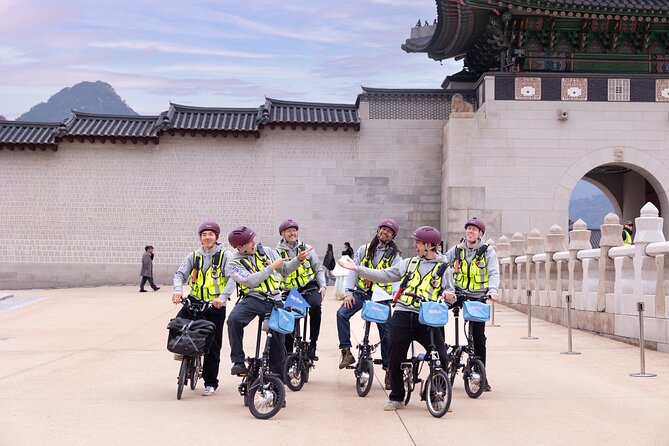
- Small group (max 10) for a more personal pace and safer riding feel
- E-bike + helmet + insurance included, which lowers the stress for first-timers
- Major sights plus side alleys so you get both postcards and real streets
- Happy Hour food and drinks at the end, including season-based options
- Guides with real city knowledge (like Hagar, Taejin, and Vincent)
Why an afternoon e-bike hits the sweet spot in Seoul
If your Seoul plan is packed, timing matters. Afternoon tours are a nice middle ground: you avoid the earliest morning crowds, but you still have daylight for the classic sights and the photo-worthy streets. And because you’re on an e-bike, you’re not paying the penalty of long walks between scattered neighborhoods.
This tour is built for people who want structure without feeling locked in. You get a guided route that mixes big-name places with quieter stretches where you can actually see daily life—small alleys, traditional-feeling streets, and city squares where locals linger.
The other practical win is energy. You’ll cover multiple areas in about 3 hours, with short stops that keep the momentum going. That means you can still enjoy the rest of your day afterward—shopping, palaces on your own later, or a second dinner plan you actually choose.
You can also read our reviews of more tours and experiences in Seoul.

Getting set up: the start, the ride briefing, and what to bring
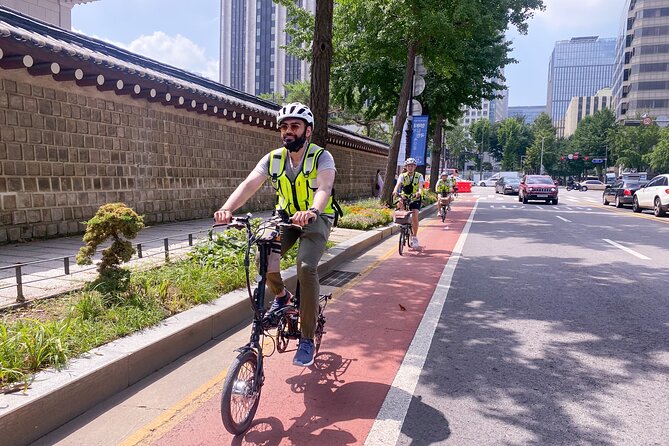
You meet at Le Meiller Jongno Town, at 19 Jong-ro in Jongno District, with a 2:30 pm start. Plan to arrive 20–30 minutes early. That extra buffer is not just administrative. It’s when the team gets you fitted to your bike, explains safety basics, and helps you get comfortable before you roll.
This matters because an e-bike is forgiving, but it’s still a bicycle. If you’ve never ridden one in traffic-like conditions, this pre-ride education is the difference between feeling confident and feeling tense.
What’s included helps too: you get an e-bike, a safety helmet, and insurance. For a first-time visitor, that combination makes the whole experience feel more like guided travel than a rental adventure with a map.
For what to bring, keep it simple: wear comfortable shoes, dress for the weather, and bring only what you can handle easily on the bike. The tour ends back at the meeting point, so you’re not scrambling to figure out transportation while tired.
Stop by stop: what you’ll see and why it’s worth the time
The route is designed to teach Seoul in chunks. Instead of one long speech at each location, you get short, focused segments that connect history, place names, and everyday scenes.
Cheonggyecheon Berlin Square: a quick start with big meaning
You begin near the Cheonggyecheon area at Berlin Square, where the guide sets up the story of Korea’s division and how cities remember political reality. This isn’t a long museum-style stop; it’s a way to frame what you’ll see around the stream and the city afterward.
If you like understanding the “why” behind the sights, this first context helps you read Seoul more clearly as you ride.
Cheonggyecheon Stream: the city’s reclaimed waterway
Next comes the Cheonggyecheon Stream. This is one of those places where Seoul slows down visually—water, footpaths, and an atmosphere that feels more human than traffic-first.
The stop is short, but that’s useful. You’re meant to enjoy the moment without losing the ride rhythm. If you’re taking photos, this is a good one to target early while you’re still fresh.
Gwanghwamun Square: a central pause in the middle of it all
At Gwanghwamun Square, you’re at the heart of Seoul’s civic center. The guide points out the statues and symbolic figures from Korean history, and you’re given a resting moment in a place that naturally gathers people.
This stop works well because it’s not just sightseeing. It helps you orient yourself to where major districts connect. After this, the route moves through more character-filled streets.
House of Baek Inje: traditional domestic architecture with modern relevance
Then you visit the House of Baek Inje, where you learn about key features of a traditional home and how ideas from that architecture still show up in daily life today.
This is the kind of stop that pays off later. Even if you don’t go into every palace or museum, understanding how traditional homes work makes the rest of the old-town neighborhoods easier to appreciate.
Ikseon-dong: where old street life still feels alive
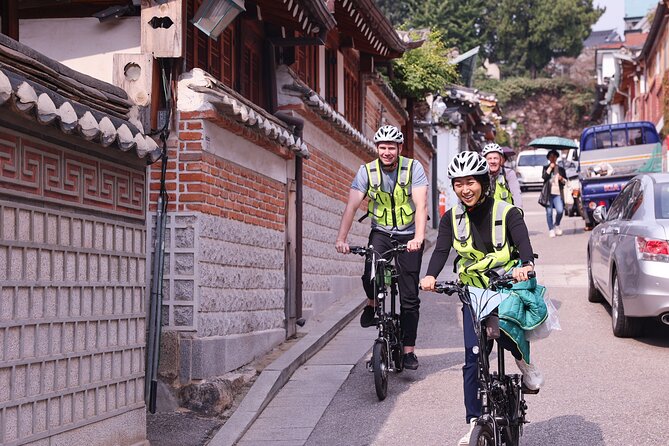
At Ikseon-dong, you get a neighborhood taste. This is a traditional housing district where older structures and newer life coexist. Think side streets, textures, and an easy walk-and-look energy.
Because you’re on an e-bike, the bike keeps you moving, but the stop gives you room to notice details. This is also a strong area if you want to come back after the tour for snacks, because you’ll leave knowing what kind of streets you like.
Daehanmun Gate at Deoksugung’s edge: a transition point in Seoul
You pass the Daehanmun Gate, which is the main gate of Deoksugung Palace built in the late 19th century. The guide frames it as a symbol of transition into a more modern Korean period.
Even if you’re not going deep into palace grounds, this stop gives you a historical lens. Gates like this are small in size compared to palaces, but they matter because they mark shifts in time and power.
The final food-and-drink stretch: local treats with season swaps
After riding, the tour drops the bikes at We Ride Korea Bicycle Tours & Rentals and then you move straight into food and drinks. This is the “Happy Hour” part, and it’s where the tour turns from sightseeing to something you’ll remember for your belly.
The exact menu shifts by season:
- In winter, you might enjoy kimchi soup, Korean pancakes, and makolli rice wine.
- In summer, you might get K-fried chicken and more.
This structure is clever. It keeps the experience comfortable and ensures you’re eating what fits the weather. It also means you don’t have to hunt for a dinner spot immediately after an active afternoon.
Changdeokgung Palace: a grand royal reference point
Finally, you reach Changdeokgung Palace, a major Joseon Dynasty seat of power. Even with a short stop, it’s a powerful visual reminder of scale—royal architecture is hard to capture fully in a quick photo stop, but seeing the setting helps you decide if you want a deeper palace visit later.
Many visitors rush palaces. This tour gives you a taste and context, which is often the best way to decide what to do next.
What the Happy Hour part really does for your trip
A lot of tours end, and you’re on your own for food. Here, the timing is smart: you eat after you’ve burned energy, and you leave with suggestions and momentum for the rest of your Seoul days.
I like that the food plan is tied to local comfort items rather than generic snacks. And because the Happy Hour includes drinks—like makolli in winter—you get a low-pressure introduction to Korean flavors without committing to a full meal elsewhere.
If you’re worried about planning, this section helps. You don’t have to translate menus or guess what’s worth trying when you’re already tired from cycling.
Guides matter: how the tour gets its high marks
This tour’s reputation isn’t just about the bikes. It’s about the people running it.
In the feedback, I saw repeated praise for guides who manage safety calmly and explain the city in a way that sticks. Names that came up include Hagar, Taejin, and Vincent—and the common theme is clear: they keep everyone moving at a comfortable pace, and they know how to connect major sights with everyday streets.
For you, that means less time asking where to go next and more time actually seeing Seoul. A good guide doesn’t just point at buildings; they help you understand what to look for.
Price and value: what you’re paying for (and what you’re not)
At $105 per person, this isn’t the cheapest way to see Seoul. But it covers the expensive part most DIY plans miss: the guided route plus the gear.
You’re getting:
- E-bike use
- Helmet
- Insurance
- A guided route with structured stops
- Snacks from a local market
- The Happy Hour food and drinks component
The big value play is time and effort. In a city like Seoul, where neighborhoods can take longer to hop between than you expect, an e-bike guide helps you compress multiple areas into one afternoon. If you only have a couple days and you want at least one guided day that doesn’t drain you, this price can feel fair.
One caution on costs: the tour notes that some admission details aren’t included (and you’ll see many stops that are free). If you want to do extra palace grounds beyond what’s scheduled, you may still want to budget separately.
Practical considerations before you book
This tour is marked as suitable for most travelers, and service animals are allowed. If you have extra mobility needs, the option to join via pedicab at the same price can be a helpful workaround—so you’re not automatically blocked from the experience.
Still, treat it like an active city outing. You’ll be riding and stopping, and you’ll want to feel comfortable handling an e-bike even at a guided pace.
Weather is also key. It requires good weather, and if it’s canceled due to poor conditions, you’ll either get another date or a full refund. That’s exactly what you want for a bike-based activity.
Who this tour is best for
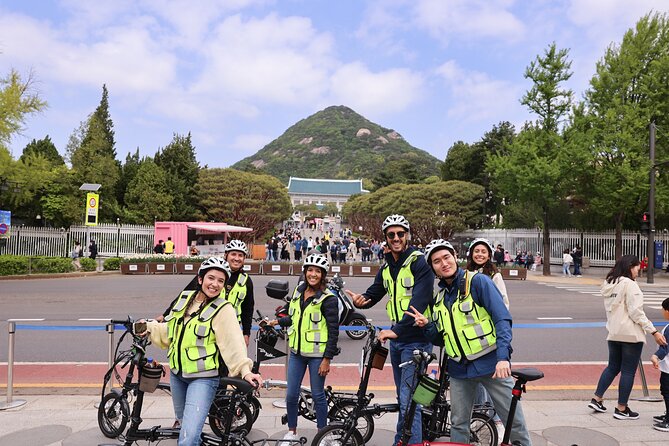
This afternoon e-bike tour is a strong fit if:
- You’re in Seoul for the first time and want an organized introduction
- You want classic sights plus quieter neighborhoods without planning every hop
- You prefer guided sightseeing over trying to self-navigate with limited time
- You like the idea of finishing with food and drinks in one place
It may be less ideal if you hate bikes, have very limited mobility and can’t use the pedicab option, or you’re traveling in a way where you need long uninterrupted free time.
Should you book this Seoul afternoon e-bike tour?
Yes, if you want a low-stress way to get oriented fast. The combination of small-group control, practical included gear, and a tour that mixes major landmarks with the street-level Seoul you can actually feel makes this a smart first-or-second-day choice.
Book it especially if your schedule is tight and you’d rather trade one afternoon of planning for a guided route that already knows where to go next. And if food is part of your travel style, the Happy Hour finish is a big plus because it takes the guesswork out of what to do when you’re done riding.
If you’re the type who wants only a single palace deep dive, you might pair this with a separate, longer palace visit later. Think of this as the map-maker day: it shows you what to chase next.
FAQ
How long is the afternoon e-bike tour?
It runs for approximately 3 hours.
What time does the tour start, and where do I meet?
The meeting point is Le Meiller Jongno Town, 19 Jong-ro, Jongno District, and the start time is 2:30 pm.
Do I need to arrive early?
Yes. You’re asked to arrive 20–30 minutes early so the team can prepare you, educate you on safety, and fit the bike.
What’s included in the price?
The tour includes an e-bike, a safety helmet, insurance, snacks from a local market, and the Happy Hour food and drinks at the end.
Is admission included for the stops?
The tour information shows that an admission ticket is not included for at least one part, while other listed stops are free. If you plan additional palace entry beyond what’s scheduled, you may need separate tickets.
How big is the group?
The tour caps the group at a maximum of 10 travelers.
What kind of food and drinks are included during Happy Hour?
The menu changes by season: winter options can include kimchi soup, Korean pancakes, and makolli, while summer options can include K-fried chicken and more.
What’s the cancellation policy?
You can cancel for free up to 24 hours in advance for a full refund. The experience requires good weather, and if it’s canceled due to poor weather, you’ll be offered a different date or a full refund.