REVIEW · ANURADHAPURA
Anuradhapura Heritage Mountain bike / bicycle Tour
Book on Viator →Operated by Rides Hub · Bookable on Viator
An ancient city is better on wheels. This 4.5-hour heritage ride through Anuradhapura blends Buddhist landmarks, ancient irrigation, and quiet village paths into one manageable loop. I especially like how the pace lets you actually look at carvings and ruins, not just speed past them. I also like that the guide, Saranga, speaks English and brings the stories of each stop to life. The main catch to plan for: the UNESCO entrance ticket is not included, so budget a bit more if you don’t already have it.
What makes this tour feel genuinely different is the focus on moving at your own comfort level along less predictable routes. You’re not doing a frantic “tick off the list” sprint. Instead, you’re guided between major monuments and calmer corners—tanks, ponds, and temple spaces—while still keeping the ride structured as a 10 km loop.
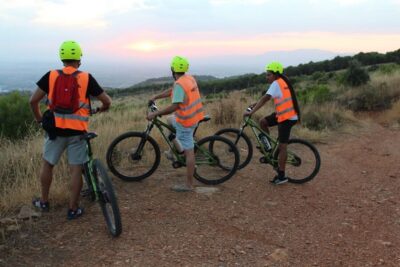
You’ll get a real mountain bike experience too. Bikes are provided from trusted brands like Giant, Trek, and Louis Garneau, plus bottled water and parking fees are handled. If you’re considering it for a hot, humid day, remember the tour requires good weather, and it’s best for people with at least moderate fitness.
In This Review
- Key highlights you’ll feel on the ride
- Why Anuradhapura on two wheels works so well
- The 10 km loop plan: what timing feels like in real life
- Meeting point and essentials: bikes, water, and the cloth rule
- Stop 1: Jetavanaramaya and the scale shock
- Stop 2: The Samadhi Buddha at Mahamevnāwa Park
- Stop 3: Abayagiriya Stupa and the monastery footprint
- Stop 4 and 5: Kuttam Pokuna and Eth Pokuna bathing tanks
- Stop 6: Sandakada pahana (Moonstone) and stair symbolism
- Stop 7: Basawkkulama Tank and the ancient engineering vibe
- Stop 8: Abayagiriya’s main refectory (and the human scale of monasteries)
- Stop 9: Ruwanweli Maha Seya and the Dutugamunu story line
- Stop 10: Sri Maha Boodhi Temple and the living link
- Local vegetarian lunch at Hela Bojun: fuel with a cultural angle
- Price and value: $25 plus the UNESCO ticket reality
- Who this tour suits best (and who might want to skip it)
- Should you book Anuradhapura on a heritage mountain bike?
- FAQ
- FAQ
- How long is the Anuradhapura Heritage mountain bike tour?
- How far do we ride?
- How much does it cost?
- Is the UNESCO entrance ticket included?
- What’s included in the tour price?
- Do I need a wraparound cloth for temples?
- Who runs the tour, and do they speak English?
- Is it a private tour?
- What’s the cancellation policy if weather is bad?
Key highlights you’ll feel on the ride
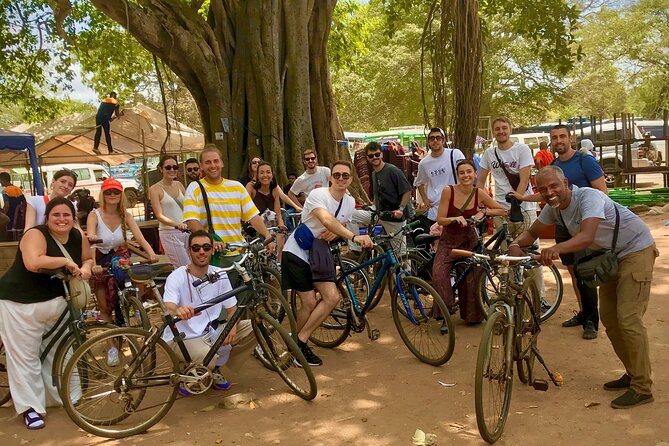
- 10 km loop in about 4½ hours, so you get exercise without rushing
- English-speaking guide Saranga with culture and religion context you can use on-site
- Major Anuradhapura monuments plus lesser-known stops, including tanks and bath ponds
- Vegetarian lunch included, cooked by local people at Hela Bojun
- Quality bikes from Giant, Trek, and Louis Garneau plus water and guide support
- UNESCO ticket not included, so plan for that cost up front
Why Anuradhapura on two wheels works so well
Anuradhapura is a city of stones: stupas, monasteries, carved stair details, and long-vanished water systems you can still see. Walking works, but it can feel slow and repetitive—because the distance between “wow” points adds up fast.
Cycling solves that. You cover ground enough to connect sites in one morning or afternoon, while the ride stays gentle enough to let the monuments land. You’re not just consuming photos; you’re seeing the shapes, the layout, and the craftsmanship in front of you.
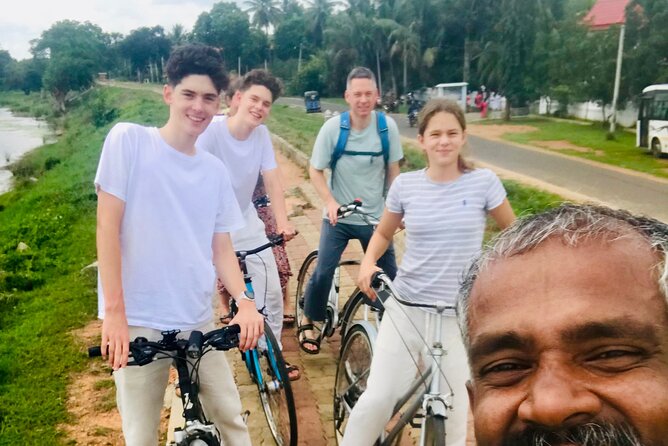
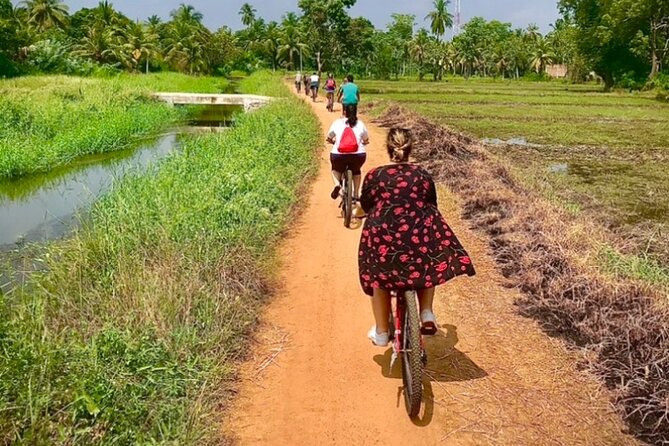
Also, the tour’s emphasis on “hidden routes” and local life matters more than it sounds. When your path goes through calmer edges—near lakes, irrigation areas, and everyday neighborhood spaces—you get breaks from the biggest crowds. Even if you’re a history fan, that mental reset makes the next stupa stop more satisfying.
The 10 km loop plan: what timing feels like in real life
This is built as a 10 km loop that takes about 4 hours 30 minutes. The structure is a series of short stops—often around 10 to 30 minutes—so you can read a bit, look closely, and move on without burnout.
Here’s the practical effect: you won’t feel trapped in one location for hours. You also won’t be in constant motion with zero time to enjoy. That middle balance is why this tour is so easy to recommend. You get history, then movement, then history again.
It’s also private. That means only your group participates, which tends to make pacing more flexible. If your legs are fine but you want longer at a carved feature, you’re less likely to get steamrolled by a large group schedule.
Meeting point and essentials: bikes, water, and the cloth rule
The tour starts and ends back at Rides Hubwela mada gedara, Garage waththa near the old car park, No:116/1 Watawandana Rd, Anuradhapura. If you’re using local transport, it’s listed as near public transportation, which helps for arrival and pickup.
You’ll ride a mountain cycle provided by the operator, with bikes from Giant, Trek, and Louis Garneau. Bottled water is included, and parking fees are covered, so you’re not chasing small payments during the tour.
One thing to bring is not optional: because you’ll visit temples, you need a wraparound cloth if your knees are not covered. That simple bit of planning saves you from last-minute stress at the entrance.
Stop 1: Jetavanaramaya and the scale shock
The ride opens at Jetavanaramaya, known for its massive stupa dimensions. The monument’s headline detail is striking: at 122 metres (400 ft), it was the world’s tallest stupa when it was built by King Mahasena of Anuradhapura, and it was also the third tallest structure in the world at the time.
Why this stop matters on a bike tour: you see scale quickly. Even if you don’t memorize dates, your body understands what “tall” means when you arrive and look up. Then the guide can connect that scale to what the stupa represented in the ancient city’s religious landscape.
Time on site is about 15 minutes, which is enough for a first deep look without dragging the schedule.
Stop 2: The Samadhi Buddha at Mahamevnāwa Park
Next comes the Samadhi Statue, featuring the Buddha in Dhyana Mudra, the meditation posture associated with his first phase of teaching. It’s one of those stops where the monument detail does the storytelling for you.
This is a good pause point in the loop. After the size-and-power feeling of Jetavanaramaya, the Samadhi statue brings you into a calmer mindset. If you like religion explained with plain language, this is the kind of stop that benefits from an English-speaking guide.
You’ll spend about 20 minutes here, including time to look around the park setting.
Stop 3: Abayagiriya Stupa and the monastery footprint
Abayagiriya Stupa brings you to Abhayagiri Vihāra, described as a major monastery site with influence across Mahayana, Theravada, and Vajrayana Buddhism. It’s also known for being one of the most extensive ruins in the world.
The value of cycling here is that you arrive with momentum, but you don’t leave too fast. About 20 minutes gives you time to orient yourself to the vastness. Ruins can be confusing if you’re alone; with a guide, the “what you’re looking at” clicks.
Entrance for this stop is included in the tour package, so the only budgeting you need to keep in mind is the separate UNESCO ticket.
Stop 4 and 5: Kuttam Pokuna and Eth Pokuna bathing tanks
Two of the most memorable “non-stupa” moments are the old water systems: Twin Baths (Kuttam Pokuna) and Eth Pokuna (Elephant Pond).
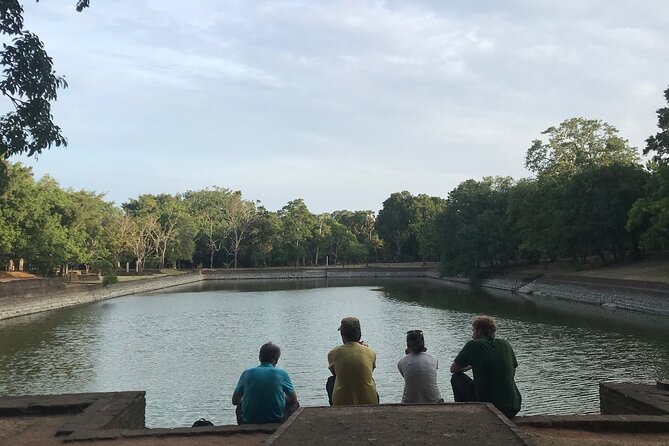
Kuttam Pokuna consists of two well-preserved bathing tanks or ponds built in the ancient Anuradhapura kingdom. It’s a visually satisfying stop because the layout is readable even without a map. You can understand function just by seeing the shape and the care that remains.
Then Eth Pokuna shifts the scale. This reservoir is about 159 metres long. That number isn’t just trivia—it hints at organized labor and long-term water planning. On a bike, these stops feel like learning to read infrastructure as culture, not just ruins as decoration.
Both stops are about 20 minutes each, and entrance is included.
Stop 6: Sandakada pahana (Moonstone) and stair symbolism
Between ponds and stupas, you’ll stop for the architectural detail known as Sandakada pahana, also called the Moonstone. This is a semi-circular stone slab, usually carved and placed at the bottom of staircases and entrances.
I like this kind of stop because it’s small enough to feel personal, but it also tells you how ancient design worked. You don’t need a scholar’s vocabulary. You just look at the curve and the carving rhythm and realize the creators cared about the way people would approach and enter sacred spaces.
You’ll spend about 25 minutes here, with entrance included.
Stop 7: Basawkkulama Tank and the ancient engineering vibe
Basawkkulama Tank is a shift toward the practical genius of Anuradhapura. The tour notes it as part of complex irrigation systems, and it points to some of the earliest examples of irrigation works in Sri Lanka dating from about 430 BCE, during King Pandukabhaya’s reign.
If you like history that isn’t only temples and kings, this is a great stop. It reframes the ancient city as a living system—food, water, labor, and management—rather than only ceremonial spaces.
Time is around 20 minutes, and admission is free for this stop.
Stop 8: Abayagiriya’s main refectory (and the human scale of monasteries)
One of the most thought-provoking stops is the Main Refectory of Abayagiri Monastery. The tour explains that the Chinese traveler monk Fa-Hien visited in the 5th century and reported the monastery housed up to 5,000 monks, including that meals for these monks were handled there.
That’s a lot of people. Even if you only spend 10 minutes at this stop, it changes the way you look at the ruins. You start thinking about daily routines—food preparation, shared meals, and the logistics behind feeding thousands—rather than just religious monumentality.
Entrance is included here as well.
Stop 9: Ruwanweli Maha Seya and the Dutugamunu story line
Then you cycle into Ruwanweli Maha Seya, one of Anuradhapura’s most famous stupas. The tour ties it to King Dutugamunu (137 BC – 119 BC), with completion mentioned for his younger brother Ki… (the detail is truncated in the notes, but the Dutugamunu connection is the main anchor).
This is where the experience feels “big” again. The 30 minutes you get here is helpful because it’s not just one photo moment. You can look at the stupa’s role in the city’s identity and also understand why it kept drawing devotion.
Entrance is included.
Stop 10: Sri Maha Boodhi Temple and the living link
The final temple stop is Sri Maha Boodhi Temple, centered on the Jaya Sri Maha Bodhi fig tree in the Mahamewna Gardens. The tour highlights it as the closest authentic living link to Gautama Buddha, referencing its sacred status and connection to tradition.
This stop is about reverence and calm. It’s also a strong finishing note because the experience closes with something still alive and active, not only archaeological stone.
You’ll spend about 30 minutes, with entrance included.
Local vegetarian lunch at Hela Bojun: fuel with a cultural angle
A major reason I’d recommend this tour is that your break isn’t an afterthought. Meals are included, described as local people cooked vegetarian food at Hela Bojun.
On a cycling tour, food matters for two reasons. First, it keeps energy steady so you can enjoy the last stretch of ruins without feeling dragged. Second, it gives you a taste of local everyday choices, not just a tourist restaurant stop.
The tour also includes bottled water, which helps you stay comfortable between sites.
Price and value: $25 plus the UNESCO ticket reality
At $25.00 per person, this is priced like a budget-friendly heritage day that still gives you the basics done right. For that money, you’re getting a guide, a mountain bike, bottled water, parking fees, and a vegetarian meal.
But here’s the one thing you must not miss: entrance fees are not included. The notes specify a UNESCO ticket cost of $30 USD per person (and $15 USD for children under 13). In other words, your real total can be closer to $55 per adult if you need to buy it.
Even with that, the value can still be strong because the tour doesn’t just walk you through ruins. It provides the bike, handles the site-to-site logistics, and includes the cultural explanations that help monuments make sense.
Who this tour suits best (and who might want to skip it)
This tour is a great match if you want to combine active exploring with an emphasis on Buddhism, culture, and nature. It’s also ideal if you prefer a structured route but don’t want a rushed, high-pressure schedule.
Because it’s described as requiring moderate physical fitness, it’s best for people who can handle steady cycling for a 10 km loop without needing constant breaks.
If you don’t want to deal with a separate UNESCO ticket, or you’re only interested in one or two monuments, this might feel like more planning than you want. Also, because it visits temples, plan to dress appropriately and bring the wraparound cloth if needed.
Should you book Anuradhapura on a heritage mountain bike?
If you like history with context, and you want your Anuradhapura visit to feel like an experience rather than a checklist, this is an easy yes. The combination of quality bikes, an English-speaking guide (Saranga), and a ride that balances big stupas with calmer tanks is exactly the kind of day that sticks with you.
Book it if you:
- want a 10 km loop that fits a half-day time window
- enjoy learning the meaning behind stone details like Sandakada pahana
- appreciate breaks like vegetarian lunch at Hela Bojun
- can handle temple visits with a wraparound cloth for knee coverage
Skip it if you:
- only want to pay for a single monument entry without separate ticket costs
- prefer a fully slow walking tour with no cycling component
- are traveling when weather is uncertain, since the tour requires good weather
FAQ
FAQ
How long is the Anuradhapura Heritage mountain bike tour?
It lasts about 4 hours 30 minutes (approx.).
How far do we ride?
The tour is a 10 km loop.
How much does it cost?
The price is $25.00 per person.
Is the UNESCO entrance ticket included?
No. The notes say the UNESCO ticket is not included and costs $30 USD per person (and $15 USD for children under 13).
What’s included in the tour price?
You get bottled water, parking fees, use of a mountain cycle bike, a guide tour, and local vegetarian meals cooked at Hela Bojun.
Do I need a wraparound cloth for temples?
Yes. The tour advises bringing a wraparound cloth if your knees are not covered since you’ll be visiting temples.
Who runs the tour, and do they speak English?
The guide is Saranga, and the tour description says the guide is English-speaking.
Is it a private tour?
Yes. It’s described as private, and only your group will participate.
What’s the cancellation policy if weather is bad?
The tour allows free cancellation up to 24 hours in advance for a full refund. It also states the experience requires good weather, and if it’s canceled due to poor weather, you’ll be offered a different date or a full refund.