REVIEW · AUSTIN
Austin: 1.5-Hour Lady Bird Lake Bike Tour
Book on GetYourGuide →Operated by Barton Springs Bike Rental & Tours · Bookable on GetYourGuide
Biking Lady Bird Lake feels like Austin on fast-forward. In just 90 minutes, you glide along Lady Bird Lake and its historic bridges, with big photo moments and city landmarks coming up one after another. You start with a helmet and bike, plus water and a basket so you can ride light and stay focused on the scenery.
My favorite part is how the route packs in the Barton Springs Pool and Zilker Park area early, then keeps moving toward the Stevie Ray Vaughan statue and the Congress Avenue Bridge zone. The best guides turn the ride into something more personal, sharing practical Austin tips and stories about what you’re seeing.
One consideration: it’s a short tour, so the pace is built for seeing more, not lingering. If you want to park your bike and spend a long time at a single stop, plan extra time on your own.
In This Review
- Key highlights worth planning around
- Why a 90-Minute Lady Bird Lake Bike Tour Works
- Getting Your Helmet, Bike, and the Ride-Ready Setup
- Zilker Park and Barton Springs Pool: Austin’s Big Park Area
- Stevie Ray Vaughan Statue to Congress Avenue Bridge
- Old Mopac Railroad Bridge and the New Library Contrast
- Pfluger Pedestrian Bridge: A Mid-Tour Viewpoint Reset
- The Boardwalk and Austin Skyline Photo Time
- How the Guide Turns Stops into Real Austin Context
- Pace, Timing, and Who This Tour Fits Best
- Price Value: Is $44 Worth It?
- Should You Book This Austin Bike Tour?
- FAQ
- How long is the Austin Lady Bird Lake bike tour?
- How much does the tour cost?
- What’s included with the tour?
- Is food or drinks included?
- Do I get hotel pickup or drop-off?
- Is there a live guide, and what language is it in?
- What sights are typically on the route?
- What’s the cancellation policy?
- Can I book now and pay later?
Key highlights worth planning around
- Historic bridges plus skyline photo stops without needing to line up for separate attractions
- Zilker Park near Barton Springs Pool, including time to enjoy the park area before heading downtown
- Stevie Ray Vaughan statue and Congress Avenue Bridge, a classic Austin combo for quick learning on the move
- Guides who tell real stories about Austin, including architecture, history, and artists
- Easy setup for the ride: helmet, water, and a basket for small essentials
- A short 1.5-hour loop that helps you cover a lot when your schedule is tight
Why a 90-Minute Lady Bird Lake Bike Tour Works
This is the kind of tour that makes sense on a first day in Austin. You get to roll through key sections of the city without feeling like you’re stuck doing logistics all afternoon. The timeline is tight on purpose: it helps you see the “greatest hits” while still having time to explore on your own later.
You’re also out in the open, not in a bus. That changes the whole feel. You’ll notice the city edges, the way neighborhoods and landmarks start showing up in sequence, and how the light shifts as you move from park space toward bridge viewpoints.
You can also read our reviews of more tours and experiences in Austin.

Getting Your Helmet, Bike, and the Ride-Ready Setup
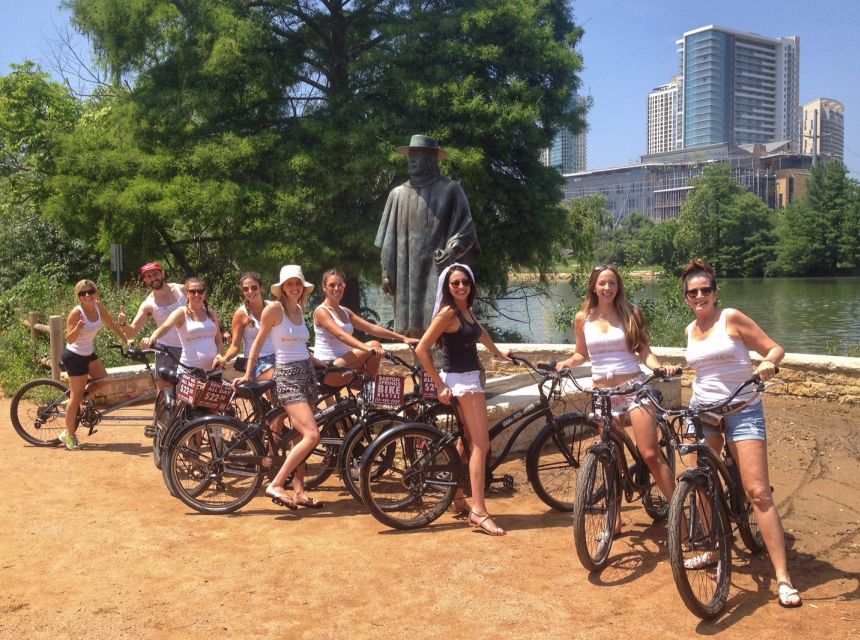
Before you set out, you meet your guide at the meeting point, then grab what you need to ride. You’ll get a helmet, the bike, and a basket, plus water for the road. That sounds basic, but it matters—when the essentials are handled, you can spend your mental energy on the route and the stops.
One small detail I like: the basket. It’s handy for a phone, a light layer, or anything you don’t want rattling around. In one experience, a rider even reported that a small service dog could fit in the basket area, which gave the tour a more practical, accommodating feel.
Zilker Park and Barton Springs Pool: Austin’s Big Park Area
The tour starts by heading toward the Barton Springs Pool and Zilker Park area. This is a smart move because it gives you immediate contrast: you’re not only chasing downtown scenery, you’re also getting that park energy early.
Zilker Park is described as Austin’s largest park, and it shows in how much room there is to feel like you’ve left the city pressure behind. Even if you’re only passing through on a bicycle, it changes your mood. Instead of sprinting between sights, you’re riding through space.
What to watch for on this section:
- The way the route threads between park areas and water-adjacent views along Lady Bird Lake
- Photo opportunities that look great even from the seat of your bike
- The guide’s context on what you’re seeing as you roll past
A drawback of starting here: you may get used to the easy, scenic rhythm. Then, when the tour shifts toward bridges and more built-up areas, you’ll want to be alert and ready to ride with traffic patterns in mind.
Stevie Ray Vaughan Statue to Congress Avenue Bridge
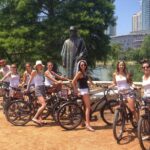
Once you’re moving away from Zilker Park, the tour turns into that classic Austin walk-and-talk energy, just on wheels. The stop at the Stevie Ray Vaughan statue is brief but memorable. It’s one of those landmarks that makes the city feel like a place with personality, not just a collection of buildings.
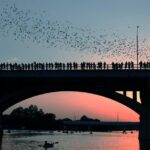
From there, you head toward the Congress Avenue Bridge area. This is where the ride starts rewarding you with big viewpoint energy—especially if you enjoy architecture and landmark structure. The bridge also lines up with the tour’s theme: historic, iconic, and photo-friendly.
What I like about this stretch is the pacing. You’re not spending ages searching for the next spot. You ride, you stop, you learn a bit, then you roll again. It’s an efficient way to build a mental map of Austin quickly.
Old Mopac Railroad Bridge and the New Library Contrast
The route includes the old Mopac railroad bridge and Austin’s newest library. That mix is a big part of why this tour feels more interesting than a generic loop.
The old Mopac railroad bridge gives you a sense of Austin’s earlier infrastructure vibe. Even without a long speech, the structure itself helps you understand how the city has developed. Then the newest library adds the opposite feeling—new design, updated public life, and a reminder that Austin keeps changing.
Practical tip: treat these as quick visual checkpoints. You’re getting just enough time at each stop to connect the dots, not enough time to exhaustively study every detail. If you want to go deeper later, you’ll know exactly what to look up.



Pfluger Pedestrian Bridge: A Mid-Tour Viewpoint Reset
Next up is the Pfluger pedestrian bridge, a key “reset” point in the ride. Pedestrian bridges tend to be where you naturally pause for photos and look around, and this one fits that role well.
Why this stop matters: it gives you a visual break in the middle of the tour. After you’ve been thinking about parks and landmark clusters, the bridge helps you see the city as a whole—how parts connect and how the skyline begins to frame the background.
If you’re someone who likes pictures but hates standing around, this is a good setup. You can stop, grab your shots, and get moving again without the tour dragging.
The Boardwalk and Austin Skyline Photo Time
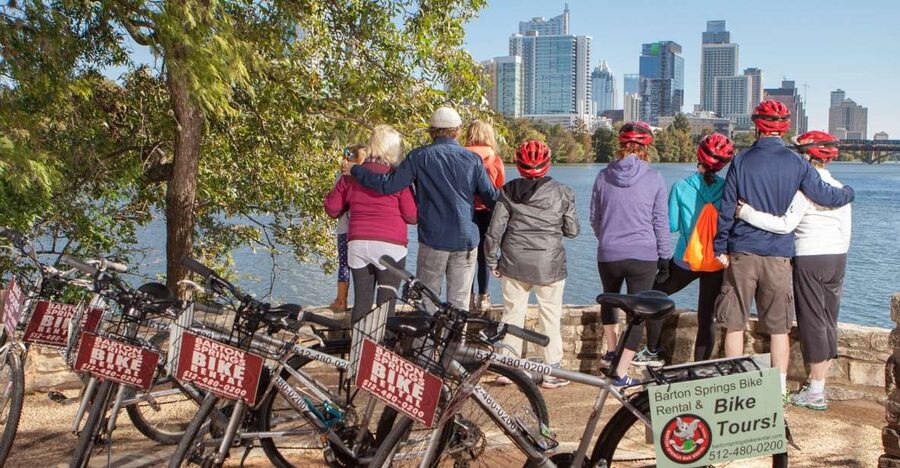
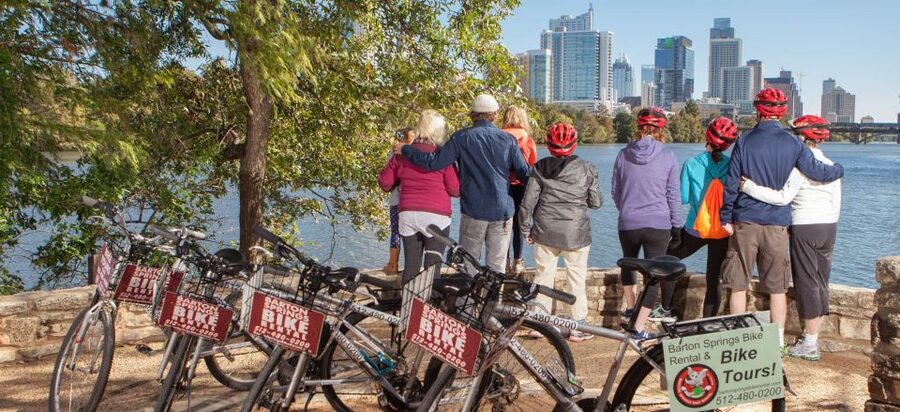
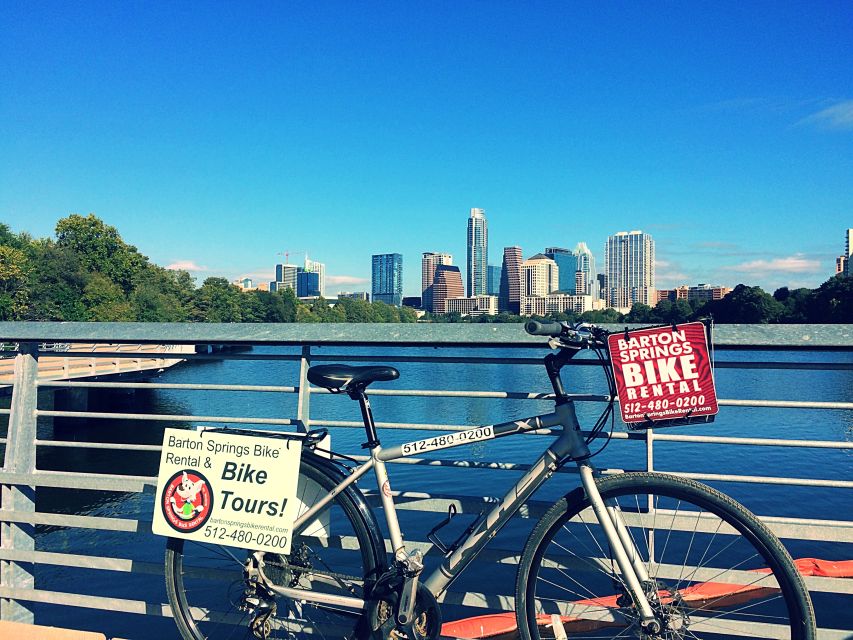
The tour includes the iconic boardwalk for perfect photo opportunities of the Austin skyline. This is the section where the ride starts to feel like a highlight reel, because the views are the payoff.
Even if you don’t consider yourself a “photo person,” this is worth treating like a moment to slow down. You’ll be moving for most of the 90 minutes, so when you reach a skyline view, it’s your chance to take it in and capture it the way you want.
What to expect here:
- A straightforward stop centered on photos and view angles
- The guide pointing out landmarks as you look across the city
- A chance to align what you’ve learned earlier with what you see now
One practical note: skyline shots can be time-sensitive with lighting. If you’re sensitive to that, it helps to arrive ready to take photos quickly once the group stops.
How the Guide Turns Stops into Real Austin Context
The real value isn’t just the list of places—it’s what your guide does while you’re riding between them.
Guides like Peter, Mark, and Michael are repeatedly praised for strong storytelling and solid explanations about Austin’s architecture, history, and artists. That’s the difference between a ride that’s simply scenic and a ride that also helps you understand what you’re looking at.
You’ll also get insider tips about life in Austin. This usually lands best in small, practical moments, like when the guide connects a landmark to how locals experience the area—where people spend time, what to pay attention to, and how to think about the city beyond the postcard.
If your goal is to learn quickly without turning your day into a classroom, this tour style fits.
Pace, Timing, and Who This Tour Fits Best
A 90-minute format is ideal for:
- First-time Austin visitors who want an efficient orientation
- People who like being outdoors and hate long waits
- Travelers who want landmark coverage without signing up for half a day of tours
- Anyone who enjoys guided interpretation, not just a self-guided ride
It’s less ideal if you’re the type who wants to linger. The tour is designed to see many stops rather than deeply explore one site. You’ll likely appreciate that structure if your schedule is tight and you still want room for a longer meal or a separate attraction later.
Group size can vary. In one reported case, a rider described the tour as nearly private when there were only two people, which made the ride feel calm and flexible. So if you want a quieter experience, it can happen.
Price Value: Is $44 Worth It?
At $44 per person, you’re paying for a guided, 90-minute ride that includes the bike, helmet, water, and a basket. On paper, that might sound like a simple rental, but the guide’s role is what pushes this into value territory.
You’re also covering a concentration of standout areas in one go: Zilker Park near Barton Springs Pool, the Stevie Ray Vaughan statue, Congress Avenue Bridge, the old Mopac railroad bridge, the newest library, the Pfluger pedestrian bridge, and the boardwalk with skyline views. In a short window, that can be a more efficient way to connect the dots than piecing together separate stops on your own.
The best way to think about the price: it’s paying for time saved and context provided. If you’d otherwise spend hours figuring out the route and figuring out what matters, the $44 starts to feel like a bargain.
Should You Book This Austin Bike Tour?
I’d book it if you want a fast, guided way to see the Austin you’ll remember: Lady Bird Lake, major bridges, the boardwalk skyline angle, and the Barton Springs area. It’s a good fit when you like your sightseeing active, your learning practical, and your day still open afterward.
Skip it only if you’re craving slow exploration at one location or you dislike riding between stops. This tour is built for motion, not for parking yourself for long visits.
If you’re comfortable riding a bike and you want a local guide to connect the landmarks into a story, this is an easy yes.
FAQ
How long is the Austin Lady Bird Lake bike tour?
The tour lasts 90 minutes.
How much does the tour cost?
It costs $44 per person.
What’s included with the tour?
The tour includes a bike, helmet, water, and a basket.
Is food or drinks included?
No. Food and drinks are not included.
Do I get hotel pickup or drop-off?
No, hotel pickup and drop-off are not included.
Is there a live guide, and what language is it in?
Yes, there is a live tour guide, and the tour is in English.
What sights are typically on the route?
You’ll pass by or stop near Barton Springs Pool and Zilker Park, the Stevie Ray Vaughan statue, the Congress Avenue Bridge, the old Mopac railroad bridge, Austin’s newest library, the Pfluger pedestrian bridge, and the boardwalk for Austin skyline photo opportunities.
What’s the cancellation policy?
Free cancellation is available up to 24 hours in advance for a full refund.
Can I book now and pay later?
Yes, there is a reserve now & pay later option.