REVIEW · BASEL
Basel: Fancy a bike tour through 3 countries in 60 minutes?
Book on GetYourGuide →Operated by BASEL BIKE ADVENTURES - More Bike. More Basel. More Adventure. · Bookable on GetYourGuide
Basel turns into a three-country shortcut on this short bike tour. In just about an hour and roughly 10 km, you roll from the Swiss side of the Rhine to France, then Germany, then back again—so you get geography lessons with pedals.
What I really like is the mix of big infrastructure and everyday city life: the tour crosses the Dreiländerbrücke, then keeps going through working harbor areas and alternative spaces like Holzpark Klybeck. You’ll also get guided context for what you’re seeing, with stops planned for photos and breaks instead of a nonstop grind.
One consideration: you’re covering three borders in a small window, so this isn’t a slow, spend-the-day kind of ride. Bring your passport/ID and be ready for tight timing around the bridges and viewpoint moments.
In This Review
- Key things you’ll notice on this Basel-to-Three-Countries ride
- Why Cycling Basel Means Crossing Borders in One Hour
- Meeting at St. Johann Park: Easy Start, Clear Game Plan
- Your Bike, Your Helmet, and the Small-Group Safety Factor
- Down the Rhine in Switzerland: Parks, Novartis Views, and River Rhythm
- Crossing Into France via St. Louis and the Quai du Rhin
- Dreiländerbrücke: The Signature Bridge Ride
- Weil am Rhein and Kleinhünigen: Germany’s Harbor Side and Ongoing Change
- The Border Triangle Moment: Seeing Switzerland, France, and Germany Meet
- Back Up the Rhine: Klybeck Wood Park and the Alternative-Culture Break
- The Finish: Dreirosenbrücke Panoramic View of the Rhine and All Three Countries
- What $28 Gets You: Value for a One-Hour Three-Country Ride
- Who This Tour Suits Best (and a Few Fit Notes)
- Should You Book This Basel Bike Tour Through Switzerland, France, and Germany?
- FAQ
- FAQ
- Where is the meeting point for the Basel bike tour?
- How long is the tour, and how far do you ride?
- Does the tour really go through three countries?
- What should I bring for the tour?
- What’s included in the price?
- What languages are the guides?
- Is this a small group tour?
- Can I cancel or pay later?
Key things you’ll notice on this Basel-to-Three-Countries ride
- Dreiländerbrücke: the long cantilevered pedestrian and cycle bridge in Europe makes the route feel like a movie scene.
- Dreiländereck monument stop: you get a clear, symbolic moment at the border triangle area.
- Rhine cycling with real city edges: Novartis campus views downriver and harbor redevelopment around Kleinhünigen.
- Holzpark Klybeck: alternative-culture vibes mixed into an industrial Rhine city.
- Dreirosenbrücke panoramic finish: a strong end payoff with wide Rhine views.
Why Cycling Basel Means Crossing Borders in One Hour
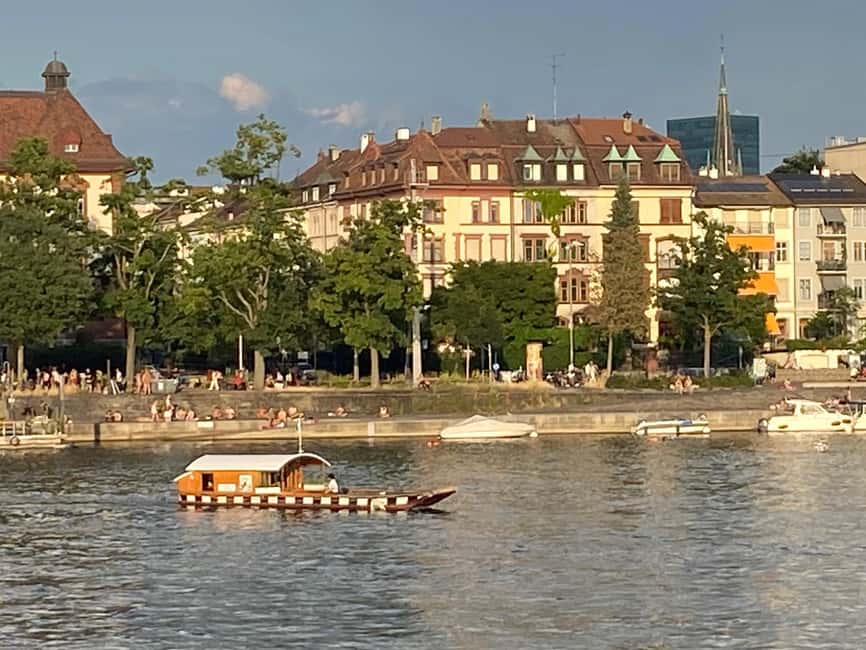
Basel has a rare trick: it sits right on the Rhine and borders two other countries. This tour takes advantage of that reality, not as a gimmick, but as a smart way to see the city from angles most people miss on foot or on one-country day plans.
You start in Switzerland, ride along the river corridor, and keep stepping across borders via bridges and border-adjacent streets. That means you don’t just see landmarks—you experience how daily life changes every time the country line shifts.
And since the ride is about 10 km and mostly flat, it’s the kind of activity that won’t wreck your next day. You can pair it with museums, an old-town stroll, or a relaxed evening dinner.
You can also read our reviews of more tours and experiences in Basel.
Meeting at St. Johann Park: Easy Start, Clear Game Plan
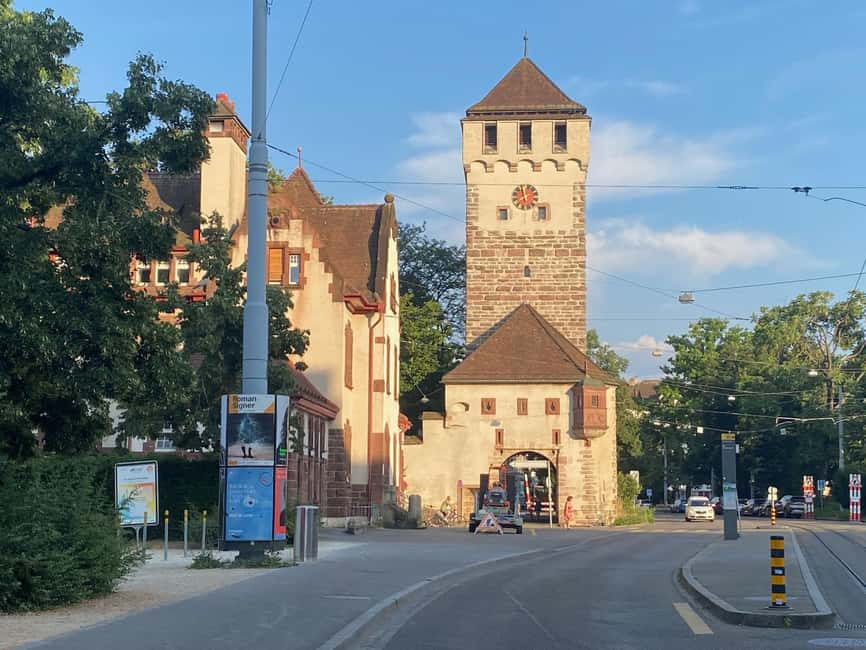
Your meeting point is opposite the St. Johanns-Tor tram stop, right at the entrance to St. Johann Park. Your guide wears a Basel Bike Adventures T-shirt with the logo, so you’re not playing guessing games.
For public transit, take tram line 11 toward Saint-Louis Grenze. Get on at Basel SBB, Barfüsserplatz, or Marktplatz, then ride to St. Johanns-Tor.
That matters because timing is the whole deal on a one-hour tour. If you arrive a few minutes early, you’ll have time to get fitted, adjust your helmet, and get comfortable before you hit the river paths.
Your Bike, Your Helmet, and the Small-Group Safety Factor
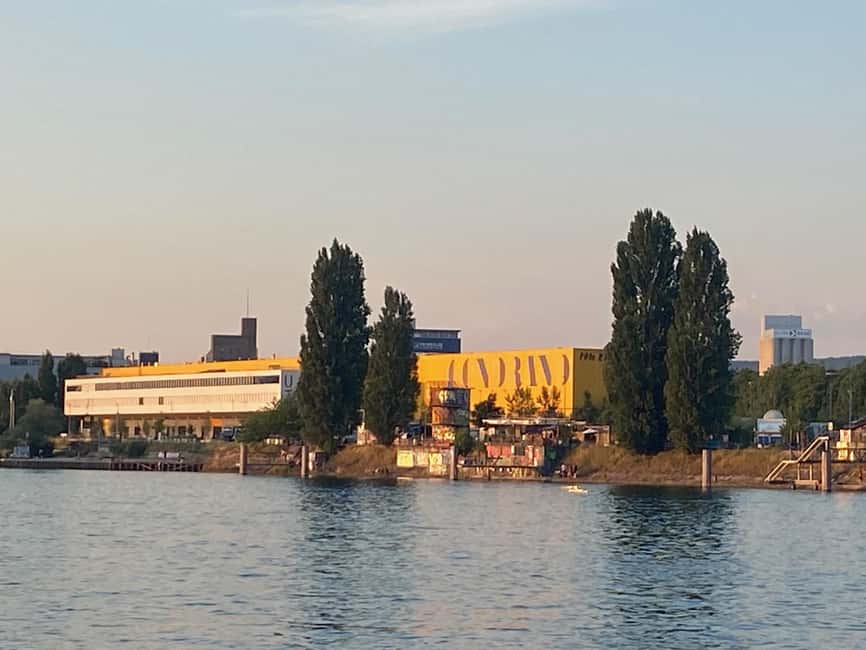
This tour includes a bicycle and a helmet. A nice practical touch: helmets are disinfected after each use. That’s one of those boring details that makes the whole experience feel better.
Group size is limited to 6 participants. In practice, that smaller number helps the guide manage pacing and route choices, especially around bridges and busier crossing points.
The guide setup also helps keep everyone together. On recent rides, you can expect a guide at the front and another closer to the back, which is a big deal if you have mixed comfort levels or you want time for photos without stressing the group.
And yes, the route is mostly flat—so the work here is mental and visual, not physical.
Down the Rhine in Switzerland: Parks, Novartis Views, and River Rhythm
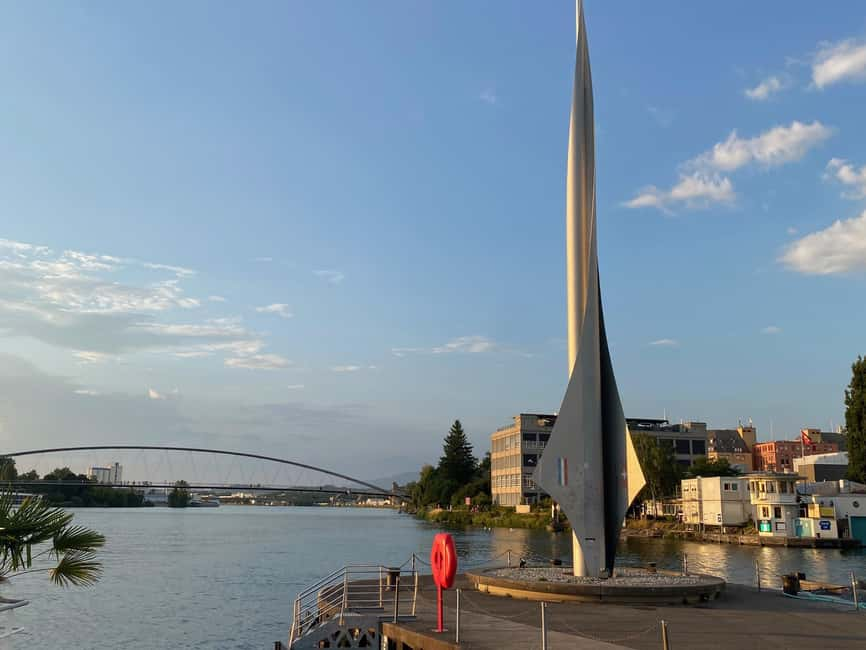
The tour starts in a green spot in Basel: St. Johann Park. That’s a smart warm-up. You get space to breathe before the ride turns into “follow the Rhine” mode.
From there, you head downstream along the river past the impressive Novartis campus. Even if you’re not chasing corporate architecture, the view gives you a sense of modern Basel: a city that’s not only old bridges and chiming towers.
The Rhine stretch is also where the cycling rhythm kicks in. You’re moving through flat river corridors where the scenery keeps shifting—waterfront, bridges, skyline fragments—without constant hills or stops.
If you like cities where nature and industry share the same view, this part hits the sweet spot.
Crossing Into France via St. Louis and the Quai du Rhin
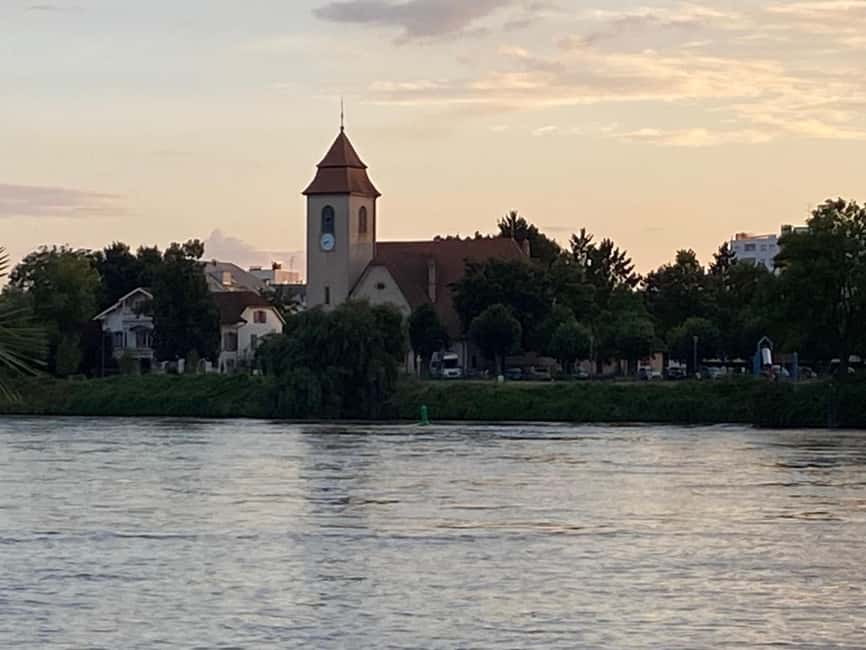
Once you reach the French border area, you cycle on French soil along the Quai du Rhin through charming St. Louis. This is where the tour starts to feel like an actual cross-border experience, not just a scenic ride.
St. Louis gives you a different urban mood: more neighborhood character and a Rhine-edge feel that reads as “adjacent to the city” rather than “inside the downtown core.” You also get more of that riverfront atmosphere, with the water acting like a continuous thread between countries.
Then there’s the Canal de Huningue segment—idyllic in the way small waterways often are. It’s the kind of stop that breaks up the big-water Rhine view, and it gives your eyes a chance to reset.
A small caution: canal and river-edge paths can feel tight in spots. The guide’s pacing and spacing helps, but you’ll still want to ride with a calm, steady hand.
Dreiländerbrücke: The Signature Bridge Ride
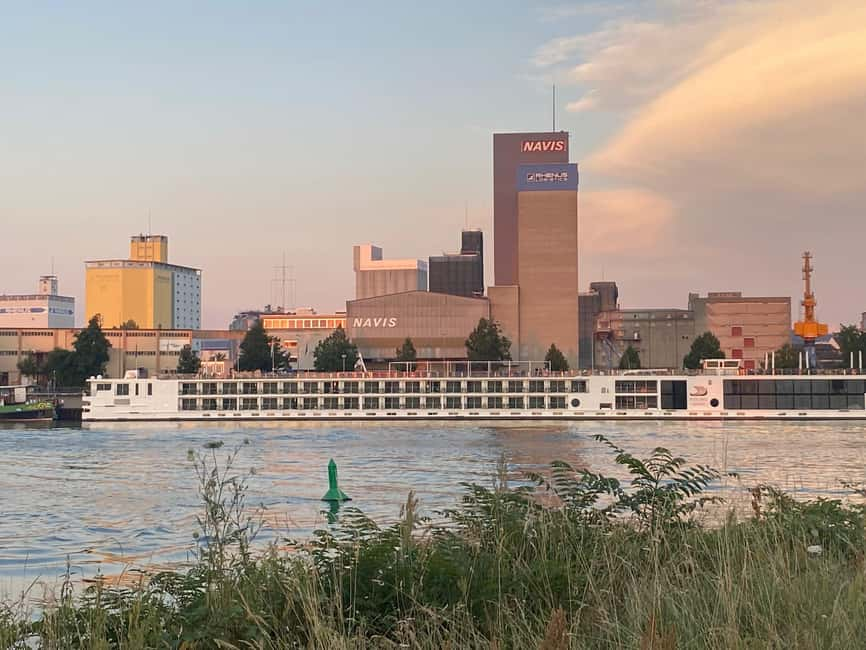
Now for the headline: you cross the Dreiländerbrücke, described as the longest cantilevered pedestrian and cycle bridge in Europe. That kind of fact matters only because it matches what you feel on the bike—long stretches, bold structure, and that sense of being exposed above the Rhine.
It’s a bridge ride that turns travel time into a view moment. You’re not rushing through it; you’re moving at a human pace across a landmark.
On the way, you stop at the striking Dreiländereck monument. This is the symbolic anchor point where the border story becomes clear. You’re not guessing the geography—you’re standing with the landmark that makes it concrete.
If you’re the type who loves photos, this is where you’ll want to be ready to take them. If you’re not, you’ll still appreciate the way the monument makes the tour feel meaningful instead of just scenic.
Weil am Rhein and Kleinhünigen: Germany’s Harbor Side and Ongoing Change
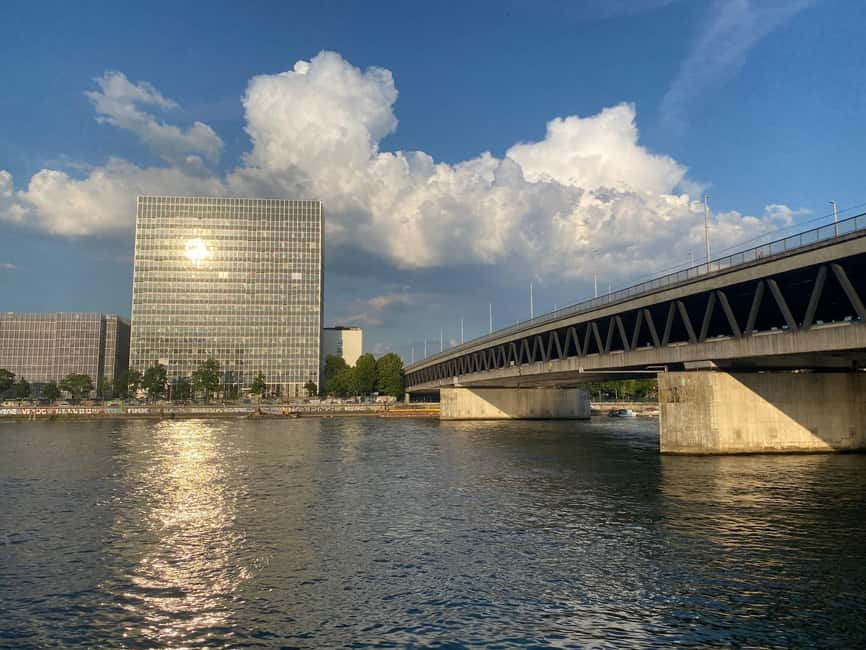
After the Dreiländerbrücke, you reach Weil am Rhein and continue across the border back into Switzerland through the Kleinhünigen harbor area.
Kleinhünigen is interesting because it’s in transition. You’re cycling through a place where industry, logistics, and urban development overlap. That gives the tour a real-world edge: not every border-zone story is postcard-perfect.
The harbor area also adds texture to the ride. You go from river aesthetics to working-city visuals—cranes, infrastructure, logistics rhythms. It’s less museum, more lived-in.
This is also one of the reasons the tour feels valuable. It doesn’t treat borders as lines on a map only. It treats them as places with changing economies and everyday movement.
The Border Triangle Moment: Seeing Switzerland, France, and Germany Meet
Near the end of the downstream-to-round-trip arc, you reach the symbolic border triangle where Switzerland, Germany, and France meet.
This part is small in time, but it lands emotionally because you can literally connect what you learned visually. You’ve already cycled through the differences; now you’re at the point where the differences collide.
Even if you’ve visited Basel before, it’s hard to get this kind of “three-country geography” without a dedicated route. The bike makes it efficient. The guide makes it understandable.
Back Up the Rhine: Klybeck Wood Park and the Alternative-Culture Break
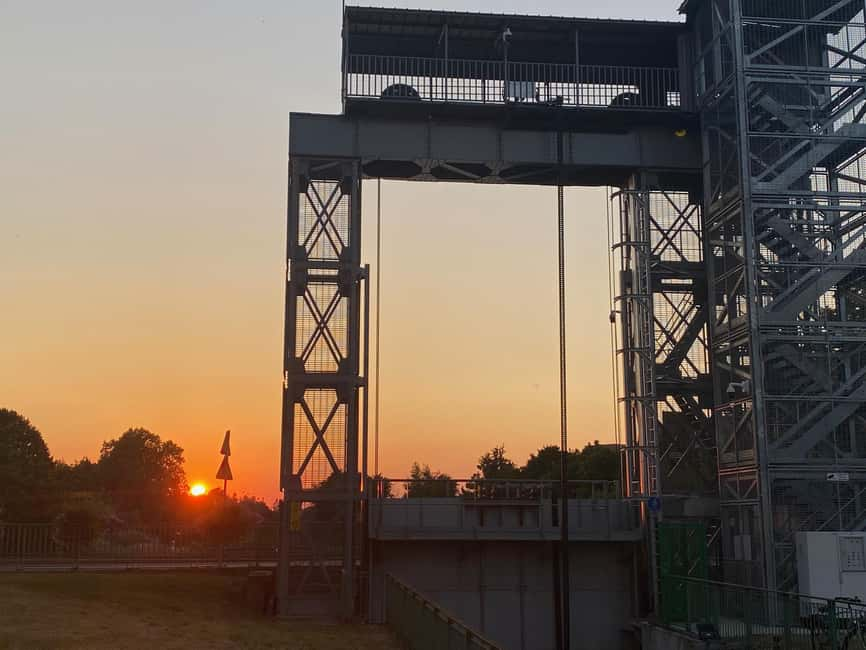
On the way back, you follow the Rhine upstream. That means the river views shift again—similar water, different angles, changing skyline slices.
You also pass Klybeck Wood Park, described as a creative urban open-air area with alternative cultural offerings. This is one of the more human parts of the route because it’s not only about architecture or borders. It’s about how neighborhoods invent their own public spaces.
And you’ll also see Holzpark Klybeck, highlighted for its harbor-area authenticity and alternative culture. If you like cities that let different communities share the same waterfront, you’ll feel it here.
This isn’t just a “stop for a photo.” It’s a reminder that the Rhine isn’t only a transportation corridor—it’s a social one too.
The Finish: Dreirosenbrücke Panoramic View of the Rhine and All Three Countries
The tour ends with a final big payoff: a ride over the Dreirosen Bridge and its panoramic Rhine views. It’s built for the ending you want—views that stretch wide and let you spot what you just crossed.
Because you’ve already been through Switzerland, France, and Germany on the same ride, the final view lands with extra meaning. You’re no longer looking at a river from one country; you’re looking at the river as a shared space.
It’s the kind of finish that makes you want to slow down for a few extra minutes, even if your legs are ready to be done.
What $28 Gets You: Value for a One-Hour Three-Country Ride
At $28 per person for a one-hour tour, you’re paying for more than a bicycle. You’re paying for:
- A local guide who helps you understand what you see and where you are as you cross borders
- Helmets and a bike, so you don’t spend time renting or figuring out gear
- Insider tips for Basel so the tour supports the rest of your trip, not just the ride
You also get a high concentration of “worth seeing” moments: Dreiländerbrücke, Dreiländereck, canal scenery, harbor areas like Kleinhünigen and Holzpark Klybeck, plus the panoramic end at Dreirosenbrücke.
If you only have a short time in Basel, this tour is a good use of it. It’s not trying to replace a full-day Basel tour. It’s trying to give you the cross-border angle fast—and for a price that doesn’t punish short attention spans.
Who This Tour Suits Best (and a Few Fit Notes)
This is a strong choice if you want:
- A short activity that still feels like an experience
- A mostly flat ride that works for a range of comfort levels
- A new way to explore Basel that goes beyond old town sightseeing
It’s also a good option if you’re traveling with family or a small group, since the tour is capped at 6 and guides can adapt the pace. In particular, having a guide positioned at the front and another toward the back helps keep everyone feeling supported.
If you’re a hardcore cyclist looking for long climbs and big mileage, you might find 10 km a bit short. But if you want a relaxed, focused ride with meaningful stops, this size is the point.
Should You Book This Basel Bike Tour Through Switzerland, France, and Germany?
I think you should book it if you want maximum variety with minimal time. The combination of three countries, the signature bridge crossing, and the harbor-and-alternative-culture stops makes it feel like more than a novelty border ride.
You should skip it only if you hate structured routes and prefer total freedom. This tour is designed with planned stops and an efficient arc through the area, so it won’t feel like “wander and see what happens.”
Finally, be sure you’re set on the basics: bring your passport/ID, wear a helmet (you get one), and show up ready to enjoy bridges and river views.
FAQ
FAQ
Where is the meeting point for the Basel bike tour?
You meet opposite the St. Johanns-Tor tram stop at the entrance to St. Johann Park. Your guide will be wearing a Basel Bike Adventures T-shirt with the logo.
How long is the tour, and how far do you ride?
The tour lasts 1 hour and covers about 10 kilometers. It’s mostly flat.
Does the tour really go through three countries?
Yes. The route passes through Switzerland, France, and Germany.
What should I bring for the tour?
You should bring a passport. The tour crosses through Switzerland, France, and Germany, so you’ll need valid identification.
What’s included in the price?
The tour includes a local guide, a bicycle, a helmet, and hand-picked insider tips for Basel.
What languages are the guides?
The live guide speaks German and English.
Is this a small group tour?
Yes. It’s limited to 6 participants.
Can I cancel or pay later?
You can cancel up to 24 hours in advance for a full refund. You can also reserve now and pay later, so you pay nothing today.