REVIEW · BOSTON
Boston City View Bicycle Tour: History and Landmarks
Book on Viator →Operated by Urban AdvenTours · Bookable on Viator
Boston looks different from the saddle. You cover big highlights fast while also seeing how neighborhoods feel up close on real streets. The mix of North End grit, Back Bay brownstones, and park-and-plaza stops makes it a great first-day orientation.
I especially like the safety-first setup: you get fitted with your bike and a helmet before you roll, and the ride is managed so the group stays together. The second thing I like is the “learning by riding” style—your route links landmarks (Fenway, Boston Common, Copley Square) with the stories that explain why Boston grew the way it did.
One thing to consider: this is active and street-based. You need to be comfortable riding in traffic with cars, pedestrians, and other cyclists, and there are some hills (e-bikes can help, if available).
In This Review
- Quick hits on the Boston City View bike tour
- Why Boston looks different at bike speed
- Getting set up at Urban AdvenTours: bikes, helmets, and the safety rhythm
- North End to Beacon Hill: garlic streets, Old Ironsides, and brownstone views
- Louisburg Square to the Hatch Shell: literature square and Fourth of July energy
- Fenway and the Emerald Necklace: parks with real Boston identity
- MFA, Gardner, and Christian Science Plaza: big landmarks, quick angles
- South End brownstones and cast-iron details: the neighborhood you’ll want to revisit
- Copley Square and the Back Bay core: Boston’s civic stage
- Boston Common and Downtown Crossing: oldest park meets old shopping streets
- Rose Kennedy Greenway and the Big Dig legacy: modern Boston in motion
- Cost and what you really get for $78
- Pace, hills, and choosing hybrid vs e-bike
- Safety on real streets: what to watch during the ride
- Who this tour suits best
- Should you book the Boston City View Bicycle Tour?
- FAQ
- How long is the Boston City View bicycle tour?
- What does the tour cost?
- Are helmets provided?
- What kind of bikes are available?
- Is the tour good for first-time visitors to Boston?
- Will you ride the entire Freedom Trail on bikes?
- What if the weather is poor?
Quick hits on the Boston City View bike tour
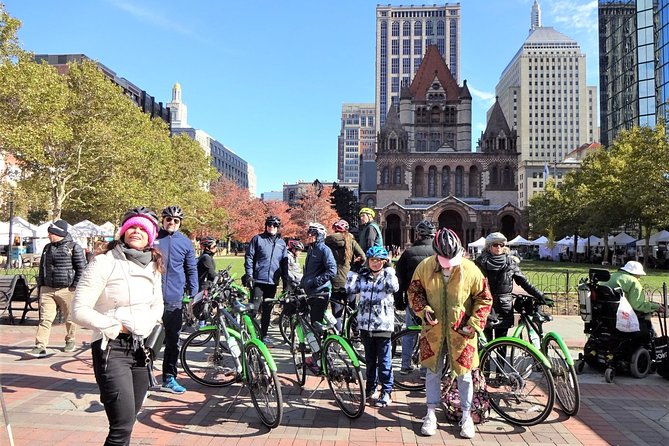
- Bike fit first: Helmet provided, plus a proper custom fit before you start
- Street-smart guidance: Multiple guides help keep the group together at intersections
- Neighborhood variety: North End, Beacon Hill, Back Bay, South End, Downtown, and more
- Photo stops with context: You see major landmarks like Copley Square and Boston Common, not just passing them
- Parks that connect: The Emerald Necklace stops you in places designed for walking, views, and lingering
- Freedom Trail crossings: You don’t ride the whole trail, but you’ll cross it multiple times
Why Boston looks different at bike speed
A walking tour gives you details. This tour adds scale. On a bike, Boston’s distances make sense: you feel how the neighborhoods “hand off” to one another, and how waterfront areas, parks, and downtown streets all connect.
You also get a very practical kind of education. Instead of memorizing facts, you watch a route that matches the city’s layout: older neighborhoods first, then the institutional downtown, then the sports-and-park areas, and finally the grand civic spaces like Copley Square and Boston Common.
And because you’re moving, the city’s vibe changes by the block. One moment you’re in the North End’s dense, old-world streets; the next you’re in wide-open park views along the Charles.
You can also read our reviews of more tours and experiences in Boston.
Getting set up at Urban AdvenTours: bikes, helmets, and the safety rhythm
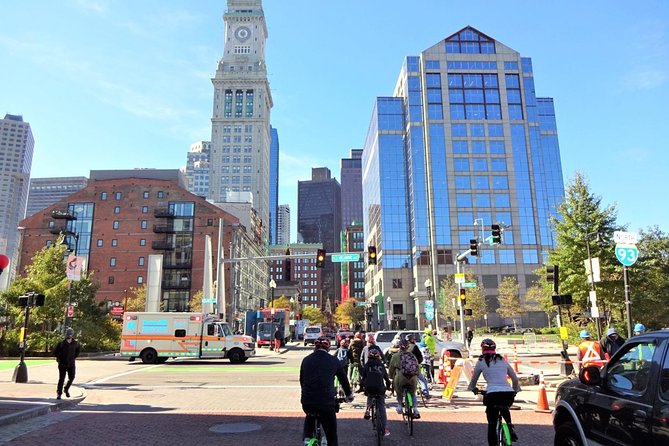
Your tour starts at Urban AdvenTours, 103 Atlantic Ave, and the best way to make it smooth is to arrive about 30 minutes early. You’ll sign a waiver, then get fitted with your bike and helmet before the ride begins.
This matters more than it sounds. A good fit helps your knees and back stay comfortable, and it reduces that first-five-minutes wobble that can turn a fun ride into stress. The tour also runs with a clear safety routine: before you launch, your guide covers safety tips and rules of the road so you know how the group handles intersections and lane changes.
Size-wise, you’re never dealing with a huge crowd. The tour caps at 32 travelers, and a lot of riders highlight the “I felt looked after” feeling, including the way guides position themselves so the front, middle, and back of the group stay coordinated.
Tip: wear sneakers. It’s not listed as a must, but it’s the easiest way to feel stable when you’re stopping often for photos and history.
North End to Beacon Hill: garlic streets, Old Ironsides, and brownstone views
The ride kicks off in the North End, Boston’s Italian neighborhood. The first surprise is sensory: you may catch garlic on the air as you pedal through the tight streets, and you get a sense of how “small” the North End feels when you’re moving slowly enough to notice storefront life.
Then you get a classic waterfront moment. Early on, the route includes a look at Old Ironsides from across the water. It’s the kind of landmark you can’t appreciate from far away on a bus stop, but on a bike you get a better angle without losing time.
As you roll onward, the guide shares fun facts about the city’s newer bridge design. You’ll also pass major event energy at TD Garden, which gives you a feel for how Boston mixes everyday neighborhoods with big arenas that pull the whole city in.
Beacon Hill is next on the vibe list. This is where the photos get easy—brick streets, tidy facades, and a neighborhood that looks like it was built for walking, which is why seeing it on a bike feels like an upgrade, not a compromise. You’ll ride through enough of it to understand why it’s so often photographed.
Louisburg Square to the Hatch Shell: literature square and Fourth of July energy
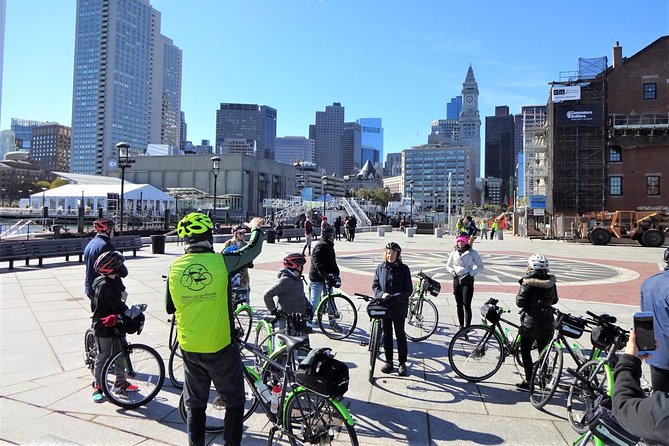
After the early neighborhood blocks, you hit a quieter, smarter pocket: Louisburg Square. It’s known as a literary square, with past residents including Louisa May Alcott and Robert Frost. This is one of those stops where the guide turns a small space into a story about how ideas and Boston identity connect.
Then the route leans into the river views. You pedal along the Charles River Esplanade, and you’ll roll past the Hatch Shell, the outdoor stage made famous by the Boston Pops. The connection to the Fourth of July fireworks is baked into the place—when you see the shell, you can picture the crowds and the music without needing a long explanation.
This is a good time to settle in. The ride opens up, your legs get a breather, and you move from neighborhood density to civic waterfront.
Fenway and the Emerald Necklace: parks with real Boston identity
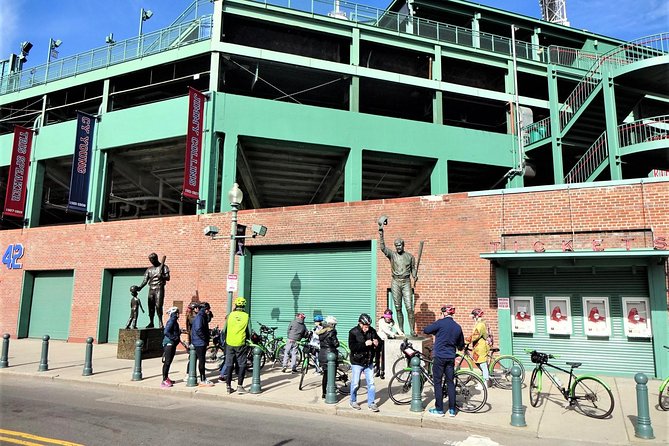
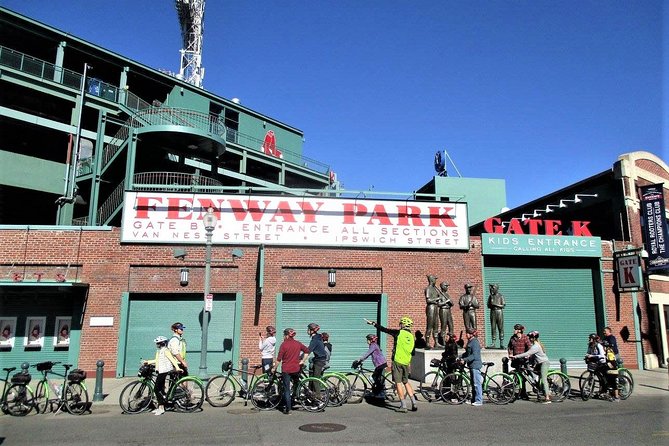
Fenway is stop-worthy even when you’re only seeing it outside. You’ll pause near Fenway Park, home of the Boston Red Sox. It’s quick, but it’s powerful because Boston’s sports identity isn’t separate from the city’s daily life—it’s part of it.
Right after, the tour shifts from stadium to green systems. You’ll ride through the Back Bay Fens, part of Frederick Law Olmsted’s Emerald Necklace park plan. This is one of the most rewarding parts of the route because you see how planning shapes everyday life: pathways, views, and green space that make the city feel linked instead of chopped into disconnected areas.
The stops also add human details. The Fens include Victory Gardens dating back to WWII, plus major art institutions nearby—Isabella Stewart Gardner Museum and the Museum of Fine Arts (MFA). Even if you’re not going inside on this ride, the guide points you toward what to prioritize later.
MFA, Gardner, and Christian Science Plaza: big landmarks, quick angles
You’ll stop near the Museum of Fine Arts, with a chance to view an outdoor art installation. Banners outside can help you figure out what’s on inside, but the tour’s goal here is orientation, not museum time. If you want to go deeper, this stop works like a preview—helpful, fast, and honest about what you’ll need to add to your schedule later.
The route also passes Isabella Stewart Gardner Museum, and the guide encourages planning a full visit during your time in Boston. That’s a good nudge, because this is one of those places that doesn’t feel like a quick stop. Seeing it from the bike route is enough to learn where it sits and why people keep coming back.
Next comes Christian Science Plaza, where you admire the building and reflecting pool. There’s even a playful note: on hot summer days, people sometimes run through the fountains. You don’t need to follow that tradition, but it gives you a sense of how lively this civic space can be when the weather cooperates.
South End brownstones and cast-iron details: the neighborhood you’ll want to revisit
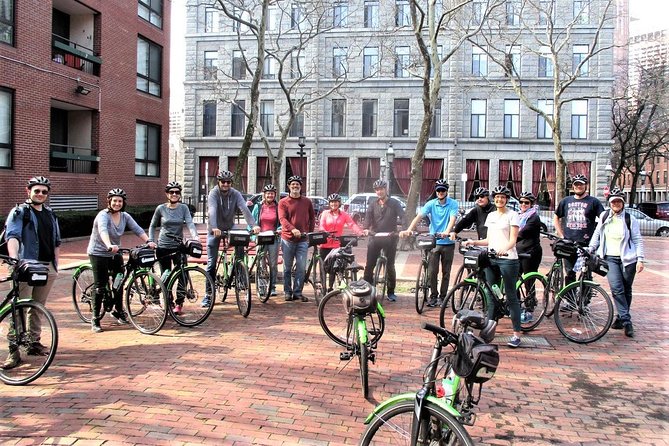
Now you’re in the South End, famous for brownstone townhouses and cast-iron details. This is one of the best parts of a bike tour because you can actually track the rhythm of the streets without stopping every five steps like you would on foot.
You’ll ride long enough to notice the architecture changes block to block, and you’ll get a feel for why people love this area for strolling later. It also helps you understand what Boston “looks like” beyond the postcard highlights.
If you’re the kind of traveler who likes wandering, this section is basically setting you up for a second-day plan.
Copley Square and the Back Bay core: Boston’s civic stage
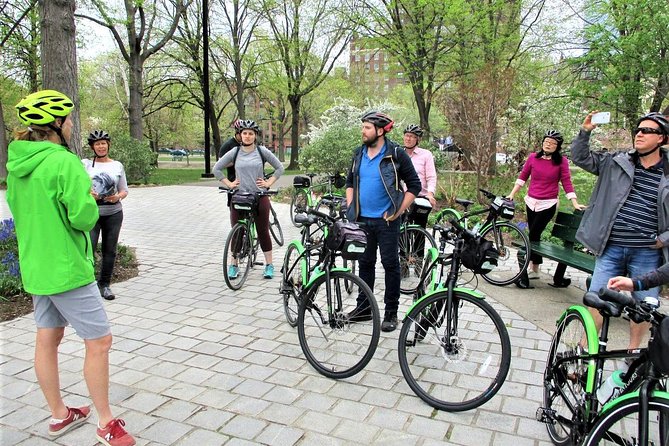
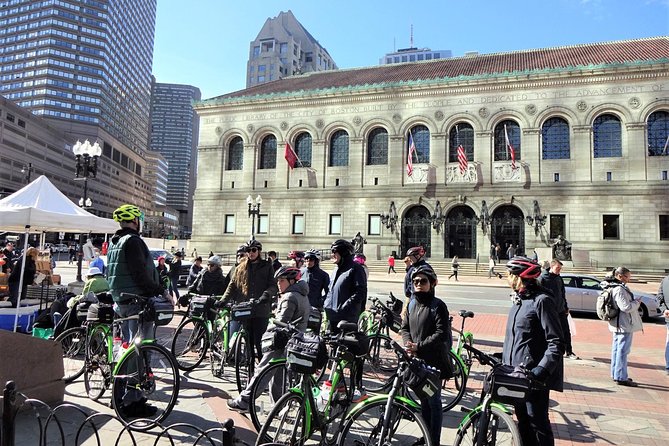
You’ll reach Copley Square, the heart of the Back Bay. This is where the city’s scale becomes obvious. The John Hancock building, Trinity Church, and the Boston Public Library sit around the square, and the space works like a civic stage for everything Boston wants to show.
Copley Square also marks the finish line for the Boston Marathon. Even if you’re not there during race weekend, the sightline across the square helps you understand why that event is such a big deal locally.
From there, the tour makes a sequence of quick stops to highlight the major icons:
- Trinity Church for the classic exterior presence
- Boston Public Library for the public-institution feel
- John Hancock Tower for the skyline anchor
These pauses aren’t long, but they’re timed so you get context and photos without losing momentum.
Boston Common and Downtown Crossing: oldest park meets old shopping streets
Next is Boston Common, America’s oldest park. This stop gives you a reset. The Common is one of the easiest places to “feel” Boston because it’s open, central, and historically grounded without needing a long lecture.
From the Common, the route moves into downtown energy. You’ll ride through Downtown Crossing, described as the original shopping district in Boston, and you’ll see the Old South Meeting House along the way.
This is also where the tour starts to feel like a guided map of the city. You’ll cross the Freedom Trail multiple times, but you won’t be able to ride the entire Freedom Trail route on bike. The value is that you get repeated connections—enough to make the trail make sense later when you choose which segments you want to walk.
Rose Kennedy Greenway and the Big Dig legacy: modern Boston in motion
One of the final stretches is the Rose Kennedy Greenway, a newer park created during the Big Dig. This is Boston’s “we can rethink infrastructure” chapter made visible on the street.
You’ll see what makes this area popular: art installations, gardens, splash fountains, and even farmer’s markets when the timing lines up. It’s a great place to notice how Boston’s newest public space blends into downtown rather than feeling like an isolated attraction.
This ending section also works well for photo pacing. By now you’ve seen enough of Boston’s civic highlights that the Greenway feels like the city’s contemporary punctuation mark.
Cost and what you really get for $78
At $78 per person for about 2.5–3 hours, you’re paying for three things: a guide, bike time, and a tight route that strings together neighborhoods and landmarks efficiently.
What you don’t get is long museum admission time. Most stops are quick photo and history moments, and several are listed as free admissions. That’s not a negative—it means your money goes toward orientation and transportation rather than ticketing. If you want interiors, you’ll plan that separately (MFA and Gardner, especially).
Value-wise, it’s strong if you’re a first-timer or if you want to compress “where is everything” into one morning. The price also makes sense when you consider the helmet and safety setup are included, and the bike style is handled for you (with an option to upgrade to an electric bike).
Booking note: it’s commonly booked about 21 days in advance, so if your dates are tight, don’t wait.
Pace, hills, and choosing hybrid vs e-bike
The ride pace is moderate, and a lot of people talk about it as manageable even if they’re not in peak biking shape. Expect a ride distance around 8–11 miles depending on the exact flow of the route and stops.
There can be a few hills early in the tour. If you’re feeling cautious about that, you can choose an e-bike upgrade when booking. A key detail: the electric bikes are pedal-assist, not a throttle. So you still pedal, just with help.
If you choose an e-bike, there are requirements: you must be 16 years or older and at least 5 feet tall to tour on the e-bike, and e-bikes may not be available every day.
If you pick a comfort hybrid, you’ll likely be fine as long as you can pedal comfortably and you’re mentally prepared for real street riding.
Safety on real streets: what to watch during the ride
This is not a closed-track cycling vacation. You’re sharing the road with cars, pedestrians, and other cyclists. That’s why the group format matters.
The tour is designed with safety in mind, and many riders highlight the feeling of being watched over by multiple guides. Some reviews specifically note three guides positioned front, middle, and rear, which is exactly what you want when you’re crossing intersections and staying together.
So here’s my practical advice: keep your eyes up, don’t drift, and listen when the guide calls out what’s coming next. If you’re nervous at the first busy junction, focus on calm control. In a well-run group, that first minute settles down fast.
Also, because you stop frequently, you’ll be doing a “start-stop-start” pattern. That’s normal. A little extra water and a relaxed mindset help.
Who this tour suits best
This is a great fit if:
- You want a Boston introduction with neighborhoods, not just landmarks
- You can ride comfortably in traffic (the tour is recommended for ages 12+ and people comfortable riding in the street)
- You want a mix of parks, civic spaces, and local-feeling areas like the North End and South End
- You like learning while moving, with frequent stops that break up the ride
It’s also a good choice for couples who want exercise without overcommitting to a full-day cycling plan. Families can be a little trickier because of the street-riding requirement; the provider points families toward a different Boston bike tour, which suggests this one is best for riders who already feel confident on roads.
Should you book the Boston City View Bicycle Tour?
Book it if you want the smart shortcut into Boston: neighborhoods plus big sights in one guided session, with helmets and a clear safety approach. The route connects iconic stops—Fenway Park, Boston Common, Copley Square—while also showing you places that make Boston feel like more than a list of monuments.
Skip it or choose your bike option carefully if you hate street cycling or you’re not comfortable pedaling through a few hills. Also remember that many stops are outside only, so plan separate time for any museum interiors you care about.
If you’re deciding between “walk it all” and “see it fast,” I’d pick this bike tour as your orientation move. Then build the rest of your trip around what you enjoyed most—whether that’s the North End for food and atmosphere, or the parks and civic spaces for longer wandering later.
FAQ
How long is the Boston City View bicycle tour?
It runs about 2 hours 30 minutes (approximately).
What does the tour cost?
The price is $78.00 per person.
Are helmets provided?
Yes. Helmets are provided, and you’ll also be fitted for your bicycle at the start.
What kind of bikes are available?
You can ride a comfort hybrid bike, with an option to upgrade to a pedal-assist electric bike when booking. E-bikes may not be available every day.
Is the tour good for first-time visitors to Boston?
Yes. It’s designed as an introduction to Boston, covering multiple neighborhoods and top attractions in one ride.
Will you ride the entire Freedom Trail on bikes?
No. It isn’t possible to follow the entire Freedom Trail by bike, but the route crosses over the Freedom Trail multiple times.
What if the weather is poor?
The experience requires good weather. If it’s canceled due to poor weather, you’ll be offered a different date or a full refund.