REVIEW · BRUGES
Bruges: Guided Bike Tour with a Local to Sights & Secrets
Book on GetYourGuide →Operated by Quasimundo Bike Tours Brugge · Bookable on GetYourGuide
Bruges looks like a postcard. Then you pedal through it. This guided bike tour by Quasimundo Bike Tours Brugge is built for real city-time, not a cookie-cutter route. I love that you get the famous anchors like the Market Square and the Belfry, but you also bounce into quieter lanes and greener edges where the pace drops.
Two things I like a lot: the guides bring personal stories and favorite spots (so the tour feels human, not scripted), and you leave with practical advice on where to eat, drink, and wander next. One possible consideration: the roads can be cobbled, so even though the riding is described as relaxed, it still feels a bit bumpy at times.
If you want a quick hit of Bruges plus local know-how, this is a strong way to do it—especially since Quasimundo has been running since 2002 and keeps the experience small-group and guide-led.
In This Review
- Key reasons this Bruges bike tour works
- Quasimundo Bike Tours: where your Bruges wheels start rolling
- How 150 minutes balances riding and seeing
- Market Square to the Belfry: the iconic start, guided with personality
- Canals, windmills, and Church of Our Lady: postcard Bruges with working context
- Getting beyond the center: the quiet green edges of Bruges
- Local stories you can cash in later: where to eat, drink, and wander
- Bike comfort and safety: what to expect on real Bruges roads
- Value check for $45: why this price can make sense
- Who should book this Bruges bike tour (and who should skip it)
- Should you book? My straight answer
- FAQ
- How long is the Bruges guided bike tour?
- What’s included with the tour price?
- Do I need to arrange food and drinks?
- Is the route fixed?
- What language are the guides in?
- What should I know about cancellations and weather?
Key reasons this Bruges bike tour works
- No fixed route, so you see both icons and the day’s off-the-path choices
- Long-running local operator since 2002, with guides who share stories like they mean it
- Real Bruges pacing: relaxed ride, easy navigation, and frequent stops to look and listen
- Icon-to-quiet mix: Market Square and landmarks plus the greener, calmer city edges
- Use-it-right-after tips on food, beer, bars, and what to do beyond the tour
Quasimundo Bike Tours: where your Bruges wheels start rolling
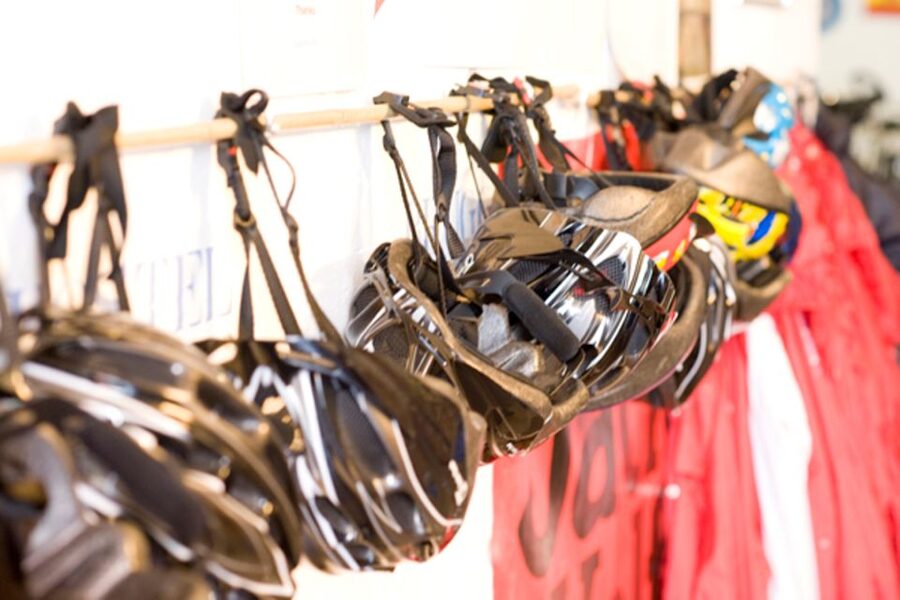
You meet at the Quasimundo Bike Tours Brugge office, right before you head out on your city bike. The setup is part of the comfort factor: helmets are included, and in practice you can treat it as gear for peace of mind rather than a stunt. If you’ve never biked in a historic center, this kind of start helps because you’re not guessing how anything works.
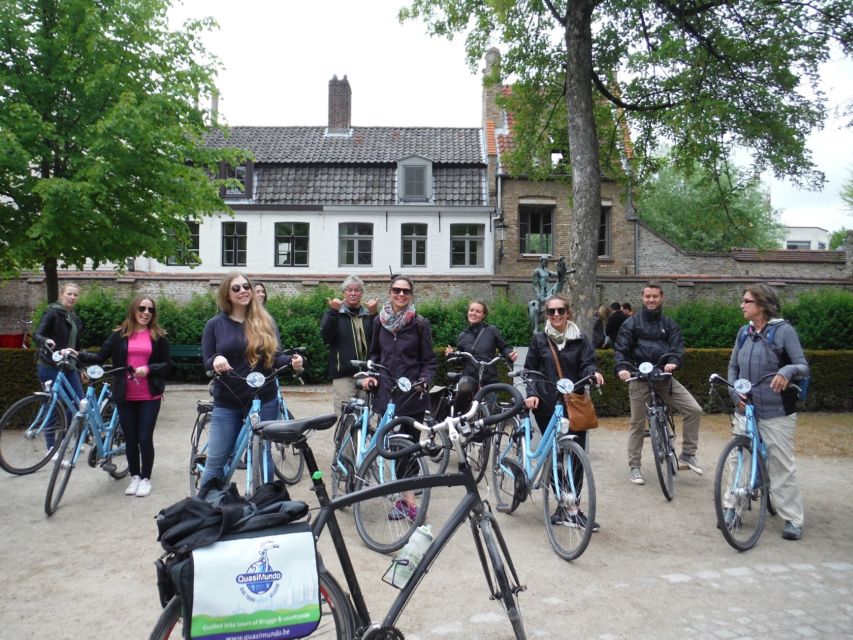
The tour is built around a local guide and a small-group feel. That matters in Bruges, where tight streets and crowds can turn a walking plan into a stop-and-go headache. On a bike, you can keep moving without losing the chance to actually look at what you’re passing.
You’re also getting a format that’s been running for years. Quasimundo’s long history since 2002 isn’t just trivia; it usually means smoother logistics, clearer meeting flow, and guides who know how to pace a group for maximum enjoyment in about 150 minutes.
You can also read our reviews of more tours and experiences in Bruges.
How 150 minutes balances riding and seeing
This is not a sprint tour. It’s designed for a relaxed tempo that suits most fitness levels, with stops to take in sights and hear the guide’s stories. You’ll ride enough to cover ground without turning the day into a workout.
One thing that stood out from the guide experience: different guides create different vibes. Some lean toward quiet alleys and side streets. Others take you along parks and greener stretches. That flexibility keeps you from feeling like you’re following a checklist.
Expect a mix of famous landmarks and the smaller, less obvious bits. You’ll also spend enough time at the stops that your brain has a chance to connect the facts to what you’re seeing—canals look different when someone explains how the city used water, and squares feel bigger when you hear why they mattered.
Also worth noting: the ride can include cobblestones. Bruges is famously flat, but that doesn’t mean smooth. Many people describe the bike as comfortable even over cobbles, but if you’re sensitive to rough pavement, take it slow and don’t fight the terrain.
Market Square to the Belfry: the iconic start, guided with personality
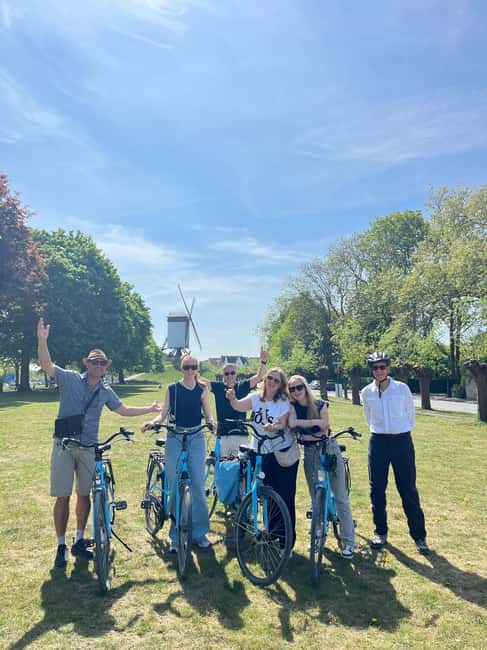
Most people come to Bruges for the big visuals, and you get them early. You’ll ride past the Market Square area and learn how the city’s identity took shape there. Instead of dry names and dates, you get story-driven context tied to what you’re seeing.
Then the tour moves you toward the Belfry, a symbol you can spot from far away and instantly understand as a civic marker. The guide’s job here isn’t just to point upward. It’s to explain what made this kind of landmark matter to ordinary life, trade, and local power.
What I’d watch for on this segment: listening level. In the best moments, guides tell stories in a way that makes details click quickly. But if the street is noisy or construction noise is nearby, you might have to lean in a bit—one traveler noted that the guide could be hard to hear at times. The fix is simple: don’t hang too far from the front, and ask questions when the group stops.
Canals, windmills, and Church of Our Lady: postcard Bruges with working context
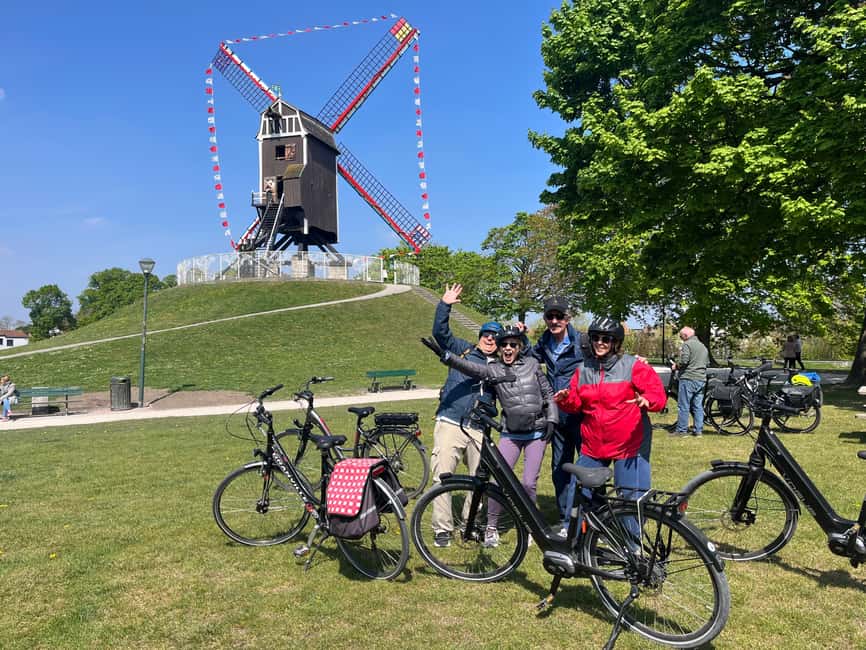
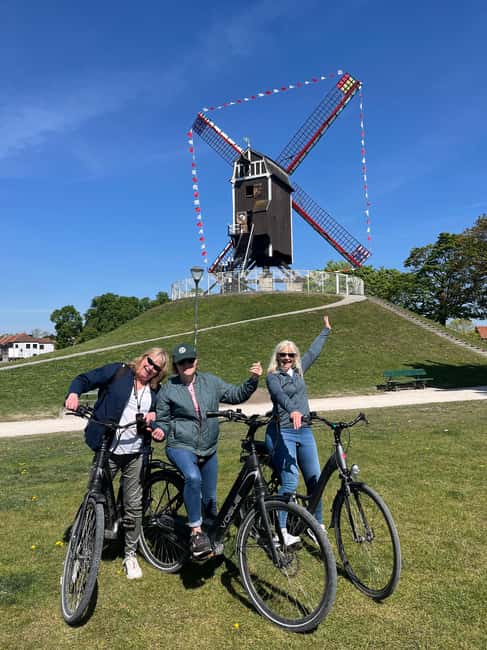
After you’ve got the civic backbone of the city, the tour shifts into Bruges as it looks in photos—canals, moody water views, and classic architecture. You’ll pass windmills and canal scenes, and you’ll also ride by the Church of Our Lady.
This part of the experience is where the tour usually wins people over. Bruges can look like a museum from the outside. With a guide, you start seeing how the pieces connect. Canals aren’t just scenic. They’re part of the city’s rhythm—transport, wealth, and layout.
Windmills add another layer. They point you toward the city’s practical side: how things were made, processed, and powered. And then the Church of Our Lady helps you tie the religious landmark into the broader story of how Bruges organized community life.
If you love photography, you’ll get plenty of chances to stop and look. Just don’t treat every stop as a photo-only moment. The value here is hearing why the spot matters, then making your own mental picture on top of it.
Getting beyond the center: the quiet green edges of Bruges
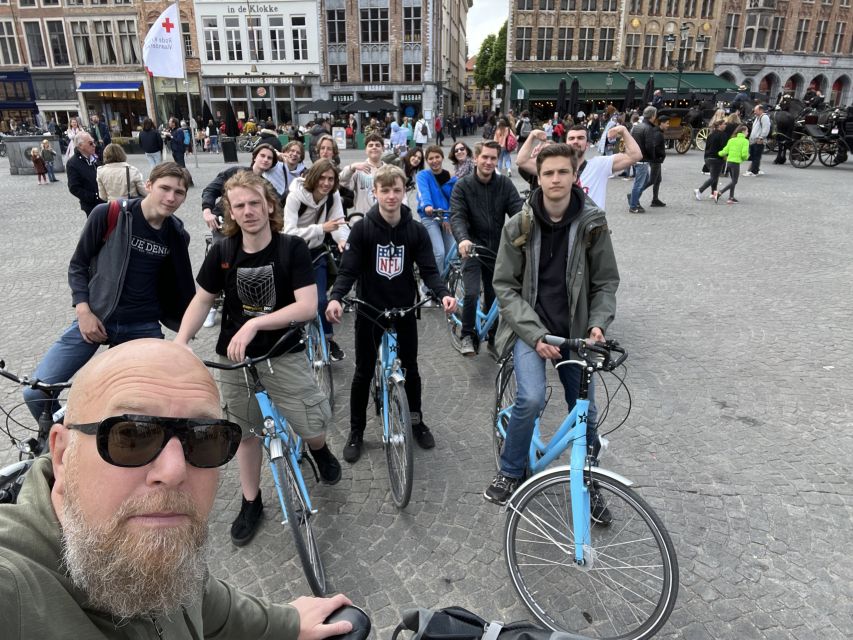
One of the strongest promises of this tour is that you won’t stay locked in the busiest loop. The route takes you beyond the center and toward the green borders of Bruges, where it gets quieter and the city feels less like a set and more like a place people actually live.
This is also where the cycling feels easiest. Side streets and park-adjacent routes tend to reduce the crowd pressure, and you can actually breathe for a minute. It’s a nice reset after you’ve seen the famous faces of the center.
The guide style also shapes this section. Because there’s no fixed route, some tours emphasize calm park paths. Others may prioritize quieter alleys and unexpected corners. Either way, the goal is the same: show you the Bruges that doesn’t shout.
Local stories you can cash in later: where to eat, drink, and wander
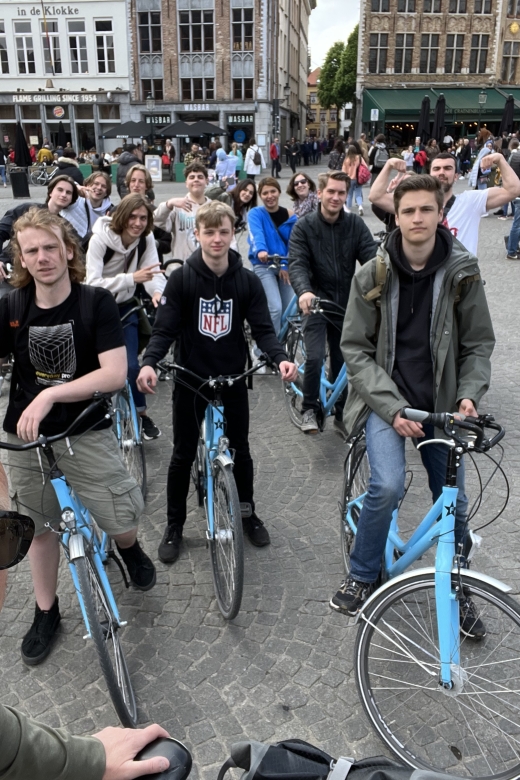
This tour doesn’t end when your bike does. Along the way, your guide shares practical tips—where to eat, where to drink, and what to explore after the ride. These are the kinds of recommendations that usually don’t show up in generic guidebooks.
You’ll also get a sense of the local rhythm: what people do after sightseeing, and how to avoid the most obvious tourist traps. Some guides even provide extra resources after the tour, which can help you turn the day’s momentum into a smart next step.
Guide personalities vary, and that’s part of the fun. For example, you might hear Peter’s engaging, humorous storytelling; Kim’s lively approach; Jos bringing Bruges alive with comedy and history; or Dany mixing wit with useful local pointers. Names change, style changes, but the underlying promise stays consistent: a local guide who wants you to enjoy Bruges like you live there for a bit.
Bike comfort and safety: what to expect on real Bruges roads
Let’s talk gear and feel, because Bruges isn’t a brand-new cycling park. It’s a historic city with uneven textures.
- Cobbles: Expect a little bumpiness. Multiple people highlighted that the bike can still feel comfortable even over cobbles, but you’ll feel the surface.
- Roads: Bruges is described as flat and the routes as easy to navigate. That’s reassuring if you’re not an experienced rider.
- Helmets: Provided with the tour. Even if a helmet isn’t mandatory in practice, I’d still use it for extra peace of mind.
- Pace: Relaxed pace and frequent stops. This is built for sightseeing, not speed.
Bring comfortable shoes, water, and clothing that fits the weather. The tour runs rain or shine, so pack for both sun and drizzle. If you forget rain gear, you’ll regret it. One traveler even noted that when conditions were terrible, the guide shifted toward an in-depth walking version, which makes sense because safety and comfort come first.
If you can’t ride a bike, this isn’t for you. And if mobility is limited, the experience is not suited to that either.
Value check for $45: why this price can make sense
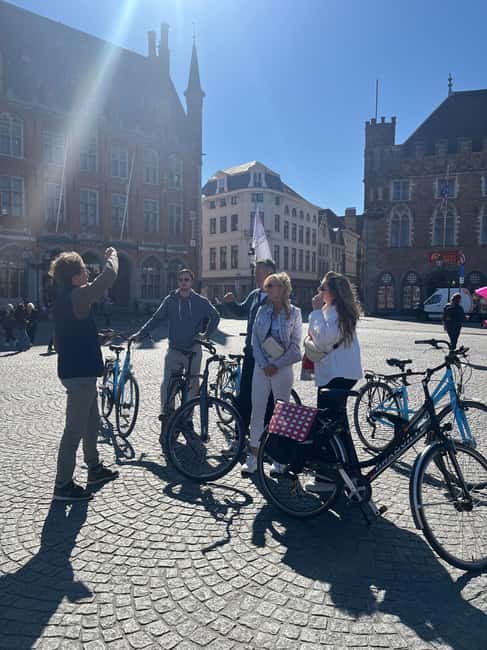
At around $45 per person for roughly 150 minutes, this isn’t just paying for a walk-and-talk. You’re paying for transportation, a bike you don’t have to source yourself, plus a local guide for a decent chunk of time.
The real value shows up when you consider what you get beyond the obvious sights: the route flexibility, the personal storytelling, and the practical after-the-tour recommendations for food and drinks. If you’re the kind of person who wants to leave Bruges knowing where to go next, this format can be money well spent.
Also, it’s small-group and guide-led. In a city like Bruges, that reduces friction. Less time stuck in crowds or backtracking on foot can be the difference between a good day and a great one.
Who should book this Bruges bike tour (and who should skip it)
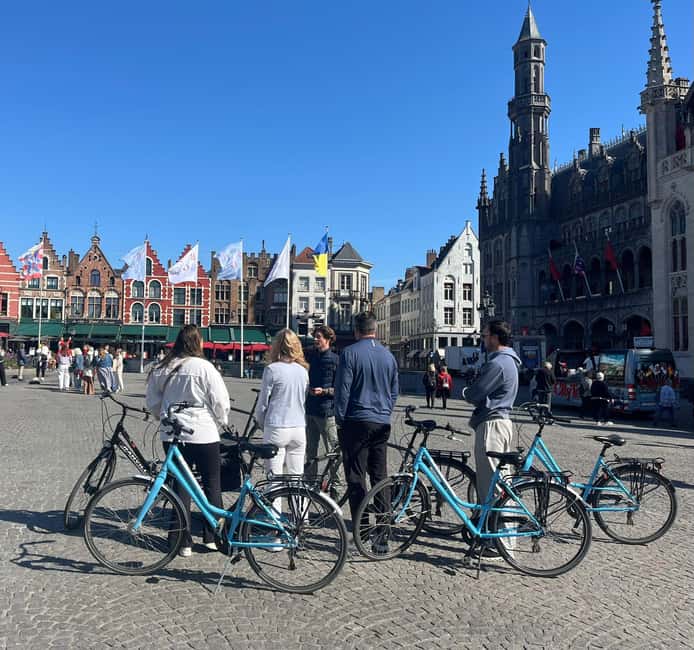
I think this tour is ideal if you:
- want a first-timer-friendly introduction that still has character,
- like cycling but don’t want technical stress,
- want famous landmarks plus calmer neighborhoods,
- enjoy history told through people and stories, not lectures.
It may not be the best match if you:
- can’t ride a bike or need a mobility-friendly setup,
- want a fully set, predictable route every minute,
- hate rough pavement sensations (even with comfort bikes, cobbles exist).
If you’re traveling as a family, children’s bikes are available for kids aged 6–12. For younger kids, child seats are available for an extra fee per seat.
Should you book? My straight answer
Yes, if you want a smart way to cover Bruges in a short window while still getting a local viewpoint. The mix of icons plus quiet green edges, the guide-led, no-fixed-route style, and the practical tips for what to do after the ride are the main reasons I’d pick this over a purely sightseeing-based option.
If you’re cautious about biking on cobblestones, just plan for a slower, steadier pace and wear comfortable shoes. And if you hate any chance of rain, remember the tour runs in weather—pack for it.
If your goal is: see a lot, learn in a fun way, and leave with places to eat and drink next, book it.
FAQ
How long is the Bruges guided bike tour?
It runs for about 150 minutes (around 2.5 hours).
What’s included with the tour price?
You get a guided bike tour, a city bike, a helmet, a local guide, and a small-group experience.
Do I need to arrange food and drinks?
No. Food and drinks aren’t included, so you’ll want to plan meals on your own.
Is the route fixed?
No. There’s no fixed route, and each guide shares their own stories, favorite spots, and a route that can vary based on the group and the day.
What language are the guides in?
The tour is offered in Dutch and English.
What should I know about cancellations and weather?
The tour runs rain or shine. It also offers free cancellation up to 24 hours in advance for a full refund.