REVIEW · MONTEVIDEO
Montevideo Electric Bicycle Tour
Book on Viator →Operated by Beetour · Bookable on Viator
E-bikes make Montevideo easy to see. This 3h15 ride covers downtown, parks, and the Rambla on comfortable electric bikes, led by guides like Santiago (and also Felipe) in English and Spanish with an audio guide to match.
One heads-up: the route still includes real riding and you’ll want good weather. In cooler months, plan for a jacket, since you’re out and moving the whole time.
In This Review
- Key Highlights You’ll Feel Right Away
- Why Montevideo Looks Better From an E-Bike
- Your Ride Setup: Helmets, Reflective Vest, and Real Bike-Lane Safety
- Getting Your Bearings: UDELAR and Montevideo’s Green Lungs
- Batlle Park to Centenario: Transport Art and Football Muscle
- From Obelisco to 18 de Julio: The City’s Big Main Street Energy
- Plaza Independencia to Salvo Palace: Artigas, Architecture, and the Old-to-New Mix
- Peatonal Sarandí and Plaza Matriz: Where the Old City Shows Up
- Rambla de Montevideo: Coastal Views Without Wasting the Morning
- Parque Rodó and Culture Stops: Parks, Learning, and Public Memory
- Punta Carretas to Pocitos: Elegant Streets, Coastal Living, and Quirky Art
- Price and Value: Is $59 a Good Deal Here?
- Who This Tour Fits Best (and Who Might Want Another Plan)
- Should You Book This Montevideo Electric Bicycle Tour?
- FAQ
- FAQ
- What’s the duration of the Montevideo Electric Bicycle Tour?
- Where is the meeting point for the tour?
- What time does the tour start?
- What’s the price per person?
- What’s included with the tour?
- Are admission tickets included for any stops?
- Is this tour private?
- What’s the fitness level needed?
- Do I need good weather?
Key Highlights You’ll Feel Right Away
- Comfortable e-bike riding for about 18–19 km across neighborhoods and bike paths
- English and Spanish live guiding plus an audio guide in both languages
- A smooth mix of landmarks and everyday streets, from Plaza Independencia to Peatonal Sarandí
- Rambla de Montevideo by bike, with Rio de la Plata views without the slow walking grind
- A route built around major public spaces: stadium, velodrome, squares, parks, and memorials
- Private tour format with a small group that stays together at traffic lights
Why Montevideo Looks Better From an E-Bike
Montevideo is the kind of city where a “see it all fast” bus tour can feel like window-shopping. This electric bicycle tour flips that script. You glide between big landmarks and local streets, and you still get the point of being outside: fresh air, real textures, and the rhythm of neighborhoods.
The e-bike changes the math. You cover a lot more ground than walking, yet you don’t get the “photo-stop then vanish” feeling. The pace is also adjustable. If you want an easy morning, you can keep it light. If you feel good, you can pedal more and make it a mild workout without wrecking your day.
And the route makes sense for first-timers. You start in a landmark-heavy zone, then move into the classic downtown core, then follow the coast and finish in the neighborhoods many visitors save for later. After this ride, you’ll know where things are—and why Montevideo feels the way it does.
Your Ride Setup: Helmets, Reflective Vest, and Real Bike-Lane Safety
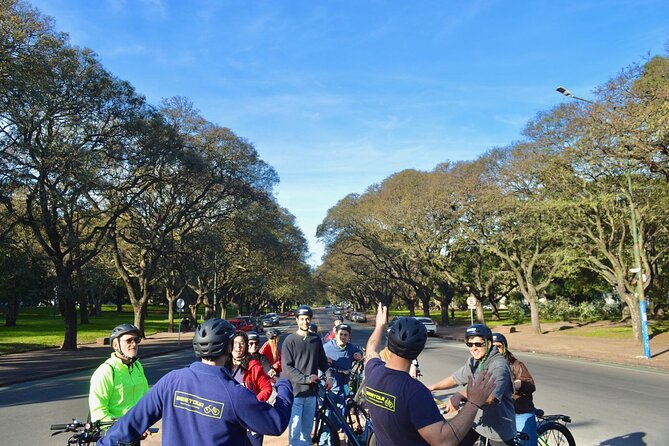
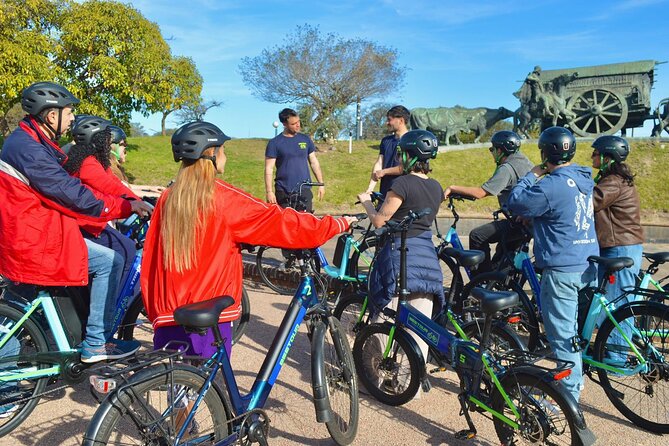
At the meeting point on La Gaceta 1282, you get your bike and safety gear: helmet plus a reflective vest. Then the guides walk you through how the e-bike works so you can get comfortable quickly. The bikes are described as very comfortable and in very good condition, with multiple riders noting they were practically new.
What makes the experience feel safe is not just the helmets—it’s the way the route is planned. On many stretches, you ride on designated cycling infrastructure, including sections where bike lanes run along major roads. Riders have also noted the lanes are well managed with barriers and cones, and traffic feels calmer than you’d expect for a big city main avenue.
You should also know the tour is built for moderate physical fitness. This isn’t a sit-and-stare outing. Even with an e-bike, you’re staying upright and moving for a while. The good news: people report getting through it easily, including riders over 65, because the electric assist takes the edge off hills and longer stretches.
Getting Your Bearings: UDELAR and Montevideo’s Green Lungs
The tour starts by anchoring you in Uruguay’s public life and architecture. First is Hospital Universitario | UDELAR, an emblematic university hospital where the buildings and campus-like setting give you a sense of how Uruguay invests in health and education.
From there, you shift into a more open, park-like feeling with one of the city’s green lungs. Think of this as your mental warm-up: you’re moving, but you’re not trapped in dense downtown traffic right away. It also sets up the theme of the tour—Montevideo isn’t just plazas and monuments. It’s neighborhoods, parks, and coastline living.
These early stops are short, so you won’t “tour” a building in the traditional sense. Instead, the guide helps you understand what you’re looking at and why it matters in Montevideo’s layout and identity. It’s a fast way to start learning without committing to a full day of museums.
Batlle Park to Centenario: Transport Art and Football Muscle
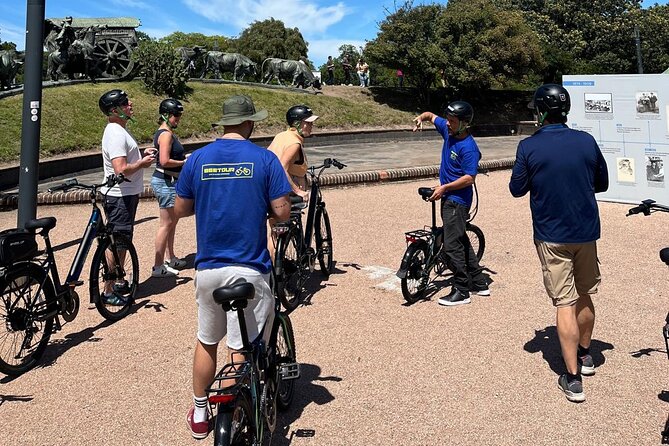
Next comes La Carreta, a characteristic monument tied to Batlle Park, representing transport and Uruguay’s artistic spirit. It’s one of those landmarks that looks simple at first glance, but the explanation helps you “read” it. You’ll get a sense of how public art fits into parks and major city spaces.
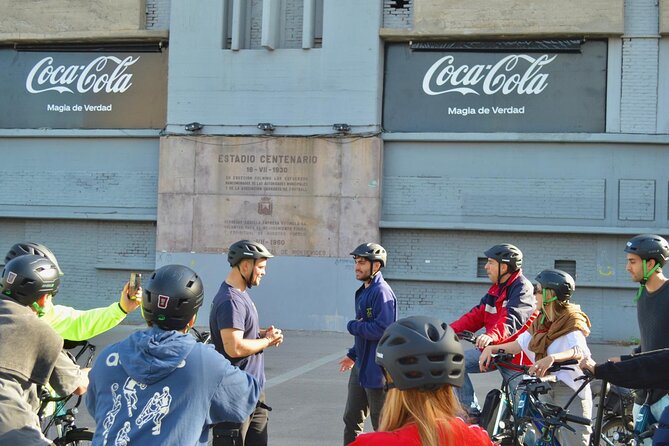
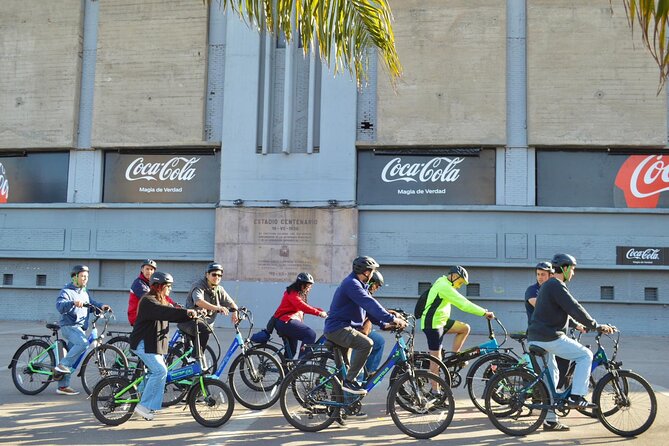
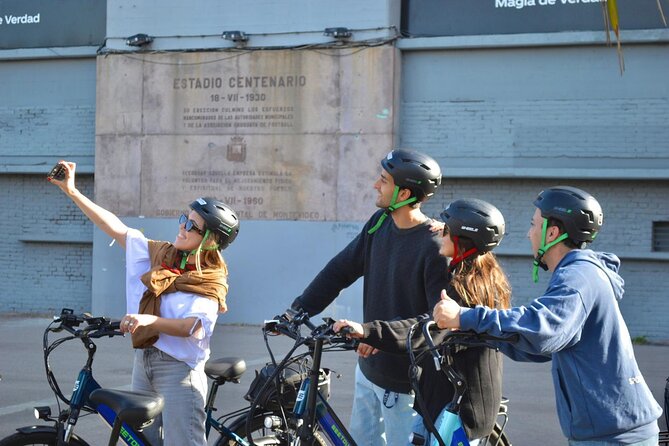
From there, you hit Estadio Centenario, the historic stadium linked to the first football World Cup in 1930. Even if you’re not a diehard football fan, this stop lands because stadium architecture is unforgettable—and because Montevideo clearly carries football in its daily conversation.
Then you visit Montevideo Municipal Velodrome, a dedicated cycling space that adds a nice twist to the tour. You’re literally riding through a city that takes sport seriously, not just watching it from a distance.
These stops work well back-to-back because they show three sides of Montevideo:
- public art
- sports pride
- and the city’s ongoing relationship with cycling and movement
From Obelisco to 18 de Julio: The City’s Big Main Street Energy
You’ll get a quick photo moment at Obelisco a los Constituyentes, commemorating the Constituent Assembly of 1830. It’s brief, but it adds political context in a very visual way.
Then the tour slows down at Avenida 18 de Julio, Montevideo’s main artery. You’ll have enough time here (around 30 minutes) to actually feel the street—shops, cafes, urban life, and that “this is where people pass through” energy. Riding it means you’re not stuck behind a windshield. You notice details: storefronts, signage, building rhythms, and the way pedestrians and cyclists share the space.
If you want a single stretch that shows you how Montevideo functions day-to-day, it’s this one. It’s also a great place to ask the guide questions, because by this point you’re warmed up and paying attention.
Plaza Independencia to Salvo Palace: Artigas, Architecture, and the Old-to-New Mix
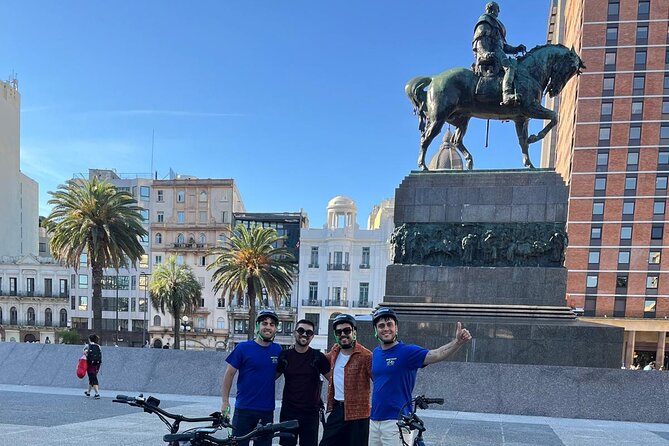
One of the most important stops is Plaza Independencia, where the monument to Artigas anchors the square and helps mark the start of the Old City. The guide’s commentary makes it more than a stop for a picture—you learn how the city frames its national story in public space.
A short ride later, you’ll see Salvo Palace, famous for its striking architecture. It’s the kind of building that changes how you think about the skyline. Montevideo is often described as balanced rather than flashy, and then you hit a structure like this that proves it has bigger ambitions too.
These downtown blocks are compact, so you’ll feel like the tour is “tight” and efficient. You’re not wandering for hours to get to key points. You keep moving, with enough time to absorb each landmark.
Peatonal Sarandí and Plaza Matriz: Where the Old City Shows Up
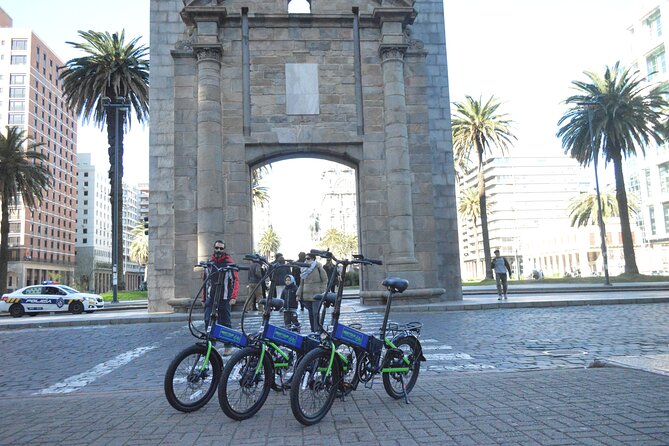
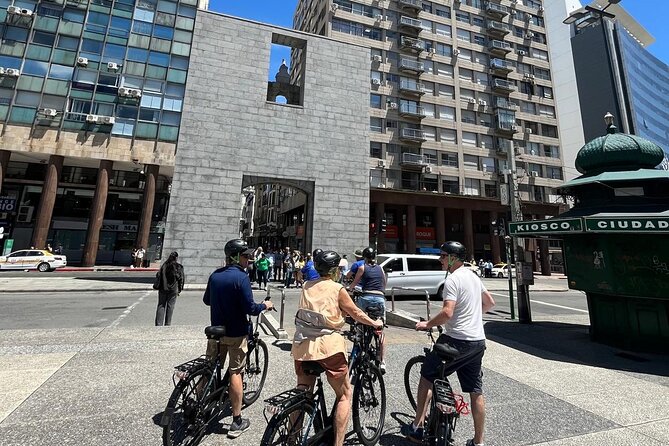
Next you pass Puerta de la Ciudadela, one of the historic entrances connecting colonial past to the present. It’s a quick stop, but entrances matter. They’re physical reminders that cities expand and reshape themselves while still keeping doorways to earlier eras.
Then comes Peatonal Sarandí, a pedestrian street packed with shops, art galleries, and cafes. This is one of the tour’s most “human” stretches. You’ll see the Old City vibe without needing a separate walking detour.
After that, you reach Plaza Matriz, the oldest square in the country and a place that hosted key events across the 18th, 19th, and 20th centuries. The stop here includes admission, so you’ll get more than just an exterior glance.
Nearby, you also stop at a major historic theater—one of Latin America’s important cultural venues—known for its architecture and active programming. Even if you don’t go inside, seeing a major theater in this central setting tells you Montevideo keeps culture in the core, not tucked away for special occasions.
Rambla de Montevideo: Coastal Views Without Wasting the Morning
The tour shifts to the coast with Rambla de Montevideo, a long seaside stretch along the Rio de la Plata. You’ll spend around 30 minutes here, which is enough time to slow down, enjoy the view, and take photos that actually include the waterfront.
Riding the Rambla feels different than walking it. On foot, you stop every few minutes just because your legs are telling you to. By bike, you move at a pace that lets you drink in the coastline without rushing past it.
You also get that “in-between” feeling that Montevideo does well: urban life meets water. This is where the city’s mood changes. The air feels different, the horizon opens up, and you start to understand why so many Montevideans spend time outdoors.
After the Rambla, you’ll also see the headquarters of the regional bloc, which adds a modern, international layer to your day before the tour turns toward green space and memory.
Parque Rodó and Culture Stops: Parks, Learning, and Public Memory
You’ll then head to Parque Rodó, one of Montevideo’s green lungs. The stop here is about 15 minutes, and it’s a welcome reset after the downtown core. Parks are not just pretty scenery in this itinerary—they break up the pace and make the tour feel balanced instead of nonstop sightseeing.
From there, you pass stops tied to education and public culture—buildings connected to schooling and modern academic life, plus an iconic outdoor cultural space where concerts and events happen. Even with short stops, these locations help explain the city’s priorities. Montevideo is not only a place of monuments; it’s a place of institutions that shape daily life.
Then the mood shifts again at Memorial al Holocausto del Pueblo Judio. This stop is short but meaningful. It’s the kind of place where the guide’s framing matters, because you’re not just passing by—you’re being asked to pause and reflect.
Punta Carretas to Pocitos: Elegant Streets, Coastal Living, and Quirky Art
Later in the tour, you move into the neighborhoods that many visitors associate with strolling, eating, and relaxing.
First is Punta Carretas, known for its elegant feel, shops, cafes, and a beautiful waterfront. You’ll also see the Ex Jail shopping area, which keeps the location’s history visible while giving it a new role.
Then you visit Universo Pittamiglio – Castillo del Alquimista, a more unusual stop tied to a creative architectural work and legends. This is where the tour starts to feel fun in a more surprising way. You’re used to monuments and squares by now, so a strange, story-rich structure feels like a reward.
After that, the tour reaches Pocitos, another coastal neighborhood with restaurants and a relaxed vibe near the beach.
Finally, you finish at Mirador Panorámico de Montevideo, the famous sign where the city’s outline helps you see Montevideo in one graphic idea. It’s a picture stop with purpose: you leave with a better mental map.
Price and Value: Is $59 a Good Deal Here?
At $59 per person for about 3 hours 15 minutes, this tour is priced like a value-oriented specialty activity, not a luxury “feel-good” extravagance. And the inclusions help justify it:
- Bike use (including electric assist)
- Helmet and reflective vest
- English and Spanish guide
- Audio guide in English and Spanish
- Some admission fees are included (like La Carreta and Plaza Matriz), while other stops are free
Here’s the practical angle: you’re paying for time-efficient access. Instead of piecing together separate rides or long walks for each area, you get a planned loop that strings together downtown highlights, the Old City core, the coast, and multiple neighborhoods.
If you’re short on time, this is a strong way to create a “shortlist” for your next day. You’ll know what you want to see again on foot or by public transport.
Who This Tour Fits Best (and Who Might Want Another Plan)
This is a great match if you:
- want a first-morning orientation to Montevideo
- enjoy learning through walking-like movement, but hate long distances on foot
- like riding on dedicated bike lanes and want that safer feeling
- want bilingual guidance and a structured route without feeling rushed
It may be less ideal if you:
- can’t manage moderate physical activity, even with e-bike assist
- are traveling on days when weather might be iffy, since the experience requires good weather
Also consider timing. Riders have noted cool mornings or chilly weather in some months, so if you run cold, pack accordingly.
Should You Book This Montevideo Electric Bicycle Tour?
Yes, if you want an efficient, outdoor way to understand Montevideo fast. This tour hits the big landmarks people come for, but it also gives you the street-level feeling of how the city moves—from Avenida 18 de Julio to the Rambla to neighborhood stops like Punta Carretas and Pocitos.
If you’re on a short trip, start here. You’ll finish with a mental map and a list of places you’ll want to revisit slowly. And if you’re not into strenuous walking, the e-bike makes the experience feel fair. You still get the sights, without paying with your energy.
FAQ
FAQ
What’s the duration of the Montevideo Electric Bicycle Tour?
The tour lasts about 3 hours 15 minutes.
Where is the meeting point for the tour?
The meeting point is La Gaceta 1282, 11300 Montevideo, Uruguay.
What time does the tour start?
The start time is 10:00 am.
What’s the price per person?
The price is $59.00 per person.
What’s included with the tour?
The tour includes bicycle use, a helmet and reflective vest, an English and Spanish guide, and an audio guide in English and Spanish.
Are admission tickets included for any stops?
Yes. La Carreta has admission ticket included, and Plaza Matriz also has admission ticket included. Other listed stops are free.
Is this tour private?
Yes. It’s a private tour/activity, and only your group participates.
What’s the fitness level needed?
The tour is designed for travelers with a moderate physical fitness level.
Do I need good weather?
Yes. The experience requires good weather. If it’s canceled due to poor weather, you’ll be offered a different date or a full refund.