REVIEW · OAXACA DE JUAREZ
Oaxaca City: Bike Tour with Professional Guide+Art workshop
Book on GetYourGuide →Operated by Bike Flow Oaxaca · Bookable on GetYourGuide
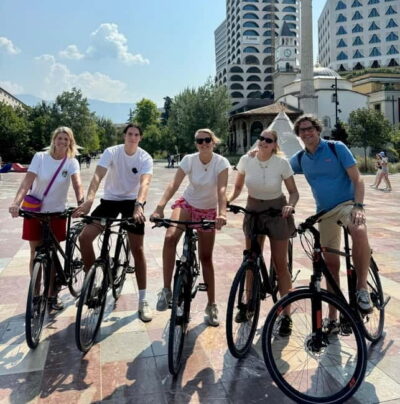
Oaxaca looks best at bike speed, with just enough stops to explain the why. I like the small-group feel and the way a local bilingual guide turns street corners into real context. The ride is also safety-managed with guides in the back, but it’s not ideal if you’re not confident on two wheels.
You’ll cover six of Oaxaca’s most recognizable neighborhoods in a short time window, with photo stops and guided history from past to present. I also love that you get the option of an art workshop where you can create an engraving-style piece, even if you’re not an artist.
One possible drawback: this is a focused ride through busy areas, so expect a bit of traffic noise and you’ll need a reasonable fitness level for continuous biking for a couple of hours.
In This Review
- Key takeaways
- Why biking Oaxaca City beats car sightseeing
- Meet at Bike Flow Oaxaca: gear, pace, and who it suits
- The six stops that map Oaxaca’s neighborhoods fast
- Panteon General: history you can feel in the streets
- Barrio de Jalatlaco: color, craft, and a neighborhood mood
- El Llano: a breather that adds perspective
- Barrio de Xochimilco: another side of Oaxaca
- Templo de Santo Domingo: the big architectural moment
- Sunset-style stops: Santo Domingo and the Basílica experience
- Art workshop add-on: make your own engraving piece
- Price check: what $37 really buys you
- What to bring and how to enjoy the ride more
- Who should book this bike tour (and who should skip it)?
- Should you book this bike tour with the optional art workshop?
- FAQ
- How long is the Oaxaca City bike tour?
- Where do we meet and where does the tour end?
- What language is the tour guide available in?
- What is included with the bike and safety gear?
- Is water included?
- What about the art workshop add-on?
Key takeaways
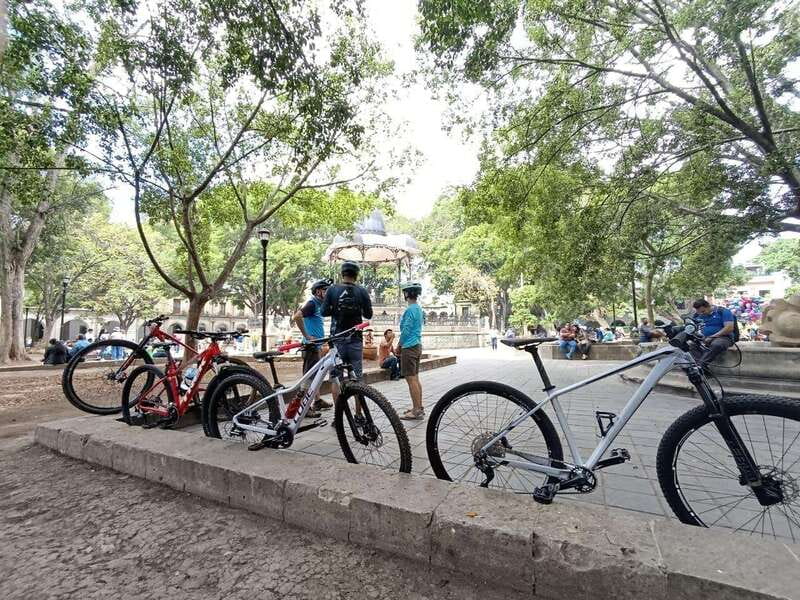
- 100mm suspension bikes help smooth out rougher pavement you’ll hit in central Oaxaca
- Small group up to 8 means more attention from the guide and easier pacing
- Strategic stops connect landmarks to local traditions, not just photos
- Sunset tours include bike lights, so you’re not caught out as daylight fades
- Optional engraving art workshop is offered after the ride on 8:00am tours
Why biking Oaxaca City beats car sightseeing
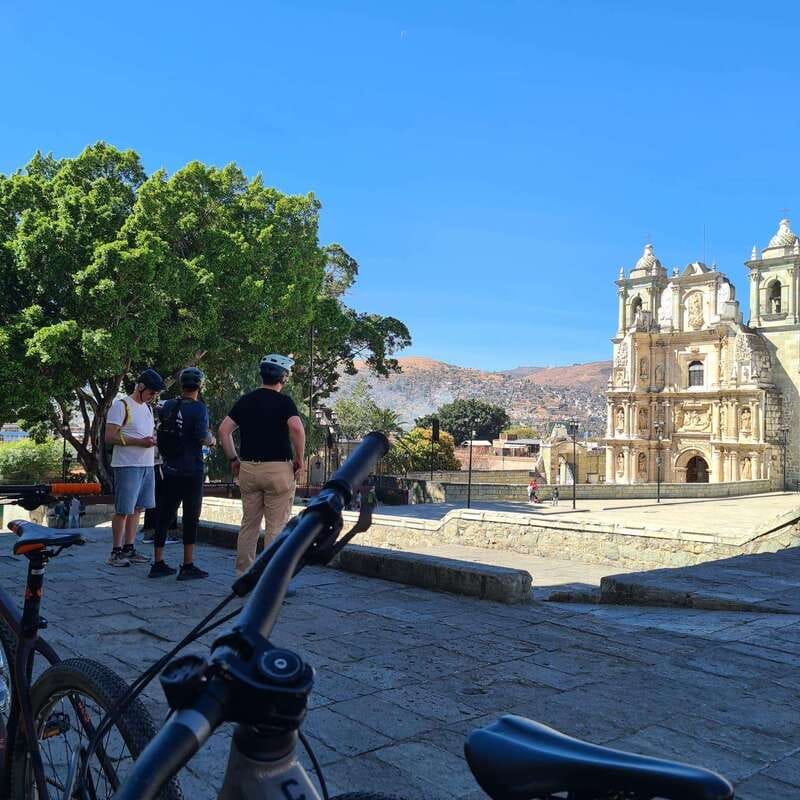
Oaxaca City can feel like three different towns at once: colonial stone and big churches, market-and-street life, and quieter neighborhoods with their own colors and rhythms. A bike tour is one of the best ways to stitch those parts together fast. You get movement between places, but you still stop enough to understand what you’re seeing.
The real value here is not just the route. It’s the pacing and the explanations. Instead of rushing from one big sight to another, you’re guided through areas that show how Oaxaca works—how history still shows up in daily life, and how traditions keep shaping the street.
And yes, biking changes your perspective. On foot you might miss the side streets. By car you’d glide past them. On a bike, you can notice details like street layout, painted facades, and the small landmarks that make each neighborhood feel distinct.
Meet at Bike Flow Oaxaca: gear, pace, and who it suits
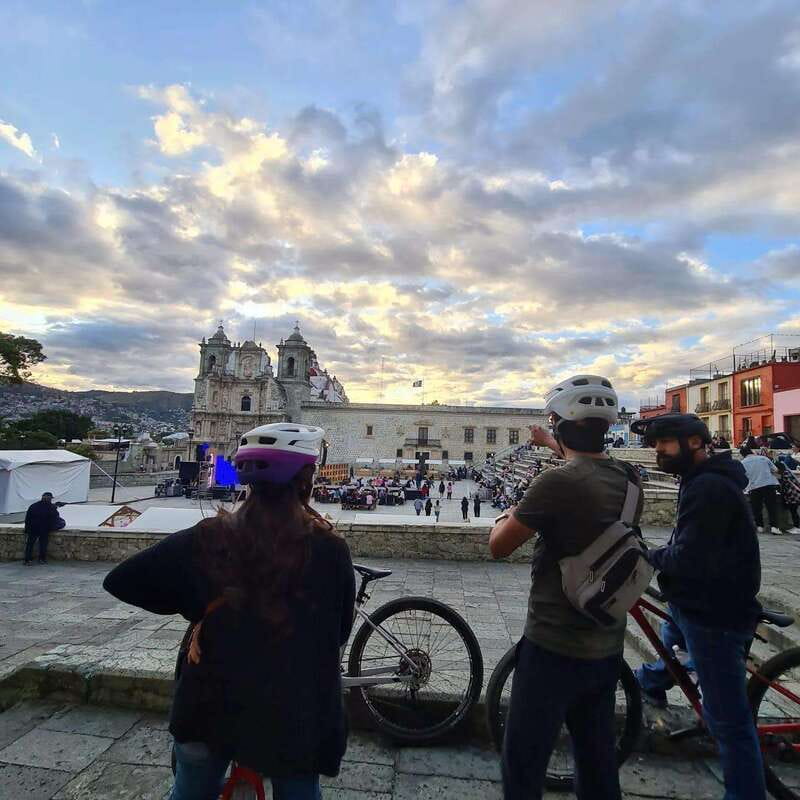
The tour starts and ends at Bike Flow Oaxaca, at Mártires de Tacubaya #101, Col. Centro. This matters because you’re not spending your limited sightseeing time guessing how to get there. You also know the ride is loop-based: you’ll return to the same meeting spot after the city circuit.
What you get for gear is genuinely practical. You’ll ride a bike with 100mm suspension, plus a helmet with MIPS technology. That suspension detail matters in Oaxaca because some central streets can be a little uneven. It’s not about mountain trails—this is still city biking—but good suspension makes the experience less tiring and more comfortable.
The group size is capped at 8 participants, and there’s a safety setup that includes a guide at the back and an extra back guide for every 4 people. That means you’re not just “on your own in traffic.” You’re traveling with people whose job is to keep you together.
Who this suits best: adults and teens 16+ who can comfortably ride a bike and don’t need wheelchair access. It’s not a good match for people who are pregnant or can’t ride confidently. If you’re already comfortable biking in city traffic (even at a relaxed pace), you’ll likely enjoy the flow more.
The six stops that map Oaxaca’s neighborhoods fast
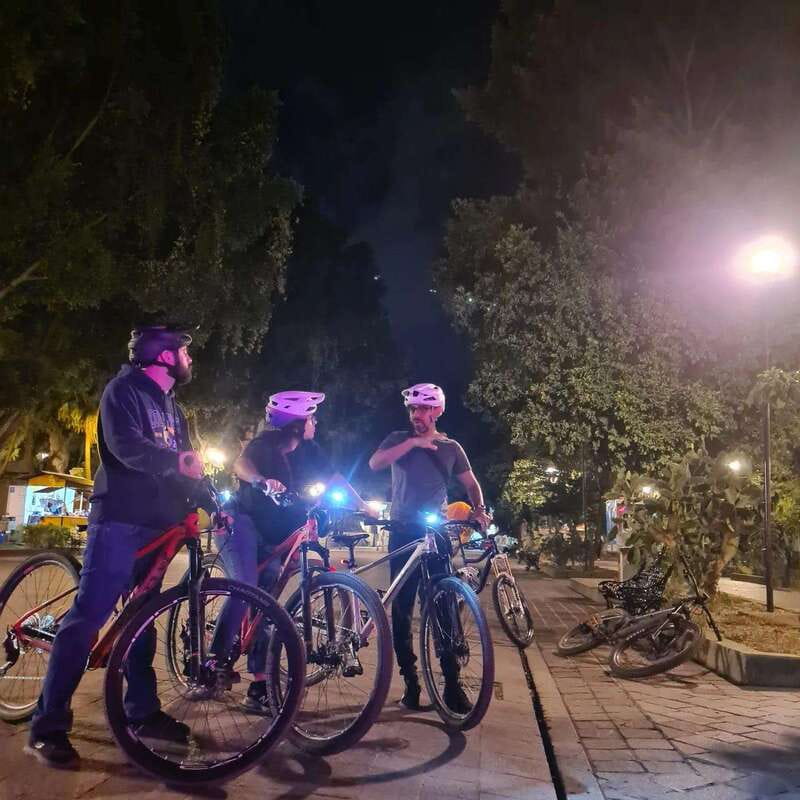
The tour runs about 2 to 2.5 hours on the bike, with targeted stops around six emblematic places and neighborhoods. The timing is tight enough to feel efficient, but there’s breathing room: short guided visits and photo stops spaced with bike segments.
A key detail: your local bilingual guide explains both the past and the present. That’s important, because in Oaxaca, history isn’t just something behind glass. It shows up in celebrations, neighborhood character, and how people use the spaces around the landmarks.
Panteon General: history you can feel in the streets
The ride starts with a stop at Panteon General for about 20 minutes of guided sightseeing. Cemeteries can be heavy places, but in Oaxaca they also connect to how families honor memory and how communities carry traditions across generations.
What you’ll likely appreciate most here is the context. A good guide helps you look past the simple sight and understand why this location matters in local culture.
Possible drawback: if you’re not in the mood for a solemn start, you may want to mentally shift gears for a more reflective moment right away.
Barrio de Jalatlaco: color, craft, and a neighborhood mood
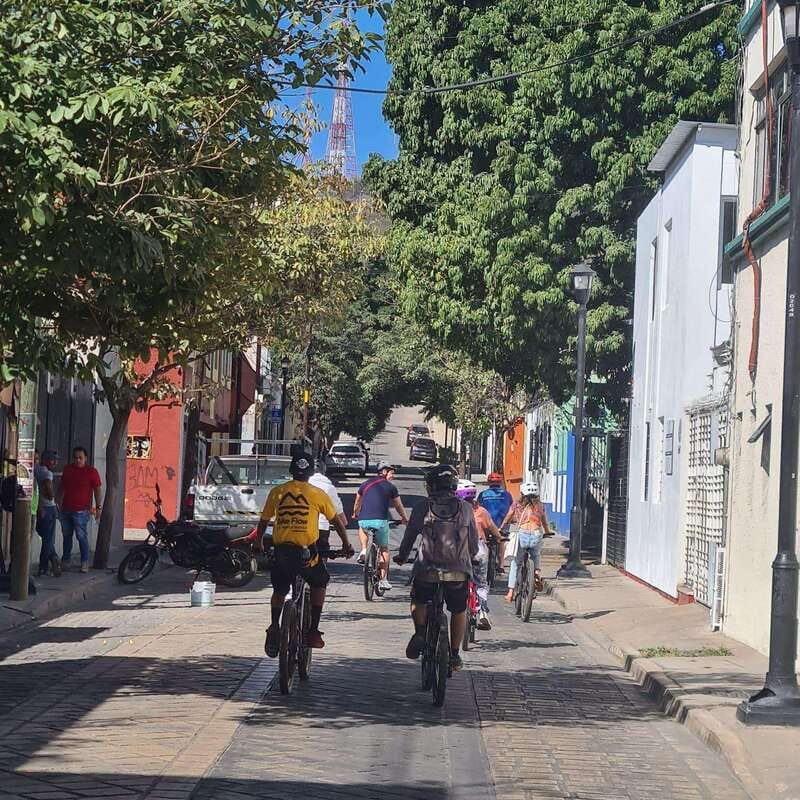
Next up is Barrio de Jalatlaco, again around 20 minutes with bike time plus a photo stop and guided walk. This neighborhood is a favorite kind of Oaxaca scene: streets that look lived-in, not staged, with visual character that changes block by block.
In the feedback I’ve seen, people often love the colors in the streets, and it makes sense. In Jalatlaco, the aesthetic isn’t just decoration—it’s part of how the neighborhood expresses identity day to day.
One practical note: if you’re hoping for perfect, postcard-style angles every minute, you’ll still get photos—but this is a real neighborhood. Some scenes will be more textured than tidy.
El Llano: a breather that adds perspective
Then comes El Llano, another roughly 20-minute stop with guided context plus photo time. This stop helps shift you out of a “landmark only” mindset. It’s a chance to understand how Oaxaca’s urban design and social life overlap.
Why this works: the tour is building a mental map. You’re not only collecting sights; you’re learning how different areas of the city function and how people move through them.
Potential downside: if you’re very photo-focused and dislike guided commentary, you might feel the stop is “slower” than you’d like. The trade-off is understanding.
Barrio de Xochimilco: another side of Oaxaca
Barrio de Xochimilco comes after, with another set of photo and guided sightseeing moments around 20 minutes. This neighborhood adds variety to what you’ve already seen. You’ll get more of that “wait, this is also Oaxaca” feeling as the vibe shifts from one block type to the next.
This is one of the stops that can surprise you—because it’s not only about a single famous building. It’s about how everyday culture shows up in the neighborhood layout, street life, and local traditions.
Templo de Santo Domingo: the big architectural moment
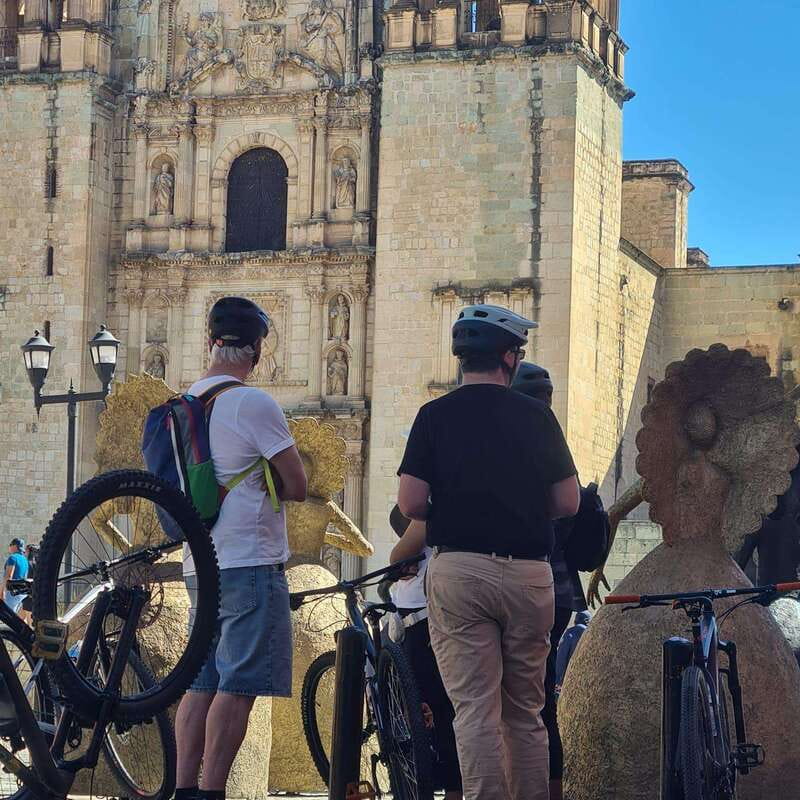
Now you reach Templo de Santo Domingo, one of the heavyweight sights on the route. You’ll have around 20 minutes here for stopping, photo time, and guided context.
Temples like this do two jobs on a short tour: they anchor your understanding of Oaxaca’s religious and artistic legacy, and they give you a clear visual focal point to reset your attention.
If you time it with the rest of the ride well, this stop also becomes a natural “mile marker” before the later sunset-style viewpoints.
Sunset-style stops: Santo Domingo and the Basílica experience
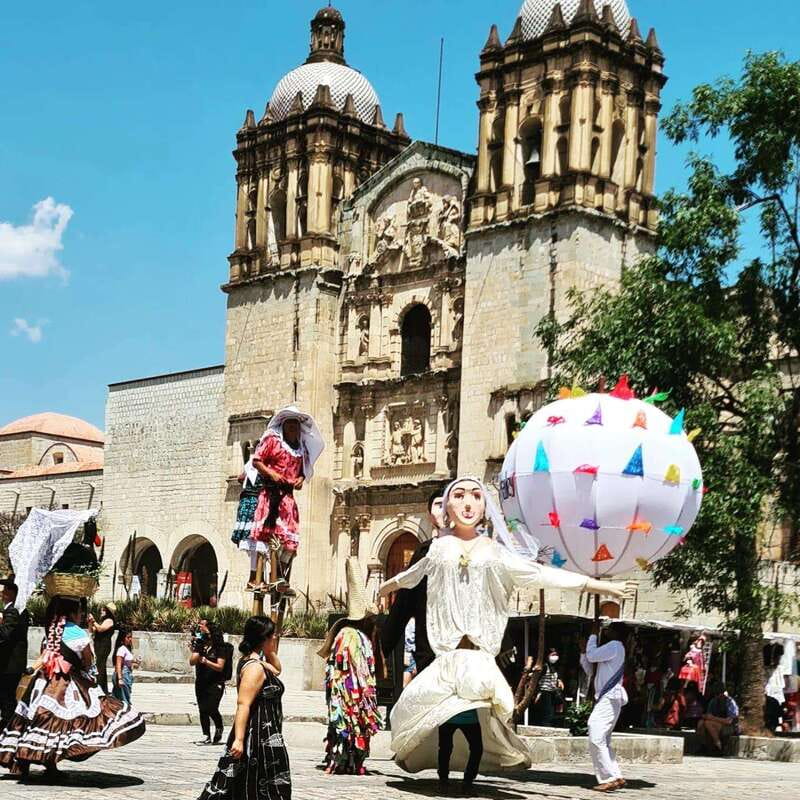
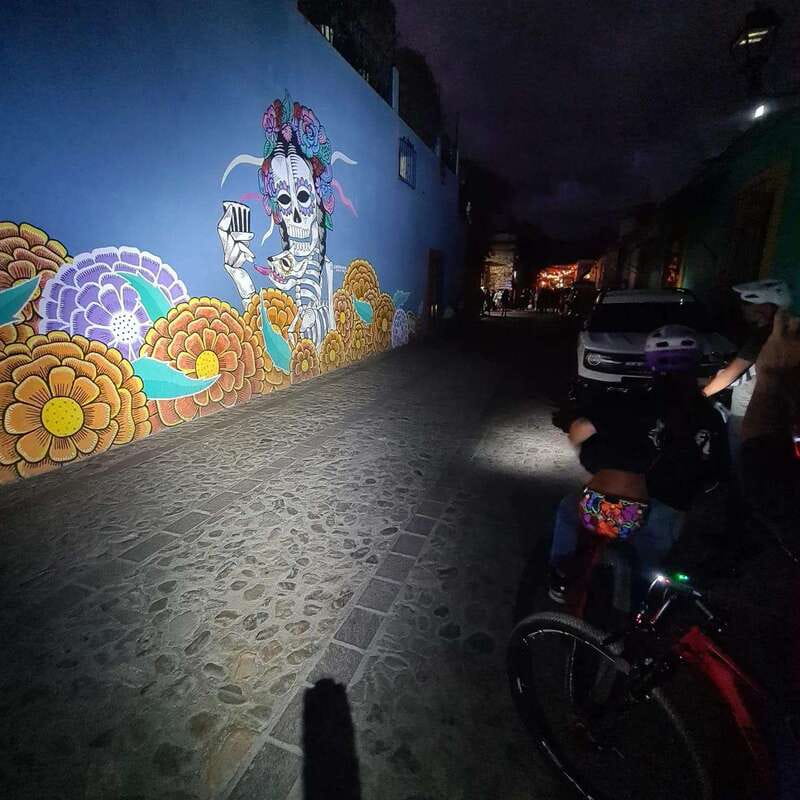
Toward the latter part of the tour, the energy shifts. On sunset tours, you’ll have front and rear lights for your bike. That small detail makes a difference because the city can get darker faster than you expect between stops.
After Santo Domingo, the ride continues to Basílica de Nuestra Señora de la Soledad for another guided visit with sightseeing and sunset timing. This is where the tour’s pacing often feels most rewarding: you’re not just ticking off another building, you’re experiencing the transition between day and night around a major landmark.
What makes this worthwhile: Oaxaca’s atmosphere changes after late afternoon. Even if you’re not a “sunset person,” it’s a nicer time to take in architecture without harsh midday crowds.
The main consideration: sunset means you’ll want to stay mentally present. The tour keeps moving, so don’t plan to wander off for long on your own.
Art workshop add-on: make your own engraving piece
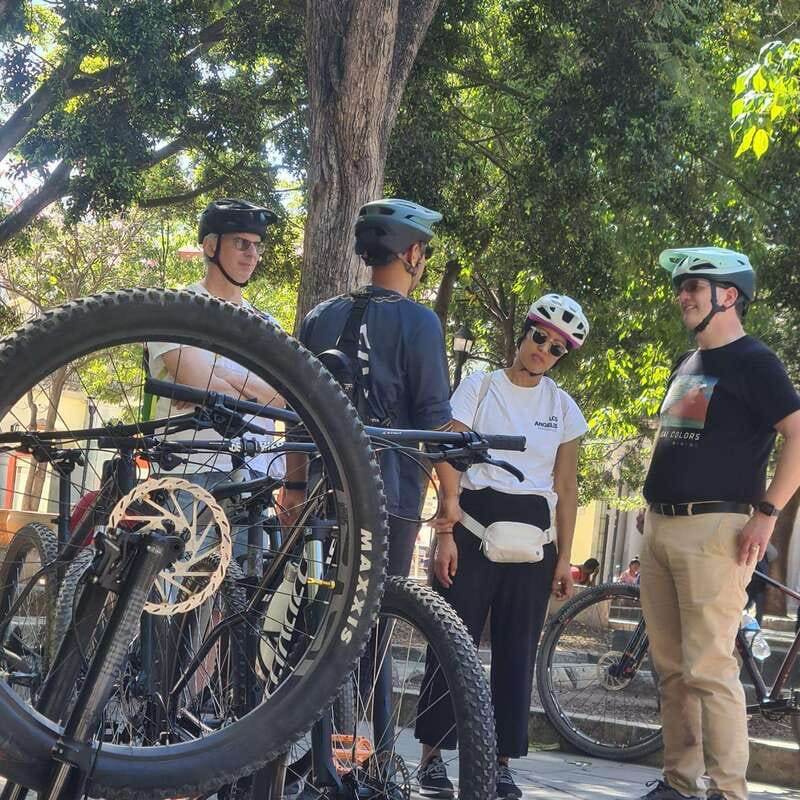
After you finish the bike ride and return the bikes to the store, there’s an optional extra: an art workshop. This is offered only for the 8:00am tours, so if you care about adding it, schedule around that start time.
The workshop focuses on processes and styles, plus a chance to create your own engraving artwork piece. And here’s a big practical comfort: you don’t need to be an artist. The organizers provide incredible designs you can choose, so even if you’re starting from zero, you still have something tangible to take home.
Why this add-on is a good match for the bike tour: you end the day with the same kind of “context learning” you got from your guide, but in a hands-on way. The visual culture you saw on the streets becomes something you can physically make.
One potential drawback: because it’s optional and tied to a specific morning start, it can affect your morning plans. If you’re already committed to another activity later that day, check the timing carefully.
Price check: what $37 really buys you
At $37 per person, the value comes from how the tour is constructed.
You’re paying for three main things:
- Time-saving access to multiple neighborhoods in a short window
- A professional bilingual guide who explains the importance, history, and cultural traditions
- Equipment and safety systems (suspension bike, helmet with MIPS, guide setup, plus lights on sunset tours)
A common mistake with city tours is treating them like a checklist. This one isn’t just a list. The pacing and structured stops are what turn a “ride through town” into actual understanding.
Also, the bike quality and helmet matter more than you’d think for a couple of hours. If you’ve ever taken a basic rental bike on uneven pavement, you know how quickly that becomes tiring. The suspension upgrade helps prevent the ride from feeling like work.
Water is handled too. You get free water refill, and there’s the option of bottled water for +10 mxn. Either way, it’s simple and practical.
Meals are not included, so you’ll want to plan breakfast or lunch on your own.
What to bring and how to enjoy the ride more
This is a practical city bike tour, so plan like you’re spending a couple of hours outside, moving and stopping.
A few “smart by default” tips:
- Wear comfortable closed-toe shoes you don’t mind getting a little dusty.
- Bring sunscreen and a light layer. Oaxaca sun can be strong even when temperatures feel pleasant in the morning.
- If you’re doing sunset timing, expect cooler air as the light drops, even if you can’t predict it perfectly.
- Use your camera immediately at stops. The best photos happen right when the guide gives you the short window.
If you’re worried about biking comfort, the biggest help is mental: treat it like “easy city cruising” rather than “touring like a cyclist.” The guide and safety crew are there to keep things moving smoothly, not to test your stamina.
Who should book this bike tour (and who should skip it)?
Book it if you want a guided way to see Oaxaca City without spending half your day in transit. It’s especially good if:
- you want to cover lots of places fast,
- you prefer small groups,
- you like learning how culture and history show up in real neighborhoods,
- you’re interested in an art activity you can take home.
Skip it if you:
- can’t ride a bike confidently,
- need wheelchair access,
- are traveling with kids under 16,
- are pregnant,
- or your goal is slow wandering with no structured stops.
If you’re unsure, think about your comfort riding in a city environment. If that’s fine, the tour’s safety setup and pacing should feel reassuring.
Should you book this bike tour with the optional art workshop?
I’d book it if you want efficiency with context. For a little over two hours, you’ll move through major Oaxaca landmarks and distinct neighborhoods while getting explanations that connect them to culture and traditions. The small group size is a major advantage—more attention, less chaos.
The optional engraving workshop is the icing, but only if you can make the 8:00am start. If you like making things with your hands, it’s one of the best ways to end a city tour beyond photos.
If you’re comfortable biking and open to guided stops, this is a strong value choice—especially for your first or second day in Oaxaca City.
FAQ
How long is the Oaxaca City bike tour?
The tour runs about 2 to 4 hours, with 2 to 2.5 hours spent riding and exploring on the bike before any optional add-on.
Where do we meet and where does the tour end?
You meet and end at Bike Flow Oaxaca, located at Mártires de Tacubaya #101, Col. Centro.
What language is the tour guide available in?
The live tour guide is available in English and Spanish.
What is included with the bike and safety gear?
You’ll be provided with a bike with 100mm suspension and a helmet with MIPS technology. On sunset tours, bikes also have front and rear lights.
Is water included?
Yes. You can get free water refill during the tour. Bottled water is available for +10 mxn.
What about the art workshop add-on?
The art workshop is optional and is offered only after the ride for 8:00am tours. You’ll learn about different art processes and can create your own engraving artwork piece, with designs available even if you’re not an artist.