REVIEW · QUITO
Quito Cultural Bike Tour – Group
Book on Viator →Operated by Quito Bike Tours · Bookable on Viator
Four hours, two wheels, Quito gets easier. You’ll ride through less-visited neighborhoods, with La Floresta street art and a chocolate stop that actually feels like part of the culture, not a gimmick. I like how the route mixes real city viewpoints with green parks, while keeping the pace friendly—just be ready for Quito’s altitude and a few hill pushes.
What makes this tour click is the human touch. You’ll roll with a licensed, bilingual guide, and the names you’ll hear in the group can include Milton, Alejandro, Roberto, Daniel, Kevin, and Joselyn. Their style is practical: bike paths where possible, safety first, and stops that explain what you’re looking at (from art to local markets) as you go. The one trade-off: you’re not on a cushy van. If you don’t love short climbs or want a fully car-free day, plan accordingly.
In This Review
- Key takeaways before you pedal off
- Entering Quito by Bike: What This Tour Gets Right
- Getting Started at Nuovo Caffe and Ochoymedio
- La Floresta Street Art and Chocolate: More Than a Photo Stop
- Guapulo Views: A Short Ride That Changes the Way You See Quito
- Alameda Park and the Oldest Observatory in Ecuador
- El Ejido and La Mariscal Markets: Where Local Life Really Shows
- Price and Value: Is $89 Worth It?
- How Hard Is the Ride? Hills, Altitude, and Staying Comfortable
- Small-Group Pace and Safety That Keeps the Day Fun
- Should You Book This Quito Cultural Bike Tour?
- FAQ
- How long is the Quito Cultural Bike Tour?
- Where does the tour start and end?
- What is included in the $89 price?
- Do I need to bring my own water?
- What bike will I ride?
- Will the tour be difficult because of hills?
- How does altitude affect this tour?
- Can I cancel for a refund?
Key takeaways before you pedal off
- Small-group size keeps it personal, capped at 10 (and often run like a tight group of 7)
- Street art + tasting at Ochoymedio and La Floresta adds texture beyond sightseeing photos
- Park-and-view rhythm means regular breaks without killing the momentum
- Market time with artisans gives you a chance to see how things are made, not just sold
- Safety gear and guidance are built in: helmet, reflective vest, and a lock/key for your bike
- Altitude awareness matters in Quito; pace yourself and bring your own water bottle
Entering Quito by Bike: What This Tour Gets Right
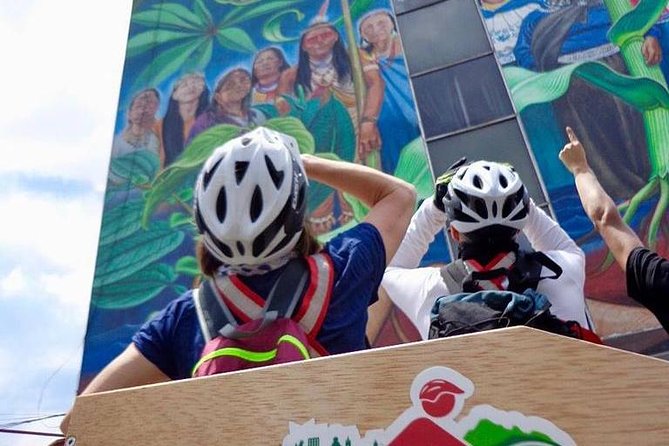
A Quito bike tour is a smart move if you want to understand the city, not just tick boxes. You get motion, fresh air, and quick context as you pass through different neighborhoods. And with a small group, you’re not fighting for attention at every corner.
This one is built around three things: local culture, city viewpoints, and food-and-drink sampling. The tastings matter because they’re tied to the places you’re visiting—street life in La Floresta, everyday shopping rhythms in markets, and the little habits that make a city feel lived-in.
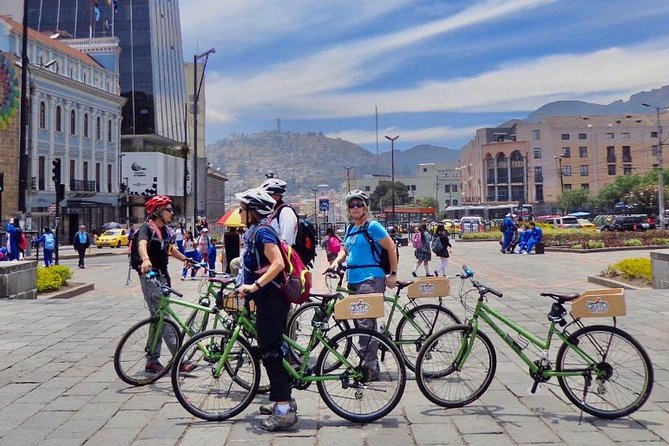
You’ll also notice the tour design is practical. You’re given an urban bike with multiple gears, plus a helmet and reflective vest. That’s not flashy, but it’s exactly what you want in a city where elevation and road conditions can catch you off guard.
Getting Started at Nuovo Caffe and Ochoymedio
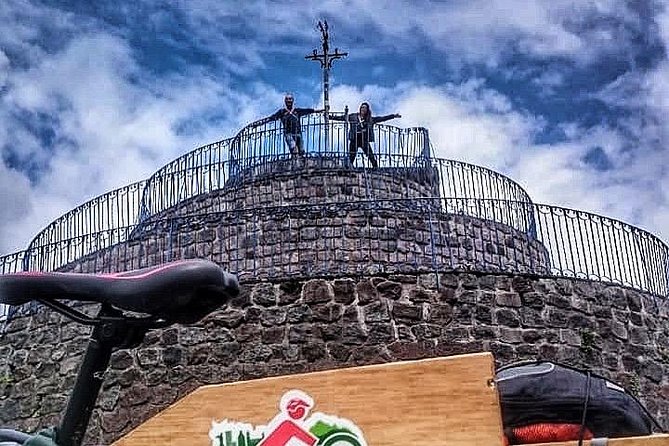
You meet at Nuovo Caffe on Av. Francisco de Orellana (Quito 170517), and the tour ends back at the same meeting spot. No hotel pickup, so your first job is simply getting there on time. The good news: the meeting point is noted as being near public transportation.
Right at the start, the plan is to ease you into the day. The route begins at the Ochoymedio Arthouse Cinema, a famous landmark for the area’s creative scene. Before you ride far, your guide sets expectations for safety and group pace—hands visible, spacing between bikes, and clear signals at intersections.
They also provide the bike essentials: a chain, lock, and key, plus a safety-certified helmet and reflective vest. That reduces the small stress of the day, so you can focus on what you came for: seeing Quito from ground level, at bike speed, with explanations as you roll.
La Floresta Street Art and Chocolate: More Than a Photo Stop
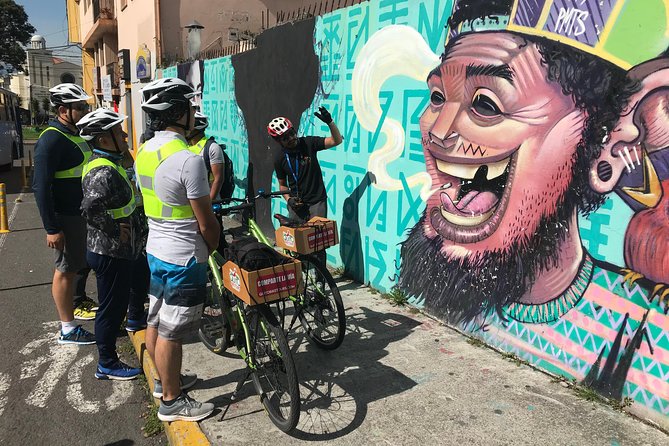
La Floresta is where the tour starts to feel like a story. You look at the street art around the neighborhood and hear about the artists who painted it. If you’ve ever wondered why some murals feel like they have personality, this is the sort of context that helps it land.
You’ll also taste some chocolate early on. This isn’t just a sweet payoff; it’s timed to match the neighborhood feel. Street art and chocolate might sound random in an itinerary, but together they work because both are tied to local creativity and everyday culture.
From there, you move into the area’s more residential corners and you’ll visit a lookout where you can slow down and take in the city with locals around you. The tour’s own framing is that this is the kind of spot you’d be unlikely to find on your own, and the vibe supports that. You get views without feeling like you’re herded through a single viewpoint for the same 12 minutes.
A practical note: this is an outdoor part of the day, so bring sunglasses and sunscreen. If you get caught in a sudden drizzle, a rain jacket is worth having.
Guapulo Views: A Short Ride That Changes the Way You See Quito
After La Floresta, the tour heads into Guapulo, and this is mostly about the ride itself and the payoff of the views. Expect an easy-to-moderate stretch with a focus on vantage points. You’re cycling through the city rather than watching it from a bus window, so the perspective feels more personal.
This stop is shorter—about 30 minutes—but it’s designed to give you that feeling of scale. You’ll look out over Quito in a way that’s harder to capture from the usual streets.
If you’re the kind of person who thinks a viewpoint is “just a viewpoint,” Guapulo is where this tour has a leg up. The guide keeps you oriented: what direction you’re looking, what you’re likely seeing in the city’s layout, and how the neighborhood connects back to what you already covered.
Alameda Park and the Oldest Observatory in Ecuador
Midday brings you to Parque La Alameda, described as the oldest park in Quito and in Ecuador. That sets the tone: this isn’t just a green break in the ride. You also get historical context that makes the park feel like a living timeline rather than a random patch of grass.
One standout detail here is the oldest astronomical observatory in Ecuador. Even if you don’t consider yourself a science person, it’s a fascinating angle for a bike tour because it ties the city’s identity to how people have watched the sky over time.
You’ll spend about one hour here, which is long enough to actually absorb the place. The guide gives you insights as you move around, and you’ll likely spot small signs of how the park functions as a local meeting point, not only as a stop for visitors.
If you prefer a tour with more than one kind of “why should I care,” Alameda delivers. It gives you atmosphere and explanation at the same time.
El Ejido and La Mariscal Markets: Where Local Life Really Shows
Late morning into the early part of the tour’s latter half takes you toward Parque El Ejido, in the broader La Mariscal / El Ejido area. This is where the experience pivots into hands-on culture: local activity, parks that people actually use, and a pair of food-and-craft stops.
First, you’ll spend time in the parks and around the neighborhood activity. Then comes one of the most practical reasons to book this particular tour: a handicrafts market where you can meet the artisans making the products. That’s a big difference from stopping at a generic souvenir stall. You get to see the maker side of the work, and it makes your purchases (if you choose to buy) feel more grounded.
Next is the fruit and veggie market experience—an “everyday” stop that helps you understand what people shop for and how the local rhythm works. It’s also part of why the tour includes tastings and why you’re not left scrambling for lunch. You’ll get sampling moments that fit the neighborhood you’re standing in, not a random snack break inserted for convenience.
A small reality check: the tour is heavy on experiences and light on full meals. You’re tasting foods and drinks, not getting a full meal service. So if you have a big appetite, plan to eat after the ride.
Price and Value: Is $89 Worth It?
At $89 per person for about 4 hours, this tour prices itself for value in three ways:
- You’re getting the bike and safety gear included. The bike is an urban model with 24 speeds (Fulgur Cotinga), plus a helmet, lock, and reflective vest.
- You’re paying for local guidance, not just transportation. The guide is licensed and bilingual (English/Spanish), and the explanations are part of the point of the ride.
- Tastings are included. You get chocolate and additional food-and-drink sampling through the tour.
If you were to bike-rent in Quito, figure out a safe route, and then separately book a guide for the story behind each stop, the cost usually starts creeping upward quickly. This package keeps it simple: gear, guide, and planned stops in one price.
What’s not included is also clear: water, meals, and extra snacks/drinks. The sustainability angle is direct—you’re asked to bring your own bottle instead of buying plastic. Honestly, this is one of those travel rules that feels minor until you realize it also helps you stay hydrated during altitude and sun.
How Hard Is the Ride? Hills, Altitude, and Staying Comfortable
Quito is high: 2867 metres above sea level. The tour operator specifically recommends that you give yourself at least one day to acclimatize, sleep well, and eat lightly on the day of your tour. If you’re coming straight from sea level, slow down mentally even before the first pedal.
In terms of bike effort, the ride isn’t sold as an extreme workout, and the included bikes are meant for city cycling (24 speeds help). Still, you should expect some hills. One helpful real-world detail from the experience: you might need to stop and walk briefly on steeper bits. That’s not failure—it’s smart riding, and it keeps the group together.
What to bring helps a lot with comfort:
- A rain jacket (weather can shift)
- Sunglasses, cap, bandana, sunscreen
- Camera
- Small change and money if you want to buy at markets
- A backpack if you’ll store purchases
And yes: bring water. The tour notes it directly, and it’s for a good reason.
Small-Group Pace and Safety That Keeps the Day Fun
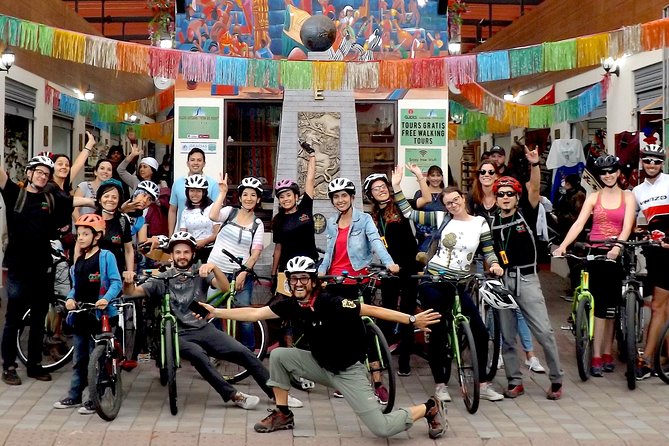
This is a tour for people who want to feel safe while moving fast enough to see a lot. The gear is clear: helmet, reflective vest, and bike lock/key. The guide rides with you and helps manage the group so you aren’t constantly stopping to regroup.
The small-group size also matters. The tour is limited to 7 people in the overview, and the maximum is listed as 10 travelers. Either way, it’s small compared with big bus tours, and you’re more likely to get direct answers from your guide rather than watching them talk into the distance.
In practical terms, you’ll spend more of the day looking outward and less of it trying to figure out where you are. That’s the real value of a guided loop through parks and markets.
Should You Book This Quito Cultural Bike Tour?
Book it if you want a high-value first look at Quito that mixes art, viewpoints, and local shopping culture in one morning-to-early-afternoon stretch. It’s also a good choice if you prefer active sightseeing—cycling beats standing in one place—while still wanting support: safety gear, a bilingual guide, and planned stops.
Skip it (or at least think twice) if you need a totally flat, low-effort day. Between Quito’s altitude and the reality of hills, you might have moments where walking is the easiest option. And because there’s no hotel pickup, you’ll need to get yourself to Nuovo Caffe on time.
If you’re the type who enjoys street art context, local markets, and learning as you move, this tour makes a lot of sense.
FAQ
How long is the Quito Cultural Bike Tour?
It runs for about 4 hours (approx.).
Where does the tour start and end?
The tour starts at Nuovo Caffe on Av. Francisco de Orellana in Quito and ends back at the same meeting point.
What is included in the $89 price?
The price includes the bicycle, a safety-certified helmet, chain/lock/key, reflective safety vest, some food and drink tastings, and a licensed local bilingual guide (English/Spanish), plus all taxes and fees.
Do I need to bring my own water?
Yes. The tour asks participants to bring their own water bottle for sustainability reasons.
What bike will I ride?
You’ll ride a Quito Bike Tours urban bicycle (Fulgur Cotinga) with 24 speeds.
Will the tour be difficult because of hills?
The ride is described as manageable for most participants, but you may encounter a few hills and might need to stop and walk briefly.
How does altitude affect this tour?
Quito is listed as 2867 metres above sea level, and the operator recommends giving yourself at least one day to acclimatize, sleeping well, and eating lightly on the day of the tour.
Can I cancel for a refund?
Yes—free cancellation is available up to 24 hours in advance of the experience start time for a full refund (a processing fee may apply, as stated by the supplier). Cancellations within 24 hours are not refunded.