REVIEW · STRASBOURG
Strasbourg: Guided Bike Tour with a Local Guide
Book on GetYourGuide →Operated by Cyclorama · Bookable on GetYourGuide
Strasbourg rewards slow looking on a fast bike. This guided ride strings together Petite France, the cathedral area, and the European district into one easy loop. You also get context that makes the streets feel less random and more meaningful.
I love the way you cover two “Strasbourgs” back to back: the old, postcard-perfect core and the 19th-century Neustadt. I also love that the tour doesn’t stop at sightseeing; you’ll learn what the European Institutions are and why they matter while you’re actually standing nearby.
One consideration: this is a bike route through busy areas, so bike confidence helps. If you’re easily thrown off by pedestrians at crossings, go in ready to go slow and stay alert.
In This Review
- Key Things I’d Circle on Your Planning List
- Why Strasbourg Works So Well on Two Wheels
- A 2.5-Hour Circuit That Connects Old Town to the EU District
- Petite France and Strasbourg’s Covered-Bridge Moments
- Cathedral Area Stops: Pont du Corbeau, Gutenberg Place, Place Broglie, Place Saint-Étienne
- Neustadt and Imperial German Strasbourg in the 19th Century
- European Institutions: Parliament, Council of Europe, Human Rights Court
- Parc de l’Orangerie and the City Wall Finish
- Bike Riding Reality: Pace, Helmets, and Pedestrian Weaving
- Value at $46 and Who This Tour Fits
- FAQ
- How long is the Strasbourg guided bike tour?
- What languages are the live guides?
- Is a bicycle included?
- Where does the tour start?
- What major places will we see during the ride?
- Can I cancel for a full refund?
- Should You Book This Strasbourg Bike Tour?
Key Things I’d Circle on Your Planning List
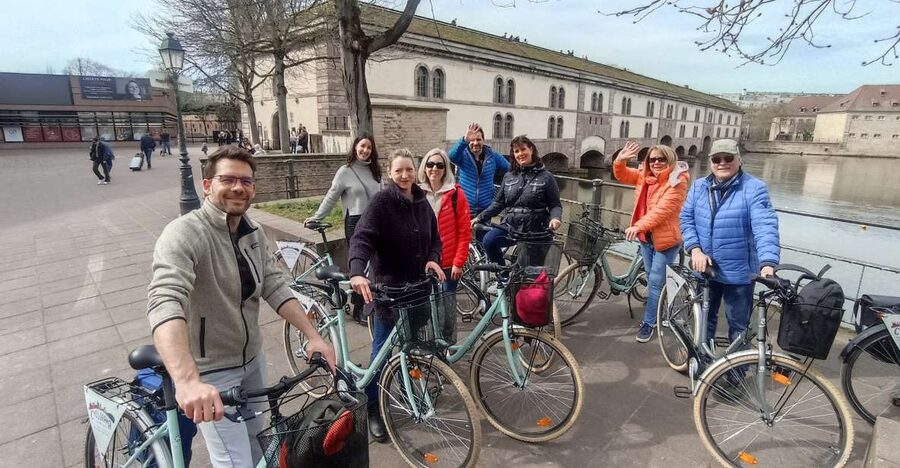
- Petite France by bike: covered bridges, historic canals, and the Vauban Dam area
- Neustadt + imperial-era flavor: 19th-century streets you’d miss on foot
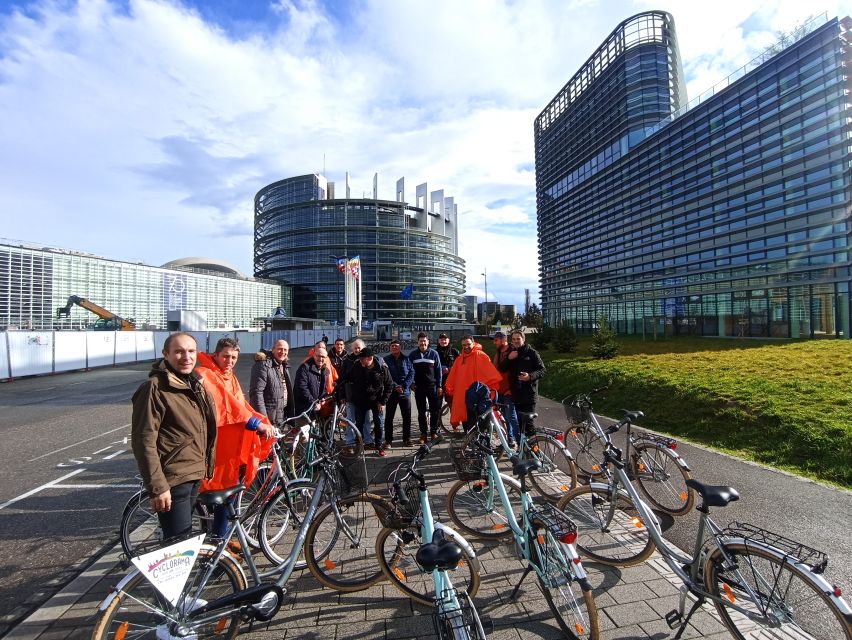
- European Institutions stop: Parliament, Council of Europe, and the European Court for Human Rights
- Big landmarks without wasting time: Notre-Dame area, Place Broglie, Pont du Corbeau
- Fresh-air ending: Parc de l’Orangerie plus a section of the 14th-century wall
- Guides who adjust: German tours can simplify when language gets tough
Why Strasbourg Works So Well on Two Wheels
Strasbourg is one of those rare cities where cycling feels natural from the first minutes. The city layout is flat, and the bike-first streets make it easier to see more than you could in the same time walking.
This is also a smart format if your time is limited. With about 150 minutes, you get a guided “map in motion” that shows you where the main sights sit, how neighborhoods connect, and which corners are worth revisiting later at your own pace.
The tour leans practical: you ride, you stop, you take photos, then you ride again. That rhythm matters because Strasbourg’s charm is in details—bridge angles, street layouts, and building scale—and bikes let you experience those without backtracking.
You can also read our reviews of more tours and experiences in Strasbourg.

A 2.5-Hour Circuit That Connects Old Town to the EU District
The core value here is the storyline. The route links the medieval-feeling Old Town and Petite France with the grand, planned Neustadt (including the imperial German district), then carries you into the working heart of Europe.
You’ll start with a short introduction, then move through major sections in a loop that keeps travel time efficient. Along the way, you’ll cross key bridges (including Pont du Corbeau) and pass major public spaces like Gutenberg Place, so the city feels linked rather than chopped into disconnected stops.
By the time you reach the European Institutions, it’s not a random detour. The bike ride sets you up to understand why this district sits where it does and how Strasbourg became a home for European decision-making.
Petite France and Strasbourg’s Covered-Bridge Moments
Petite France is the kind of place where you can point at a view and instantly get why people come. On this tour, you don’t just look from one angle—you cycle through the old-quarter lanes and waterways that give the area its charm.
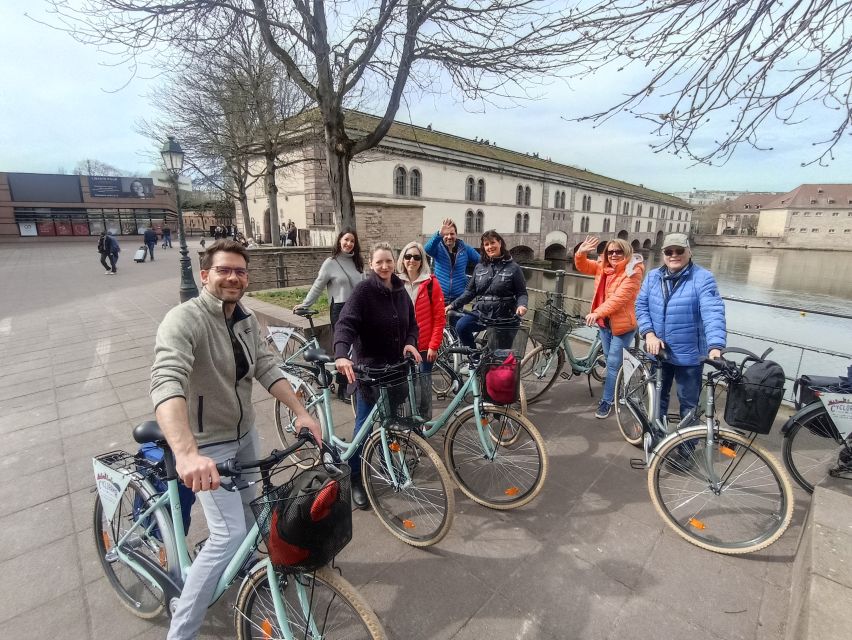
You’ll pass the covered bridges, which are more than cute scenery. They shape how the canal-side streets connect, and seeing them by bike helps you understand their placement in the flow of the neighborhood. The ride also includes the Vauban Dam area, a stop that adds a layer of “why this town looks like this” to the postcard feel.
If you’re doing Strasbourg in two days (or less), Petite France is a high-return segment. You’ll get both atmosphere and orientation—so after the tour, you’re more likely to find the best spots again without hunting.
Cathedral Area Stops: Pont du Corbeau, Gutenberg Place, Place Broglie, Place Saint-Étienne
This is where the tour gives you its headline moments, with enough time to see them without rushing past.
After crossing Pont du Corbeau, you’ll pass Gutenberg Place, then ride into the area in front of Notre-Dame de Strasbourg Cathedral. It’s one of the best places to understand Strasbourg’s scale, because the cathedral doesn’t sit alone—it anchors the surrounding streets and public spaces.
From there, you’ll see the Opera house on Place Broglie and roll through the small streets near the cathedral. The tour also includes stops around hidden spots close to Place Saint-Étienne, which is a great reminder that the cathedral area isn’t only about the big building. It’s also about the network of lanes and squares around it.
Practical note: these are busy areas. You’ll want to stay focused at junctions and crossings, and let the guide control the pace.
Neustadt and Imperial German Strasbourg in the 19th Century
Strasbourg’s Neustadt is a different visual world from Petite France. Think wider streets, more formal urban planning, and architecture that signals a city growing into its modern role. Cycling through it is a big advantage because it’s hard to understand the spacing and “planned” feel from a slow walking crawl.
The route takes you through the imperial German district first, then into the Neustadt rhythm. That sequencing helps: you get a sense of how styles and power shifts show up in streets and building decisions, not just in individual façades.
One thing to watch your expectations on: the tour balances Old Town highlights with newer, institutional architecture. If you’re only chasing medieval corners, you may find you want an extra walking hour in the oldest streets afterward. But if you enjoy comparing eras side by side, Neustadt is one of the tour’s strengths.
European Institutions: Parliament, Council of Europe, Human Rights Court
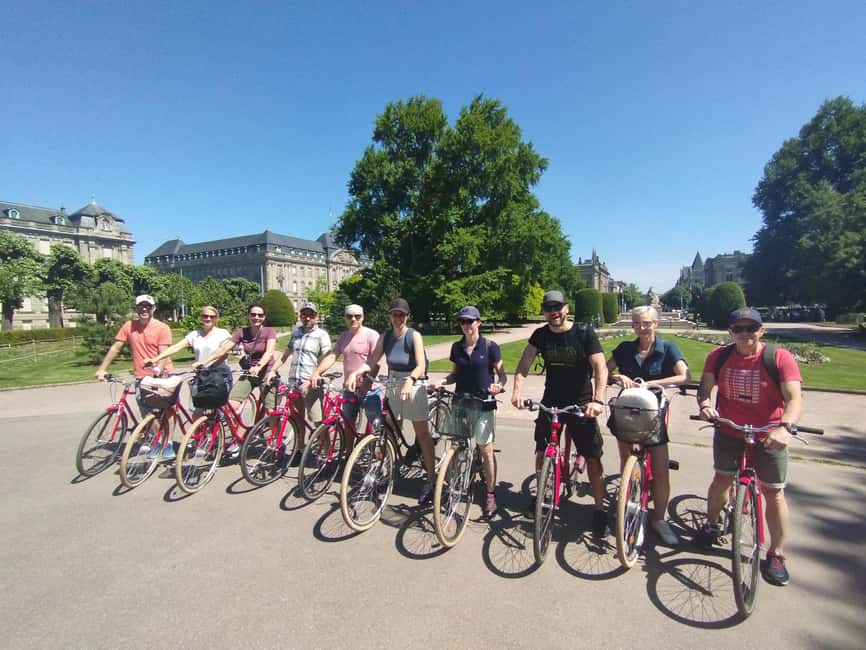
This is the signature twist. Many city tours stop at a view; this one helps you make sense of what you’re looking at.
In the European district, you’ll see the European Parliament, the Council of Europe, and the European Court for Human Rights. The guide’s explanations tie the buildings to their purpose, so the area stops being a photo stop and becomes a context stop.
The bike format also helps here. The district is large and spaced out, and cycling gives you a better feel for scale than standing in one spot. You also move through the area efficiently, so you’re not stuck in long transfer time.
If your trip includes time pressure, this segment is a smart trade: you get multiple major landmarks plus meaning, all within the same loop.
Parc de l’Orangerie and the City Wall Finish
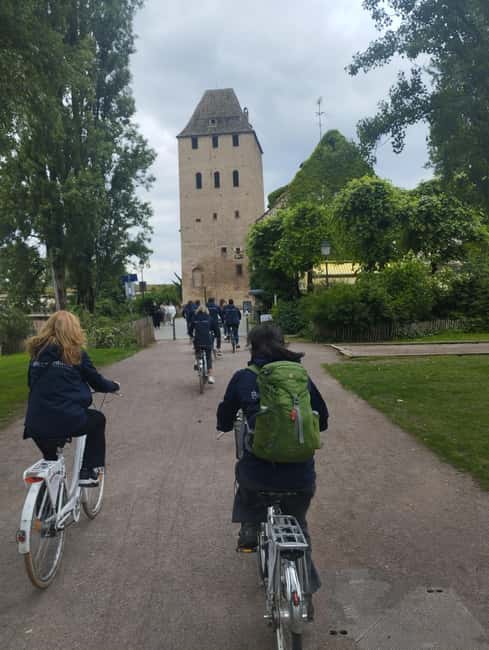
After the big-picture institutional stops, the tour shifts to lighter breathing room. You’ll enjoy fresh air at Parc de l’Orangerie, a welcome change after streets and buildings.
Then the ride heads back through Place d’Austerlitz and continues along a section of the 14th-century wall. That wall segment is a great closing note because it reconnects you to Strasbourg’s longer timeline, and it does it without pulling you back into constant heavy sightseeing.
This finish works well for photos, too. You’re more likely to capture calmer shots—less crowd density, more open view space. It also makes the tour feel like a loop that returns you to the city’s structure, not just to your starting point.
Bike Riding Reality: Pace, Helmets, and Pedestrian Weaving
The biggest practical question for bike tours is always the same: will I feel safe and in control?
From the way the tour is described, it’s mostly an easy ride in a flat city, but you will be weaving around pedestrians at points. That’s normal in central Strasbourg, and it’s exactly why having a guide helps—you follow their line, you stop when it’s safe, and you get direction at crossings.
Helmets and bike add-ons are part of the experience. Helmets are available, and there can be baskets for a small bag, which is useful if you’re carrying a phone, a light layer, or a guidebook you plan to use later.
Pace is another factor. The tour includes repeated stops for explanations and photos, so it doesn’t feel like a nonstop bike ride. In bad weather, the tour still runs, and the ride remains enjoyable because it’s structured around short viewing moments.
Value at $46 and Who This Tour Fits
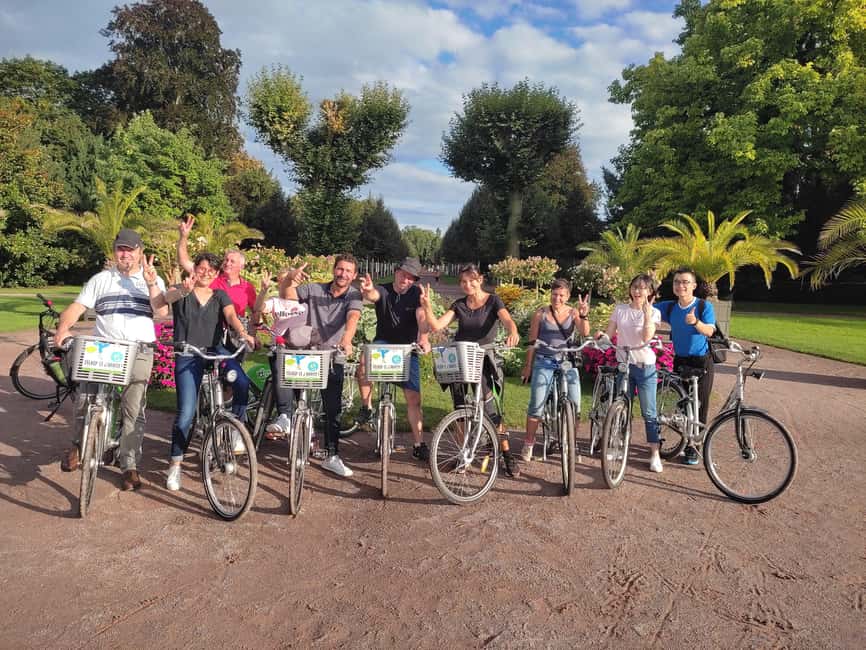
At $46 per person for 150 minutes, you’re paying for three things: a guided route, a bicycle, and multilingual help. That’s strong value in a city where a bike rental alone can eat up a chunk of your day, and where a walking tour may not cover as many distinct districts.
This is also a great fit for:
- First-time visitors who want orientation fast
- People who want a blend of beauty + explanation (cathedral and bridges plus European Institutions)
- Travelers doing Strasbourg as a quick stop and want maximum return per hour
Language is covered too. Live guiding runs in German, Dutch, and English. If you choose German, you might even get support when understanding is tough—guides can slow down or simplify to keep you with the group.
Where it might not be perfect: if you want strictly medieval content with lots of deep old-street time, you may feel the ride spends more minutes in later-era and institutional areas than you expected. Still, you’ll come away with a map of the whole city, which makes later exploring easier.
FAQ
How long is the Strasbourg guided bike tour?
The tour lasts about 150 minutes (around 2.5 hours).
What languages are the live guides?
The guide offers live interpretation in German, Dutch, and English.
Is a bicycle included?
Yes. The bicycle is included in the experience.
Where does the tour start?
The meeting point can vary depending on the option booked, with listed starting locations including Café Lové and La Pépinière.
What major places will we see during the ride?
You’ll cycle through areas including Petite France and the Old Town, then reach the European district to see the European Parliament, the Council of Europe, and the European Court for Human Rights, along with landmarks such as Notre-Dame de Strasbourg Cathedral and places like Place Broglie.
Can I cancel for a full refund?
Yes. Free cancellation is available up to 24 hours in advance for a full refund.
Should You Book This Strasbourg Bike Tour?
Yes—if you want a fast, guided way to understand Strasbourg’s layout and meaning in a short window. The mix of Petite France + Neustadt + the European Institutions is exactly what you need when you don’t want to spend your limited time hopping between separate tours.
If you’re the type who wants only medieval vibes, consider adding extra time on foot after this ride. Otherwise, this is a solid value play: you’ll leave with the city’s big highlights connected in your head, and you’ll know where to wander next.