REVIEW · MUNICH
Best of Munich Electric Bike Tour
Book on Viator →Operated by Fat Tire Tours Munich · Bookable on Viator
Munich’s best shortcut is two wheels. This 4-hour electric bike tour threads history, art, and beer culture through central Munich, with a guide keeping you oriented while you coast between major landmarks.
I especially like the way it hits big sights without turning the day into a full-body workout. The e-bike assist helps you keep energy for the stories your guide tells at each stop, and the pace stays friendly even when the itinerary gets full.
One thing to plan for: it’s a highlights-style ride. You get short stops (often about 5 minutes) rather than long museum hangs, and with a max group size of 20, you’ll want to pay attention early if you want extra time on anything later.
In This Review
- Key things I’d prioritize
- The real win: riding Munich instead of chasing it on foot
- Price and logistics: what you’re paying for (and what you’re not)
- Starting at Karlsplatz: get your bearings fast
- Wittelsbacherbrunnen and the opening lesson in Munich’s city design
- Karolinenplatz and Königsplatz: the squares that teach you how Bavaria thinks
- The Führerbau still standing: a hard chapter, now a music school
- Old Pinakothek to Pinakothek der Moderne: art lovers get a fast map
- Siegestor and Odeonsplatz: victory, peace, and the hard date lines
- Residenz and Hofgarten: royal power and a quiet break between stories
- Bayerische Staatskanzlei and the shift from palace to modern government
- Englischer Garten and the Chinesischer Turm beer garden: where the day turns fun
- Eisbachwelle: the Isar’s standing wave (and a reality check)
- Friedensengel and Maximilianeum: peace messaging and state power
- Deutsches Museum: when science takes over the skyline
- Viktualienmarkt and Ohel Jakob Synagogue: daily life and modern memory
- The guide factor: why the best tours start with the right storyteller
- Extra beer and food: budget it, but keep control of your day
- Should you book this e-bike tour?
- FAQ
- FAQ
- How long is the Best of Munich Electric Bike Tour?
- What’s the meeting point for the tour?
- Is the tour offered in English?
- What’s included in the price?
- What’s not included?
- Do I need museum tickets for the stops?
- Is the ride suitable for most people?
- Can I cancel for a full refund?
Key things I’d prioritize

- Electric assist makes the route feel easy even if you’re not a cyclist.
- Stops are timed for understanding, not just photos.
- Art museum quarter shows up fast, from Old Masters to modern design.
- Beer culture is built in, with optional beer-hall sampling for extra cost.
- You get both parks and city life, including the Englischer Garten area and Viktualienmarkt.
- Guides can strongly shape the experience, with many praised for humor, safety, and smart restaurant tips.
The real win: riding Munich instead of chasing it on foot
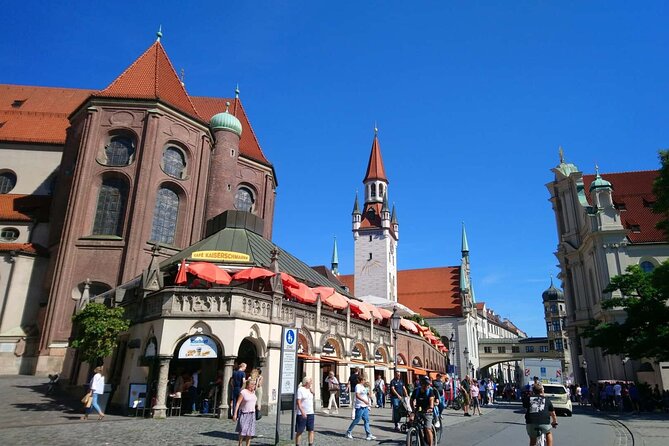
Munich is flat enough that a bike makes sense. What the e-bike changes is comfort and focus. You spend less time fighting your legs and more time listening, looking, and asking questions at the pauses—especially on a route that jumps from grand squares to the city’s art zone and then out toward the river and parks.
This tour is also a good “first taste” of Munich. You start in the core (near Karlsplatz), then you’re guided through the old royal-realm geometry—fountains, gates, palace streets—before you angle toward areas locals use for daily life, like the beer gardens and the market.
You can also read our reviews of more tours and experiences in Munich.
Price and logistics: what you’re paying for (and what you’re not)
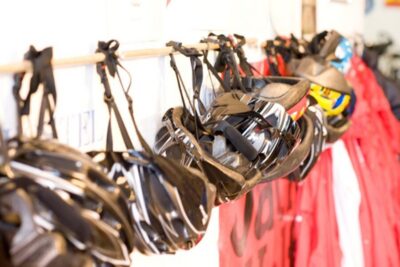
At $71.90 per person for about 4 hours, you’re mainly buying two things: a live guide and the e-bike setup (bike + helmet). Food and drinks are not included, and that matters because the ride naturally lands you near places where you’ll want something to eat or drink.
The tour is offered in English, and you’ll get a mobile ticket. It’s capped at 20 travelers, and the group may mix e-bike and non-e-bike riders. That mix can affect how tight the pace feels at turns and merges, so staying alert is smart.
Also: while the tour stops list many locations as ticket-free, that doesn’t automatically mean you’re getting deep entry into museums. Think “context + vantage points” more than “full museum day.”
Starting at Karlsplatz: get your bearings fast
You meet at Karlsplatz 4 (80335 München) and the tour ends back at the meeting point. Karlsplatz is central and easy to reach by public transport, so it’s a practical launch pad.
From the start, the ride’s rhythm is built around frequent regrouping. That’s one reason this works well for mixed abilities. The best part is how quickly you can connect the dots: you leave with a mental map of where the palace area sits, where the museum quarter begins, and how the green space and river show up further along.
Wittelsbacherbrunnen and the opening lesson in Munich’s city design
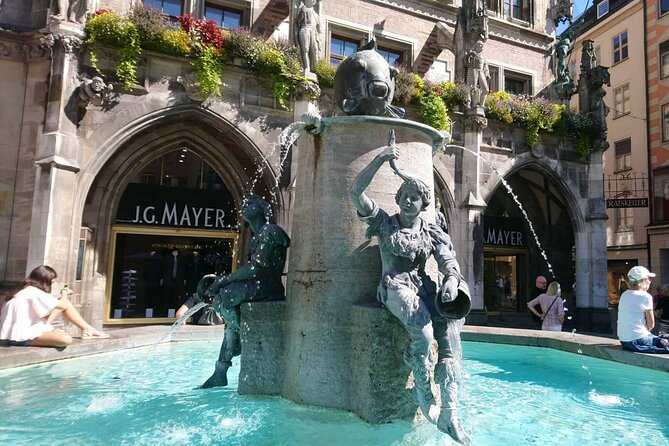
Wittelsbacherbrunnen is your first big “wow” moment. This monumental fountain sits near the transition between Lenbachplatz and Maximiliansplatz. It was built in the 1890s and designed in a Neo-Classicalist style by sculptor Adolf von Hildebrand, meant to represent the primal forces of water.
Why it’s a great early stop: it sets the tone. Munich isn’t just old buildings—you’re also seeing the way the city uses public art to teach values and identity. It’s a short stop, so don’t rush past the sculpture details your guide points out.
Karolinenplatz and Königsplatz: the squares that teach you how Bavaria thinks
Next comes Karolinenplatz in Maxvorstadt. This square is tied to a Bavarian-French relationship in the early 19th century and named for Queen Caroline of Bavaria. It’s subtle but important: the guide uses these squares to explain Munich’s cultural alliances and how they show up in street-level symbolism.
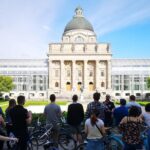
Then you roll into Königsplatz (King’s Square), a Neoclassical centerpiece. Here you’re looking at the Propyläen Gate, with the Glyptothek and the Staatliche Antikensammlungen facing each other across the open space. It’s also right by Munich’s Kunstareal museum and gallery quarter.
Practical note: these are good places for quick photo pauses, but the space can feel “open windy” depending on the weather. In cold or rain, the e-bike still helps because you don’t linger.
The Führerbau still standing: a hard chapter, now a music school
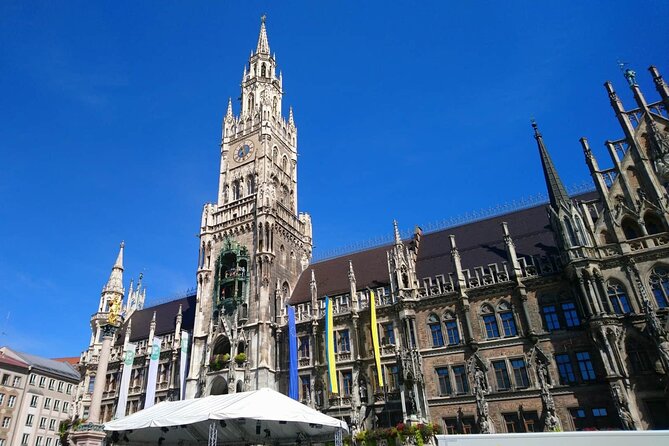
You’ll stop at the Führerbau, built during the Nazi period (1933–1937) and used extensively by Adolf Hitler. The uncomfortable part is obvious: it’s a remnant of that era. The helpful part is that it’s not frozen in time—today it houses the University of Music and Performing Arts Munich.
Why this stop matters: the guide uses it to show how history can remain physical, even when the use of a building changes. You’ll leave understanding that Munich’s story isn’t only about kings and composers; it includes the modern scars and how people live around them now.
Old Pinakothek to Pinakothek der Moderne: art lovers get a fast map
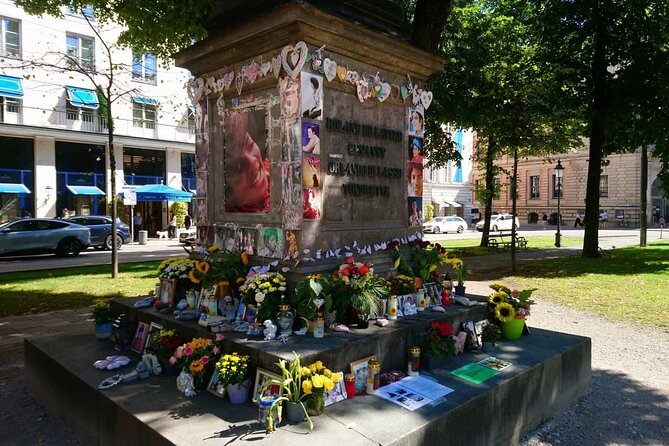
The tour swings through the Kunstareal cluster.
- Alte Pinakothek (Old Pinakothek): one of the oldest galleries in the world, with major Old Master paintings.
- Pinakothek der Moderne: a larger modern-art complex that merges several collections, including works on paper and design/applied arts.
These stops are quick, but they give you something useful: a sense of where to go if you want a second visit. If you’re the type who likes to pick one museum and do it properly, this route helps you decide which direction to take later.
Siegestor and Odeonsplatz: victory, peace, and the hard date lines
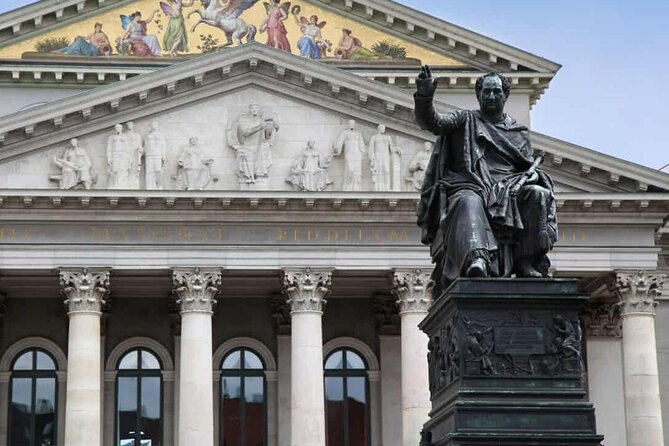
Siegestor is a three-arched memorial arch topped with a statue of Bavaria with a lion-quadriga. Originally, it was dedicated to the glory of the Bavarian army. After World War II restoration, its message shifts toward peace.
Then you move to Odeonsplatz, one of central Munich’s big squares shaped in the early 19th century by Leo von Klenze. You’ll also be in the zone linked to the 1923 Beer Hall Putsch, including the fatal gun battle connected to the march toward the Feldherrnhalle.
If you like history, these stops work because they’re visual and timed. You’re not reading a textbook—you’re watching symbols and then hearing what they meant at different times.
Residenz and Hofgarten: royal power and a quiet break between stories
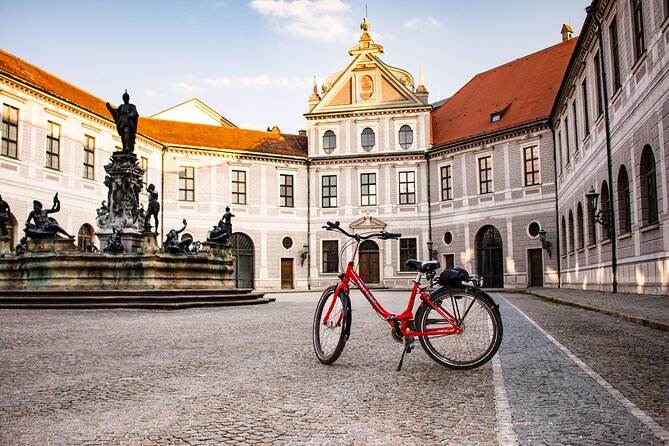
Residenz München is the former royal palace of the Wittelsbach monarchs and the largest city palace in Germany. The stop gives you a sense of scale and how the palace zone shapes the street network around it.
Just next to it is Hofgarten, built in the early 1600s in the Italian Renaissance garden style. In the middle sits a pavilion for the goddess Diana built in 1615. It’s the kind of stop where you can feel the change from “power” to “planned calm.”
This pair is a nice mental reset. The ride keeps moving, but those two stops make you pause and look at proportions instead of only dates.
Bayerische Staatskanzlei and the shift from palace to modern government
Bayerische Staatskanzlei is the building that houses offices for chancellery staff. It was built from 1989 to 1993 around the central dome of a former Bavarian Army Museum (built in 1905) that had been destroyed in WWII.
This is a clever stop because it ties old and new together. You see architecture as a choice about memory: what gets rebuilt, what gets kept, and what gets repurposed. It’s one of those moments where Munich feels like a living city rather than a collection of landmarks.
Englischer Garten and the Chinesischer Turm beer garden: where the day turns fun
Now you’re in the green.
The tour reaches the Englischer Garten, one of the world’s largest urban parks, with an area listed as 3.7 km² (370 hectares). The name reflects the English-style informal landscape tradition popular in the mid-1700s.
From there, you hit Biergarten am Chinesischen Turm—one of Munich’s famous beer gardens. It has 7,000 seating places (listed as the second largest in Munich after Hirschgarten). It sells Hofbräu beer, and it’s been run by Antje Schneider since 1974.
This stop is where the tour’s “beer aficionados” side becomes real without forcing you into a long sit-down. You can grab a cold drink and Bavarian-style food on your own timing, because drinks/food aren’t included. That flexibility is a plus if you’re juggling taste preferences.
Eisbachwelle: the Isar’s standing wave (and a reality check)
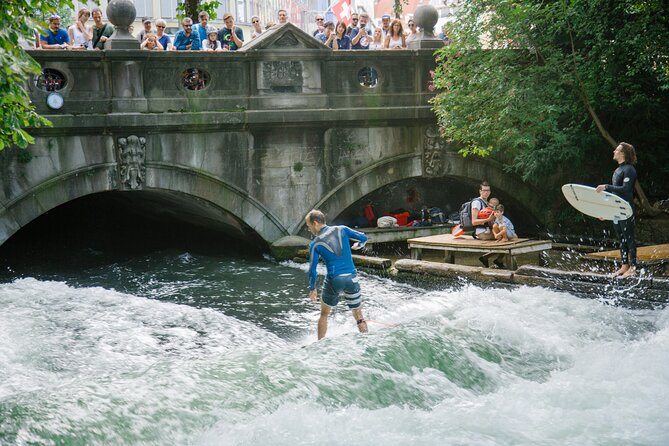
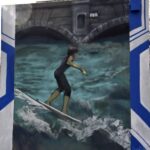
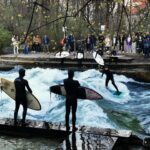
Just past a bridge near the Haus der Kunst museum, you’ll see Eisbachwelle, a standing wave where people surf. The water is cold and shallow—sometimes around 40 cm deep—so it’s only suitable for experienced surfers.
Even if you don’t watch long, it’s a great Munich detail: the city lets nature stay “useable” in a very local way. If it’s crowded, you’ll likely just have a quick look as the guide keeps the group flowing.
Friedensengel and Maximilianeum: peace messaging and state power
Friedensengel (Angel of Peace) is part of Maximilian Park and an observation point aligned with Prinzregentenstraße. You’ll find an open area with water features, plus a viewing deck reached by stairs. The column is 38 meters high, crowned by a six-meter statue of the Angel of Peace, described as a replica of the Nike of Paeonius.
Then comes Maximilianeum, a palatial building that since 1949 houses the Bavarian State Parliament. It’s another reminder that your ride is circling power centers—some historic, some current.
Deutsches Museum: when science takes over the skyline
At Deutsches Museum, you’re near the world’s largest science and technology museum, described as having about 125,000 objects across 50 fields, with around 1.5 million visitors per year.
This stop is brief, but it’s strategically useful. Even if you don’t enter today, you’ll now know where the “science magnet” is in your Munich map. If you’re traveling with kids, or you love tech history, this gives you a direction for a return trip.
Viktualienmarkt and Ohel Jakob Synagogue: daily life and modern memory
Viktualienmarkt is a market area that grew from a farmers’ market into a foodie destination with around 140 stalls and shops. It’s where you’ll find everything from flowers and exotic fruit to cheeses, fish, spices, and juices.
This is a great final-stage stop because it feels like Munich beyond monuments. You can pick up a snack, slow down, and watch how people actually use the city in the middle of a day.
Then you reach Ohel Jakob Synagogue, the new main synagogue for Munich’s Jewish community. It was built between 2004 and 2006 and inaugurated on 9 November 2006, which matches the 68th anniversary of Kristallnacht.
This stop adds serious context, and it’s done in a way that fits the tour format: quick orientation, key facts, and respect for the site’s meaning.
The guide factor: why the best tours start with the right storyteller
A strong guide can turn a set of landmarks into a coherent story. In the reviews you’ll see repeated praise for guides such as Rob, Cannan, Karl, Mark, and Dan, and for guides like Susanna/Suzanne who handle pacing well and keep the group safe.
You’ll also notice the tour seems designed to work across conditions. People describe enjoying it even in rain and cold, which makes sense: the e-bike helps you keep moving rather than freezing on foot. One review even notes that the e-bike option can feel like an upgrade rather than a necessity, since Munich is flat and you stop frequently.
Extra beer and food: budget it, but keep control of your day
There’s an optional beer-hall sampling element mentioned as extra expense. Food and drinks aren’t included in the base price, so you’ll decide how much you want to spend once you’re in the right mood.
If you want value, treat the ride as your cultural sampler: use the beer garden stop to taste something local, and use the market stop to pick up small bites. You can always go big later.
Should you book this e-bike tour?
Yes—if you want a smart overview with minimal leg burn. This tour is a strong choice for history buffs who also like beer culture, and it’s ideal as a first or second day in Munich when you want the city’s layout to click.
You should think twice if you’re expecting deep time in museums. This is built for short, high-impact stops. Also, if you hate group rides, note the tour maxes at 20 people, and you may share the route with non-e-bike riders.
FAQ
FAQ
How long is the Best of Munich Electric Bike Tour?
It lasts about 4 hours.
What’s the meeting point for the tour?
The tour starts at Karlsplatz 4, 80335 München, Germany, and ends back at the same location.
Is the tour offered in English?
Yes, it’s offered in English.
What’s included in the price?
You get a live guide, an electric bike, and a helmet.
What’s not included?
Food and drinks aren’t included, and any optional beer sampling at a beer hall is an extra expense.
Do I need museum tickets for the stops?
Many of the stops are marked as admission ticket free, so you typically don’t need to budget for entry fees for those locations during the ride.
Is the ride suitable for most people?
Most travelers can participate. The group may mix e-bike and non-e-bike riders.
Can I cancel for a full refund?
Free cancellation is available up to 24 hours in advance for a full refund.