REVIEW · AYUTTHAYA
Colors of Ayutthaya: UNESCO Heritage 6 hour Bicycle Tour
Book on GetYourGuide →Operated by Recreational Bangkok Biking · Bookable on GetYourGuide
Ayutthaya gets real when you pedal. This small-group cycle route blends countryside lanes with major UNESCO-era sights, and the star stop is Wat Mahathat with its Buddha face wrapped in tree roots.
I really like how the tour keeps things small (up to 9 people), so the pacing feels manageable and it’s easier to follow explanations as you move between ruins. You’ll also get a proper lunch break and time at temples, not just a quick photo sprint.
One possible drawback: if you rely heavily on English for every detail, plan for some variation in clarity. And based on what I’ve seen in real feedback, the lunch portion size can feel a bit tight for bigger eaters.
In This Review
- Key things that make this bike tour worth your time
- Cycling Ayutthaya UNESCO ruins without feeling rushed
- Getting started near PomPhet Fort and fitting your bike fast
- Morning ride: villages, rice paddies, and a quieter Ayutthaya
- The elephant-history stop at Phaniat Royal Elephant Kraal
- Wat Mahathat: the roots-and-Buddha moment plus real context
- Wat Phra Si Sanphet: the 3 pagodas you can compare in person
- Lunch by the river at about 12:30, then market bites
- A local school visit if it’s open
- Luang Phor Lokayasuttha: the large reclining Buddha statue
- Wat Chaiwatthanaram on the west bank: a classic Ayutthaya temple
- Tour pace, guide style, and who this suits best
- Value check: is the $70 price fair for this route?
- Should you book Colors of Ayutthaya?
- FAQ
- How long is the Colors of Ayutthaya bike tour?
- How much does the tour cost?
- Where is the meeting point?
- Is a bike and helmet included?
- What languages does the guide speak?
- How big is the group?
- Is lunch included?
- Are entrance fees included for the temples?
- Does the tour include a boat crossing?
- Can children join, and is the school stop guaranteed?
Key things that make this bike tour worth your time
- Wat Mahathat in the roots: the famous Buddha head look, plus temple context that helps it make sense
- Countryside first, ruins second: rice paddies and village roads before the old capital gets busy
- Phaniat Royal Elephant Kraal: a history stop that connects the landscape to Ayutthaya’s elephant era
- School visit if open: an optional, human moment that adds meaning beyond temples
- Riverside Thai lunch + local market snacks: fuel stops that keep the day from feeling like nonstop sightseeing
Cycling Ayutthaya UNESCO ruins without feeling rushed
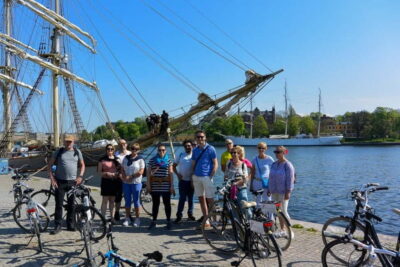
Ayutthaya is the kind of place where you can spend all day hopping between temples, but it often turns into a stop-and-start day. This tour solves that by getting you moving under your own power first—cycling through villages and along rice fields—then transitioning into the old capital area when your legs are ready and your attention is dialed in.
You’re also not just seeing one famous spot. The route ties together multiple temple styles and eras, so the ruins feel connected instead of random. The day includes the big name photos and the “wait, this is impressive up close” moments, especially around Wat Mahathat, Wat Phra Si Sanphet, and Wat Chaiwatthanaram.
You can also read our reviews of more tours and experiences in Ayutthaya.
Getting started near PomPhet Fort and fitting your bike fast
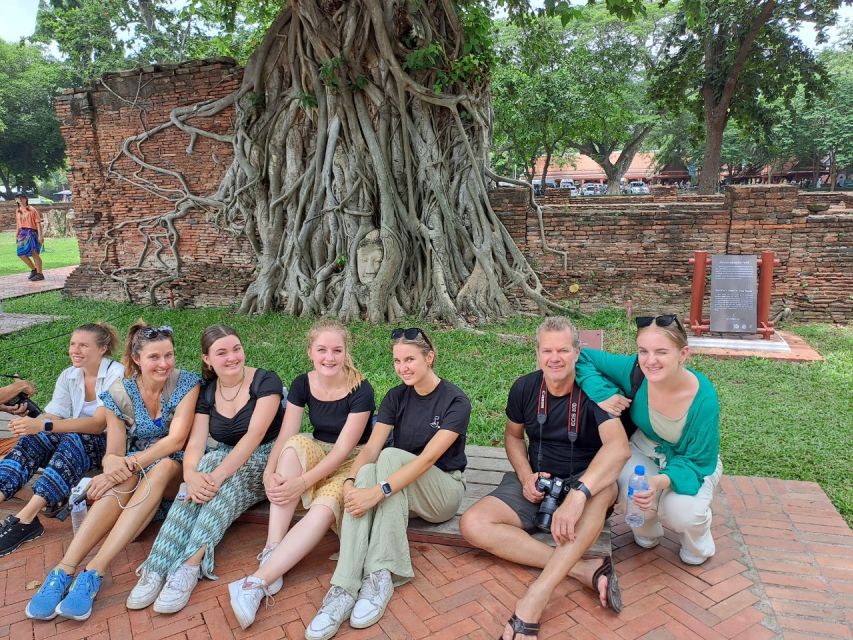
Your day begins at the meeting point near PomPhet Fort on Uthong Road. It’s a short walk from Ayutthaya train station, which is convenient if you’re already in the area without needing extra transport planning.
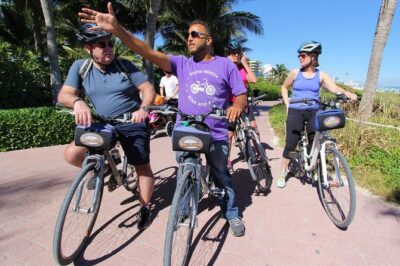
Then you’ll do a bike fitting before you roll. Helmet and bike rental are included, and you also get drinking water on the tour. That sounds basic, but it matters: you’re cycling for about 5.5 hours (330 minutes), so being comfortable from the start changes everything.
The tour runs daily with a 10:00 start, and the general flow is northward at first. You’ll spend the morning setting your rhythm, then shift to the old capital highlights around midday.
Morning ride: villages, rice paddies, and a quieter Ayutthaya
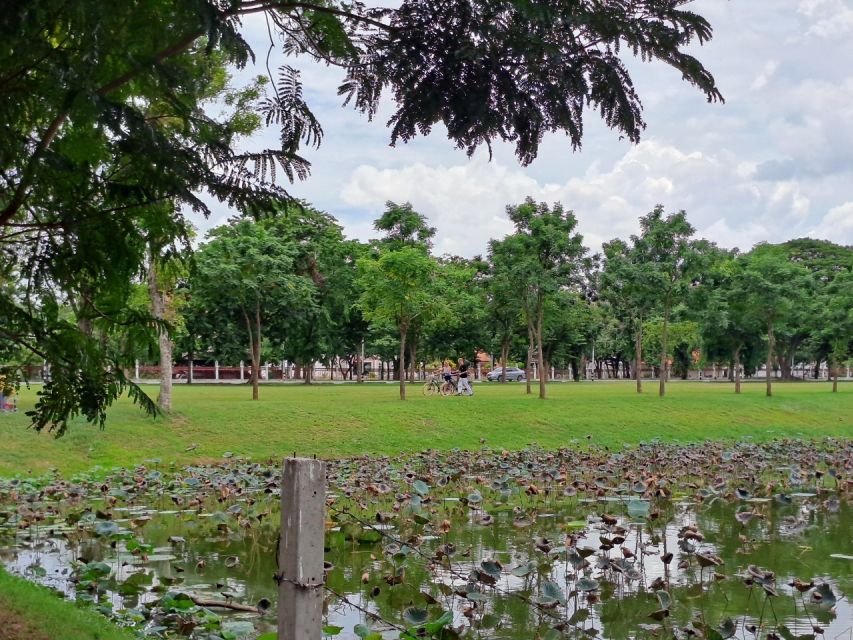
Once you’re rolling, the scenery is the point. Expect idyllic villages, quiet roads, and long stretches where you can see rice paddies alongside the route. It’s a different Ayutthaya than the one that lives in postcards.
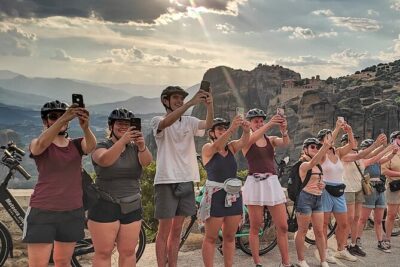
Because the group is limited to 9, the pace stays human. You’re not getting yanked along by a big cluster, and you can actually take in what you’re passing—roads, homes, everyday routines—before the temples start stacking up.
This is also when you’ll likely feel the real benefit of cycling here: you cover ground faster than walking, but you don’t feel locked into a bus schedule. You can sense the geography leading into the old capital.
The elephant-history stop at Phaniat Royal Elephant Kraal
After you’ve been riding for a while, the route passes Phaniat Royal Elephant Kraal. This is more than a random structure along the way. The tour explains how Ayutthaya’s elephant round-ups worked, with this setup used to entrap wild elephants herded down from the north.
You’ll learn that the process was traditionally presided over by Ayutthaya kings, who selected strong elephants for training for war and labor. Even if you’re not a history deep-dive person, this stop gives context for why animals, power, and control were part of the kingdom’s daily reality.
It’s also a nice break from temple walls. After the riding-and-scene section, you get a grounded, physical example of how Ayutthaya operated beyond palace life.
Wat Mahathat: the roots-and-Buddha moment plus real context
As you near the old capital, temple ruins start appearing more frequently, and the day builds momentum. At around 12:30, you’ll pause for Thai lunch—then you’ll enter the old capital area for the temple highlights, starting with Wat Mahathat.
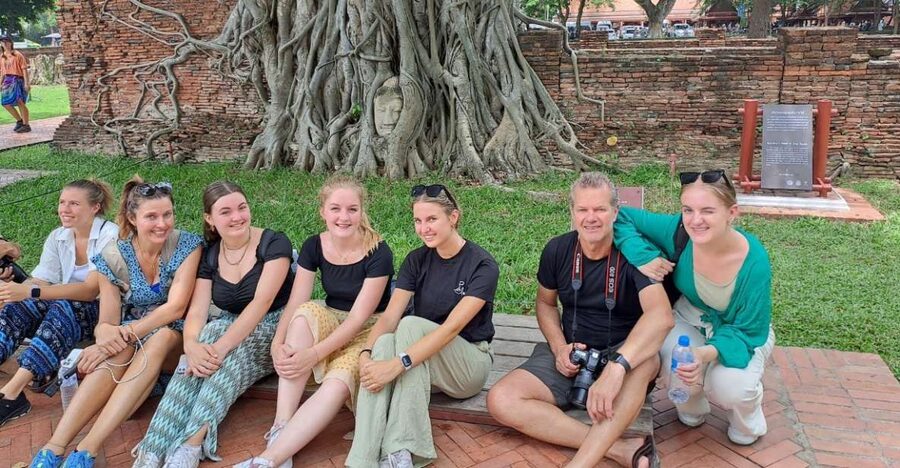
This is the stop you came for. You’ll see the famous Buddha head entwined within tree roots. What makes it work on a bike tour is that you’re not just arriving via a tour bus and snapping photos. You’ve already spent hours seeing how Ayutthaya spreads out in the landscape, so the temple ruins land with more meaning.
The guide shares history of Ayutthaya and its kings, helping connect the iconic images to the broader story. In practice, the quality of that explanation matters a lot, and feedback suggests guides like Bung and Beam stand out for making traditions and daily life easier to understand.
Wat Phra Si Sanphet: the 3 pagodas you can compare in person
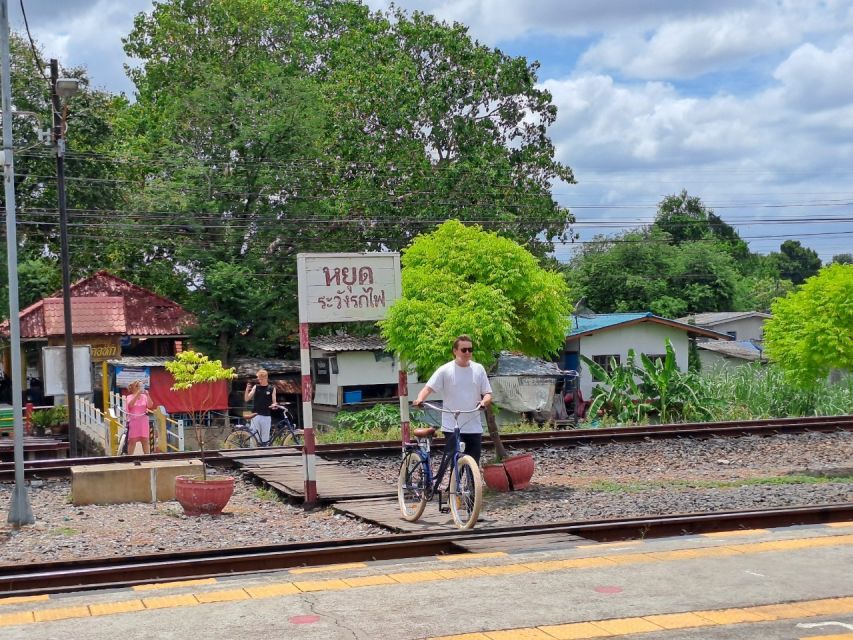
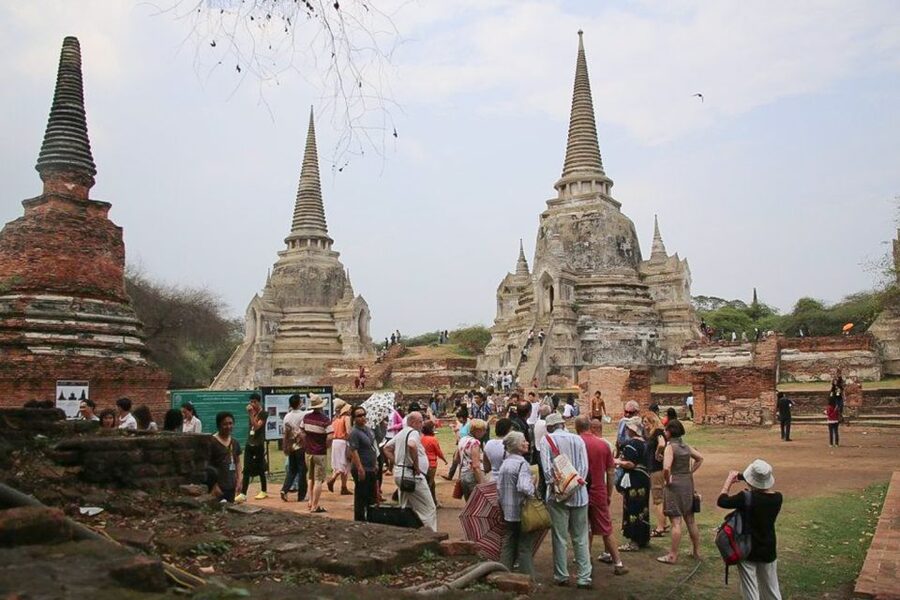
Next up is Wat Phra Si Sanphet, famous for its three distinctive pagodas. This temple is often discussed as a symbol of Ayutthaya’s royal religious power, and seeing the pagodas in person helps you appreciate scale and design choices that photos flatten.
On this route, you’re not just ticking a box. You’ll learn what you’re looking at—how the temple fits into the old capital’s identity and what the king and temple relationship meant in that era.
If you like ruins but find temple visits tiring when there’s no narration, this is one of the better stretches of the day. A well-paced guide makes the difference between staring at stone and actually understanding why it mattered.
Lunch by the river at about 12:30, then market bites
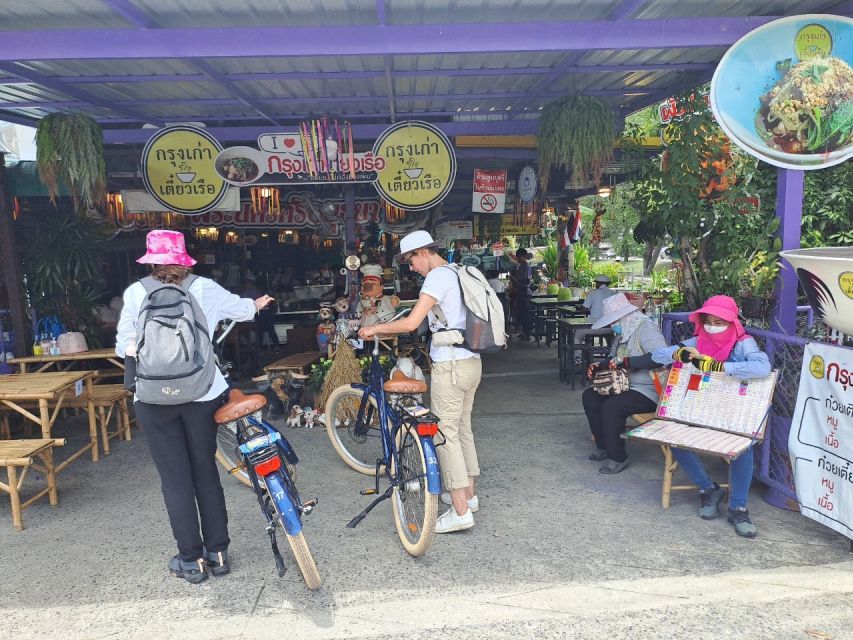
At roughly 12:30, the tour stops for Thai lunch at a local riverside restaurant. Lunch is included, and for many people this is a comfort point in the middle of a long ride. One strong trend in feedback: the lunch is often praised as tasty, and the riverside setting helps the break feel like more than just fuel.
Still, be aware: one review flagged that the portion felt rather small. If you tend to eat a lot, you might want to plan for that by taking your time at lunch and maybe having extra water and any small snack you might already carry (not provided, since only drinking water is listed).
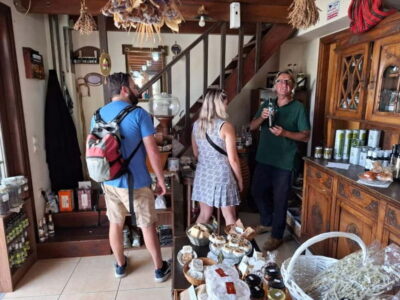
After lunch, the tour adds a quick market stop to see typical local baked and fried delicacies. This is a fun way to keep your senses engaged while the day continues toward the remaining Buddha and temple sights.
A local school visit if it’s open
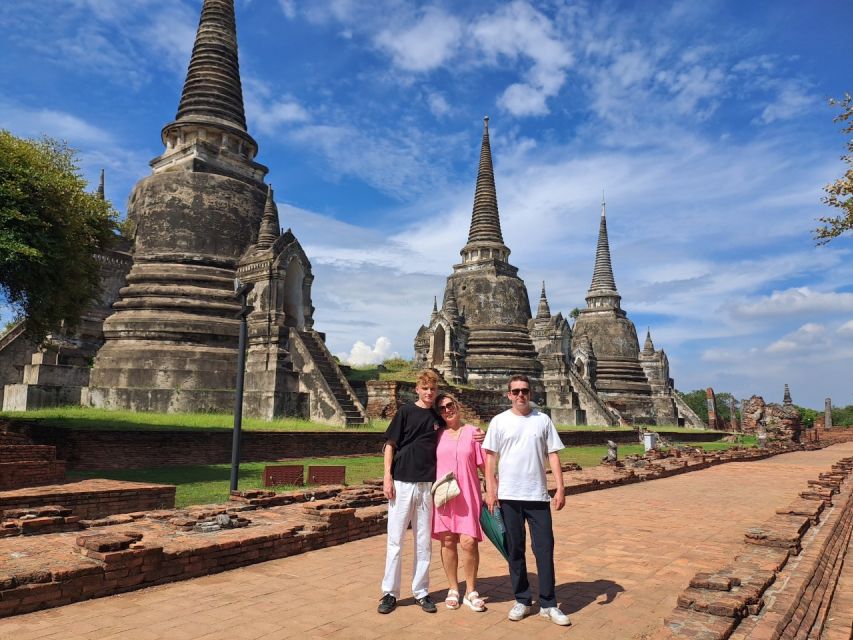
There’s also a chance to visit a local elementary school and interact with the children—if the school is open. This part is less about architecture and more about human connection, which is what gives the day its warmth.
Because it depends on whether it’s open, it can’t be guaranteed. If it happens for you, treat it with respect and keep your expectations realistic: brief, friendly contact is the point, not selfies-by-the-minute.
This stop is also a reminder of what this tour tries to balance. Yes, you’re chasing UNESCO ruins. But you’re also riding through a living region with schools, streets, and families.
Luang Phor Lokayasuttha: the large reclining Buddha statue
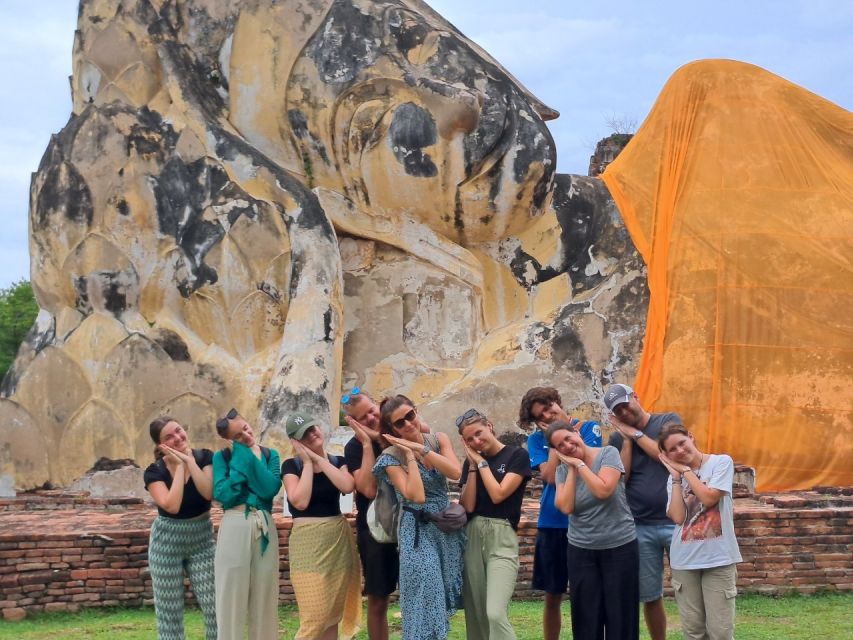
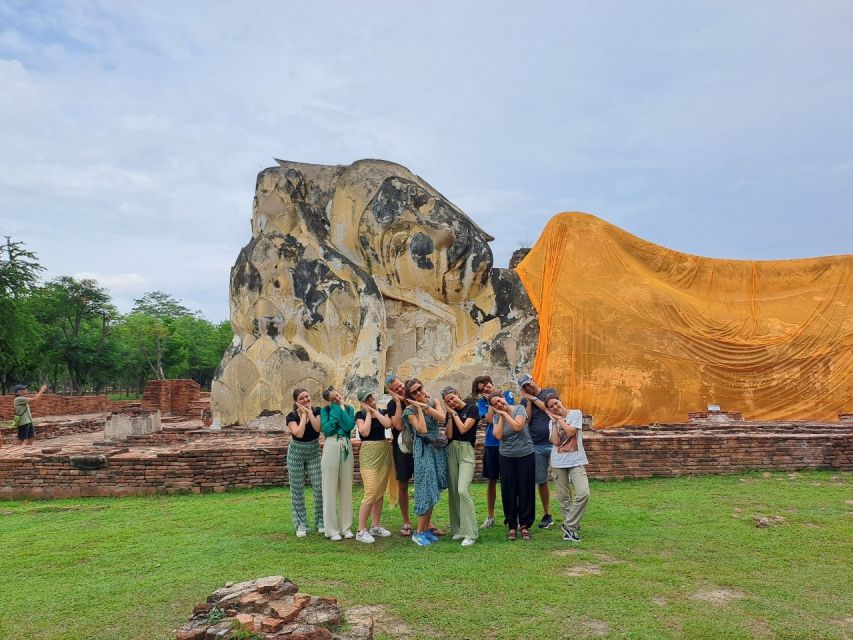
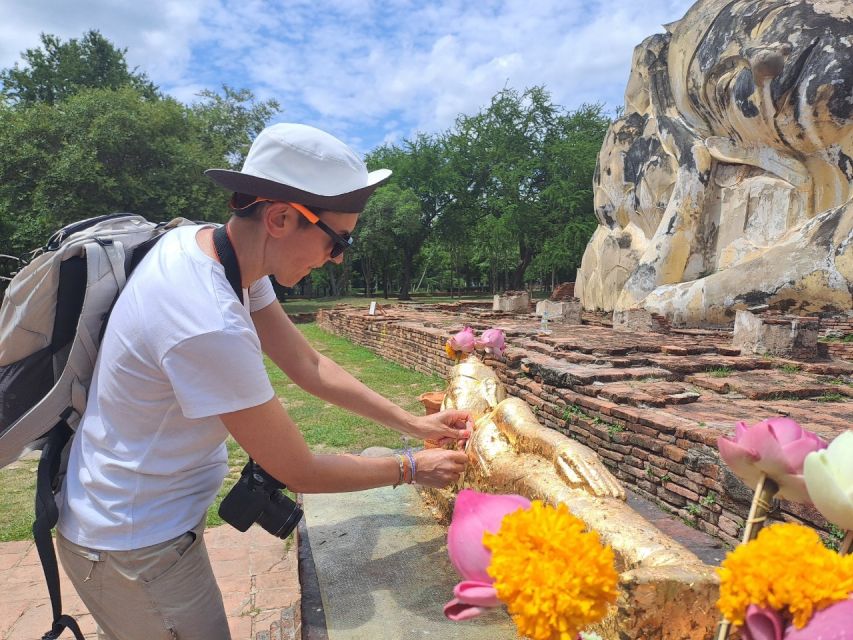
After the market, you’ll head to the reclining Buddha statue area at Luang Phor Lokayasuttha. The tour frames it as the largest Buddha statue in Ayutthaya, and seeing a reclining figure in person changes how the scale feels.
This stop is a good transition from the “temple ruins and pagodas” phase into the final big temple on the west bank. It also helps break up the day’s rhythm: you go from cycling and browsing snacks, to a more contemplative sight where you can pause and take in details.
In a long 6-hour tour, those pacing breaks matter. They keep the day from feeling like nonstop motion.
Wat Chaiwatthanaram on the west bank: a classic Ayutthaya temple
The last major temple focus is Wat Chai Wattanaram (Wat Chaiwatthanaram), on the west banks of the Chao Phraya River. The route describes it as one of the most impressive temples in Ayutthaya, constructed in 1630 by King Prasat Thong as a memorial tied to his mother’s residence in the area.
You’ll ride along the west bank until you reach the pier, then cross the river to return to the city and finish the tour.
This is the kind of closing stretch that makes the whole day feel complete. The temple’s setting next to the river gives you breathing room, and the ride back helps you move from “ruin focus” to “geography appreciation,” which is what makes Ayutthaya stick in your mind.
Tour pace, guide style, and who this suits best
At 330 minutes, this is a true half-day bike experience. You’re cycling from the morning into early afternoon, with key stops that break up the effort: the elephant-history structure, a lunch break around 12:30, temple clusters in the old capital, then the reclining Buddha and the west-bank temple.
The group size limit of 9 is a major factor in comfort. It also makes it more likely your guide can stop, answer questions, and keep everyone together on the move.
Guide quality is another strong point. The names Bung, Beam, and Spike show up in feedback as examples of guides who explain history and traditions in a way that lands well. If you’re traveling with kids or family, one review also notes a guide being accommodating with family needs, which is a good sign for a mixed group.
Who should book:
- You want temples plus countryside in one day, not just a car-driven temple list
- You like small groups and value a guided explanation
- You’re comfortable cycling for much of the morning and early afternoon
Who should reconsider:
- You need nonstop, perfectly clear English at every moment
- You expect a big lunch portion every time, based on how you usually eat
- You’re sensitive to the fact that one optional stop is dependent on whether the school is open
Value check: is the $70 price fair for this route?
At $70 per person, the value depends on what you compare it to. Here, the price covers more than just a bike. You get bike rental and a helmet, a live guide, drinking water, a Thai lunch, entrance fees for Wat Mahathat, Wat Phra Si Sanphet, and Wat Chaiwatthanaram, plus a boat crossing.
For most people, that’s the core of the “value” calculation: you’re paying for the full day experience with the big-ticket items included, instead of adding them on top. The small-group cap also matters because it affects pacing and how easy it is to follow along.
If you’re aiming to maximize temple access while also seeing countryside, $70 feels reasonable. If you only care about one or two temples and would rather DIY the rest, then you might feel less satisfied. But for a structured day that strings everything together, it’s a solid deal.
Should you book Colors of Ayutthaya?
I’d book this if you want Ayutthaya to feel like a lived-in place, not just ruins on a schedule. The combination of countryside cycling, major temple highlights like Wat Mahathat and Wat Chaiwatthanaram, and included food and entrances makes it an efficient way to see a lot without racing.
I’d be cautious if you’re very language-dependent or picky about lunch portions. In that case, you can still go—just adjust expectations and plan to ask questions in real time when something isn’t clicking.
If you’re 12 or older and you’re comfortable biking for most of the morning, this is a strong way to experience UNESCO Ayutthaya in a way that feels practical and human.
FAQ
How long is the Colors of Ayutthaya bike tour?
The tour runs for 330 minutes (about 5.5 hours).
How much does the tour cost?
It costs $70 per person.
Where is the meeting point?
The meeting point is close to PomPhet Fort on Uthong Road, with a short walk from Ayutthaya train station.
Is a bike and helmet included?
Yes. Bike rental and a helmet are included.
What languages does the guide speak?
The live tour guide offers English and Thai.
How big is the group?
It’s a small group limited to 9 participants.
Is lunch included?
Yes. Thai lunch at a local restaurant is included (with lunch typically around 12:30).
Are entrance fees included for the temples?
Yes. Entrance fees are included for Wat Mahathat, Wat Phra Si Sanphet, and Wat Chaiwatthanaram.
Does the tour include a boat crossing?
Yes. A boat crossing is included.
Can children join, and is the school stop guaranteed?
The minimum age to join is 12 years old. The local elementary school visit is included if the school is open.