REVIEW · MELBOURNE
Electric Bike Tour of Melbourne
Book on Viator →Operated by Blue Tongue Bikes · Bookable on Viator
Four hours on an e-bike makes Melbourne click fast. This tour pairs a mobile-ticket city circuit with the E-bike boost so you can see more than you would on foot, without spending all day in a bus seat. You’ll get guided orientation around the CBD and nearby areas, plus stops that frame what shaped the city.
I especially like the route design: 95% off-road bike paths and parks, with plenty of brief pauses to regroup. I also love how the commentary builds context, from Indigenous history to sporting landmarks and war remembrance, with guides like Al, Marcus, and Avalon leading groups and keeping the ride moving at an easy pace.
The main drawback to consider is timing. Because there are short stops and some history-heavy moments early on, you might spend less continuous riding than you expected in a 4-hour block. If you prefer more street-level wandering off the main sights, you may want something with fewer talking stops.
In This Review
- Key things that make this electric bike tour worth it
- E-bike orientation in Melbourne’s best bike-friendly zone
- How the 4-hour rhythm keeps you moving
- Stop-by-stop: what you’ll see and why it matters
- Southbank: Kulin Nation land and early city shaping
- Shrine of Remembrance: war memory plus Aboriginal leadership
- Melbourne Cricket Ground (MCG): sport as city identity
- Fitzroy Gardens: Cook’s cottage in the middle of park calm
- Parliament House of Victoria: gold-rush wealth made architectural
- Royal Exhibition Building: the 19th-century global meeting point
- North Fitzroy Vintage (lunch): boho neighborhood reset
- Chinatown: gold-rush roots in the heart of the city
- Hosier Lane: street art energy on bluestone
- Fed Square: public space connecting key areas
- Immigration Museum area: the city seen through people who moved here
- E-bike comfort, helmets, and staying safe in traffic-heavy moments
- Price and value: why $85.35 can work out better than it looks
- Logistics that can trip you up (and how to fix them)
- Who should book this tour
- Should you book this electric bike tour of Melbourne?
- FAQ
- How long is the Electric Bike Tour of Melbourne?
- What does the tour cost?
- Where do I meet, and what time does it start?
- What’s included in the price?
- Is lunch included?
- Are most of the roads busy or quiet for cycling?
- How many people are in the group?
- Do I need to bring anything besides money for lunch?
- Can I cancel for a refund?
- Is hotel pickup included?
Key things that make this electric bike tour worth it
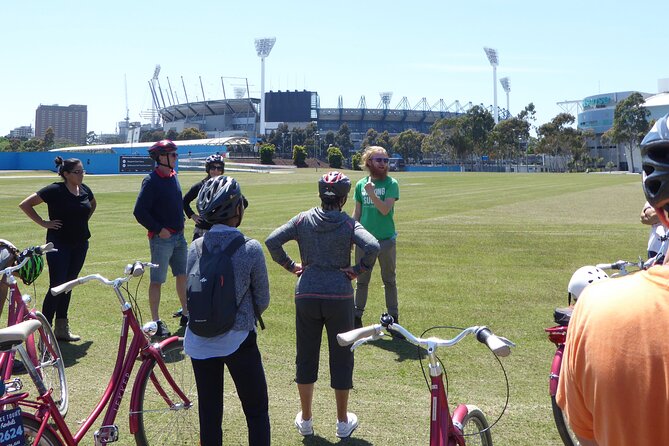
- Mostly car-free cycling: about 95% on safe paths and parks
- E-bike help for all levels: easier effort, less stress on hills or longer distances
- Small groups (max 10): easier to stay together and feel looked after
- A fast Melbourne orientation: major CBD landmarks plus surrounding neighborhoods
- Fitzroy lunch stop: North Fitzroy cafe break, with time to recharge (bring cash)
E-bike orientation in Melbourne’s best bike-friendly zone
Melbourne is a city that rewards a good route. This tour does that work for you. You start at 20 Rebecca Walk and head through the CBD and nearby areas on a plan that mixes famous landmarks with neighborhood flavor.
The E-bike part matters more than most people think. Even if you’re an average walker or someone who hasn’t biked in years, the pedal assist helps you keep steady without turning the ride into a workout you regret. In real terms, that means you can focus on the sights—Flinders Street area energy, Chinatown streets, and bluestone lanes like Hosier Lane—instead of burning your legs before you even hit the best photo stops.
I also like that the tour gives you structure. You’re not just “cycling around.” You get a narrated route that explains why these places matter: Indigenous presence and recognition on Kulin Nation land, the role of settlement and gold-rush wealth, and major threads like sport and military remembrance. It’s a fast way to get your bearings so your next day in Melbourne feels less random.
You can also read our reviews of more tours and experiences in Melbourne.
How the 4-hour rhythm keeps you moving
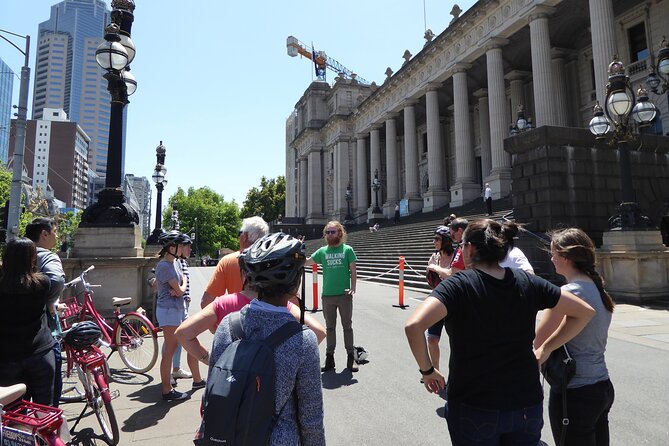
The whole ride is about 4 hours with short stops (often around 5 minutes each). That sounds quick, but the pacing is the point. You get brief looks, you hear the story, you regroup, and then you roll again.
One thing I’d plan for: the schedule includes multiple moments where the group pauses together. Some riders love this format because it turns the city into an organized walk-with-a-bike. Others may find the early stretch a bit dense. If you’re the type who wants the minimum amount of talking at the beginning, be aware that the orientation portion can run a little longer than you’d expect.
Another practical note: the group size is capped at 10 travelers. That keeps the flow calmer, especially when you stop and start at crowded pedestrian crossings. In the comments people also mention bike safety and staying together, which is exactly what you want in a city ride.
Finally, the route is described as mostly flat and mostly off-road, which helps a lot. You still need to pedal and stay alert around pedestrians, but you’re not constantly fighting traffic.
Stop-by-stop: what you’ll see and why it matters
This is the kind of route where you can come away with more than a list of landmarks. Each stop is chosen to explain a layer of Melbourne—who lived here first, what changed after settlement, what people built, and how the city became a global draw.
Southbank: Kulin Nation land and early city shaping
You begin at Southbank, cycling on Kulin Nation land. The tour includes a respectful acknowledgment of the people and environment of the Kulin Nation, whose land was never ceded. You’ll also get a sense of some settler figures who shaped the city.
Why I like this start: it’s not just geography. It frames Melbourne as a place with an ongoing story, not only a backdrop of modern buildings. The only drawback is that this is an early “listen first” stop, so if you’re eager to ride immediately, you’ll want to settle in quickly.
Shrine of Remembrance: war memory plus Aboriginal leadership
Next is the Shrine of Remembrance, Victoria’s major war memorial. This stop also brings in William Barrack, described as an Aboriginal leader, activist, cultural ambassador, educator, and advocate for Aboriginal rights.
This pairing matters. You’re not treating history as a single theme. You’re seeing how remembrance and community leadership coexist in the public landscape. Expect a quiet moment and then a return to cycling.
Melbourne Cricket Ground (MCG): sport as city identity
Then it’s the Melbourne Cricket Ground (MCG). For sport fans, this is the obvious thrill. For everyone else, it’s the reminder that Melbourne doesn’t just host events—it treats sport like part of its identity.
The value here is timing. After a couple of heavy history stops, the MCG gives you a more energizing scale change. You get landmark impact without needing paid entry.
Fitzroy Gardens: Cook’s cottage in the middle of park calm
In Fitzroy Gardens, you’ll find Cook’s cottage, shipped from England and rebuilt brick by brick. It’s a surprising object in a garden setting, and it helps explain how Melbourne imported and adapted ideas from abroad.
The potential drawback: garden stops are nice, but your time is short. If you want to linger for photos or a longer look at the cottage area, plan to come back after the tour.
Parliament House of Victoria: gold-rush wealth made architectural
At Parliament House of Victoria, you’ll hear how the building reflected the wealth of Melbourne during the gold rush. This is one of those “you can see it even if you don’t know it yet” stops.
Practical tip: this is a great place to notice how the city’s power and politics were built into stone. Even with limited time, you’ll come away with a clearer visual memory.
Royal Exhibition Building: the 19th-century global meeting point
The Royal Exhibition Building is a standout stop. It connects to the international exhibition movement of the 19th century—where people exchanged goods, technology, ideas, and culture.
I like this one because it makes Melbourne feel connected to a wider world, not just local history. If you like big-picture stories, you’ll get a lot out of this pause. If you prefer pure sightseeing without context, just treat it as a strong architectural photo break.
North Fitzroy Vintage (lunch): boho neighborhood reset
Then comes North Fitzroy Vintage, where you’ll get a lunch stop at a favorite cafe. This is where you’ll taste the neighborhood vibe and take a breather after cycling and listening.
Bring extra cash, because food and drinks are not included unless specified. The time is short—around the 5-minute mark in the schedule—so it’s more of a sit-and-eat break than a full lunch hour. If you’re hungry, decide what you want quickly once you reach the cafe.
Chinatown: gold-rush roots in the heart of the city
Next is Chinatown, described as the second oldest in the world and established in 1851 in response to the gold rush. This is a perfect contrast after the park and memorial stops.
The downside to consider: this area can feel busy, and it can be tempting to drift into side streets. The tour’s job is to keep you moving safely back to the group, so if you’re someone who loves roaming, set a plan for that on your own afterward.
Hosier Lane: street art energy on bluestone
At Hosier Lane, you pull up to see one of Melbourne’s most famous street art laneways. The lane is known for bluestone and colorful murals that give the city its urban edge.
This stop is quick, but it’s a favorite because you can look with your eyes instead of your “history brain.” If street art is your thing, I’d still treat this as a taste and save a longer revisit later.
Fed Square: public space connecting key areas
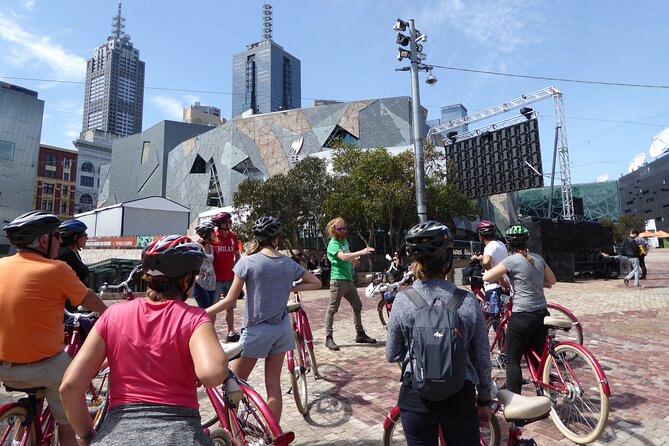
At Fed Square, you get the buzz of Melbourne’s first public square and an architecturally designed area linking Flinders Street to the Yarra River. Nearby heritage buildings like St Paul’s Cathedral also frame the scene.
This is a good “reset point” stop. You’ve toured history, sport, gardens, and neighborhoods—and now you’re back in a modern public hub.
Immigration Museum area: the city seen through people who moved here
Finally, you’ll stop near the Immigration Museum. The framing is that immigrants make up 50% of the population, so Melbourne’s identity is shaped by migration.
Even if you don’t go inside (the tour is focused on cycling stops), the view and context help you understand why the city feels so international. It’s a thoughtful way to end the story arc.
E-bike comfort, helmets, and staying safe in traffic-heavy moments
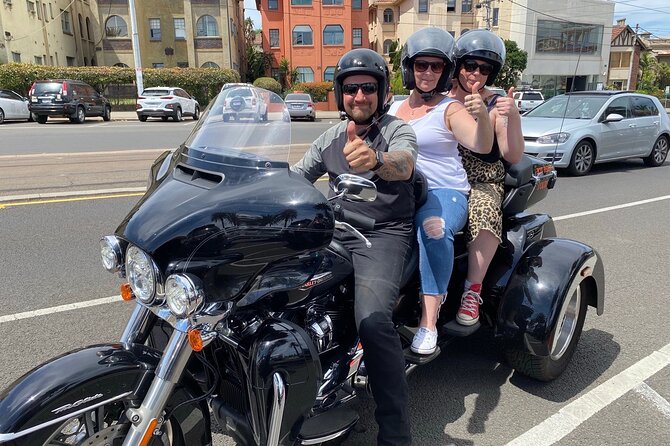
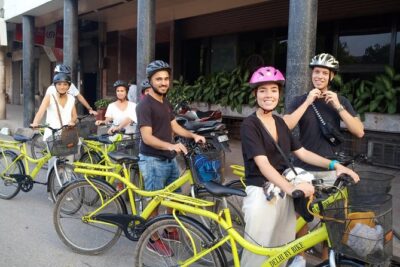
You’ll get helmet use and use of an E-bike as part of the tour, plus a guide to keep the group together. This matters because Melbourne has busy pedestrian moments. Even on bike paths, you’ll be sharing space with people walking, stopping, and taking photos.
From the way the tour is run, the big comfort win is that the E-bike handles help reduce rider stress. Multiple guides are mentioned across different groups—like Freddie, Marcus, Al, and Avalon—and riders consistently note that instructions make the bikes easy to operate, even for people who aren’t confident cyclists.
Still, keep your expectations realistic:
- You should be comfortable putting in basic effort with your legs.
- You should be prepared to slow down around pedestrians.
- You should dress for outdoor weather changes in Melbourne.
If you’re over 60 or not very fit, this type of assist can be the difference between trying a bike tour and skipping it entirely. Just don’t assume the ride is zero-effort. It’s more about making the experience doable and enjoyable.
Price and value: why $85.35 can work out better than it looks
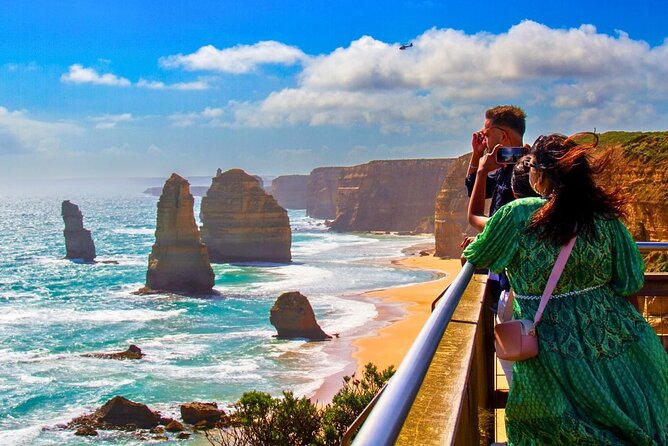
At $85.35 per person, the cost can feel like a lot until you break down what you actually get.
You’re paying for:
- A guided route (not just a rental bike)
- E-bike access
- Helmet included
- A structured run through major sights and neighborhoods in about 4 hours
That’s value when you compare it to spending a whole day doing partial sightseeing—walking one area, taking rides for others, and losing time to transit. You also avoid the work of figuring out the safest cycling lines yourself.
The one cost you should plan for is lunch. The tour includes a cafe stop in Fitzroy, but food and drinks are not included. Bring extra cash and pick a meal you’ll feel good about, because you’ll want energy for the ride back.
One more value point: the small group size. With a maximum of 10 travelers, you get a more personal pace than big bus-style tours, and the guide can help the slower riders keep up.
Logistics that can trip you up (and how to fix them)
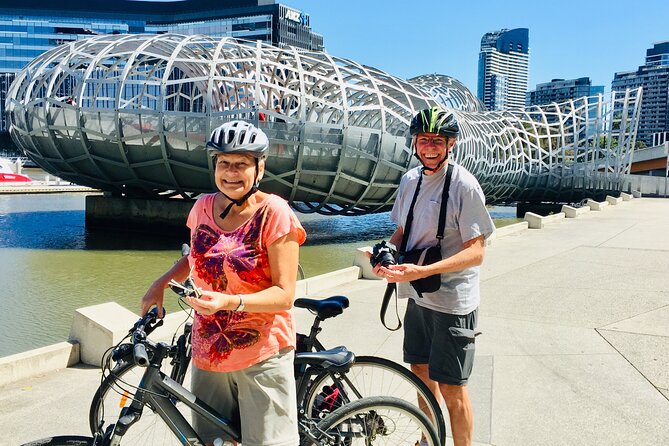
A small thing, but worth mentioning: the meeting location. The official start point is 20 Rebecca Walk, but one rider noted the meeting point was different in practice (they reported 2 Rebecca Walk). If you’re going, I’d double-check the exact pin on your confirmation and do a quick street scan when you arrive. Melbourne street numbering can surprise you.
Also, bring a little flexibility. The schedule is filled with short stops, so you’ll want to be ready to get on and off your bike quickly. Pack like you’re moving through a city loop: phone, water if you prefer, and a light layer.
Finally, the ride is described as suitable for most travelers, but it’s still a bike tour. If you want a sit-and-stare style of sightseeing, you might be happier with another format.
Who should book this tour
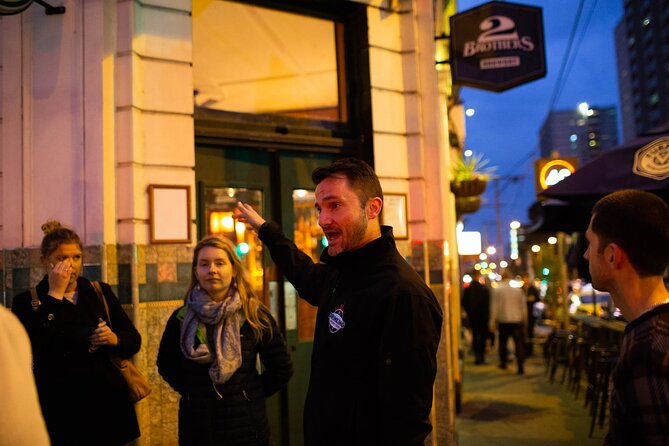
This electric bike tour is a great fit if you want:
- An efficient first look at Melbourne
- A way to cover major sights without spending hours walking
- Help from E-bikes if cycling feels intimidating
- A guided route that explains more than just what’s in front of you
It’s also ideal for groups mixing experience levels—because the smaller group size and pedal assist make it easier to keep everyone together.
If you’re a hardcore cyclist who wants long riding time with fewer stops, you might find the pacing a bit “stop and go.” If you want lots of side streets and less talking, you may want a different type of ride.
Should you book this electric bike tour of Melbourne?
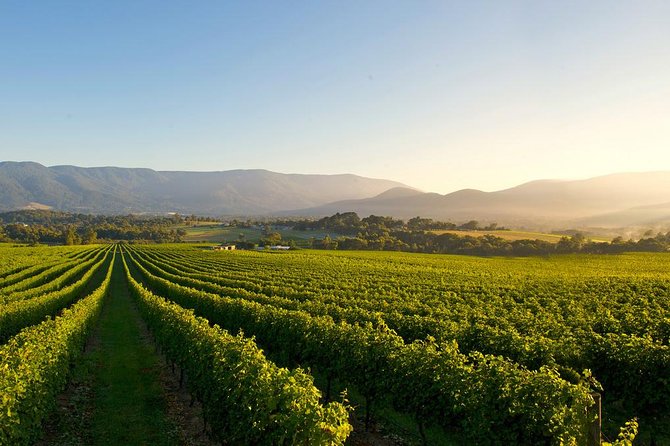
If you’re doing Melbourne for a few days and want a fast, safe introduction, I’d book it. The combination of mostly car-free cycling, major landmarks, and story-driven stops hits a sweet spot for many visitors. The Fitzroy cafe stop is a nice bonus, and the route ends where it begins, so you can keep exploring after without hunting for your next plan.
I’d think twice only if you strongly prefer longer continuous ride time, or if you get impatient with history commentary at the start. In that case, you’ll probably still enjoy the sights, but you may feel like the ride portion is shorter than what you wanted.
FAQ
How long is the Electric Bike Tour of Melbourne?
It runs for about 4 hours.
What does the tour cost?
The price is $85.35 per person.
Where do I meet, and what time does it start?
You meet at 20 Rebecca Walk, Melbourne VIC 3000, and the start time is 10:00 am. The tour ends back at the meeting point.
What’s included in the price?
You get a guided bike tour, use of an e-bike, and use of a helmet.
Is lunch included?
No. There is a lunch stop in North Fitzroy Vintage, and you’ll need extra cash for food and drinks.
Are most of the roads busy or quiet for cycling?
The tour is designed so that about 95% is off roads, using safe bike paths and parks.
How many people are in the group?
The tour has a maximum of 10 travelers.
Do I need to bring anything besides money for lunch?
You should come prepared for an outdoor ride and be ready for biking with your helmet provided. Bringing cash for lunch is the main extra item specifically called out.
Can I cancel for a refund?
Yes, you can cancel for free up to 24 hours before the experience start time for a full refund.
Is hotel pickup included?
No. Hotel pickup and drop-off are not included.