REVIEW · MANILA
Experience Intramuros with Bamboo Bicycle – Ecotours
Book on Viator →Operated by Bamb Ecological Technology Inc. · Bookable on Viator
Some of Manila’s best history is easiest on a bike. This small-group Intramuros ride uses bamboo bicycles for a laid-back way to see major landmarks, including stretches along the old city walls and major gates.
I like two things a lot: you cover more ground than walking, and the guide focus stays on the places that explain Manila’s layers—Spanish, Chinese, and WWII-era history—without turning it into a textbook.
One thing to consider: it’s not a full-on cycling workout. You get lots of short stops and a bit of walking inside Fort Santiago, so if you want nonstop pedaling, you may feel a bit teased.
In This Review
- Key things to know before you pedal
- Getting your bearings: Bambike HQ and the start in Intramuros
- Casa Manila to Muralla Street: colonial architecture and WWII reminders
- Puerta Real Gardens: the gate that explains Spanish defense thinking
- Café Y Ruedas break: a cool reset near the walls
- Puerta del Parian and Plaza Roma: Chinese influence in public space
- Manila Cathedral: Christianity in the center, with a real interior visit
- Fort Santiago: stone fortress, plus a bit of walking
- San Agustin Church: UNESCO status and why it’s taught here
- Safety and pacing on busy streets (and why the group size helps)
- What you actually get for $39: value that goes beyond the bike
- Rain or shine: how weather changes the feel
- Who this tour suits best (and who might want a different option)
- Book it or skip it? My decision guide
- FAQ
- How long is the Intramuros with Bamboo Bicycle tour?
- How much does the tour cost?
- Where does the tour start and end?
- How big is the group?
- What’s included in the price?
- Is biking difficult?
- What happens if it rains?
- Is there food or drinks during the tour?
- Are children allowed?
- Can you bring a service animal?
- What if I need to cancel?
Key things to know before you pedal
- Bamboo bikes with different styles and sizes so you can match a bike that fits you comfortably
- Max 15 people with a local guide and an escort/host for smooth group control
- Old walls + major gates including Puerta Real and Puerta del Parian
- UNESCO area stop at San Agustin Church, taught as part of the story (not just a photo stop)
- Included cool break at Café Y Ruedas after riding toward the wall
- A mostly flat route that’s easy for many riders, even if Intramuros streets can feel busy
Getting your bearings: Bambike HQ and the start in Intramuros
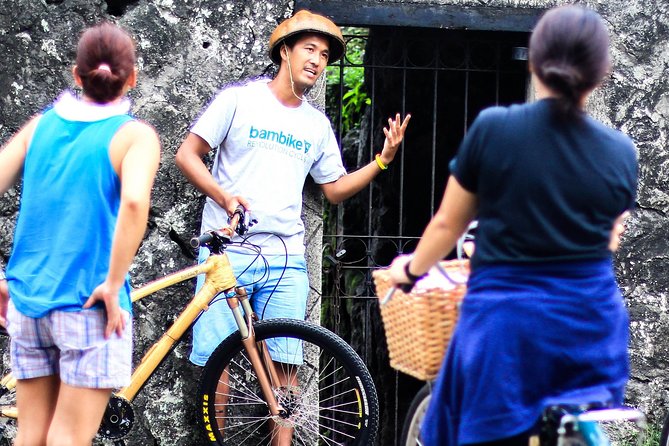
Your tour kicks off at Bambike Ecotours Intramuros at Plaza San Luis Complex, near the corner of M General Luna St and Real St in Intramuros. Expect a quick start process: you’ll fill out waivers first, then a staff member helps you pick the bamboo bike style and size that fits.
This matters more than it sounds. Bamboo bikes are not all the same feel, so taking a few minutes to choose your match usually makes the rest of the ride smoother. It also helps you settle in right away, especially if it’s your first time riding in the Intramuros area.
You’ll also get key ride gear as part of the experience: helmets, plus sunscreen or rain ponchos when needed. A cold towel comes at the end, which is a nice touch after a few hours in the sun.
You can also read our reviews of more tours and experiences in Manila.

Casa Manila to Muralla Street: colonial architecture and WWII reminders
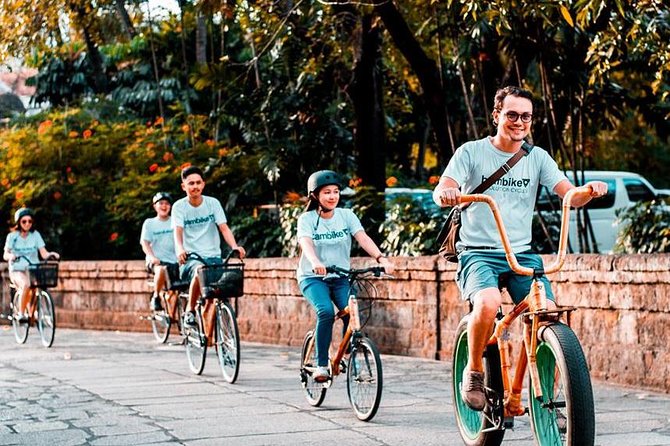
From the HQ, the first meaningful stop is Casa Manila. This isn’t just a random photo corner. The point is to see a traditional house inspired by the Spanish Colonial Period. You get a better feel for what “colonial Manila” looked like, before you start moving toward the walls and gates.
Next you ride along Muralla Street, with a history stop tied to the Japanese Cannon. This is where the tour shifts toward WWII-era context—what happened in the Philippines and how that period connects to global war history. It’s one of those stops that works well on a bike because you’re moving along the same historical corridor as you learn.
Practical note: Muralla Street can be crowded with pedestrians. Even though the biking is described as flat and easy, you’ll still want to stay calm and follow your guide’s pace through the busier stretches.
Puerta Real Gardens: the gate that explains Spanish defense thinking
One of the highlights of the route is Puerta Real Gardens. Here, you explore and learn about one of Intramuros’ main gates and the Spanish defense logic beyond the walls.
This stop makes more sense once you’ve already seen Casa Manila. The architecture and the “why” connect: you start to understand Intramuros as a whole system, not just a collection of churches and plazas.
Timing is fairly relaxed at this point—about 20 minutes. That gives you room to look around, take a few photos, and still keep the energy up for the rest of the ride.
Café Y Ruedas break: a cool reset near the walls
At Café Y Ruedas, you bike out toward the walls again for a refreshing break. This is listed as included, and the vibe is simple: cool down, regroup, and keep the afternoon legs from turning into regret.
Several guides in the reviews are praised for pacing, and this is part of why: that café pause gives your group a mental breather. You don’t have to rush, and it helps the tour feel like a shared walk-and-ride day rather than a sprint of monuments.
If you’re traveling on a hot day, this stop is a smart buffer. Intramuros can get intense with sun and foot traffic, and the route plan doesn’t pretend that you’re a robot.
Puerta del Parian and Plaza Roma: Chinese influence in public space
After the café break, you reach Puerta del Parian, one of the main gates and public plazas. The focus here is the significance of Chinese people and their influence in Philippine history.
This is a valuable part of the tour because it broadens the story beyond the usual Spanish-only framing. You’ll connect the dots between communities, commerce, and how public space shaped life inside Intramuros.
From there, Plaza Roma ties the tour back to what’s around the plaza, including the Manila Cathedral. You’ll learn about the plaza’s history and how nearby establishments developed around this civic center.
Expect short, teachable moments here. This isn’t a slow museum crawl. It’s more like a guided “read the street” experience—what you’re seeing and why it matters, in manageable chunks.
Manila Cathedral: Christianity in the center, with a real interior visit
Manila Cathedral is the tour’s next focus and it functions as a key anchor stop. You visit the heart of Christianity in the Philippines and also get a look at the church interior.
This is a good stop if you want your history day to include faith and art, not only war and fortifications. And because the tour is moving by bike, you don’t feel like you’re stuck in one place for hours.
Plan on about 10 minutes here, so it’s best for scanning, absorbing, and getting the photos you came for—then leaving before the crowd energy spikes.
Fort Santiago: stone fortress, plus a bit of walking
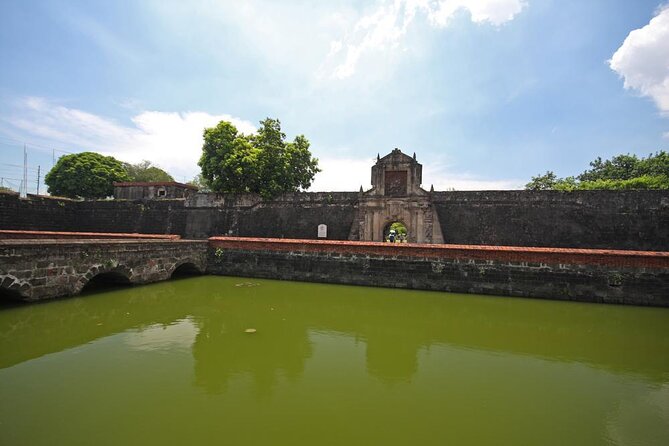
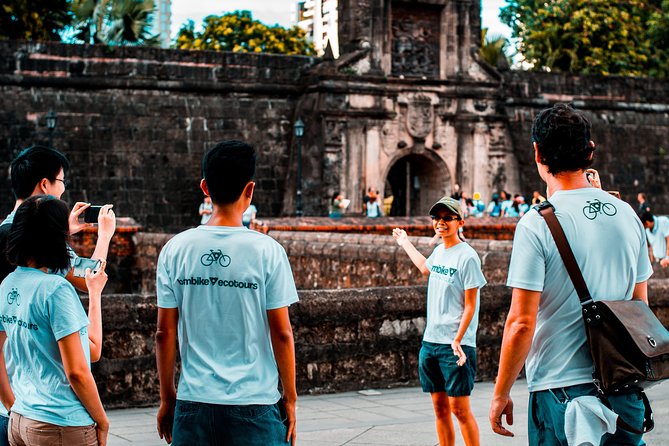
Fort Santiago is where the tour slows down the most—about 40 minutes—because it’s a major site and it needs time to make sense. You explore the stone fortress and learn about its significance in Philippine history.
One detail to keep in mind: there’s a small amount of walking inside Fort Santiago. It’s not a long hike, but if you’re expecting an all-seat ride, adjust your expectations.
Why this stop is worth extra time: the fortress is one of those places where the physical setting helps your understanding. You can see how fortification works, and you can feel the “hard edges” of the city’s defense mentality.
If you’re the type who likes your history with structure—this is your segment.
San Agustin Church: UNESCO status and why it’s taught here
The tour ends with San Agustin Church – Immaculate Conception Parish, framed as the oldest church in the Philippines and also as a UNESCO World Heritage Site.
It’s a quick stop—about 5 minutes—so don’t expect a long sit-down visit. But the tour’s approach works well: you’re not thrown into a landmark with zero context. You already learned about gates, plazas, and why Intramuros was built to be defended. Then you end with a landmark that shows cultural endurance.
This ending style often lands well. The day closes with a sense of “how old Manila still breathes,” even if you’re only there briefly.
Safety and pacing on busy streets (and why the group size helps)
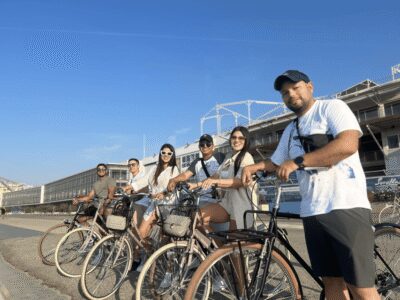
This is a small-group experience with a maximum of 15 travelers, which makes a difference in a place like Intramuros. Your guide keeps the group together, and there’s also an escort/host to help manage movement.
In the reviews, you’ll see a recurring point: support teams can slow or stop traffic so the group stays safe while crossing key roads. That matters, because Intramuros is not a closed bike path. You may encounter cars and motorcycles at times, especially while moving between areas.
Pace-wise, the biking is described as flat and easy. But be realistic: the tour includes lots of historical stops, so you’re riding between them, not clocking miles. If you’re a rider who wants maximum time pedaling, a few people felt the early stops might be shorter to allow more cycling later. That’s a fair tradeoff if you’re here for history and photos.
What you actually get for $39: value that goes beyond the bike
At $39 per person for about 3 hours, this tour is priced like an activity you do once in a city with lots of sights—easy to justify if you want a structured overview fast.
Here’s what you’re paying for, in practical terms:
- a local guide and escort/host (so you’re not guessing at what you’re looking at)
- a helmet and the bamboo bicycle
- sunscreen or rain ponchos when needed
- water during the ride and refreshments afterward (billed as part of the experience)
- cold towel at the end
- an included stop at Café Y Ruedas
- gratuities are included
That package can be better value than “rent a bike + figure out history on your own,” especially if you don’t want to spend your Manila hours reading plaques.
What’s not included: the general tour notes say food and drinks aren’t included unless specified, and alcohol is available to purchase. In other words, rely on the included water and the tour’s refreshment/snack parts, and plan to cover anything else yourself.
Rain or shine: how weather changes the feel
The tour operates in all weather conditions. That’s not fluff. Rain can change how the ride feels, and it can also affect crowd energy and visibility.
The good part: you’re provided rain ponchos if needed, plus the route is designed for short riding segments between stops. Several reviews mention ponchos helping when warm rain arrived mid-tour, so the experience doesn’t seem to fall apart when the sky acts up.
Still, dress for humidity and unpredictable showers. Wear something you can handle getting slightly wet.
Who this tour suits best (and who might want a different option)
This is a great fit if you want:
- an easy cycling day with guided history
- a small-group experience (max 15)
- major Intramuros sights in one run: walls, gates, Fort Santiago, and key churches
It’s also a smart choice if you’re traveling with kids—just remember you’ll ride with cars and motorcycles at times, and kids need to be comfortable riding. If your child can’t handle bikes confidently, you might want to rethink.
You might want a different option if:
- you’re chasing the most time possible on the pedals
- you’re sensitive to unpleasant smells around certain starting-area spots (one review flagged a strong sewage-like smell near the office area)
Book it or skip it? My decision guide
Book this tour if you want an efficient, structured way to see Intramuros without getting lost in the streets. The bike format makes the day feel lively, but the real win is how the guide ties together gates, plazas, and the big UNESCO and fortress stops. It’s also good value at $39 because the ride and the guiding are both built in.
Skip it if your #1 goal is a long cycling session. This is history-first, with cycling as the transport that keeps the day moving. If you want nonstop riding, you’ll likely feel that the frequent stops cut into your pedal time.
If you like photos, short lessons, and a friendly group pace, this is one of the easier ways to understand old Manila fast.
FAQ
How long is the Intramuros with Bamboo Bicycle tour?
It’s about 3 hours (approx.).
How much does the tour cost?
The price is $39.00 per person.
Where does the tour start and end?
It starts at Bambike Ecotours Intramuros, Bambike HQ in Plaza San Luis Complex (Real St, corner M General Luna St, Intramuros, Manila). The tour ends back at the meeting point.
How big is the group?
The tour has a maximum of 15 travelers.
What’s included in the price?
Included items are a local guide, tour escort/host, helmet, use of a bamboo bicycle, sunscreen or rain ponchos (when needed), cold towel at the end, bottled water/refreshments as part of the experience, and gratuities.
Is biking difficult?
The ride is described as flat and easy, with some streets that can be crowded with pedestrians. There is also a small amount of walking inside Fort Santiago.
What happens if it rains?
The tour operates in all weather conditions. You’ll be provided rain ponchos when needed, and you should dress appropriately.
Is there food or drinks during the tour?
The experience includes bottled water during the ride and refreshments afterward. There is also an included stop at Café Y Ruedas. Alcohol isn’t included and can be purchased.
Are children allowed?
Children must be accompanied by an adult.
Can you bring a service animal?
Service animals are allowed.
What if I need to cancel?
Free cancellation is available up to 24 hours in advance for a full refund. If you cancel less than 24 hours before the start time, the amount paid is not refunded. If the experience is canceled due to poor weather, you’ll be offered a different date or a full refund.