REVIEW · GLASGOW
Glasgow: City Highlights Guided Bike Tour
Book on GetYourGuide →Operated by Gallus Pedals · Bookable on GetYourGuide
Glasgow clicks into place on two wheels. I love the refurbished Royal Mail bikes—saved from landfill and rebranded in tribute to women from Glasgow’s past—and the way the guide ties street scenes to real stories. The second big win for me is the built-in photo-stop pacing that feels relaxed, not rushed.
You’ll also get a strong mix of major landmarks and local character, from the River Clyde to Kelvingrove and the University of Glasgow. The main consideration is simple: you’re cycling for about 2.5 hours, the route is 9–13 km, and you should be fine with basic riding plus some short hills, in rain or shine.
In This Review
- Key things to know before you go
- Meeting at The Pentagon Centre: what your morning-or-afternoon flow looks like
- Royal Mail bikes and the Gallus vibe: why this feels different from a standard sightseeing ride
- Cycling the Historic Clydeside: River Clyde, industry, and modern landmarks in the same breath
- Yorkhill and SWG3 street art: creative Glasgow with room to breathe
- Kelvingrove Museum and Kelvingrove Park: free culture plus community stories
- University of Glasgow: a Hogwarts-like stop with world-changing context
- River Kelvin return ride: calm cycling and time to take it in
- Guides, stories, and pacing: what the best part of the tour actually delivers
- Price and value: $80 for a 3-hour guided bike ride that includes more than a bike
- Who should book this Glasgow bike tour (and who should reconsider)
- Should you book Glasgow City Highlights Guided Bike Tour with Gallus Pedals?
- FAQ
- How long is the Glasgow city highlights bike tour?
- What distance will we cycle?
- Where do we meet, and where does the tour end?
- What’s included in the $80 price?
- Is it suitable for kids or shorter riders?
- Does the tour run in bad weather?
Key things to know before you go
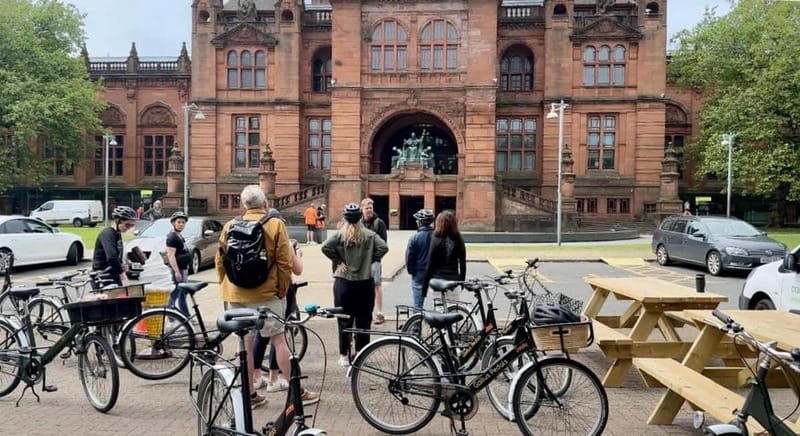
- Royal Mail bikes with a purpose: decommissioned bikes are refurbished and rebranded to honor women from Glasgow’s history
- A guided route that makes sense: 9–13 km, with safety briefing and a smooth ride rhythm
- Iconic stops plus local street art: Kelvingrove Museum, Kelvingrove Park, and creativity in Yorkhill/SWG3
- Big-name Glasgow, explained well: the University of Glasgow (including Adam Smith and Lord Kelvin)
- Clyde to Kelvin in one tour: you’ll get both the industrial past and a calmer riverside return
- Included extras that help on the day: helmet, bike rental, plus fruit and a snack
Meeting at The Pentagon Centre: what your morning-or-afternoon flow looks like
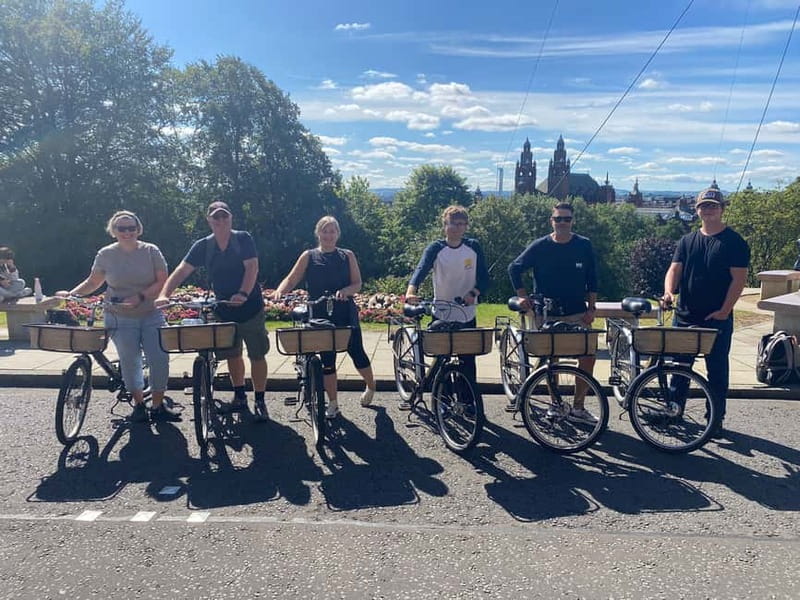
This tour starts at The Pentagon Centre at 36 Washington Street, G3 8AZ. You’ll meet in the reception area, where the guide gets you set up on a vintage-style Gallus Pedals bike and runs through a quick safety chat. It’s the kind of start that helps you feel confident early, especially if you’re not an everyday cyclist.
Then you roll. The ride time is about 2.5 hours inside a total 3-hour experience, so you’re not spending half your afternoon stopped in traffic. Expect a short “secret stop” moment built around the safety briefing—then you’re moving again quickly.
The bikes themselves are a standout. You’ll ride on a fully refurbished Royal Mail bicycle, and the rebranding is part of the charm: the bike becomes a moving mini-history lesson, not just transportation. If you care about travel that’s a little more thoughtful than another city-bus photo line, this format fits.
You can also read our reviews of more tours and experiences in Glasgow.

Royal Mail bikes and the Gallus vibe: why this feels different from a standard sightseeing ride
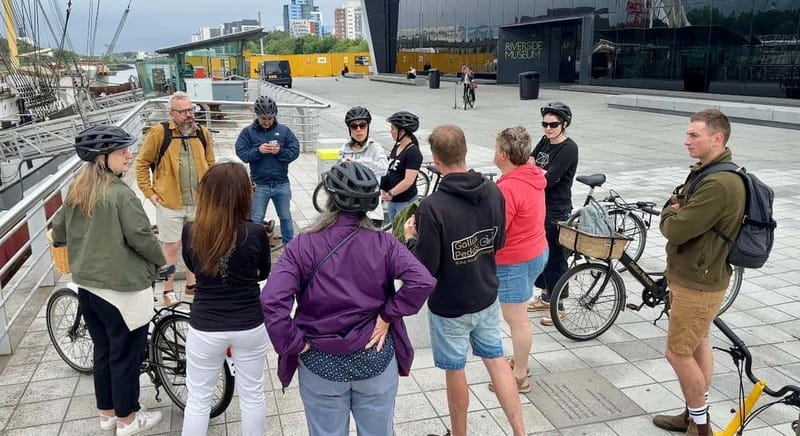
“Gallus” is a Glaswegian word for bold, cheeky, full of character, and that attitude shows up in how the tour is presented. The guide’s job isn’t only to point at sights. It’s to connect Glasgow’s past and present in a way that sticks—stories with personality, not a lecture.
You’ll also notice the eco angle right away. These bikes are not new-for-you rentals; they’re refurbished, kept in use, and rebranded instead of ending up in landfill. That makes the whole experience feel more grounded: you’re seeing the city from an older-but-rebuilt “working” vehicle.
And yes, the tour is practical. Helmet, bike rental, and small fuel like 1 piece of fruit and 1 snack are included. You might still want your own water bottle (water bottles can be provided, but bringing your own helps cut plastic use), because you’ll be outside cycling for a decent stretch.
Cycling the Historic Clydeside: River Clyde, industry, and modern landmarks in the same breath

One of the tour’s strongest arcs is how it moves through Glasgow’s “how we grew” story. You’ll pedal alongside the River Clyde, tied directly to the city’s industrial rise—shipbuilding, trade, and a transformation that helped Glasgow become the so-called Second City of the Empire.
This section works because the river is doing double duty. It’s a scenic cycling corridor, and it’s also an easy way to understand why the city developed where it did. You’re not just learning names; you’re moving through the physical geography that shaped the economy.
Then the tour layers in modern architecture you’ll recognize right away: you’ll cycle past landmarks like the Armadillo and the Hydro. That contrast—old industry story along the same river that now hosts cutting-edge buildings—helps Glasgow feel like one living city instead of two separate time periods.
Yorkhill and SWG3 street art: creative Glasgow with room to breathe
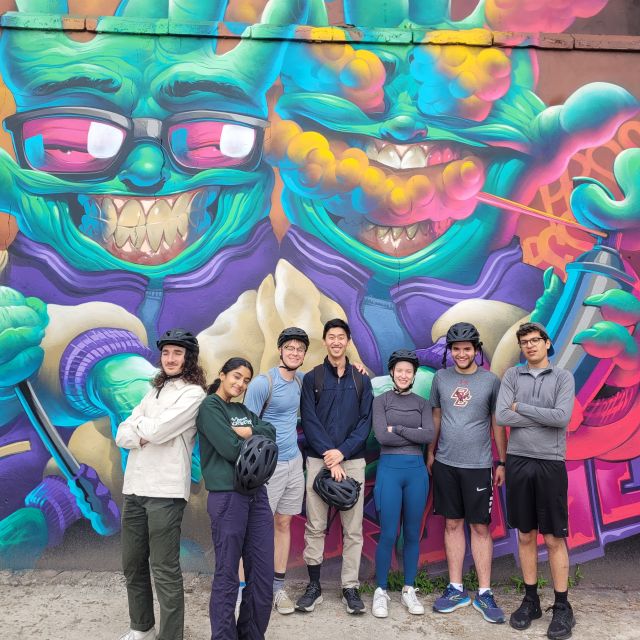
After the industrial core, the route shifts toward neighborhoods known for creative energy. You’ll head into areas like Yorkhill and SWG3, with time to see how artists have transformed brick walls into street-level galleries. This isn’t framed as “look at art because art is cool.” The guide connects it to how Glasgow expresses itself and, in their telling, how creativity helps shape the city’s future.
This is a great section to slow down mentally. Street art can be easy to rush past on foot, but here you have a moving rhythm that still allows you to take it in. Plus, you’re getting variety: the tour already covered grand institutions and big-picture history, so this part adds texture.
If you like photography, this is where you’ll probably do the most “wait—stop for one more” moments. The alleyway feel and wall textures make for better shots than most landmark backdrops.
Kelvingrove Museum and Kelvingrove Park: free culture plus community stories
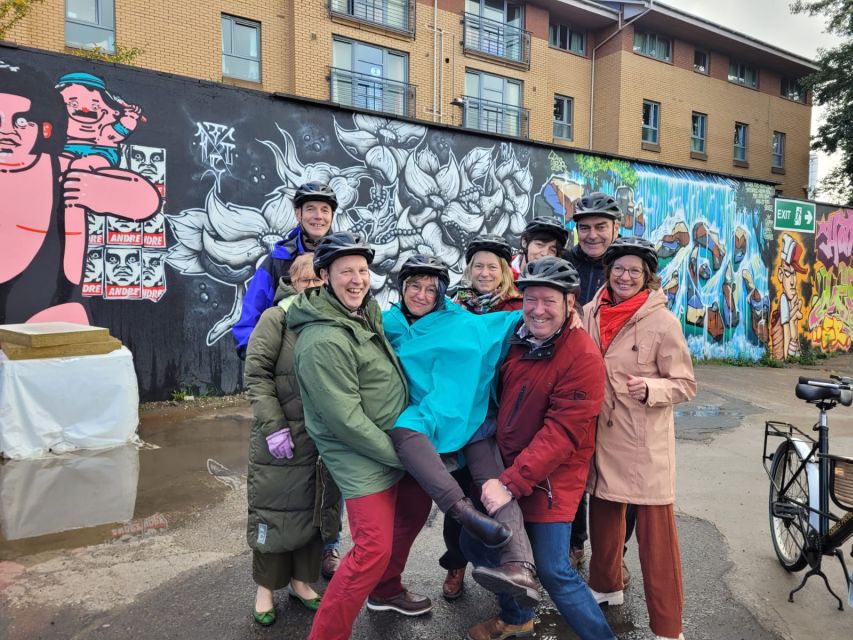
Next up is Kelvingrove Museum, a major highlight because it’s free to enter. Even if you don’t go inside for long, the museum stop anchors the West End feel of Glasgow—classical architecture energy, big public-culture presence, and an easy transition into green space.
From there, you ride into Kelvingrove Park, which is more than just a break from the road. The guide uses the park setting to talk about Glasgow’s multicultural community and how residents build belonging in everyday ways. You may hear conversation threads like yoga, raves, Gaelic schools, and neighborhood spirit—topics that might sound random until you realize they’re all pointing at the same idea: Glasgow’s culture is made by people, not just monuments.
One practical note: a stop in a park is great for resetting your legs. The tour is paced to keep you comfortable rather than grinding up every hill like a training ride.
University of Glasgow: a Hogwarts-like stop with world-changing context
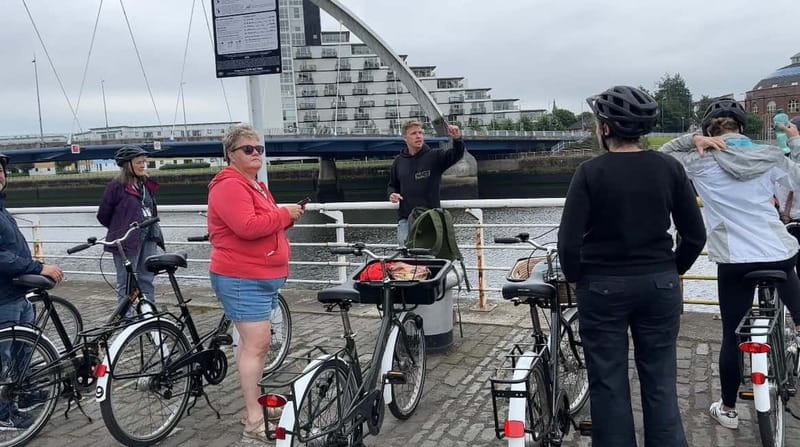
Then comes the University of Glasgow—often described as Hogwarts-esque, and it’s easy to see why once you’re there. This stop isn’t just a dramatic façade moment. The guide connects the university to the thinkers associated with it, including Adam Smith and Lord Kelvin, and explains why Glasgow has had an outsized influence on the wider world.
This is valuable for you if you want more than “I saw a university.” It helps you understand how ideas travel from cities to the rest of the world—and how the city’s education culture fed into business, science, and public life.
The stop also gives your ride variety. You’re not always cycling through open roads and rivers. You’re touching a place where the buildings themselves communicate a certain kind of confidence and history—without turning the tour into a museum crawl.
River Kelvin return ride: calm cycling and time to take it in
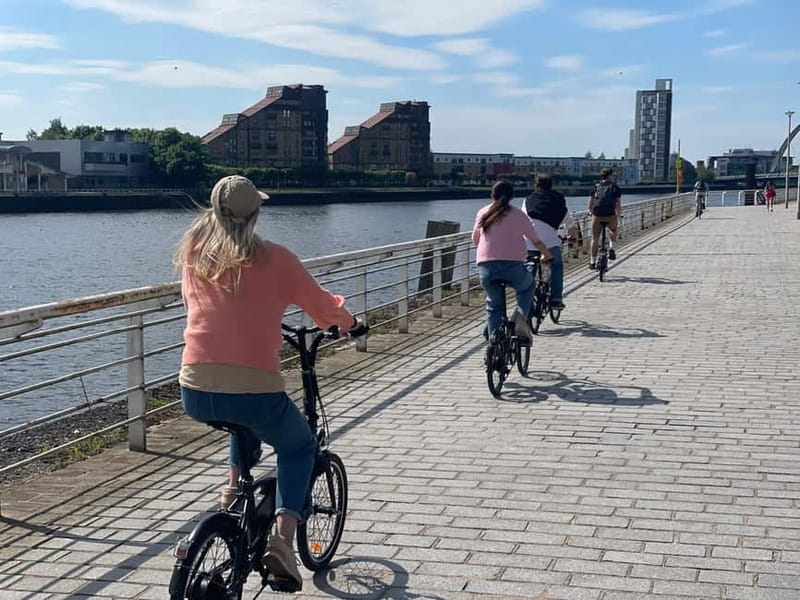
The last major segment follows the River Kelvin back toward the start. This part tends to feel calmer than the Clyde section, and it’s a good match for the tour’s closing phase: you get leafy views and local tales while your body settles into the rhythm of a steady ride.
The guide also builds in a practical pause so you’re not running on empty. Snacks can be provided if needed, which matters because the tour includes included food, but you’re still out for about three hours and you might want something extra depending on the day.
This return ride is a nice way to end because it leaves you with momentum. You’ll arrive back at The Pentagon Centre feeling like you’ve seen Glasgow with your eyes and your legs, not just your phone camera.
Guides, stories, and pacing: what the best part of the tour actually delivers
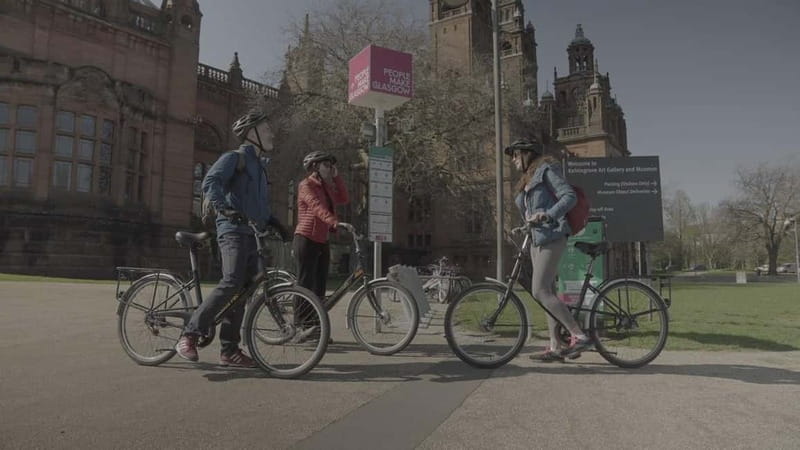
The difference between a decent tour and a great one is often the guide’s storytelling and how the group moves. Here, the guide’s role is clearly central: the tour promises history from the street level, including Glasgow’s place in the empire story, plus smaller details that make the city feel like it has a personality.
In the guide names that show up, Stuart is praised for being friendly, caring, and attentive to what people like. Arnold gets credit for warmth and for explaining the university with firsthand student context. Martin is called out for being extremely knowledgeable and for giving a strong introduction to Glasgow. Even if your guide isn’t one of these names, the pattern is consistent: you’re not getting a script—you’re getting a person who can connect landmarks to lived identity.
Pacing matters too. The ride is described as nicely paced, with time to stop briefly for meaningful moments. Some rides even include short opportunities at places like a cathedral or a motor museum, which is a good sign the route can flex to keep you from feeling like you’re just pedaling through scenery.
Price and value: $80 for a 3-hour guided bike ride that includes more than a bike
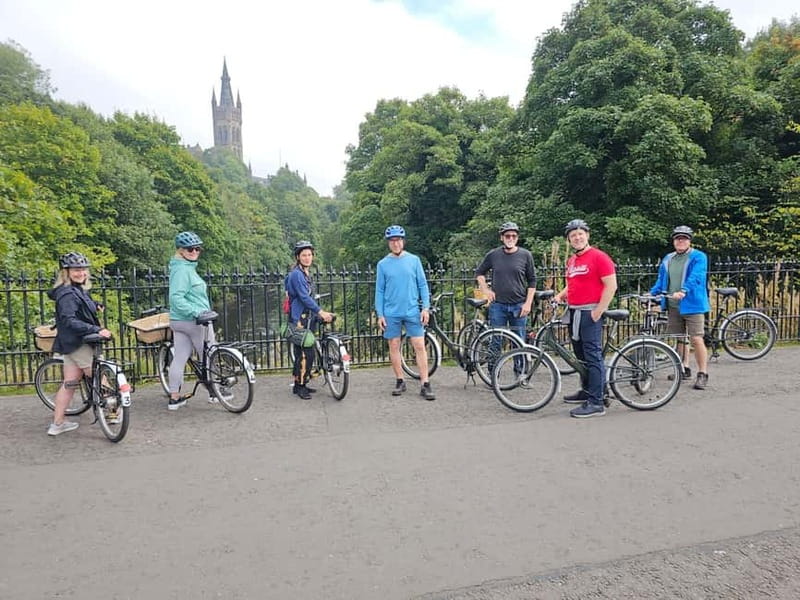
At $80 per person, you’re not just paying for handlebars. The price includes bike rental, a helmet, a live guide, plus 1 piece of fruit and 1 snack. The route also packs in multiple “worth your time” stops—like Kelvingrove Museum and the University area—that would otherwise mean you’d pay for separate entry or spend extra time lining up transit.
You’re also getting something hard to price: perspective. Cycling lets you cover ground—about 9–13 km—while still seeing details. That usually costs less than renting a bike on your own and hiring a guide separately for the same amount of time.
And because the bikes are refurbished and rebranded, the experience has an extra layer of meaning. It’s not only sightseeing; it’s part of Glasgow’s story, handed to you in the form of a bike that won’t be thrown away.
If you only have one afternoon to get your bearings, this tour is a strong use of time.
Who should book this Glasgow bike tour (and who should reconsider)
This tour is a good fit for curious travelers, solo adventurers, couples, friends, and culture lovers who want more than postcard views. It’s also suited to people who like their city experiences delivered as conversations—where the guide can answer questions and shape the ride around your interests.
You’ll want basic cycling skills. The tour is for ages 12+, and it has a height minimum of 150 cm. It’s also not suitable for people with heart problems.
If you’re nervous about riding in mixed city streets, consider whether your comfort level matches “basic cycling skills” rather than “confident cyclist.” And if you hate weather uncertainty, remember the tour runs rain or shine, with possible cancellations due to high winds or ice.
Should you book Glasgow City Highlights Guided Bike Tour with Gallus Pedals?
If you want an efficient, story-driven way to see Glasgow’s key areas—River Clyde, Kelvingrove, Yorkhill/SWG3 street art, and the University of Glasgow—this is an easy yes. For the money, you get the bike, the guide, safety support, and small snacks, plus stops that feel worth your time rather than “drive-by photo only.”
Book it if you like: local context, cycling for a few hours, and a route that balances famous sights with less predictable texture. Skip it if you can’t handle being in the saddle for about 2.5 hours or you’re not comfortable cycling in everyday weather, since the tour continues in rain unless conditions become unsafe.
FAQ
How long is the Glasgow city highlights bike tour?
The tour lasts about 3 hours total, with around 2.5 hours of cycling.
What distance will we cycle?
The route is approximately between 9 and 13 km.
Where do we meet, and where does the tour end?
You start at the Pentagon Centre, reception at 36 Washington Street, G3 8AZ, and the tour ends back at the same meeting point.
What’s included in the $80 price?
The tour includes a live guide, bike rental, helmet, 1 piece of fruit, and 1 snack.
Is it suitable for kids or shorter riders?
It’s not suitable for children under 12, and there is a height requirement of more than 150 cm.
Does the tour run in bad weather?
It runs rain or shine. Tours may be canceled due to high winds or ice.