REVIEW · WARSAW
Half-Day Warsaw City Sightseeing Bike Tour for Small Group
Book on Viator →Operated by Station Warsaw · Bookable on Viator
Warsaw by bike cuts the walk time. In about three hours, you pedal from Station Warsaw to the UNESCO Old Town area, then keep rolling toward the Vistula River and some of the city’s most photographed landmarks.
What I like most is how the route strings big sights into bite-size stops, so you spend less time guessing where to go and more time actually seeing. I also love that the stories are led by real people you can follow—guides such as Marcin, Maria, and Michak are known for making history feel clear and human, not like a lecture. Short stops with a live guide makes it easy to keep up without racing.
One consideration: this is still a cycling tour. If you’re new to bikes or the group hits crowded pedestrian areas (especially on busy weekend days), you may feel a bit tense—plus there’s at least one uphill stretch where it’s smarter to expect to walk briefly if needed. Pedestrian crowds are the main practical risk.
In This Review
- Key highlights to know before you book
- How this half-day bike tour gives you Warsaw fast
- Start at Station Warsaw Toursul, right by Old Town energy
- Stop-by-stop: what you’ll see and why each part matters
- Warsaw Uprising Monument and the war story you can feel
- Old Town’s UNESCO district: destruction and careful restoration
- Castle Square (Plac Zamkowy): the iconic hub
- The Royal Route: churches, architecture, and the “story in stone”
- Poland’s presidential residence, often nicknamed like a reference
- Ceremonial moments: Tomb of the Unknown Soldier
- Saski Garden and the “pause inside the city”
- Grzybowski Square: WWII ghetto memory in a surviving street
- Palace of Culture and Science, then a quick café break inside
- Holy Cross Church and Chopin’s heart
- Mermaid Statue and the Vistula riverfront: scenery with a story
- Royal Castle gardens and fountains by the river
- Maria Skłodowska-Curie stop: science you can point at
- Bikes, helmets, and the riding rules you should know
- Pacing: how a 3-hour tour can still feel relaxed
- Price value: what $43.03 buys you in time and logistics
- Weather and comfort: what to wear for Warsaw on the move
- Who should book this tour (and who should skip it)
- Should you book this bike tour?
- FAQ
- How long is the bike tour?
- What does the tour cost?
- Where do I meet the guide?
- Is bike rental included?
- Are helmets provided?
- Is the tour in English?
- Does the tour run in bad weather?
- Is there a minimum age or height requirement?
- Are admission tickets included for the stops?
- What should I do if I’m late?
Key highlights to know before you book
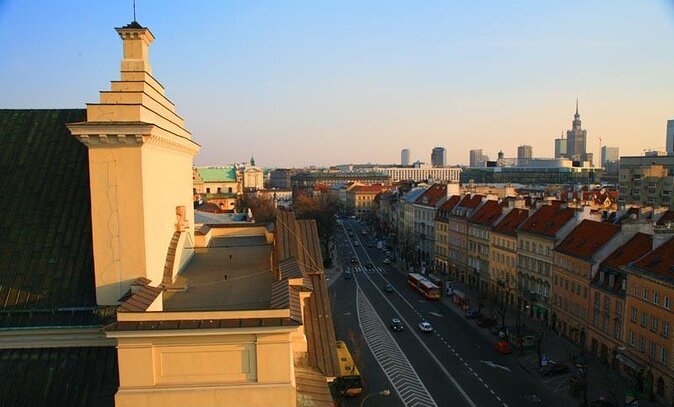
- UNESCO Old Town zone on two wheels: you get the war-and-rebuild story without long detours on foot
- Memorial stops timed for real ceremony energy: the Tomb of the Unknown Soldier is a major moment on the route
- Jewish heritage at Grzybowski Square: you’ll see the surviving street that links to the WWII ghetto story
- Vistula River viewpoints: river promenades and wildlife-side scenery show a different Warsaw
- Multiple photo anchors in one sweep: Palace of Culture and Science, Mermaid Statue, and Royal Castle gardens
How this half-day bike tour gives you Warsaw fast
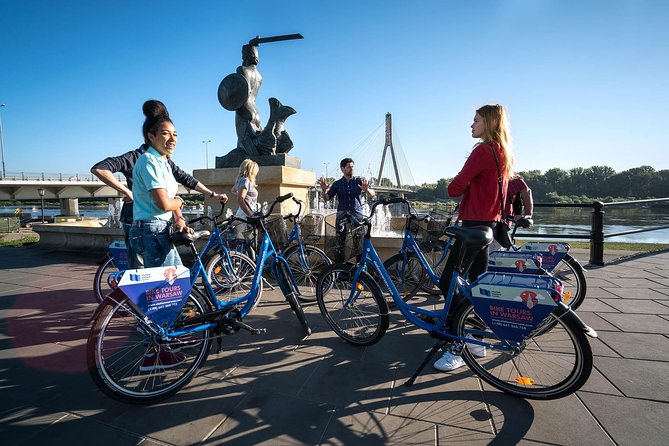
This tour is built for travelers who want the city’s main chapters without spending half the day on transit or at the edge of a big map app. You’re on a bike for the big connections, and then you’re on your feet for the meaningful stops. That mix is exactly what makes a “half-day” feel complete.
You’ll also appreciate that the group stays small (max 15). It’s easier for the guide to keep everyone together, and you can actually hear the explanation at each stop instead of playing catch-up. And because it’s run in English, you’re not relying on guesswork for what you’re looking at.
You can also read our reviews of more tours and experiences in Warsaw.
Start at Station Warsaw Toursul, right by Old Town energy
The tour begins at Station Warsaw Toursul, Koźla 16/18, 00-228 Warszawa. This is a practical choice because you’re starting close enough to the Old Town area that the first part of the ride feels immediate, not like you’re “traveling to sightseeing.”
Plan to arrive at least 10 minutes early. That buffer matters because you’ll need a moment to get set up, get briefed on security measures, and adjust seats. If you’re late and the team doesn’t hear from you for 5 minutes past departure, they treat it as a no-show—so message them if something goes sideways.
Stop-by-stop: what you’ll see and why each part matters
Warsaw Uprising Monument and the war story you can feel
Right after you roll out, you reach the Warsaw Uprising Monument. This is one of the strongest emotional stops on the route. You’ll get close enough to take it in properly—no distant bus-view angles—and the guide frames what the monument represents and why it matters in Warsaw’s identity.
This is also a good early stop because it sets the tone for everything that comes next: the destruction, the reconstruction, and the rebuilding of public memory.
Old Town’s UNESCO district: destruction and careful restoration
From there, you’ll spend time in the historical district that was destroyed during WWII and rebuilt afterward. Today it’s listed as a UNESCO World Heritage Site, and you’ll see the result in how streets and squares feel “put back together” in a way that preserves charm while acknowledging what happened.
If you’re short on time, this is where a guided bike route beats a self-planned wandering day. You avoid the “what am I looking at?” moments and you get context right when the streets appear in front of you.
Castle Square (Plac Zamkowy): the iconic hub
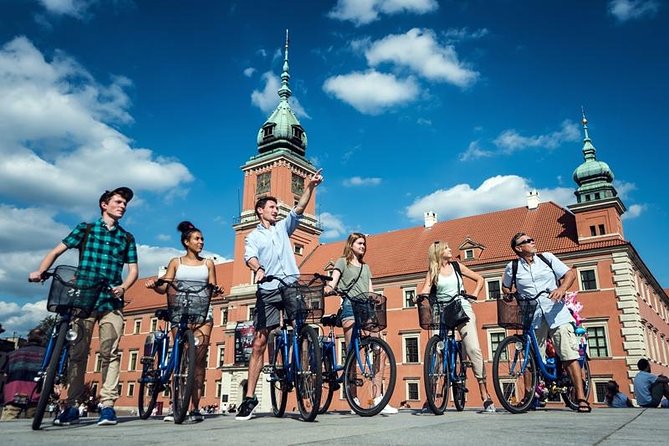
Your next anchor is Castle Square (Plac Zamkowy). This is the kind of place that always looks good in photos, but the value here is what you learn while standing there—why the square’s role fits Warsaw’s larger story.
Expect a calm pause. You’re not stuck there for long, but you’ll have enough time to orient yourself, take photos, and move on with the route’s momentum.
The Royal Route: churches, architecture, and the “story in stone”
As you ride along the Royal Route, you’ll pass architectural gems and churches that explain how Warsaw’s past gets written into the built environment. Even if you’re not a hardcore architecture fan, this section works because you’re seeing a sequence—not just one building.
Practical tip: keep your eyes up. This part is easy to get caught up in, and you’ll want to watch for the guide’s signals at each stop.
Poland’s presidential residence, often nicknamed like a reference
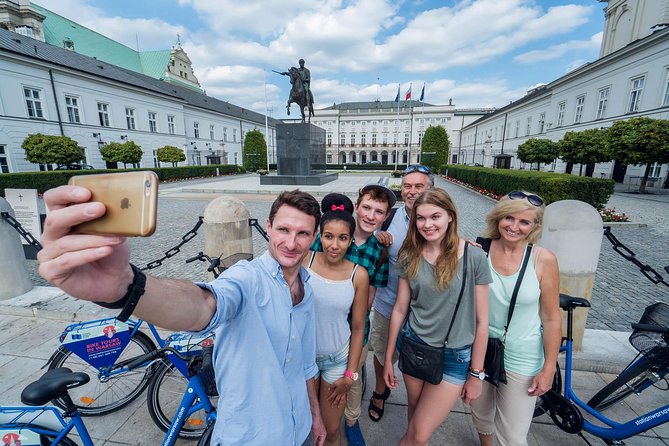
You’ll also get a look at Poland’s own White House, the official residence of the President of the Republic of Poland. The point of this stop isn’t the nickname—it’s the symbolism and the feel of government centered right in the city heart.
It’s short, but it adds a modern-political layer to the route’s more historical stops.
Ceremonial moments: Tomb of the Unknown Soldier
The Tomb of the Unknown Soldier is where the tour shifts into formal remembrance. You’ll pay respects at a solemn monument guarded by the Honor Guard of the Polish Armed Forces, and it’s the site of major state ceremonies.
One reason this stop lands well on a bike tour: timing. The guide’s schedule is tight enough that you may catch the changing of the guard when it lines up with the hour. Even if you don’t catch the exact moment, the atmosphere is still strong.
Saski Garden and the “pause inside the city”
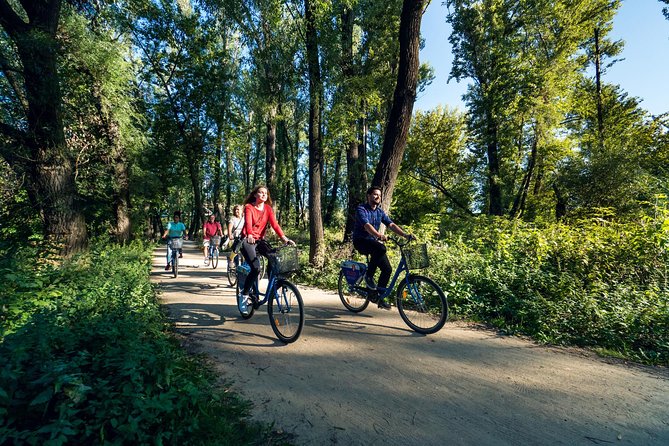
Next comes a more breathing-space stop in the garden area (Saski Garden). Warsaw can feel big and layered, and gardens act like mental punctuation. You’ll ride through this green oasis and get a break from stone monuments.
It’s also a nice photo stretch—clean lines, open paths, fountains and water features that help reset your eyes before you head into the next historic neighborhood.
Grzybowski Square: WWII ghetto memory in a surviving street
At Grzybowski Square, the tone changes again. This is the historic heart of Warsaw’s Jewish community, and the guide connects the area to WWII history, including the fact that the site includes the only remaining street from the WWII Ghetto.
This stop is powerful but handled in a way that fits the tour pace: you’re given enough time to take in what’s there and absorb why it matters, without the experience turning into a long documentary session.
If you care about historical context, this is one of the most important stops on the route.
Palace of Culture and Science, then a quick café break inside
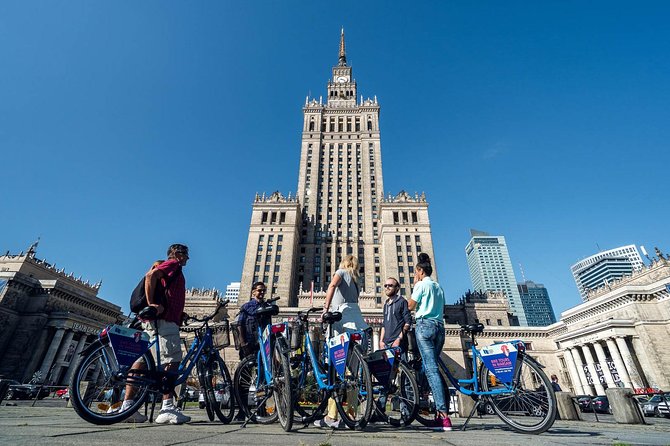
You’ll hit Palace of Culture and Science, the postwar communist-era landmark that’s become Warsaw’s best-known silhouette. It’s one of those buildings that you’ll recognize instantly from photos, and the tour gives you a chance to do the obvious thing: get a good selfie and move on with understanding.
Then there’s a longer break at Bar Studio inside the Palace of Culture. This is practical. You can recharge without losing the group’s time, and it makes the ride feel organized rather than rushed.
If you want a light drink or snack, it’s on you—food and drinks aren’t included.
Holy Cross Church and Chopin’s heart
Next: Holy Cross Church (Kosciol Swietego Krzyza). Here rests the heart of Frederic Chopin, and the church’s Baroque beauty makes it a memorable stop even if you’re not a classical-music expert.
A smart move here is to keep your expectations simple: plan to look at the exterior and take in the church details, then listen for what the guide highlights about Chopin’s connection to Warsaw.
Mermaid Statue and the Vistula riverfront: scenery with a story
You’ll reach the Mermaid’s Statue, positioned by the Vistula riverbank, with the National Stadium in the background. It’s playful at first glance, but the guide helps tie it to what the riverfront means to the city.
From there, you ride along the Vistula Boulevards. You’ll also see views toward a protected wildlife area across the river. This is a different side of Warsaw: less ceremony, more open air and long sightlines.
Royal Castle gardens and fountains by the river
You’ll end on a calmer, scenic note at Warsaw Royal Castle Gardens, where you can see manicured lawns and fountains. There’s a good photo angle with the Royal Castle nearby, and it feels like a reward after the harder emotional stops.
Then you pass the Fountain Park by the Vistula with cascades and water displays. Even if you’re not into fountains, it’s a pleasant way to close a half-day without running out of steam.
Maria Skłodowska-Curie stop: science you can point at
Near the end, you’ll stop at the Monument to Maria Sklodowska-Curie. The guide connects her story to Warsaw, including the fact that she was the first woman to win a Nobel Prize.
This is a good final “aha” stop. After all the monuments and memorials, you get a piece of Warsaw identity tied to achievement and global impact.
Finally, you roll back to Station Warsaw Toursul to wrap things up.
Bikes, helmets, and the riding rules you should know
The tour includes bike rental and a local guide, plus all taxes, fees, and handling charges. Helmets are available on request—so if you want one, ask early when you check in.
There are some safety and rules items you should take seriously:
- You must be at least 150 cm / 4’11” tall to ride the bikes.
- You’ll need to confirm knowledge of Polish law of the road regarding bicycles.
- Alcohol is forbidden just before or during the tour. If the guide thinks you’re unfit to cycle, they can refuse participation for safety reasons, and that’s not grounds for a refund.
In real life terms, that means: show up sober, comfortable, and ready to follow directions. This tour is built for a smooth group ride, not for people testing their limits.
Pacing: how a 3-hour tour can still feel relaxed
This runs about 3 hours. Each stop is usually around 10 minutes, with one clear longer break at Bar Studio. That time pattern is the secret sauce. You get context, you take photos, and you move—without losing the day.
Bike tours can feel either easy or stressful depending on how the route handles traffic and pedestrian areas. Here, the guide’s job is to keep the flow and keep you safe. If you’re comfortable biking and you follow instructions, you’ll likely find the pace manageable; if you’re hesitant or easily overwhelmed by crowds, plan for a more cautious experience.
Price value: what $43.03 buys you in time and logistics
At $43.03 per person, you’re paying for three things that add up fast in a city like Warsaw:
1) A guided route that strings together far-apart sights in a logical order
2) Bike rental (so you don’t spend time hunting, renting, or transferring gear)
3) Time efficiency—you cover much more ground than walking would in 3 hours
Most stops list free admission for what you’ll do during the tour, so your money goes mostly to the ride and the guide’s interpretation, not to ticket hunting.
Is it perfect value for every style of travel? If you love slow wandering and you hate cycling, you might prefer walking tours. But if you want a smart overview while also seeing real neighborhoods and river scenery, this price is easier to justify.
Weather and comfort: what to wear for Warsaw on the move
The tour operates in all weather conditions. Rain is handled with flexibility, and you can buy a rain poncho for 10 PLN. Translation: bring layers, wear shoes that handle slick paths, and don’t plan on staying dry like you’re indoors.
Wind and chill can also be a factor near the Vistula. Dress for being outside, not for a quick photo stop.
Helmets are optional unless you request them, but comfortable clothes and shoes are non-negotiable. You’ll be cycling, stopping, and walking short stretches.
Who should book this tour (and who should skip it)
This works especially well for:
- First-time visitors who want the core highlights plus context
- People who prefer active sightseeing over sitting on public transit
- Families (there’s no minimum age, but the height rule matters)
- Anyone with limited time, including a short layover style schedule
It may not be ideal if:
- You’re uncomfortable biking in a group setting
- You’re very sensitive to crowds or unpredictable pedestrian traffic
- You want lots of museum time (this is a sightseeing ride with short stops)
Should you book this bike tour?
If your goal is a high-quality Warsaw overview in a short window, I think this is a strong choice. You get a tight, logical route: memorial stops, UNESCO Old Town context, Chopin at Holy Cross Church, the Jewish WWII story at Grzybowski Square, and then a scenic closing along the Vistula.
Book it if you like guidance, photo stops, and efficient sightseeing. Consider another option if cycling makes you uneasy or you want slower, deeper time inside buildings.
Either way, do yourself a favor: arrive early, ride within your comfort level, and let the guide do the connecting work. That’s where the payoff is.
FAQ
How long is the bike tour?
The tour runs for about 3 hours.
What does the tour cost?
The price is $43.03 per person.
Where do I meet the guide?
Meet at Station Warsaw Toursul, Koźla 16/18, 00-228 Warszawa, Poland.
Is bike rental included?
Yes. Bike rental is included.
Are helmets provided?
Helmets are available on request.
Is the tour in English?
Yes, it is offered in English.
Does the tour run in bad weather?
Yes. It operates in all weather conditions, and you can buy a rain poncho for 10 PLN.
Is there a minimum age or height requirement?
There is no minimum age, but all participants must be at least 150 cm / 4’11” tall to ride.
Are admission tickets included for the stops?
The information provided lists admission tickets as free for the stops included on the route.
What should I do if I’m late?
Arrive at least 10 minutes early. If they don’t hear from you for 5 minutes past the scheduled time, they consider you a no-show and start without you.