REVIEW · JAIPUR
Jaipur: 3-Hour Morning Bike Tour of Jaipur Old City
Book on GetYourGuide →Operated by Le Tour De India · Bookable on GetYourGuide
Jaipur wakes up on two wheels. This 3-hour morning bike tour threads through the walled city while you catch daily life in motion, plus temple energy, chai breaks, and market scenes. It’s built for a small group, with a team that keeps the ride calm and the experience focused.
I really like two things about it. First, the food stops feel like part of the culture, not just a snack break—think masala chai and lassi, plus stops at locally known food joints. Second, the safety setup is practical: you get helmets, multiple guides, and a support battery rikshaw that follows along so you’re not stuck if you need a breather.
One thing to consider: it’s an early-start tour, so expect a wake-up call that can feel intense on vacation. Also, you’ll be close to crowds for the temple ceremony, and you’ll want to dress modestly to match the setting.
In This Review
- Key things I’d plan around
- Why This Sunrise Bike Ride Works Better Than a Sightseeing Sprint
- Getting Oriented at Le Tour De India (Beacon Wall Street Area)
- The Safety System: 3–4 Guides, Helmets, and a Following Battery Rikshaw
- Bikes That Make It Real for Couples and Families
- Cycling Into Jaipur’s Old City: Narrow Streets, Havelis, and Local Encounters
- The Albert Hall Museum Morning Park: Seeing the City Before the Heat
- Hawa Mahal Photo Stop: The Best Light Comes Early
- Krishna Temple Ceremony at Govind Dev Ji: Aarti, Bells, and Close-Up Atmosphere
- Flower and Vegetable Market: Where Traditions Look Like Work
- Food Stops and Tastings: Why This Tour Feels Like Breakfast, Not a Museum
- Price and Value: Is $28 for 3 Hours a Good Deal?
- What to Wear and Bring for a Smooth Morning Ride
- Who Should Book This Jaipur Bike Tour (and Who Might Skip It)
- Should You Book It?
- FAQ
- Where does the tour start?
- How long is the ride?
- What bikes are used, and can kids join?
- Is there support if someone gets tired?
- Do I need to dress a certain way for temple stops?
- Is food included?
Key things I’d plan around
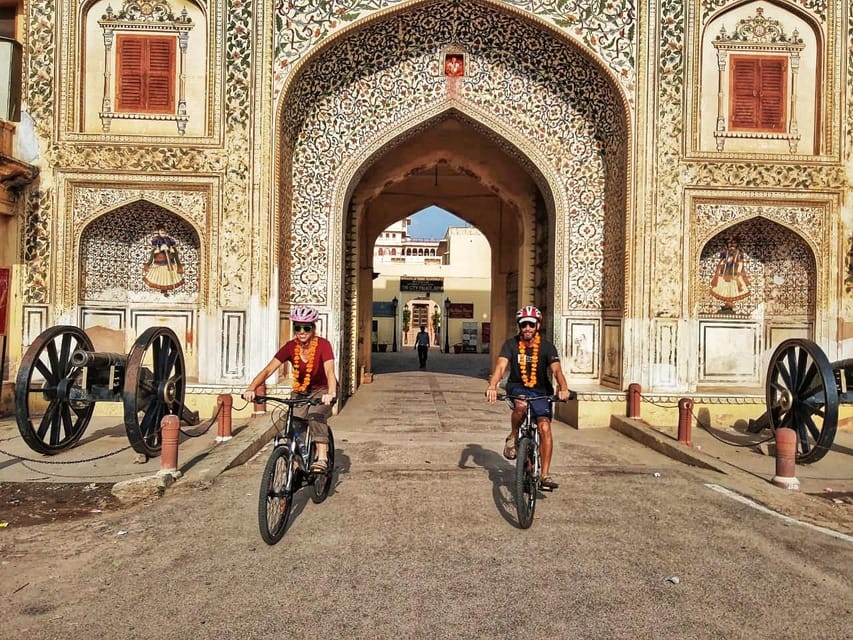
- A small group capped at 8: easier conversation, less waiting, tighter control in busy lanes
- 3–4 guides plus a battery rikshaw: safety support you can actually feel during the ride
- High-end bikes (Trek, Giant, Merida) with kids and tandem options
- Temple morning + laughing yoga: the tour isn’t only sightseeing, it’s participation
- Markets as a photo-and-senses stop: flower/vegetable trading, pushcarts, and street breakfast energy
Why This Sunrise Bike Ride Works Better Than a Sightseeing Sprint
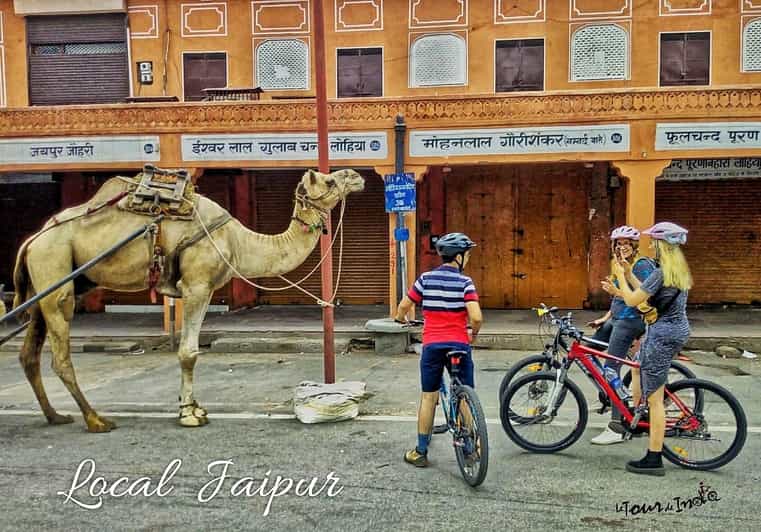
Jaipur can be beautiful from a car window, but that’s not how you learn the city. This ride is timed for morning—when streets feel more human and less tour-bus busy—so you get the soundscape of daily life: scooters starting up, vendors setting out, and people already in motion.
The value is in how the route links the “big sights” to real routine. You’re not just checking off a monument. You’re riding through the narrow streets between home-like spaces (havelis), working markets, and morning prayer, with a steady pace that lets you look around.
And yes, it’s still sightseeing. The famous spots like Hawa Mahal show up, but you experience them from the rhythm of the neighborhood instead of from a single photo stop.
You can also read our reviews of more tours and experiences in Jaipur.
Getting Oriented at Le Tour De India (Beacon Wall Street Area)
You begin at the Le Tour De India office, opposite Beacon Wall Street hotel. Your guides are there with bikes, so you’re not hunting for gear or guessing where to meet.
Expect a short briefing on the route and how the ride will work. That matters because the lanes inside the old city can look intimidating on foot if you don’t know what’s ahead. Starting with guidance helps you relax into the plan fast.
If you’re traveling with a family, this early meetup is also helpful. The team can match you with the right bike setup (kids bikes, tag-alongs, or tandem) before you roll out.
The Safety System: 3–4 Guides, Helmets, and a Following Battery Rikshaw
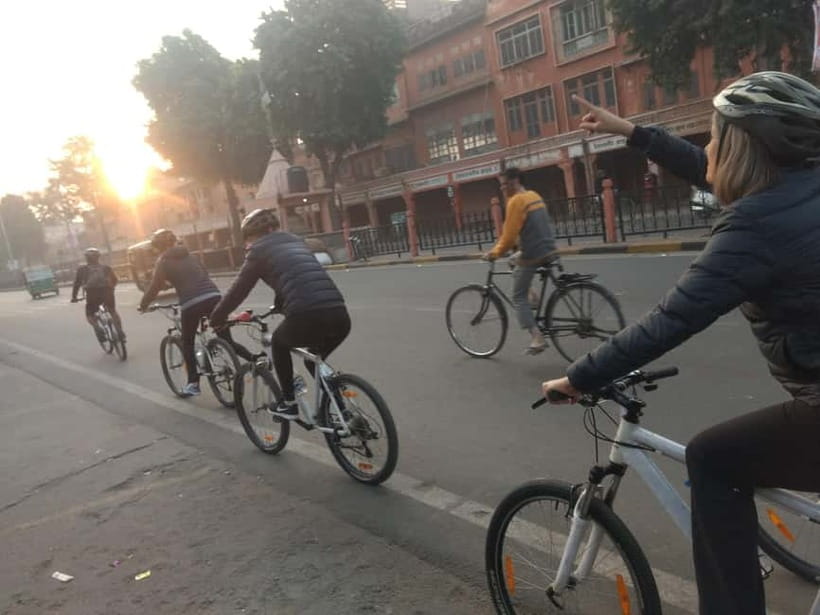
This tour feels “managed,” in the good way. You ride with a team of 3–4 experienced bicycle guides, and everyone’s watching the group in the traffic mix.
A few practical safety elements are built in:
- Good quality helmets provided
- Multiple guides leading and escorting so no one gets left behind
- A support vehicle (battery rikshaw) following the ride
That last piece is underrated. If you’re tired, not fully confident, or you need a quick pause, you’re not stuck figuring things out on your own. Reviews also mention scenarios where a support option helped participants keep the experience going comfortably.
Bikes That Make It Real for Couples and Families
Not everyone’s an equal cyclist, and the tour plans for that. You ride Trek, Giant, and Merida bikes, and the lineup includes different sizes plus:
- Tandem bikes for non-riders and couples
- Tag-along options for children
- Kids bikes for younger riders
So if one person prefers to sit back, you still stay part of the ride. It’s a smarter setup than a standard “everyone must pedal” tour, especially with mixed ages.
Cycling Into Jaipur’s Old City: Narrow Streets, Havelis, and Local Encounters

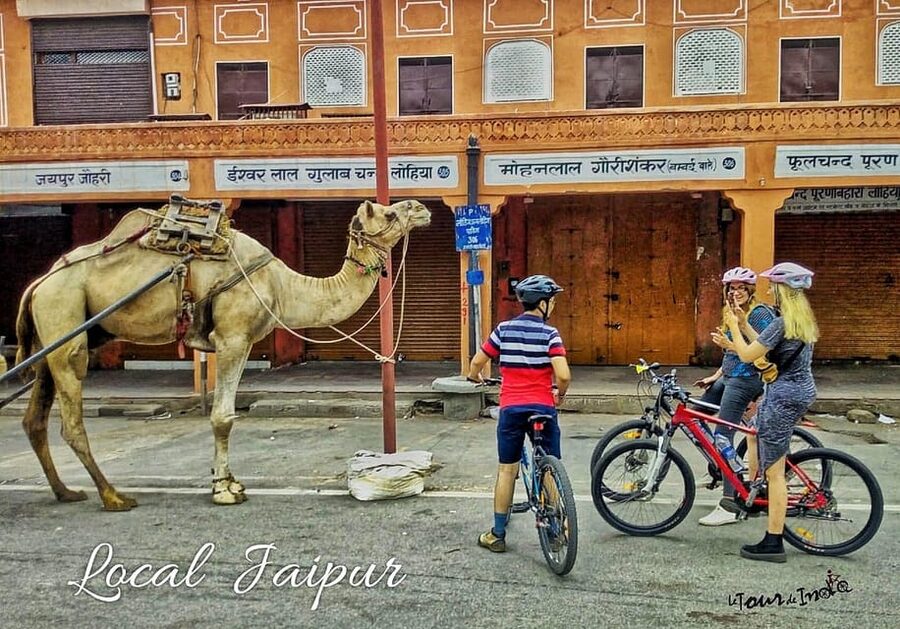
Once you enter the walled city, the atmosphere changes quickly. The route moves through narrow streets where you pass vintage-style havelis and architectural details you’d miss if you only walked a main road.
What makes this part work is the pacing. You’re not sprinting. You’re gliding, so you can notice:
- How people use the street in the morning
- How shops and homes overlap
- Where conversations happen, not just where buildings stand
Along the way, you also stop to meet locals. One standout is the tea stop at a well-known chai seller’s place—told as a family tradition carried for generations. Even if you’ve had chai before, tasting it in a place where people have kept the rhythm for decades hits different.
The Albert Hall Museum Morning Park: Seeing the City Before the Heat
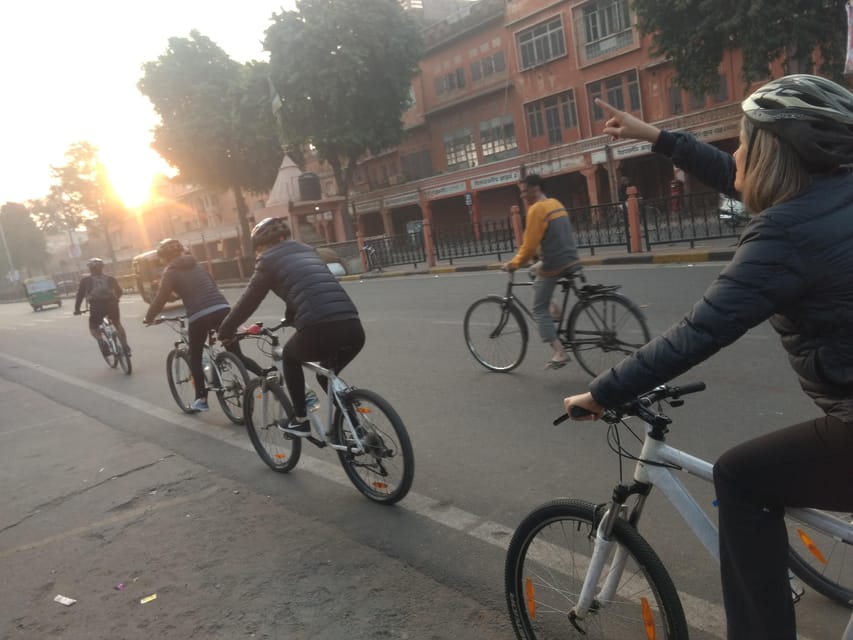
After chai, you head to the Albert Hall Museum area, where a busy street shifts into a quieter morning public park. This is where you get a glimpse of Jaipur’s daily pace without the glare of midday crowds.
You’ll have time to see morning life at a slow, human level—people chatting, passing time, and going through the routine. If you like street-level travel, this stop is a big reason to choose a bike tour over a standard car-and-photos itinerary.
And you might find your morning includes laughing yoga here. It’s short, social, and (in the best way) a bit silly. The point isn’t fitness; it’s joining locals for a practiced moment that turns the park into a stage for community life.
Hawa Mahal Photo Stop: The Best Light Comes Early
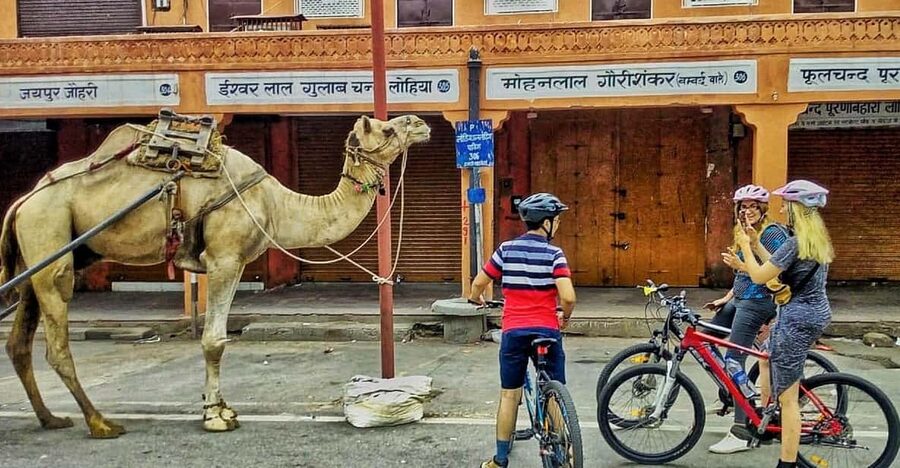
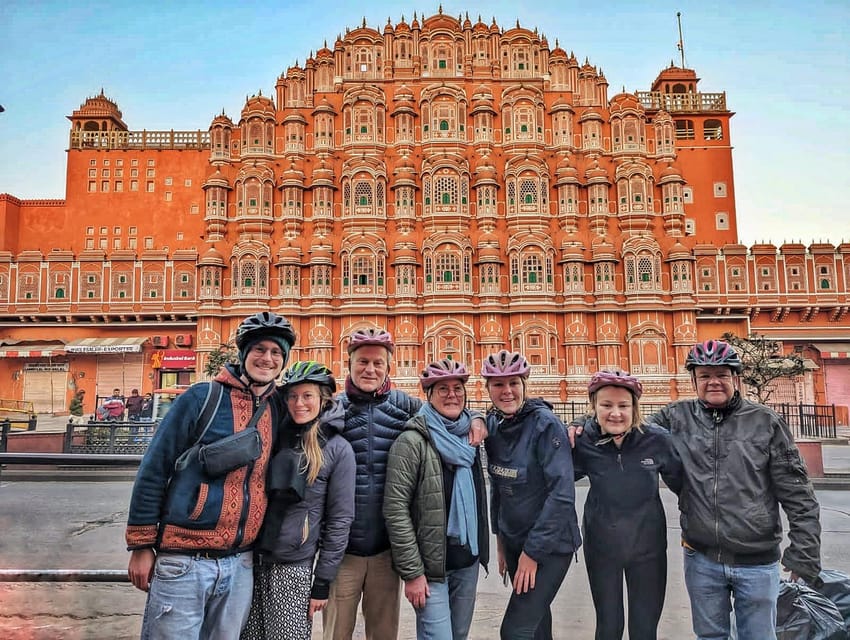
Hawa Mahal is one of those buildings you think you know—until you see it in the right light. Morning sunlight gives the facade a softer glow, and the tour is timed for that.
You’ll get a photo stop so you can frame it properly without rushing. The practical upside of doing it on the bike route is that you’re not waiting around at a single, isolated spot. You’re still moving through the neighborhood as Jaipur warms up.
If you’re serious about photos, bring sunglasses and keep an eye on shadows—morning light shifts fast, especially in the old-city lanes.
Krishna Temple Ceremony at Govind Dev Ji: Aarti, Bells, and Close-Up Atmosphere
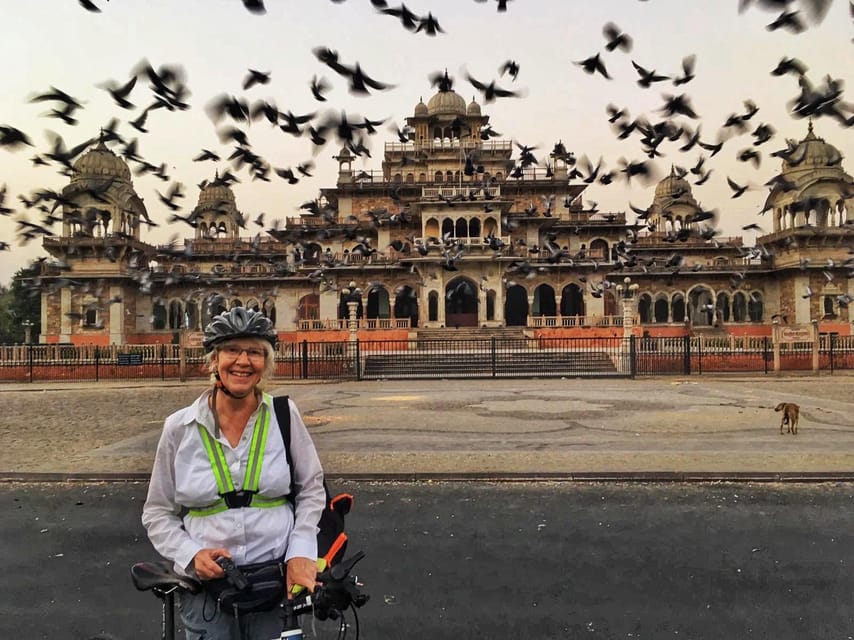
One of the most memorable segments is the approach to the Krishna temple for morning ceremony. You cross large gates as you get closer, and the ride turns into careful navigation through pedestrians moving toward the event.
The tour brings you into the temple of Govind Dev Ji. This is not a “stand far away” stop. You’re close enough to feel the atmosphere—devotees preparing for aarti, ringing huge bells, and the sound of hundreds of singers at once.
There are moments where you’ll see lighted wicks and hear devotional singing, with devotees gathered before the sacred idol. It can feel uplifting, even if you’re not there for religious reasons.
A quick reality check: you’ll be in a ceremony space with people and movement. Keep your balance, move when the crowd moves, and follow your guides’ instructions for where to stop and when to ride through.
Flower and Vegetable Market: Where Traditions Look Like Work
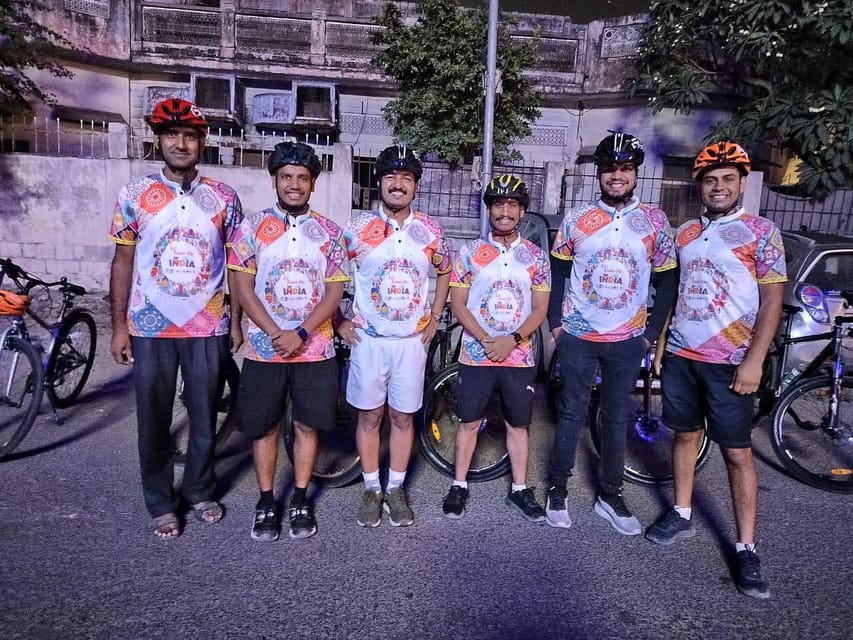
After the temple and morning activities, you roll into Jaipur’s biggest vegetable and flower market area. This is one of those stops where the “touristic” part disappears because you’re watching real trading and real negotiation.
Expect:
- Traders busy with conversation
- Merchants with colorful, practical setups
- A lot of photo opportunities
- Traditional pushcarts and sacks carried on heads
At bike speed, the market feels like a moving snapshot. You get to see the whole operation without standing in one spot too long.
Food Stops and Tastings: Why This Tour Feels Like Breakfast, Not a Museum
Food is a core part of this experience. The tour includes tastings at renowned local food joints known for how they prepare regional favorites.
You’ll sample things like:
- Masala chai (spiced tea)
- Lassi (yogurt drink)
- Street snacks and breakfast-style bites
In the early hours, street food often feels fresh and warm, and the tour’s structure helps you try multiple items without guesswork. Instead of searching for what’s safe or good, your guides bring you to places that focus on flavor and routine.
Some mornings also include a small community moment like hand feeding cows for good karma, described as part of the pre-sunrise feel. It adds an extra layer of “this is how locals start the day,” not just “look at buildings.”
Price and Value: Is $28 for 3 Hours a Good Deal?
At $28 per person for a 3-hour guided bike tour, you’re paying for more than a ride. The cost covers:
- A small-group guide team (3–4 guides for safety and pacing)
- High-end bikes (Trek/Giant/Merida) in multiple sizes
- Helmets
- A support battery rikshaw following the group
- Multiple tastings during the ride
That makes the math different from a basic walking tour. You’re getting transportation, safety coverage, and food included in one package.
One cost note: transfers to and from your hotel are not included. If you’re staying far from the meeting point, factor in local transport so you’re not surprised by the total spend.
What to Wear and Bring for a Smooth Morning Ride
This tour is simple, but you should pack smart.
Bring:
- Comfortable shoes
- Sunglasses
- Comfortable clothes
- Your own water bottle (you can get it refilled with filtered water before and after the tour)
Dress modestly. You’ll visit a temple and join public activities with locals, so plan clothing that covers appropriately. If you show up in uncomfortable shoes, you’ll pay for it quickly—this is a ride with stops and crowd movement.
Also note what’s not allowed: pets.
Who Should Book This Jaipur Bike Tour (and Who Might Skip It)
This fits best if you want:
- A morning experience of Jaipur before it gets hot and crowded
- Real-life neighborhood scenes, not only monuments
- Guided food tastings in places you might not find on your own
- A tour that works for mixed ability levels via tandem and tag-along bikes
It may be less ideal if you:
- Can’t handle early starts
- Want a quiet, low-activity day (this includes temples, crowds, and market movement)
- Are traveling with very young children (it’s not suitable for children under 3 years or babies under 1 year)
If you like your travel active, social, and grounded in daily rhythm, this is a strong match.
Should You Book It?
If your goal is to feel Jaipur as a living city—morning chai, temple ceremony, laughing yoga, and market trading—this tour is a high-return way to do it in just 3 hours. The safety structure (multiple guides plus a following battery rikshaw) and the bike options for kids and non-riders make it easier than most “adventure” tours.
I’d book it if you’re comfortable riding at a relaxed pace and you’re okay with modest dress for temple time. Skip it only if the early morning start sounds like punishment or you strongly prefer staying away from crowds.
FAQ
Where does the tour start?
The tour starts opposite Beacon Wall Street hotel, at the Le Tour De India office.
How long is the ride?
The tour duration is 3 hours.
What bikes are used, and can kids join?
The tour uses high-end bikes including Trek, Giant, and Merida. There are bikes of all sizes, including tag-along for kids and tandem bikes for non-riders and couples.
Is there support if someone gets tired?
Yes. A support vehicle (battery rikshaw) follows the riding guest, and helmets are provided.
Do I need to dress a certain way for temple stops?
Yes. You’re asked to dress modestly because the tour includes a temple visit and public activities with locals.
Is food included?
Food and local cuisine tastings are included as part of the experience, with tastings at well-known local food joints.
If you want, tell me your dates and who you’re traveling with (adults/kids, cycling comfort level), and I’ll help you decide if this timing and bike setup makes sense for your group.