REVIEW · KRAKOW
Krakow: Bike Tour of the Old Town, Kazimierz, and the Ghetto
Book on GetYourGuide →Operated by Cruising Krakow Bike & Segway Tours · Bookable on GetYourGuide
This bike tour clicks Kraków into focus fast. I love how it stitches together Old Town landmarks with WWII ghetto context in one ride, so your first day doesn’t turn into a confused hop between neighborhoods. One catch: you have to be comfortable riding a bike, and it’s not designed for mobility impairments.
I also like the pacing. The ride is extensive but not overly strenuous, with frequent explanation stops plus a 45-minute lunch break built in, so you don’t feel like you’re sprinting from photo spot to photo spot.
The guides set the tone. In groups I’ve heard about, guides such as Mike, Zoe, and Chris keep the stories clear and respectful, and a dog named Ramsey (or Rameses) sometimes joins when conditions allow. The tour is in English or Dutch, and it’s a great way to get your bearings before you start picking your own routes around town.
In This Review
- Key things that make this tour worth your time
- Where the ride starts: Adam Mickiewicz statue, safety briefing, and bike fit
- Old Town landmarks by bike: Main Square, Barbican, Planty Park, and Wawel
- Transitioning to Podgórze: how the ride changes feel (and why)
- Kazimierz: Jewish Quarter streets, synagogues, cemeteries, and plac Nowy
- The ride itself: pace, effort level, and why it feels easier than it sounds
- Price and value: what $26 covers, and where you’ll spend extra
- Morning vs evening options in summer: picking the right length for your schedule
- Practical tips so the tour feels great, not tiring
- Should you book this Kraków bike tour of Old Town, Kazimierz, and the ghetto?
- FAQ
- How long is the Kraków bike tour?
- Where do I meet for the tour?
- Is the tour offered every day?
- What does the tour cover?
- What is included in the price?
- Is lunch included?
- Are e-bikes included?
- What languages is the guide available in?
- Is the tour strenuous?
- FAQ
- Can I cancel for a full refund?
- Should I dress for the weather?
Key things that make this tour worth your time
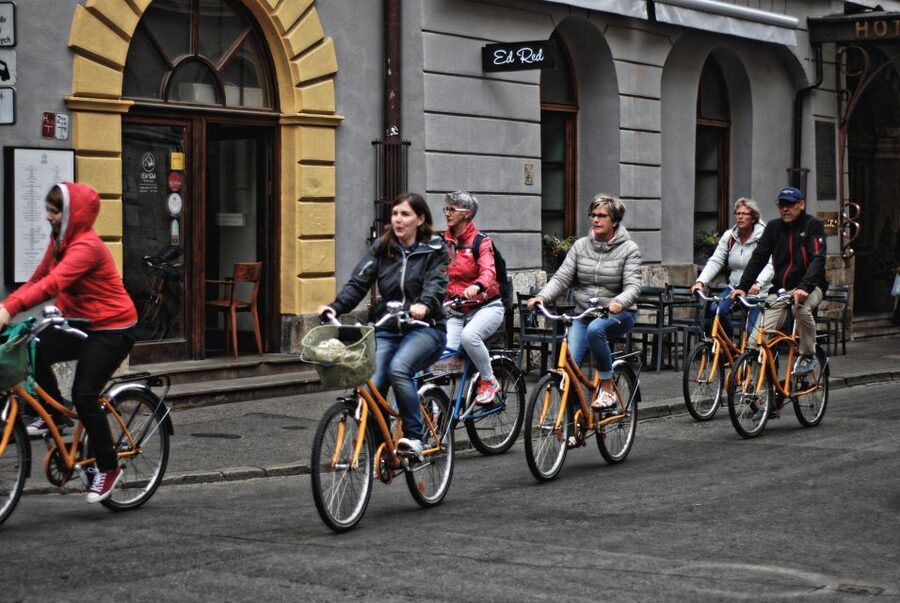
- A first-day “map in motion”: Old Town, Kazimierz, and Podgórze all in one guided loop
- Lots of stops, not just riding: photo breaks and history context along the way
- Easy bike setup: bike rental plus a helmet, and a safety briefing before you roll out
- Vistula river and calmer streets: you spend plenty of time on quieter paths and gardens
- A tour that handles hard topics carefully: Podgórze and the ghetto area get proper attention
Where the ride starts: Adam Mickiewicz statue, safety briefing, and bike fit
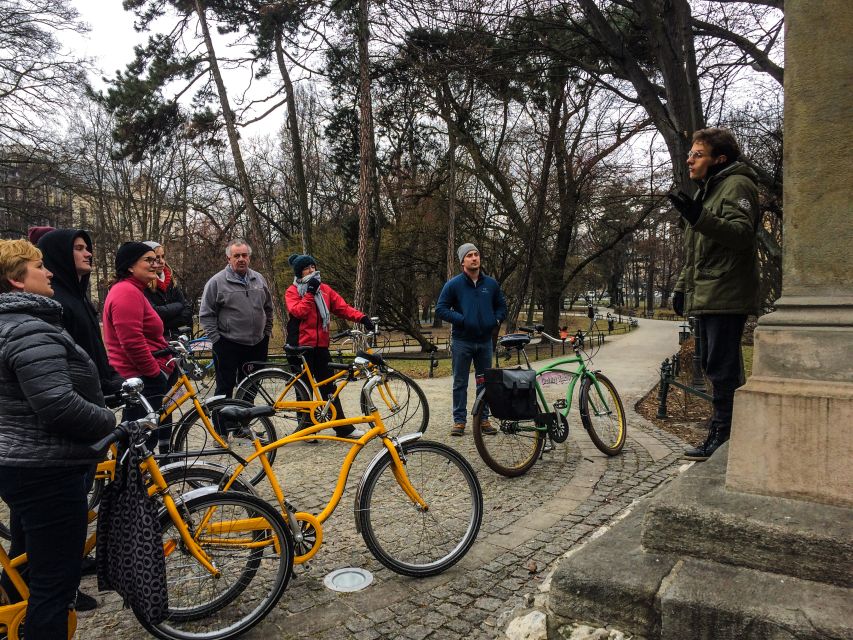
You’ll meet at the meeting point under the Adam Mickiewicz statue in Kraków’s Main Market Square area (the exact address can vary by tour option). That’s a smart start, because once you’re oriented here, everything else in Kraków feels easier to place on a map.
Before you head out, the crew runs a safety briefing. It’s not just legal talk. You’ll get a quick rundown that matters when you’re moving through busy areas but still trying to keep things calm and safe for the group.
You get the basics covered: bike rental and a helmet are included. If you’re the type who gets tense on a bike, go a little early and make sure your seat height feels right before the group sets off. Even if the route isn’t too demanding, comfort reduces fatigue fast.
You can also read our reviews of more tours and experiences in Krakow.

Old Town landmarks by bike: Main Square, Barbican, Planty Park, and Wawel
The Old Town portion is where the tour helps you connect the dots between the postcard sights. The ride starts with an easy pass through the Main Market Square, then you spend time moving along key landmarks at a comfortable pace.
You’ll cruise past the Kraków Barbican and then roll through Planty Park for a breather. This is one of those segments that feels like a “reset button”: you’re still in the historic center, but the ride gives you a break from the thick crowd energy you might feel if you walked everywhere.
Next comes a cluster of big-name stops where the guide’s job is to help you see more than just the facades. You’ll bike by Jagiellonian University and the Church of St. Francis of Assisi, then continue toward Wawel Castle. If you’re hoping to get your bearings for your later days, this is the part that does it—because Wawel and the Old Town core anchor where you’ll spend most of your time.
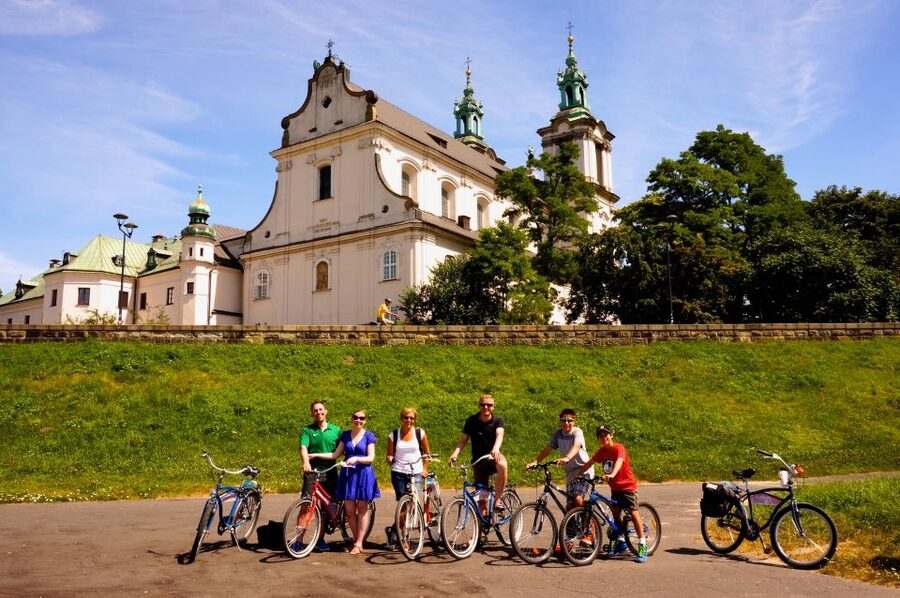
The tour also includes stops that work well for quick photos and short listening breaks: the Church on the Rock and a Vistula River photo stop. The river moment matters more than you’d think. It’s a visual pause that helps you understand Kraków’s layout, especially if you’re planning a walking day later.
Tip: bring water and keep your camera ready, but don’t treat every stop like a race. These short halts are part of the learning rhythm.
Transitioning to Podgórze: how the ride changes feel (and why)
Leaving the Old Town rhythm behind, the tour shifts toward Podgórze—the area tied to Kraków’s WWII ghetto. The route doesn’t feel like a separate excursion that you tack on at the end. It feels like a continuation, which is important when you’re trying to understand what you’re seeing.
In Podgórze you’ll spend about 40 minutes riding and then walking through the area with stops that bring the history into focus. One of the key stops is Plac Bohaterów Getta, which is specifically associated with the ghetto area.
This is also where a respectful guide style really matters. The best part of this segment isn’t just names and dates—it’s how the guide helps you hold the seriousness of the subject while still moving through the city. In the groups I’ve heard about, guides like Mike are praised for delivering facts in a way that stays human and doesn’t turn hard history into a checklist.
Another stop here is Oskar Schindler’s Factory. Even if you’ve heard of it before, seeing it as part of the Podgórze section changes how it lands, because you’re already in the right geographic and historical context by the time you get there.
Consideration: this part can feel emotionally heavier than the Old Town. If you’re visiting with kids or you’re sensitive to wartime topics, it can help to pace yourself—take the photo breaks, breathe, and don’t force extra listening when you need a reset.
Kazimierz: Jewish Quarter streets, synagogues, cemeteries, and plac Nowy
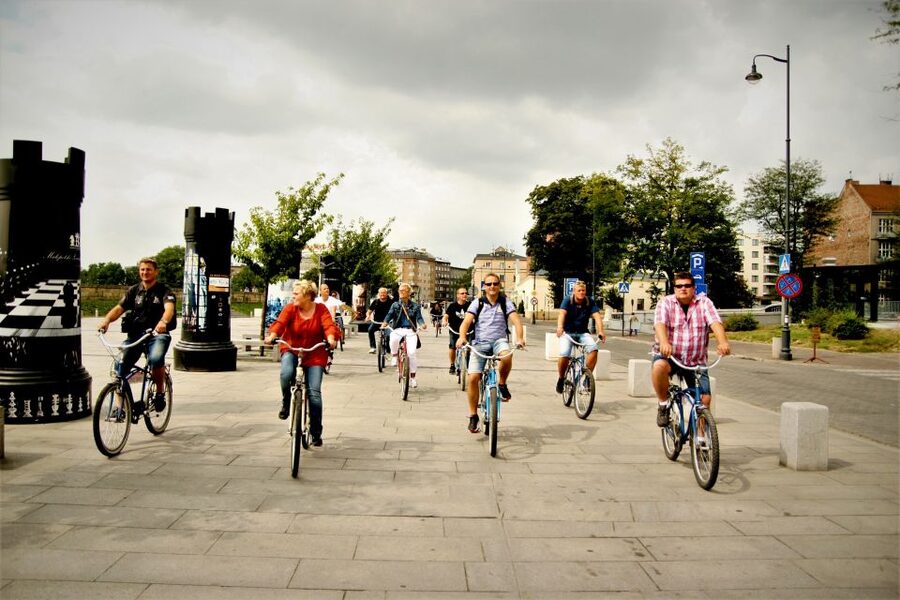
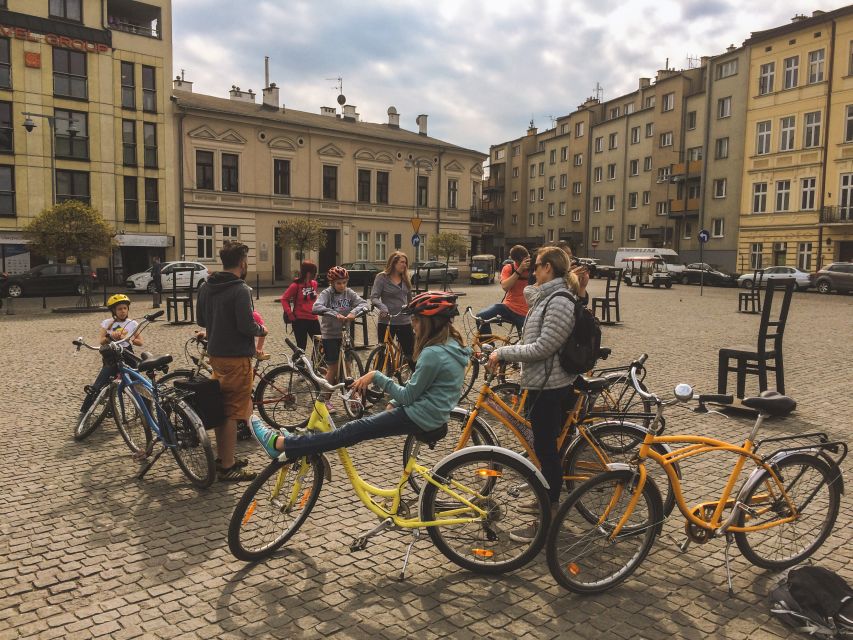
Kazimierz is where the ride gets colorful in the best way. You’ll spend roughly 40 minutes biking through the historic Jewish Quarter, including some of the most important religious and community sites in the area.
A few stops in this stretch are quick but meaningful—like the Old Synagogue stop and the Remuh Cemetery stop. Even when you’re just passing through on bike, the guide uses those pauses to give context and help you understand why these places mattered to everyday life.
You’ll also ride by Szeroka Street, which is ideal for a short photo stop and people-watching. The tour then continues toward plac Nowy, another useful moment to orient yourself. If you’re planning to explore Kazimierz later on foot, these plac and street stops tell you where the action is.
There’s also time at the Kraków New Jewish Cemetery (a short segment) and a stop at the Juliusz Słowacki Theatre. That theatre stop may not be the most historic on-theme piece, but it adds real city texture. Kraków isn’t only monuments. It’s a lived-in place, and that matters when you’re visiting Kazimierz for more than just a theme.
In short: Kazimierz on this tour works because the guide doesn’t just hit landmarks. You get short breaks that let you absorb the neighborhood’s rhythm—then keep moving.
The ride itself: pace, effort level, and why it feels easier than it sounds
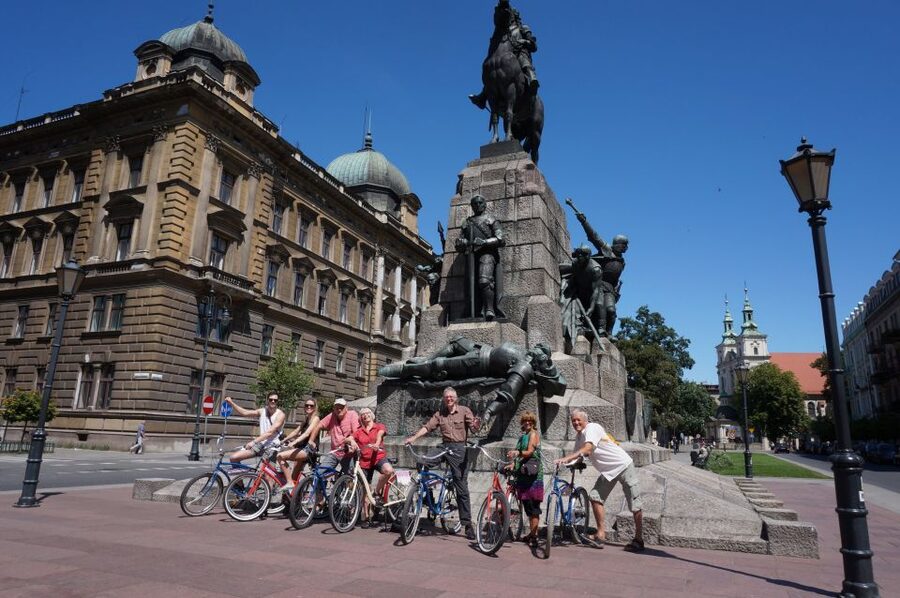
Even though this is an “Old Town + Kazimierz + ghetto area” day, it’s designed to be manageable. The big selling point is that the ride is not too strenuous and suits all levels of fitness—as long as you can ride a bike confidently.
Most of your energy goes into staying comfortable on the saddle and keeping your eyes up for intersections and turning points. The route includes bike time through parks and calmer stretches, plus more time on quieter streets or paths than you might expect.
In some groups, the total distance is described as around 12 km. That’s long enough to feel like a real city workout, but not so long that you’ll be wrecked afterward—especially since you get breaks and a lunch pause.
One practical win: the route includes a lunch break of about 45 minutes. Lunch is not included in the price, but the break is. It means you can eat without rushing and still keep the tour on track.
Also, you’ll get shade opportunities depending on the day and route conditions. If it’s hot, that’s not something you want to fight on a bike, so plan on dressing smart for the weather.
Price and value: what $26 covers, and where you’ll spend extra
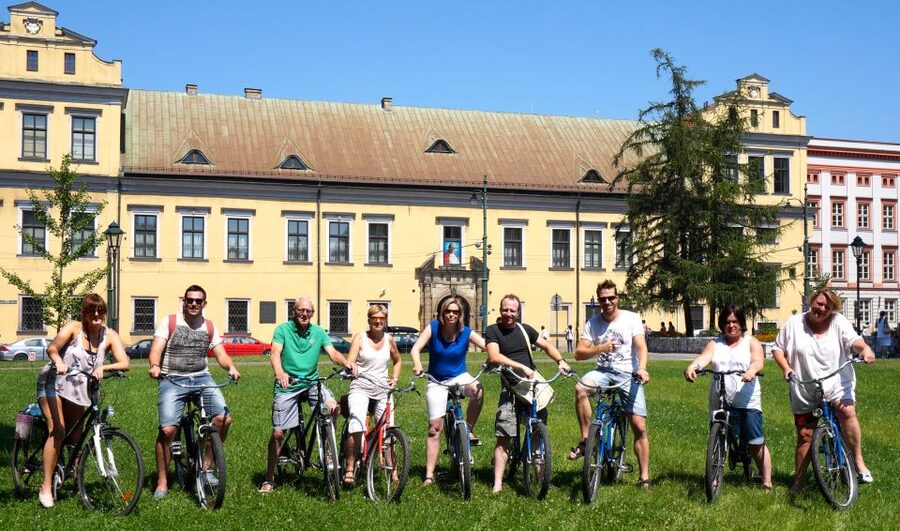
At $26 per person, this is one of the better value ways to see a lot of Kraków fast without turning your day into a bus-and-museum marathon. The included items are the key part: you get a tour guide, a bike rental, and a helmet.
That combination matters because you’re not paying separately for transportation or basic safety gear. You also get a guided storyline that connects neighborhoods—Old Town to Kazimierz to Podgórze—so you’re not left guessing what you’re looking at.
What’s not included is straightforward:
- Lunch (you’ll stop for the meal, but you pay for it)
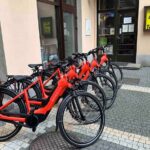
- E-bike (the tour includes standard bike rental, not an e-bike)
If you’re wondering whether it’s worth it compared with a walking tour, I’d say yes if you want range. You’ll see more ground with less fatigue, and the bike lets you access areas that are harder to reach quickly by foot.
If you care most about deep museum time, you’ll still want to add standalone museum visits later. This bike tour gives context and routing help, not a full replacement for indoor exhibits.
Morning vs evening options in summer: picking the right length for your schedule
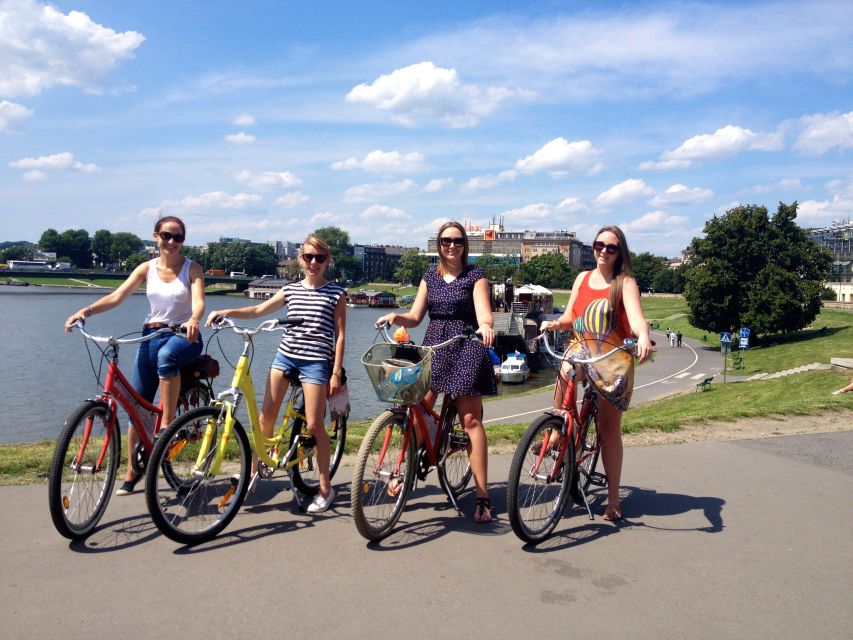
In summer, you can choose between a longer and a shorter option.
The morning option runs about 4 hours and covers the Old Town, Kazimierz, and Podgórze (the WWII ghetto area). If you’re only in Kraków for a day or two, this is the one that gives you the full narrative arc.
The evening option is shorter—around 2 hours—and focuses on the Old Town and Kazimierz. It’s a good pick if you want the charm and the neighborhood feel without spending as long on the more heavy Podgórze segment.
Both options start at the main market square meeting point under the Adam Mickiewicz statue, and both end back at the starting location.
Tip: if you’re unsure, think about your next day plans. If you’ll explore Kazimierz or the Old Town mostly on foot later, the longer morning option can make the rest of your trip easier.
Practical tips so the tour feels great, not tiring
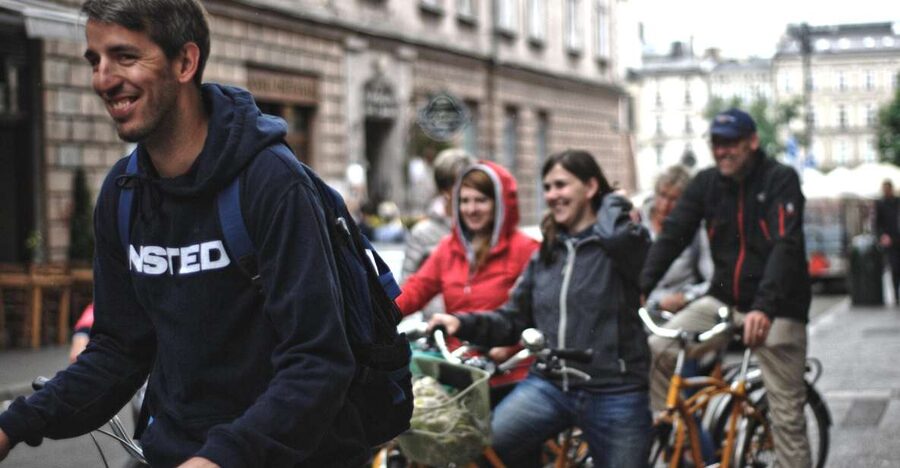
This is the kind of tour where small prep choices pay off.
Dress for the weather. Kraków can shift fast, and you’re outside for long stretches. Comfortable shoes help, even if you’re mostly on the bike, because you’ll have stops and short walking moments.
Bring a small day bag with basics like water and a light layer. The ride itself isn’t described as too strenuous, but sun, wind, and temperature can change how your body feels.
If you want the smoothest experience, be ready to listen during stops and then move on quickly. The guide works with the group rhythm. Staying mentally in it makes the history part better, not slower.
Finally, if you’re sensitive to crowded sightseeing days, this bike format often feels calmer. You move through the city in short sections, and you’re not stuck in the same crush as people walking at the same pace.
Should you book this Kraków bike tour of Old Town, Kazimierz, and the ghetto?
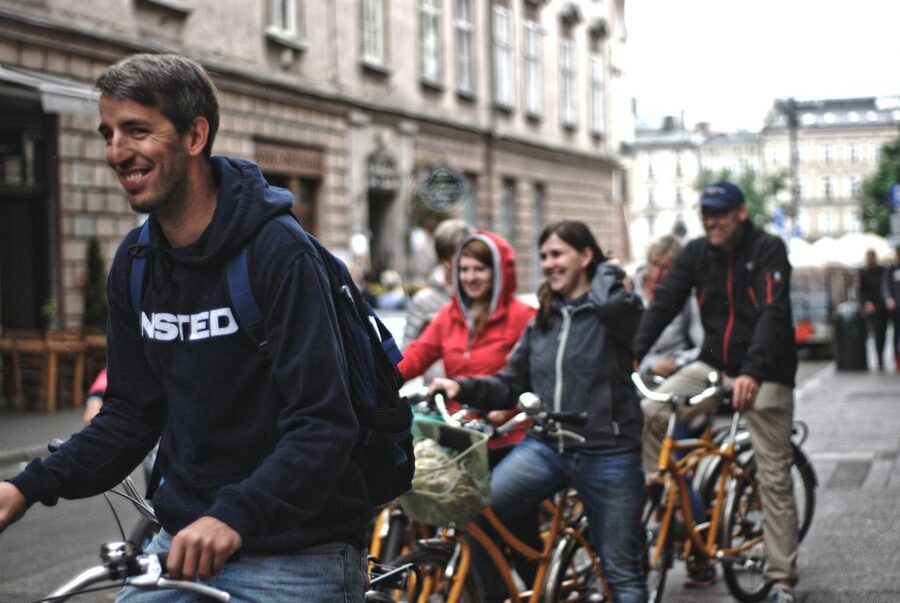
Book it if you want a first-day orientation that’s more meaningful than a simple highlights loop. You’ll cover the Old Town core (Main Square area, Wawel Royal Castle, and other major sights), then move into Kazimierz with synagogue and cemetery stops, and finish with Podgórze and the WWII ghetto area for proper context.
Skip it if you can’t ride a bike, or if mobility limits would make cycling unsafe or uncomfortable. Also, if you know you’ll be overwhelmed by wartime topics, choose the shorter evening option that focuses on Old Town and Kazimierz.
One more reason I’d lean toward booking: the tour has a strong track record for guides who blend clear explanations with humor and care. If you get a guide like Mike (or other guides such as Zoe or Chris), you’re likely in for a fun, well-paced day with enough story to make the city stick in your memory.
FAQ
How long is the Kraków bike tour?
The tour runs about 2 to 4 hours depending on the option you book. The full route is described as about 3.5 to 4 hours including a 45-minute lunch break.
Where do I meet for the tour?
You meet under the Adam Mickiewicz statue in Kraków’s Main Market Square area. The exact meeting point details can vary by the option booked.
Is the tour offered every day?
Yes, the city bike tour begins every day from the main market square meeting point.
What does the tour cover?
It covers Kraków’s Old Town, the historic Jewish Quarter (Kazimierz), and the WWII ghetto area in Podgórze.
What is included in the price?
The price includes a live tour guide, bike rental, and a helmet.
Is lunch included?
No. Lunch isn’t included, but there is a 45-minute break for lunch during the tour.
Are e-bikes included?
No. E-bike is not included.
What languages is the guide available in?
The tour guide is available in English and Dutch.
Is the tour strenuous?
It’s described as extensive but not too strenuous, suitable for all levels of fitness. It is not suitable if you can’t ride a bike.
FAQ
Can I cancel for a full refund?
Yes. You can cancel up to 24 hours in advance for a full refund.
Should I dress for the weather?
Yes. Dress for the weather, since you’ll be outside for the ride and stops.