REVIEW · MERIDA
Mérida: The E-bike tour with history and culture
Book on GetYourGuide →Operated by Flip’s Side of History Tours · Bookable on GetYourGuide
Mérida moves best on an e-bike. I love the easy, comfortable ride that lets you cover about 17 kilometers without arriving wrecked, and I love how guide Ivan uses each stop to explain what you’re seeing—Monuments, neighborhoods, and daily life around Yucatán. This is the only e-bike option in Mérida I’ve seen promoted like this, so it feels like a smart upgrade over the usual walking-only tours.
The main drawback is pretty simple: you’re cycling for 2.5 to 3 hours, so you’ll want a moderate fitness level and decent comfort on a bike. If you can’t ride (or hate the idea of it), this won’t be your best plan, even with the electric assist.
In This Review
- Key highlights worth knowing
- Meeting up at Paseo Montejo and learning the e-bike fast
- Montejo Avenue cycle path: mansions and the Monument to the Homeland
- Parque de las Américas in García Ginerés: Neo-Mayan art in a calmer pocket
- Back to Montejo for a taste of gastronomy and a practical city overview
- Parque de la Plancha: protected cycle paths, and a cold drink when you need it
- La Mejorada and the historic center: colonial life through two old squares
- Southbound old neighborhoods and the cobblestone return
- Why the e-bike approach is the smart move here
- What you’ll learn in 9 stops (without missing the city)
- Price and what you truly get for $46
- Who should book this e-bike history tour (and who shouldn’t)
- Should you book it?
- FAQ
- How long is the e-bike tour?
- Where do I meet the guide?
- How far will we cycle?
- What’s included in the price?
- Is the tour for first-time e-bike riders?
- What languages are available for the guide?
- Is the tour private or in a group?
- Is the tour suitable for children?
- Are alcohol and drugs allowed?
- Can I cancel or change plans?
Key highlights worth knowing
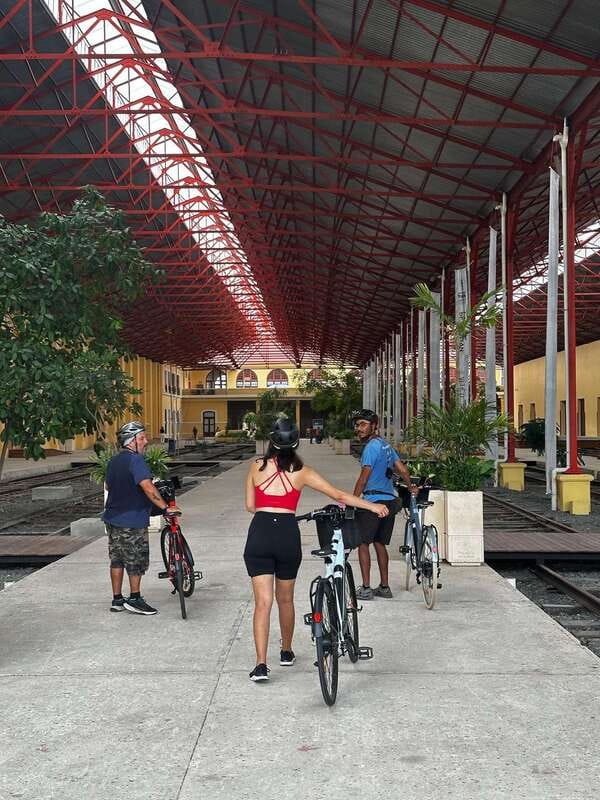
- Only e-bike experience in the city for this kind of guided, history-and-culture route
- Nine planned stops for photo time and context, not just sightseeing photos from the saddle
- García Ginerés + Neo-Mayan art at Parque de las Américas, in a quieter neighborhood
- Parque de la Plancha ride time on cycle paths, with a cooling drink offered there or near the historic center
- Ivan’s safety-first approach with a quick e-bike lesson before you roll and a mic so you can hear him while riding
Meeting up at Paseo Montejo and learning the e-bike fast
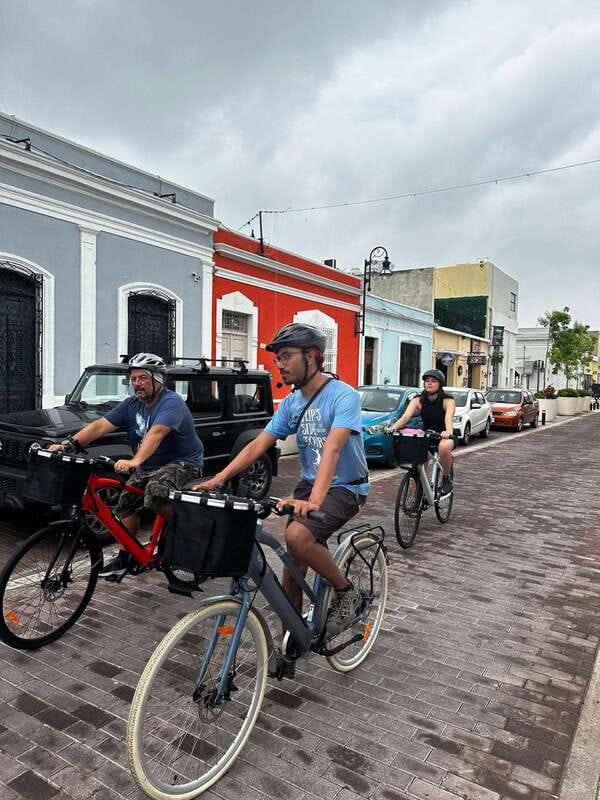
The tour starts right by the action: you’ll meet at the corner of 43rd Street and Paseo Montejo. The guide will be easy to spot—he’s the only person waiting there with an e-bike. This matters because getting started quickly is half the fun on a short 2.5 to 3 hour experience.
Before you head out, you get a hands-on setup: how to operate the e-bike, plus what you need to stay safe. A helmet is included, and the guide provides what you need to make the ride feel controlled rather than chaotic. If it’s your first time on an e-bike, you’ll likely spend a little time getting comfortable, but the process is straightforward.
One extra detail I really like: the guide uses a sound system (a small speaker/mic setup) so you can hear instructions and history while you’re rolling. That means you’re not constantly stopping to ask people to repeat themselves.
If your schedule lines up with a Sunday, you may benefit from road closures that reduce car traffic in parts of Mérida, which can make the whole ride feel smoother and safer.
You can also read our reviews of more tours and experiences in Merida.

Montejo Avenue cycle path: mansions and the Monument to the Homeland
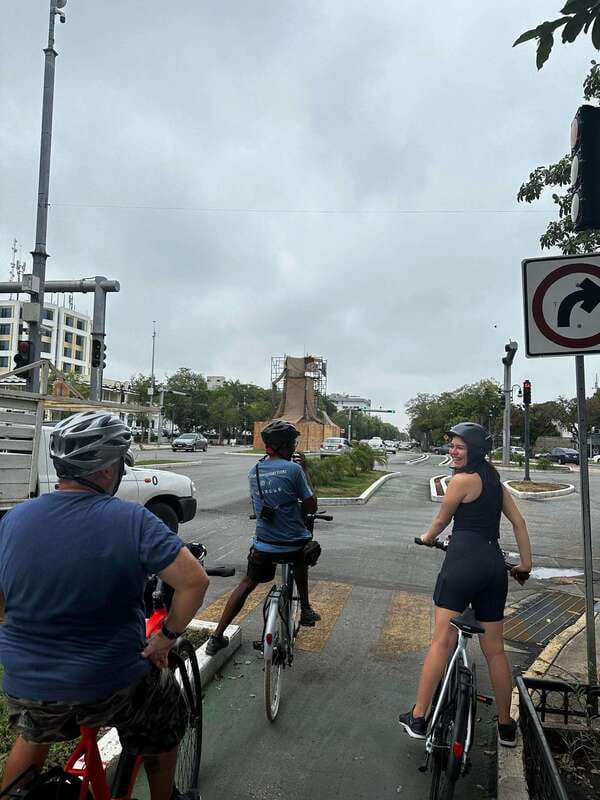
You begin on Montejo Avenue, one of Mérida’s most recognizable stretches. The ride uses the cycle path along this corridor, so you’re not fighting for space on every block. Early on, you’ll see the Monument to the Homeland and the impressive mansions that line the area.
This is a great first segment because it sets the tone. You get to learn how Mérida’s wealth and civic pride showed up in architecture, and you see why Montejo is often treated like the city’s grand living room. Even if you’ve only skimmed photos online, being there in person gives you the scale—buildings that look decorative at a distance turn into actual stories once someone points out the details.
What to watch for: the mansions vary a lot in style and age, and your guide will connect those differences to the bigger picture of Mérida’s growth. The route also gives you an easy warm-up on the bike before you head toward the smaller neighborhoods.
Potential drawback here is mainly logistics of timing. If you arrive late, you’ll miss the “get comfortable on the bike” part, and that lesson is the difference between a calm ride and a stressful one.
Parque de las Américas in García Ginerés: Neo-Mayan art in a calmer pocket
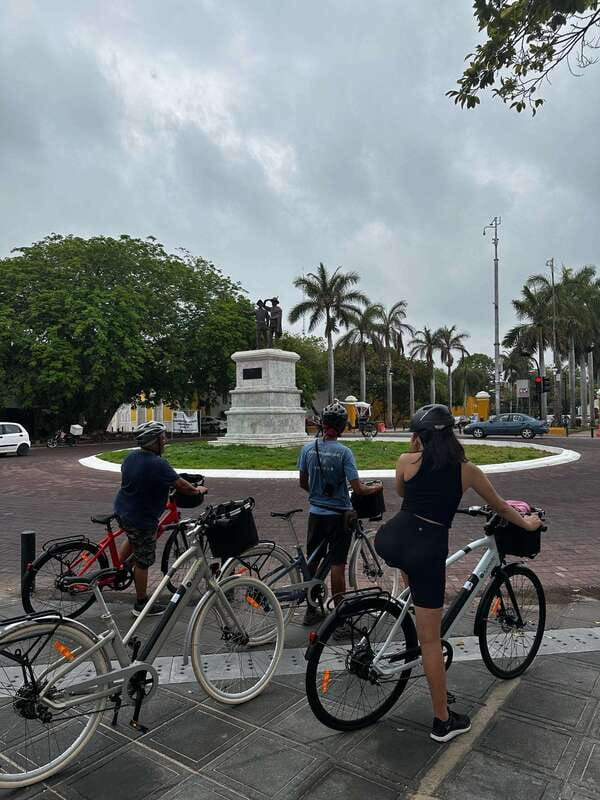
After the Montejo stretch, you head to García Ginerés, a quieter neighborhood with a different feel. Your stop is Parque de las Américas, known for its Neo-Mayan art. This is where the tour starts to feel less like a route through landmarks and more like an education in how Mérida expresses identity.
I like this kind of stop because Neo-Mayan art isn’t just decoration—it’s cultural messaging. It’s a modern conversation with Maya roots, and the guide explains what you’re looking at rather than leaving you to guess. You’ll have time to look around and snap photos without feeling rushed.
This part also breaks up the ride. You get greenery and space, and you’re not only stuck between sidewalks and busy roads. The tour balances motion with moments where you can reset your senses.
One consideration: because this is a park stop, the shade and comfort depend on the time of day and weather. If Mérida is roasting, plan on leaning on sunscreen and light clothing.
Back to Montejo for a taste of gastronomy and a practical city overview
Once you return to Montejo Avenue, the tour shifts gears slightly. You’ll ride along a recently renovated gastronomy street, and your guide will point out restaurants and explain what’s around you.
This segment is valuable because it helps you after the tour. You’re not just learning history for the ride—you’re collecting ideas for what to eat and where to go later. It’s the kind of context that makes your next meal feel more intentional.
Also, the ride route keeps you moving. You’re still cycling, not standing around waiting for the next photo stop. It’s a good rhythm: listen, look, pedal, repeat—without turning into a lecture marathon.
If you’re the type who wants restaurant recommendations, pay attention here. The guide’s suggestions can help you plan your evenings in the Centro area and beyond.
Parque de la Plancha: protected cycle paths, and a cold drink when you need it
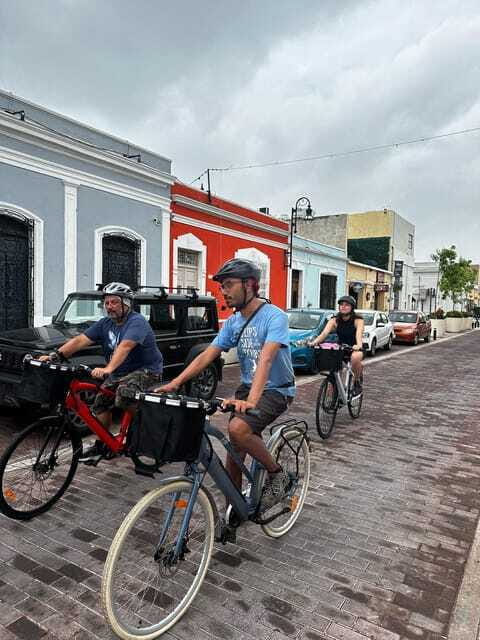
Next comes Parque de la Plancha, another key moment on the tour. You pedal through its cycle paths, and you’ll get a breather from the busiest roads while still making steady progress.
This is also where the tour offers refreshing drinks (tropical fruits is the example provided). If your schedule lines up that way, you’ll grab a drink here. If not, the drink offer happens in Parque de Santa Anna near the historic center, depending on the day’s flow.
I appreciate this because it acknowledges the reality of Mérida heat. You’re not expected to just push through without a practical pause. It’s also a good checkpoint: you can take a minute, look at the park area, and reset before you roll into the older parts of the city.
One small caution: hydration is easy to forget on a fun ride. If you tend to run warm, bring your own extra water as backup, even though the drink is included.
La Mejorada and the historic center: colonial life through two old squares
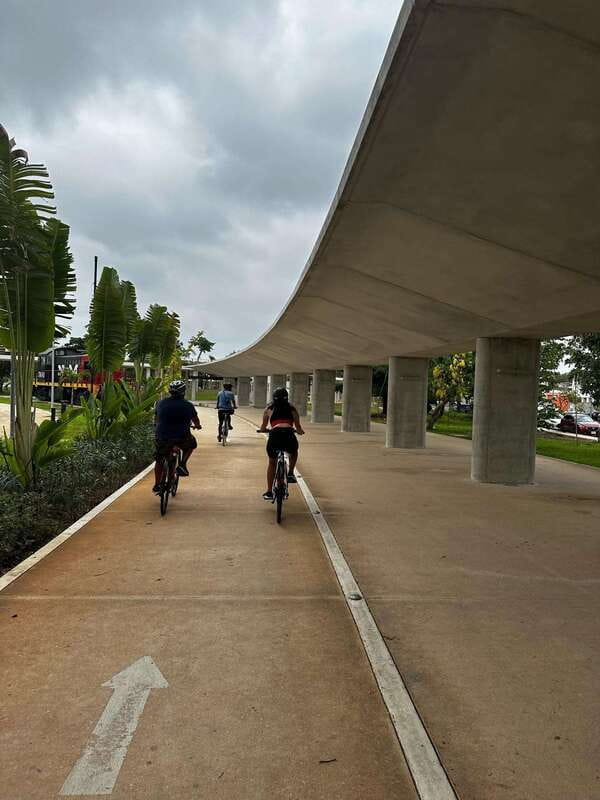
From Parque de la Plancha, you then connect toward the historic areas. You’ll be taken to the La Mejorada neighborhood, and as you pass, you’ll see restaurants and museums outside the bike route.
This section matters because Mérida’s history isn’t only in one giant monument. It’s in neighborhood layers—street layout, building frontage, and the way public spaces evolved. The guide helps you notice the pattern rather than treating the city as a list of separate sights.
You’ll then visit an area where multiple aspects of colonial life are concentrated, centered on two old squares: the main square and the Cathedral. This is where the tour gives you the big bearings you’ll keep using later. Once you understand the central square area, it becomes easier to navigate on your own and easier to understand why people gather where they gather.
What to expect at this stage: a slower pace for explanation and photos, plus the feeling that you’ve reached the core of the city’s public story.
If you don’t like crowds, consider the time you book. The historic center can get busy, and even with a guided flow, you’ll still be in the middle of the city’s public life.
Southbound old neighborhoods and the cobblestone return
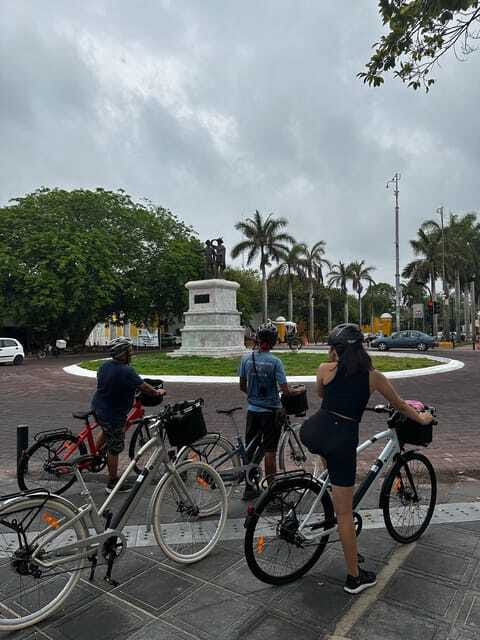
After the Centro highlights, you head farther south to an older neighborhood that’s described as one of the most beautiful in the city today. Even if you don’t know the neighborhood name ahead of time, you’ll recognize the shift in streets and atmosphere as you move away from the main corridors.
The tour includes a ride that includes a cobblestone street on the return to the starting point. Cobblestones can be bumpy even on an e-bike, so this is another reason the bike lesson and route choice matter.
This final segment is more than a souvenir photo moment. It’s where the tour connects the city’s old bones with how Mérida looks now—still walkable, still distinctive, and still very much alive.
When it ends, you’ll have done something that feels like you saw the city from multiple angles: grand avenues, cultural parks, residential neighborhoods, and the historic core.
Why the e-bike approach is the smart move here
E-bikes change the way a city tour feels. Instead of choosing between slow walking and missing distances, you get to cover ground while keeping energy for looking closely. On this tour, that’s especially helpful because you’re cycling about 17 kilometers.
That distance isn’t extreme for someone with basic bike comfort, but it is long enough that electric assist genuinely reduces fatigue. It also makes it easier to enjoy the explanations without arriving mentally drained.
The other win is safety. The guide emphasizes rider safety from the start, and the routes are designed to reduce the need to deal with heavy traffic constantly. If you’re nervous, this matters more than the bike itself.
If your day includes lighter car traffic—Sunday road closures are specifically mentioned as a factor in how the ride can feel easier—your experience should feel even smoother. Either way, expect the ride to feel organized rather than improvisational.
What you’ll learn in 9 stops (without missing the city)
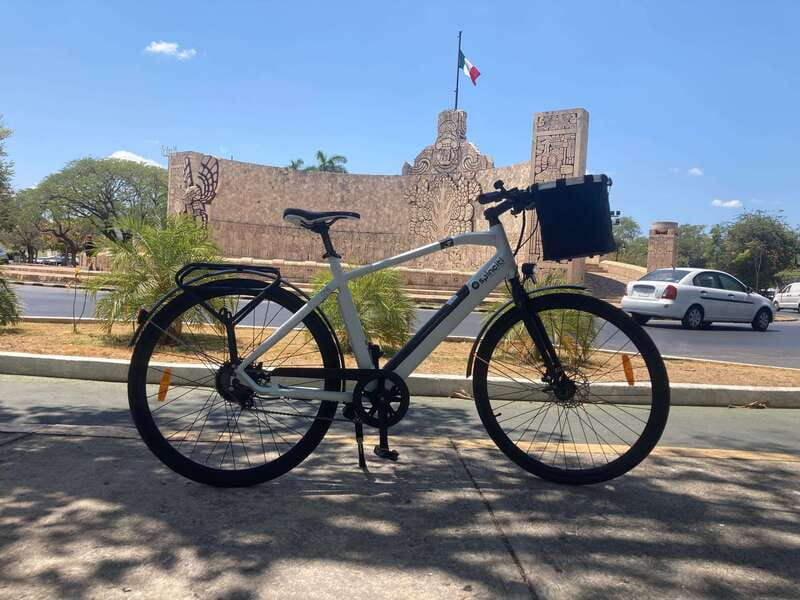
The tour is built around nine stops, each with more detailed explanation. That stop structure is a big deal: it prevents the classic problem where you’re either speed-watching sights or stuck in one spot too long. You get enough time to take photos, and you get enough context to understand what the photos mean.
The guide—often Ivan—is described as careful, conscientious about safety, and deeply connected to Mérida’s history and culture. He also adjusts content based on what you want, so if you’re more interested in architecture, food culture, or broader Yucatán background, you can get more of that.
Language support is included with live guiding in English and Spanish. And because you’re hearing the guide through a mic setup, it’s easier to follow along while moving rather than stopping every few minutes.
If you’re the type who likes to understand how neighborhoods work—what makes this area different, why certain public spaces matter—you’ll probably enjoy this format a lot.
Price and what you truly get for $46
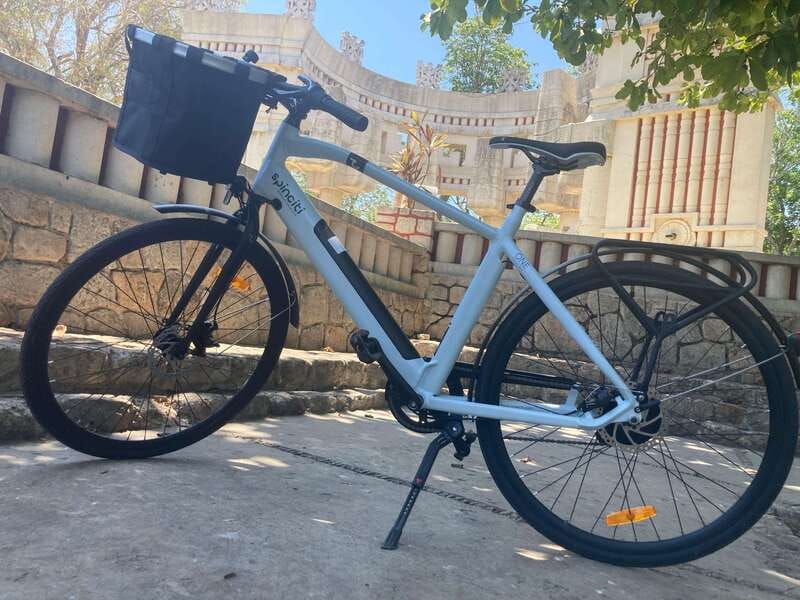
At $46 per person for about 2.5 to 3 hours, you’re paying for more than a bike rental. You get a live guide, a guided route with cultural context, and included gear: helmet plus an e-bike designed for about 60 km of distance with lights provided for tours at night.
You also get a cooling drink (tropical fruits is the example given). That sounds small until you’re cycling in heat and realize it’s part of keeping the experience comfortable.
Value-wise, this is strongest if:
- you don’t want to plan routes on your own,
- you want guided context so you can explore smarter after,
- you want an easier pace than walking the same distances.
If you already know Mérida well and you just need a bike for cruising, you might find cheaper options. But if your goal is history and culture with less effort, the included guide and structured stops justify the price.
Who should book this e-bike history tour (and who shouldn’t)
This tour is for adults and teens who can handle cycling. It’s not suitable for children under 14, and it’s not for anyone who can’t ride a bike. Visually impaired visitors aren’t considered suitable based on the activity requirements.
A moderate level of fitness is recommended because you’re covering about 17 kilometers. You’ll also want light clothing and to plan for weather—sunscreen or a raincoat is recommended, and sandals or flip-flops are discouraged.
On the positive side, the electric assist makes it friendly for first-time e-bike riders who are willing to listen during the initial practice. The guide’s safety approach helps people feel more secure than they might expect.
Finally, there are clear rules: alcohol and drugs aren’t allowed.
Should you book it?
I think you should book if you want Mérida’s big sights plus the kind of neighborhood context that doesn’t come from a quick photo run. The mix of Montejo Avenue, García Ginerés, Parque de la Plancha, and the historic square/Cathedral area gives you a well-rounded view in a short window.
Book it confidently if you:
- want a guided route in English or Spanish,
- like learning while you move,
- value comfort and safety over walking for hours.
Skip it if you’re unwilling to cycle for 2.5 to 3 hours or if you don’t feel comfortable riding. In that case, a slower walking-focused plan will feel more natural.
If you’re on the fence, one practical tip: choose a day when you’ll have good energy. Mérida is hot, and the tour includes cycling time that will be much more enjoyable if you start hydrated and sun-protected.
FAQ
How long is the e-bike tour?
The tour lasts about 2.5 to 3 hours.
Where do I meet the guide?
Meet at the corner of 43rd Street and Paseo Montejo. The guide will be the only person there with an e-bike.
How far will we cycle?
You’ll cycle around 17 kilometers during the tour.
What’s included in the price?
The price includes a comfortable electric bicycle, helmet, and a refreshing drink (tropical fruits is provided). The bikes also have lights for night tours and charging for about 60 km.
Is the tour for first-time e-bike riders?
It includes a short teaching and safety setup at the start, so beginners can usually get up to speed during that initial practice time.
What languages are available for the guide?
The live guide operates in Spanish and English.
Is the tour private or in a group?
You can book private or small groups.
Is the tour suitable for children?
No. It’s not suitable for children under 14.
Are alcohol and drugs allowed?
No. Alcohol and drugs are not allowed on the tour.
Can I cancel or change plans?
You can cancel up to 24 hours in advance for a full refund, and you can use a reserve now & pay later option.