REVIEW · MERIDA
Mérida: Montejo Boulevard and Historic Center bike tour
Book on GetYourGuide →Operated by Flip’s Side of History Tours · Bookable on GetYourGuide
Mérida by bike feels like cheating, in a good way. I love the shade-protected bike lanes on Paseo Montejo and the small-group history talks with Ivan as you roll through the city. It’s an easy way to see a lot without arriving sweaty and fried.
The tour is built for conversation and short, timed breaks, so you can ask questions and still keep moving. You’ll also get practical cultural and food tips as you go, not just facts on a wall. One drawback to plan for: bike condition can be a little inconsistent, so do a quick check (seat height, brakes, tires) before you start pedaling.
If you want a flat, efficient Mérida intro that mixes big landmarks with lesser-seen corners, this is a solid choice.
In This Review
- Key highlights to look for
- Meeting at Palacio Cantón: getting your bike and your bearings
- Paseo Montejo bike lanes: shade, palms, and the Monument to the Homeland
- The quieter stops: mansions, “golden age” connections, and a chance to ask questions
- Plaza Mayor/Plaza Grande: cathedral views, colonial-era clues, and 19th-century parks
- Casa Montejo Museum and the cathedral area: short stops with big payoff
- La Plancha photo stop: a slower moment for angles and street-life views
- Santa Anna market fruit drink: the included cooling break that keeps you smiling
- Pace, safety, and when to pick this tour
- Bike tour logistics you should know before you roll
- Price and value: what $40 buys in 2.5 hours
- Should you book this Mérida Montejo Boulevard bike tour?
- FAQ
- Where is the meeting point?
- How long is the tour?
- How far do you ride?
- Is the route flat?
- Do you stay mostly on bike lanes?
- What sights do you see?
- Is there time to take photos?
- Is a drink included?
- What should I bring?
- Who shouldn’t take this tour?
Key highlights to look for
- A flat 7-kilometer ride that’s gentle even if you’re not very fit
- Paseo Montejo’s tree-and-palm shade for the hottest part of the experience
- Ivan’s story style, including pointing out details as you approach
- Stops timed for photos and short walking, so you don’t feel rushed
- Plaza Mayor/Plaza Grande landmarks with cathedral and colonial-era building context
- A market fruit drink included to cool down right when you need it
Meeting at Palacio Cantón: getting your bike and your bearings
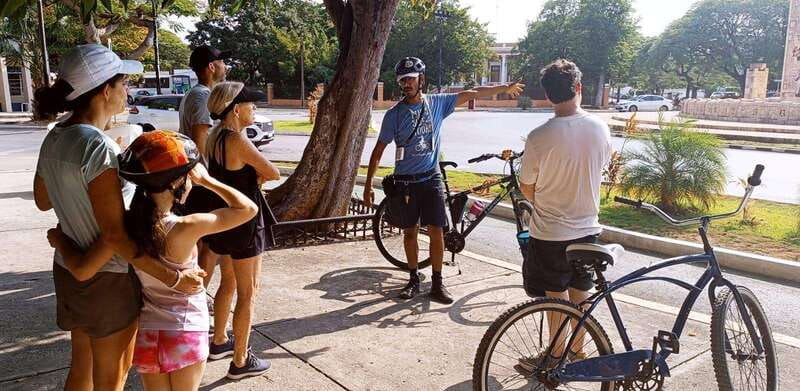
The tour starts outside the Museo Regional de Antropología, Palacio Cantón. Your meeting point is on the corner of 43 Street and Montejo Avenue, and the bikes are nearby rather than right at the exact front door. When you arrive, you’ll get set up quickly—this is not the kind of tour where you’re stuck waiting forever with your helmet hat-hair.
Bikes come in different sizes and colors, and the staff adjusts the fit to your height. You’ll also get a helmet, and there are options for kids too, including seats for small children (listed ages 2 and 5), plus tricycles for adults (two passengers in back, one in front pulling), and even tandem bikes. That flexibility matters because it makes the tour feel more like a real neighborhood activity than a one-size-fits-all ride.
For your comfort, I’d show up in comfortable clothes, with water and a hat. Mérida can be warm even when the sky looks innocent, and the route uses shade where possible, but you’re still in the sun. If it’s raining, the ride time stays about the same, but the route may shift to keep things safe and convenient.
Paseo Montejo bike lanes: shade, palms, and the Monument to the Homeland
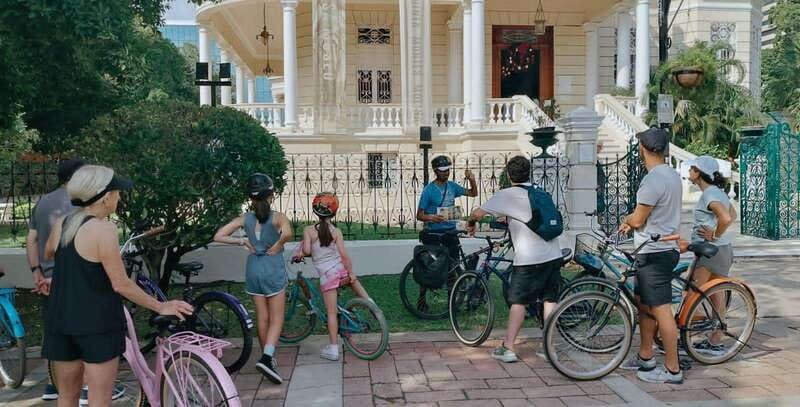
The first stretch is the payoff. You roll along bicycle lanes on Paseo Montejo, an avenue with trees and palms that genuinely cut the sun. This matters because a bike tour can turn into a heat test fast—here, the design helps you stay comfortable while you cover ground.
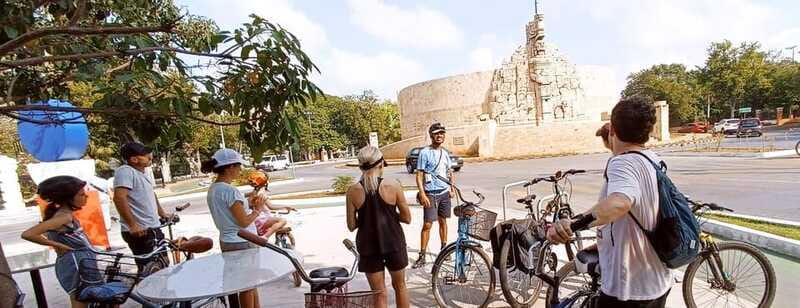
Early on, you stop at the Monument to the Homeland for about 15 minutes. The guide gives a short explanation, then you get time to take photos. If you like architectural and sculptural photo angles, this is a good place to slow down. It’s also one of those stops that makes you feel the city’s identity, not just its buildings.
This leg is also where you learn the rhythm. The pace stays relaxed, and you’re guided via a loudspeaker setup so you’re not constantly trying to catch every word from the front.
The quieter stops: mansions, “golden age” connections, and a chance to ask questions
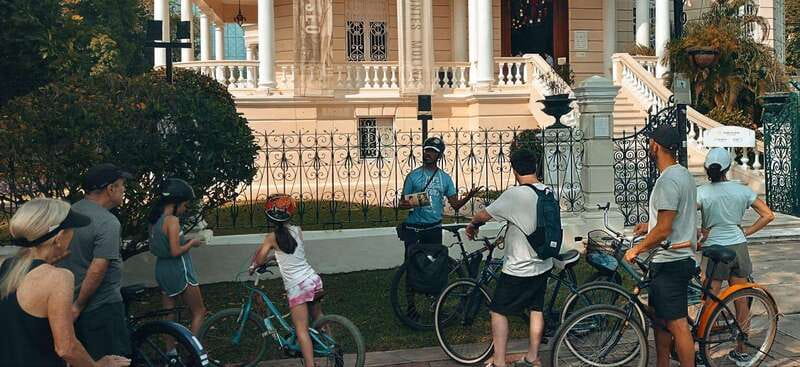
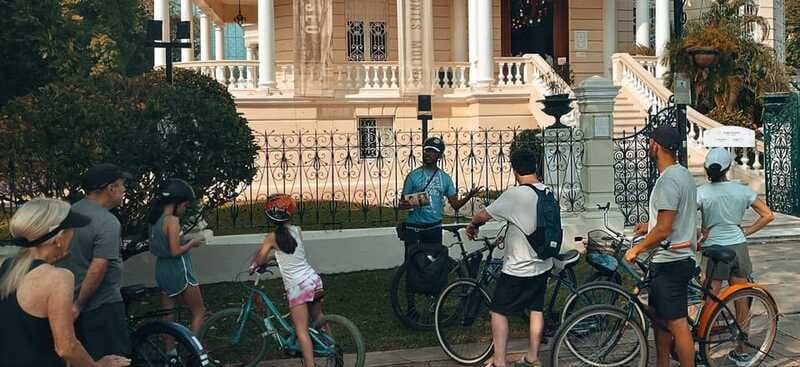
After the initial boulevard segment, the tour pivots into the parts of Mérida that feel more personal. You’ll make stops at four different beautiful mansions, with guided explanations tied to who lived there and their connection to the golden age of Yucatán.
These mansion stops are the kind of lesson that makes your next walk through town better. Instead of seeing a big old house and moving on, you learn the human story behind it—how wealth, politics, and regional fortunes shaped what got built. That adds depth to what you’re seeing at the street level, especially in a city where the past is still visible.
There’s also an additional short stop (about 10 minutes) labeled as a lesser-known point. It’s the kind of brief detour that breaks up the main sights and gives you a smarter sense of how neighborhoods connect beyond the postcard spots. You’ll likely get time to look around while the guide explains what you’re looking at.
One practical note: since this is a small-group ride, you’ll get the most out of it if you stay within hearing range. One of the only mild critiques that comes up is that groups can sometimes spread out, making it harder to hear at the next regroup point. So if you’re prone to falling back for photos, just be ready to close the gap quickly.
Plaza Mayor/Plaza Grande: cathedral views, colonial-era clues, and 19th-century parks
In the second half, you ride toward the Plaza Mayor area, directly on a safe street segment aimed at keeping everyone comfortable as you transition from boulevard lanes into the historic center. This shift is where your eyes get busy.
At the central square, you get a guided walk-through with stops and explanation that cover big landmarks and the story behind them. You’ll see or reference:
- The cathedral of Mérida
- The House of the Conquistadors, described as dating from the colonial era
- Parks created in the 19th century
- The main theater seen from the outside
- Other surrounding features the guide highlights as you roll up
These aren’t long museum-style sessions. Many of the explanations are short and targeted—so you understand what you’re seeing without losing half the tour to standing in one place.
The real value here is context. For example, when you’re told a building dates from the colonial period, it changes how you read the façade and street layout. When you hear about 19th-century parks, you start noticing how the city’s public spaces evolved—not just the churches and big houses.
Casa Montejo Museum and the cathedral area: short stops with big payoff
As you work through the historic center, there are timed stops designed to keep momentum. You’ll visit the Casa Montejo Museum for about 10 minutes with a guided explanation, then move toward the cathedral for a shorter guided stop (around 5 minutes).
These durations are intentionally brief. If you want deep, slow art-museum time, this isn’t that kind of tour. But for a bike itinerary, short guided segments are a smart compromise: you learn enough to look like you know what you’re seeing, then you keep moving while the city is still fresh in your mind.
Also, because the route is mostly flat, you won’t arrive at the cathedral area feeling wiped out. That means you can actually enjoy the exterior viewing and photo time rather than rushing because your legs hurt.
La Plancha photo stop: a slower moment for angles and street-life views
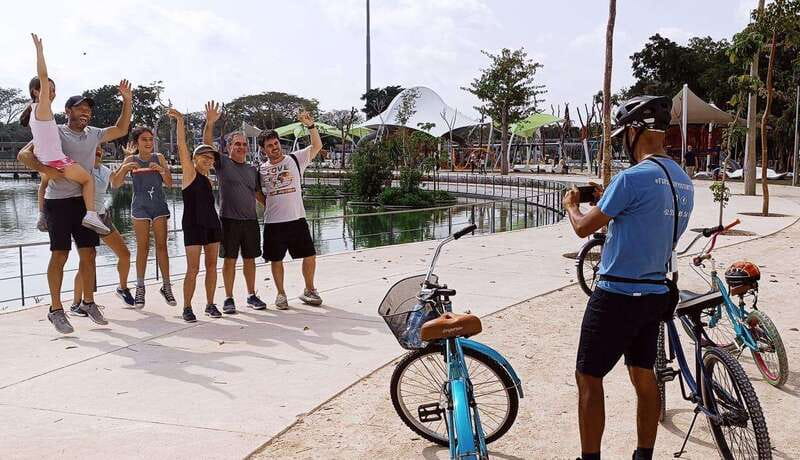
One of the most photogenic moments comes at La Plancha. This stop runs about 25 minutes and includes a photo moment, a visit, and guided context.
This is the section where you stop treating the city like a checklist and start treating it like a place. La Plancha is a good spot to soak in street texture and get shots from angles you wouldn’t get from the main boulevard. If you’re the type who enjoys noticing small details—signs, textures, people, street-level life—this is where you’ll feel most at home.
If you have kids, this is also a comfortable pacing window. It’s long enough for them to rest, look around, and get their energy back without turning into a long detour.
Santa Anna market fruit drink: the included cooling break that keeps you smiling
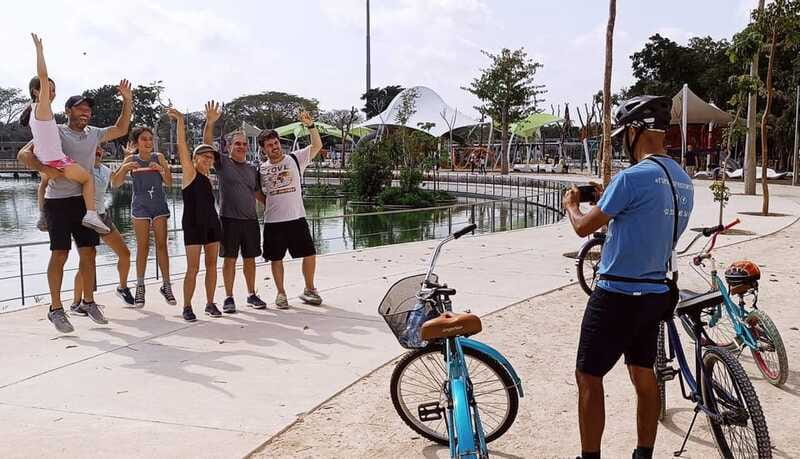
At the end, you head to Santa Anna market. The idea is simple: cool down with a non-alcoholic drink. You can pick the fruit drink of your choice, and it’s included in the price, either halfway or at the end of the tour depending on timing.
This is the kind of included perk that actually earns its spot. You’re out for about 2.5 hours, covering roughly 4 miles / 7 kilometers. Even with a flat route, you’ll feel the sun. The drink break is timed to reset you so the ride back doesn’t feel like a victory lap.
When you’re done, you return to the same meeting place area near Palacio Cantón and drop off the bikes on Paseo Montejo.
Pace, safety, and when to pick this tour
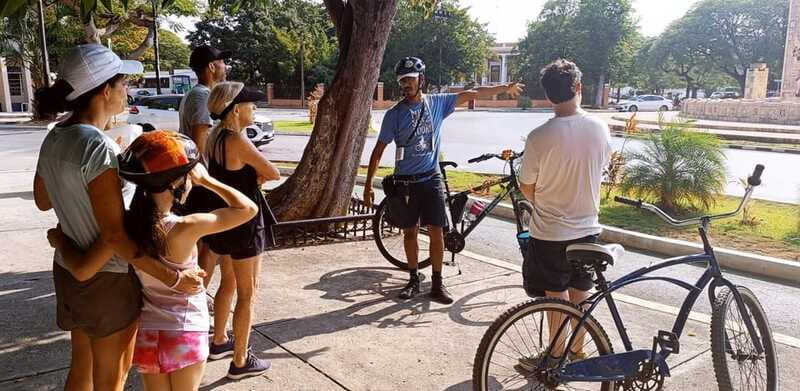
This bike tour is designed around a gentle pace. Most of the route uses bike lanes first, which helps you feel confident early. In the historic center section, cars are described as patient around cyclists, which makes a big difference for your comfort.
Your guide, Ivan, is a major part of why the tour works. He’s friendly at the start, asks about your background, and uses audio so explanations stay audible while you ride. There’s also mention of him using a handheld laser to point out details on distant buildings and monuments, which helps you follow even when you’re moving.
Safety is handled thoughtfully. You’re on a flat route, you’re given helmets, and the itinerary is adapted when heat or rain gets intense—same duration, route changes for everyone’s safety.
This tour is a good fit if you:
- Want a first-timer Mérida experience that doesn’t require long walks
- Prefer light exercise over sitting in a bus
- Like history explained in clear pieces tied to what you’re seeing
- Enjoy local recommendations for food and cultural stops
It’s not a good fit if you can’t ride a bike, use a wheelchair, or have epilepsy. There are also listed weight limits, including 309 lbs / 140 kg and 350 lbs / 159 kg, so check the exact guidance for your situation. If you’re low fitness, this can still be doable because it’s gentle and flat, but if you know you’ll struggle outdoors in heat, plan your day accordingly.
Bike tour logistics you should know before you roll
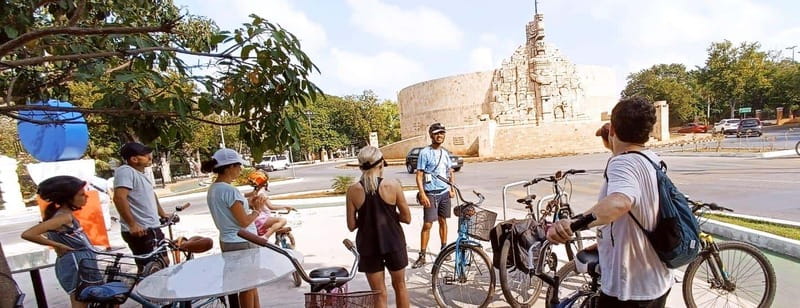
A few small things will help you enjoy the experience more:
- Bring water and a hat. Even with shade, you’ll want to stay hydrated.
- Wear comfortable clothes that won’t bind when you pedal.
- Expect shade at most stops, but keep your eyes on the sky if conditions shift.
- Don’t expect a super fast ride. The value here is explanations and stops, not speed.
Also, check your bike quickly at pickup. One issue that came up is that some bikes may not feel like top condition. It doesn’t have to ruin the experience, but a 10-second check before you start can save you headaches later.
Price and value: what $40 buys in 2.5 hours
At $40 per person for 2.5 hours, this is a decent value for what you get: bike access with a fit-adjusted setup, a helmet, a live guide in English or Spanish, guided time at multiple major sights, and a cooling included drink at a market.
What makes the price feel reasonable is that it’s not just transportation. You’re paying for guidance that turns landmarks into understanding—plus local food and cultural recommendations you can use immediately afterward. The route length is modest at about 7 kilometers, but the stops are timed so you get both movement and context.
In a city like Mérida, that balance matters. You could spend more time hopping between sites on your own and still miss the relationships between buildings and eras. Here, you get those connections without burning your energy.
Should you book this Mérida Montejo Boulevard bike tour?
I’d book it if you want an efficient, low-effort way to see the highlights of Mérida’s historic center while staying comfortable under the shade of Paseo Montejo. With Ivan leading, you’re likely to leave with better context for the cathedral area, the story behind colonial-era houses, and a clear sense of how the city developed.
Skip it if you want a long, slow museum-style experience or if your biggest goal is riding for speed. Also, if bike condition or group audio is a dealbreaker for you, you’ll want to do that quick bike check right away and stay close to the front for easier listening.
If you’re an easy-going cyclist who likes short guided stops and included local cooling breaks, this tour is a smart way to spend your afternoon in Mérida.
FAQ
Where is the meeting point?
You meet at the corner of 43 Street and Montejo Avenue, outside the Museo Palacio Cantón (Museum of Regional Anthropology).
How long is the tour?
The tour runs about 2.5 hours.
How far do you ride?
It covers about 4 miles (7 kilometers).
Is the route flat?
Yes. The entire surface is totally flat.
Do you stay mostly on bike lanes?
The first part is on bicycle lanes along Paseo Montejo, and the second part goes through streets in the historic center.
What sights do you see?
You’ll stop at the Monument to the Homeland, multiple mansions, Plaza Mayor/Plaza Grande, Casa Montejo Museum, the cathedral area, La Plancha, and end at Santa Anna market.
Is there time to take photos?
Yes. You get photo time at the Monument to the Homeland and at La Plancha, plus brief stops where you can take pictures.
Is a drink included?
Yes. The tour includes a non-alcoholic drink (either halfway or at the end), choosing a fruit drink at the market.
What should I bring?
Bring comfortable clothes, water, and a hat.
Who shouldn’t take this tour?
It’s not suitable if you can’t ride a bike, if you use a wheelchair, if you have epilepsy, if you have low fitness, or if you’re over the listed weight limits. Alcohol and drugs are not allowed.