REVIEW · FRENCH QUARTER
New Orleans: Heart of the City Bike Tour
Book on GetYourGuide →Operated by Flambeaux Bicycle Tours · Bookable on GetYourGuide
This is the kind of New Orleans bike tour that turns streets into lessons you can remember. I like how the route links colonial streets to the making of Creole culture, and I also like the small-group feel (no more than 10 people) guided by pros like Eric who mix history with a friendly, personal touch. One thing to consider: you’re riding city streets for about 6 miles, at a leisurely pace, but you do need to be comfortable biking and not afraid of rain-soaked sidewalks since the tour runs rain or shine.
If you want New Orleans history without the long walk-and-wait rhythm, this 3-hour Heart of the City tour is a smart fit. You’ll pedal through French Quarter streets and other oldest areas, cruise along the Mississippi River banks, and finish with a visit to St. Roch Cemetery, where you’ll learn how New Orleanians handle burial practices. The big win is context: after this, you’ll understand what you’re seeing when you wander the city on your own.
In This Review
- Key highlights that make this bike tour worth your time
- New Orleans by bike: how this tour actually helps you understand the city
- Meeting between Toulouse and St. Peter: what the start feels like
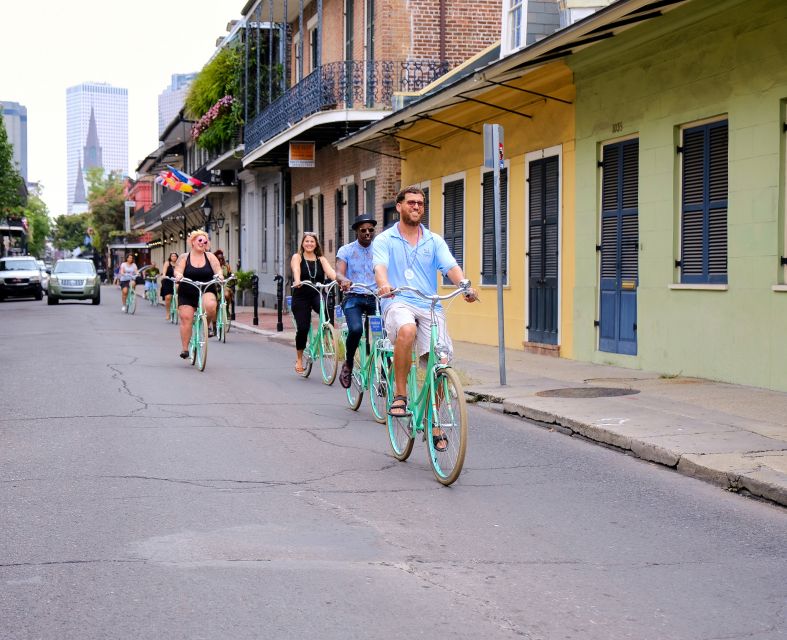
- Pedaling through the French Quarter and the city’s oldest streets
- A quick note on riding in real traffic
- Cruising along the Mississippi River banks at a leisurely pace
- Faubourg Marigny and Bywater: where the culture feels lived-in
- St. Roch Cemetery: above-ground burials and the meaning behind the visit
- The one consideration for cemetery time
- Creole culture explained without making it feel like homework
- Bike-tour value: what $55 gets you (and what it avoids)
- Who this tour is best for (and who should skip it)
- What to bring for a comfy ride (and rules to know)
- The bigger picture: why this tour beats random wandering
- Should you book the New Orleans Heart of the City Bike Tour?
- FAQ
- How long is the New Orleans Heart of the City Bike Tour?
- How much does the tour cost?
- How far do you ride during the tour?
- What’s included in the price?
- Where do we meet for the tour?
- Do I need hotel pickup?
- Is the tour canceled if it rains?
- What are the age and height requirements?
Key highlights that make this bike tour worth your time
- Five oldest neighborhoods with a guide who connects them to how Creole culture formed over time
- A low-stress 6-mile loop designed for a leisurely ride, not a workout grind
- Mississippi River bank cruising to break up the urban street grid with open river views
- St. Roch Cemetery visit to see an above-ground burial approach up close
- Pro bikes and traffic-smart guiding on flat streets in a small group of 10
New Orleans by bike: how this tour actually helps you understand the city
New Orleans can feel like a show: colors, music, food, and characters on every block. The problem is that it’s easy to see the scenery without learning the “why” behind it. This tour solves that by pairing a gentle ride with stop-and-explain moments that put names, neighborhoods, and traditions into plain context.
The ride is designed for everyday cyclists. You’re not asked to conquer hills or ride fast laps. Instead, you pedal a total of about 6 miles at a very leisurely pace, which matters because it gives your brain time to connect what the guide is saying to what you’re seeing outside the window.
And because it’s a small group limited to 10 participants, you’re not stuck in a huge herd. You can ask questions, and your guide can keep everyone together—especially useful when you’re moving through the tight street patterns around the historic core.
Meeting between Toulouse and St. Peter: what the start feels like
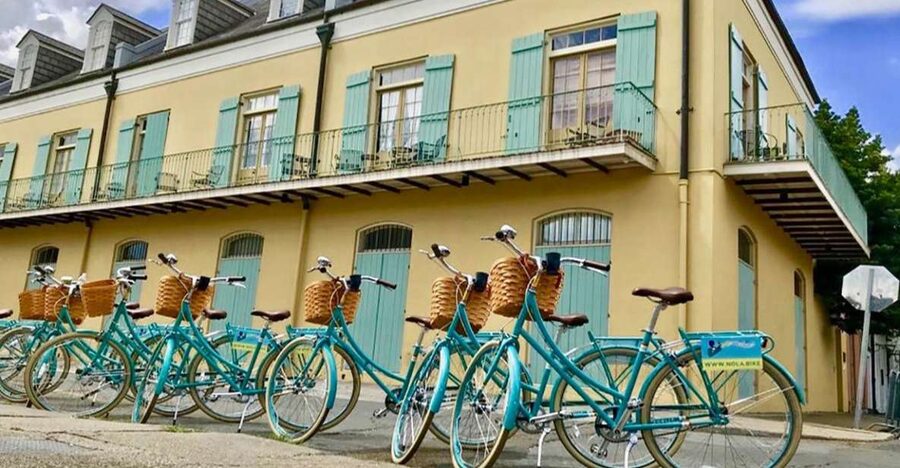
The meeting point is right where you want to be: between Toulouse St. and St. Peter St, next door to Arrow Cafe. If you’re staying in the French Quarter area, this is convenient because you don’t need a complicated pickup plan—just show up with comfortable shoes and get rolling.
You’ll start the tour by getting on a professionally maintained bicycle. Even though the tour is relaxed, that bicycle quality is a big deal in New Orleans, where the ground can feel less predictable than in flatter, newer cities. Having a guide and a bike that’s already checked before you mount it removes a chunk of stress.
Your guide is English-speaking, and the tour is generally available in the morning. That timing can help you avoid the harshest parts of the day heat, and it also sets you up to return later to the spots you liked best.
Pedaling through the French Quarter and the city’s oldest streets
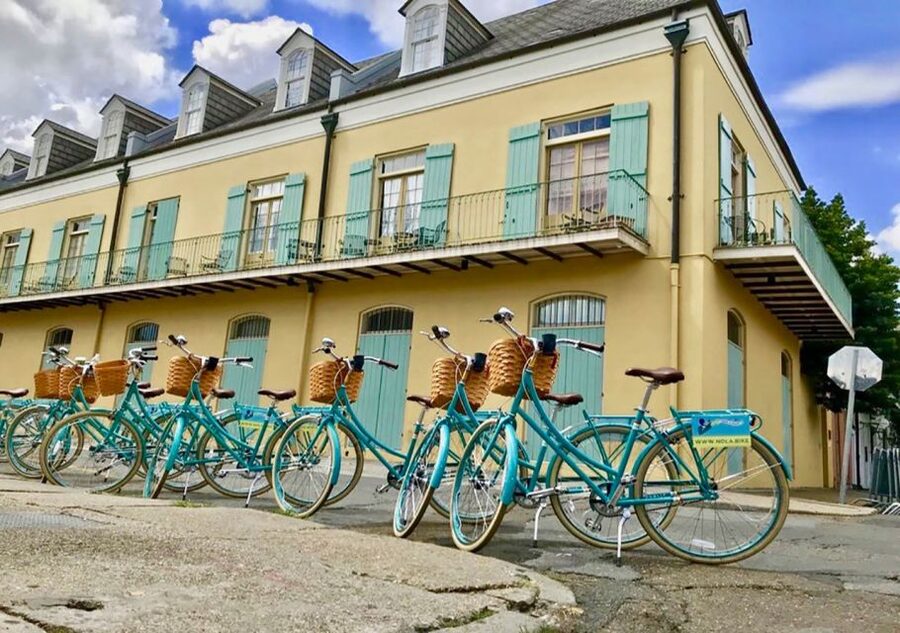
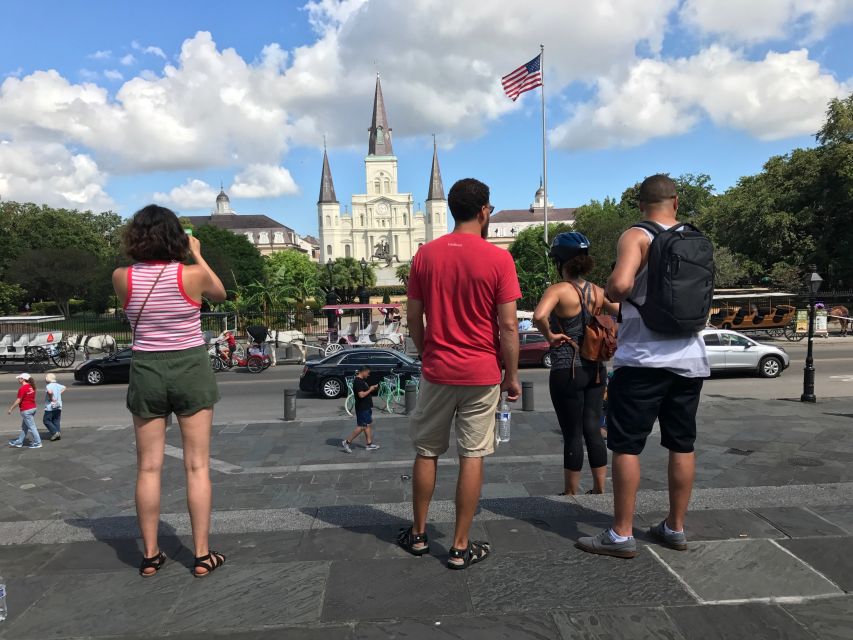
The French Quarter is where most first-timers point their camera. But a bike tour changes the experience: instead of stopping every block, you keep a steady flow and your guide can frame what you pass.
On this route, you’ll ride through the French Quarter and other historic areas at a pace that lets you actually absorb the details—architecture, street layout, and how the city’s past still shapes what’s around you now. The guide’s focus is on the colonial story of New Orleans and how it led into the development of Creole culture.
A practical advantage here is that you’ll get your bearings fast. You’ll remember the street connections and landmarks, which makes independent exploring afterward easier. If you’ve ever felt like New Orleans is too big to process on foot, this “slow but moving” approach helps.
A quick note on riding in real traffic
This is a city-street bike experience, not a closed-path cycling route. You’ll be mixing with pedestrians and vehicles. That’s normal for New Orleans, but it does mean you should be confident steering, braking, and staying aware. If you can handle a relaxed ride through urban streets, you’ll be fine.
Cruising along the Mississippi River banks at a leisurely pace
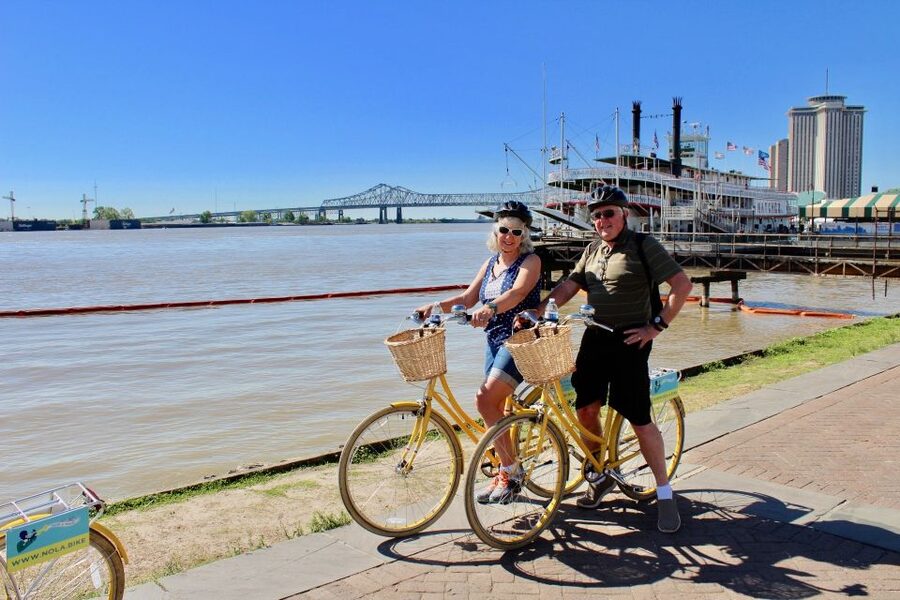
One of the smartest parts of this tour is the mix: city streets plus a change of scenery. When you pedal along the banks of the Mississippi River, the pace feels calmer and your senses reset. Even when you’re only riding a short distance, the river view gives the story room to breathe.
This matters because New Orleans history isn’t only about buildings. It’s also about trade routes, water access, and the geography that made the city grow. By turning that river edge into part of the tour, the guide’s explanations land better.
You’ll also appreciate the flatness of the route. The tour is described as flat, which makes it more approachable for a wider range of riders—especially compared with bike tours that feel like they’re built for experienced cyclists only.
Faubourg Marigny and Bywater: where the culture feels lived-in
After the core historic areas, the tour moves into neighborhoods that help explain how New Orleans culture evolved beyond the earliest colonial footprint. Faubourg Marigny is one of the named stops, and the ride continues through the Bywater area as you make your way toward St. Roch Cemetery.
What makes these neighborhoods valuable on a bike tour is that they show the city as more than a museum. You’re still in street life. Even if you’re not a history nerd, you’ll start seeing how the cultural identity of New Orleans shows up in everyday space: the rhythm of streets, the way people move, and the feeling of place.
If you’ve got limited time in town, this portion of the tour does a nice job covering “where you should go next.” For example, one guide (Eric, in particular) is praised not only for storytelling but also for practical recommendations—like dining and jazz bar ideas you can use after the ride ends.
St. Roch Cemetery: above-ground burials and the meaning behind the visit
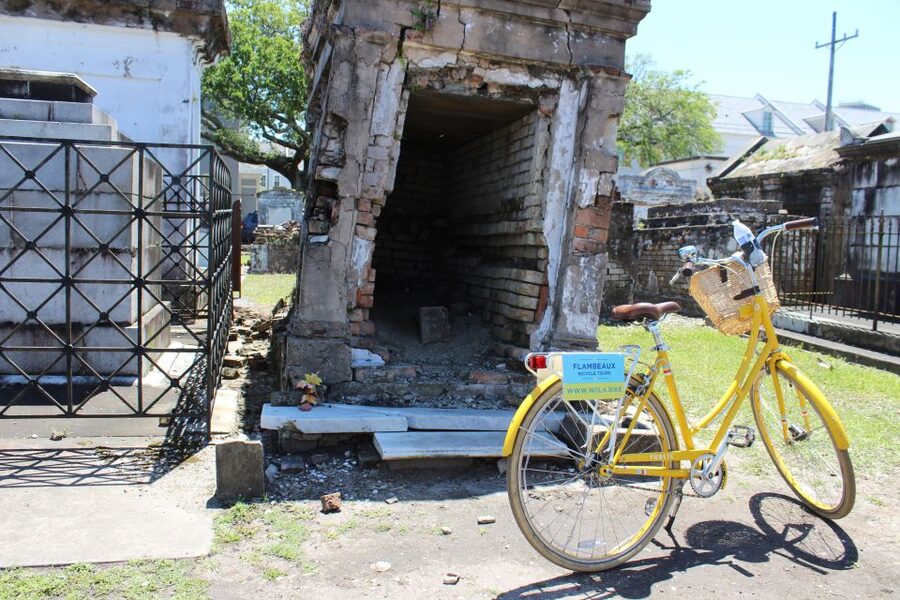
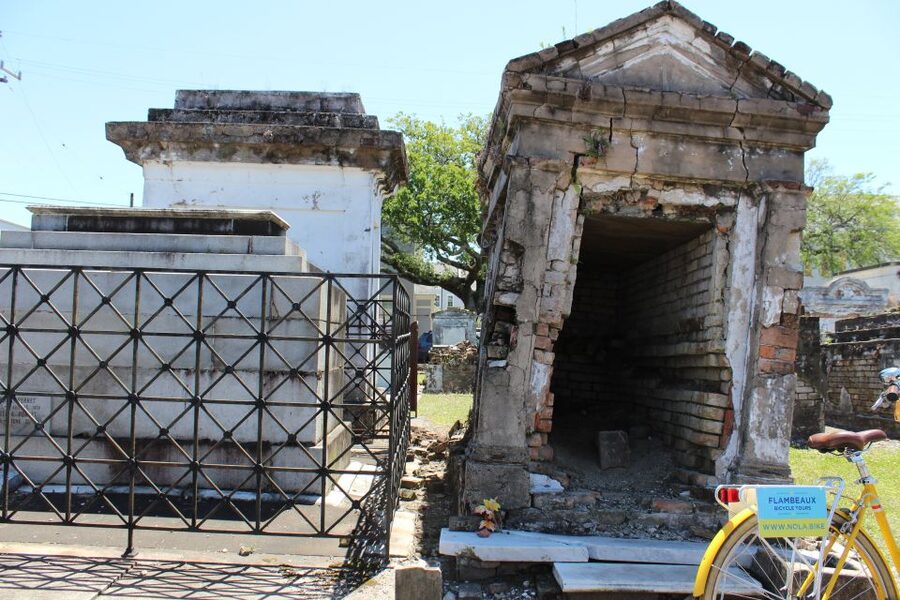
The tour’s biggest factual “stop” is St. Roch Cemetery. This is where New Orleans history becomes personal in a different way. You’ll learn about burial practices, including what it means to have above-ground tombs in a city shaped by its climate and traditions.
Seeing the cemetery firsthand is powerful because it’s not theoretical. It’s a real place with real architecture and a real system of remembrance. On this tour, the guide isn’t just pointing out features; they’re explaining why the cemetery matters and what the burial approach says about community and continuity.
There’s also a social side to this visit: in one standout guide story, the guide seemed to know a lot of people around the area, greeting passersby as if the cemetery is part of a living neighborhood, not just a historic site.
The one consideration for cemetery time
A cemetery stop usually means you should be ready to slow down and listen. The tour pace stays relaxed overall, but you should plan for a quieter, more reflective portion of the route. Also remember the rules: this is a guided experience with clear boundaries, and you should follow the guide’s directions so everyone can enjoy the experience respectfully.
Creole culture explained without making it feel like homework
Creole culture is one of those terms you’ll hear constantly in New Orleans. The challenge is that it can become a label instead of a story. This tour is built to connect influences and development—tying neighborhood history and colonial patterns to the cultural mix that formed Creole identity.
What I appreciate is that the tour doesn’t treat Creole culture like an abstract topic. It links it to places you actually ride past: older streets, evolving neighborhoods, and the city’s long memory. When the guide explains how these pieces connect, you start to understand why the city’s traditions don’t sit in one sealed chapter of time. They keep changing while still carrying older threads.
If you plan to spend a few days in New Orleans, this kind of context pays off repeatedly. Once you’ve got the background, you can better interpret what you hear at a music venue, what you see in architecture, and what people mean when they talk about food and language.
Bike-tour value: what $55 gets you (and what it avoids)

At $55 per person for about 3 hours, this tour is priced like a focused experience rather than a full-day production. The value comes from a few specific things you’re getting together:
- A professionally maintained bicycle (so you don’t waste time or energy figuring out equipment)
- A guide in a small group of 10 (so the history feels personal, not generic)
- An included bottle of water (small detail, but it keeps you comfortable)
- A structured route through multiple historic areas plus St. Roch Cemetery
It also avoids the most common trap in sightseeing: spending your energy on transportation logistics. There’s no hotel pickup, and you start at a clear meeting point between Toulouse and St. Peter. That simplicity helps you protect your time.
If you’re trying to build a “best first day in New Orleans” plan, this tour is a strong anchor. It gives you a foundation you can reuse when you return for self-guided wandering.
Who this tour is best for (and who should skip it)
This bike tour fits best if you want history with momentum. You don’t need to be a hardcore cyclist, but you do need to be able to ride a bike comfortably and handle city streets.
It’s also a good option if you like small-group guides and clear explanations. The guide is praised for being friendly, and in multiple accounts, the storytelling is described as easy to follow and entertaining—not just reciting facts.
It’s not suitable if you:
- can’t ride a bike
- have mobility impairments
- are under the age requirement (must be over 13, and height must be taller than 4’11 / 150 cm)
- are under 18 without a legal guardian
If you’re traveling with a teenager who meets the age and height requirements, you’ll likely have a much smoother experience because the tour is structured and the expectations are clear.
What to bring for a comfy ride (and rules to know)
This tour is outdoors and runs rain or shine, so you should dress like New Orleans weather can change its mind quickly. You’ll also want to follow the footwear rules: no sandals or flip flops. Comfortable shoes are the call, because you’ll be on and off the bike and walking a bit during stops.
Helmet use is listed as optional. If you like having an extra safety layer, bring one or plan to use one if provided during check-in. Since the tour involves real streets, it’s a good habit either way.
For behavior rules, alcohol and drugs aren’t allowed. Unaccompanied minors aren’t allowed either, and slippers aren’t allowed. Basically: keep it simple, wear practical gear, and act like you’re joining an organized street ride—not a casual stroll.
The bigger picture: why this tour beats random wandering
Random wandering in New Orleans can be fun, especially if you love spontaneous discovery. But if you want your time to feel like it clicks, the route design matters. This tour groups together the city’s earliest neighborhoods, key cultural development, and a cemetery stop that explains traditions you’ll otherwise only hear about in passing.
After a ride like this, you don’t just remember what a neighborhood looks like. You understand why it looks that way. And because you’ll cover multiple areas in about 3 hours, you also keep enough energy to explore after the tour.
One more subtle benefit: bike tours help you build a mental map. When you know how the French Quarter connects to surrounding neighborhoods, you’ll make better decisions about where to spend extra time.
Should you book the New Orleans Heart of the City Bike Tour?
I’d book this tour if you want a history-heavy New Orleans experience that still moves at a gentle pace, and if you’re comfortable riding a bike through city streets. The small group size, the mix of French Quarter plus oldest neighborhoods, the river bank portion, and the St. Roch Cemetery stop all combine into a route that gives context fast.
Skip it if any of these are dealbreakers: you can’t ride, you have mobility limitations, you don’t meet the age/height requirements, or you know you hate rain-day plans. Since it runs in bad weather, you should be willing to ride even if the sky doesn’t cooperate.
If you’re on a time budget and want the city’s Creole roots explained in a way that helps you explore afterward, this is a strong, practical choice.
FAQ
How long is the New Orleans Heart of the City Bike Tour?
The tour lasts about 3 hours.
How much does the tour cost?
It’s priced at $55 per person.
How far do you ride during the tour?
The tour covers about 6 miles total at a very leisurely pace.
What’s included in the price?
Included are the use of a professionally maintained bicycle, an optional helmet, and a bottle of water.
Where do we meet for the tour?
You meet between Toulouse St. and St. Peter St, right next door to Arrow Cafe.
Do I need hotel pickup?
No—hotel pickup and drop-off are not included.
Is the tour canceled if it rains?
The tour runs rain or shine. If inclement weather happens before the tour, you can either reschedule or request a refund.
What are the age and height requirements?
Participants must be over age 13 and taller than 4’11 (150 cm). People under 18 must be accompanied by a legal guardian.