REVIEW · OAXACA CITY
Oaxaca City Bicycle Tour Explore Iconic Barrios
Book on Viator →Operated by Tizoc Tours · Bookable on Viator
Two hours, and Oaxaca clicks into place. This bike tour links Zócalo sights with the iconic Acueducto de Xochimilco, then wraps with a diversity-themed fountain—so you’re seeing the city’s character in a tight, easy loop. It’s a smart way to get oriented fast without feeling like you’re trapped in a long walking circuit.
I love the payoff-for-time ratio: at about 2 hours, you cover multiple “this is Oaxaca” stops with an English-speaking guide. I also like the small size—maximum 5 travelers—so it feels more like a guided ride with room to ask questions, and guides such as Carlos, Leo, and Roman show up with their own style (and plenty of energy).
One thing to consider: the experience can feel more like a casual ride with bike talk mixed in, not a super-structured lecture. If you’re the type who wants lots of stop-by-stop details, you’ll want to be ready to ask on the spot—because not every departure matches that expectation.
In This Review
- Key highlights to watch for on this Oaxaca City bicycle tour
- How this 2-hour bike loop helps you orient fast
- Meeting at Ciclo Vía: the easiest start point to find
- Stop 1: The Cathedral on the Zócalo—your city anchor
- Stop 2: Acueducto de Xochimilco and the green-limestone approach to barrios
- Stop 3: The diversity fountain near the university medical school
- Guides and pace: why the experience can feel different day to day
- Value for money: what $53.73 buys you in Oaxaca
- Who should book this Oaxaca City bicycle tour
- Should you book Tizoc Tours’ Barrios bike ride?
- FAQ
- How long is the Oaxaca City bicycle tour?
- What does the tour cost?
- Is the tour offered in English?
- Do I need to print a ticket?
- Where does the tour start?
- Where does the tour end?
- How big is the group?
- Is free cancellation available?
- Is it accessible for most travelers?
Key highlights to watch for on this Oaxaca City bicycle tour
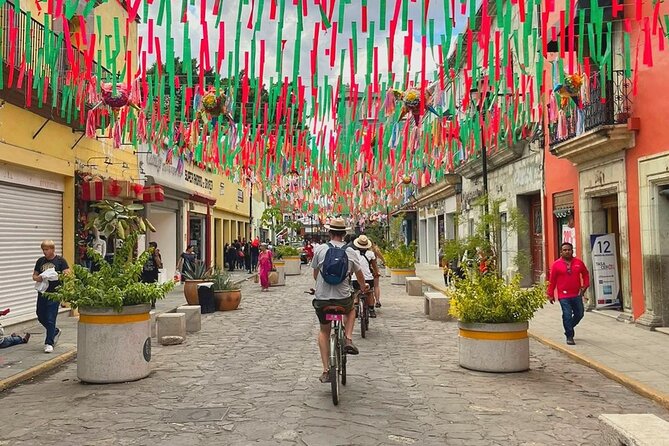
- Max 5 travelers keeps the vibe personal and gives you easier chances to connect with the guide
- English offered makes it straightforward if you don’t want to rely on translation
- Zócalo + Oaxaca Cathedral area gives you a strong first anchor point in the city
- Acueducto de Xochimilco in green limestone is a standout landmark linked to an iconic barrio
- A diversity tribute fountain by the Med School adds a modern cultural marker near campus
- Mobile ticket and free cancellation up to 24 hours make planning feel low-stress
How this 2-hour bike loop helps you orient fast
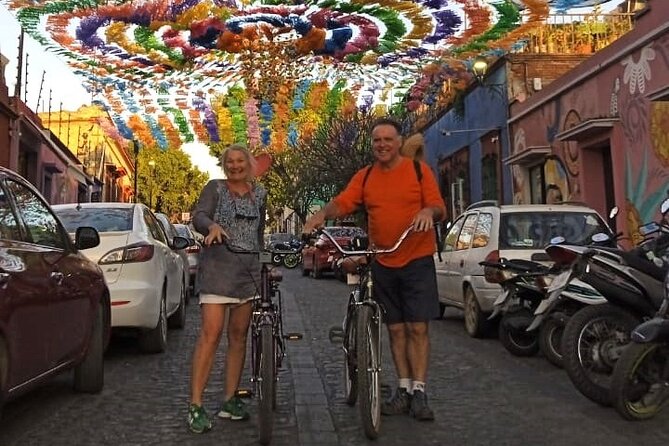
This tour is built for people who want to see more than one “must-see” in a short window. With an approximate 2-hour duration, you’re not committing half a day just to get bearings. Instead, you get a guided path through key landmarks that act like landmarks on a map—useful when you later start wandering on your own.
And because it’s designed as a bicycle tour, you’re moving through the city rather than stopping every few minutes to fight for parking spots or navigate crowds. You should still expect real city time—turns, lights, and short transitions between stops—but the overall flow is meant to keep things moving.
I also like the timing pattern: on average, this experience is booked about 13 days in advance. That tells me it’s popular, but not last-minute chaotic. If you’re traveling in a busy season, try to lock it in earlier rather than waiting until you’re already in town.
You can also read our reviews of more tours and experiences in Oaxaca City.


Meeting at Ciclo Vía: the easiest start point to find
The tour starts and ends back at the meeting point, which reduces a common travel stress. You’ll meet at la Ciclo Vía – Taller de bicicletas y accesorios, on Calz. Cuauhtémoc 200, Trinidad de las Huertas (68080), Oaxaca de Juárez, Oax., Mexico.
Why this matters: meeting at a bike shop/workshop setting tends to make the start smoother. You’re likely to have clearer direction from staff, and you’re starting in a place that feels built for bicycle travel instead of trying to assemble a group on a random street corner.
It also helps that the activity is listed as being near public transportation. Even if you’re staying somewhere else in the city, you should be able to route yourself to the start without a long taxi ride.
Finally, you’ll receive confirmation at booking time, and the ticket is mobile. That’s a small detail that pays off later when your day already has other plans.
Stop 1: The Cathedral on the Zócalo—your city anchor
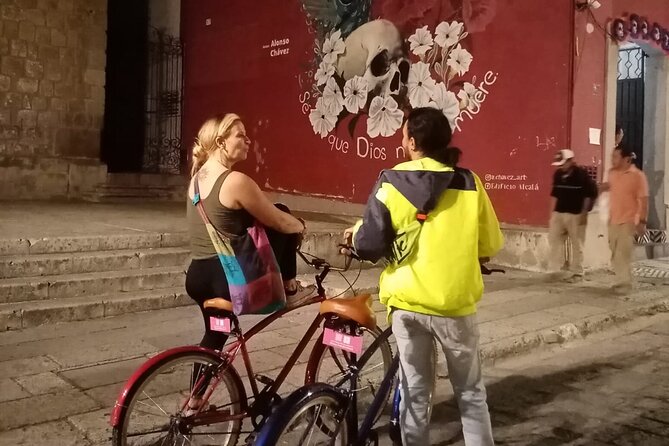
The first major stop is the Cathedral of Oaxaca, located on the Zócalo, the heart of the city. If you’re arriving in Oaxaca and trying to understand how everything “lines up,” Zócalo is the natural place to start. It’s where the city’s energy concentrates, and it’s often the reference point you’ll keep returning to in your own itinerary.
What you’ll likely enjoy here is the simple clarity: you get a recognizable landmark immediately, then your guide can connect what you see in this central area to where you’ll ride next. That kind of orientation makes the rest of the tour easier to understand, even if you’re not deep-diving into details.
A practical note: since Zócalo is a major public area, expect it to feel active. Give yourself a few minutes to settle your bearings, take your photos, and then get ready to move on while you’re still fresh.
Stop 2: Acueducto de Xochimilco and the green-limestone approach to barrios
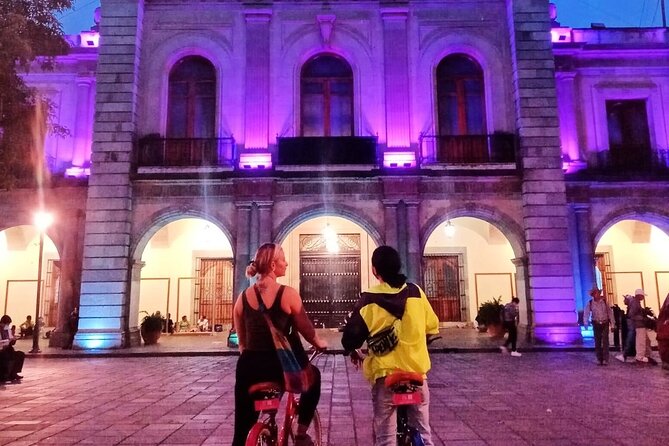
Next up is the acueduct of Xochimilco, described as a landmark of the colonial city, built with green limestone, leading into an iconic barrio of Oaxaca. Even without trying to memorize architectural facts, the idea is easy: this is a physical structure that helps you read the city’s layout.
I like stops like this because they show you a “through-line.” It’s not just a pretty object in place; it’s a connector that points toward a neighborhood. When you later walk through that barrio on your own, you’ll have a mental cue for how you got there.
The green limestone detail is especially worth watching. When a landmark has a distinct material look, it becomes easier to recognize again later. That means the tour can help you build real navigation skills, not just a set of photos.
Possible drawback here: if you prefer heavy narration at every stop, be prepared that different guides set different expectations. Some departures can feel more conversational and less lecture-style. If that’s your style preference, ask your guide what to pay attention to before you roll out—what to notice now, and what to remember later.
Stop 3: The diversity fountain near the university medical school
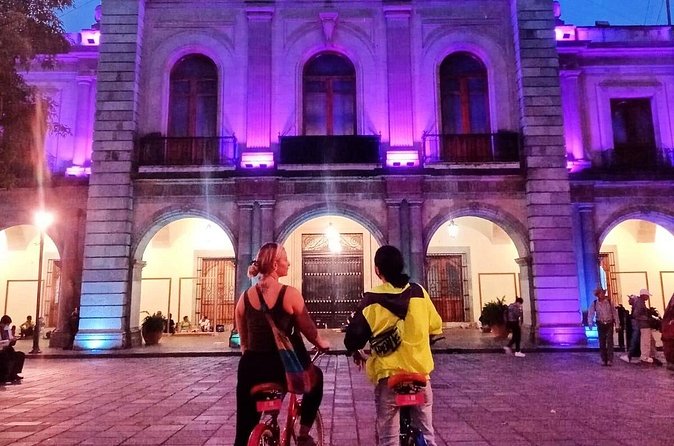
The final highlight is an iconic fountain that’s a tribute to the diversity of Oaxaca. It’s located in front of the Med School of the State’s University.
This stop works well for two reasons. First, a fountain is easy to locate and easy to frame visually—so even short pauses feel satisfying. Second, the “diversity tribute” angle gives you something cultural rather than purely scenic. It’s a reminder that Oaxaca isn’t just about old monuments; it also celebrates identity in public art and modern institutions.
Being in front of the medical school area also helps you see the city as a living place. You’re not only touring history sites—you’re riding through spots that connect to education and daily life.
If you enjoy learning by observing, this stop tends to be the kind you can remember later when you catch a similar piece of public art around town. It also sets you up for good follow-up walks afterward, because you’ll already be in an active part of the city loop.
Guides and pace: why the experience can feel different day to day
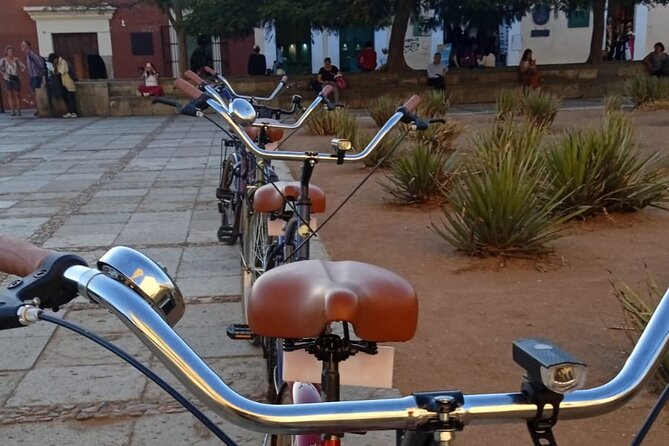
The best part of this tour, based on feedback, is the guide. On many departures, names like Carlos, Leo, and Roman come up with strong impressions. The common thread in the praise is clear: friendly energy, a sense of connection to the city, and stories that help make the stops feel more meaningful.
You’ll also likely feel that bike tours naturally invite more back-and-forth than museum-style tours. You can ask quick questions like what something symbolizes, why a location matters, or what you should watch for while riding. With a max group size of 5, you shouldn’t feel lost in a crowd.
Here’s the honest trade-off: one negative note points out disorganization and very limited information at the stops, described as more of a hangout with a bike-focused guide than a learning-heavy tour. That’s not a guarantee you’ll have that experience, but it’s a useful consideration if you’re strict about structure.
My practical advice: if you want more interpretation, set the tone early. Ask a question right at the start—something like what story connects the Zócalo stop to the aqueduct and then to the fountain. If your guide is the talkative, story-forward type, you’ll likely get what you want. If they’re more “ride and react,” you’ll still get the sights and movement, but you may have to do more of your own reading afterward.
Value for money: what $53.73 buys you in Oaxaca
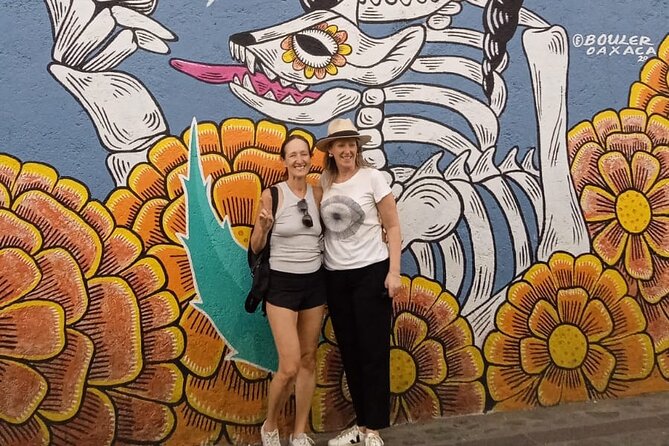
At $53.73 per person for about 2 hours, this isn’t a “cheap and cheerful” add-on, but it also isn’t priced like a private tour. For me, the value comes from the combination: multiple iconic stops, an English-speaking guide, and a small group size that keeps attention from getting diluted.
The “value math” changes depending on your travel style:
- If you’re short on time (or you want an easy first-day orientation), paying for a guided loop can save hours of figuring out what’s where.
- If you love cycling and want to see barrios from the saddle, you’re paying for convenience plus a faster way to cover ground.
Also, mobile ticketing and free cancellation up to 24 hours (for full refund when canceled in time) lowers risk. You can plan with more confidence, especially if you’re juggling weather, jet lag, or a day-trip schedule.
Who should book this Oaxaca City bicycle tour
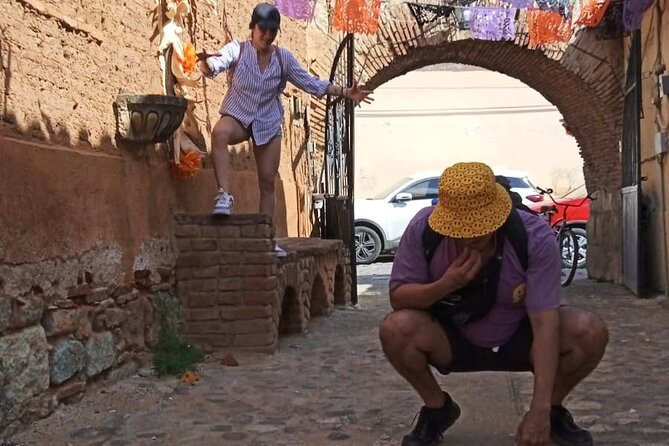
This tour fits best if you:
- Want a quick first look at Oaxaca City that connects landmarks with neighborhood vibes
- Prefer guided walking alternatives that still let you move at a comfortable pace
- Like cultural stops such as the Cathedral on the Zócalo, the green-limestone aqueduct, and public art like the diversity fountain
It may be less ideal if you:
- Only enjoy tours with heavy, structured explanations at every stop
- Get frustrated when a guide’s style is more relaxed and conversation-driven
One more subtle match: the tour’s small group size (max 5) suggests it’s designed for interaction. If you like asking questions and comparing notes with a guide, you’re likely to enjoy the format.
Should you book Tizoc Tours’ Barrios bike ride?
I’d book it if your goal is simple: get oriented, see multiple iconic stops, and ride through Oaxaca City in a way that feels efficient and fun. The biggest strengths are the tight loop, the Zócalo start, and the combination of landmarks plus neighborhood connection—plus the fact that many departures have strong guide impressions (Carlos, Leo, Roman).
I’d hesitate only if you’re very specific about the format—if you want a very structured, lecture-style narration at each stop. If that’s you, plan to ask questions early so the guide knows what you want from the ride.
If you’re on your first days in town, this is the kind of booking that can make the rest of your trip easier. You’ll leave with more than photos; you’ll have a mental map of how Oaxaca’s central landmarks link to its iconic barrios.
FAQ
How long is the Oaxaca City bicycle tour?
It’s approximately 2 hours.
What does the tour cost?
The price is $53.73 per person.
Is the tour offered in English?
Yes, the experience is offered in English.
Do I need to print a ticket?
No. You’ll get a mobile ticket.
Where does the tour start?
You’ll meet at la Ciclo Vía – Taller de bicicletas y accesorios, Calz. Cuauhtémoc 200, Trinidad de las Huertas, 68080 Oaxaca de Juárez, Oax., Mexico.
Where does the tour end?
The tour ends back at the same meeting point.
How big is the group?
The maximum group size is 5 travelers.
Is free cancellation available?
Yes. You can cancel up to 24 hours in advance for a full refund, and confirmation is received at booking.
Is it accessible for most travelers?
It’s listed as suitable for most travelers, and it’s near public transportation.