REVIEW · PHNOM PENH
Phnom Penh: Mekong Islands & Silk Islands Guided Bike Tour
Book on GetYourGuide →Operated by Discova Southeast Asia · Bookable on GetYourGuide
Trade Phnom Penh noise for cycling over islands. I love the ferry-crossing start that instantly changes the mood, and I love the Silk Island stops where you can see traditional skills up close. One thing to know: this is an early-morning, about 25 km ride, so come ready to pedal, not to linger.
You’ll leave the motorbike hum behind and spend the morning with an English-speaking guide in a small group (up to 10). The route stays mostly flat on quiet roads and tracks, but you may hit some gravel—or muddy patches if it’s rained recently—so decent shoes and patience help.
In This Review
- Quick hits before you book
- A 7:45 am start that beats the tuk-tuk chaos
- Crossing the Mekong by ferry: the ride starts before you pedal
- Pedal through orchards and market gardens north of Phnom Penh
- Pagoda stop and Buddhism talk: culture with context, not just sightseeing
- Lotus silk farm and Silk Island: see how silk skills are passed on
- Lunch in Phnom Penh with fresh fruit and a relaxed finish
- Bikes, safety, and what makes the ride feel easy
- Price and value: why $65 feels fair for a half-day
- Who should go (and who should skip it)
- The guide makes the difference on a rural route
- Should you book the Phnom Penh: Mekong Islands & Silk Islands Bike Tour?
- FAQ
- Where is the meeting point?
- What time does the tour start and when does it end?
- About how far do we bike, and is it hilly?
- What’s included in the tour?
- What stops do we make besides cycling?
- Is it suitable for children or pregnant women?
Quick hits before you book
- Areiksart Ferry Port + Mekong boat time: you start by crossing the river by ferry and you’ll get river views built into the morning.
- About 25 km, mostly flat riding: easy pace for many people, with gentle coaching from the guide.
- Village culture beyond the temples: you’ll visit a local pagoda and pause for real-day Cambodian life.
- Lotus silk farm plus Silk Island: see silk-making skills and visit traditional areas on the islands.
- Included lunch, fruit, snacks, and quality bike gear: mountain bike, helmet, lights, water, plus a Khmer lunch.
A 7:45 am start that beats the tuk-tuk chaos
This tour begins at 7:45 am at the Garden area on the left-hand side of Areiksart Ferry Port. If you’ve been relying on tuk-tuks all trip, that early departure is a gift. You’ll miss the worst of the city traffic and you’ll ride while the countryside is still waking up.
I also like that the meeting point is simple to understand—just get there early and aim for the Garden spot at the left side of the port. If you’re arriving in Phnom Penh the day of, give yourself a little buffer for finding it, because a slow start here can ripple into the whole morning.
You can also read our reviews of more tours and experiences in Phnom Penh.
Crossing the Mekong by ferry: the ride starts before you pedal
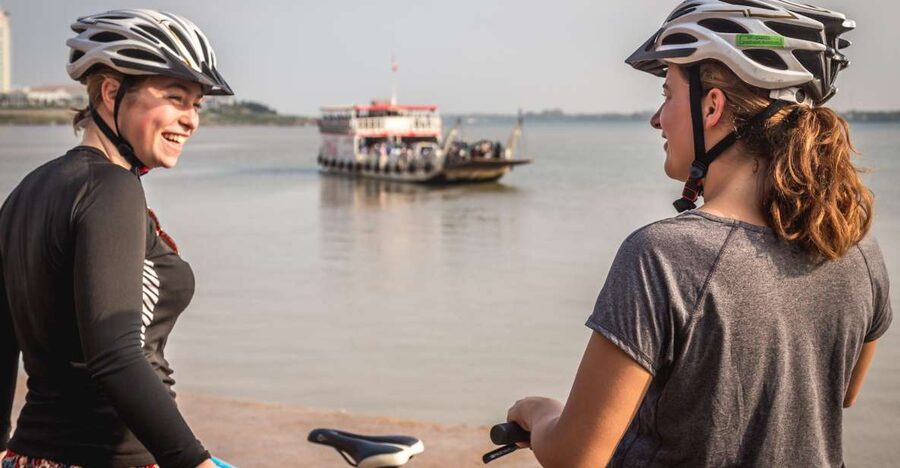
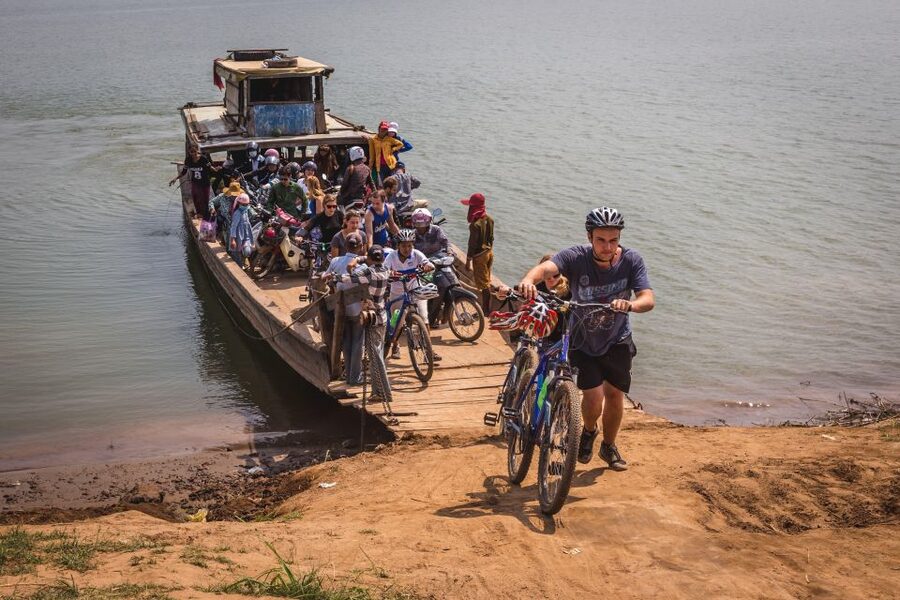
Before you ride, you’ll take a ferry across the river (about 20 minutes). This matters more than it sounds. In Cambodia, a lot of how people live is tied to water, so starting with a boat crossing gives you the right context right away.
After the crossing, there’s a guided Mekong River sightseeing segment (about 1 hour). Expect the guide to point out what you’re seeing and connect it to daily life along the river—what people do, what the river enables, and why this part of the country feels different from Phnom Penh’s streets.
If you’re the kind of person who likes understanding a place instead of just taking photos, you’ll appreciate the pacing here: you’re not thrown onto bikes immediately.
Pedal through orchards and market gardens north of Phnom Penh
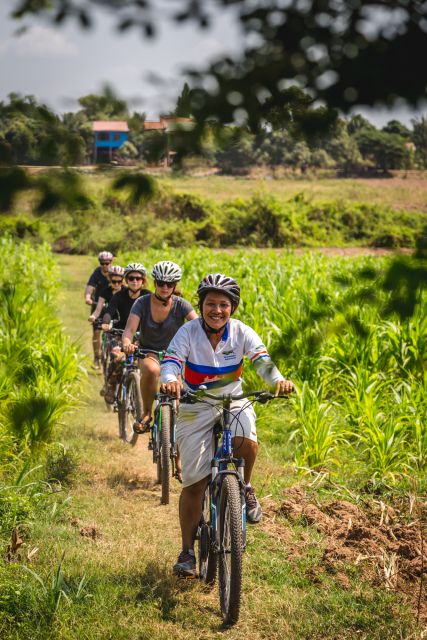
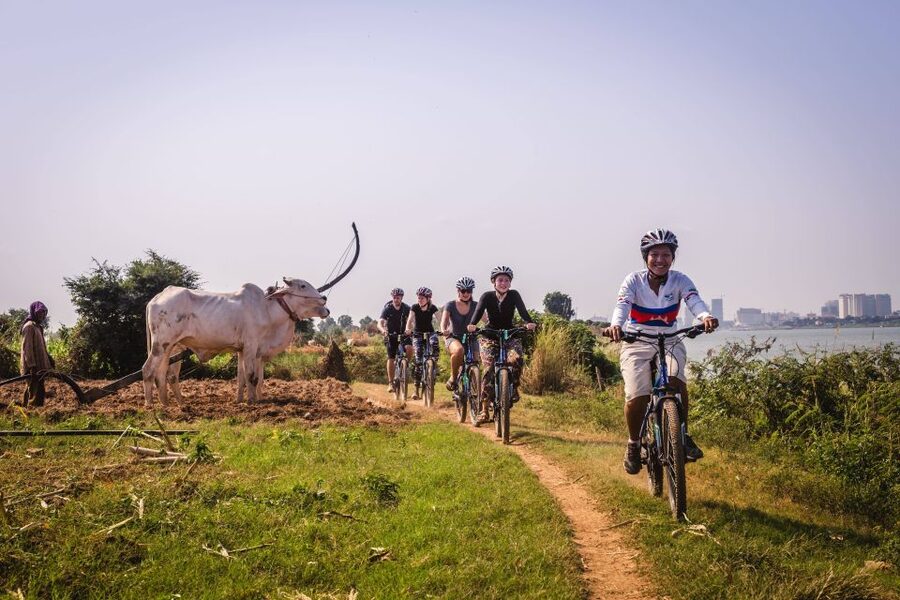
Once you’re on the islands side, you’ll cycle through countryside that feels a lot calmer than the city—orchards, market gardens, and the kind of rural pathways that let you actually notice how people move.
The cycling distance is around 25 km, mostly flat tracks and quiet roads. That flat profile is one of the biggest practical wins for this tour. It keeps the day from turning into a workout you regret halfway through, while still giving you the physical satisfaction of going places by bike.
I’d also pay attention to how the guide manages the ride. Some parts can be gravelly, and the guide gives plenty of notice ahead of time. If you’re not an expert cyclist, that kind of heads-up reduces the stress factor fast.
And if it has been raining, you might encounter muddy patches. Nothing dangerous is implied, but it’s real-world Cambodia conditions—so wear footwear you’re okay getting splashed and bring a good attitude for slow sections.
Pagoda stop and Buddhism talk: culture with context, not just sightseeing
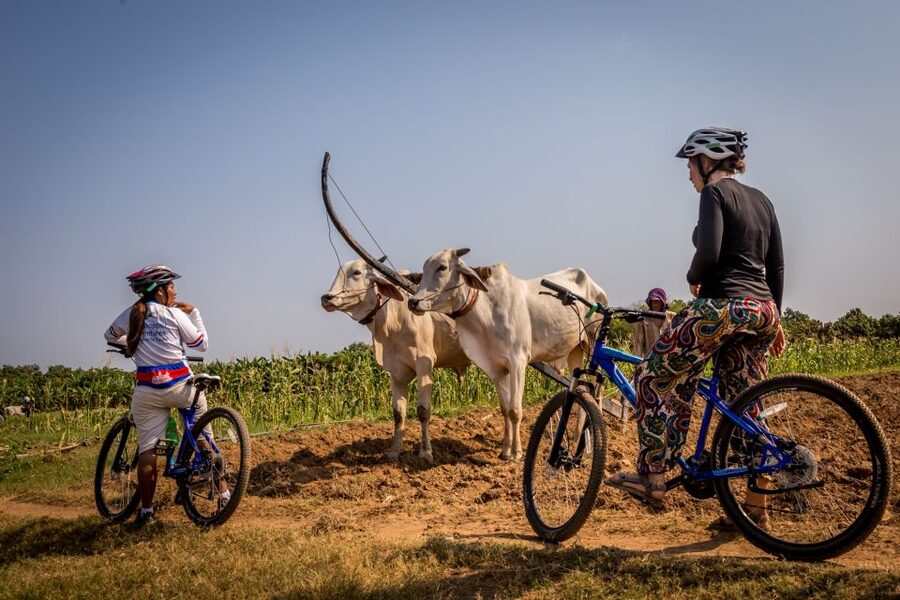
One of the most meaningful parts of the morning is the cultural pit stops—especially the visit to a local pagoda. This isn’t just a photo stop. The guide is there to explain what you’re seeing and to connect Buddhist practices to everyday Cambodian life.
You’ll also get chances to interact with the broader rhythm of village community. That’s the difference between a standard sight-seeing day and a guided ride: you move through daily settings at a human pace, and the guide can point out patterns you’d otherwise miss—like how different routines shape the landscape, schedules, and social spaces.
If you want more than temple facts—if you want to understand why religion, farming, and community life overlap—this section is where the tour earns its rating.
Lotus silk farm and Silk Island: see how silk skills are passed on
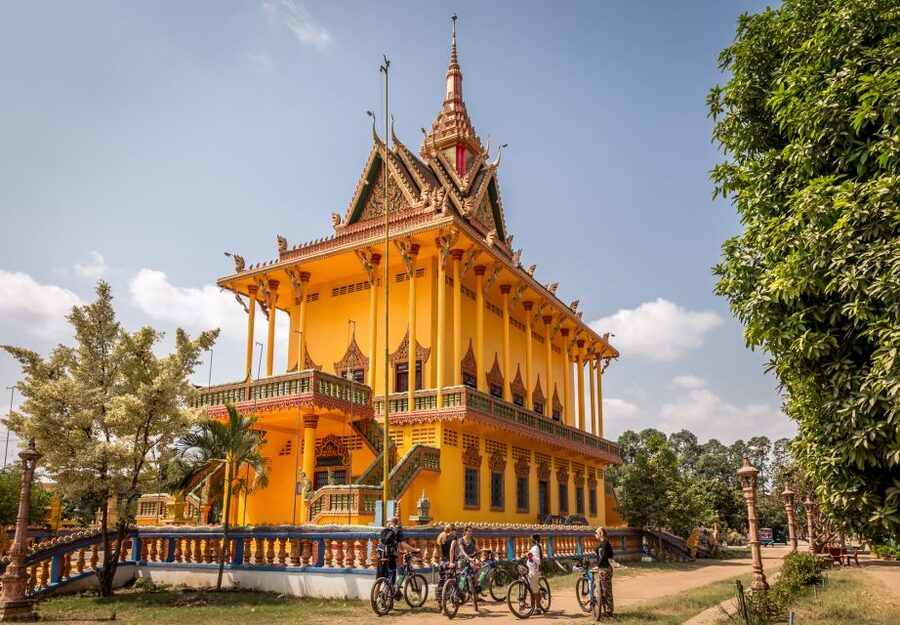
Then comes the Silk portion, and it’s usually the moment people start talking about the tour with extra energy.
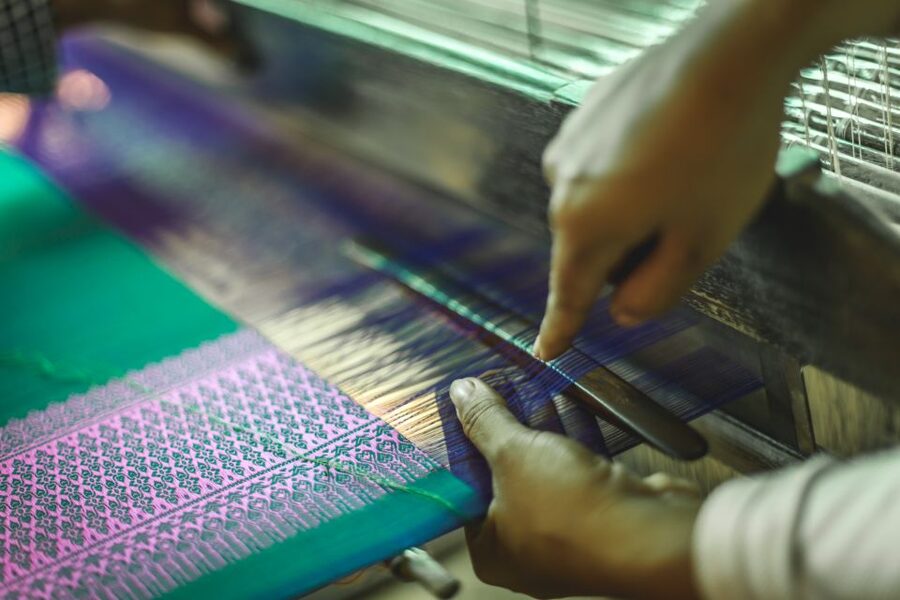
You’ll visit a Lotus Silk Farm and Shop (about 30 minutes), where you can see traditional silk work and understand how silk-making skills connect to local livelihoods. The tone here is practical: you’re learning through what’s in front of you—processes, materials, and the people who keep the craft going.
After that, you’ll head to Silk Island (about 1 hour) for more time on the island side. Think orchards plus craft culture, not a museum feel. It’s a guided look at traditional skills and the day-to-day reality around them.
I like this structure because it avoids the common travel trap of only seeing the end product. You get more of the “how” behind silk. And if you enjoy hands-on learning—even just through watching and asking questions—you’ll likely come away with a clearer picture than you would from buying a souvenir.
Lunch in Phnom Penh with fresh fruit and a relaxed finish
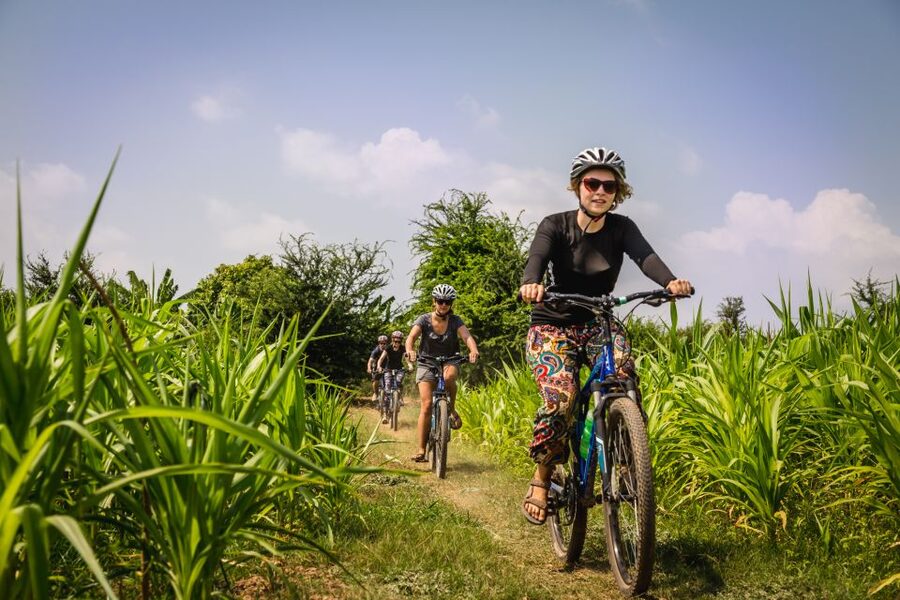
You’ll return toward Phnom Penh by ferry and wrap up around 12:30 pm. That timing is nice if you want a full day after the tour instead of being stuck recovering.
Lunch is included: a local Khmer meal (served after the ride as part of the final stretch), plus fresh fruit, water, and snacks during the morning. This matters because it keeps you from hunting down food in a hurry after cycling. It also gives you a natural time to slow down and ask questions when your legs finally stop complaining.
Guides often chat during lunch—history, culture, what life is like, and how different customs compare. If you’re curious and you like conversation, this is a low-pressure moment to connect with the guide beyond logistics.
Bikes, safety, and what makes the ride feel easy
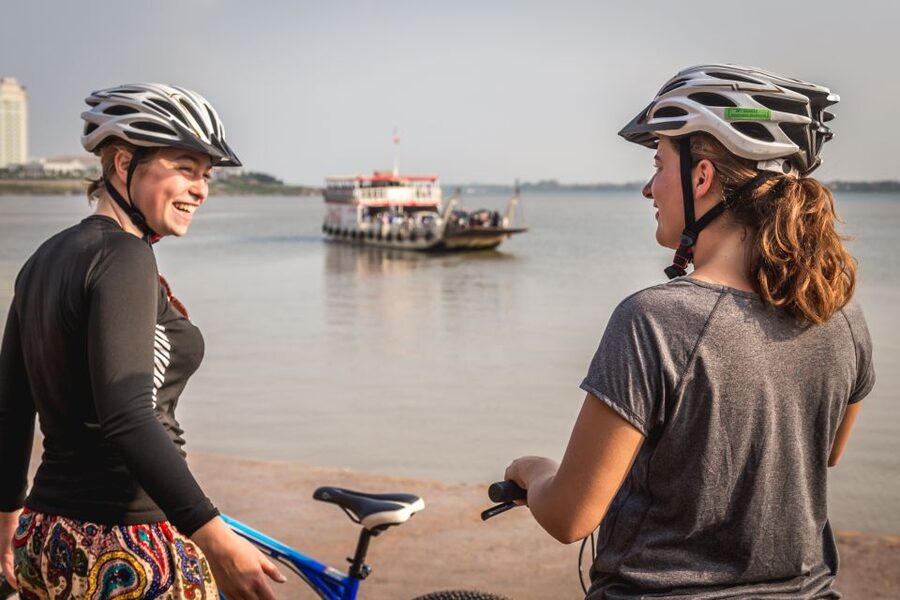
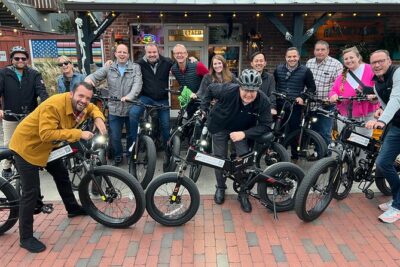
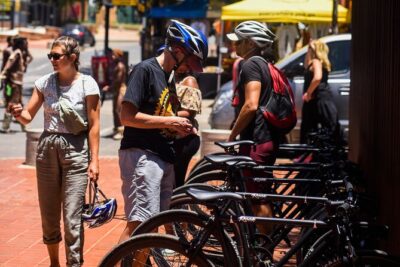
The bikes are imported quality mountain bikes, plus you’ll get helmet and lights. That’s a straightforward safety upgrade. It also helps you feel confident on rural roads where you might not always know what the surface will do next.
What makes the ride feel manageable is the route design: flat or gently rolling terrain on quiet ways, around 25 km total. Many people can handle that comfortably with a steady pace—especially when the guide is watching the group.
Two practical tips from the experience style you’ll see on this tour:
- The guide gives notice before gravel sections, which keeps surprises low.
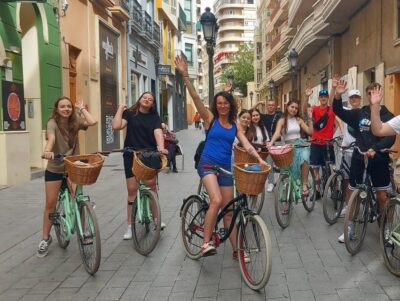
- The group tends to be small, which makes it easier to slow down, regroup, and help anyone who needs it.
If you’re traveling with kids, it can work well because the ride isn’t built like a mountain bike race. But it’s still cycling, so the bike comfort and kid confidence matter.
Price and value: why $65 feels fair for a half-day
At $65 per person, you’re paying for more than a bike rental. You’re also getting a guided experience, ferry tickets, a provided bike with helmet and lights, and multiple food stops: snacks, fresh fruit, water, and lunch.
Here’s the value logic I’d use when deciding:
- If you had to piece this together yourself, you’d likely pay separately for bike access, a guide to interpret what you’re seeing, and transport across the river.
- You’re also getting structure. That’s hard to buy later once you’re already in Phnom Penh.
For a five-hour morning that moves you out of the city and into islands countryside—plus includes food and river crossing—this price lands in the “reasonable” zone.
Who should go (and who should skip it)
This tour is a great fit if you want:
- active travel without extreme effort (the route is mostly flat)
- a smaller-group day outside Phnom Penh
- cultural stops that explain daily life, not just monuments
- an “in-between” interest in both agriculture and craft culture (including silk)
It’s not suitable for pregnant women, so if that applies, choose a different Cambodia day that avoids cycling.
For kids: child seats are available upon request, but the child-seat weight limit is 14 kg. Also, the operator asks for height info in advance so the right-side bike can be arranged. That’s a helpful sign: it suggests they’re trying to set up bikes correctly instead of improvising.
The guide makes the difference on a rural route
A bike tour lives or dies on the guide’s rhythm—especially when you’re crossing by ferry, riding rural roads, and stopping at places that aren’t set up for large groups.
On this tour, guides like Ted, Nary (also listed as Sonvannary), and Vichet have led departures, and the common pattern is a calm, safety-minded approach. You’ll notice it in things like helping you find what’s around the next corner, giving notice for rough patches, and answering questions at sensible stops.
If you’re the type who likes asking why something is the way it is—Buddhism, village routines, local skills—this kind of guide can turn the ride into an education you actually remember.
Should you book the Phnom Penh: Mekong Islands & Silk Islands Bike Tour?
Yes, I’d book it if you want a calm, guided way to see Cambodia’s river-and-craft life just outside Phnom Penh. The combination is the reason: ferry crossing plus mostly-flat cycling plus pagoda culture plus a silk-farm and Silk Island experience, all wrapped up with lunch and fruit.
I’d hesitate only if your idea of a perfect day is zero exertion, late starts, or a super flexible timeline. This is a morning with momentum, and you’ll pedal for part of it.
If that sounds like your style, this one is worth your time.
FAQ
Where is the meeting point?
Meet at the Garden area on the left-hand side of Areiksart Ferry Port.
What time does the tour start and when does it end?
It starts at 7:45 am and finishes around 12:30 pm when you return to Phnom Penh by ferry.
About how far do we bike, and is it hilly?
You’ll ride around 25 km on mostly flat tracks and quiet roads.
What’s included in the tour?
Included are an English-speaking guide, ferry ticket, an imported quality mountain bike, helmet and lights, drinking water, snacks, and lunch.
What stops do we make besides cycling?
You’ll visit a local pagoda, and you’ll also see Lotus Silk Farm & Shop and spend time on Silk Island.
Is it suitable for children or pregnant women?
It is not suitable for pregnant women. Child seats are available on request for children up to 14 kg. The operator also asks you to share each person’s height so the correct bike can be arranged.