REVIEW · COLORADO SPRINGS
Pikes Peak & Garden of the Gods E-Bike Expedition
Book on Viator →Operated by Adventures Out West · Bookable on Viator
Cold mornings. Big mountain day.
This Pikes Peak & Garden of the Gods e-bike expedition is built around one standout idea: a long, downhill ride from the summit of Pikes Peak, paired with an up-mountain jeep ride. It’s a real “mountain morning” experience, not a quick photo stop, and it’s paced for safety with a support vehicle.
What I like most is the hands-on guiding. You’re not just handed a bike and sent off; guides lead you with frequent stops and talk you through what you’re seeing, from mountain history to what to expect on the road down. I also really appreciate that they show up ready for the cold—extra cold-weather gear is provided because the summit can stay chilly year-round.
One possible drawback to plan for: the day demands strong physical fitness and good weather. If you hate brisk wind, or if you’re expecting an easy stroll, the cold at the top and the effort on a few uphill stretches (yes, even on the way down) can be a reality check.
In This Review
- Key Highlights You’ll Feel From the Start
- Why Pikes Peak Downhill by E-Bike Beats the Usual View
- Meeting at 925 S 8th St: Your Early Start Plan
- Jeep Up the Mountain: A View Experience With One Tradeoff
- Summit Time: Cold-Weather Gear Makes the Difference
- The 19.5-Mile Descent: Longer Than You Think, Easier Than It Sounds
- Garden of the Gods: What’s Certain, What You Should Confirm
- Price and Value: Is $295 Worth It?
- Who This Tour Fits Best (And Who Might Struggle)
- Tips That Make the Ride Feel Smooth
- Should You Book This Pikes Peak + Garden of the Gods E-Bike Tour?
- FAQ
- How long is the Pikes Peak & Garden of the Gods e-bike expedition?
- Where does the tour start?
- What time does it start?
- What is the price per person?
- Is the tour offered in English?
- Do I need strong physical fitness?
- What cold or safety gear is provided?
- What happens if weather is poor or the minimum group size isn’t met?
Key Highlights You’ll Feel From the Start
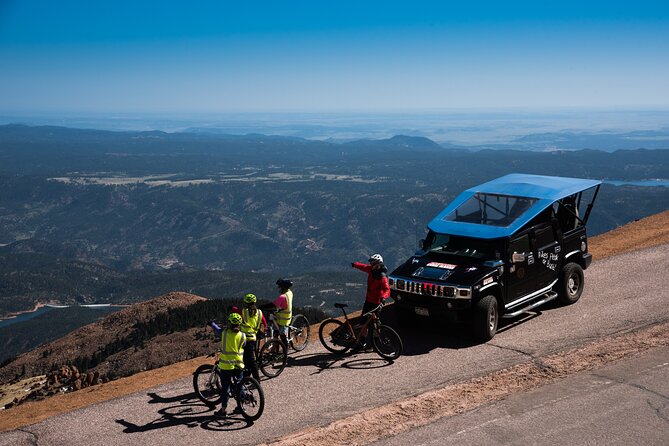
- 19.5-mile downhill route from the Pikes Peak summit—long enough to feel like an event
- Cold-weather gear provided, including items that help at the top when wind bites
- Small group size (max 5), which usually means more attention and smoother pacing
- Guides with energy and local knowledge, with named guide praise like Bill, Jesse, Jeff, Marcel, Scott, Nolan, George, Eli, and Cougar
- Controlled riding with support, including a vehicle that follows and leaders who match the group
- Frequent breaks and photo stops, with a summit donut called out by riders
Why Pikes Peak Downhill by E-Bike Beats the Usual View
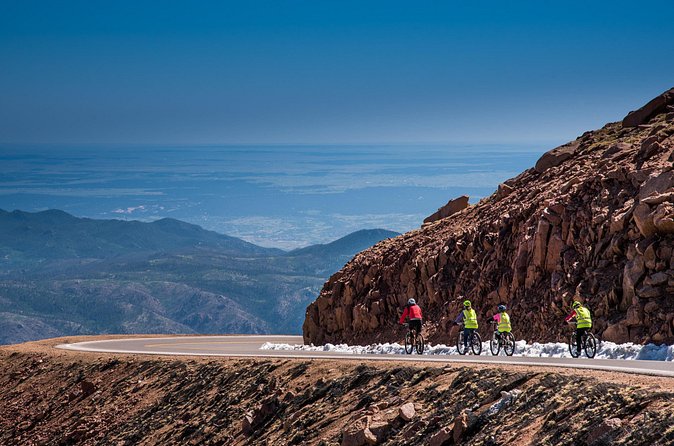
Driving Pikes Peak is pretty. Riding down it is memorable. The difference is time on the road: you’re not just looking at the mountain—you’re moving through it, with views opening up again and again as the grade changes.
This is also an e-bike-friendly concept. Even though it’s described as a downhill adventure, the road isn’t perfectly “free wheel the whole way.” Reviews point out there are stretches that go uphill even while you’re descending overall. That’s exactly where an e-bike (or at least having the option) matters. You get the adrenaline without turning the ride into a leg-burn you didn’t train for.
The other big win is pacing and safety. Riders describe a setup with cycling guides out front and behind, speed limits you can’t exceed, and a support vehicle that follows. That combo makes it feel like a guided ride first, and a thrill ride second—which is a good thing when you’re dealing with mountain conditions and cold.
You can also read our reviews of more tours and experiences in Colorado Springs.
Meeting at 925 S 8th St: Your Early Start Plan
Your day starts at 7:00 am at 925 S 8th St, Colorado Springs, CO 80905. The tour runs about 6 hours total, and it ends back at the same meeting point.
The early start matters more than it sounds. Pikes Peak mornings can be cold and windy, and you’ll be transitioning between temperatures fast: warm-ish in town, then sharp chill at the summit, then whatever Mother Nature decides for the return. Starting early also gives you a better shot at clearer conditions, which the operator lists as important since the experience requires good weather.
You’ll also have the convenience of a mobile ticket, and you should receive confirmation at booking. The tour is offered in English, and it’s capped at a maximum of 5 travelers, so it’s not a big-coach situation where you feel lost in the crowd.
Jeep Up the Mountain: A View Experience With One Tradeoff
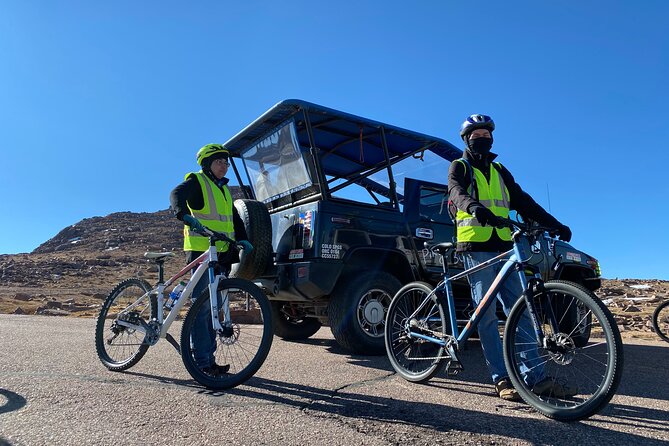
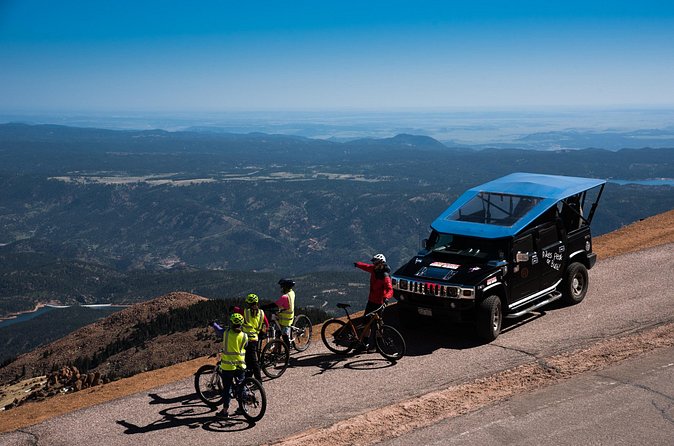
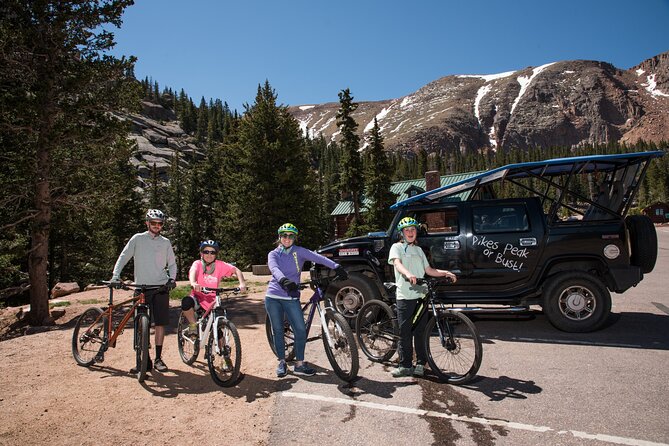
A big part of this tour is getting up the mountain by jeep before your bike ride begins. That’s a smart choice. You don’t have to spend your energy grinding uphill just to earn the descent, and the jeep ride helps you “arrive” at the summit without wearing yourself out before things get cold and windy.
It also changes how you experience the mountain. One guide, Cougar, earned specific praise for his personality and for sharing interesting history about the mountain and the highway leading to it—everything from racing to forest fires. That kind of storytelling isn’t just filler. It gives your ride context, so when you see a bend in the road or a change in terrain, you have something to connect it to.
Tradeoff: if you’re in the back of an open-air jeep, it can be hard to hear the guide depending on where you sit. If you’re sensitive to noise or communication, plan to bring that up with the team when you’re boarding and aim for a spot where you can hear comfortably.
Summit Time: Cold-Weather Gear Makes the Difference
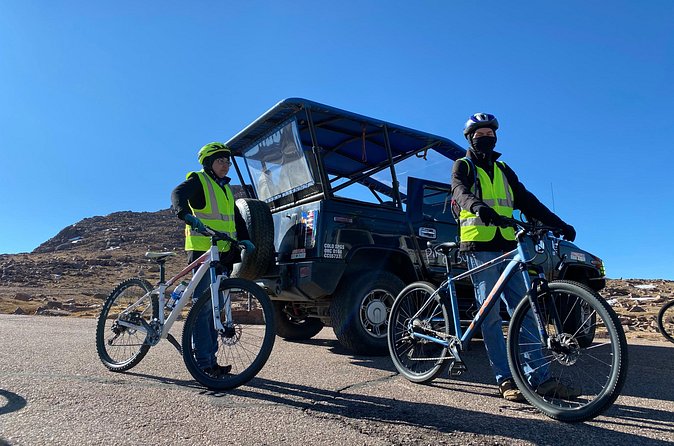
They explicitly warn you that it’s cold up there year-round. That’s not marketing talk—it’s the reality of elevation and wind at the summit.
The good part: the operator brings safety and extra cold weather gear. Reviews back this up with details like warm jackets and gloves being provided at the top, which you’ll be glad for if you’re the type who thinks you can “just wear a hoodie.” If you tend to get chilly, treat summit gear as non-negotiable.
One practical mindset: think in layers, not outfits. Even if you run warm in Colorado Springs, you can freeze fast when the wind cuts across you. If you bring your own extras—hat, warmer gloves, or a neck layer—that can help you dial in comfort.
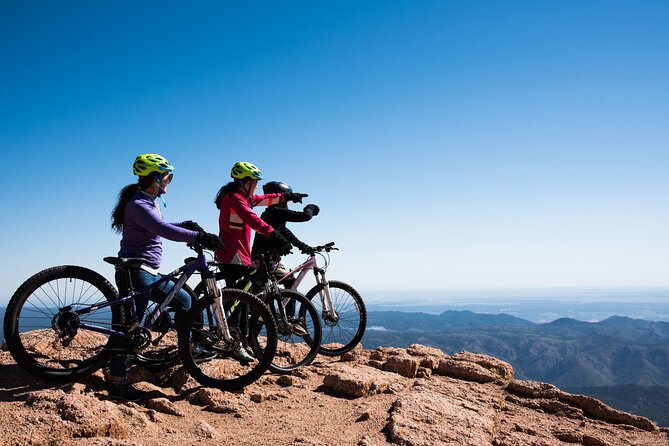
Once at the summit, you’re outfitted, and then the ride starts with cycling guides positioned to support the group. That structure matters on a technical road: you’re not guessing where to look or when to stop, and you’re not managing safety alone.
The 19.5-Mile Descent: Longer Than You Think, Easier Than It Sounds
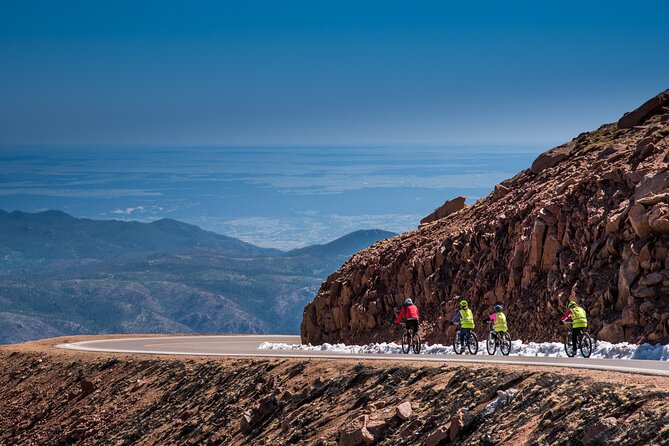
The main event is a 19.5-mile downhill ride from the summit back toward Colorado Springs. “Downhill” is the hook, but the ride still has its own rhythm because mountain roads come with changing grades and conditions.
Here’s what to expect in the flow:
- You’ll have frequent breaks. These aren’t tiny photo stops where you’re back on the pedals immediately. The breaks give you a breather, help you regroup, and make the day feel paced instead of rushed.
- Photo opportunities happen naturally. Riders note multiple stops with big views along the way.
- Speed is managed. You cannot ride over posted speed limits, and leaders adapt pace to the group. That’s huge for comfort and safety, and it prevents the ride from turning into a “race to the bottom.”
- A support vehicle follows. If something goes wrong—or if you simply need a moment—that safety net helps you relax and enjoy.
What surprised some people is how quickly the downhill ends, mainly because 19.5 miles feels like a long story until you’re moving with momentum and getting coached on timing. One rider noted they were surprised at the speed of the descent ending, but still felt breaks were adequate.
Also: don’t assume it’s effortless the whole time. One review called out that there are some stretches that go uphill, which is why an e-bike can be a smart choice even on a “downhill” day. If you’re deciding between a standard bike and an e-bike, think like this: you’re riding a mountain road with changes. Having extra assist means you get to spend your energy on enjoying, not just surviving.
And yes, the summit has a little treat moment. Donuts at the top were mentioned by riders—small detail, big morale boost when the wind is trying to steal your joy.
Garden of the Gods: What’s Certain, What You Should Confirm
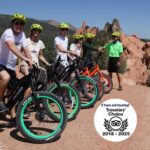
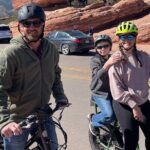
The tour name includes Garden of the Gods, so you should expect that part of the experience to take place as part of the overall day and bike theme. You also know the day ends back at the meeting point, so Garden of the Gods is likely folded into the same half-day plan after (or around) the Pikes Peak segment.
One thing you don’t have in the details here: the exact route, stops, or timing for specific Garden of the Gods landmarks. That doesn’t mean it’s vague in practice—just that you’ll want to confirm the exact plan with the operator when you book so you know what you’ll see and how long you’ll have there.
If your heart is set on certain viewpoints inside the Garden, ask directly before you go. The best way to avoid disappointment on a mixed itinerary is to clarify the bike time and stop time.
Price and Value: Is $295 Worth It?
At $295 per person for about 6 hours, this tour isn’t cheap like a basic shuttle. But it also isn’t “just rent a bike and good luck.”
Here’s what you’re paying for, based on what’s included and praised:
- Guided mountain ride structure: front/back cycling guides and a support vehicle system
- Cold-weather gear delivered by the operator (which is a big real-world cost if you had to buy it)
- Equipment basics like helmets being provided in rider notes
- Water and snacks mentioned in reviews
- Expert handling: speed limits, group pacing, and stopping frequently so you’re not managing logistics
Small-group operation helps the value too. A maximum of 5 travelers changes the feel. You’re more likely to get real attention when you need it, not just a safety briefing and a waved goodbye.
So the value question becomes: do you want an organized, safety-first downhill experience with mountain context and gear support? If yes, $295 starts to make sense. If you’re the kind of traveler who loves figuring out routes and managing everything solo, you might find cheaper self-guided options elsewhere—but you’re also taking on the cold, the risk, and the planning yourself.
Who This Tour Fits Best (And Who Might Struggle)
This is best for people who want adrenaline without chaos, and who can handle an outdoor, cold-at-the-top day.
You’ll likely enjoy it most if you:
- Have strong physical fitness (the operator explicitly says that)
- Like guided activities with clear safety rules
- Are comfortable riding in a group and following pacing instructions
- Enjoy big views and photo stops more than museum-style sightseeing
You might think twice if:
- You’re not ready for cold summit conditions and wind chill
- You expect a totally effortless ride the whole time (some uphill stretches exist)
- You’re very noise-sensitive for the jeep portion, since open-air seating can affect hearing
Good news: the e-bike concept helps a lot with matching your energy to the terrain. And the way speed and limits are managed means you’re not constantly white-knuckling it.
Tips That Make the Ride Feel Smooth
These are the little things that help most people get the most out of it:
- Dress for summit wind, not Colorado Springs weather. Layering matters more than style. Even if you feel warm at the start, you may be chilled fast at elevation.
- Use the e-bike if you’re unsure. One rider noted an e-bike was recommended to keep pace because of uphill stretches. If you’re close to the line physically, assist is peace of mind.
- Listen closely at the start. You’ll likely get instructions on speed limits, how the group moves, and what to do if you need a break.
- Plan for frequent stops and photos. If you want maximum photos, don’t rush your recovery between breaks. The ride is designed around stopping.
- Bring a good attitude about timing. This ride can feel quick once you’re descending. That’s normal. The pacing is part of how it stays fun and safe.
Should You Book This Pikes Peak + Garden of the Gods E-Bike Tour?
If you want a bucket-list mountain ride with gear support, tight safety management, and guides who actually teach you what you’re seeing, I think this is a strong choice. The long 19.5-mile descent, the cold-weather prep, and the small group size add up to an experience that feels cared for, not thrown together.
Book it if you’re ready for an early start, you can handle chilly summit conditions, and you’re okay with following the group pace. Skip it—or ask lots of questions—if you’re hoping for a warm, casual ride with minimal exertion.
FAQ
How long is the Pikes Peak & Garden of the Gods e-bike expedition?
The tour is listed as approximately 6 hours.
Where does the tour start?
It starts at 925 S 8th St, Colorado Springs, CO 80905, USA.
What time does it start?
The start time is 7:00 am.
What is the price per person?
The price is $295.00 per person.
Is the tour offered in English?
Yes, the tour is offered in English.
Do I need strong physical fitness?
Yes. The operator notes that travelers should have a strong physical fitness level.
What cold or safety gear is provided?
The operator says they bring safety and extra cold weather gear for the summit. You’re also welcome to bring anything else that helps you stay cozy at the top.
What happens if weather is poor or the minimum group size isn’t met?
The experience requires good weather. If it’s canceled due to poor weather, you’ll be offered a different date or a full refund. The tour also requires a minimum number of travelers; if that minimum isn’t met, you’ll be offered a different date/experience or a full refund.