REVIEW · STOCKHOLM
Stockholm’s Best Bike Tour!
Book on GetYourGuide →Operated by Stockholm Summer Tours · Bookable on GetYourGuide
Pedal Stockholm fast, without missing the best. This 3-hour bike tour is built for an efficient, scenic loop through the city’s core and out toward the museums on the water. I like that you pass by the biggest landmarks in a single ride, and I love the way the guide uses stop-by-stop storytelling with Swedish-themed music and matching old/new photos to keep it all clear.
One thing to plan for: this is a non-electric tour with real gears and hills, plus back-pedal brakes. If you’re rusty on bike control, you’ll want a few minutes to get comfortable before speed picks up.
In This Review
- Key highlights that make this tour worth your time
- Why this 3-hour Stockholm bike ride gives you real orientation
- Bikes and pace: the non-electric reality (and why it’s still good value)
- Where you’ll start in Östermalm and why that opening matters
- The government-and-parliament loop: Opera to City Hall on two wheels
- From Riddarholmen to Gamla Stan: the old-town feel, without walking yourself tired
- Royal Palace area: seeing the monarchy as a street-level experience
- Waterfront riding: Nybrokajen, Strandvägen, and the museum corridor mindset
- Out toward Djurgården: Skansen and the walkable feeling from bike pace
- Rosendals Trädgård break: where the route gives you breathing room
- The real secret sauce: stops with photos, Swedish music, and local tips
- What’s not included (so you can plan your next moves)
- Logistics that matter on a bike tour: bags, weather, and smartphone time
- Who this tour fits best (and who should skip it)
- Should you book this Stockholm Summer Tours bike tour?
- FAQ
- How long is the Stockholm bike tour?
- How much does it cost per person?
- What’s included in the price?
- Are museum entrance fees included?
- What kinds of stops and areas does the tour cover?
- What type of bike do you ride?
- Is the tour suitable for beginners?
- What are the age and height limits?
- What should I bring, and what should I avoid?
Key highlights that make this tour worth your time
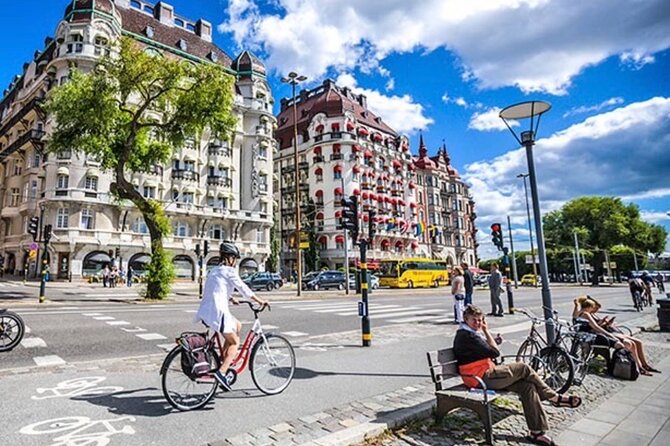
- A route that links City Hall, Gamla Stan, and the Royal area to Djurgården
- Back-pedal brake + 3 gears on a non-electric City Bike (built for control, not cruising)
- Photo-based storytelling at stops, with Swedish themed music between them
- Small groups (max 10) that make the pace feel friendly and organized
- A break around Rosendals Trädgård plus local food and viewpoint recommendations
- You see sights from the outside, then you go deeper with context, not museum lines
Why this 3-hour Stockholm bike ride gives you real orientation
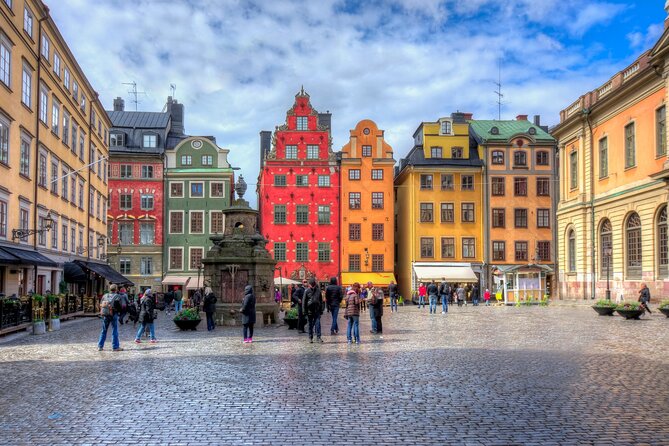
Stockholm can feel like a lot at once. Water on both sides, bridges everywhere, and neighborhoods that change character block by block. This tour works because it gives you a guided “map in motion,” where you’re cycling while the guide explains what you’re actually looking at.
I also appreciate that it’s not trying to cram in every museum door. It’s built around “you are here” landmarks—government buildings, old squares, royal streets, and then the ferry-side museum stretch—so by the time you’re done, you’ve got a mental model of the city. That matters, because Stockholm is best when you can move around with confidence the rest of your trip.
Finally, the pacing is designed for short attention spans in a good way: you bike, you stop, you listen, you roll on. There are around ten photo-and-facts stops along the way, so you’re never just stuck watching from the curb.
You can also read our reviews of more tours and experiences in Stockholm.
Bikes and pace: the non-electric reality (and why it’s still good value)
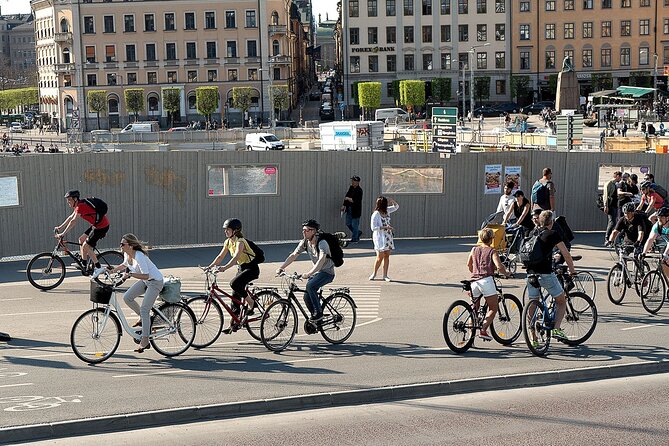
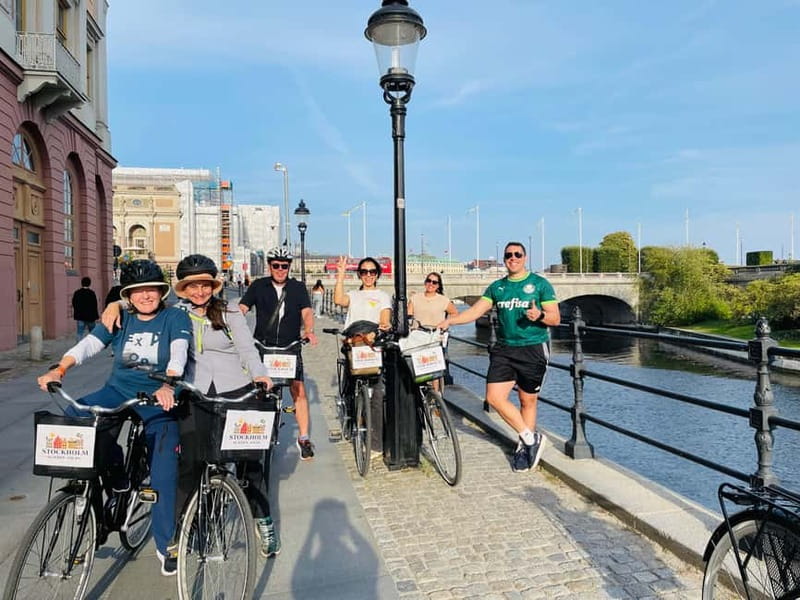
Let’s talk bike basics up front, because this tour is honest about it. You ride a standard City Bike (non-electric) with 3 gears and a back pedal brake. Yes, there will be hills. No, it isn’t a race.
A few practical takeaways for you:
- Back-pedal braking takes getting used to. If you’ve never ridden one, practice mentally before you worry about the view.
- The bike has no special power assist, so your effort matches the route.
- You’ll want comfortable shoes and weather-appropriate layers. Stockholm weather can switch moods quickly.
This is why I think the $55 price makes sense. You’re not just paying for a route. You’re paying for a guide who manages timing, keeps the group safe, and gives you historical context at speed without sending you to ticket counters.
One caution: the tour uses real-world riding conditions outdoors, and they state a moderate fitness and biking experience level is required. If you show up unable to ride safely, the guide has the right to deny access. That’s not to be dramatic—it’s to protect you and the group.
Where you’ll start in Östermalm and why that opening matters
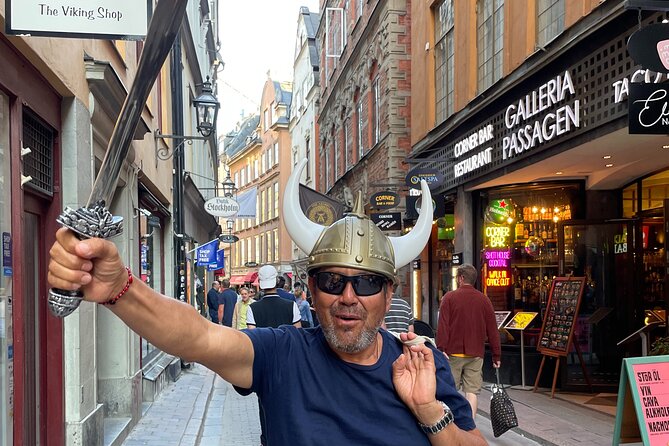
Your tour begins at one of two starting points depending on the booked option. One common start is around Östermalmshallen, and there’s also a Sandelsgatan 25 option for some departures and the drop-off.
Starting in Östermalm is smart. It helps you warm up with a smoother-feeling introduction before you hit the denser central landmarks. It also sets up a good “then and now” contrast as the ride pulls you toward older squares, official buildings, and the royal axis.
From there, the route quickly threads through:
- Östermalmshallen (a short bike connection to get you rolling)
- Kungsträdgården Park (a quick pass that helps you understand the city’s central flow)
- Royal Swedish Opera (right where the architecture starts to feel formal)
Even if you’re not a “building person,” these early stops help you learn the rhythm of Stockholm: where the grand facades sit relative to the water, and how bridges and streets braid neighborhoods together.
The government-and-parliament loop: Opera to City Hall on two wheels
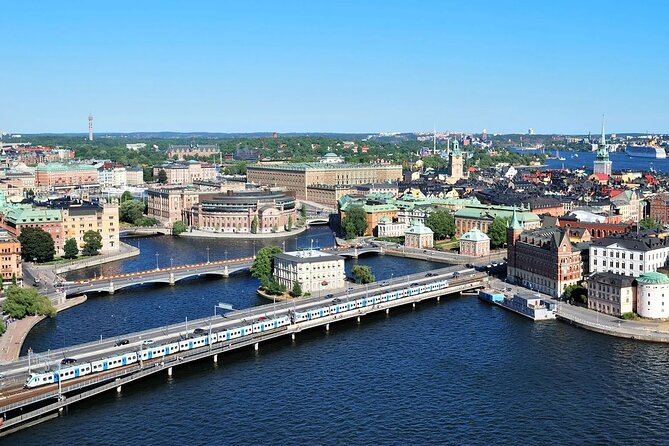
This part of the ride is all about civic Stockholm—big institutions, classic stone, and the feeling of a city run with intention.
You’ll pass by:
- Sagerska huset, where you get a glimpse of the kind of streetscape that makes Stockholm feel designed, not random
- Parliament House, Sweden (visible from the outside—no entrance time, just context)
- Stockholm City Hall, including a longer stop to actually look
I like this sequence because it’s not just name-dropping. The guide connects what you see to what the buildings represent, and then you’re out in the open again with water nearby, so it never becomes one long lecture.
Also, the guide uses historic and present photos at stops, which helps you translate what would otherwise be just facades. When you can compare old views to the modern scene, it becomes much easier to remember where you are later.
From Riddarholmen to Gamla Stan: the old-town feel, without walking yourself tired
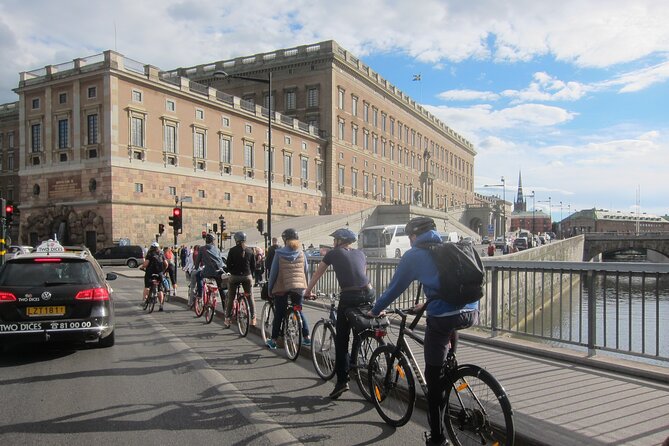
Next the ride leans into old Stockholm character.
You’ll move through:
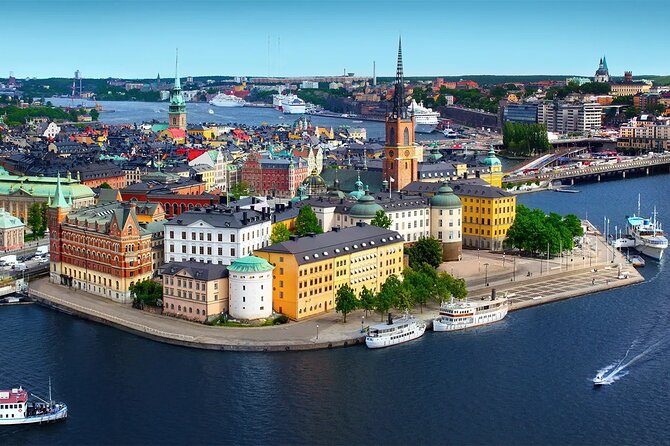
- Riddarholmen (a classic vantage point for the look of the city core)
- Riddarholmsbron (you’ll feel the bridge in the route—great for seeing how water shapes the streets)
- Prästgatan (a street connection that helps you place the flow into the old core)
Then you reach the heart of the old city area:
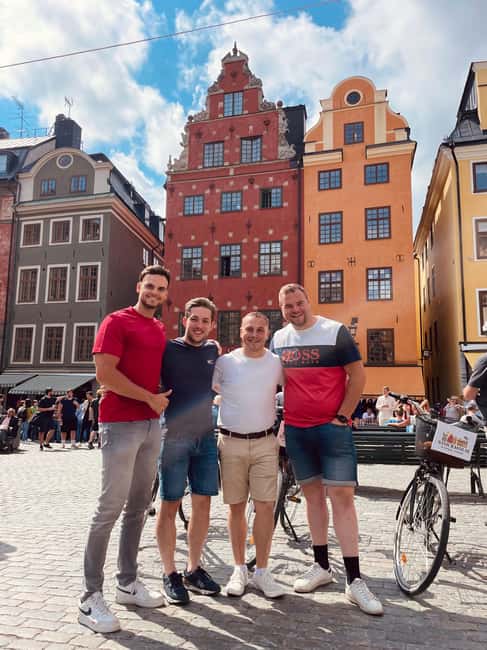
- Stortorget (a meaningful square where the guide’s picture prompts really help you understand the layers)
This is where the bike tour beats a slow walk. You get the old-town vibe—squares, tight urban feel, historic sightlines—without spending hours covering distances. Stockholm’s center is pretty, but it can also be tiring on foot. Here, the wheels solve that problem.
One practical note: you’ll be stopping enough to absorb the story, but you’re still in motion most of the time. If you’re looking for a totally relaxed, stop-and-shop pace, this might feel busy. If you like efficiency, it’s a win.

Royal Palace area: seeing the monarchy as a street-level experience
After the old square, you roll into one of the most “you are in the city now” zones.
Stops include:
- Royal Palace, Stockholm with time to take it in from outside
- Grand Hôtel, which gives you a sense of Stockholm’s luxury-facing streetscape
- National Museum, Stockholm (again from the outside—so you save time for riding and learning)
This is a good place to pay attention to alignment: where the main road runs, how the palace zone connects to major promenades, and how the city’s water-facing style continues.
The tour also uses a playlist with Swedish-themed music between stops (unless it rains). That may sound like a small detail, but it changes the feel. It turns the ride into a moving soundtrack, and the guide’s photo comparisons keep it grounded so it doesn’t feel like background.
Waterfront riding: Nybrokajen, Strandvägen, and the museum corridor mindset
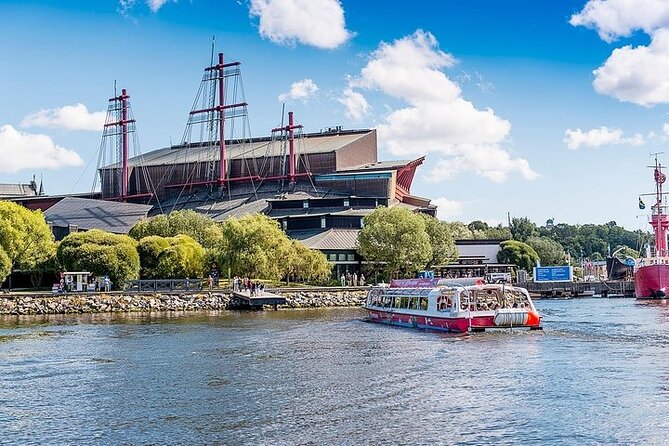
Now you enter the part of Stockholm that makes bike tours feel like the obvious choice: water, long views, and promenades.
You’ll pass by:
- Nybrokajen
- Strandvägen (a standout stretch for water views and city elegance)
- Nordiska Museet
- Vasa Museum
- ABBA The Museum
Even though you’re not going inside any of these museums on this tour, you’re still getting the “why this matters” view. This is one of the tour’s strengths: you see the places, then you’re told enough to decide later if you want to spend paid time on a specific museum.
I’d treat this section as your shortlist builder. After you see all those names in context, you’ll know what to prioritize later. If you’re a museum person, you’ll likely want to plan follow-up visits. If you’re not, you at least leave knowing where the famous stops are clustered so you can choose a single target.
Out toward Djurgården: Skansen and the walkable feeling from bike pace
Then the ride extends into Djurgården, the island that turns Stockholm into an open-air story.
You’ll encounter:
- Skansen
- Djurgårdsvägen
- Kärleksudden
- Narvavägen
- Karlaplan
Here’s what I like: this doesn’t feel like you’re just “going somewhere.” It feels like you’re watching Stockholm expand. The air and water cues change. Streets widen. You start to sense why people come out here even when the city center is right there.
And since this is still within an efficient 3-hour window, you’re not stuck committing to a long transport day. You get the island highlights and then you can decide whether you want to slow down later.
Rosendals Trädgård break: where the route gives you breathing room
The ride includes a break time at Rosendals Trädgård (about 15 minutes). This is your reset moment: stretch your legs, grab water, and take photos without the “moving train” pressure.
Some guests also mention fika snacks during the experience, and the guide gives local recommendations for places to eat and drink around town. Even if you don’t plan a full meal, this break helps you stay comfortable enough to enjoy the later parts of the ride rather than counting down minutes.
If you have a charged smartphone, use it. During the tour, you’ll see historic and present images at stops. Later, having your own photos helps you remember what you were looking at when the guide was talking.
The real secret sauce: stops with photos, Swedish music, and local tips
Plenty of bike tours show you landmarks. This one tries to make you understand them.
Three elements make the difference:
- Photo prompts at the stops: historic vs present images help you make sense of change over time
- Swedish-themed music between stops: included unless it rains, and it makes the ride feel more lively
- Local recommendations from the guide: you’ll get a list of local options—restaurants, fika, viewpoints, and budget-friendly ideas—after the tour, plus the chance to take a photo of it
I especially like the local tips piece for practical reasons. Stockholm is famous, but it’s also full of good choices that aren’t obvious from a quick map. If you go to the guide’s recommended spots right after your ride, you’ll waste less time guessing.
What’s not included (so you can plan your next moves)
This bike tour passes sights from the outside, so there are no entrance fees included. That means your time is focused on views, explanations, and photo moments—not lining up.
For you, that’s actually helpful:
- You can pair this tour with a short museum visit later without feeling locked into a big schedule.
- If you’re traveling with limited time, you still get the overview portion that tells you what’s worth paying for.
The flip side is that if you came specifically for deep museum time, you’ll need a separate plan for that. The tour is about context and placement, not long gallery hours.
Logistics that matter on a bike tour: bags, weather, and smartphone time
A few “know before you go” points that affect how smooth your ride feels:
- You can’t bring large bags or luggage. The front basket is for a small item like a water bottle.
- If you bring a backpack, you carry it on your back the whole time.
- Weather-appropriate clothing matters because you’re riding outdoors for the full session.
Also bring a charged smartphone. Not because the bike needs it, but because your guide’s local recommendation list is something you’ll want to capture after the tour. A dead phone here is just unnecessary stress.
Finally, the guide operates in English and German. If you’re comfortable with either, you’ll be fine. If you’re not, you might still enjoy the visuals and photos, but you’ll get the most out of it by understanding the guide’s explanation.
Who this tour fits best (and who should skip it)
This is a strong fit if:
- You can ride a bike comfortably on streets and paths
- You’re okay with a moderate fitness requirement and some hills
- You want a high-value orientation around central Stockholm plus Djurgården
- You like stories tied to what you can actually see outside, not just a walking checklist
You should consider skipping if:
- You can’t ride a bike
- You’re under 15 (age limit) or below the recommended height of 160 cm / 5’2″
- You want a totally non-riding experience (this is cycling first, sightseeing second)
One more practical fit note: the group is limited to a maximum of 10 participants. Reviews often mention small-group bonding and smooth pacing. That smaller size is part of why the tour can stay efficient without feeling chaotic.
Should you book this Stockholm Summer Tours bike tour?
Yes, if you’re doing Stockholm for the first time and you want a fast, guided feel for the city’s layout. I’d book this early in your trip because it acts like a master key: you learn where the Royal area is, how Gamla Stan connects, and how the museum corridor stretches out toward Djurgården. Then you can spend the rest of your stay with more intention.
I’d skip it if you hate bike riding, you’re worried about back-pedal braking, or you want slow, casual sightseeing where you can stop for long food or shopping breaks. This tour is built for movement with structured stops.
If you fall somewhere in the middle—curious but not sure—prepare for the bike part, wear comfy shoes, and give yourself permission to focus on the ride. The payoff is a Stockholm overview that makes the rest of the trip easier to enjoy.
FAQ
How long is the Stockholm bike tour?
The tour lasts 3 hours.
How much does it cost per person?
The price is $55 per person.
What’s included in the price?
You get a local guide, a non-electric 3-gear City Bike with a back pedal brake, a helmet, a Swedish themed music playlist between stops (unless it rains), relevant photos at stops, and your guide’s local recommendations.
Are museum entrance fees included?
No. The tour passes sights from the outside, and entrance fees are not included.
What kinds of stops and areas does the tour cover?
It covers major central sights plus Djurgården. Stops include Stockholm City Hall, Parliament House, Gamla Stan/Stortorget, the Royal Palace and Stockholm Cathedral area, and museum areas around Vasa Museum, ABBA The Museum, plus Skansen and Rosendals Trädgård.
What type of bike do you ride?
You ride a non-electric City Bike with 3 speeds/gears and a back pedal brake. Helmets are provided.
Is the tour suitable for beginners?
It requires moderate fitness and biking experience, since you’ll ride in outdoor conditions with hills. The back-pedal brake may take time to get used to.
What are the age and height limits?
It’s for ages 15+ and recommends a height of from 160 cm / 5’2″.
What should I bring, and what should I avoid?
Bring comfortable shoes, weather-appropriate clothing, and a charged smartphone. Avoid luggage or large bags (front basket is only for small items), and don’t bring unaccompanied minors or intoxication into the tour.