REVIEW · VICENZA
The story of Vicenza: Guided Half-Day E-Bike sightseeing Tour
Book on Viator →Operated by Palladian Routes · Bookable on Viator
Vicenza gets a lot easier when you ride. This half-day e-bike tour uses Palladio as your map, with a guide who explains the city like a living book. You’ll glide between palaces, plazas, churches, and countryside views, all in one smooth sweep from historic center to the great villas.
I love how much story you get in 2 hours 45 minutes. With Cicero Palladiano (your guide) and a real spotlight on how Renaissance ideas spread, you’re not just seeing buildings—you’re understanding why Vicenza looks the way it does.
One thing to think about: it’s an outdoor route, so you’ll be mostly riding and standing during short stops. Bring water in warm months, and don’t assume you’ll get long museum time, since most admissions are not included.
In This Review
- What Makes This Vicenza Palladian E-Bike Tour Special
- First Stop: Palazzo Valmarana Braga and Your Palladian E-Bike Setup
- Corso Fogazzaro and Early Palladio: Trissino’s Friendship, Not Just Stone
- Ponte Furo’s Roman Echoes: The Roman Theater Beneath Vicenza
- The Bridge Toward the Villas: Arco delle Scalette to Villa La Rotonda
- Villa Valmarana ai Nani and Monte Berico: Vicenza From the Edge and From Above
- Palazzo Chiericati and Teatro Olimpico: The Civic Side of Palladio
- Reformation-Era Clues: Palazzo Angaran, Santa Maria in Araceli, and Parco Querini
- Piazza and Basilica Time: Santa Corona, Piazza delle Biade, Piazza delle Erbe
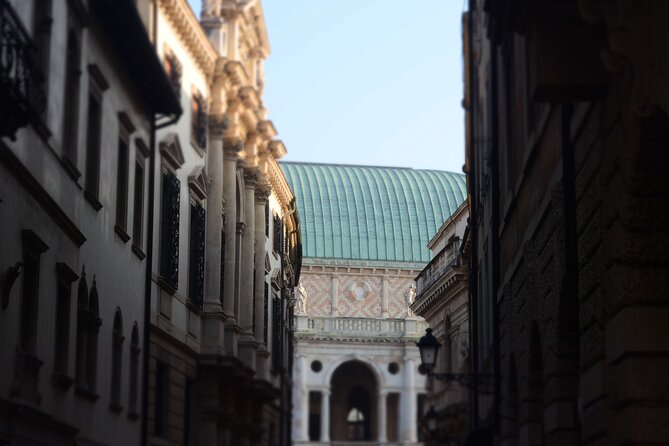
- Basilica Palladiana and the Grand Palaces Near the Roman Forum
- From Bottega to Gardens: Contrada Pedemuro San Biagio to Loggia Valmarana
- Back at the Start: Finishing at Palazzo Valmarana Braga
- Price, Time, and What You’re Actually Paying For
- Who This Tour Fits Best (and Who Might Want a Different Plan)
- Should You Book the Palladian Routes Vicenza E-Bike Tour?
- FAQ
- What’s the tour duration?
- Where does the tour start and end?
- What time does it start?
- Is the tour offered in English?
- What’s included in the price?
- Are admissions to all stops included?
- Do I need moderate fitness for the route?
- Can children join?
- Is this a group tour with strangers?
- What happens if I cancel?
What Makes This Vicenza Palladian E-Bike Tour Special
- Manuel-style storytelling: the guide’s pacing ties the buildings together, so the tour feels like one continuous argument for Palladio’s impact
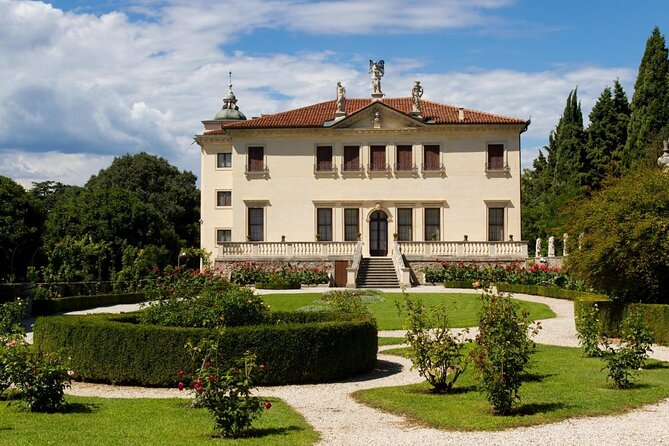
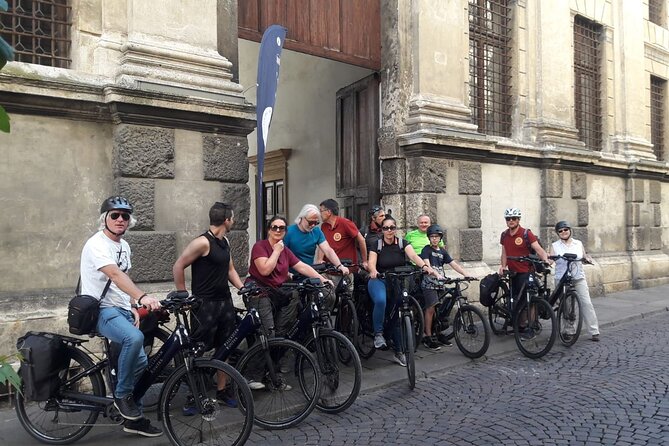
- State-of-the-art e-bikes: easy to ride even if you’ve never used one before, plus practical help at the start
- Major Palladian sites in one loop: you hit the landmarks people travel to see, without needing a full day
- Short stops that still matter: each place is timed so you understand the idea before moving on
- Scenic viewpoint moments: Monte Berico gives you an above-the-city perspective that changes how you read the streets later
- Comfort level guidance: the tour expects moderate physical fitness for the bike + outdoor walk segments
First Stop: Palazzo Valmarana Braga and Your Palladian E-Bike Setup
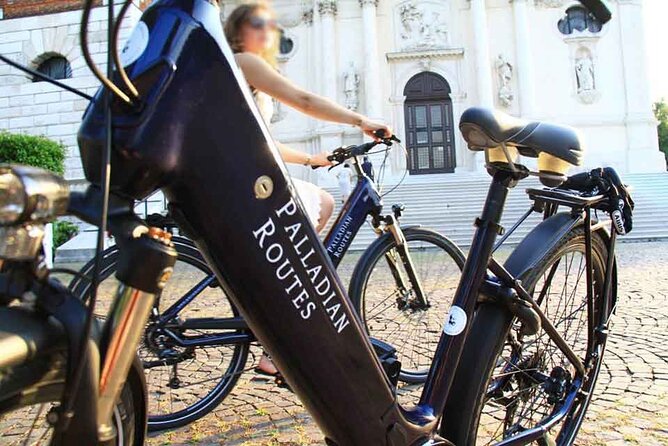
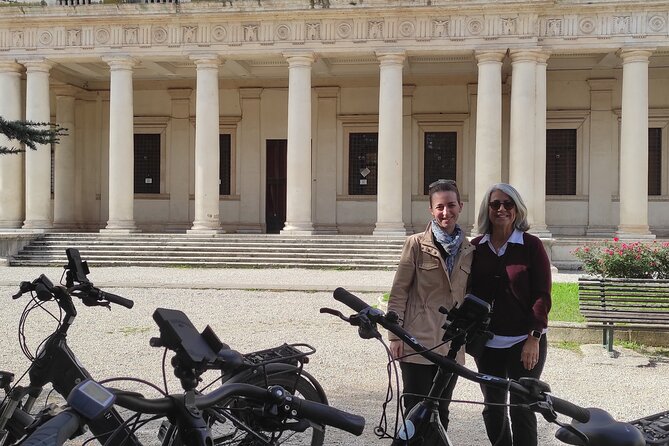
Your tour begins back at Palazzo Valmarana Braga on Corso Antonio Fogazzaro. This matters because it sets the tone: you start in a major private palace linked to Palladio, then switch from standing on the sidewalk to actually moving through the city like the architect’s ideas were meant to be experienced.
You’ll pick up your Palladian e-bike here and get your narration from the guide. One review-style highlight that comes through strongly: the guide doesn’t dump facts—he builds the explanation step by step and keeps it practical for real riders. If you’ve never used an e-bike, that early help is huge. You’ll also get a proper “how to ride” moment before you start covering ground.
At the start, you also have an admission ticket included for the opening stop (so you’re not paying extra right away for the first entry).
Tip for your first minutes: take a few seconds to get comfortable with braking and starting uphill. Vicenza streets can ask a little more from your legs, even with electric assist.
You can also read our reviews of more tours and experiences in Vicenza.
Corso Fogazzaro and Early Palladio: Trissino’s Friendship, Not Just Stone
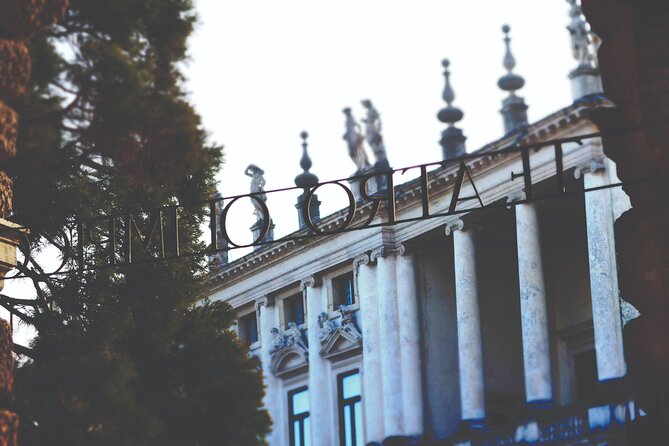
From Palazzo Valmarana Braga, the route moves into central Vicenza with Corso Fogazzaro as your next anchor point. This section is about how Palladio wasn’t invented in isolation. Giangiorgio Trissino—Palladio’s mentor—is tied directly to this street, and the tour frames the early “how did Palladio get his break?” question.
Then you continue to Palazzo Civena, described as Palladio’s first private city work and the first Renaissance palace in Vicenza. This is where the tour helps you spot talent in progress: not just “Palladio the finished genius,” but the energy of someone early in his trajectory.
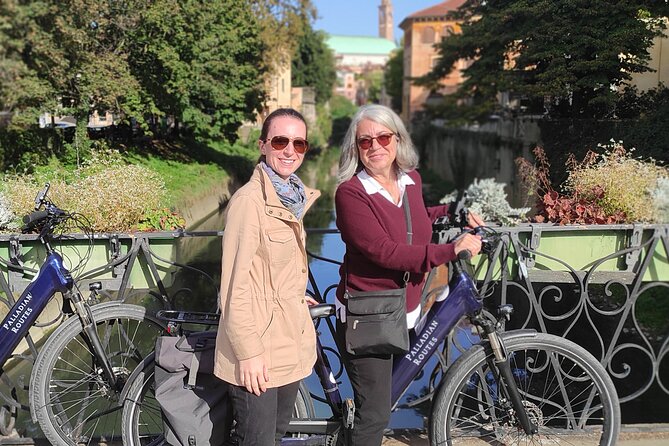
Next comes Ponte Furo, which acts like a story hinge. The bridge and the surrounding view are used to talk about how Palladio’s myth took shape—how clients, sponsors, and relationships turned architecture into a lasting movement rather than a one-off project.
What you’ll enjoy here: this part of the tour is built to show relationships—mentor to student, society to architect, patron to idea.
What to watch for: stop times are brief. If you love photo-taking, you’ll want to be ready before you arrive so you don’t lose the moment while adjusting your phone camera.
Ponte Furo’s Roman Echoes: The Roman Theater Beneath Vicenza
After Ponte Furo, the tour quickly brings you to a more unexpected layer: archaeological remains of the Roman period. You’ll get a glimpse of the site where the Roman Theater once stood (the structure that could host around 5,000 spectators).
Here’s the clever part: modern buildings helped hide the remains over centuries, but that same overlap allowed mapping and deeper study. The guide uses this to connect Palladio’s fascination with classical mastery to what’s literally under your feet.
If you’ve ever wondered why Palladio looked to Rome so confidently, this stop helps you see it as more than inspiration. It’s an ongoing conversation across time—Rome to Renaissance—built into the city’s physical ground.
Admission is not included for this segment, and it’s short, so think of it as a “look closer, understand more” stop rather than a full deep archaeological visit.
The Bridge Toward the Villas: Arco delle Scalette to Villa La Rotonda
As you head toward one of the most exciting parts of the route, you pass the Arco delle Scalette. This arch is tied to Palladio’s influence even when attribution isn’t certain. That uncertainty gets turned into a storytelling advantage: you learn how style travels and how communities sometimes build on an idea faster than history can document it.
Then you reach the big event: Villa La Rotonda by Andrea Palladio, a UNESCO World Heritage site. Almost everyone comes to Vicenza thinking of Palladio—and this is the stop that justifies that. The tour frames it as a moment where the “house” becomes something closer to a temple for enlightened discussion: philosophy, theology, politics, and classical inheritance.
This stop is timed for about 10 minutes. That’s enough to get the scale and rhythm of the design, but not enough to turn it into a long sit-down visit. Since admission isn’t included here, you’re really paying for the ride + context, not a full-time villa ticket experience.
My practical advice: if you want to linger later, plan to come back after the tour. The tour gives you the why; a return visit lets you enjoy the slower how.
Villa Valmarana ai Nani and Monte Berico: Vicenza From the Edge and From Above
After La Rotonda, the tour shifts to Villa Valmarana ai Nani. This early 18th-century jewel is explained as part of the Palladian legacy—how Neoclassical architecture in Vicenza inherits ideas and adapts them across generations. The stop also notes that the villa includes frescoes by a Tiepolo during his career peak, giving you a reason to pay attention not just to shape, but to decoration and patronage.
Then the route heads to Santuario della Madonna di Monte Berico. This is where the tour earns its “short but unforgettable” status. From the terrace, you get one of the best views over Vicenza, and the guide uses it to help you read the city as an orderly labyrinth of Palladian planning.
If Piazza time makes you understand the city at street level, Monte Berico gives you the city’s grammar from above.
Admission is not included for this stop, and again it’s brief—think viewpoint, orientation, and photo moment rather than a full religious visit.
Palazzo Chiericati and Teatro Olimpico: The Civic Side of Palladio
Back in the historic center, Palazzo Chiericati comes next. It’s also a UNESCO site, tied to one of Palladio’s early supporters and part of how Vicenza gained public commissions. The tour links Palazzo Chiericati to the later chance for Palladio to help reshape the city, with the civic projects on the horizon.
Inside, today the civic museum collects works by Venetian artists, with names like Tintoretto, Veronese, and Sansovino. Since admission isn’t included on this part of the itinerary, you’ll mainly take in the building exterior and the guide’s connections rather than a full museum session.
Next is Teatro Olimpico. This is one of those places where you can feel architecture doing something theatre-like even before you step fully inside. The guide explains how Palladio’s late-career ideas tied to the Academy and how the theatre becomes a kind of final “gift to history” in Vicenza.
Why this stop matters: it turns “Palladio built buildings” into “Palladio built experiences.” The theatre’s atmosphere and illusion are the point, and the tour sets that expectation for you.
Reformation-Era Clues: Palazzo Angaran, Santa Maria in Araceli, and Parco Querini
After Teatro Olimpico, the route moves through Palazzo Angaran, where the tour shifts from architecture into alliances and intrigues tied to the Reformation. You also learn that Palladio’s relationships with the Angaran family connect this theme to his life and professional world.
Then you get Chiesa di Santa Maria in Araceli, tied to a convent site and to a striking story involving Bianca Nievo Angaran. The tour uses her to illustrate how Renaissance independence had a cost—even for intellectual women—and it connects her to Palladio by referencing Giacomo Angaran, to whom Palladio dedicated his first two Architectural Books.
Finally in this cluster: Parco Querini. This is Vicenza’s green pause and a practical lesson in how the city’s economy shaped its spaces. The story here is that the land was once associated with a mulberry plantation (supporting the silk trade), and that trade tied Vicenza into European contact and exchange.
In other words: you stop in a park, and you learn why Vicenza grew rich enough to fund Palladio.
Piazza and Basilica Time: Santa Corona, Piazza delle Biade, Piazza delle Erbe
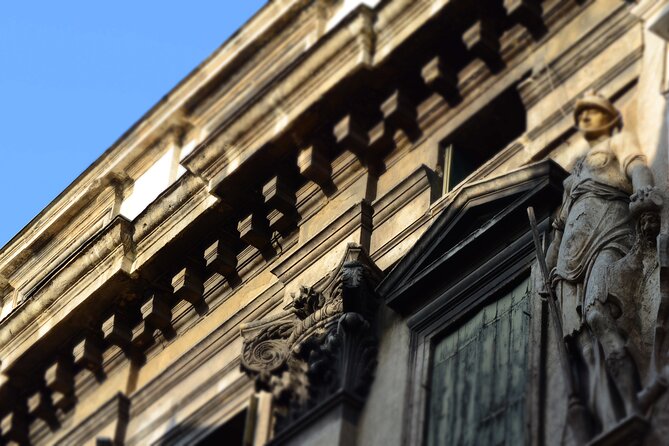
As the tour continues, it passes Contrà San Marco. This segment is about a construction site Palladio was forced to neglect for a while due to commitments in Venice. It’s also connected to a facade commissioned by Bernardo da Schio, with uncertainty around details. This kind of “history with missing pieces” is common in older cities, and the guide uses it to teach you how to read timing into stone.
Chiesa di Santa Corona is next. The stop centers on the temple’s famous Bellini altarpiece and also the Naturalistic and Archaeological Museum. It also frames the church as part of Palladio’s city epilogue story and notes that the Valmarana friends wanted the most illustrious artist linked to Vicenza to rest here.
Then you reach Piazza della Biade and Piazza delle Erbe, which set up the final civic masterpieces. The tour explains that Piazza dei Signori is connected to these names and that Piazza Biade was the official entrance from Venice, acting as a commercial outpost on the mainland. From there, the perspective toward the final Palladian landmarks becomes a highlight in itself.
Torre del Tormento also enters the picture through Piazza delle Erbe, tying the square to a painful past. And yes, the tour keeps practical life in mind too: you can use this time window to plan an aperitivo end-of-day moment if you want.
Admission isn’t included for these stops, but the point is orientation and understanding where to “stand” to see the right lines.
Basilica Palladiana and the Grand Palaces Near the Roman Forum
Now you get the face-off that Vicenza is famous for: Basilica Palladiana in Piazza dei Signori. The tour frames it as two major Palladian works facing each other, which makes the space feel like a stage. It also explains the collaboration and friendships behind it—Palladio, Alvise Valmarana, Gerolamo Chiericati, and mentor Giangiorgio Trissino.
A key detail the guide emphasizes: Palladio later faced Venice from the basilica setting, placing Venice’s presence in front of Vicenza. It’s a neat way to learn architecture as political geography, not just aesthetics.
Then the route moves into the surrounding palaces on the “forum-adjacent” story track:
- Palazzo Thiene, a UNESCO site, tied to the Thiene family’s wealth and their role in bringing Vicenza into the orbit of Venice
- Palazzo Barbaran da Porto, also UNESCO, and the Palladio Museum in Vicenza today
- Palazzo Iseppo Porto Festa, connected to long-running design negotiations with Palladio
These stops help you understand a big idea: Palladio wasn’t only designing buildings. He was negotiating ideas with powerful families who wanted status, legacy, and the right intellectual image for their city moment.
From Bottega to Gardens: Contrada Pedemuro San Biagio to Loggia Valmarana
After the palaces, you move to Contrada Pedemuro San Biagio. This is a shift from elite patronage to craft origins. You’ll learn that Andrea di Pietro della Gondola (the young stonemason before he was renamed as Palladio) began as an apprentice and learned his trade in a workshop tied to this area.
That’s a surprisingly grounding stop. The tour helps you connect “genius” to real work, dust, stone, and technique.
Then you head to Villa Thiene, Valmarana (another UNESCO site). The story here notes Palladio’s involvement as director of works early on, with practical guidance on using terracotta where possible. The tone is “Palladio was a construction man,” not only a paper architect.
Next: Loggia Valmarana. This stop blends garden shade, water reflections, and design symmetry, with a story connecting it to a “loggia reflected” effect created for Leonardo, son of Giovanni Alvise, a friend of Palladio. Attribution may be debated, but style “alla Palladia” is noted as something already imitated while Palladio was alive.
This is where you’ll feel the tour’s final payoff. The ride has been about ideas; now you see how those ideas behave in real space.
Back at the Start: Finishing at Palazzo Valmarana Braga
The route ends where it begins: Palazzo Valmarana Braga. You’ll return for a final 15-minute window, with access to an info point staff member who can help you plan what comes next in your stay.
That last segment matters because Vicenza is better with follow-up. This tour gives you a guided map through the Palladian story. After, you can decide what you want to spend extra time on—either because it caught your eye or because you learned a detail you want to revisit at a slower pace.
Price, Time, and What You’re Actually Paying For
At $159.63 per person for about 2 hours 45 minutes, this isn’t a “cheap and cheerful” city tour. But you are paying for a specific bundle:
- an e-bike included
- a guided narrative focused on Palladio’s impact
- a structured route that covers both central landmarks and villa territory
Most admissions to individual attractions aren’t included, so you’re not paying for a museum-hopping day. Instead, the value is in getting the connections and the orientation fast, then using your own time to return for tickets if you want deeper entry.
Also, this tour is offered in English and is private in the sense that only your group participates. If you’re traveling with a small group and want less crowd noise, that matters.
If your schedule is tight (half-day availability, limited energy), this “big ideas in one loop” approach can be a smart fit.
Who This Tour Fits Best (and Who Might Want a Different Plan)
This one works especially well if:
- you want to see many Palladian highlights without spending the whole day
- you like architecture when it comes with stories, not just labels
- you can handle an outdoor route with moderate movement
It’s also a good match for first-time e-bike riders, since the bikes are described as easy to use and the guide provides operation help.
It may be less ideal if:
- you want lots of long indoor visits, since admissions are mostly not included and stops are short
- you prefer slow strolling with no biking between stops
On families: children can only enjoy it with a minimum height of 1.50 meters. Child seats are only available for children up to 3 years old, so plan around that.
Should You Book the Palladian Routes Vicenza E-Bike Tour?
If your goal is to understand Vicenza’s Palladio story in one satisfying morning or afternoon window, I’d say this is a strong booking. The best part isn’t only the e-bike; it’s the way the guide, including Manuel, stitches the city together from early mentor connections to civic masterpieces and countryside villas.
Book it if you want value in context: the route helps you see the city’s logic and the relationships behind the buildings. Skip it if you’re chasing long museum time or mostly want independent exploring with no narration.
FAQ
What’s the tour duration?
It’s approximately 2 hours 45 minutes.
Where does the tour start and end?
It starts at Palazzo Valmarana Braga, Corso Antonio Fogazzaro, 16, 36100 Vicenza, Italy, and ends back at the same meeting point.
What time does it start?
The listed start time is 10:00 am.
Is the tour offered in English?
Yes, it’s offered in English.
What’s included in the price?
Your Palladian e-bike is included, and you’ll get narration from your guide (Cicero Palladiano). The first stop includes an admission ticket.
Are admissions to all stops included?
No. The tour is outdoors, and entrance tickets to individual attractions are excluded except where specifically stated (for example, the first stop includes an admission ticket).
Do I need moderate fitness for the route?
Yes. The tour is marked for travelers with a moderate physical fitness level.
Can children join?
Children can only enjoy the tour with a minimum height of 1.50 meters. Child seats are only available for children up to 3 years old.
Is this a group tour with strangers?
This is private in the sense that only your group participates.
What happens if I cancel?
This experience is non-refundable and cannot be changed for any reason. If you cancel, the amount you paid isn’t refunded.