REVIEW · AMSTERDAM
Amsterdam bike tour with a French-speaking guide local!
Book on GetYourGuide →Operated by Amsterdam Velo - Tours en Francais · Bookable on GetYourGuide
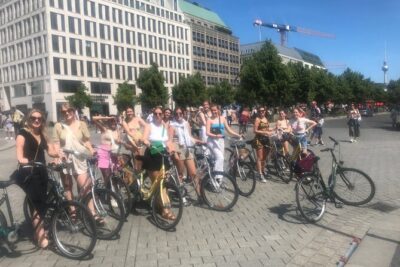
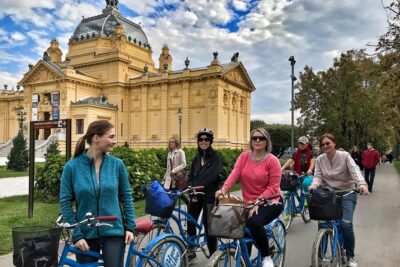
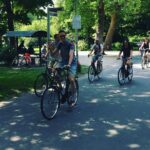
Pedal through Amsterdam like a local plan. This French-speaking local guide tour gives you a smart overview fast, and I especially like the small-group feel (max 12). One thing to consider: you’ll ride a regular bike with hand brakes, not an e-bike, so it helps if you’re comfortable pedaling in city traffic.
You start near Central Station at IJdok 47, then cycle through the neighborhoods that most self-guided visitors skip. I also love how the guide ties what you see to day-to-day life—history, cultural differences, and how people actually use canals and streets.
The route is packed into 2.5 hours, so if you want long stops for photos, this tour is more about momentum than lingering. Still, for getting oriented and getting recommendations afterward, it’s a very solid use of a morning or early afternoon.
In This Review
- Key takeaways before you book
- Start Smart: this 2.5-hour French Amsterdam ride gets you oriented
- Bikes and safety: Batavus hand brakes, helmets, and family options
- Meeting at IJdok 47: easy access, less hassle, good timing
- Stop-by-stop highlights you’ll understand on a bike
- Westerdok and the main channels: get the city’s canal logic
- Museumkwartier: why the museum district feels different
- Dam Square: the center point for stories and contrasts
- Westerkerk: a recognizable landmark with neighborhood context
- De Negen Straatjes: the nine streets feeling
- Haarlemmerbuurt: a residential texture, not just postcard views
- Anne Frank House area: the old Jewish quarter context
- Grachtengordel: canals plus the secrets of Dutch architecture
- The Jordaan: finishing with a neighborhood you’ll want to walk
- Back to IJdok 47: use the map and keep going on foot
- The guide experience: French clarity, practical biking rules
- Value check: why $40 can be a smart deal in Amsterdam
- Who this tour fits best (and who should choose differently)
- Should you book this Amsterdam bike tour in French?
- FAQ
- How long is the Amsterdam bike tour?
- What time does the tour run?
- Where do I meet the guide?
- Is the tour in French?
- What kind of bikes are included?
- Do they have bikes for children?
- What is included in the price?
Key takeaways before you book
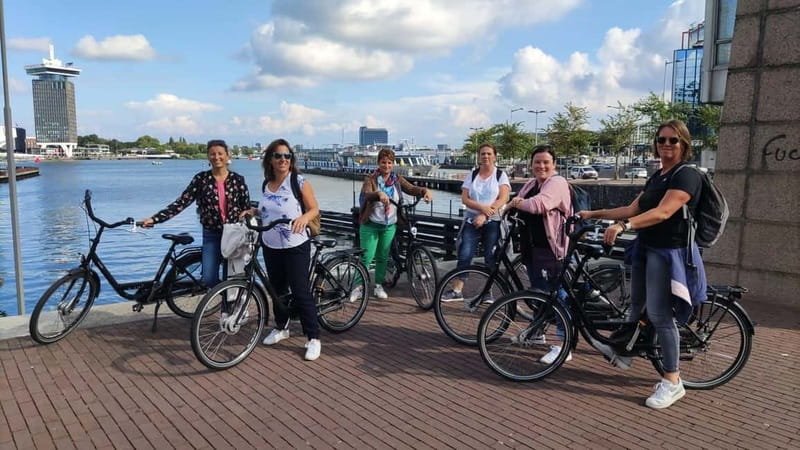
- Small group (max 12): easier questions, less chaos at canal corners, and more personal attention.
- French-only guide: ideal if you want the city explained in clear, natural language.
- Batavus bikes with hand brakes: controllable and simple once you get used to the setup.
- Neighborhood focus: Museumkwartier, Jordan, De Negen Straatjes, Haarlemmerbuurt, Grachtengordel, and more.
- After-tour local guidance: restaurant and brown-café ideas, plus maps for continuing on foot.
- Optional connected boat add-on: they mention a French boat tour with aperitif and cheese.
Start Smart: this 2.5-hour French Amsterdam ride gets you oriented
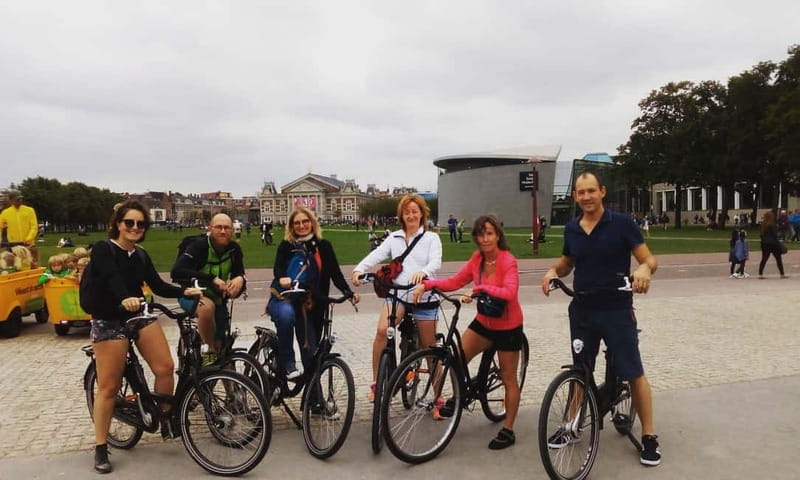
If you’re arriving in Amsterdam and wondering where to even begin, this is one of the smartest first-day moves. The whole point is to get your bearings fast—by bike, with a local explaining what you’re seeing as you go. Starting soon also means you can use the guide’s tips immediately, not days later when the best places are already behind you.
I like that the tour is built for efficiency. Two departure times usually run at 10:30 a.m. and 1:30 p.m., so you can match it to your energy and your sightseeing plan. And because it’s 2.5 hours, it fits neatly before museums, canal cruises, or dinner plans—without swallowing your entire day.
The smaller-group limit matters more than you might think. In Amsterdam, there’s a rhythm to cycling, stopping, and turning at busy intersections; fewer people means less stopping-and-starting. One review note that a smaller group would be even better, and I get that instinct if you’re the type who likes space for photos or quiet listening.
You can also read our reviews of more tours and experiences in Amsterdam.
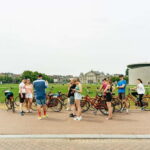
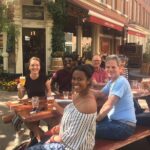
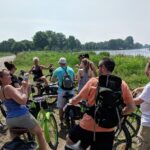
Bikes and safety: Batavus hand brakes, helmets, and family options
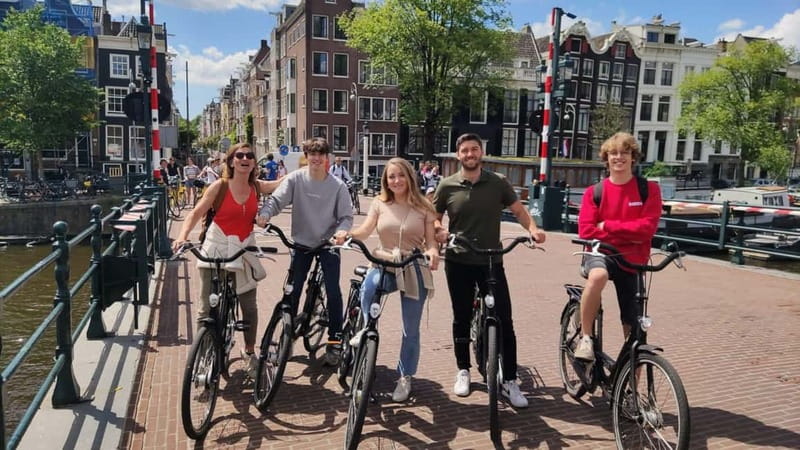
Let’s talk bike comfort, because in Amsterdam that’s the whole deal. The tour includes Batavus bikes in multiple sizes, and the bikes use hand brakes (not foot brakes). If your brain is trained for foot braking, give yourself a couple minutes at the start to adjust how you slow down.
You’ll also have practical features that make the ride easier. There’s a luggage rack for your bag or water bottle, and helmets are included if needed. If you’re traveling with kids, bikes are available from age 8, and they can provide child seats for younger children as needed.
This isn’t an e-bike tour. Electric bikes aren’t included, and they don’t list tandem or cargovelo options. So if you need motor assistance or a different bike setup, you’ll want to plan a separate option instead of assuming you can swap mid-tour.
Meeting at IJdok 47: easy access, less hassle, good timing
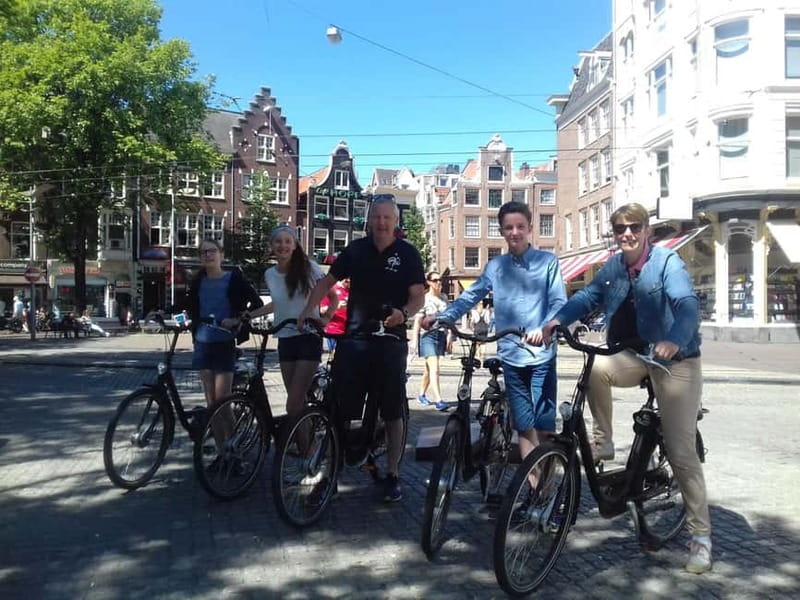
You meet at IJdok 47, near Centraal Station. That’s a big plus if you’re staying nearby or arriving by train, because you’re not trying to cross the city just to start the tour. Once you find the bikes shop area, you’re set to roll without a lot of extra travel.
There’s also a useful detail for day-planners: it’s possible to leave luggage so you can cycle around without hauling bags all over the neighborhoods. That means you can keep your day moving, especially if you’re coming straight from a hotel check-in or still sorting out travel bags.
A small but important note: since the tour is guided in French, you’ll get the most out of it if you’re comfortable listening in French. If you understand basic French, you’ll still pick up a lot, but this is best for travelers who want the explanation itself, not just the ride.
Stop-by-stop highlights you’ll understand on a bike
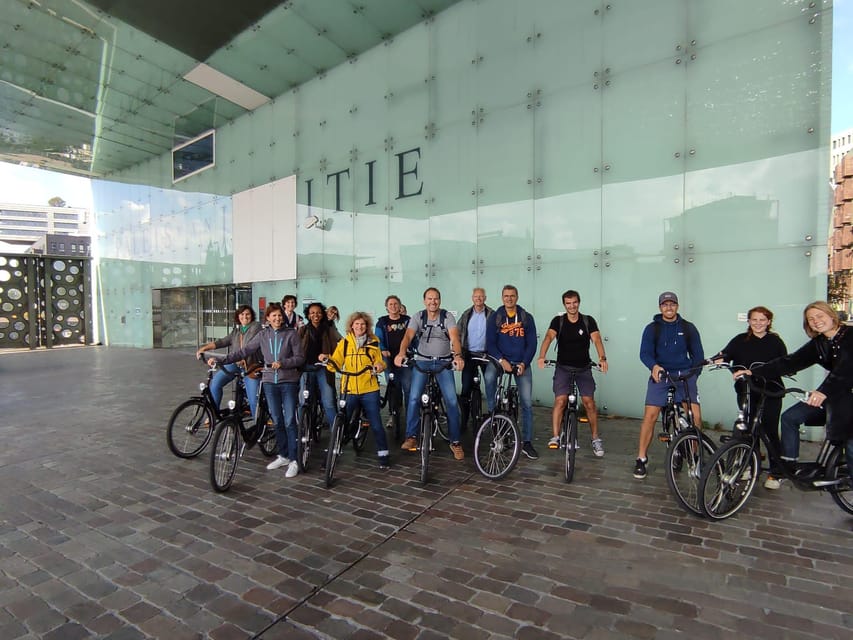
This is where the tour earns its keep. You’re not just cycling past landmarks—you’re learning how they fit into Amsterdam’s history, cultural differences, and daily life, with plenty of emphasis on canals and architecture.
Westerdok and the main channels: get the city’s canal logic
Before you settle into the best-known districts, you’ll spend time in areas like the Westerdok district and along the main channels. I like this early part because it teaches you how Amsterdam’s water system shapes movement and neighborhood feel. You also get those first canal views that make the rest of the tour click.


Museumkwartier: why the museum district feels different
Your route includes a stop at the Museumkwartier. The guide’s job here isn’t to sell museum tickets—it’s to give you context so the area feels less random. You’ll learn about Amsterdam’s evolution and how different parts of the city developed, which helps later when you walk around on your own.
The practical payoff: if you decide to do museums later, you’ll already understand what area you’re in and why it looks the way it does.
Dam Square: the center point for stories and contrasts
Next comes Dam Square, a major reference point that many first-timers end up seeing anyway. Here, the value is in the explanations: history, cultural differences, and what daily life looks like from a local perspective.
If you’re the kind of traveler who likes to photograph first and ask questions later, you might find this stop a bit more talk-heavy than you expected. But that’s also why the tour works as an orientation tool.
Westerkerk: a recognizable landmark with neighborhood context
You’ll stop at Westerkerk, and the guide will connect it to the surrounding area rather than treating it like a standalone photo spot. This is one of those moments where a local voice helps you read the city instead of just looking at it.
The drawback is timing. Because the tour keeps moving, you don’t get long stretches to wander off. If you want deep museum-style detail, plan a separate visit later.
De Negen Straatjes: the nine streets feeling
Then you hit De Negen Straatjes. This area is known for its walkable street character, and on a bike tour it becomes a quick way to understand how Amsterdam mixes shopping, housing, and small-street charm. The guide’s explanation helps you see why locals gravitate here and how it fits into the broader canal neighborhoods.
Good to know: this stop is great for orientation, but it’s not the time to fully shop or browse for an hour. Think of it as a preview so you know what to seek later on foot.
Haarlemmerbuurt: a residential texture, not just postcard views
Your next stop is Haarlemmerbuurt. I appreciate that this kind of district helps you balance the more famous canal-photo areas. You’ll get the sense of everyday neighborhood life and cultural differences in a way that’s hard to catch when you only visit the top attractions.
This part is also where the tour’s pace can feel most real. Cycling through residential areas makes you notice street layout, how people move, and how the city functions beyond the center.
Anne Frank House area: the old Jewish quarter context
The itinerary includes Anne Frank House. The tour frames it within the old Jewish quarter context, tying history to the streets you’re riding through. Even if you don’t go inside, you’ll walk away with a clearer sense of why the area matters and how the neighborhood story connects to the broader city narrative.
One caution: because this is a meaningful historical place, it’s easy to feel rushed if you’re sensitive to solemn sites. The tour keeps a flow, so if you want quiet reflection, you may want to schedule a separate visit afterward.
Grachtengordel: canals plus the secrets of Dutch architecture
You’ll also visit Grachtengordel, the canal belt area that’s central to Amsterdam’s visual identity. Here, the tour focuses on the canals and the secrets of Dutch architecture. That combination is exactly why bike tours work better than bus tours—you’re at street level, moving at a human pace, and your perspective keeps shifting.
If you’re an architecture fan, this part can be a highlight. You’ll notice details more easily when you’re not trapped behind windows or pulled along quickly.
The Jordaan: finishing with a neighborhood you’ll want to walk
Finally, you cycle through the Jordaan. It’s a strong ending choice because it gives you a lively neighborhood feel for what to do next. The guide’s talk helps you see the area as more than scenery, so when you dismount and head out on your own, you know what to aim for.
Back to IJdok 47: use the map and keep going on foot
You end back at IJdok 47. What I like here is that the tour doesn’t just end at the finish line—it includes a list of recommendations for Dutch restaurants, brown cafes, bars, and neighborhoods you can explore on foot. Maps with good deals are mentioned too, which makes the “what now?” part easier.
If you’re visiting for the first time, this follow-up is where the value stretches beyond the 2.5 hours you paid for.
The guide experience: French clarity, practical biking rules
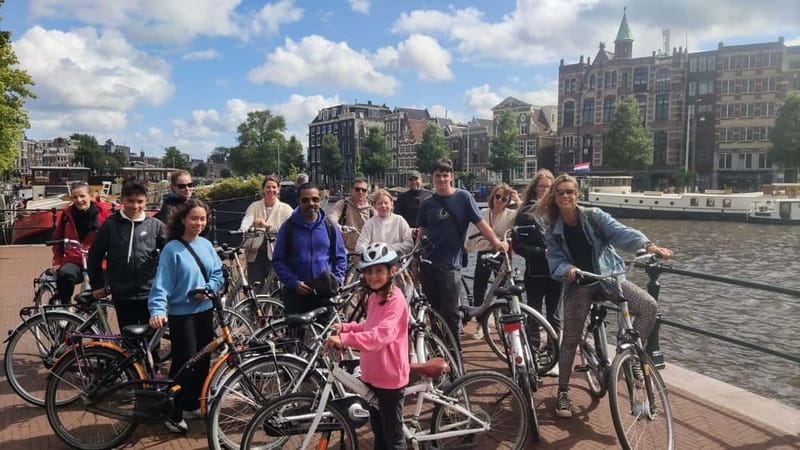
The tour is led by a French-speaking team and runs as a live guided experience. What stands out from the guide style notes is that you get practical biking instruction right away.
One review example mentions Marcel, and that he explained the cycling rules so the ride stayed smooth. That matters because Amsterdam cycling can feel intimidating even for people who cycle at home. When someone teaches you how to behave on the route—when to move, how to handle the flow—you enjoy the city instead of thinking about mechanics.
You’ll also learn about daily life and cultural differences as you pass through different neighborhoods. This is a big difference between a ride that only points and a ride that teaches you how to read the city.
Value check: why $40 can be a smart deal in Amsterdam
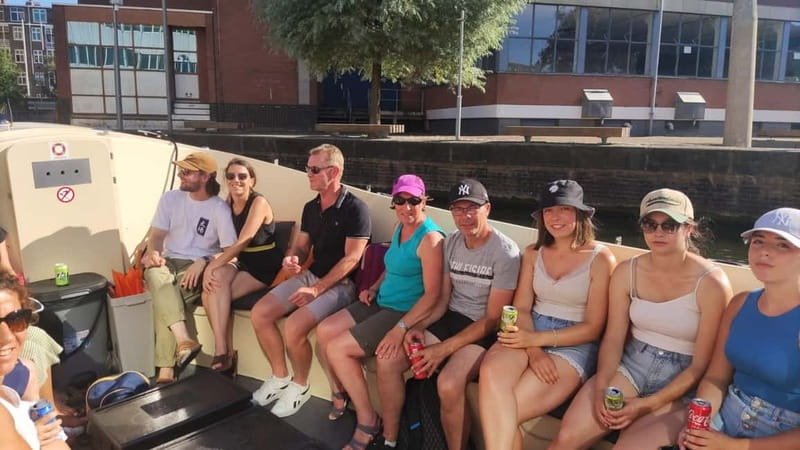
For $40 per person (bike rental included), you’re buying more than a bicycle. You’re paying for:
- a local French guide explaining what you’re seeing,
- a small group limited to 12 people,
- Batavus bikes with proper brake setup,
- and an end-of-tour package of local recommendations and maps.
In a city where transport costs add up fast, getting a guided overview plus a bike rental in one price often feels efficient—especially on days when you’re also trying to fit in museum tickets or canal cruises.
The discounts help too. They mention a 10% reduction on bicycle rental after the tour, plus a 10% reduction on another French-guided tour by boat or visiting the windmills. Even if you don’t book the add-on right away, it’s nice to know there’s a built-in continuation.
Who this tour fits best (and who should choose differently)
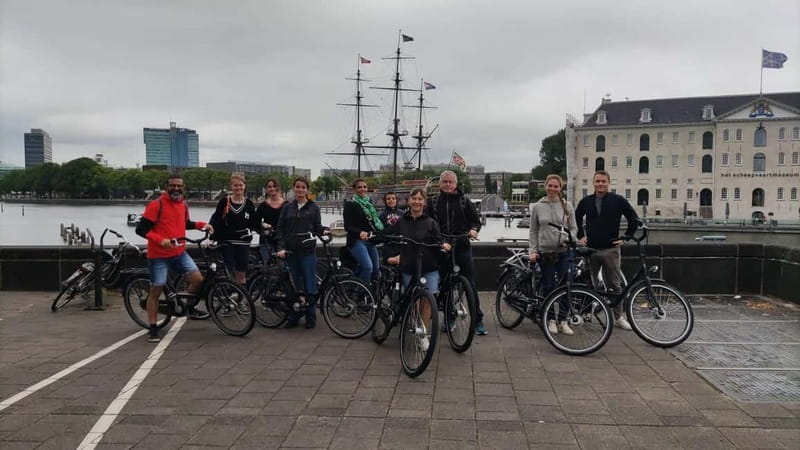
This is a great fit if you:
- want a first-time orientation with a local guide,
- prefer French explanations (not audio-only),
- like small-group experiences with less crowd pressure,
- want to see multiple neighborhoods in a short window.
It’s also family-friendly, with bikes available from age 8 and child seats for younger kids when needed. That can be hard to find in busy destinations.
You might skip it if you:
- need an electric bike (not included),
- expect a long stop-and-wander style tour,
- need a tandem/cargobike setup (not listed as available).
And if hand-brake biking is totally new to you, start with the expectation that you’ll need a quick adjustment period.
Should you book this Amsterdam bike tour in French?
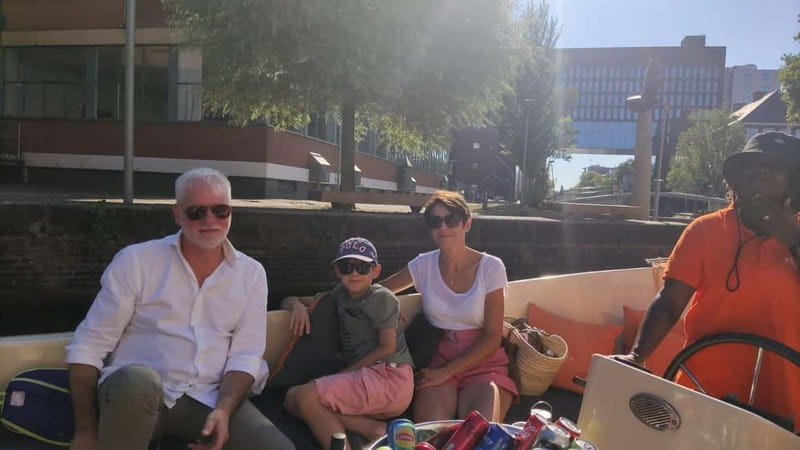
Book it if you want a practical, local-feeling way to get oriented on your first day. The combination of a small-group French guide, a focused neighborhood route, and strong after-tour recommendations is exactly the kind of value you want in a city where you can spend too much time bouncing between hotspots.
Skip it or plan a backup if you rely on e-bikes or you need lots of downtime at each stop. This tour is built for movement and context, not for extended sightseeing breaks.
If you’re ready to ride, learn, and then use the tips immediately, this is one of the easier decisions you’ll make in Amsterdam.
FAQ
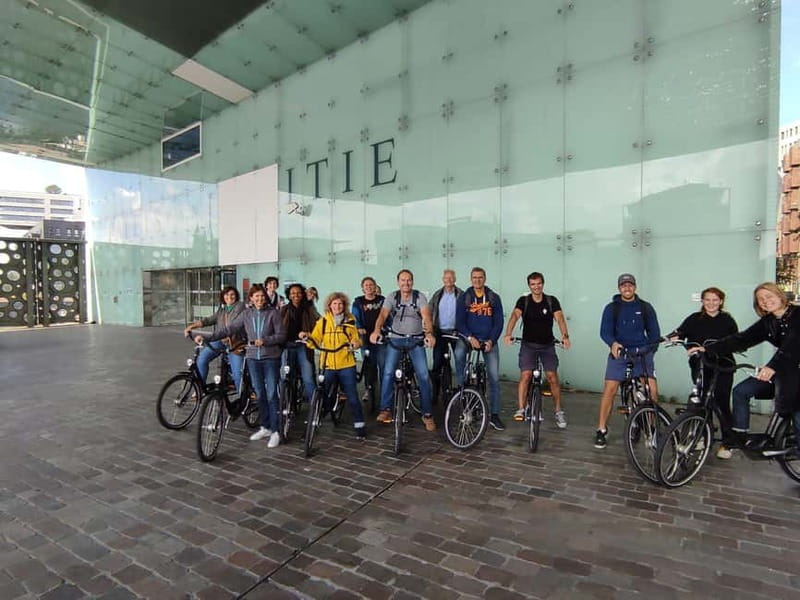
How long is the Amsterdam bike tour?
The tour lasts 2.5 hours.
What time does the tour run?
There are two departures per day, listed as 10:30 a.m. and 1:30 p.m. Check availability for the exact starting times.
Where do I meet the guide?
You meet at IJdok 47, near Central Station (Centraal Station Amsterdam). The tour ends back at the same meeting point.
Is the tour in French?
Yes, the live tour guide speaks French.
What kind of bikes are included?
Bikes are included and they are Batavus bikes. The bikes have hand brakes (not foot brakes), and helmets are included if necessary.
Do they have bikes for children?
Yes. Bikes are available from 8 years old, and they provide baby seats if needed for small and big children.
What is included in the price?
The price includes bike rental, a French-speaking local guide, and luggage racks on the bikes. They also include a list of recommendations and maps for where to go next.