REVIEW · AMSTERDAM
Amsterdam: Windmill, Cheese, and Countryside E-Bike Tour
Book on GetYourGuide →Operated by AmsterBike · Bookable on GetYourGuide
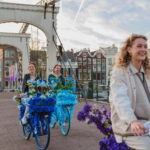
Two wheels, windmills, and cheese—far from downtown. I like how the ferry-and-e-bike setup gets you out of the city fast, and I love riding through Waterland villages like Broek in Waterland and Monnickendam on mostly level bike paths. The English live guide option (and yes, names like Olec and Red show up often) also makes the countryside feel understandable, not random.
One thing to consider: the e-bikes aren’t suitable for riders under 160 cm, and after a few hours you may notice the seat more than you want. If you’re even a little unsure about comfort or fit, plan for a slow start and be ready to adjust.
In This Review
- Key points at a glance
- Getting out of Amsterdam fast: ferry, e-bikes, and Old Holland context
- Start in Piet Heinkade: what to expect before the first pedal
- A’DAM Tower and Eye Film Museum area: a quick Amsterdam taste before the countryside
- D’Admiraal Windmill: the one windmill stop that people remember
- Broek in Waterland: where the countryside feels frozen in time
- Monnickendam and Katwoude: canal towns with different personalities
- Zunderdorp and the fishing village: the calm “in-between” that makes the day
- The cheese farm visit: tastings, cows, and how milk becomes cheese
- How the e-bike ride works: pace, comfort, and self-guided reality checks
- Price and value: what $43 really buys you
- Who should book this e-bike cheese-and-windmill day
- Should you book AmsterBike’s Windmill and Cheese E-Bike Tour?
- FAQ
- How long is the Amsterdam Windmill, Cheese, and Countryside E-Bike Tour?
- Where does the tour start and end?
- How much does it cost?
- Is there a guided option?
- What is included in the ticket price?
- Can I take this tour self-guided?
- What should I bring?
- Is the tour suitable for everyone?
- What if the weather is bad?
- Is food included?
Key points at a glance
- Ferry start plus quick Amsterdam context near A’DAM Tower and the Eye Film Museum area
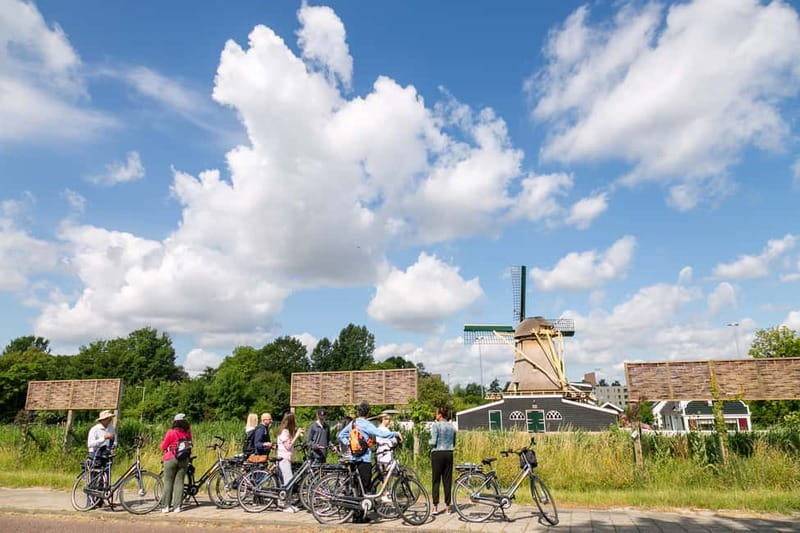
- One solid windmill stop at D’Admiraal, timed early for easier photos
- Waterland village riding through Broek in Waterland and Monnickendam, with lots of canals and bridges
- A real cheese farm visit where you can taste multiple cheeses at the source
- Small groups (up to 15) with an English live guide on guided departures
- Choose guided or app self-guided so you control pacing once you’re rolling
Getting out of Amsterdam fast: ferry, e-bikes, and Old Holland context
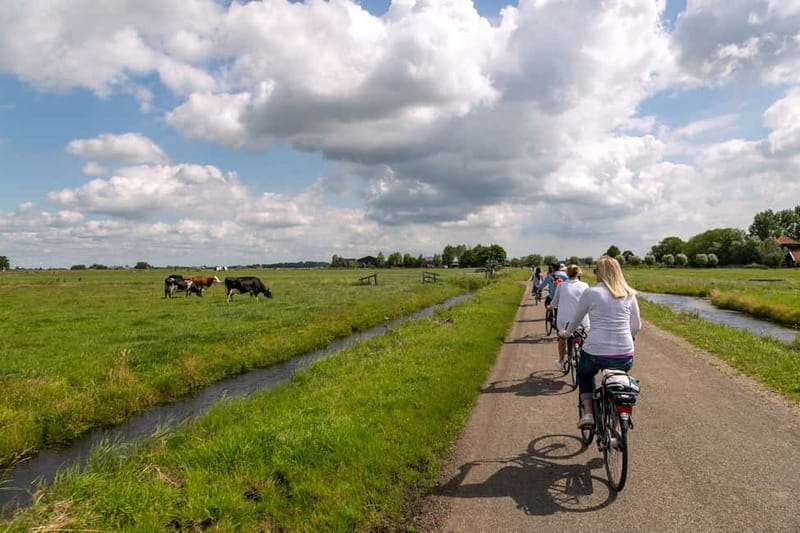
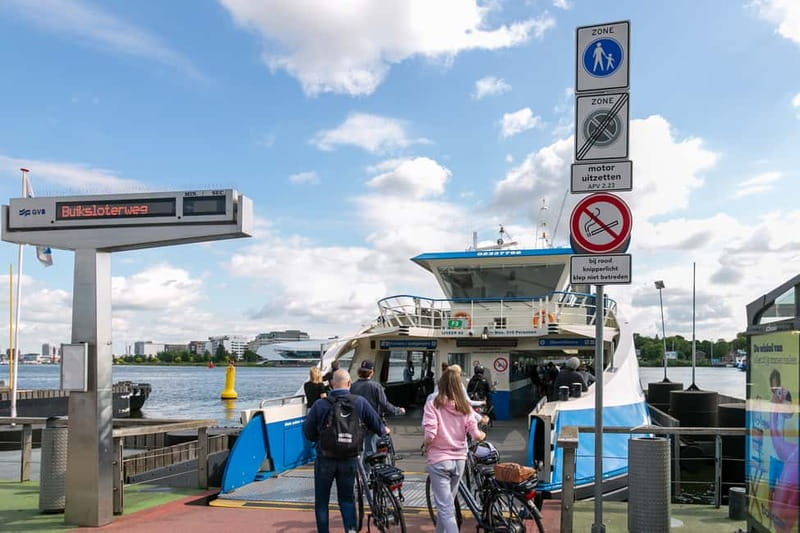
This tour works because it changes your mood quickly. You’re in Amsterdam, then you take a ferry to the north side and shift into countryside rhythms—flat roads, bike paths, canals, and the kind of farmland you don’t get from the city’s canal-ring views.
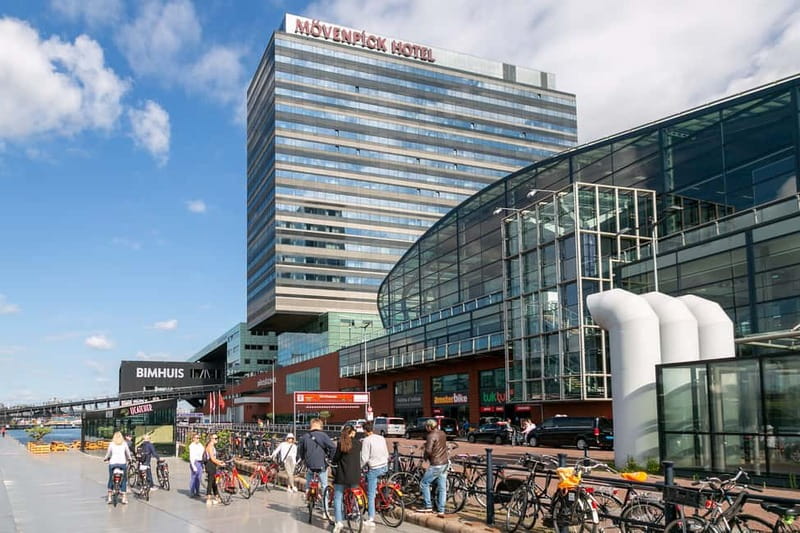
You’ll start at Piet Heinkade 25 and spend a short chunk of time in the A’DAM Tower area. It’s not a long lecture or an all-day sightseeing crawl, just enough framing so that when you hit Waterland, you know what you’re looking at. Many guides—people have mentioned English-speaking leaders like Olecr and Mariano—tend to explain how the region’s dikes, pumping stations, and farm life fit together.
The ride also feels practical. E-bikes handle the work on long flat stretches, so you’re not burning your energy just to keep up. Instead, you can focus on what’s actually fun: watching daily life along canals and small bridges, plus those classic Dutch farm scenes where the horizon looks almost unreal.
You can also read our reviews of more tours and experiences in Amsterdam.
Start in Piet Heinkade: what to expect before the first pedal
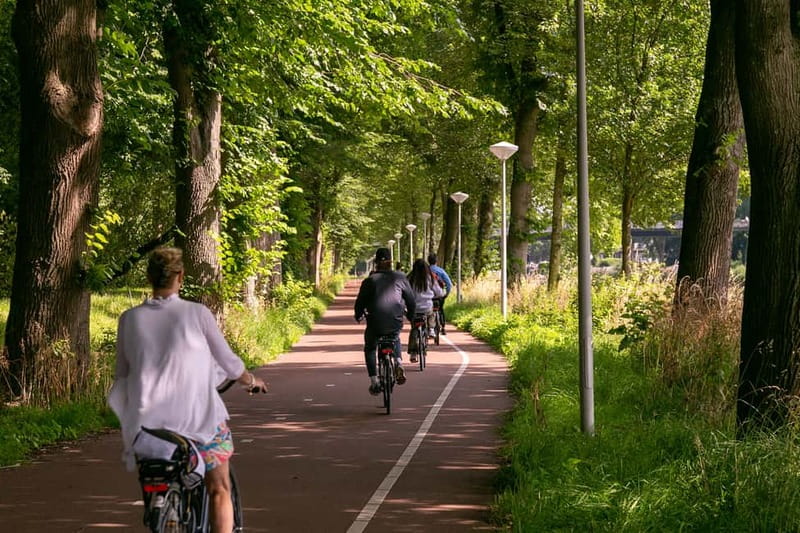
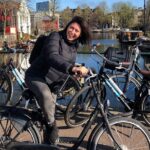
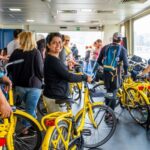
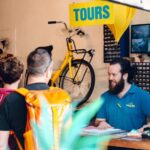
Before you ride, expect the tour to get you set up and moving—helmet on, bike adjusted, and a quick orientation. The start point is very specific: Piet Heinkade 25, 1019 BR Amsterdam, and you’ll return there at the end.
Bring a reusable water bottle. It sounds basic, but on a 4-hour cycling day (with stops and tasting) you’ll feel grateful for it. And if you choose guided, listen closely during the first few minutes. A smooth start makes the rest of the ride feel easy.
Here’s a small tip that matters: do a quick check that the e-bike assist is actually turned on before you set off. Some riders have reported realizing they were basically pushing a heavy bike the whole way for a stretch. You don’t need that kind of cardio when the whole point is effortless countryside cruising.
A’DAM Tower and Eye Film Museum area: a quick Amsterdam taste before the countryside
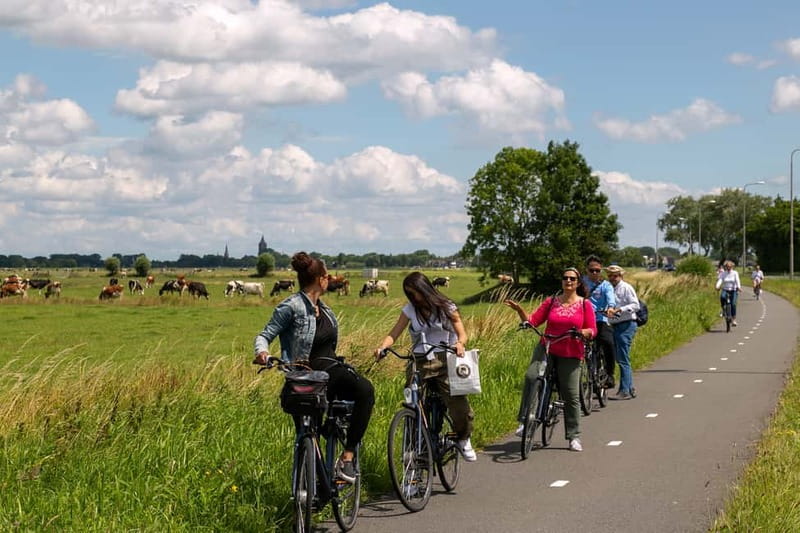
One of the smartest choices on this outing is the way it transitions. Instead of jumping straight into villages, you get a short guided look around the A’DAM Tower area and the Eye Film Museum surroundings as an introduction to Amsterdam’s older “Old Holland” setting.
You’re not stuck there for hours, though. This is more like a breather: a chance to see the water, understand you’re crossing into a different world, and get your bearings before the route opens up.
If you’re the type who likes context, the live guide time here can be surprisingly useful. Guides have a way of linking what you see—waterfront architecture, the ferry crossing, and the feel of the city edges—to why Waterland has the farm layout it does.
D’Admiraal Windmill: the one windmill stop that people remember
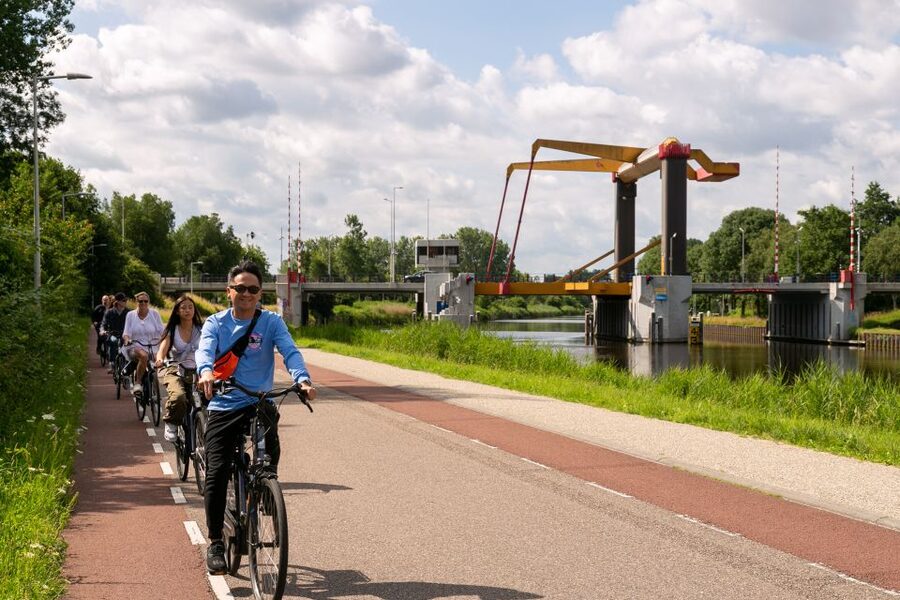
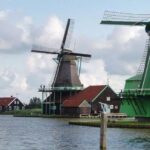
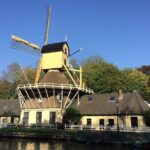
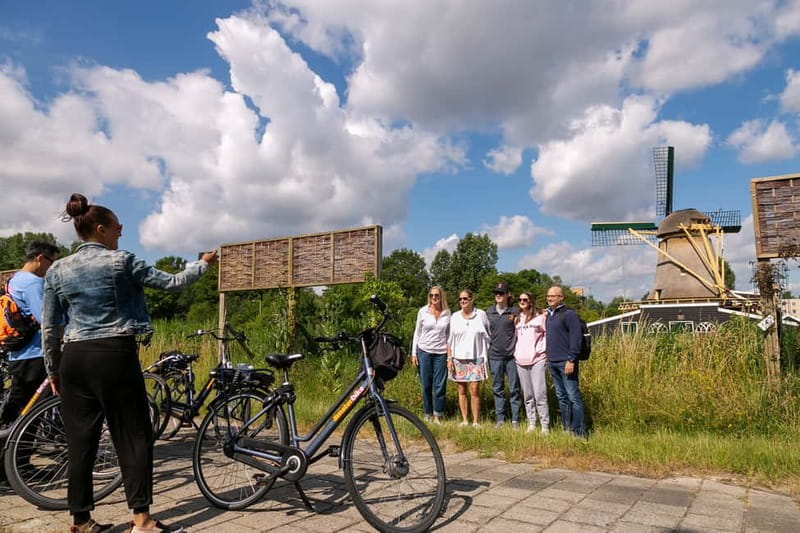
Yes, you visit a windmill—specifically D’Admiraal Windmill—and the timing is part of the appeal. It’s a guided stop (about 10 minutes), so you don’t wander for ages trying to “find the vibe.” You get in, get the story, take the photos, and keep riding.
Also, set your expectations: you’re not doing a windmill-and-dam-photo marathon. This tour’s identity is more about villages + farming + cheese than stacking multiple windmills. That’s actually good news. You avoid the “we saw one thing, then rushed to the next” feeling.
If you want a clean photo moment, aim to treat this stop as your warm-up. Get the windmill shot early, then relax into the village canals and farmland scenes that come next.
Broek in Waterland: where the countryside feels frozen in time
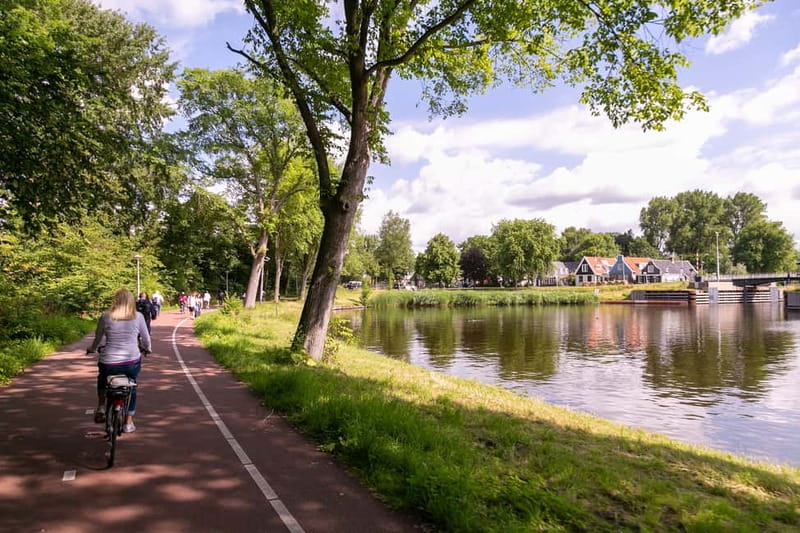
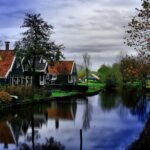
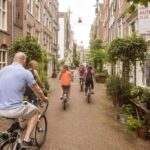
This is the village segment that many people end up loving most. Broek in Waterland has that classic Dutch look—tight village lanes, open water views, and a calm pace where you can actually notice details.
The guide time here is longer than some stops (about 15 minutes), and that matters because it gives you a chance to orient yourself. Your guide can explain how the land is protected by kilometers of dikes and pumping stations, and why that protection allowed villages to thrive.
And you’ll feel the difference on the bike. The route takes you past canals, bridges, and older farm shapes that look built for slow life, not hurried city commuting. This is the part of the tour where you start thinking: oh, this is why people come to the Netherlands beyond Amsterdam.
Possible drawback: if you’ve got very high photo expectations for every single village, you might find some spots quieter than the Instagram highlights. But that’s also the charm—Broek in Waterland feels like a place where life continues, not a stage set.

Monnickendam and Katwoude: canal towns with different personalities
After Broek in Waterland, you’ll cycle onward through Monnickendam and then reach Katwoude. Monnickendam is a shorter guided stop (around 10 minutes), which works well because it keeps you moving while still giving you a reason to stop rather than simply roll past.
Katwoude is where the schedule slows down a bit more (about 30 minutes). That extra time is valuable. You can stretch your legs, take in canal views and farm buildings, and soak up the “north of Amsterdam, but not Amsterdam” feeling.
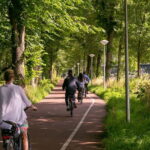
This section is also where the bike paths and bridges do their best work. The ride is mostly flat, so you don’t fight the terrain. Instead, you glide through moments that feel like they belong to everyday Dutch life: farms, water channels, and homes that sit right beside the route.
Zunderdorp and the fishing village: the calm “in-between” that makes the day
The later part of the ride includes Zunderdorp and a fishing village stop, each guided briefly (about 10 minutes). These are the segments that often get overlooked if you’re just chasing the biggest landmarks.
But the value here is cumulative. Small stops give you variety: one village has a different rhythm than the next. You start noticing the landscape patterns—how water, dikes, and agriculture connect—and your brain locks onto the logic of the region.
If your group is guided, this is also where your guide’s style can really show. People have highlighted guides who keep a comfortable pace and make stops feel planned rather than chaotic—names like Chris have been mentioned in that context.
If you’re self-guided, treat these “in-between” stops as reminders to pause. The app route helps, but you’ll enjoy it more if you occasionally treat the ride like a slow walk with wheels.
The cheese farm visit: tastings, cows, and how milk becomes cheese
This is the heart-food portion of the tour, and it’s why so many people say the day feels worth the price.
You’ll visit a traditional cheese farm designed for tastings. The promise is simple: you can sample as many cheeses as you like while learning how the process works from scratch. In practice, it’s not just a walk-through shop. Many people highlight the chance to see cows up close and watch mechanization in the milk harvesting process.
That combination is what makes the cheese stop satisfying instead of “just shopping.” You get context for what you’re tasting, and you learn that cheese isn’t a mystery product—it’s a sequence of steps, equipment, and timing.
You should also expect a bit of sensory payoff. The smells, the texture variety, the conversation from staff, and the pure fun of comparing flavors across multiple cheeses is usually what keeps the energy high even after hours on the bike.
Practical caution: tasting can make you hungry. Cafe purchases aren’t included, so if you want a drink or snack beyond what you bring, plan to buy it on your own.
How the e-bike ride works: pace, comfort, and self-guided reality checks
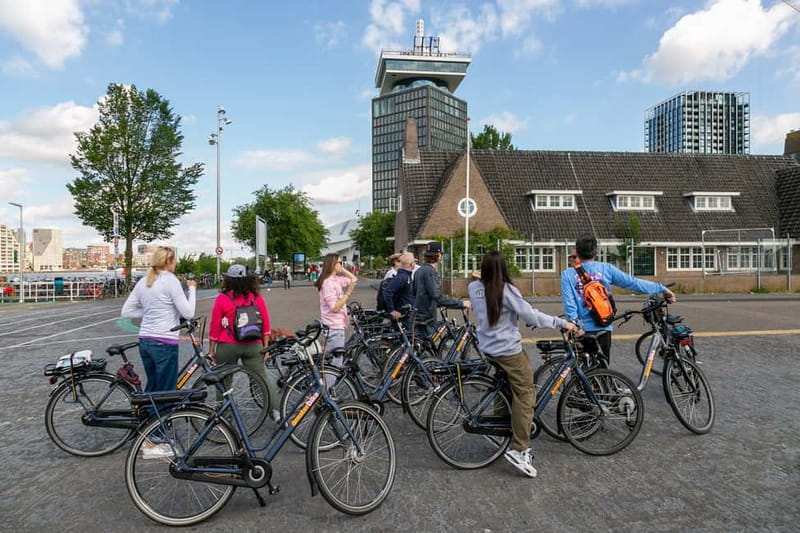
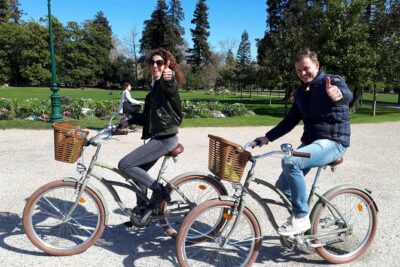
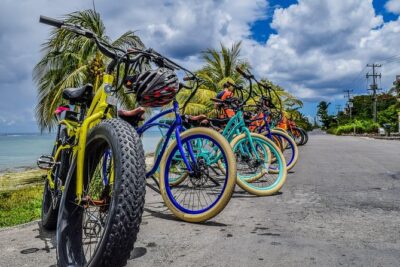
This tour runs for about 4 hours and includes an e-bike and helmet. If you pick the guided option, you get a live English guide. If you choose self-guided, you’ll get a route delivered through an app so you can ride at your own pace.
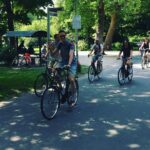
Either way, the e-bike changes the experience. You’re still cycling, and your legs still matter, but the assist helps you stay comfortable across canals and bridges without feeling wrecked.
Two practical notes from real-world experience:
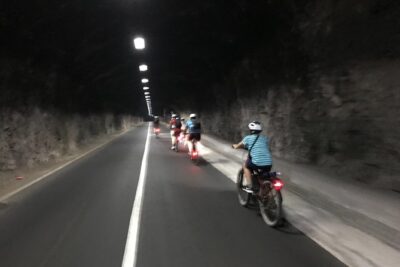
- The ride can include distances people describe around 25–30 km up to around 40 km, depending on the exact route flow. With e-bikes, it’s manageable, but it still adds up.
- Some riders find the seat a bit firm, especially if you’re sensitive to saddle discomfort. If your body tends to complain after 2 hours on a bike, bring padded shorts and plan for a slower effort on the return.
Self-guided option tip: route apps can miss details when roadworks happen. Some riders reported detours not shown clearly in the map and needing to figure out options on the fly. If you’re self-guided, download the route before you start, keep your phone charged, and don’t panic if a turn looks different than expected.
Weather is another practical factor. If rain hits hard, guides may pause so you can wait it out. So pack for changing conditions and expect that your day might shift slightly.
Price and value: what $43 really buys you
At $43 per person, the value is mostly in what’s bundled.
You’re not just paying for a “nice ride.” Your ticket covers:
- E-bike and helmet
- A traditional cheese farm visit focused on tastings
- A live English guide if you book the guided option
- A structured route that takes you out past the city edge into Waterland villages
The cost adds up quickly if you tried to DIY it: bike rental, ferry logistics, and coordinating a countryside route plus a cheese stop with an explanation. Here, the tour stitches it together.
Is it expensive compared to free sightseeing? Sure. But it’s good value compared to Amsterdam activities that are basically transportation-free. This is an active day that includes the ride tool, the storytelling, and the food payoff—so you leave with both photos and a reason to remember the day.
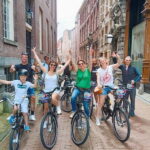
Also, it’s small group by design, limited to 15 participants. That usually means you’re not trapped in a massive herd at every stop.
Who should book this e-bike cheese-and-windmill day
I’d book this if you want:
- A break from central Amsterdam that still feels “Dutch,” not touristy suburb hopping
- A countryside day that doesn’t require fitness training
- A mix of cycling + villages + cheese instead of just cycling or just eating
- Clear structure with an option to go guided or self-guided
It’s not for you if you:
- Can’t ride a bike
- Are under 160 cm
- Want a fully uninterrupted countryside experience with no stops (this tour stops, tastes, and explains)
Should you book AmsterBike’s Windmill and Cheese E-Bike Tour?
If you’re doing Amsterdam for a few days, this is one of the smartest “get out of the city” choices you can make. You get a quick Amsterdam framing near A’DAM Tower, then the day becomes Waterland villages, windmill history, and a proper cheese farm experience with tastings and farm-life context.
Book it if your ideal day includes meandering villages, flat bike paths, and a food stop you’ll actually enjoy. Skip it if you’re very sensitive about bike-seat comfort, don’t meet the height requirement, or you’re not comfortable riding a bicycle at all.
FAQ
How long is the Amsterdam Windmill, Cheese, and Countryside E-Bike Tour?
It runs for about 4 hours.
Where does the tour start and end?
The meeting point is Piet Heinkade 25, 1019 BR Amsterdam, and it ends back at the same location.
How much does it cost?
The price is $43 per person.
Is there a guided option?
Yes. You can book a guided tour with a live English-speaking guide, or choose a self-guided option using an app route.
What is included in the ticket price?
The tour includes an e-bike and helmet, and a traditional farm cheese visit. A live guide is included if you select the guided option.
Can I take this tour self-guided?
Yes. If you choose self-guided, you’ll receive the route via an app so you can ride at your own pace.
What should I bring?
Bring a reusable water bottle.
Is the tour suitable for everyone?
No. It is not suitable for people who cannot ride a bike, and e-bikes are not suitable for riders under 160 cm.
What if the weather is bad?
In instances of severe weather, the tour may be canceled.
Is food included?
Cafe purchases are not included. You can handle meals/snacks separately if you need them.