REVIEW · ATHENS
Ancient Athens E-Bike Tour
Book on Viator →Operated by AyoToursAthens · Bookable on Viator
You can see Athens faster without breaking a sweat. This Ancient Athens e-bike tour uses a motorized standing trike so I think you’ll love how it squeezes in Acropolis-area sights and classic neighborhoods in about 2 hours, with a small group and guide talk that helps the places make sense. I also like that you don’t have to pedal, which matters when the sun is doing its best impression of a blowtorch. One drawback: you’ll still need to budget for archaeological tickets at several stops, and the tour depends on good weather.
The ride setup is simple: you get a helmet, you use the Trikke-style e-bike, and the plan is built around short viewing breaks. The guides (including names like Dimitris and Kevin from past tours) are clearly the engine of the experience—fun, flexible, and happy to adjust if you’ve already seen a few things.
Finally, the route is not a slow walk-and-stay-awhile day. If you want to linger for hours inside temples and museums, this tour is a fast sampler. If you want to get your bearings fast and see the main hits you’ll later revisit on your own, it’s a strong fit.
In This Review
- Key highlights worth your attention
- Why a standing e-bike works so well near the Acropolis
- Meeting at Leof. Andrea Siggrou 22: timing and first steps
- The ride: what the itinerary feels like in real time
- Theatre of Dionysus: where Greek theatre began
- Odeon of Herodes Atticus: Roman theatre still used today
- Acropolis: see the hill close up, not from a distance
- Pnyx: where democracy started (and why guides love this stop)
- National Observatory of Athens: the first observatory hill
- Ancient Agora: Athens’ main market and meeting place
- Keramikos: ceramics and the meaning of the neighborhood
- Monastiraki: the heart of Athens feels right in the middle
- Roman Agora: Tower of the Winds and a more compact feeling
- Plaka: finish in the streets that feel like an island
- Price and value: $72.09 plus what you’ll likely add
- Guides who keep the story clear (and adjust on the fly)
- Comfort, heat, and small-group pace: who this suits best
- A few practical tips so the day goes smoothly
- Should you book this Ancient Athens e-bike tour?
- FAQ
- How long is the Ancient Athens E-Bike Tour?
- What’s included in the tour price?
- Are archaeological tickets included?
- How many people are in the group?
- Where does the tour start, and what days is it offered?
- Is the tour in English, and what if weather is bad?
Key highlights worth your attention
- Standing e-bike / no pedaling: less effort, more time at the viewpoints.
- Small group pace (max 12): you’re not fighting the crowd or losing the guide.
- Acropolis-area coverage in one loop: Theatre of Dionysus, Odeon of Herodes Atticus, and Acropolis are all in play.
- Real city neighborhoods, not just ruins: Plaka and Monastiraki are part of the story.
- Guides who tailor the route: the day can shift based on what you’ve already seen.
- Helmet + insurance included: you start feeling taken care of before you even move.
Why a standing e-bike works so well near the Acropolis
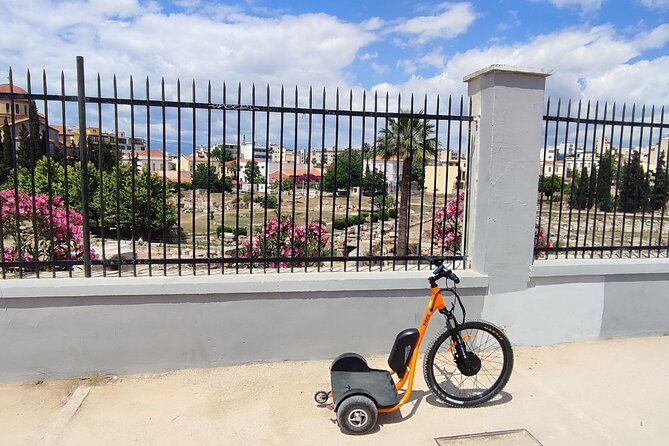
The Acropolis area is beautiful, but it’s also hilly, uneven, and usually packed. A standing electric trike is a clever way to handle that. You trade long uphill shuffles for short rides between viewpoints, then you can spend your legs-free energy on looking, photographing, and listening.
The tour’s promise is comfort and ease. You don’t pedal, which keeps you from turning the trip into a workout. You still get the feel of moving through the city at a human pace, just with help from the motor. In Athens heat, that difference is huge.
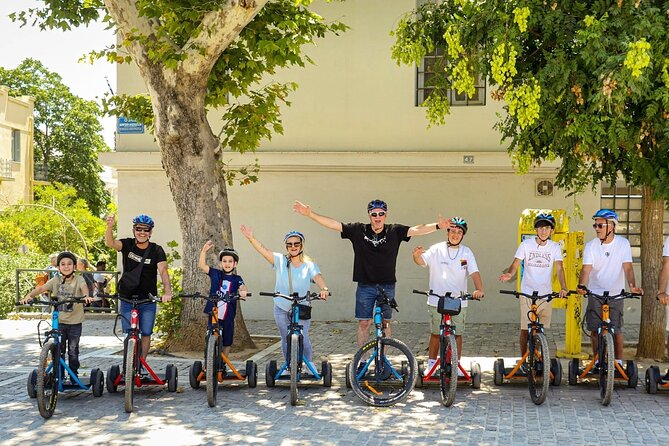
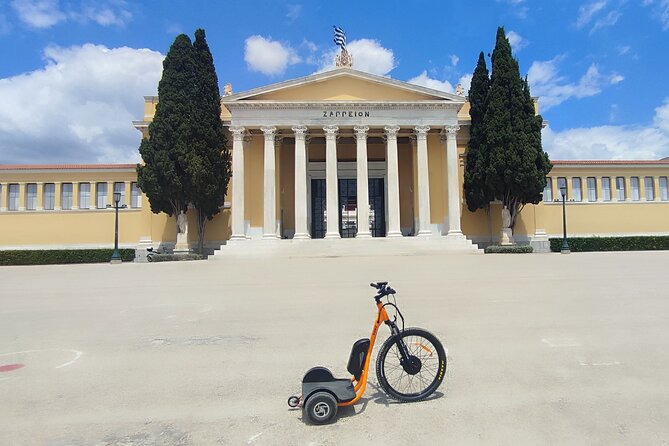
Safety also matters here. You get a helmet, and the activity is set up so you’re learning and riding in a controlled way rather than threading through traffic on your own. Past riders specifically called out how easy the trikes are to use, and kids have handled them too—so this isn’t an ultra-technical ride for most people.
You can also read our reviews of more tours and experiences in Athens.



Meeting at Leof. Andrea Siggrou 22: timing and first steps

You meet at Leof. Andrea Siggrou 22, Athina 117 42, Greece, and the tour ends back at the same spot. That matters more than it sounds. With a two-hour plan, you don’t want to spend your energy figuring out logistics mid-day.
The tour runs Monday through Saturday, 10:00 AM to 4:00 PM (during the listed operating window). It’s offered in English, and you’ll receive a mobile ticket at booking time. Since the meeting point is near public transportation, you’re not locked into using a taxi if you’re already in the central area.
Group size is capped at 12 travelers, so the vibe stays manageable. You should expect stops where you can actually hear the guide—then hop back on quickly to cover the next section.
The ride: what the itinerary feels like in real time
This is built like a “greatest hits” route, but it’s not random. Each stop adds a piece of Athens: theatre, democracy, observing the sky, markets, crafts, and street life.
Also note the time rhythm. Most stops land around 10–20 minutes. That means you’ll get just enough time to understand what you’re looking at, and then you’re back moving before you start feeling exhausted or stuck in one spot too long.
Theatre of Dionysus: where Greek theatre began
Your early stop is the most important theatre in Ancient Greece, linked to the start of theatre itself. The story here is big: the site where theatre began, and an area tied into the broader Acropolis hill ticket. The practical part: admission for this area is 20€.
You’ll get a short, focused visit—enough to grasp why it mattered, without trying to cram every Greek drama detail into ten minutes. If you like history that connects to human behavior (power, performance, public life), this stop sets the tone.
Odeon of Herodes Atticus: Roman theatre still used today
Next comes the Odeon of Herodes Atticus, a Roman theatre created in the second century A.D. as a memorial gift connected to Herod Atticus and the death of his wife. The cool part is that it’s still used for shows, which makes the past feel less like a ruin and more like a living stage.
Again, this is tied to the Acropolis hill ticket (20€), which is important for your planning. You’re not likely buying a separate pass for every single name you see on the route. If you’re budgeting, keep your ticket strategy simple: buy once for the Acropolis hill area, and let it cover the related stops.





Acropolis: see the hill close up, not from a distance
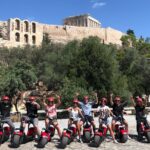
Then you’re at the Acropolis, with access from a close side. The Parthenon sits at the top, and even if your viewing time is brief, getting a close angle helps you understand why this hill dominates Athens.
This is a smart moment in the ride. You get the visual punch early, then later on you’re going to move through areas that explain the city around it—markets, civic spaces, neighborhoods—so the Acropolis stops feeling like a lone postcard.
Pnyx: where democracy started (and why guides love this stop)
After the big hill, you head to Pnyx, described as where democracy started. The hill sits inside an archaeological area and a park, so you’re not just looking at stone. You’re also getting a sense of place—public gathering space, open-air civic life.
You’ll spend around 15 minutes here, and the admission is free. In practice, this stop tends to be where the guide’s narrative really lands: it’s a natural place to talk about how public decisions worked and how civic life was staged in the landscape. One guide story specifically highlighted the idea of meetings tied to democracy, which gives you a clearer mental picture than just reading a plaque.
National Observatory of Athens: the first observatory hill
Next is the National Observatory of Athens, with the note that it’s the first observatory of Athens. The hill of the Nymphs is part of an archaeological area and park, which keeps it from feeling like a random detour.
You get about 15 minutes, and admission here is included. That’s a good deal. You’re getting a distinct viewpoint element and a different kind of ancient-to-modern story: Athens wasn’t only thinking about politics and art—it also cared about the sky.
Ancient Agora: Athens’ main market and meeting place
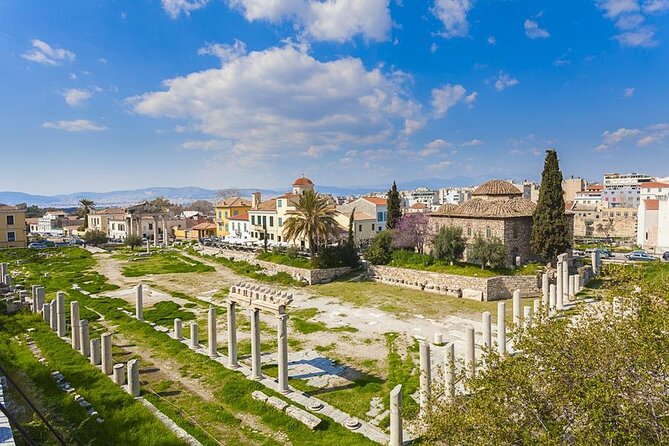
The ride then moves to the Ancient Agora of Athens, presented as the most important side of Ancient Greece. The Agora was the main market in ancient society, so it’s where daily life met politics and culture.
This is one of the longer stops at 20 minutes, and admission is included (with a listed ticket price of 4€). In real terms, this is the place where you start to understand how people lived: commerce, conversation, and civic talk in the same spaces.
Keramikos: ceramics and the meaning of the neighborhood
Close by the Agora is Keramikos, the archeological area tied to ceramics production—hence the neighborhood name. Admission is free, and the stop is about 10 minutes.
This is a nice pivot if you feel like most ruins blur together. Ceramics is practical and human. You’re not only seeing where speeches happened—you’re seeing what people made and traded, and how crafts shaped a city.
Monastiraki: the heart of Athens feels right in the middle
Then you hit Monastiraki, described as a crowded square and considered the heart of Athens, with bars, restaurants, and lots of options around you. Admission is included, and the visit is about 10 minutes.
The value here isn’t archaeological detail. It’s orientation. Once you’ve ridden through ancient spaces, Monastiraki helps you connect Athens’ timeline—ancient routes and today’s street life still overlap in the way the city flows.
Roman Agora: Tower of the Winds and a more compact feeling
Next is the Roman Agora, created by Romans on the second century A.D. plan and paired with the Tower of the Winds. The stop is about 10 minutes. A ticket price of 4€ is listed, while the admission for this stop is also marked free in the details—so treat it as a place where ticket rules may vary on the day and plan to ask at check-in if you’re unsure.
Even with the short time, Tower of the Winds is a strong visual anchor. It helps you see how Romans adopted and reworked Greek civic space.
Plaka: finish in the streets that feel like an island
The tour ends with Plaka, the traditional neighborhood described as picturesque and looking like a Greek island. It’s a free stop with about 10 minutes.
Plaka is where the day becomes easy to enjoy. You’ve already seen the big civic and monumental pieces, and now you can wander the streets with a clearer sense of what you just rode past.
Price and value: $72.09 plus what you’ll likely add
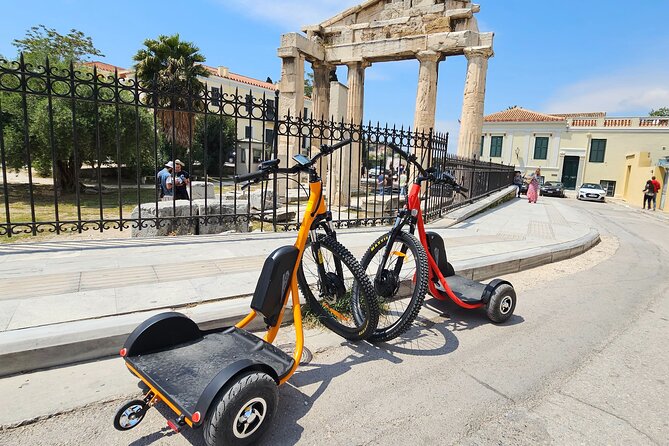
At $72.09 per person, you’re paying for the ride and the guide experience. Included items are practical: use of Trikke, helmet, and costumer insurance (spelled as listed). That’s the core value—mobility plus a guided loop that hits multiple major sights quickly.
The archaeological tickets are not included. Based on the listed prices and how the Acropolis-area ticket ties together stops, here’s the budget logic you can use:
- Acropolis hill ticket: 20€
This is tied to both the Theatre of Dionysus and the Odeon of Herodes Atticus.
- Ancient Agora: 4€
- Roman Agora: 4€ (listed alongside this stop)
So a reasonable planning number for tickets you might pay is around 28€ on top of the tour price. Some stops on the route are marked free or already included (for example, National Observatory is listed as included, and Keramikos and Plaka are listed as free). If you want the cleanest budget, ask the team before you start which ticket(s) you should buy for the day.
Value-wise, the math works best if you want efficiency. Two hours is short, so paying separately for tickets doesn’t feel like a penalty—it’s the price of getting close access to major sites without spending your whole day just getting from place to place.
Guides who keep the story clear (and adjust on the fly)

This tour leans hard on guide skill. In the experiences I’d trust most, the best guides don’t just recite facts—they help you notice what you’d otherwise miss.
In past tours, guides like Dimitris and Kevin have been described as fun and highly adaptable. One standout theme: they ask what you’ve already seen and tweak the route accordingly. That means you’re less likely to feel like you paid for the same photos you already took earlier in the day.
Dimitris is also connected to a particularly memorable angle on democracy at Pnyx—tying the landscape to the idea of public meetings and democratic life. That kind of explanation is why a 10–20 minute stop can still feel meaningful.
Expect a friendly, talk-forward style. You’re not just watching ruins. You’re learning enough context to make later independent visits faster and more rewarding.
Comfort, heat, and small-group pace: who this suits best
This is a great pick if you want to cover a lot of ground without turning Athens into a leg injury. Electric help matters on hills, and no pedaling matters when the temperature rises.
It also seems family-friendly. One example mentioned kids ages 9 through 15 handling the trikes and having fun. That doesn’t mean it’s a daycare, but it does suggest the ride is approachable for a wide range of people.
The group limit helps comfort. With up to 12 travelers, you’re not stuck waiting at every corner. That keeps the tour feeling like motion instead of a sequence of traffic jams.
One more practical note: the experience requires good weather. If weather is rough, it may be canceled and you’ll be offered a different date or a full refund. If you’re traveling in shoulder season, check the forecast the day before, and don’t bank on rain-free miracles.
A few practical tips so the day goes smoothly
- Wear sunscreen and bring water. Even if you’re not pedaling, you’re outside a lot.
- Expect short stops. This is a fast loop, so decide in advance what you want most: photos, context, or quiet time.
- If you’ve already visited the Acropolis or Agora, tell your guide early. The tour can be adjusted based on what you’ve seen.
- Budget for tickets separately. Plan for the Acropolis hill ticket area first, then decide on the small extra tickets for other Agora stops.
- If you’re new to standing trikes, give yourself a minute to get comfortable. The ride is easy, but your body still needs a tiny warm-up.
Should you book this Ancient Athens e-bike tour?
Book it if you want maximum Athens in minimum time. It’s especially smart if you’re short on days, you hate hill slog, or you’d rather spend your energy understanding what you’re seeing than walking everywhere.
Skip it (or consider a more time-flexible plan) if you want long museum-style breaks, or if you’re hoping all costs are included in the $72.09 ticket. You’ll handle separate archaeological admissions, and you’ll want the weather to cooperate.
If your goal is to get the big sights—Acropolis area, Agora, and the neighborhoods—plus a guide who helps you remember what matters, this is a strong way to start your Athens story.
FAQ
How long is the Ancient Athens E-Bike Tour?
The tour is about 2 hours.
What’s included in the tour price?
You get use of the Trikke (standing e-bike), a helmet, and costumer insurance.
Are archaeological tickets included?
No. Tickets to archaeological areas are not included.
How many people are in the group?
The tour has a maximum of 12 travelers.
Where does the tour start, and what days is it offered?
It starts at Leof. Andrea Siggrou 22, Athina 117 42, Greece. It runs Monday through Saturday from 10:00 AM to 4:00 PM.
Is the tour in English, and what if weather is bad?
The tour is offered in English. It requires good weather, and if it’s canceled due to poor weather you’ll be offered a different date or a full refund.