REVIEW · FLORENCE
Bike Tour of Florence in Small Group
Book on Viator →Operated by My Green Tour · Bookable on Viator
Florence looks best when you’re moving. This small-group bike tour helps you get your bearings fast while hitting the city’s big art and history stops. I like the small-group cap of 15 riders, and I also love that luggage deposits are included, which keeps your hands free for exploring after the ride. One possible drawback: the tour can turn into a walking route in rain, and the e-bike setup can create a little start-of-tour confusion if the group is sorting out bikes.
You’ll cover major squares and landmarks in about two hours, then ride on to the areas that give you the best “from above” views. The route takes you through the classic core—Duomo Square, San Lorenzo, Signoria Square, Republic Square—then over to Ponte Vecchio and farther along the way to Santa Croce, Palazzo Pitti, and Santo Spirito. One more consideration: you’re on a bike for most of the tour, so expect frequent starts, stops, and some time in busier pedestrian zones.
4-6 Key Points to Know Before You Ride
- Max 15 riders for a more personal pace: You’re not trapped in a huge group, so questions actually happen.
- Major Florence highlights with real navigation help: Squares, churches, and viewpoints come in a sequence that makes the city feel logical.
- Luggage deposit included: This is a big deal if you’re arriving with bags and want to explore hands-free afterward.
- E-bikes available, but not perfect for every rider: Some people love the assist; others report issues or differences in how bikes feel.
- Rain turns this into a walking tour: Same idea, different mode, for safety reasons.
- Audio can be hit-or-miss: One review flagged weak sound for hearing the guide, so don’t assume every part will be loud and clear.
In This Review
- Two Hours to Map Florence on Wheels
- Where the Tour Starts: Via de’ Martelli Setup and Bike Check
- The Route: Classic Squares, Ponte Vecchio, and the Arno Crossings
- Duomo Square and San Lorenzo: The Cathedral Area as a Reference Point
- Signoria Square and Republic Square: The Civic Heart
- Ponte Vecchio and Borgo Ogni Santi: River Life and River Power
- Santa Croce: Art, Faith, and the Vibe Shift
- Palazzo Pitti and Santo Spirito: Past the Must-See Core
- The View Part: Hills and a Firenze-From-Above Moment
- E-Bikes vs Regular Bikes: What to Expect (and What to Double-Check)
- Guide Style and the Audio Reality Check
- Small-Group Size: 15 Riders Means You Can Actually Ask Questions
- Comfort and Safety: Helmets, Brakes, and City Pedestrian Chaos
- Price Value: Why $43.37 Can Be a Smart Use of Time
- Weather and Timing: Rain Plans and a Smooth Start Matters
- Who Should Book This Bike Tour of Florence?
- Should You Book It? My Practical Take
- FAQ
- How long is the Bike Tour of Florence?
- How many people are on the tour?
- Where does the tour start?
- Does the tour include admission tickets?
- Is the tour offered in English?
- What happens if it rains?
- Are there e-bikes available?
- Do I need to bring a helmet?
- When should I book?
- What’s the cancellation window?
Two Hours to Map Florence on Wheels
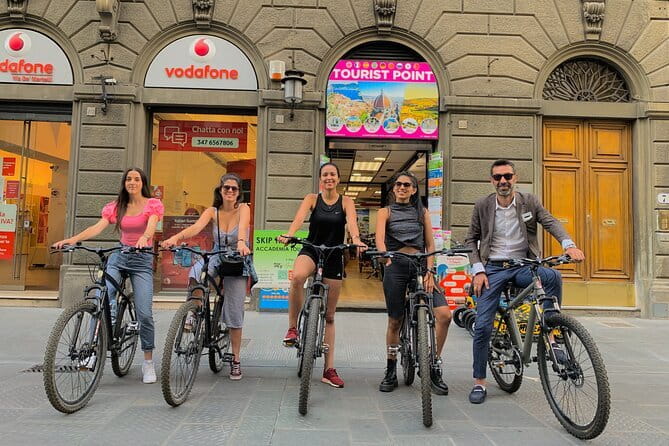
If you only have a short window in Florence, biking is one of the smartest shortcuts. You get motion plus context: the guide talks while you ride, so the city stops being a pile of separate landmarks and starts feeling like a connected place. In a couple of hours, you’ll see enough to understand where the power centers are—the cathedral area, the Medici orbit, the river crossings, and the “look back at Florence” spots.
This tour is priced at $43.37 per person for about two hours, which is a fair value if you treat it like orientation. You’re paying for guided time and logistics—bikes, managing the group, and moving you efficiently between sides of the river—rather than paying for entry tickets. The tour notes that admission is free, so you’re mostly paying for the ride-and-story experience.
Also, the booking pace matters. This one is commonly booked about 30 days in advance, which usually means it runs on a steady schedule and sells out like a lot of popular Florence activities. If your dates are firm, grab it early and stop worrying.
Where the Tour Starts: Via de’ Martelli Setup and Bike Check
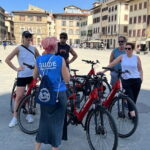
The meeting point is Via de’ Martelli, 33R, 50129 Firenze FI, Italy. It’s handy because it’s near public transportation, which means you’re not forced into a long trek just to start the fun.
Before you roll out, you’ll want to do a quick personal checklist:
- Confirm what type of bike you got (regular or e-bike).
- Take 30 seconds to test brakes and shifting.
- Adjust your seat height so you’re not fighting the pedals.
That might sound basic, but it’s worth it in Florence, where you’re riding in and out of crowded streets and stopping often. One review complained about a bike-brake problem and another mentioned having to adjust the bike during the tour, so you’re not wrong to verify everything early. On the positive side, at least one rider reported well-maintained bikes that were easy to ride. Your best bet is to trust your own hands and eyes at the start.
You can also read our reviews of more tours and experiences in Florence.
The Route: Classic Squares, Ponte Vecchio, and the Arno Crossings
This tour is designed to work like a guided map. You’re not just seeing buildings; you’re learning how Florence is organized—by the river, by old neighborhoods, and by the civic and religious spaces that shaped daily life.
Here’s how the route plays out, stop by stop, and what makes each one useful:
Duomo Square and San Lorenzo: The Cathedral Area as a Reference Point
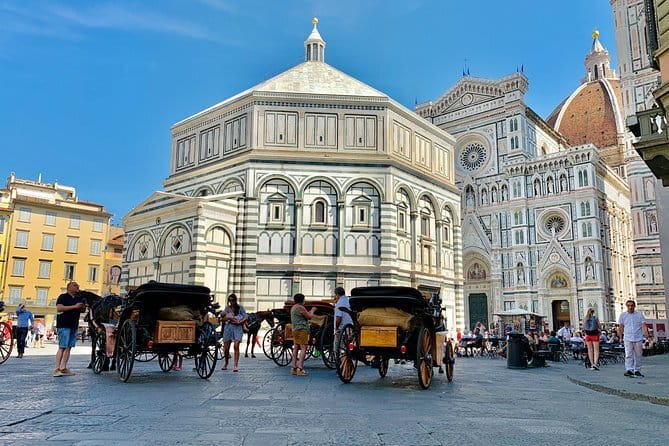
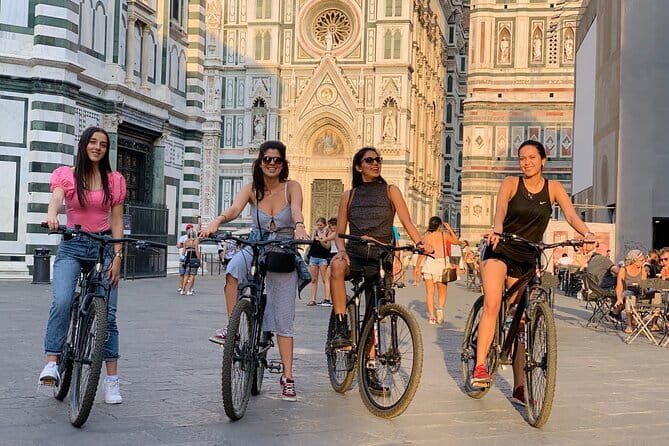
You start at Duomo Square and then head to San Lorenzo. This matters because once you understand the cathedral zone, everything else in central Florence snaps into place. Even if you don’t go inside any museums on the bike, you’ll learn the layout—where the big public spaces sit and how people move between them.
Signoria Square and Republic Square: The Civic Heart
From Signoria Square you’ll reach Republic Square, two spots that give you the “Florence as a showplace” feel. This is where the city’s political and cultural identity becomes obvious. You’ll likely understand the differences between the grand public squares and the tighter, more local streets nearby—useful knowledge when you later wander on your own.
Ponte Vecchio and Borgo Ogni Santi: River Life and River Power
Crossing Ponte Vecchio is one of those must-do Florence moments. You’ll also ride through Borgo Ogni Santi, which helps connect the tourist postcard to the everyday geography of the river area. One thing I appreciate about bike tours like this is they keep you from getting stuck in one photo spot. You see the crossing, then you keep moving.
Santa Croce: Art, Faith, and the Vibe Shift
Santa Croce brings a change in tone—more reflective and historical, less “state-symbol square,” more “city soul.” Even if you’re not going inside, the stop gives you a landmark that helps you later plan your own walks and museum choices.
Palazzo Pitti and Santo Spirito: Past the Must-See Core
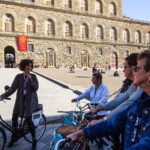
Then you get into Palazzo Pitti and Santo Spirito church. These stops help you understand that Florence isn’t just cathedral-and-leaning-tower-of-the-internet. The city’s power and patronage history stretches beyond the first layer of famous sights, and biking gives you a smoother path there.
The View Part: Hills and a Firenze-From-Above Moment
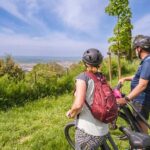
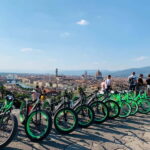
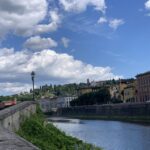
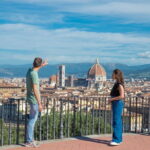
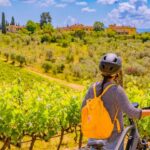
One of the best parts of this tour is that it doesn’t stay flat. A rider described going out toward the suburbs with stunning views from above, and another specifically called out the viewpoint area near Piazzale Michelangelo.
You don’t need that viewpoint only at sunset. Seeing it earlier in the day still gives you a sense of where the city spreads out and how the river and neighborhoods relate. It’s also a smart mental trick: once you’ve seen Florence from up high, your later walks feel less random.
E-Bikes vs Regular Bikes: What to Expect (and What to Double-Check)
This is where the reviews show a split in experiences, so I’d treat it as a “know before you go” zone.
Some rides are on traditional bikes, and one review described them as funky 3-speed beach cruisers used by locals. They’re not fancy, but that’s often fine for a short guided loop.
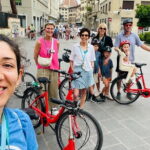
E-bikes can be a big help if you’re not thrilled about hills. Still, I’d plan as if you might pedal at least some of the time. One review said the e-bike didn’t work and they had to pedal manually to reach the hills. Another said e-assist availability may require attention at the start, since there can be confusion about who gets which bike.
Also, read the room at the start. If there’s a mix of e-bikes and regular bikes, you’ll want to clearly confirm your bike type and operation before everyone rolls out. That reduces the chances of a frustrating scramble mid-tour.
Guide Style and the Audio Reality Check
The tour lives or dies by the guide’s ability to connect history to movement. When it clicks, it’s excellent. At least one rider praised the guide as brilliant and another highlighted a knowledgeable and enthusiastic guide, including a lot of stories and historical context.
A named guide showed up in the reviews: Dimitri. If you get him, you can expect history talk and an emphasis on what makes places matter, not just what they look like. One rider specifically credited Dimitri with stories about the history of Florence and the rise of Italy, plus a top-notch Piazzale Michelangelo view.
One drawback to keep in mind: the sound system for hearing the guide was criticized in one review. So if you’re the type who needs clear narration, don’t assume every word will come through perfectly from every position on the bike line.
Small-Group Size: 15 Riders Means You Can Actually Ask Questions
The cap of 15 travelers is not a marketing number—it changes your experience. You’re more likely to get personal attention if something is unclear, and your guide can slow down when people have questions or need a quick bike adjustment.
This also helps on a tour like this, where you’re stopping often. More riders usually means longer waits and more congestion at each landmark. With a smaller group, it’s easier to keep the rhythm, and your ride stays fun instead of turning into a traffic jam.
Comfort and Safety: Helmets, Brakes, and City Pedestrian Chaos
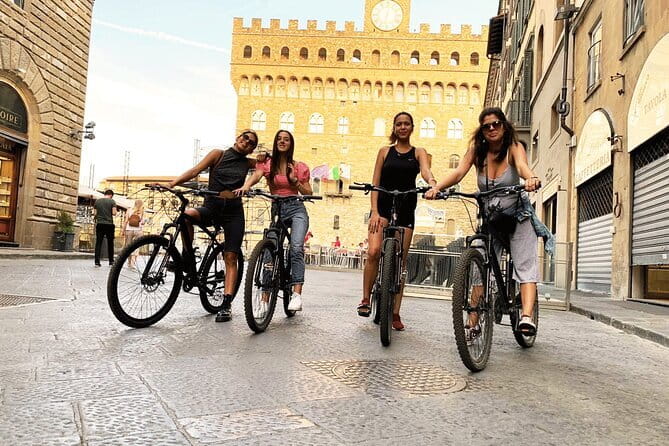
The tour info notes that most travelers can participate, and one review said no helmets are necessary or required. That lines up with the general bike culture in parts of Europe—but still, I strongly recommend you bring your own helmet if you have one. It won’t hurt, and it adds peace of mind.
For safety, two things matter most in practice:
- Braking reliability (make sure your brakes feel strong before you start hills and stops).
- Your awareness around pedestrians.
One unhappy review described almost hitting a pedestrian due to an e-bike that kept moving while they wanted to stop. Even if that’s not typical, it’s a reminder: in Florence, you’re not just riding through empty bike paths—you’re negotiating real people in real streets.
And yes, follow the guide’s instructions about where to ride and when to stop. One review complained about behavior and confusion around red lights. It’s not just about rules; it’s about keeping the whole group together.
Price Value: Why $43.37 Can Be a Smart Use of Time
At $43.37 for about two hours, the price is low enough that you can justify it as “orientation + highlights,” but not so low that it feels sketchy. You’re not paying for private guide time, yet you still get a guide and a structured route.
The value gets better if:
- You want to see many famous spots without planning a full day.
- You have luggage and like the idea of a luggage deposit being handled.
- You want a guided sequence that prevents the “I saw the cathedral but I don’t know why it matters” feeling.
If you hate biking in traffic or you need quiet museum-level time, then a bike tour might not be your best first choice. In that case, spending your time walking between a few key sights could feel more comfortable. But for most active visitors, this hits a sweet spot: fast, guided, and efficient.
Weather and Timing: Rain Plans and a Smooth Start Matters
This experience requires good weather. If the weather turns, the tour becomes a walking tour for security reasons. That’s good to know up front. It means you should be ready for a different physical style than you expected.
Timing can also affect how the first moments feel. One review mentioned waiting because the guide didn’t show up on time and the tour was rescheduled later. Another mentioned needing to adjust the tour hour due to a booking error on the provider side. I can’t promise that won’t happen, so I’d treat the start time as important: show up a few minutes early, and keep your phone charged in case you need to confirm details.
Who Should Book This Bike Tour of Florence?
This tour is a strong match if you:
- Want a fast orientation to Florence’s major sights.
- Like guided history but don’t want to spend an entire day in transit.
- Travel with luggage and prefer having a luggage deposit solution instead of dragging bags.
- Enjoy viewpoints and want help getting to them without building your own route.
It’s less ideal if you:
- Have mobility limits that make cycling uncomfortable.
- Expect perfect audio narration at all times.
- Are very sensitive to bike-condition issues and don’t want to check your bike at the start.
Should You Book It? My Practical Take
I’d book this if your goal is to understand Florence quickly and you’re okay riding for about two hours with frequent stops. The small-group size (15 max) and the broad sweep of landmarks make it a smart use of limited time. I also like the inclusion of a luggage deposit, because it reduces friction when you want to keep exploring right afterward.
Just go in with eyes open:
- Confirm your bike type and test brakes early.
- Expect that hearing the guide might be spotty in some spots.
- If rain threatens, plan mentally for walking instead of biking.
If you want a guided “map of Florence” experience that also gives you great viewpoints, this is the kind of tour that earns its place in your itinerary.
FAQ
How long is the Bike Tour of Florence?
The tour lasts about 2 hours.
How many people are on the tour?
The group is capped at a maximum of 15 travelers.
Where does the tour start?
It starts at Via de’ Martelli, 33R, 50129 Firenze FI, Italy.
Does the tour include admission tickets?
The tour notes that admission ticket access is free.
Is the tour offered in English?
Yes, the tour is offered in English.
What happens if it rains?
If it rains, the tour can become a walking tour for security reasons.
Are there e-bikes available?
The tour offers e-bikes (some people in reviews mentioned e-bike assignments and e-bike performance).
Do I need to bring a helmet?
Helmets were described as not necessary or required in one review.
When should I book?
On average, this experience is booked about 30 days in advance.
What’s the cancellation window?
You can cancel up to 24 hours in advance for a full refund.