REVIEW · FLORENCE
Florence: 2.5 hour Audio Guided Bike Tour led by Tour Leader
Book on GetYourGuide →Operated by ACCORD Italy Smart Tours · Bookable on GetYourGuide
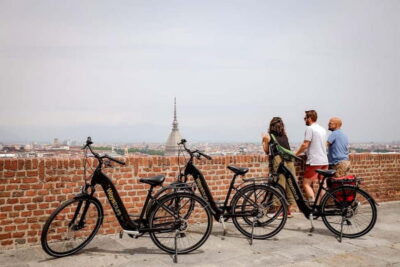
Florence can feel like a museum you’re walking through. On this bike tour, you roll past it—using an audio guide so you get the story while you’re getting the shots. I especially like the photo-focused stops and the audio app that keeps the explanations moving while you ride. One possible drawback: Florence can be crowded, and some streets and bikes may feel less smooth than you’d expect.
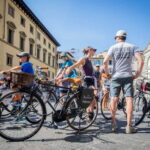
This is a 2.5-hour, small-group style sightseeing loop through the historic center, built around getting you from the big-ticket landmarks to the in-between lanes. You’ll cycle through the area where lots of streets are pedestrianized, so biking is a smart way to cover ground without losing hours in foot traffic.
You also get a real escort feel, not just a device and a map. Guides you may run into have included people like Leonardo and Barbara (from recent departures), and they’ve handled questions well while the audio fills in the details. Just note: it’s not suitable for pregnant women, and you can’t bring luggage or large bags.
In This Review
- Key highlights at a glance
- Why cycling Florence works so well in 2.5 hours
- Meeting point reality: Piazza di Madonna degli Aldobrandini and the blue bag
- From Medici power to San Lorenzo: the early stops that set the tone
- Palazzo Medici Riccardi
- Basilica di San Lorenzo
- Medici Chapel
- Piazza del Duomo (plus Baptistery viewpoint time)
- The pedestrian-core ride: Santa Maria Novella, the shopping street glow, and quieter churches
- Piazza della Repubblica
- Basilica of Santa Maria Novella
- Via dè Tornabuoni
- Piazza Santa Trinita
- Chiesa di Ognissanti
- Across the Arno direction: Oltrarno cues and the Michelangelo crucifix detail
- Santo Spirito
- Pitti Palace
- Church of Santa Felicita
- Ponte Vecchio and the Uffizi side: the iconic crossing plus art-world context
- Ponte Vecchio (photo stop)
- Uffizi Gallery
- Florence National Central Library
- Santa Croce, Dante, and Piazza della Signoria: the stops that feel like a story arc
- Basilica of Santa Croce
- Piazza San Firenze
- Piazza della Signoria
- House of Dante
- Vasari Corridor (short photo time)
- Pacing and street reality: what to expect when Florence is full
- Value check: is $46 worth it?
- Who should book this bike tour, and who should skip it?
- Should you book it? My quick call
- FAQ
- How long is the Florence bike audio tour?
- What does the tour cost?
- Where do I meet the tour leader?
- Do I need to arrive early?
- What’s included with the ticket?
- What languages are available through the audio?
- Is luggage allowed?
- Is this tour suitable for pregnant women?
- Can I get a refund if my plans change?
- Is reserve and pay later available?
Key highlights at a glance
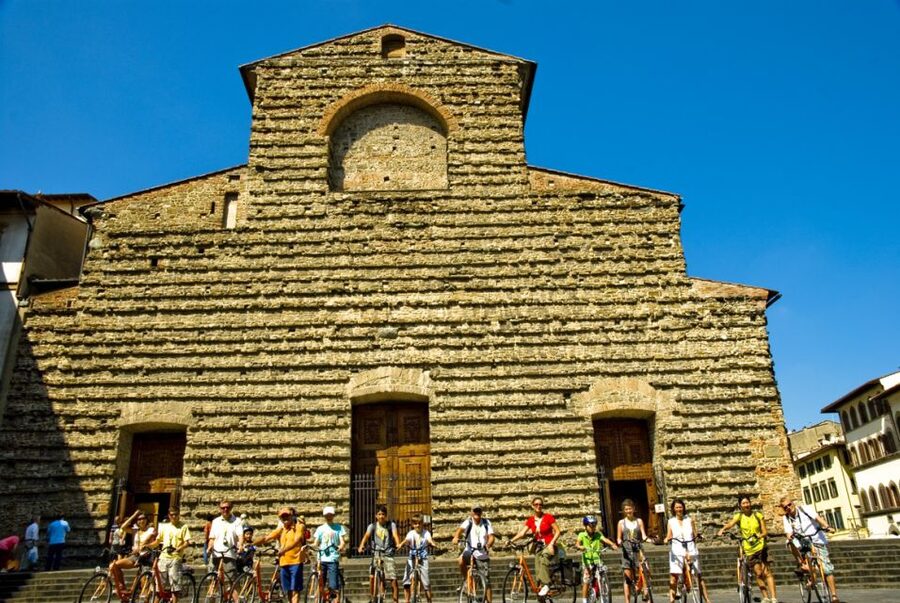
- 20+ photo stops across Florence’s most famous sights and a few quieter corners
- Ponte Vecchio crossing over the River Arno, with a proper viewpoint moment
- Duomo and Baptistery pause so you can look up and frame your photos
- Arno-to-Oltarno rhythm: power stops on one side, calmer streets on the other
- Audio app in many languages, delivered via provided earphones
- Helmet, padlock, and liability insurance included, so you’re not scrambling for basics
Why cycling Florence works so well in 2.5 hours
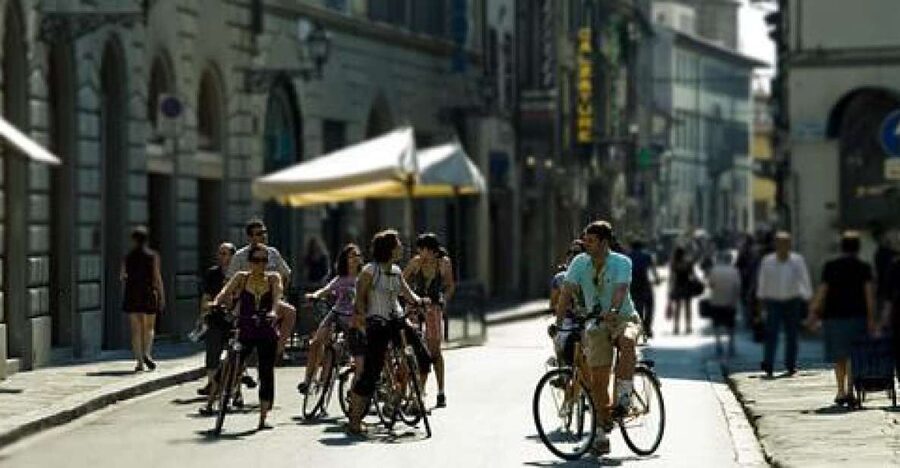
Florence is the kind of city where your feet get tired just as you start to care. On a short visit, it’s easy to see only a handful of landmarks and spend the rest of your time figuring out where to go next.
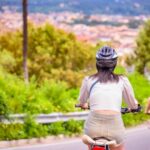
This tour uses bikes to solve the time problem. In a place with a large pedestrianized core, riding lets you hit more stops without turning your day into a long shuffle. And because the experience is built around photo pauses, you’re not constantly moving past things too quickly to appreciate them.
The audio format is also key. Even if the guide is speaking English, you still get earphones for the sight-by-sight narration. That means you can listen in your preferred language and keep your attention on what’s in front of you instead of juggling directions and reading.
You can also read our reviews of more tours and experiences in Florence.
Meeting point reality: Piazza di Madonna degli Aldobrandini and the blue bag
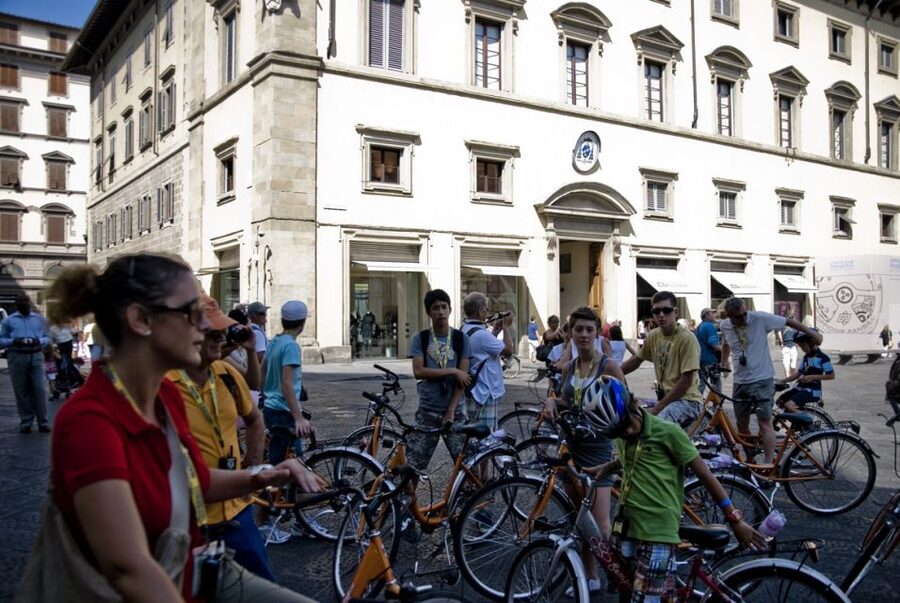
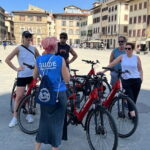
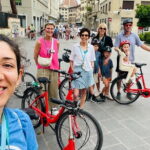
You meet at Piazza di Madonna degli Aldobrandini, 8. Plan to arrive 15 minutes early so you can find the group, collect your gear, and get settled before you roll out.
Look for the guide carrying a blue bag with the ACCORD logo. That detail matters in Florence, because nearby corners can look similar when you’re rushed.
Once you’re together, you’ll handle bike rental plus the safety basics. You get a helmet and a padlock, and you’re covered by liability insurance—small stuff that makes the ride less stressful.
From Medici power to San Lorenzo: the early stops that set the tone
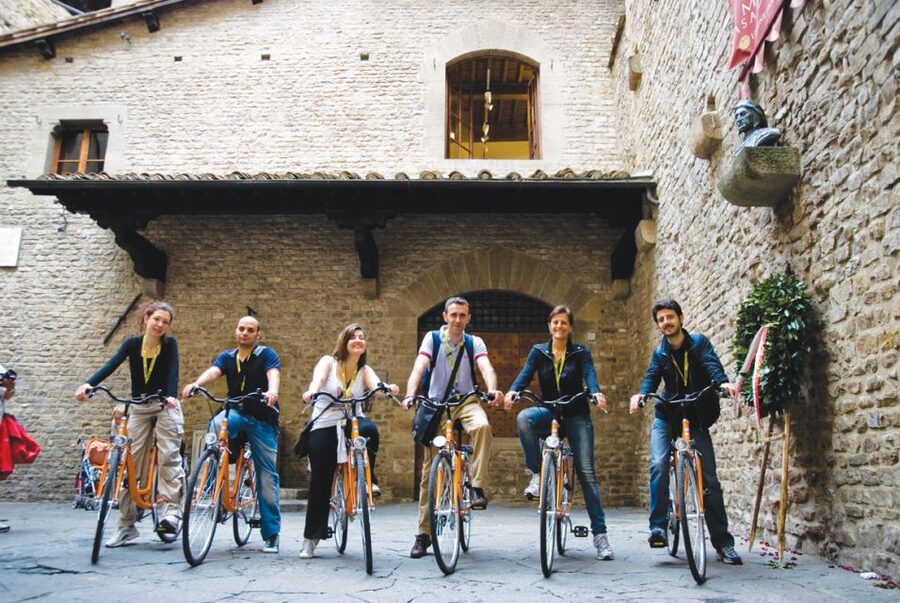
The ride starts right in the historic core, near the Santissima Annunziata area (the neighborhood associated with sights like the National Archaeological Museum and the Spedale degli Innocenti). From there, the tour builds context fast.
Palazzo Medici Riccardi
This is an early “you’re in the right place” stop. The building is tied to Medici influence, so it’s a strong opener for understanding why Florence looks the way it does—stone, power, and prestige on every corner. Even if you don’t go inside, the façade gives you a visual anchor.
Basilica di San Lorenzo
San Lorenzo helps shift you from a single famous façade to an entire religious-civic complex. It’s a good place to slow down briefly, absorb the architecture, and understand why people connect Florence to art and patronage—not just tourism.
Medici Chapel
Right after San Lorenzo, the tour points you toward the Medici story in a more focused way. This pause is ideal if you like your Florence sightseeing with clear cause-and-effect: who mattered, why they mattered, and how that shows up in the city.
Piazza del Duomo (plus Baptistery viewpoint time)
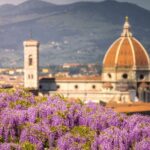
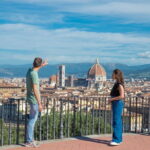
This is the moment most visitors come for. You get a photo stop at the Duomo area with time around the Baptistery as well. Even when you can’t get close to every angle, the surrounding views are what make this stop work: you can frame the cathedral mass, then look outward to place it within the city.
Practical note: crowds and pedestrian flow can slow bike traffic around here, so treat this as a look-up moment, not a speed-through stop.
The pedestrian-core ride: Santa Maria Novella, the shopping street glow, and quieter churches
After the Duomo area, you cycle through a stretch that feels like Florence’s “main stage” but with enough variety to keep it interesting.
Piazza della Repubblica
This square is a natural breather. It’s wide enough to regroup visually, and it’s useful for orienting yourself—especially after the density around major landmarks.
Basilica of Santa Maria Novella
This church stop is about scale and detail. You’ll get a chance to photograph and recognize how Florence uses surface and proportion to create drama. It’s also a nice shift: you’re not only seeing political architecture (Medici) and cathedral power (Duomo), but also a broader religious identity.
Via dè Tornabuoni
A photo stop along this street helps you connect the big sights to the everyday city fabric. If you care about the way neighborhoods look and move, this is a good “street-level” moment.
Piazza Santa Trinita
This square is another framing pause. It helps you reset your eyes—especially if you’ve been cycling close to façades and busy intersections. You’ll also get a visual sense of where the river route begins to influence the city layout.
Chiesa di Ognissanti
This is where the tour adds depth without turning into a long museum detour. Ognissanti gives you a more understated Florence feeling, which is great for photos that aren’t only the most famous angles.
Across the Arno direction: Oltrarno cues and the Michelangelo crucifix detail
At this point, the tour starts leaning toward the Arno crossing zone and the southern/western side of Florence.
Santo Spirito
This stop comes with a standout specific detail: Santo Spirito contains a crucifix carved by Michelangelo. Even if you’re mostly looking outward and planning photos, that information adds meaning to what you see. It turns a church stop into a story stop.
Pitti Palace
Pitti Palace is a major “Medici successor” type landmark—big walls, royal weight, and a sense of power that matches the Medici narrative from earlier. It’s also a practical stop because it helps you understand the city’s shift as you head toward the river.
Church of Santa Felicita
Santa Felicita adds another layer to the religious-and-art conversation. It’s a shorter pause, but it works if you like connecting dots between neighborhoods rather than treating each stop as a standalone postcard.
Ponte Vecchio and the Uffizi side: the iconic crossing plus art-world context
Now comes the highlight many people book for: the River Arno crossing and the famous bridge.
Ponte Vecchio (photo stop)
This is the stop where you slow down and enjoy the idea of Florence as a living city with history stacked on top of daily life. The bridge is famously photogenic, and the way the tour approaches it (as a photo pause during a bike route) helps you get the views without the long standing in one spot.
Just expect crowds around the bridge. You’ll likely need patience, and you might be off the bike briefly more than you’d like depending on congestion.
Uffizi Gallery
This photo stop helps you place Florence’s art world in context. Even if you’re not entering, seeing this landmark from the outside helps connect what you’ve been hearing in the audio to the city’s reputation.
Florence National Central Library
This is a meaningful “Florence beyond the postcard” stop. A library isn’t the usual headline sight, but it signals that this city’s importance isn’t only about monuments—it’s also about institutions and knowledge.
Santa Croce, Dante, and Piazza della Signoria: the stops that feel like a story arc
The tour then shifts back toward some of the most symbolic names in Florence.
Basilica of Santa Croce
Santa Croce is a big stop and it lands well in the middle of the ride. The church is known for major frescoes (including 14th-century work), and the tour gives you time to take it in visually. It’s also a strong emotional reset after the river section—more solemn, more Florence-feeling.
Piazza San Firenze
This stop is useful for photos that show you the city’s rhythm. It’s not as “one obvious angle” as the Duomo or Ponte Vecchio, so it rewards people who like wandering with intention.
Piazza della Signoria
This is power and politics in stone. You’ll get a pause at the Neptune Fountain, and you’ll also have a chance to see the area connected to the Medici Palazzo Vecchio. It’s a great place to stand still for a moment and remember that Florence’s beauty often comes from competition: art, influence, and civic identity.
House of Dante
This is one of the more interesting “names you recognize” stops. Even if you don’t go inside, the sight ties Florence directly to the literary side of Italian culture, not only visual art.
Vasari Corridor (short photo time)
The tour includes a brief 10-minute photo stop here. It’s exactly the kind of stop that feels like a bonus: you get a taste of something famous and rare without turning your entire ride into an indoor queue.
Pacing and street reality: what to expect when Florence is full
Cycling Florence is part of the fun, but it’s also where expectations matter.
A few practical realities show up in real-world experiences:
- You may dismount more often than you’d like in the busiest areas, since pedestrian congestion can make it unsafe to keep rolling.
- Streets can feel uneven or tight, and that affects comfort.
- Bike condition can vary. On some departures, bikes have been described as older, with brakes that squeaked.
The good news: this tour is built around short pauses, so even if the ride slows down, you still get time at the sights. The guide’s job is not just navigation—it’s keeping the timing workable and helping you find the best vantage points.
If you’re comfortable on a city bike and you don’t mind moving a little slowly near major landmarks, this works well. If you want smooth cruising with zero traffic contact, you’ll probably find Florence humbles every plan.
Value check: is $46 worth it?
At $46 per person for about 2.5 hours, the value mostly comes from what you don’t have to coordinate yourself.
You’re paying for:
- A city-bike rental
- Helmet and padlock
- Liability insurance
- An exclusive audio app plus earphones
- An English-speaking tour leader (with audio available in many languages)
The money math is strongest if you’re short on time and want a high sight count without spending half your trip hunting for the next location. If you were to DIY this on foot, you’d likely lose time and spend more effort just getting from place to place—especially around Duomo, Ponte Vecchio, and Signoria.
Also, the audio system matters more than it sounds. You’ll get guided context at stop after stop, which turns photos into something you can remember, not just collect.
Who should book this bike tour, and who should skip it?
This is a great match for you if you:
- Want to see a long list of Florence highlights in a single morning/afternoon block
- Like using photos as a way to anchor your trip
- Are comfortable cycling in a busy European city
- Prefer learning in real time via earphones
I’d skip it if you:
- Are pregnant (it’s marked as not suitable)
- Need luggage or large bags (not allowed)
- Want a fully car-free, smooth-road bike ride with no stops for crowds
Should you book it? My quick call
Book it if you want structure in Florence without turning into a museum-only day. The combination of bike mobility, audio storytelling, and a long stop list makes it feel efficient in the best way.
Think twice if your ideal trip is slow and quiet, because Florence can be crowded and the ride involves real street conditions. In that case, you might still enjoy it, but go in expecting more stop-and-start than a countryside cycling day.
FAQ
How long is the Florence bike audio tour?
It lasts 2.5 hours.
What does the tour cost?
The price is $46 per person.
Where do I meet the tour leader?
Meet at Piazza di Madonna degli Aldobrandini, 8.
Do I need to arrive early?
Yes. Plan to arrive 15 minutes before the start time.
What’s included with the ticket?
The tour includes city-bike rental, helmet and padlock, liability insurance, an exclusive audio app, and earphones, plus an English-speaking tour leader.
What languages are available through the audio?
The audio guide is available in Italian, English, French, Spanish, German, Portuguese, Turkish, Japanese, Polish, Russian, Dutch, Greek, Korean, Chinese, Hungarian.
Is luggage allowed?
No. Luggage or large bags are not allowed.
Is this tour suitable for pregnant women?
No. It is marked as not suitable for pregnant women.
Can I get a refund if my plans change?
Yes. You can cancel up to 24 hours in advance for a full refund.
Is reserve and pay later available?
Yes. You can reserve now & pay later and pay nothing today.