REVIEW · FLORENCE
Florence Vintage Bike Tour–guided, small group or private option
Book on Viator →Operated by Towns of Italy · Bookable on Viator
Two hours, zero map stress. A guided Florence vintage bike tour turns the city center into a quick, story-packed ride, and guides like Catrine or Lorenzo handle the route so you can focus on the views.
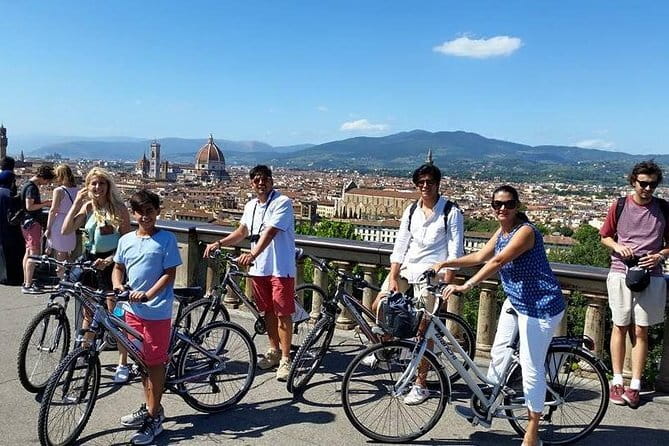
I like the easy-going pace and the fact that you’re not trapped on a fixed script—you can stop for photos when something catches your eye. Plus, the bike setup is built for comfort, including helmets and a water bottle.
One thing to weigh: if Florence weather gets rough, the plan can shift. The tour won’t be canceled for rain, but heavy rain may mean a walking version or a shortened ride, and you should arrive ready to choose on the day.
In This Review
- Key highlights
- Why Florence is made for a guided bike (and why this tour fits)
- Meeting point, start time, and what you should do before you roll
- Gear check: helmets, headphones, and a pace that won’t cook you
- Piazza della Repubblica: where Roman Florence starts speaking
- Santa Maria del Fiore area: the dome’s geometry up close
- San Lorenzo: Medici burial ground in the middle of the market
- Via de’ Tornabuoni and Ponte Santa Trinita: style street meets Renaissance crossing
- Santo Spirito in Oltrarno: the other side of the Arno
- Palazzo Pitti: Medici power south of the river
- Ponte Vecchio and the old bridge story you’ll remember
- Piazza della Signoria: Florence’s political heart on two wheels
- The City GuideBook and how to turn the ride into better days
- Value and price: what $42.33 buys you (and when it’s worth it)
- Rain, heat, and Florence crowds: the realistic comfort checklist
- Should you book this Florence Vintage Bike Tour?
- FAQ
- How long is the Florence Vintage Bike Tour?
- What language is the tour offered in?
- Is there a small group limit?
- What’s included with the tour?
- What should I do if it rains?
- Where is the meeting point?
- Do I need to bring my own bike or helmet?
Key highlights
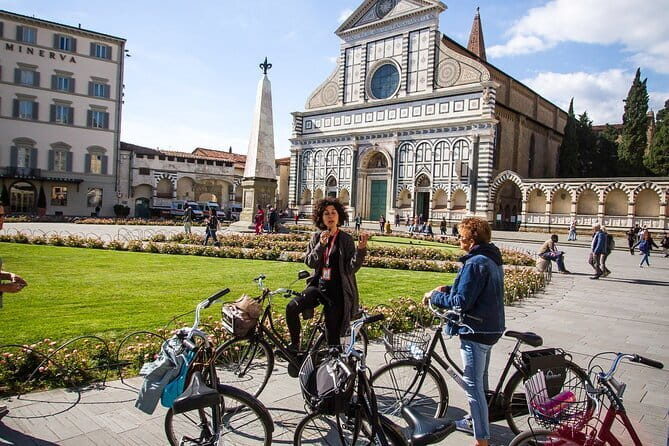
- Guide-led route means you don’t fight Florence traffic or navigate crowded streets
- Headphones for groups over six keep commentary clear without leaning in
- Helmets and water make the ride feel practical, not just scenic
- Two wheels over big landmarks: Duomo area, Medici sites, Arno bridges, and Piazza della Signoria
- Small group size (max 12) helps you move as a unit without feeling rushed
- Flexible rain plan: ride if possible, switch to walking if needed, with a rain check option
Why Florence is made for a guided bike (and why this tour fits)
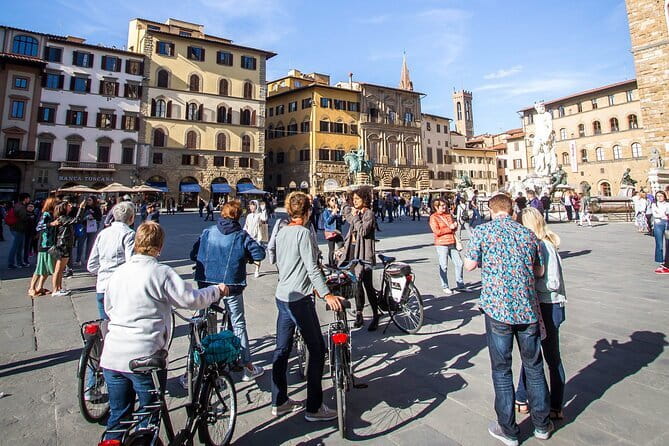
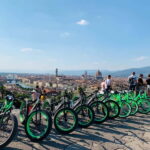
Florence is surprisingly bike-friendly. The city center is relatively flat, and the tour is designed for sightseeing on real streets—not a “look but don’t touch” kind of experience. Instead of getting overwhelmed by one-way lanes and dense crowds, you get a human shortcut: the guide leads, sets the tempo, and keeps the group together.
This matters because Florence’s best sights are also the busiest ones. With a small group and a leader up front, you spend less time figuring out where to go and more time noticing details—stone, statues, street angles, and that classic Arno view you keep seeing in photos.
It’s also time-smart. At about two hours, you cover a lot of ground without turning your day into a whole project. If your schedule in Florence is tight, this is an efficient way to get your bearings fast.
You can also read our reviews of more tours and experiences in Florence.
Meeting point, start time, and what you should do before you roll
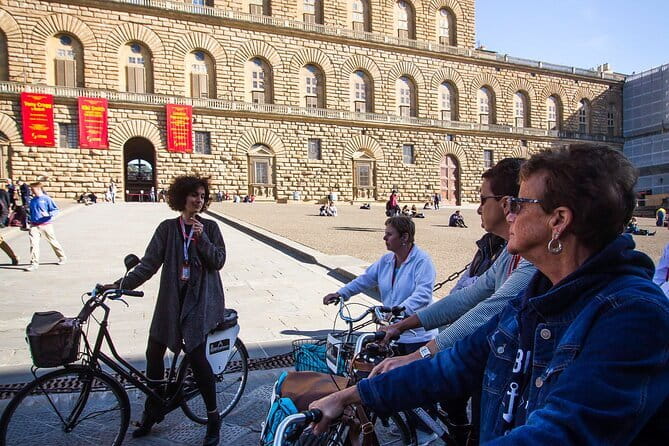
The tour starts at 10:00 am and ends back at the same spot. For current departures, the meeting point is Piazza Mentana, 50122 Firenze FI, Italy. Starting March 2026, the meeting point moves to Via della Mosca 10/r.
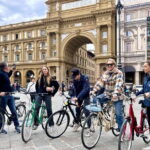
Plan to arrive 15 minutes early. That buffer helps you check weather conditions (rain is part of the plan here), get comfortable with the bike, and avoid the stress of being the last one ready when you’re in the middle of the morning crowd.
You’ll receive a mobile ticket, and the tour is offered in English. There’s also a private option if you want your own dedicated guide.
Gear check: helmets, headphones, and a pace that won’t cook you
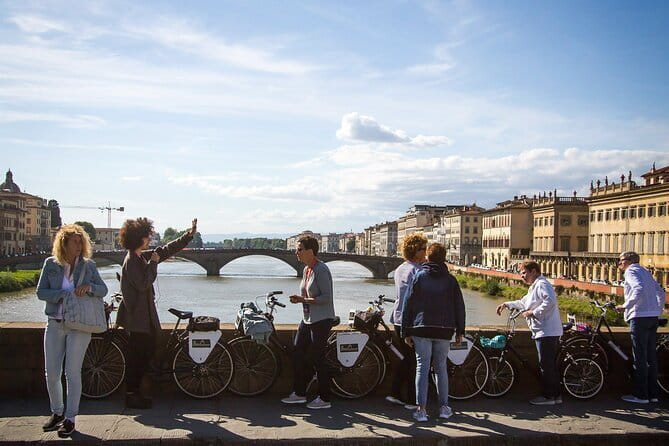
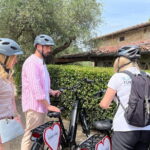
You’re provided with helmets and a water bottle. That’s a simple thing, but it makes a difference in a hot, sunny afternoon city like Florence.
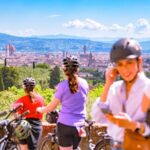
For groups larger than six, you’ll get earphones/headphones so you can hear your guide clearly while riding. That means you don’t have to take the classic tourist posture—neck craned, voice shouted, half-hearing the story. Instead, you can actually follow the commentary and connect it to what you’re seeing.
The pace is intentionally flexible. You’ll be able to pedal at a comfort level, and there are photo stops built into the route. If you’re not trying to train for a race, this setup is a good match.
One note from real-world experience: bike tours can feel very doable for many people, but they’re not ideal if you’re totally new to riding. The route goes through busy areas, so being comfortable on a bike helps you enjoy it instead of white-knuckling it.
Piazza della Repubblica: where Roman Florence starts speaking
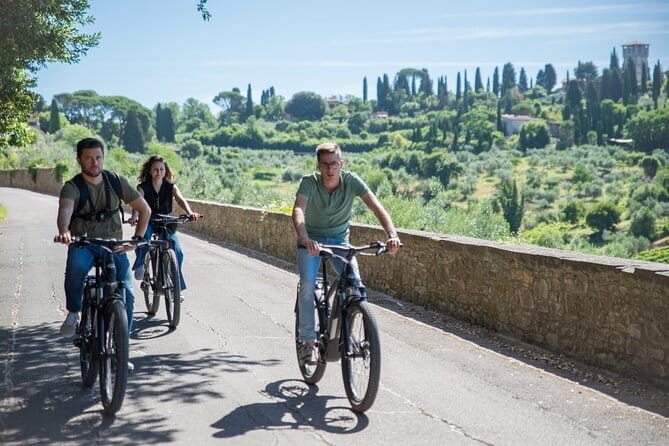
Your tour begins near the center of things: Piazza della Repubblica. This square is tied to the Roman layout of the city—think forum area, with the old axes of the cardo and decumanus. In plain terms, you’re starting at a spot where street alignments from centuries ago still influence the way the city feels.
Why it’s a great first stop: it gives you a mental map of Florence beyond the famous monuments. Before you hit the big Renaissance hits, you get a sense of how the city’s shape was drawn long before the Medici.
If you’re arriving in Florence with zero historical grounding, this is a friendly way to start. It also helps you understand why later landmarks line up the way they do.
Santa Maria del Fiore area: the dome’s geometry up close
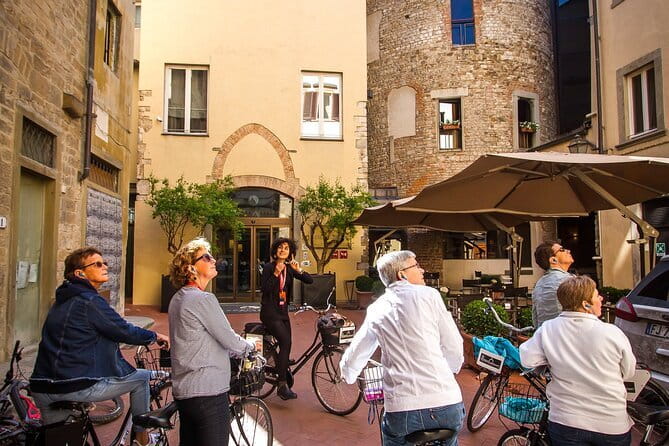
Next comes Santa Maria del Fiore, Florence’s huge cathedral complex—one of the largest churches in the world. What’s useful here is that you’re not just seeing the dome from far away. You get guided context about the plan: a triple-nave basilica, a presbytery area, and the dominance of that enormous octagon dome with radial apses and chapels around it.
On a bike, you can also get a better sense of spatial scale than you might walking alone. You’re moving, but you’re not rushed past the cathedral—you get time for the stop-and-look rhythm.
Practical tip: keep your camera ready before the group tightens up in front of the cathedral area. Crowds can swell quickly, and having a plan for quick shots saves you time.
San Lorenzo: Medici burial ground in the middle of the market
You’ll pass through the Basilica di San Lorenzo, centered in Florence’s main market district. This is one of the most “alive” zones in the city—shops, movement, and everyday Florence energy.
The standout detail here is the Medici connection: the basilica is the burial place of principal Medici family members. So while you’re in a lively commercial area, you’re also orbiting one of the political-power sites of Florence.
Why this stop works on a bike tour: it keeps you from only seeing monuments from the outside. You get a clearer story thread—church, power, and daily life all in one loop.
Via de’ Tornabuoni and Ponte Santa Trinita: style street meets Renaissance crossing
Then you ride through Via de’ Tornabuoni, a central Florence street with fashion boutiques. It’s a good contrast stop. After big religious and political architecture, you get a more modern street feel—still historic, but more about storefronts and the way people actually move through the city.
From there, you reach Ponte Santa Trinita, described as a Renaissance architectural masterpiece and often called one of the most beautiful bridges in the world. Even if you’re not a bridge person, it’s worth pausing because bridges change how the whole city frames itself. From a bicycle level, you see lines and proportions that photos sometimes flatten.
Photo tip: take one wide shot of the river angle, then one closer shot focusing on the bridge details. You’ll appreciate the contrast later when you’re organizing your pictures.
Santo Spirito in Oltrarno: the other side of the Arno
As the tour moves into the Oltrarno quarter, you’ll visit Basilica di Santo Spirito. This church faces the square with the same name, so you’re not just looking at a building—you’re stepping into a neighborhood square vibe.
This stop matters because it balances the tour. Earlier you’ve been hitting the famous “tourist map” parts of Florence. Oltrarno feels more local in spirit, and Santo Spirito is a nice way to add variety without needing another ticketed tour.
If you like Florence when it’s slightly quieter and less purely monumental, this is the stop that often delivers that change of pace.
Palazzo Pitti: Medici power south of the river
Then the ride heads to Palazzo Pitti on the south side of the Arno, a short distance from Ponte Vecchio. Palazzo Pitti is a vast palace, mainly Renaissance, and it’s strongly tied to the Medici era.
Why it’s a key moment on this itinerary: crossing the river into this side of the city helps the tour feel like more than just “passing by buildings.” You start to see Florence as a set of connected districts, each with its own architectural mood.
Also, the Arno viewpoints near this area are part of the payoff. Even if you’ve seen Florence from postcards, the river line still hits different when you’re moving past it.
Ponte Vecchio and the old bridge story you’ll remember
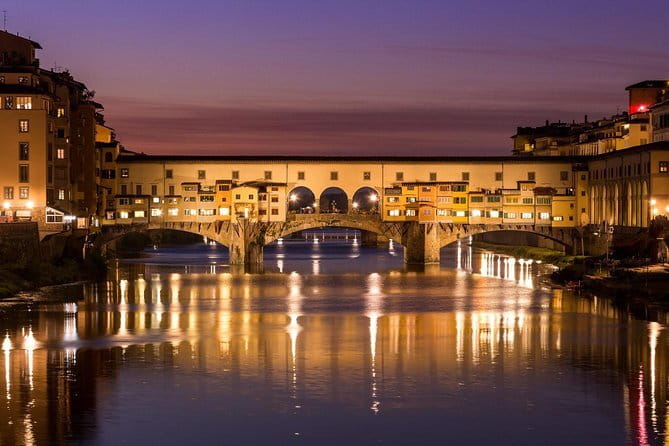
No Florence ride hits the same without Ponte Vecchio, the oldest bridge in Florence still in existence. You’ll cycle across an area known for shops on and around the bridge—historically blacksmiths, tanners, and butchers.
You’ll also get a concrete historic detail: the bridge was designed by Taddeo Gaddi (a student of Giotto) and finished in 1345. Hearing that timeline while you’re actually on the bridge gives you a “wait, this is that old” feeling.
Potential drawback here is crowds. Ponte Vecchio is always busy, and even with a guided group, you’ll still feel the human flow around you. The good news: having your guide manage positioning through the crowd helps keep things smooth.
Piazza della Signoria: Florence’s political heart on two wheels
The tour ends with Piazza della Signoria, described as Florence’s political and social center for many years. This is the kind of square where it’s easy to just wander, but biking through it with context makes you see more.
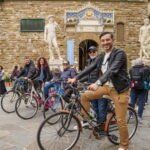
In this square, you’ll find the loggia with statues that recall important events in the city and city myths. That’s the type of thing you might miss if you only treat the piazza like a backdrop for photos.
Why this finish is smart: it leaves you with a sense of place. After Duomo, Medici connections, and bridges over the Arno, you land in the central “stage” of Florentine power and public life.
The City GuideBook and how to turn the ride into better days
One of the nice extras is a Florence City GuideBook handed to you during the tour. It’s not just theory. It comes with fresh suggestions designed to make the rest of your stay in Florence and Tuscany more memorable.
This is a value add because a bike tour gives you orientation, but your guidebook helps you decide what to do next—especially helpful if you’re trying to avoid repeating the same “main sights only” route.
Also, the tour doesn’t feel like it vanishes after you dismount. The goal is to leave you with enough context to recognize what you’ll see later—streets, church façades, and that river geography that keeps showing up.
Value and price: what $42.33 buys you (and when it’s worth it)
At about $42.33 per person for roughly two hours, this is priced like a midrange guided activity in a premium city.
What you get for the money is the combination that’s hard to replicate on your own:
- A licensed professional guide leading the route
- A small group setting (max 12), which helps you keep moving
- Helmets plus headphones in larger groups
- A concentrated highlights loop that’s designed for photo and stop moments
If you’re a solo traveler or a couple, the small group option can feel especially efficient. You pay for guidance, not just transportation.
If you’re a family, this can be a strong format because it’s a clear, time-limited activity with a guide managing the flow. Just remember: under 18s must be accompanied by at least one adult.
If you’re the type who hates logistics—where to park, how to route through crowds, how to find the right viewpoint—this price can look better fast. You’re paying to trade uncertainty for smooth momentum.
A practical timing tip: this tour is often booked about 20 days in advance. If you have fixed dates, don’t wait until the last week.
Rain, heat, and Florence crowds: the realistic comfort checklist
Florence weather can change fast, and this tour plan acknowledges that. The company says the tour will never be canceled due to rain. If rain is heavy, you might switch to a walking tour or start with walking if bikes aren’t workable yet. If the weather improves, they’ll try to get you back on bikes when possible.
You also have two guest options on rainy days:
- Proceed hoping for clearing weather, with the understanding that there’s no refund/discount if bikes aren’t ridden
- Choose a rain check voucher (same amount), usable up to 1 year and transferable to others
Comfort note: safety comes first, and proper rain gear is mandatory if you choose to ride in possible rain. That’s worth taking seriously—safety beats stubbornness.
And then there’s crowd reality. This route is designed to help you move through busy zones, but you should still expect slow moments. That’s normal in Florence. Your guide’s job is to manage it, and that’s why a guided format helps more than you might think.
Should you book this Florence Vintage Bike Tour?
Book it if you want:
- A guided highlights circuit in only two hours
- A guide to handle route choices so you don’t stress over streets and crowds
- Helmets and, in bigger groups, headphones so the commentary is easy to follow
- A mix of major landmarks plus river and neighborhood flavor
Skip it or choose another format if:
- You’re not comfortable riding a bike in busy areas
- Tight timing matters and you’ll be making immediate next stops right after the tour. In rare cases, delayed starts can cause schedule problems.
If you do book, come early, check the weather with everyone else, and go in with a simple mindset: enjoy the ride, take the photos at the stops, and use the guidebook to build the rest of your Florence days.
FAQ
How long is the Florence Vintage Bike Tour?
The tour runs for about 2 hours.
What language is the tour offered in?
The tour is offered in English.
Is there a small group limit?
Yes. The tour has a maximum of 12 travelers.
What’s included with the tour?
Included items are a licensed professional guide, water bottle, helmets, and earphones for groups over six. You also get a small-group experience, and if you book the private option you have a dedicated private tour guide.
What should I do if it rains?
The tour will not be canceled due to rain. If weather is heavy, the tour may switch to a walking tour or you may start on foot; if conditions improve, they’ll try to resume biking when possible. You can also choose a rain check voucher to use later.
Where is the meeting point?
The meeting point is Piazza Mentana for departures listed now, and it changes starting March 2026 to Via della Mosca 10/r, Florence. The tour ends back at the same meeting point.
Do I need to bring my own bike or helmet?
No. Helmets are provided, and you’ll be given a bike for the tour. Hotel pickup and drop-off are not included.