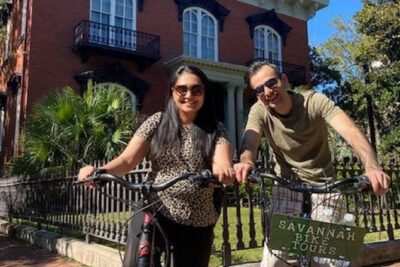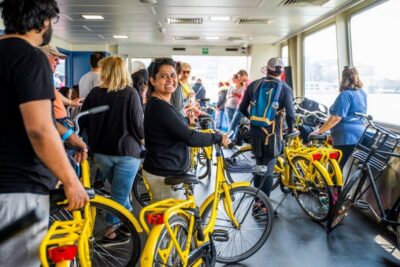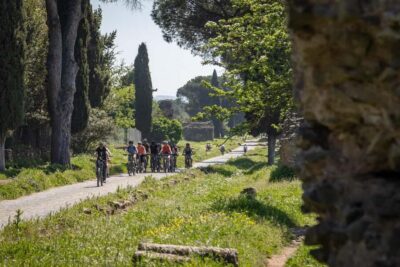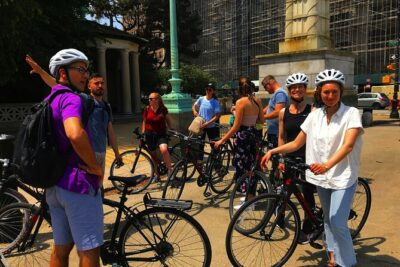
Brussels flips into focus by bike. In this 3.5-hour ride, you cover big-name landmarks and some lesser-seen industrial corners without wasting time on long transfers. I especially love the small group size and the fact that bike rental plus a fietshelm (helmet) are included, so you show up and roll.
The only real consideration is the ride style: expect city cycling with cobblestones and some hills, which is totally doable for most people, but not the calm, flat kind of tour you’d choose for absolute beginners.
In This Review
- Key Things to Know Before You Ride
- Why This Bike Tour Works So Well in Brussels
- Your Route, Stop by Stop: What You’ll See and Why It Matters
- La Bourse (Brussels Stock Exchange) and the Place de la Bourse
- Place Sainte-Catherine: the old Fishmarket area
- La Fonderie Bruxelles (Industrial heritage you might miss alone)
- The Palace of Justice area: views from Place Poelaert
- Quartier Marolles: flea market energy and everyday city texture
- Gare Maritime and the Tour & Taxis story
- Palais Royal de Bruxelles and the Royal Park stop
- Grand Hospice: the tour start point and cultural venue
- The Bike Ride Experience: Pace, Roads, and Comfort
- Small-Group Guidance: What You Gain From a Volunteer Team
- Who This Tour Is Best For (and Who Might Want Another Option)
- Value Check: Is $39.92 a Good Deal?
- Tips to Get the Most Out of the Ride
- Should You Book This Brussels Highlights & Hidden Gems Bike Tour?
Key Things to Know Before You Ride
- Small group (max 14): you stay in control of the pacing and the guide can actually look out for you.
- Bike + helmet included: no last-minute rental decisions, and the helmet means you don’t have to hunt one down.
- A route built for short time: you get the fast “what to see” sweep plus quieter areas that tours often skip.
- Free stops on the itinerary: the listed sights are accessible with no paid admission ticket needed at each stop.
- English-guided: guides share context clearly in English.
- Most travelers can participate: still, come ready to pedal and handle uneven streets.
Why This Bike Tour Works So Well in Brussels
Brussels is a city of contrasts, and that’s exactly why biking fits. In one afternoon, you go from ornate civic buildings to working-city logistics sites and onto neighborhoods most visitors don’t naturally explore on foot.
You’ll get a tour that feels both practical and local: the guide links street corners to how the city works today. Even the people who were initially worried about hills or staying together often end up enjoying the steady rhythm and the viewpoint breaks.
Price matters here, too. At about $39.92 per person, you’re not just paying for someone to point at landmarks. You’re getting bike rental, a helmet, and guided context across multiple areas, with a route designed for a short time window.
You can also read our reviews of more tours and experiences in Brussels.
Your Route, Stop by Stop: What You’ll See and Why It Matters
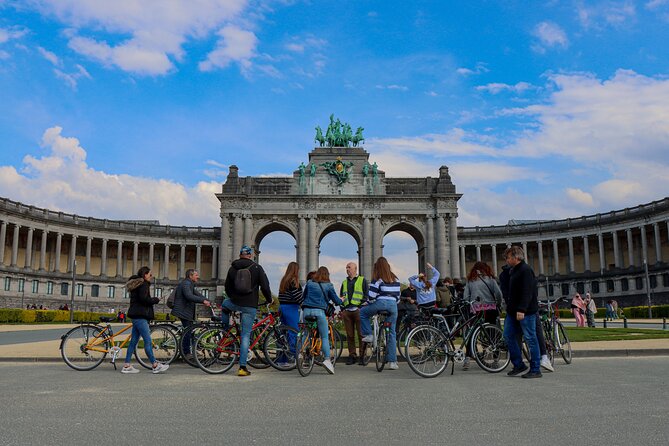
This tour is structured around a loop of major touchpoints plus “how Brussels became Brussels” moments. Each stop is brief, but that’s the point: you’re meant to leave with strong bearings, not spend half the day parked in one place.
La Bourse (Brussels Stock Exchange) and the Place de la Bourse
Your first stop puts you right in the center of the city’s energy. Place de la Bourse is one of those squares where you can feel the civic heartbeat—architecture, street life, and that classic Brussels mix of old-world prestige and everyday movement.
Why I like this start: it gives you an instant orientation map. You’ll understand where you are before you start crossing into different neighborhoods.
Place Sainte-Catherine: the old Fishmarket area
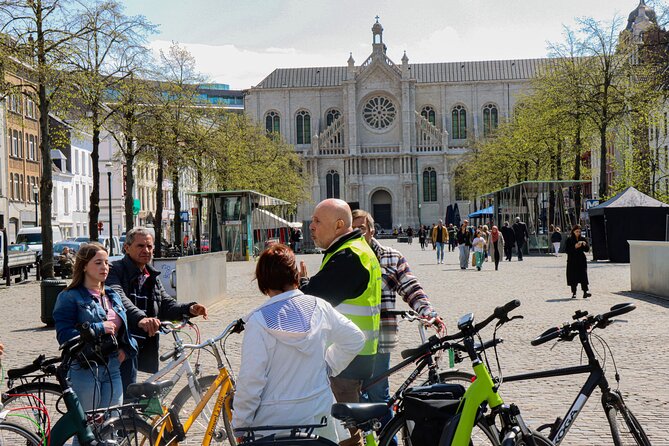
Next you’ll reach Place Sainte-Catherine, tied to the city’s older market life. It’s a strong contrast stop: old fishmarket history, a church presence, and streets that feel built for everyday transactions.
This is where the tour starts doing more than scenery. The guide helps you connect buildings to city function, so later when you see similar layouts elsewhere, you’ll recognize the pattern.
La Fonderie Bruxelles (Industrial heritage you might miss alone)
Then comes a truly useful pivot: you’ll visit La Fonderie Bruxelles, part of the story of Brussels as an industrial city. This is the kind of location that many visitors overlook because it doesn’t scream postcard from far away.
Why it’s worth it on a bike tour: it’s not just a “look at a building” moment. It gives you context for how working spaces shaped modern districts.
The Palace of Justice area: views from Place Poelaert
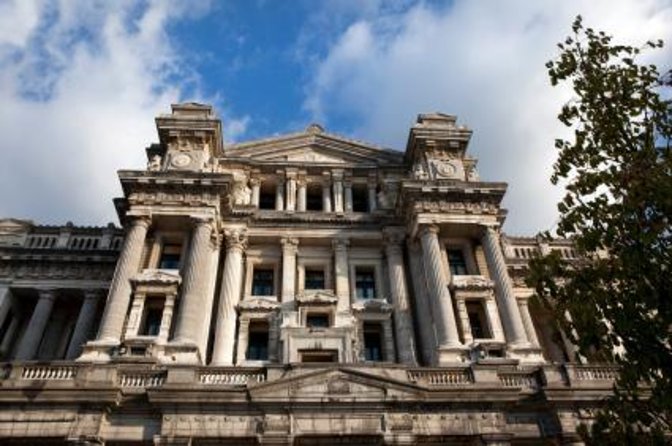
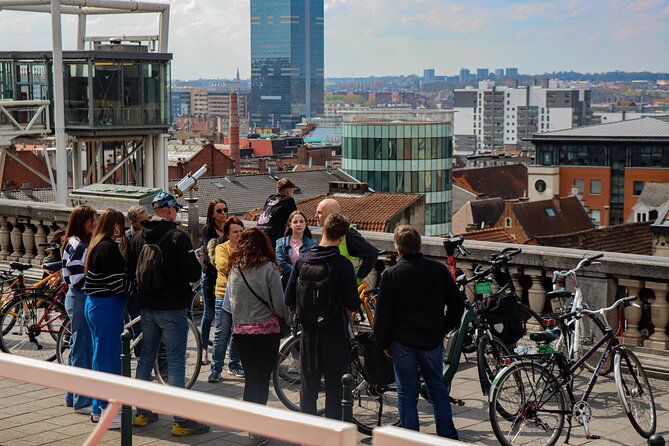
At the Palace of Justice, you’ll pause near Place Poelaert for big-picture views over the city. This area is dramatic in both design and scale, and the viewpoints make the stop feel like a mini reset.
One practical thing: if you’re the type who likes photos, plan to spend a couple extra seconds framing your shots here. The vantage point helps you see the city’s layout, not just a single façade.
Quartier Marolles: flea market energy and everyday city texture
Next you’ll reach the Marolles area, famous for its street life and flea market vibe. On a bike, it’s easier to take in the neighborhood texture without getting stuck in tourist crowds.
What to watch for: the neighborhood’s character often comes from contrast—old structures near newer patterns of daily life. The guide’s commentary helps you read those contrasts without turning it into a lecture.
Gare Maritime and the Tour & Taxis story
From there, you’ll roll toward Gare Maritime and the Tour & Taxis area, a former logistics and industrial site that has been reshaped into a newer, multifunctional district. This stop is about transformation—how city space gets reused rather than erased.
I like that it’s timed and focused. You learn what the place used to be, what it became, and why that shift matters if you want to understand Brussels beyond its classic sights.
Palais Royal de Bruxelles and the Royal Park stop
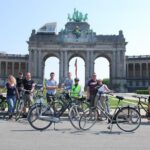
Then you’ll pause by the Royal Park next to the Royal Palace. This is the civic-symbol stop—quiet enough to listen, but central enough to understand power and placement.
Even if you’ve seen royal areas in other cities, this stop works because the guide explains the significance in plain terms, not as a list of names. You’ll walk away with a clearer sense of where symbolism sits in real geography.
Grand Hospice: the tour start point and cultural venue
Finally, you return toward the Grand Hospice area, where the tour starts. The building is neoclassical and has nearly 200 years of presence in the city’s story. Today, it’s used as a temporary occupation and cultural venue, so it fits the Brussels theme of reinvention.
It’s also a good closing note because it anchors the day’s route back to a place you can recognize later when you’re planning what to do next.
The Bike Ride Experience: Pace, Roads, and Comfort
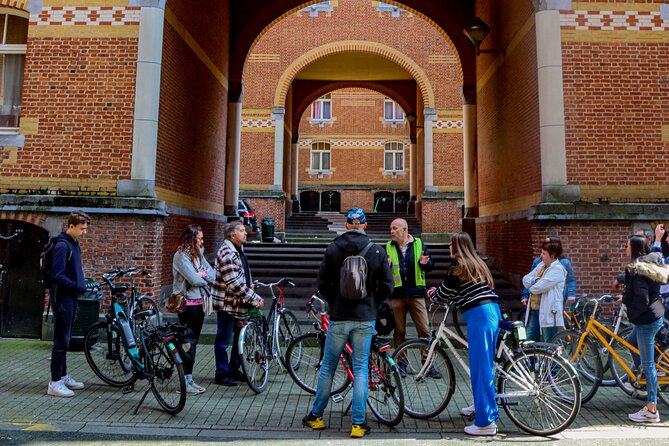
This isn’t a “sit back and coast” kind of outing. You should be comfortable pedaling through city streets for around half a day, with some uneven sections and a few tougher stretches.
A couple practical points that can save you discomfort:
- Cobblestones happen. Expect bumpy moments, not constant smooth pavement.
- Some hills are part of the deal. Even riders who felt challenged said it was manageable with the group pace.
- No e-bikes by default. One reviewer noted that e-bikes weren’t part of the standard setup, with e-bike options available only through the company’s website. If you’re hill-shy, check that option before you go.
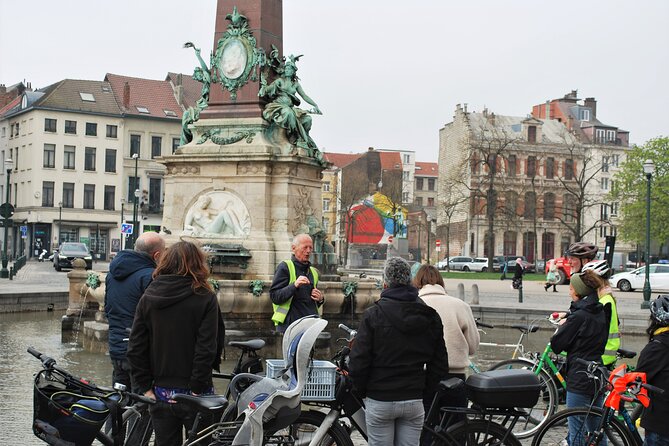
Pacing is one of the tour’s strengths. Guides keep the group together, and many people appreciated how the guide adjusted speed or waited when needed. You’ll also get frequent short breaks to absorb what you just saw.
One thing to consider: the tour doesn’t explicitly mention water holders on the bike. If you want to drink during the ride, bring a water bottle you can access easily.
Small-Group Guidance: What You Gain From a Volunteer Team
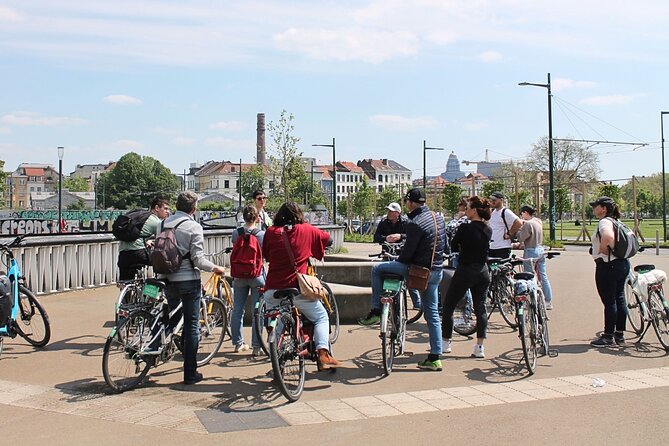
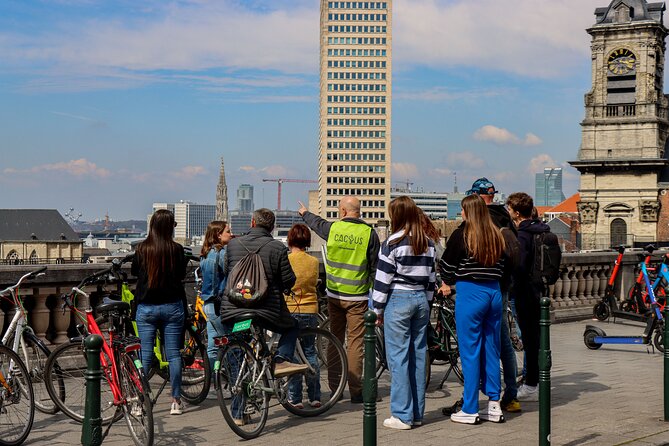
The experience feels personal because it stays small—up to 14 people. That matters. With a bigger group, bike tours can blur into a line of wheels. Here, the guide can actually manage attention, regroup points, and questions.
You’ll also benefit from a style that many people described as upbeat and organized. Different English-speaking guides have led this tour—names that come up include Andrea (Andrea/Andréa), Jessica, Vito, Mauro, Philippe, and Renaat—and the common thread is a focus on making Brussels make sense.
A bonus detail: the guides are volunteers, and that shows in the tone. People often mention feeling well cared for, with clear safety guidance and a guide who genuinely enjoys the city.
Who This Tour Is Best For (and Who Might Want Another Option)
This tour is a great fit if you want a fast, human-scale overview of Brussels. It’s ideal for first-timers who want to see both the “must-see” areas and parts of the city you likely wouldn’t pick on your own.
It’s also a good choice if you like civic stories and neighborhood context. You’ll leave understanding why areas look the way they do, not just what they’re called.
You may want to think twice if:
- You’re uneasy cycling in city traffic or on rough cobblestones.
- You need an ultra-casual pace with minimal pedaling.
- You expect one long deep explanation at every stop. The stops are short; the ride is built for movement and multiple quick context hits.
Value Check: Is $39.92 a Good Deal?
In Brussels, tours can range from “walk and point” to “guided experience plus extras.” Here, the value is in the mix:
- Bike rental included
- Helmet included
- Guided storytelling across many areas
- Free access at each listed stop
- A duration that fits a realistic sightseeing schedule
For many visitors, that math works quickly. If you’d otherwise pay for a bike or helmet rental and still want a guide to connect the dots, this price becomes fair fast.
Also, the small-group limit helps keep the experience from turning into crowd management. That matters more than you might think when you’re cycling.
Tips to Get the Most Out of the Ride
You’ll have a smoother time if you plan like a cyclist, not just a tourist:
- Wear shoes you can comfortably pedal in and that handle cobblestone bounce.
- Bring a bottle of water and keep it accessible.
- If you’re nervous about hills, consider checking whether an e-bike option is available before you book.
- Keep your expectations aligned with the format: short stops, lots of moving, then a guided “you’re here and now you get it” payoff.
And if you’re the kind of traveler who likes to do your own follow-up, this tour sets you up nicely. You’ll spot where you want to spend more time later—especially around major viewpoints and central squares.
Should You Book This Brussels Highlights & Hidden Gems Bike Tour?
Book it if you want a high-value way to get your bearings fast and you’re okay with city cycling. The combination of small-group pacing, bike and helmet included, and a route that balances major landmarks with more workaday parts of Brussels makes it a smart first add-on to your trip.
Skip or choose another option if you’re strictly looking for a flat, effortless ride or if you feel uncomfortable on uneven streets. In that case, the cobblestones and hills can be more stress than fun.
If you’re somewhere in the middle—curious, fit enough to pedal, and happy to learn as you go—this is one of the easiest ways to turn a short stay into a real sense of place.