REVIEW · DONEGAL
Donegal Electric Bike Tour with Local Guide: Half-Day Adventure
Book on Viator →Operated by WeWheel · Bookable on Viator
Donegal moves fast on an e-bike. In about three hours, you’ll pedal past dramatic water, famine-era stone cottages, and myth and memory points that make the scenery feel personal.
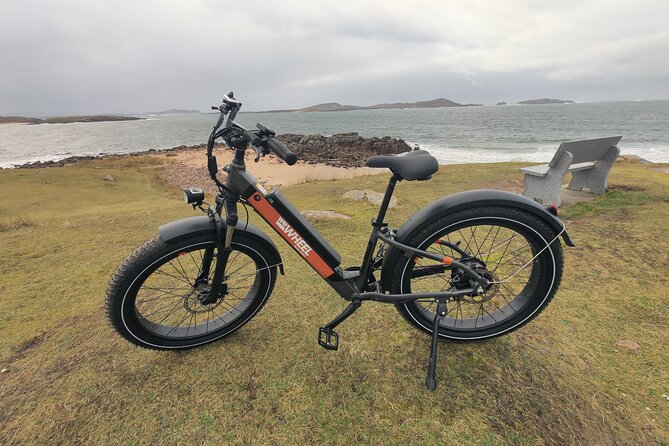
I especially like the fat-tyre eBikes for handling mixed roads without stress, and the way the guide keeps things safe while still making each stop feel meaningful. Even in the rain, this kind of tour holds together.
One thing to plan for: food and drink aren’t included, so you’ll want to bring a water bottle and a snack if you get hungry mid-ride.
In This Review
- Key highlights you’ll actually feel on the ride
- Why this half-day Donegal e-bike tour is such a good fit
- Starting at Bunbeg Harbour: look for the working past
- The abandoned famine village: stone cottages with heavy atmosphere
- Poisoned Glen viewpoint and the Balor legend
- The love memorial at the Dunlewey estate: James Russell and Jane
- Cycling over the dam: crossing between Lough Nacung and Dunlewy Lough
- Bád Eddie shipwreck: a storm grounding from 1977
- The ride experience: how the e-bike and guide approach keeps it fun
- Roads, rain, and what to wear so you don’t think about it
- Price and value: what $78.31 buys you in Donegal
- Who should book this e-bike tour—and who might skip it
- Should you book this Donegal Electric Bike Tour?
- FAQ
- How long is the Donegal Electric Bike Tour?
- Where does the tour start?
- Does the tour end back at the meeting point?
- Is food or drink included?
- What’s included with the booking?
- What language is the tour offered in?
- How big is the group?
- Is the tour weather dependent?
- Can most people participate?
- Is there a cancellation option if plans change?
- Is there a mobile ticket?
Key highlights you’ll actually feel on the ride
- Bunbeg Harbour history at a working harbor site created in the late 1830s to encourage local fishing
- Great Famine stone cottages: abandoned, but the details in the setting hit hard
- Poisoned Glen viewpoint with a Balor legend tied to a stone said to be his poisoned eye
- A love memorial linked to James Russell and Jane on the Dunlewey estate
- Two-lough crossing by cycling over a dam separating Lough Nacung and Dunlewy Lough
- Bád Eddie shipwreck: a storm grounding in 1977 that adds real-edge drama to the route
Why this half-day Donegal e-bike tour is such a good fit
This is the kind of tour that works when you want more than a scenic drive but you don’t want a full-day production. Three hours is enough time to cover ground, hit several story-based stops, and still keep the ride fun instead of exhausting.
The big value is the format. With e-bikes, the hills and uneven bits don’t feel like a battle plan. With a small group cap of 10 people, it’s easier for your guide to manage pacing, check in on comfort, and respond if roads get slippery.
You also get a practical mix of surfaces. You’re not just rolling along smooth pavement. You’ll be on paved roads at times, but you’ll also handle dirt/gravel trails and beach areas. Donegal is like that: the best views often come with the most varied terrain.
This tour is best if you like:
- scenery with a story attached
- an active outing that still feels relaxed
- learning a few local legends and facts without turning it into a classroom
It may not be ideal if you want long stops, big detours, or a full meal built into the experience. Since food and drink aren’t included, you’re basically on your own for calories.
You can also read our reviews of more tours and experiences in Donegal.
Starting at Bunbeg Harbour: look for the working past
Your ride starts at Teac Campbell Guesthouse in Magheraclogher, Bunbeg. From there, the first stop is Bunbeg Harbour, a spot shaped in the late 1830s to encourage fishing in the local area.
That matters because it sets the tone for the whole tour. Donegal coastal country is shaped by water, weather, and work. A harbor isn’t just a postcard. It’s where people built routines around the sea.
What I’d suggest you do here: take a minute to scan the area like you live there. Notice how close the sea feels, and how the harbor connects the land to daily life. Even if you’re not a fisherman, you’ll understand why this region’s history keeps coming back to storms, boats, and the stubborn rhythm of coastal living.
Starting with the harbor also helps you ease into the bike ride. You get time to get your balance, understand your e-bike assist, and listen for safety basics before you head into more rugged sections.
The abandoned famine village: stone cottages with heavy atmosphere
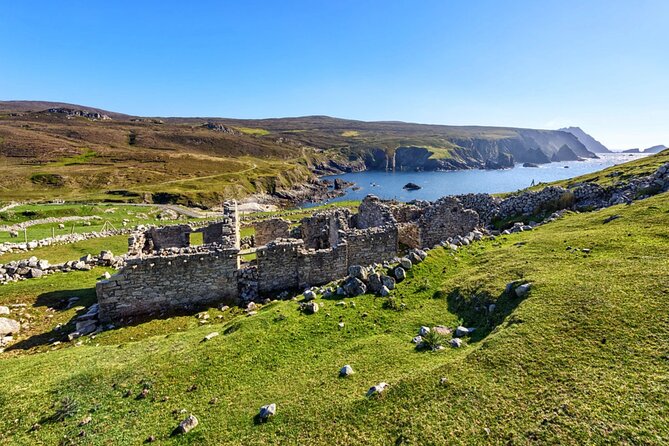
Next you’ll visit an abandoned village made of stone cottages. These were once home to families during the Great Famine in Ireland in the 19th century.
This stop is quiet in the way only abandoned places can be. The cottages may look simple, but the setting forces you to picture what it meant to arrive, survive, and then leave. You don’t need a long lecture; the stone and the emptiness do the work.
A practical tip: don’t rush the photos. Walk slowly. Look at how the cottages sit in the terrain and how time has weathered the stone. The emotional impact here comes from scale and stillness, not from dramatic ruins.
Potential drawback at this kind of site: if the weather is very wet or windy, you’ll feel it more when you’re standing around. It’s not a big risk, but it can change how long you want to linger. Pack for weather and you’ll enjoy this stop more.
Poisoned Glen viewpoint and the Balor legend
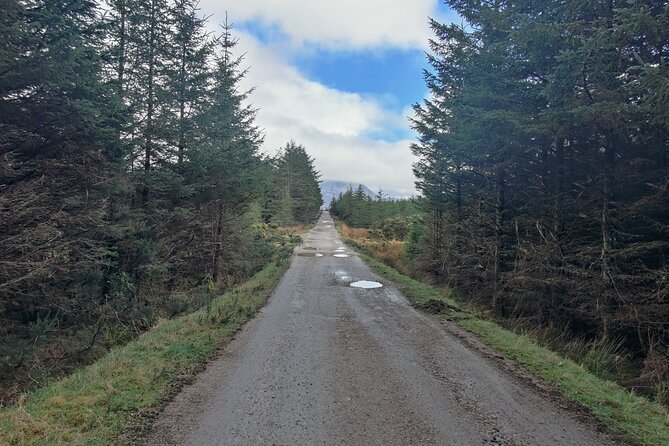
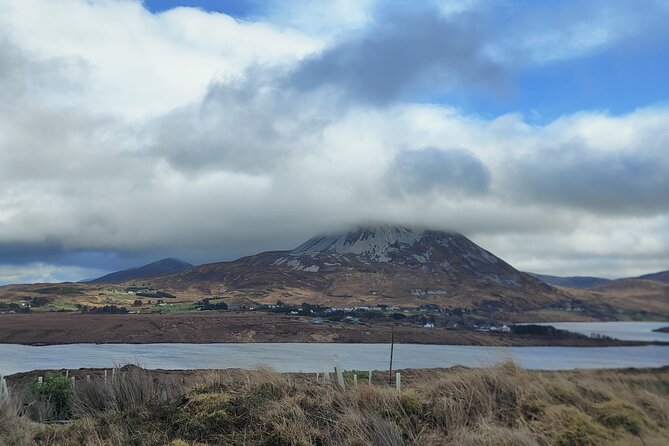
After the famine cottages, you’ll make your way to a viewpoint at Poisoned Glen. At the entrance, there’s a stone said to be the poisoned eye of Balor.
This is the fun twist in the tour: history and myth share the same footing here. Balor is part of Irish legend, and the idea that a specific stone carries that story turns the landscape into a map of old tales.
What to do at this stop:
- Get to the viewpoint slowly, so you don’t feel rushed when the scenery hits.
- Listen for how your guide ties the myth to what you see around you.
- Take in the contrast between calm lake or valley views and the darker story attached to them.
The viewpoint is a strong stop for couples, friends, and solo riders who want something memorable beyond practical sightseeing. It’s also a good moment to pause and reset after bike time.
The love memorial at the Dunlewey estate: James Russell and Jane
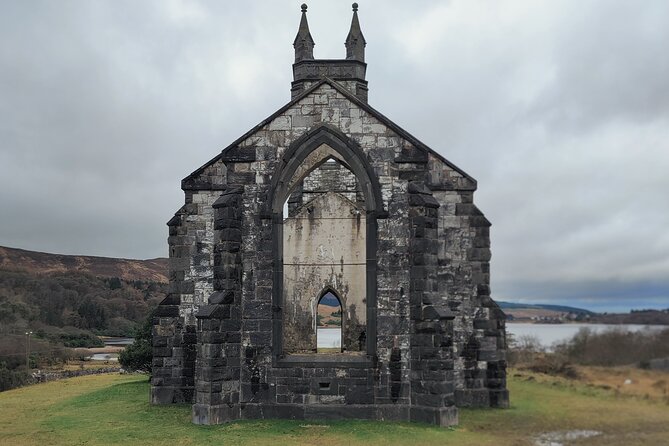
You’ll also see a beautiful building described as a memorial to a great love affair between James Russell, landlord of the Dunlewey estate, and his wife Jane.
This stop adds a human thread. After famine-era survival and mythic poison, it’s refreshing to see a story of real romance anchored in a place. It’s also a reminder that old rural Ireland wasn’t only about hardship. People loved. People built. People remembered.
When you’re looking at the building, don’t just treat it like a backdrop. I’d pause long enough to notice details in the structure and how it sits in its surroundings. That’s where the memorial feeling comes through—stone and architecture doing the talking when the people are long gone.
Cycling over the dam: crossing between Lough Nacung and Dunlewy Lough
One of the coolest practical moments comes from biking over a dam that separates Lough Nacung and Dunlewy Lough.
This is a “you’ll feel it in your body” stop. You’re not just looking at water from a distant viewpoint. You’re literally crossing a point that shapes how water is held, separated, and connected. The ride becomes part of the story.
Why it’s valuable: it breaks up the tour rhythm. Stops are great, but constant stopping can make a short tour feel choppy. A dam crossing gives you movement plus a built-in visual payoff.
Also, e-bikes help here. Even if you don’t have strong legs for hills, the pedal assist keeps you from arriving at these spots worn out.
If you’re sensitive to wind, take a moment to adjust your clothing before the crossing. Dam areas can feel exposed, depending on conditions.
Bád Eddie shipwreck: a storm grounding from 1977
Toward the later part of the route, you’ll reach the shipwreck of Bád Eddie, meaning Eddie’s Boat. It ran aground in 1977 during a storm.
This stop brings the tour back to the sea’s harder side. Shipwrecks aren’t just dramatic. They’re a snapshot of weather risk—proof that the coastline makes its own rules.
What makes this stop work in the middle of an e-bike tour is the contrast. You’re riding with comfort and control, but you’re learning about a moment when control was stripped away by storm conditions.
If you enjoy nautical stories or you’re simply curious about local coast history, you’ll likely get a lot out of this.
The ride experience: how the e-bike and guide approach keeps it fun
The tour includes a top-quality fat tyre eBike plus safety gear, along with stress-free tech and mechanical support. That’s not just marketing. On a short half-day, you don’t want to waste time worrying about basic bike issues.
In the real world, these support details matter most when:
- roads get slick
- tires hit gravel or sand
- a rider has a learning curve on the controls
Fat tyres help because they spread weight and improve grip on mixed terrain. That means less wrestling and more cruising.
About safety: your guide is attentive to safety, and the tour includes helmets. In at least one case, the helmet microphone feature didn’t work well, so people communicated without relying on it. My advice: don’t assume you’ll hear every word perfectly over wind and rain. If you’re not catching it, ask a question on the spot and keep listening for key instructions your guide repeats.
Since group size stays small (up to 10), you’ll also have a better chance to move as a unit without long waits.
Roads, rain, and what to wear so you don’t think about it
One of the best things about this tour is that it’s built for real Donegal weather. The ride can include paved roads, dirt/gravel trails, and even beach-side areas. That means you want gear that handles damp ground, spray, and the occasional chill.
Here’s what I’d plan for:
- A waterproof layer you can actually move in (not just a thin coat)
- Closed-toe shoes with decent grip
- A small pack for a water bottle, and a snack since food isn’t included
- Optional rain protection for electronics and phones
The ride time is about three hours total, and that includes cycling to and from each attraction. So if you’re thinking you’ll have long breaks, keep it realistic. You’ll stop, look, walk a bit, and then get back on. It’s a tight, enjoyable flow.
Price and value: what $78.31 buys you in Donegal
At $78.31 per person for roughly three hours, this isn’t a bargain tour, but it also doesn’t feel overpriced for what you get.
Here’s the value breakdown:
- You’re paying for an e-bike that can handle mixed terrain, not just a rental
- Safety gear is included
- You get tech and mechanical support, which matters a lot when you’re riding on varied surfaces
- You also pay for a guide who connects the ride to stories: Bunbeg Harbour origins, Great Famine cottages, Poisoned Glen Balor myth, and the Bád Eddie shipwreck
If you were to do this on your own, you’d still need equipment, route planning, and some way to learn the significance of each stop. Here, you get that without turning your day into logistics.
What isn’t included is also part of the value equation. Since food and drink aren’t provided, you’ll spend a little extra on snacks and water. Think of it as: you’re paying for the biking and the guidance, not a meal.
Who should book this e-bike tour—and who might skip it
I think you should book if:
- you want to see several Donegal highlights in a short time
- you like scenery plus stories (famine-era place memory, mythic symbolism, coastal danger)
- you want an easier ride thanks to electric pedal assist
- you prefer a small group that stays manageable
You might skip if:
- you need a long, sit-down schedule with lots of indoor time
- you strongly dislike uneven ground like gravel or sand
- you’re hoping for a built-in meal stop (you’ll need to bring your own)
This is a solid choice for couples, friends, and families who want an active half-day without overtraining.
Should you book this Donegal Electric Bike Tour?
If you want a fun, efficient way to connect Donegal’s coastal places with real stories, I’d say yes. The combination of fat-tyre e-bike comfort, small group size, and stops that go beyond generic sightseeing makes this worth your time.
Book it if you’re ready for a ride with mixed surfaces and weather-aware planning. Bring water and a snack so you’re not thinking about food halfway through. And when you hit Poisoned Glen or the Bád Eddie shipwreck, give yourself a few extra minutes to let the setting work on you.
If that sounds like your kind of day, you’ll likely have a great time.
FAQ
How long is the Donegal Electric Bike Tour?
The tour lasts about 3 hours, and that total already includes the cycling time to and from each attraction.
Where does the tour start?
It starts at Teac Campbell Guesthouse, Magheraclogher, Bunbeg, Co. Donegal, Ireland.
Does the tour end back at the meeting point?
Yes. It ends back at the meeting point.
Is food or drink included?
No. Food and drink are not included.
What’s included with the booking?
You get a top quality fat tyre eBike, safety gear, and stress-free tech and mechanical support.
What language is the tour offered in?
The tour is offered in English.
How big is the group?
The maximum group size is 10 travelers.
Is the tour weather dependent?
Yes. It requires good weather. If it’s canceled due to poor weather, you’ll be offered a different date or a full refund.
Can most people participate?
The experience notes that most people can participate.
Is there a cancellation option if plans change?
You can cancel for free up to 24 hours in advance for a full refund.
Is there a mobile ticket?
Yes, you receive a mobile ticket.