REVIEW · SEVILLE
Sevilla Daily Bike Tour
Book on Viator →Operated by All Of Seville · Bookable on Viator
Seville on two wheels beats waiting for buses. This Sevilla daily bike tour strings together the city’s biggest landmarks and a few smart side-streets, so you get a clear “map in your head” fast. You ride with a local guide and stop often enough to actually take it in, not just pedal past it.
What I like most: the easy, low-stress pace makes the ride feel manageable, even if you’re not a confident cyclist. I also love how the stops help you understand why Seville looks the way it does, from the oldest church in Triana to UNESCO sites near the cathedral and palace.
One drawback to plan for: most places here are short stops, and only one entry ticket is included. If you want to go inside every major monument, you’ll likely pay additional admission along the way.
In This Review
- Key highlights to know before you book
- Riding Through Seville’s Story: Why This Tour Works on Day One
- Price and Value: What $36.20 Buys You (and What It Doesn’t)
- Who Leads the Ride and What You’ll Learn from Them
- The Route in Real Life: Stops That Build a Clear Mental Map
- Triana start: Iglesia de Santa Ana and the feel of old Seville
- Port-side history: Palau de San Telmo and the old route of trade
- Industrial power: Real Fábrica de Tabacos
- The grand center: Cathedral de Sevilla and the Giralda’s story
- Real Alcázar and the Archivo: Where Seville’s Power Meets Its Paper Trail
- Archivo General de Indias (entry included): why documents matter here
- Real Alcázar de Sevilla (UNESCO): Europe’s oldest palace still in use
- Parks, Ceramics, and River Echoes: María Luisa and Plaza de España
- Jardines de Murillo: green space plus big monuments
- Torre del Oro: gold tiles and an Arabic name you’ll remember
- Plaza de España and the Maestranza: Seville’s spectacle side
- Parque de María Luisa to Plaza de España: the 1929 showpiece
- Plaza de Toros de la Maestranza: Seville’s oldest bullring
- Bikes, Timing, and Comfort Tips That Make the Ride Better
- Should You Book the Sevilla Daily Bike Tour?
- FAQ
- How long is the Seville Daily Bike Tour?
- Is the tour offered in English?
- What admission tickets are included during the tour?
- How large is the group, and can the pace change?
- Where does the tour start and end?
- What if the weather is bad or I need to cancel?
Key highlights to know before you book
- Max 15 riders, tailored pace: smaller groups mean you can move at your comfort level.
- A tight “best-of” loop: Triana, the cathedral area, the Alcázar, and the parks all fit into about 2h40–3h.
- Archivo entry included: the ticket for the Archivo General de Indias is covered.
- World Heritage in practical chunks: you see why the Cathedral and Real Alcázar matter, without turning it into a daylong slog.
- Park time matters: you get real breathing-room at María Luisa Park and Plaza de España.
- English tour: offered in English with a local guide who connects the dots.
Riding Through Seville’s Story: Why This Tour Works on Day One
If Seville feels like a maze the moment you arrive, this is a smart antidote. The ride format lets you cover ground that would take a lot longer on foot, while your guide keeps the route meaningful. Instead of random stops, you move through neighborhoods and landmark zones in the order that makes history feel connected.
This works especially well early in your trip. In under three hours, you’ll see enough church fronts, palace walls, and major squares to understand where things sit—and that makes your later self-guided exploring way easier. People who book this as a “first day orientation” tend to appreciate how quickly the city starts to click.
The ride itself is designed to feel accessible. In past departures, guides have kept the cycling relaxed, and the route is described as not strenuous. That means you can focus on views and details instead of fighting the bike or your own stamina.
You can also read our reviews of more tours and experiences in Seville.

Price and Value: What $36.20 Buys You (and What It Doesn’t)
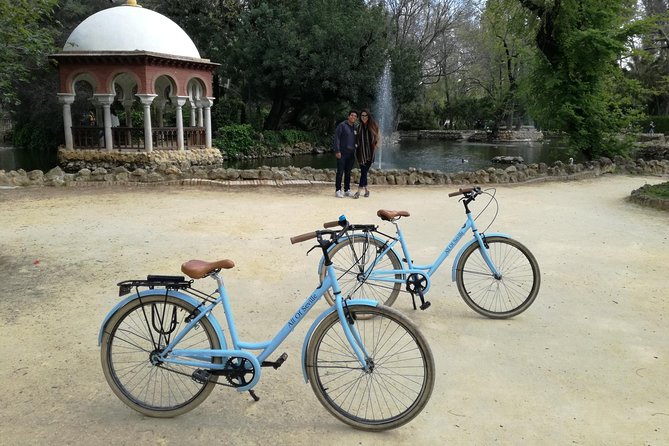
At about $36.20 per person for roughly 2 hours 40 minutes to 3 hours, you’re paying for three things: a guided loop, bike time, and a curated set of high-impact stops.
Here’s the practical truth. Most stops are quick—think short walks, photo time, and brief orientation outside key buildings. That’s not a flaw; it’s the tradeoff that lets you fit a lot in without turning the day into a marathon. If you want long museum-style visits, you’ll do that later.
Admission coverage is also partial. The entry ticket included in the tour is for the Archivo General de Indias. Many other major sites are listed as not including admission tickets, while several park/square moments are free. So you get a strong overview fast, but you’ll still want to budget separately if you plan to go inside everything.
Who Leads the Ride and What You’ll Learn from Them
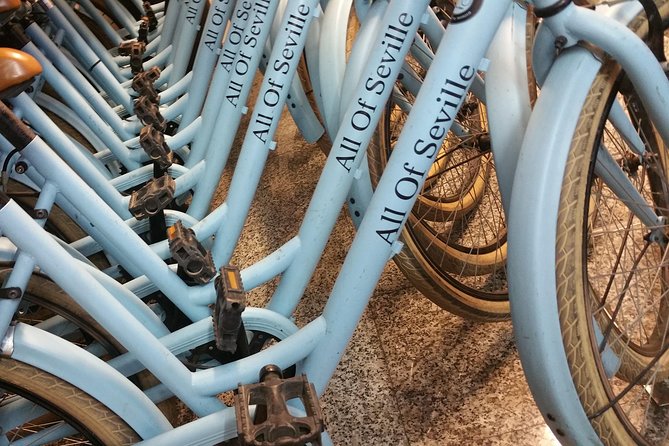
This experience is run by All Of Seville, and the guides you might encounter are locals who clearly care about the city. Names that come up repeatedly include Emilio, Fernando, Pierre, Matteo, and Melina. The through-line is storytelling: why these buildings exist, what changed over time, and how Seville’s identity was shaped by different cultures.
That matters more than people expect. Seville’s architecture can look like one long visual blur if nobody explains it. With a good guide, you notice patterns: where power shows up, how religion and trade left their marks, and how a palace differs from a cathedral even when you’re staring at them from the same street.
The Route in Real Life: Stops That Build a Clear Mental Map
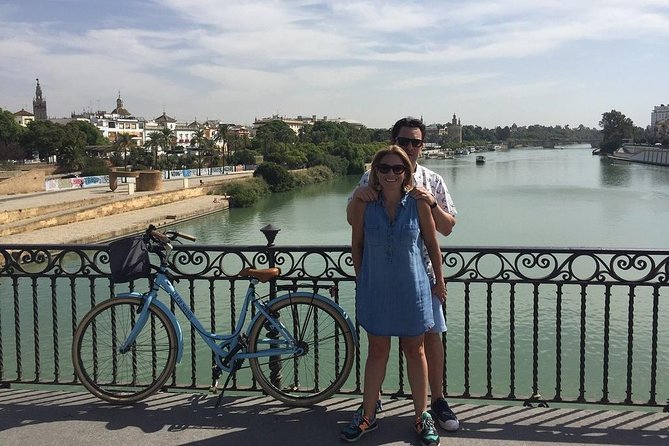
This bike tour moves through 12 stops that cover Seville’s most recognizable “anchors,” from Triana’s churches to the UNESCO zones by the cathedral and Alcázar, then into the big green lungs of the city.
Expect shorter moments at each stop, so you’ll want to bring the right mindset: look first, ask questions second, and don’t worry if you can’t read every sign. Your guide gives context so you can keep moving and still feel like you learned something.
Triana start: Iglesia de Santa Ana and the feel of old Seville
You begin near C. Arjona, 8 in the Casco Antiguo, and the early stop is Iglesia de Santa Ana. It’s described as the oldest church in Seville, founded by King Alfonso and built in the 13th century. Even if you don’t go inside right away, the church’s setting in Triana helps you understand why this neighborhood feels distinct—more lived-in, more layered, and full of atmosphere.
Triana is also the part of Seville where you get a taste of the city’s everyday rhythm. You’ll see how the big sights sit next to normal streets and local corners, not just in isolated monuments.
How to use this stop: take a moment to look at the altarpiece focus if you enter, then step back and watch how the square works as a meeting place.



Port-side history: Palau de San Telmo and the old route of trade
Next comes Palau de San Telmo, known as the port neighborhood area. The tour framing connects it to the 1600-era rise of the cult of San Pedro González Telmo and the old convent context tied to Santo Domingo. Even though you’re only there briefly, this stop helps explain Seville’s trading identity—how religion and commerce tangled historically in the same places.
The value here is not “you must memorize dates.” It’s that you’ll start hearing the same theme across the ride: Seville grew wealthy through connections, and those connections show up in building choices and neighborhood layouts.
Industrial power: Real Fábrica de Tabacos
Then you’re at Real Fábrica de Tabacos—the Royal Tobacco Factory of Seville. It’s described as the headquarters of the first tobacco factory established in Europe and a major 18th-century industrial warehouse. This is one of those stops that changes how you think about “what Seville is.”
A city tour that skips industry gives you a lopsided view. This stop corrects that. You see how a commercial powerhouse can shape the physical city as much as palaces and churches do.
The grand center: Cathedral de Sevilla and the Giralda’s story
After that, you hit the cathedral zone: Catedral de Sevilla, described as the largest Gothic cathedral in the world, plus a UNESCO World Heritage Site. This is where Seville stops being just a pleasant city and becomes a statement.
Right nearby is Torre Giralda. The guide’s explanation typically connects it to earlier Islamic influence: the main mosque built around the 12th century, and the minaret tower that evolved into the Giralda. It’s a great example of how Seville’s layers overlap, not replace each other neatly.
Practical tip: if you care about skyline views, spend a little extra attention here even during a short stop. The cathedral area is busy, and quick orientation helps.
Real Alcázar and the Archivo: Where Seville’s Power Meets Its Paper Trail
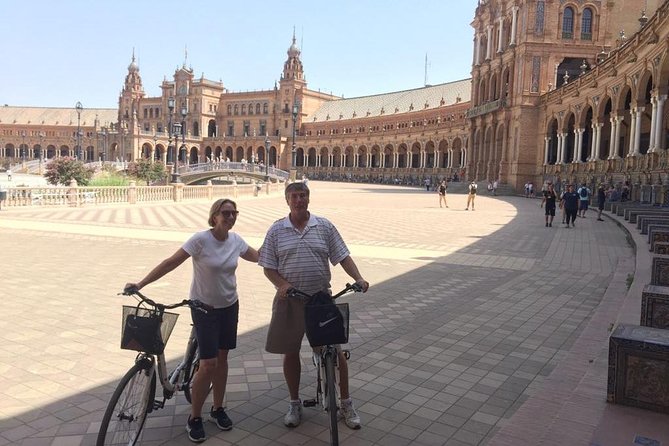
Two of the most compelling learning moments on this ride happen right in the same general theme: rule, record-keeping, and long-lasting influence.
Archivo General de Indias (entry included): why documents matter here
The tour includes admission for Archivo General de Indias. This stop is framed as essential for understanding the history of America and the economic and cultural links between Europe and the other side of the Atlantic.
That’s not just trivia. It’s why the building itself feels important even before you read a single document: it’s where official memory was kept. If you like the idea that empires leave behind paperwork as well as stonework, this is a highlight.
Real Alcázar de Sevilla (UNESCO): Europe’s oldest palace still in use
Next is Real Alcázar de Sevilla, also a UNESCO World Heritage Site. It’s described as the oldest palace in use in Europe, with origins dating back to the 11th century when Muslim authorities built a fortress in a strategic area.
Even on a quick stop, you get the sense that this is a living “power layout,” not just a pretty backdrop. The palace ties together defense, governance, and style—and that’s why it’s such a core Seville experience for first-timers.
How to plan your next step: if you want a longer inside visit, this tour is ideal as a teaser. You’ll know what to look for when you come back.
Parks, Ceramics, and River Echoes: María Luisa and Plaza de España
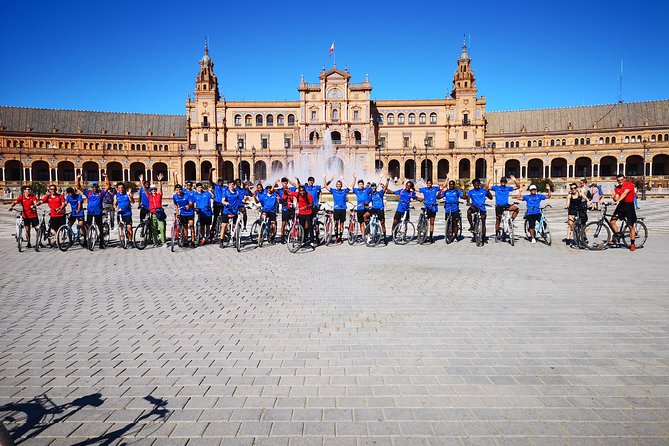
After the heavy historic hitters, you get open-air relief—one of the reasons this ride feels like more than just a checklist.
Jardines de Murillo: green space plus big monuments
The next stop is Jardines de Murillo, where you’ll find the Columbus Monument near Paseo de Catalina de Ribera, plus the Cid Campeador statue in another area of the gardens. The tour uses these references to give the park a sense of place: it’s not just trees and paths, it’s a collection of symbols.
If you’ve been concentrating on churches and palaces, this stop resets your eyes and gives you time to breathe.
Torre del Oro: gold tiles and an Arabic name you’ll remember
Then you reach Torre del Oro, built in the first third of the 13th century during the final moments of the Taifa kingdoms. The tour points out its Arabic name, Borg-al-Azajal, meaning the golden tile coating that reflected in the river like gold.
Even if you only get a short look, this stop sticks because it’s visual. You can literally imagine why a tower would earn its name through the way light changes on water.
Plaza de España and the Maestranza: Seville’s spectacle side
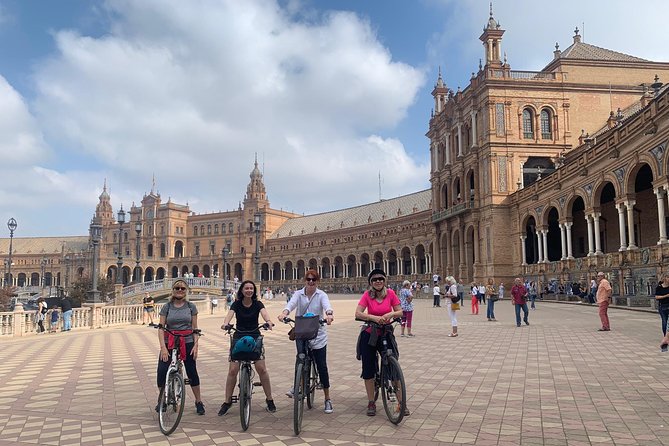
Two stops close out the ride with iconic atmosphere: one is built for Ibero-American Exposition history, and the other for public spectacle.
Parque de María Luisa to Plaza de España: the 1929 showpiece
You spend time in Parque de María Luisa, described as a favorite place to admire nature without leaving the city. It covers about 40 hectares and includes places like the Glorieta de Bécquer, Isla de los Pájaros, Monte Gurugú, and Plaza de América.
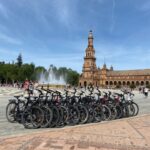
From there, the route reaches Plaza de España, designed by architect Aníbal González for the 1929 Ibero-American Exposition. The square is framed by the park and is known as a palace-square unique in the world.
This is one of those moments where Seville feels like theater, in the best way. The scale surprises people who only think of Seville as “old streets and cathedrals.”
Plaza de Toros de la Maestranza: Seville’s oldest bullring
Finally comes Plaza de Toros de la Maestranza, described as the oldest bullring in Spain. It’s linked to bullfights during the April Fair of Seville and is treated as a major tourist monument in the city.
Even if bullfighting isn’t your thing, this stop gives context for how public traditions shape cities. You’re not just looking at a building—you’re seeing where community energy gathers during big seasonal events.
Bikes, Timing, and Comfort Tips That Make the Ride Better
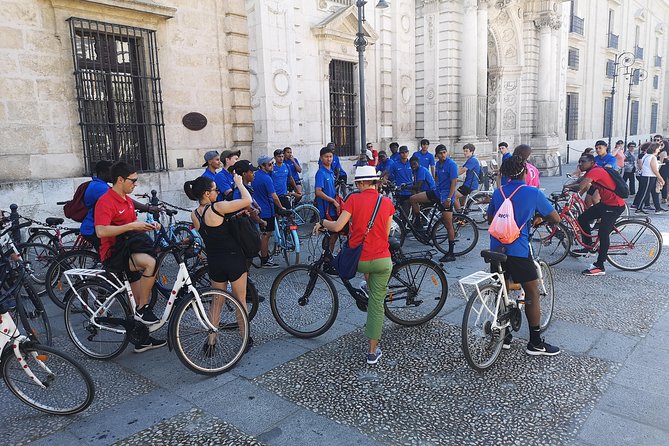
A few practical notes that help you enjoy the experience instead of just surviving it:
- Choose a cooler time if you can. One past rider specifically mentioned an evening slot during summer conditions and praised the comfort.
- Plan for quick stops. You’re meant to see a lot, not park yourself for an hour. Bring curiosity, not expectations of slow wandering.
- Route feels easy for many people. The ride is described as not strenuous and the terrain as fairly flat in past trips.
- Keep an eye on tickets. Since only the Archivo entry is included, decide in advance which “go inside” moments are non-negotiable for you.
Also, remember the tour ends back at the meeting point, so you’re not left navigating unfamiliar streets afterward with a bike on your mind.
Should You Book the Sevilla Daily Bike Tour?
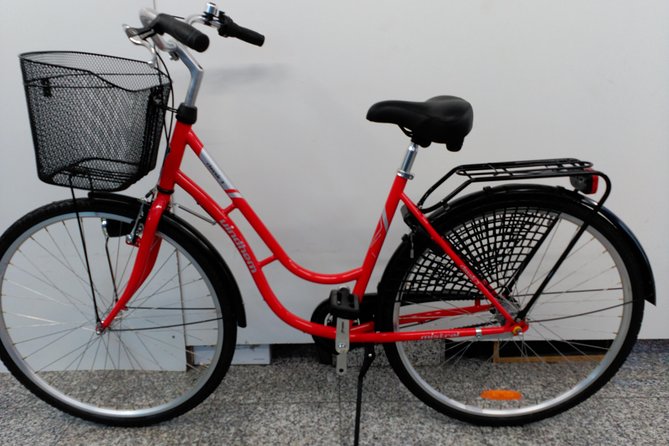
I’d book it if you want a fast, guided “first map” of Seville. This tour is ideal when you have limited time, want to reduce walking, and like learning stories tied to real places—Triana’s old church atmosphere, the cathedral and Giralda area, the Alcázar power zone, and the park-and-square reset at María Luisa and Plaza de España.
Skip it or reconsider if your main travel style is long interior visits and slow museum time. Because most stops are brief and many admissions aren’t included, you may leave wishing you had more hours at just one place.
One more decision factor: group size. With a maximum of 15 riders and a pace that can be tailored, it’s a good pick if you don’t want to feel packed in. The experience is also in English, which makes it easier to follow the why behind what you’re seeing.
If you’re arriving in Seville for the first time, this is one of the most practical ways to get oriented without wasting your precious daylight.
FAQ
How long is the Seville Daily Bike Tour?
It runs about 2 hours 40 minutes to 3 hours.
Is the tour offered in English?
Yes, the tour is offered in English.
What admission tickets are included during the tour?
The admission ticket for the Archivo General de Indias is included. Other listed stops note that admission tickets are not included, while some garden and square moments are free.
How large is the group, and can the pace change?
The group has a maximum of 15 travelers. The pace can be tailored to your fitness level.
Where does the tour start and end?
It starts at C. Arjona, 8, Casco Antiguo, 41001 Sevilla, Spain, and ends back at the same meeting point.
What if the weather is bad or I need to cancel?
This experience requires good weather. If it’s canceled due to poor weather, you’ll be offered another date or a full refund. You can cancel up to 24 hours in advance for a full refund.