REVIEW · TUNIS
Group Guided Bike Tour of Carthage Archeological Site in Tunisia
Book on Viator →Operated by Le Lemon Tour · Bookable on Viator
Carthage is best on two wheels. This 3-hour guided bike ride strings together major Punic and Roman sites close to the sea, using a route designed to avoid traffic. I especially like that you get a bike setup (regular or e-bike) plus a professional guide, so the history makes sense as you move.
What I like most is how practical it feels for a short visit. Admission tickets are included for the first four stops, and you’re not stuck piecing things together on your own. The main drawback is simple: there’s a steeper section near the end, and in very hot conditions the higher stop may be skipped or canceled.
In This Review
- Key Highlights at a Glance
- Carthage on a Bike: Why This Works
- Price and What You Actually Get for $56.99
- Meeting Point at 9 Rue Hannibal: Simple Start, Clear End
- The Ride Itself: Easy Cycling, Traffic-Smart Routing
- Stop 1: Tophet de Carthage Sanctuary (30 Minutes, Ticket Included)
- Stop 2: Punic Ports & Museum (30 Minutes, Ticket Included)
- Stop 3: Baths of Antoninus (40 Minutes, Ticket Included)
- Stop 4: Roman Theatre of Carthage (20 Minutes, Ticket Included)
- Stop 5: Byrsa Hill Option + Saint Louis Cathedral View (15 Minutes, Free/Outside)
- Guides Like Jiji and Yasi: Turning Ruins Into a Story
- E-Bike vs. Regular Bike: Choosing Without Regret
- Best For: Who Should Book This Tour
- Should You Book This Guided Bike Tour of Carthage?
- FAQ
- How long is the bike tour?
- How much does the tour cost?
- Where is the meeting point?
- What sites are included in the itinerary?
- Are admission tickets included?
- Does the tour include a bicycle and helmet?
- Can I choose an e-bike?
- Is the tour difficult?
- Do I need a passport?
- What happens if I need to cancel?
Key Highlights at a Glance
- Tickets included for most of the route: You cover four paid sites without extra hassle.
- Close-to-the-sea cycling: The scenery helps the ride feel like part of the experience.
- Regular bike or e-bike option: Choose based on your comfort level with hills.
- Short, well-paced stops: Each site gets focused time so you don’t feel rushed.
- Guides that narrate the stones: Names like Jiji and Yasi come up for their storytelling.
- Group flexibility on Byrsa Hill: The hill visit depends on group agreement, time, and weather.
Carthage on a Bike: Why This Works
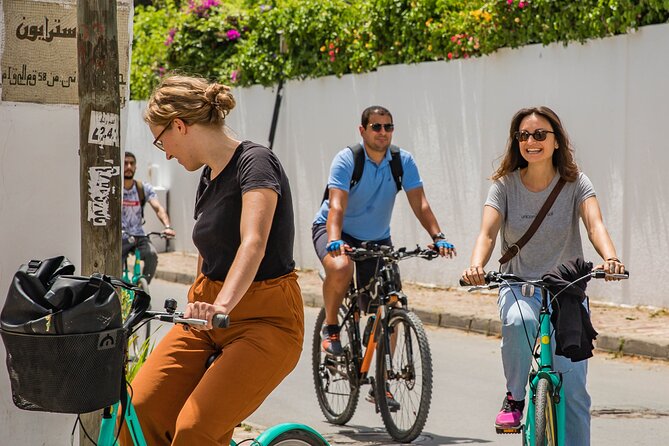
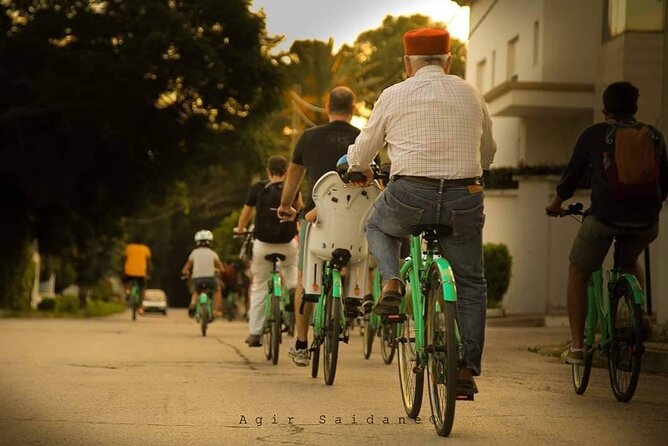
Carthage can feel like a lot of separate ruins spread across an area. This tour solves that problem by moving you from site to site on wheels, so your visit has flow instead of backtracking. You’ll cycle near the coastline, and that matters because the sites are more enjoyable when you’re not constantly fighting logistics.
It’s also a nice match for first-time visitors. In about three hours, you’ll cover major Punic and Roman chapters: a Punic sanctuary, a major port area with museum focus, Roman baths, and the Roman theatre. You’ll walk a bit at each stop, but the bike keeps the whole plan manageable.
And yes, it’s designed to keep the ride comfortable. There are no huge difficulties for most people, and you can book an e-bike if the hills worry you. That little choice makes the difference between a fun afternoon and a constant power struggle.
You can also read our reviews of more tours and experiences in Tunis.
Price and What You Actually Get for $56.99
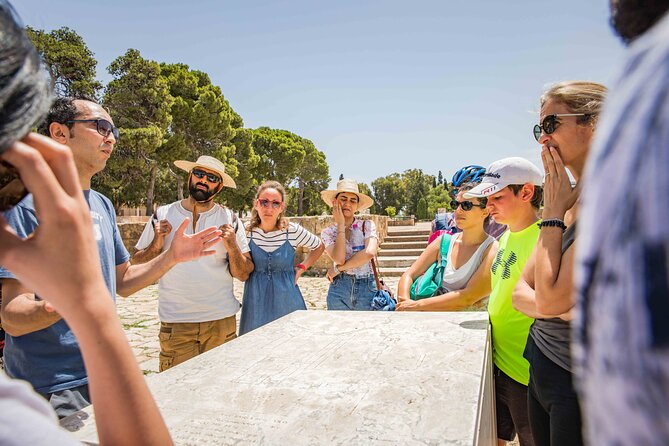
At $56.99 per person, the value comes from what’s bundled. You’re not just paying for a guide—you’re getting bikes (including helmet use), and admission tickets are included for the first four archaeological stops.
That ticket coverage is the biggest “money saver” piece. Four sites on a day out can add up fast, especially when you arrive and then still have to figure out lines, payment, and timing. Here, the tour handles the essentials, and you’re left to enjoy the sites rather than solve the admin.
You should also think about time. With a 3-hour duration and a tight itinerary, this tour is built for visitors who want the highlights without burning a whole day. If your schedule is short in Tunis and you want real Carthage coverage, this price feels aligned with what you’re getting.
Meeting Point at 9 Rue Hannibal: Simple Start, Clear End
You meet at 9 Rue Hannibal, at the archaeological site location in Carthage (listed as Site archéologique de Carthage 2025, Tunisia). The tour ends back at the same meeting point, which makes your planning easier afterward.
It’s described as near public transportation, so you’re not forced into a car day. You’ll also want to bring a current valid passport, since it’s required on the day of travel.
One more practical note: you’ll receive a mobile ticket, which tends to make check-in smoother. Just be sure your phone battery is healthy and you can show the ticket when the guide asks.
The Ride Itself: Easy Cycling, Traffic-Smart Routing
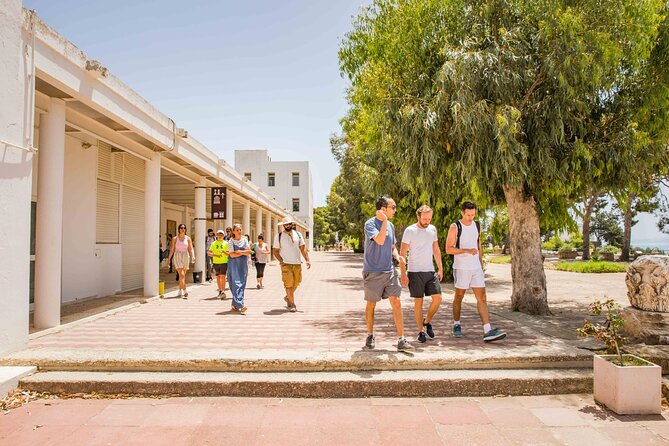
This tour is built around cycling between stops while keeping the route efficient. The plan is designed to avoid traffic as much as possible, which usually means less noise, fewer stressful intersections, and a smoother ride.
Most of the route is described as easy cycling with only a couple of hills, though there is a steep section near the end. That’s not a reason to skip the tour. It’s a reason to choose the bike type wisely.
If you’re a comfortable rider, a regular bike may be fine. If hills aren’t your thing—or you just want to arrive at the best viewpoints without feeling cooked—go for the e-bike. It also helps if you want energy for extra walking when you have the option to go higher on Byrsa Hill.
Stop 1: Tophet de Carthage Sanctuary (30 Minutes, Ticket Included)
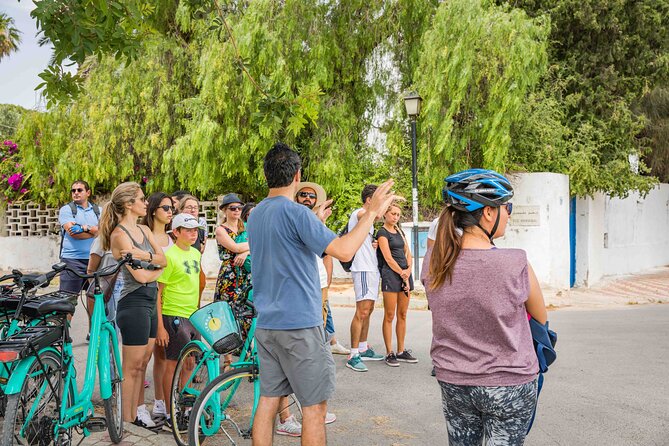
Your first stop is Tophet de Carthage, a Punic sanctuary. This is where the tour sets the tone: Punic culture first, then Roman layers later. Even if the site itself looks quiet, the guide’s explanations help it come alive as a place with meaning, not just stones in the sun.
You’ll get about 30 minutes here, which is enough time to look around and get the key ideas without turning it into a long lecture. The included admission ticket is also a relief. You don’t have to hunt down where to buy, and you can settle into the visit immediately.
Potential drawback: like many archaeological sites, it can be information-heavy. If you like your stories in small doses, this first stop can feel intense. The upside is that it gives you context you’ll carry into the Roman sections that follow.
Stop 2: Punic Ports & Museum (30 Minutes, Ticket Included)
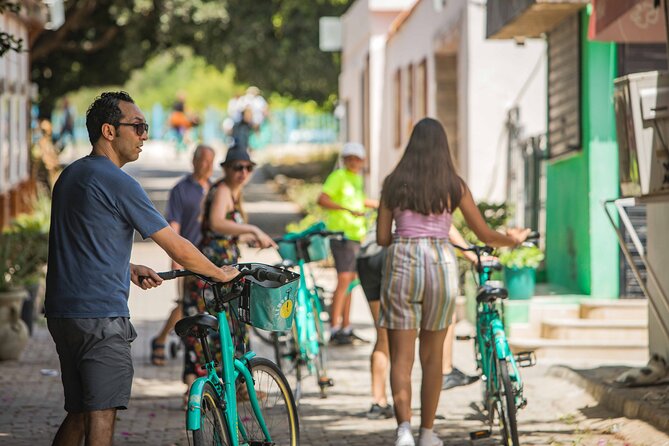
Next up: the Punic Ports & Museum. This is one of those stops that helps you understand Carthage as a major player in Mediterranean life, not only a set of impressive ruins.
You’ll spend about 30 minutes here, with admission included. The “port history” framing matters because it connects geography to power. Carthage’s location and maritime role help explain why so many cultures later left their marks.
What to expect in the real world: museum-focused stops can be hit-or-miss depending on your interest in indoor exhibits. But even if you’re more of a walk-and-look person, having this stop slotted in keeps the tour balanced instead of all open-air stones.
Stop 3: Baths of Antoninus (40 Minutes, Ticket Included)
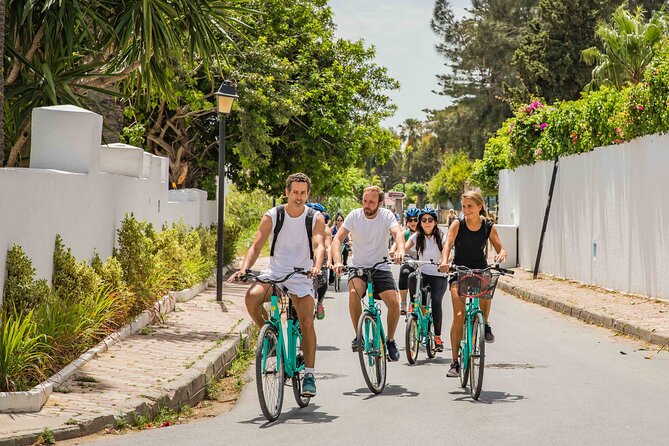
Then you cycle to the Baths of Antoninus, which take you deeper into the Roman story. The baths face the sea, and that detail isn’t just scenic. It highlights how Romans used public architecture as part of daily life and status.
You get around 40 minutes, which is the longest stop in the main Roman section. That extra time helps because ruins at bath sites can feel scattered if you don’t have a guide. With someone explaining how the spaces worked, you can look at the remains and imagine the layout with much more confidence.
Small consideration: bath ruins are open-air. In hot weather, staying hydrated matters. The tour also warns that in very high temperatures, higher sites can be canceled, so plan for sun and heat as part of the day.
Stop 4: Roman Theatre of Carthage (20 Minutes, Ticket Included)
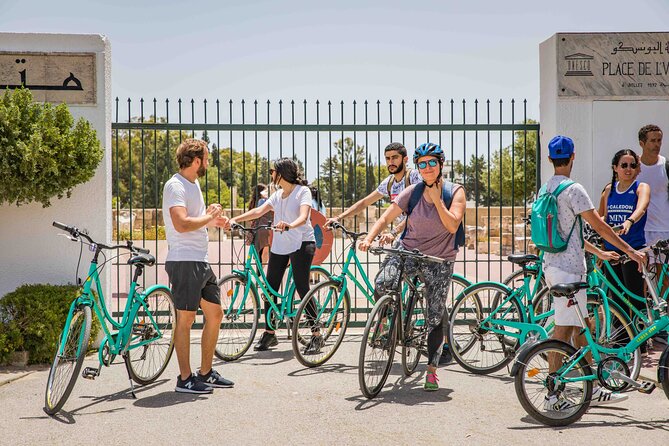
The Roman Theatre of Carthage is a quick but satisfying pivot. With about 20 minutes, you’ll focus on the structure and the sense of performance space—where crowds gathered, how the theatre functioned, and what kind of spectacles a Roman city hosted.
This stop can be a highlight if you like understanding how buildings shaped community life. Even if the theatre isn’t as mind-blowing as the most famous Roman giants elsewhere, it’s still a powerful place to connect architecture with everyday culture.
The short duration is intentional. It keeps the tour on track so you can finish with the optional hill-and-cathedral portion when conditions allow.
Stop 5: Byrsa Hill Option + Saint Louis Cathedral View (15 Minutes, Free/Outside)
This is the flexible finale. The tour includes Saint Louis Cathedral without entering, with the option to visit Byrsa Hill and see Punic architecture and the way Romans converted the hill—if all members agree and if time and weather allow it.
The key catch is that the museum on the hill is closed, so your hill experience is more about architecture, viewpoints, and the outdoor story rather than museum browsing. Also, in very high temperatures, this site can be canceled.
In other words: treat this as a bonus when the day is cooperative. If the hill part is skipped, you still finish with the cathedral viewpoint, so you’re not walking away empty-handed. But if you’re hoping for the hill, bring patience and sun-smart planning.
Guides Like Jiji and Yasi: Turning Ruins Into a Story
What really makes this type of tour work is the guiding. People consistently mention guides such as Jiji and Yasi for history storytelling that connects the sites instead of treating each one like a separate field trip.
That matters because many archaeological stops don’t hand you a neat “this is exactly what you should see” map. A good guide helps you notice the right details and understand why the site looks the way it does.
You also get an itinerary that links Punic and Roman layers in order. That sequencing is a gift for first-timers, because it prevents the classic problem: seeing ruins but missing the timeline that explains them.
E-Bike vs. Regular Bike: Choosing Without Regret
The tour gives you the option of green bikes or e-bikes if need be, and the “need” part is real. There’s a steep section near the end, and you’ll likely feel it more when you’re already a bit tired from the ride.
If you’re a regular biker and feel confident on hills, you can probably stick with a regular bike. If you don’t bike much, or you’d rather save effort for looking around, the e-bike is the calmer choice.
A simple rule I’d use for you: if you’re unsure you can enjoy a short hill without arriving stressed, pick the e-bike. Your goal is to see Carthage, not race Carthage.
Best For: Who Should Book This Tour
This bike tour is a strong fit if you want a guided overview that’s efficient, structured, and not exhausting. The pace is described as easy, with no huge difficulty, and it’s designed for moderate physical fitness.
It’s also great if you’re someone who learns better by moving. Cycling between sites helps your brain keep a timeline, a geography, and a set of themes together: Punic sanctuary and ports, then Roman baths and theatre, then the hill-and-cathedral ending.
If you prefer ultra-slow museum time or want lots of independent wandering, this might feel a bit tight. The upside is you’ll still get meaningful exposure to the big names without spending your whole day in logistics.
Should You Book This Guided Bike Tour of Carthage?
I’d book it if your priorities are: smart routing, multiple major sites in one go, and tickets handled for you. At $56.99, the included admissions and equipment make it feel like a solid deal, especially when you’re juggling limited time in Tunis.
I’d be cautious if you’re extremely heat-sensitive or hoping for guaranteed Byrsa Hill access. That final option depends on group agreement, time, and weather, and very hot conditions can trigger cancellation of the higher stop.
If you’re flexible and you choose the right bike for your comfort level, this is a practical way to see Carthage as a living timeline instead of a pile of separate ruins.
FAQ
How long is the bike tour?
The tour lasts about 3 hours.
How much does the tour cost?
It costs $56.99 per person.
Where is the meeting point?
The meeting point is 9 Rue Hannibal, at Site archéologique de Carthage 2025, Tunisia.
What sites are included in the itinerary?
The stops are Tophet de Carthage, Punic Ports & Museum, Baths of Antoninus, Roman Theatre of Carthage, and an outside view of Saint Louis Cathedral with an optional Byrsa Hill visit.
Are admission tickets included?
Admission tickets are included for Tophet de Carthage, Punic Ports & Museum, Baths of Antoninus, and Roman Theatre of Carthage. The Saint Louis Cathedral portion is free and the tour does not include entering. The museum on Byrsa Hill is closed.
Does the tour include a bicycle and helmet?
Yes. The tour includes use of a bicycle and a helmet.
Can I choose an e-bike?
Yes. E-bikes are available if you need one.
Is the tour difficult?
It’s designed for travelers with moderate physical fitness, and there are no huge difficulty areas, though there is a steep section near the end.
Do I need a passport?
Yes, a current valid passport is required on the day of travel.
What happens if I need to cancel?
You can cancel for a full refund up to 24 hours before the experience’s start time, and cancellation is free. The tour requires good weather, and if it’s canceled due to poor weather, you’ll be offered another date or a full refund.