REVIEW · TUNIS
Guided Bike Tour of Carthage Archeological Site in Tunisia
Book on Viator →Operated by Le Lemon Tour · Bookable on Viator
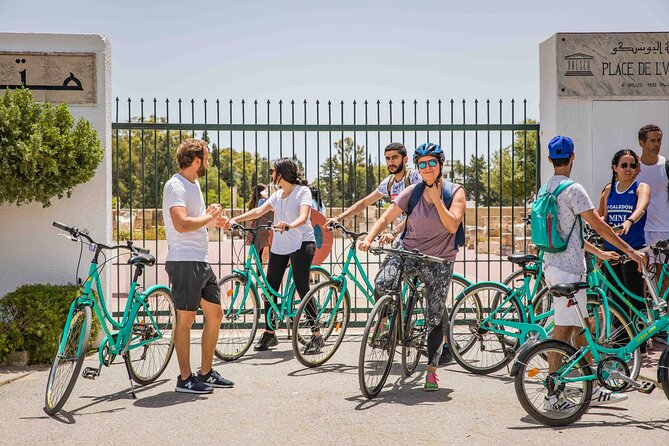
Carthage gets easier on two wheels. This 3-hour guided bike tour strings together the key Phoenician and Roman remains of Carthage, with a private guide keeping the day organized and meaningful. You’ll ride through the archaeological site on roads and paths where the ruins actually feel close, not like a checklist you barely touched.
I especially like two things. First, the practical stuff is handled for you: bike, safety gear, and helmets are provided. Second, the pacing tends to feel unhurried, with enough time at each stop to take photos, read a bit, and still ask questions.
One possible consideration: the tour expects moderate fitness, and it runs only in good weather. Also, the museum on Byrsa Hill is closed on the tour route, so you’ll see Saint Louis Cathedral from outside instead of going into the hill museum.
In This Review
- Key things I’d prioritize about this tour
- Why a 3-hour Carthage bike route works better than rushing ruins
- Starting at 9 Rue Hannibal: what your meeting point tells you
- Stop 1: Tophet de Carthage and the Punic sanctuary you can’t ignore
- Stop 2: Punic Ports & Museum, where trade becomes a story
- Stop 3: Baths of Antoninus, Roman engineering you can actually picture
- Stop 4 and 5: Roman Theatre, then Saint Louis Cathedral on Byrsa Hill
- Electric bikes, helmets, and how to survive Carthage heat and roads
- Price and value: what $91.89 gets you in practice
- Who this tour suits best (and who should rethink it)
- Should you book this Carthage bike tour?
- FAQ
- How long is the Guided Bike Tour of Carthage Archeological Site?
- Is this tour private?
- What’s included in the price of the tour?
- Do I get an electric bike?
- Is hotel pickup and drop-off included?
- Will we enter the museum on Byrsa Hill?
- Do I need a passport, and can I cancel if plans change?
Key things I’d prioritize about this tour
- Private guide, not a crowded crush that forces you to sprint between ruins
- Tickets included at major stops, so you spend less time figuring out admissions
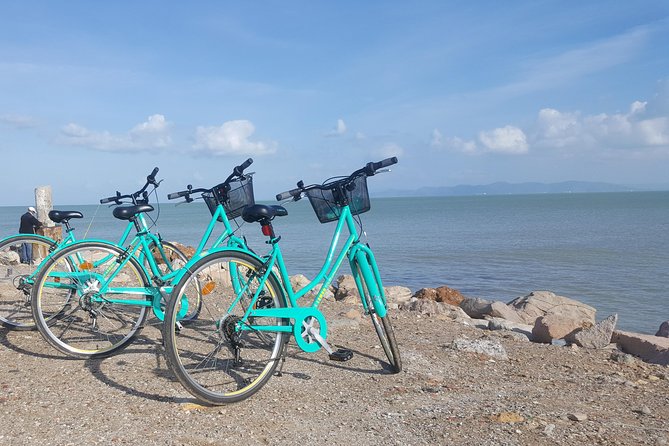
- Electric bike upgrade that makes hills and coastal traffic feel manageable
- Longer on the big sites like the Baths of Antoninus, not just quick photo stops
- Tuned route through the Punic-to-Roman story at Tophet, the ports area, Byrsa, and the theatre
Why a 3-hour Carthage bike route works better than rushing ruins
Carthage is one of those places where history shows up in layers. You see Punic sanctuaries, port areas tied to trade across the Mediterranean, and then the Roman world remaking the hill and the coastline. The tricky part is that doing it on your own can turn into walking plus backtracking plus arguing with heat and directions.
This tour helps because it’s built around a bike rhythm. You get enough time at the main stops to absorb what you’re seeing, and then you ride to the next point without burning your whole afternoon on transport. At about 3 hours, it’s also short enough that you’re not stuck in a long grind if the weather turns warm or the sites feel larger than expected.
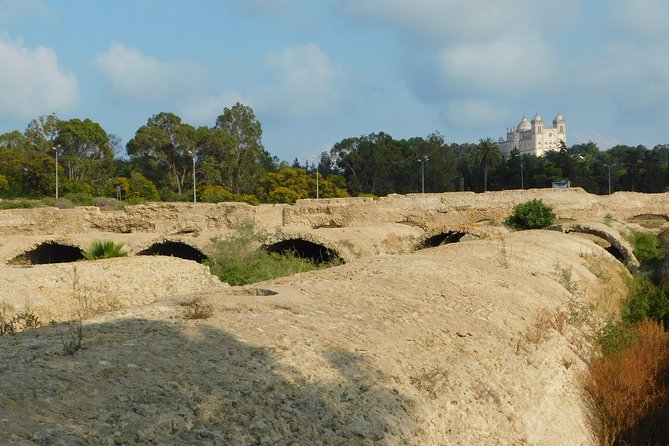
What makes it feel especially practical is the choice to cover big “anchors” of Carthage: Tophet, the ports/museum area, the Baths of Antoninus, the Roman Theatre, and the Byrsa Hill viewpoint where Saint Louis Cathedral sits. You also get sightlines that the ride itself provides, including the aqueduct context that belongs to the broader Carthage story.
If you’re the type who likes seeing places in an order that makes sense, not just random dots on a map, this route has that advantage.
You can also read our reviews of more tours and experiences in Tunis.
Starting at 9 Rue Hannibal: what your meeting point tells you
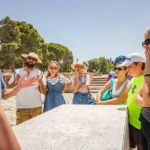
You’ll meet at 9 Rue Hannibal, Site archéologique de Carthage 2025, and the tour ends back at the same place. That matters more than it sounds. Carthage days can start with stress: where to park, where to meet, where to find your group again. Starting and ending at one spot keeps the day clean.
The location is also noted as being near public transportation, which is useful if you’re pairing this with other Tunis sightseeing. Just plan to arrive a few minutes early so you can get fitted on the bike calmly and listen to any safety briefing before you roll out.
Since there’s no hotel pickup or drop-off, you’ll want to build your day around getting to the meeting point on time. If you’re staying somewhere central in Tunis, that’s usually doable with local transport or a quick taxi ride, but it’s still your responsibility to get there.
This setup is a good fit if you like independent movement, but still want a guide to turn all that stone and scrub into a connected explanation.
Stop 1: Tophet de Carthage and the Punic sanctuary you can’t ignore
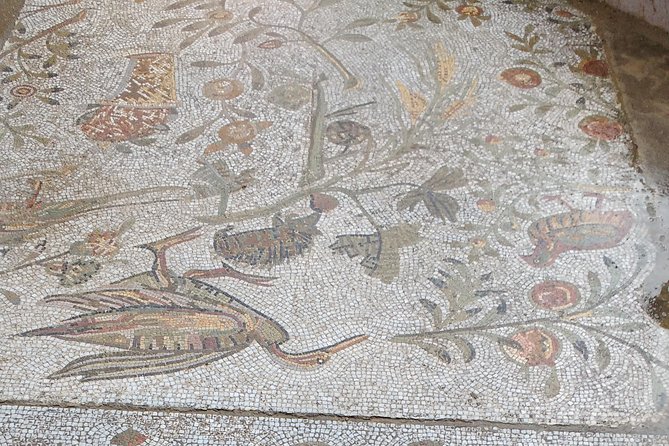
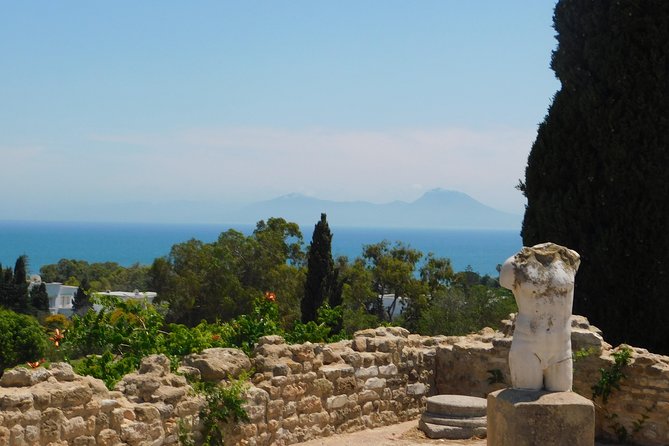
Your first stop is Tophet de Carthage (about 30 minutes), with an admission ticket included. This is a sanctuary tied to Punic culture, and it sets the tone for the whole tour.
Even if you don’t know much about the Punic world going in, the guide’s job here is to help you read what you’re seeing. You’re not just looking at ruins; you’re looking at a place that had meaning for a community, and that meaning shows up in how the site is presented and explained.
The main benefit of starting here by bike is pacing. If you start at the hill viewpoints or the Roman monuments first, you can miss the emotional and cultural “why” of the Punic layer. Beginning with Tophet anchors the day in context.
Possible drawback: this is one of the stops where people tend to want to read and stare. If you’re the type who only wants quick pictures, you might feel the time is long. But for most visitors, it’s the stop that makes the rest of Carthage make more sense.
Stop 2: Punic Ports & Museum, where trade becomes a story
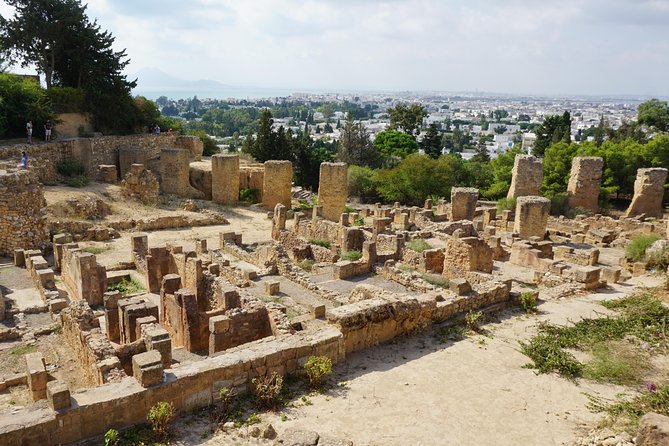
Next up is the Punic Ports & Museum stop (about 30 minutes), also with admission included. This area helps you understand Carthage as a port city, tied to Mediterranean movement rather than just inland ruins.
Ports can be tricky to “feel” as a visitor. You see structures and spaces, but unless someone connects those pieces to trade, ships, and the logic of a seafaring city, it can stay abstract. That’s where the guide’s explanations matter. The museum portion gives you a chance to translate the visible parts into what they likely meant in the Punic world.
Another advantage of this being a mid-tour stop: it breaks up the day before you move into longer Roman sites. You’re warmed up on the ride, and you’re ready to focus again without feeling fully cooked by the sun.
If you’re hoping for a big outdoor photo session at the ports, you’ll likely find good angles, but it’s not a “hang out for an hour” kind of stop. It’s built to educate and then move you along.
Stop 3: Baths of Antoninus, Roman engineering you can actually picture
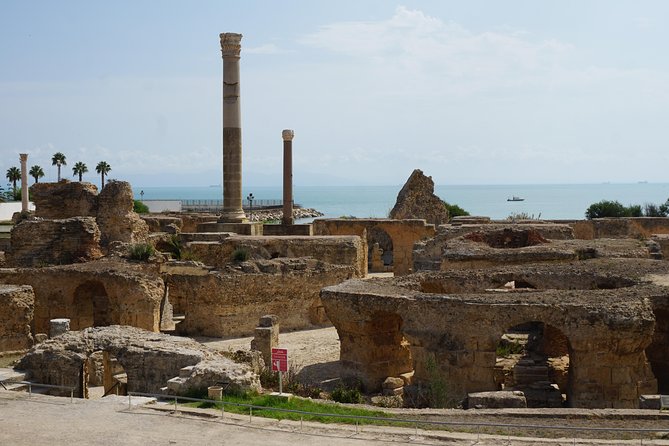
Then comes the big one: the Baths of Antoninus (about 1 hour), admission included. This stop is huge on Roman scale. The baths facing the sea were among the largest in the Roman Empire, and the site gives you more than a single wall or two.
What I like about giving this stop a full hour is that it lets you do two things at once. You can look at the structure and imagine how it worked, and you can also listen for the guide’s explanations without feeling like you’re always waiting for the next group checkpoint.
Roman baths aren’t just about washing. They were social space and a statement of urban life. By seeing them as part of the Carthage-to-Rome shift, the tour helps you understand why Romans invested so heavily here.
Small practical note: this is a stop where walking within the ruins matters. Wear comfortable shoes and pace yourself. If you opt for an electric bike upgrade, you’ll likely feel more energetic for this part too.
Stop 4 and 5: Roman Theatre, then Saint Louis Cathedral on Byrsa Hill
You wrap the main ruins with the Roman Theatre of Carthage (about 20 minutes, admission included). It’s one of the most visually satisfying moments on the day. The theatre has that classic sense of Roman design: seating carved out for crowds, with sightlines and angles you can still appreciate even after centuries.
Then the tour moves to Saint Louis Cathedral on Byrsa Hill (about 15 minutes, free admission, no entry). You’ll learn about the Punic hill architecture and how the Romans converted the hill. You’ll also see Saint Louis Cathedral from outside, because the Carthage museum on the hill is closed, so you won’t go into that museum space.
This is a smart compromise route. Byrsa Hill is important, and seeing the cathedral helps visually connect the modern landmark to the ancient story. The trade-off is that if you were counting on a museum visit for more artifacts or indoor interpretation, you’ll have to accept that part of the route won’t happen that day.
The plus side: you still get the viewpoint value and the “Roman conversion” explanation without turning the hill stop into a long detour.
Electric bikes, helmets, and how to survive Carthage heat and roads
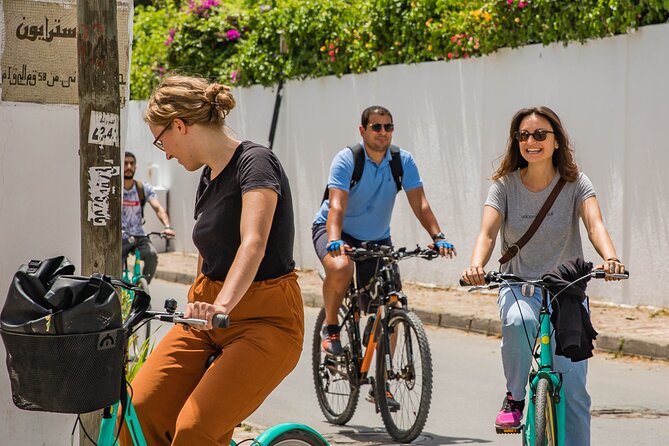
You don’t need to be a speed cyclist to do this tour, but you do need to feel comfortable riding. The tour is designed for people with moderate physical fitness, and it expects you to pedal as you connect sites.
Two practical factors make a big difference:
First, helmets are provided, so safety isn’t something you have to sort out last minute. You’ll still want to adjust the fit so it feels secure, not loose.
Second, there’s an electric bike upgrade. Electric support isn’t just about hills. It also helps on days when traffic and sun make you second-guess your stamina. Reviews highlight that e-bikes make it easier to enjoy the ride rather than fight the terrain. If you’re worried about heat or you haven’t biked in a while, this upgrade tends to be the difference between a great day and a day where you spend half your energy focusing on effort.
One more thing: the route includes riding through neighborhoods around the archaeological area. That’s part of the charm because Carthage isn’t only ruins. Still, it means you should be alert and follow your guide’s lead in traffic and crossing points.
If you hate commuting-style stress, go for the e-bike. If you’re a confident rider, you can likely enjoy the standard bike too.
Price and value: what $91.89 gets you in practice
At $91.89 per person, the tour isn’t a budget impulse buy, but it also isn’t trying to be. The value comes from stacking what you’re paying for:
- A professional guide for the full route
- A bicycle plus helmet
- Admission tickets included for the key sites on the itinerary (Tophet, Punic Ports & Museum, Baths of Antoninus, Roman Theatre)
- Group dynamics that are controlled (it’s private, meaning it’s just your group)
If you were to recreate this day on your own, you’d still have to solve bike rental, navigation, and multiple admissions. The guide does more than talk. They help you prioritize what matters, interpret what you see, and keep the day from turning into aimless wandering.
Also, the fact that this is mobile ticket friendly can save time at sites where entries and paperwork slow people down.
The most cost-effective way to think about it: you’re paying to buy back your time and attention. That’s especially valuable at archaeological sites, where understanding what you’re looking at changes the whole experience.
Who this tour suits best (and who should rethink it)
This bike tour is a strong match if you want Carthage without turning it into a grind.
It tends to fit you well if:
- You like guided explanations and you want your stops connected into a story
- You can handle moderate riding and don’t want a day of constant walking
- You’re curious about how Punic culture and Roman rule overlap at the same places
- You’d rather spend your energy looking and listening than negotiating transport
You might rethink it if:
- You want a totally self-paced day with no riding time at all
- You’re sensitive to heat and prefer a strictly indoor itinerary
- You were planning on the Byrsa Hill museum visit and would feel disappointed by the closure (you’ll still see Saint Louis Cathedral from outside)
Should you book this Carthage bike tour?
I’d book it if your goal is to see the major Carthage ruins in a guided, organized way without burning your whole afternoon on transport. The combination of included admissions, a private guide, and a route that covers Punic and Roman anchors in about 3 hours is a real time-saver.
I’d especially consider the electric bike upgrade if hills, heat, or road conditions make you hesitate about longer rides. With the right setup, the bike becomes part of the experience instead of a chore.
If you’re flexible about the fact that the Byrsa Hill museum is closed and you’re okay with seeing Saint Louis Cathedral from outside, this tour is a practical, high-value way to make Carthage feel coherent.
FAQ
How long is the Guided Bike Tour of Carthage Archeological Site?
The tour runs for about 3 hours.
Is this tour private?
Yes. It’s a private tour/activity, so only your group participates.
What’s included in the price of the tour?
Included are the professional guide, use of the bicycle, use of a helmet, and all taxes, fees, and handling charges. Admission tickets are included for multiple stops on the route (Saint Louis Cathedral is free).
Do I get an electric bike?
An electric bike upgrade is available, which can make riding easier.
Is hotel pickup and drop-off included?
No. Hotel pickup and drop-off are not included. You start and end at the meeting point.
Will we enter the museum on Byrsa Hill?
No. The museum of Carthage located on the hill is closed on the tour route, and you will not enter it.
Do I need a passport, and can I cancel if plans change?
A current valid passport is required on the day of travel. You can cancel for a full refund if you cancel at least 24 hours before the experience’s start time, and if the tour is canceled due to poor weather, you’ll be offered a different date or a full refund.