REVIEW · MARRAKECH
Half-Day Highlights of Marrakesh Bike Tour
Book on Viator →Operated by Biking in Marrakech · Bookable on Viator
If you want Marrakesh fast, ride it. This half-day bike route links the medina buzz with big landmark sights, guided by locals so you learn what you’re seeing as you go. I really like the mix of classic stops and picture-ready views, plus the English-speaking guide who helps you read the city instead of just passing it.
You’ll likely love how the ride keeps momentum while still allowing proper time at each place. The biggest thing to watch: you should be comfortable with traffic and typical city-road awareness, since this isn’t a slow, car-free cruise.
In This Review
- Key Highlights You’ll Notice
- Getting Oriented Fast: Why a Bike Tour Works in Marrakech
- Starting at Rue Oum Errabia: Timing and Logistics That Affect Your Day
- Stop 1: Jemaa el-Fnaa and the Skill of Seeing the Medina
- Stop 2: Koutoubia Mosque, Almohad Architecture Up Close
- Stop 3: Saadian Tombs and the Meaning of Royal Space
- Stop 4: Menara Gardens and the High Atlas Framing Trick
- The Bike Ride Itself: Pace, Comfort, and Road Sense
- Value for Around $36: What You’re Really Paying For
- Who This Tour Suits Best (and Who Should Rethink It)
- Should You Book This Marrakesh Bike Tour?
- FAQ
- How long is the Half-Day Highlights of Marrakesh Bike Tour?
- Where does the tour start, and what time does it begin?
- What is the approximate price per person?
- What’s included in the tour?
- Are admission tickets included for the sights?
- What are the main stops on the route?
- How big is the group?
- Do I receive a mobile ticket?
- Is it suitable for most travelers?
- What happens if weather is poor?
Key Highlights You’ll Notice
- Jemaa el-Fnaa, right up close with real street-life energy in Marrakesh’s main square
- Koutoubia Mosque photos and context for one of Morocco’s iconic Almohad-era structures
- Saadian Tombs’ royal interiors where careful decoration shows off Saadian ambition
- Menara Gardens and the water-basin view framed toward the High Atlas Mountains
- English-speaking guides like Khawla and Chama who explain daily life, not just facts
- Admission tickets included so you can spend time looking instead of sorting details
Getting Oriented Fast: Why a Bike Tour Works in Marrakech
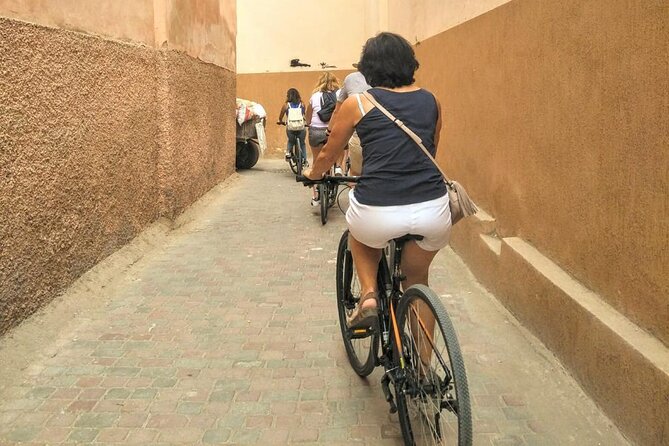
Marrakesh can feel like sensory overload, especially in the medina, where lanes twist and everything looks important. That’s exactly why a bike tour helps. In about a few hours, you get a practical overview: where the big landmarks are, how neighborhoods connect, and what the city looks like beyond the postcard angles.
This tour is built around short sightseeing windows paired with actual movement through town. Instead of spending your whole trip waiting in lines or stuck on one street, you cover key sights and still have time to pause for photos. The result is the kind of orientation that makes the rest of your stay easier, because you’ll know what’s where when you wander later.
Two things I’d focus on if you’re deciding:
1) The guide experience matters. You’re not just handed a map; you’re guided by people who can explain what you’re looking at and why it matters day-to-day. Riders have highlighted guides like Khawla and Chama for being engaging, professional, and willing to share lived-in knowledge.
2) The photo stops aren’t random. The route targets visually strong landmarks—Jemaa el-Fnaa, Koutoubia Mosque, the Saadian Tombs complex, and Menara Gardens—so you can capture the big moments without turning the trip into a long photo marathon.
One caution before you commit: if you’re a brand-new cyclist or you’re nervous around cars, narrow streets, and sudden turns, you’ll want to think carefully. The ride can feel like an active city circuit, not a quiet trail.
You can also read our reviews of more tours and experiences in Marrakech.
Starting at Rue Oum Errabia: Timing and Logistics That Affect Your Day
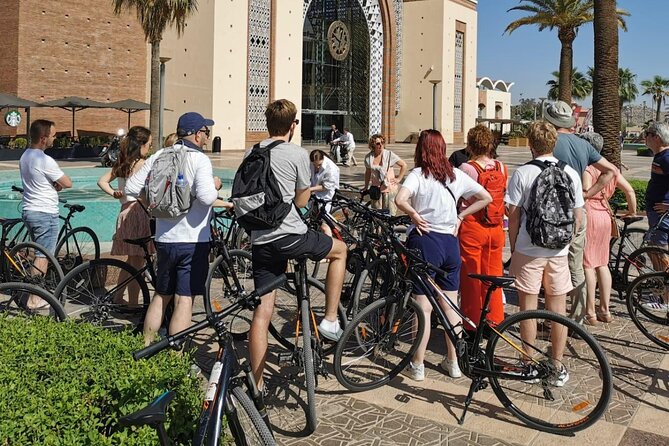
The tour starts at 9:30 am in Marrakesh at Rue Oum Errabia, Marrakesh 40000, Morocco. It ends back at the same meeting point, so you’re not scrambling to get across town afterward.
You’ll receive confirmation at booking, and you’ll have a mobile ticket. Group size is capped at 30 travelers, which is big enough to keep the vibe social, but not so large that you’ll feel swallowed by the group.
One small practical note: meeting point confusion can happen if your booking confirmation shows a map pin that doesn’t match where you actually need to go first. If that happens, don’t panic—plan to use the written meeting address and be ready for a short taxi hop to where the bikes are picked up. Taking five minutes to verify the exact start location will save you stress later.
Stop 1: Jemaa el-Fnaa and the Skill of Seeing the Medina
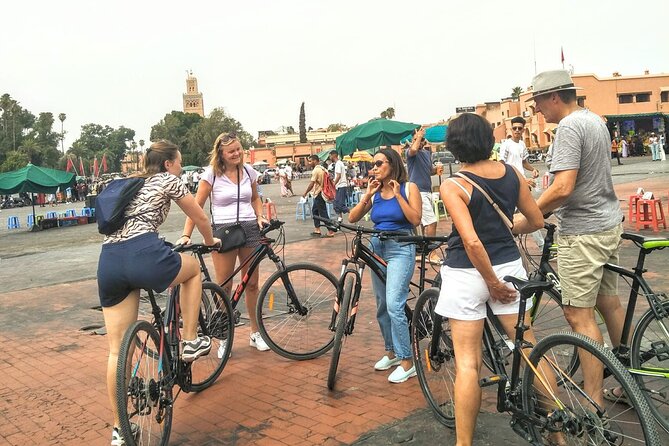
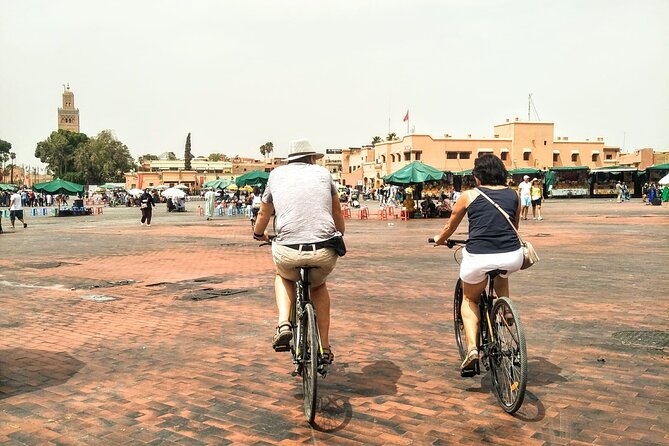
Jemaa el-Fnaa is the heart of Marrakesh’s medina quarter—an open square and market place where locals and visitors overlap. You don’t just look at it; you watch it work. Morning in places like this tends to feel like a stage rehearsal: vendors setting up, people moving in waves, and the square slowly turning into full-day energy.
This stop is about 20 minutes, which is short by design. It’s enough time to orient your eyes: where the main flow goes, how street life clusters around food and commerce, and what parts feel lively versus chaotic. If you’re planning to come back later, you’ll know where to head because you’ll have seen the square from a moving bike view first.
Tip for getting the most out of the short time: spend your first minute scanning the edges of the square, not just the center. You’ll usually spot the routes that lead into side lanes, and that helps when you later explore on foot.
Stop 2: Koutoubia Mosque, Almohad Architecture Up Close
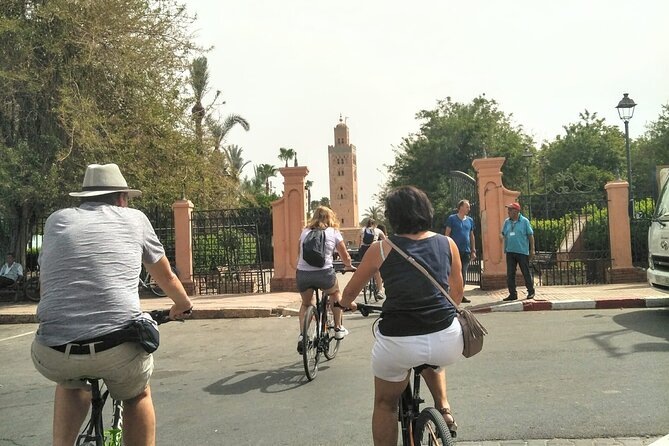
Next comes the Koutoubia Mosque, a key landmark tied to the Almohad rulers. The original mosque was founded in 1147 by Almohad caliph Abd al-Mu’min, after he conquered Marrakesh. A second version was rebuilt by Abd al-Mu’min around 1158, and construction of the minaret is often linked to Ya’qub al-Mansur, with the minaret possibly finalized around 1195.
Even if you only spend about 30 minutes, the value here is the explanation. A guide can point out what makes the structure “classic” and why it’s considered an important example of Almohad architecture and broader Moroccan mosque design. You’ll also understand how this style influences the look of other buildings you’ll see later.
This is one of those stops where the building is the lesson. Rather than treating it as a quick photo wall, let the time be about noticing proportions and details—especially the minaret. And yes, you’ll probably want at least a couple shots, because Koutoubia is one of those landmarks people still use as a visual reference point across the city.
Stop 3: Saadian Tombs and the Meaning of Royal Space
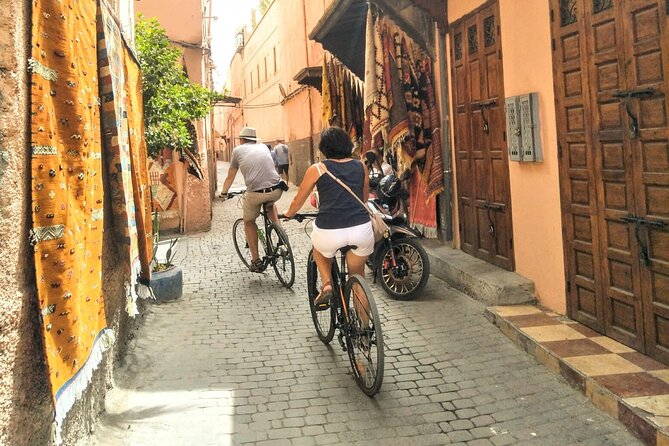
The Saadian Tombs sit on the south side of the Kasbah Mosque, inside the royal kasbah (citadel) district. They date largely to the Saadian dynasty, particularly during the reign of Ahmad al-Mansur (1578–1603), when the complex gained its standout character. Even after the Saadians, Morocco’s monarchy continued burial here for a time.
This stop tends to feel different from the street-level energy of the medina square. The Saadian Tombs are remembered for luxurious decoration and careful interior design, and many art historians consider them a high point of Moroccan architecture during the Saadian period.
Because the tomb complex is a major tourist attraction, it can be busy—but the bike tour format helps you arrive at a point where you can still spend your time meaningfully. The about 30 minutes window is useful: you can focus on the key elements without turning it into a half-day research project.
If you’re the kind of traveler who likes architecture, don’t rush your eyes. Look for how decorative work feels intentional, not random. The payoff is understanding that royal power here was expressed through built space—quiet, controlled, and designed to impress.

Stop 4: Menara Gardens and the High Atlas Framing Trick
If Marrakesh’s medina gives you density, Menara Gardens give you breathing room. These historic gardens and orchard were established in the 12th century, around 1157, by the Almohad caliph Abd al-Mu’min. Menara, along with the Agdal Gardens and the historic walled city, is part of a UNESCO World Heritage Site listing since 1985.
The gardens are arranged around a central water basin and reservoir. Next to that reservoir is a pleasure pavilion that dates in its current form to the 19th century. If you’ve seen the iconic Marrakesh images with mountains in the background, this is one of the classic spots where that framing becomes real. The High Atlas Mountains can sit in the scene behind the water and pavilion, giving you that signature “Marrakesh-as-a-postcard” look—without you having to chase the perfect viewpoint for hours.
This stop is about 30 minutes, and it’s a great pace reset after mosque and tomb time. You can slow down, let your eyes adjust, and take photos with less pressure.
If you want the best photos, treat this like a mini “timing lesson.” Look at the way light hits the basin area, then shoot. Even a small change in angle can turn a flat view into a stronger composition because the mountains line up behind the reservoir.
The Bike Ride Itself: Pace, Comfort, and Road Sense
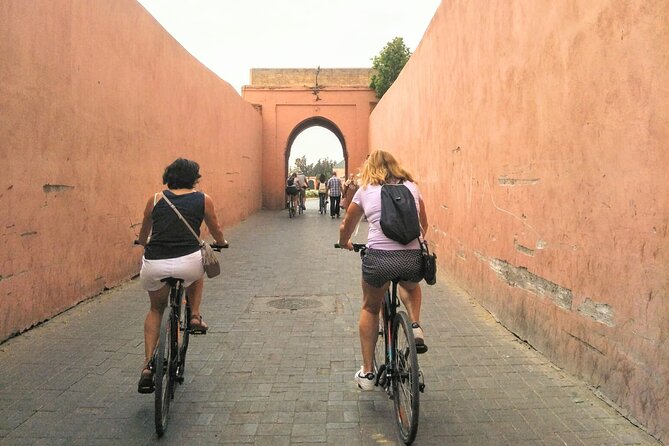
The tour is about 3 hours total (give or take), and that’s exactly why it’s such good value. You get multiple landmarks, plus real city movement, in one focused block. With a route that includes the medina and other areas, you’re not just staying in one bubble.
You’ll want to keep your expectations aligned with the bike reality. In a city like Marrakesh, roads can be uneven, and traffic patterns can be active. That’s why the tour works best for riders who are comfortable being alert and staying aware.
Comfort can be an individual thing. One review note that popped up: some saddles may feel uncomfortable for longer stretches. If you have sensitive sit bones or you don’t love standard bike seats, consider wearing padded cycling shorts. It’s a simple fix that can change your entire experience.
Value for Around $36: What You’re Really Paying For
At $36.06 per person, this tour can be a smart buy for a practical reason: you’re getting a package of things that add up. You’re covered for use of a bicycle and an English-speaking guide, and you also get admission ticket coverage for each major stop on the route.
In other words, you’re paying for time. Not just transportation, but guided time in multiple high-interest locations. Instead of spending your day piece-mealing tickets and figuring out routes between neighborhoods, you’re following a plan that does the connecting for you.
There’s also a small bonus that’s worth mentioning: riders have noted a stop for drinks that’s included. That matters because it keeps the ride from feeling like a nonstop sprint. A quick break at the right moment is what makes a half-day tour actually enjoyable.
Who This Tour Suits Best (and Who Should Rethink It)
This bike tour is a strong match if you want:
- an easy way to get oriented across different parts of Marrakesh
- a guide who helps you understand sites like Koutoubia and the Saadian Tombs
- a practical, time-efficient “highlights” plan that still leaves room to explore later
It’s less ideal if you:
- are a complete beginner and you feel uneasy around active city driving
- need super-soft ride comfort and you know bike saddles usually bother you
If you’re the type who likes to return later to one place you loved, this format sets you up. You’ll see each landmark quickly enough to decide where to spend more time on your own.
Should You Book This Marrakesh Bike Tour?
Yes, if you want a fast, guided overview of Marrakesh’s most important sights, with a local voice and built-in photo stops. The best part isn’t the novelty of riding bikes—it’s that the route helps you connect neighborhoods to landmarks in a way that makes your later exploring smarter.
Book it especially if you like structure but don’t want a rigid day. You’ll get about three hours of focused sightseeing, tickets included, and a guide who can explain what you’re seeing instead of leaving you to guess.
Skip it (or choose another option) if you’re not comfortable riding in city traffic and you tend to get stressed by road awareness. In Marrakesh, confidence matters.
One last practical tip: verify the meeting address Rue Oum Errabia before you head out. If the start looks confusing on your map app, use the street address and plan for a quick taxi adjustment to grab the bikes.
FAQ
How long is the Half-Day Highlights of Marrakesh Bike Tour?
It runs for about 3 hours.
Where does the tour start, and what time does it begin?
The tour starts at Rue Oum Errabia, Marrakesh 40000, Morocco, at 9:30 am.
What is the approximate price per person?
The price is $36.06 per person.
What’s included in the tour?
The tour includes use of a bicycle and an English-speaking guide. It also includes time to take photos.
Are admission tickets included for the sights?
Yes. Admission tickets are included for Jemaa el-Fnaa, Koutoubia Mosque, Saadian Tombs, and Menara Gardens and Pavilion.
What are the main stops on the route?
The tour includes Jemaa el-Fnaa, Koutoubia Mosque, Saadian Tombs, and Menara Gardens and Pavilion.
How big is the group?
The tour has a maximum of 30 travelers.
Do I receive a mobile ticket?
Yes. The tour uses a mobile ticket.
Is it suitable for most travelers?
Most travelers can participate.
What happens if weather is poor?
This tour requires good weather. If it’s canceled due to poor weather, you’ll be offered a different date or a full refund.