REVIEW · MARRAKECH
Marrakech’s Best Cycling Tour: Culture, Colors, and Charm
Book on Viator →Operated by Marrakech Green Wheels · Bookable on Viator
Pedal through old and new Marrakech in 3 hours. This tour gives you a guided bike view of the Medina and Gueliz plus landmark stops like Koutoubia. You’ll also hear real-life stories from guides such as Hanan and Amina as you roll through the city’s mix of tradition and change.
Two things I really like: bikes, helmets, and water are included, so you start the ride ready to go. The tea or orange juice break is an easy reset before you tackle the streets again.
One possible drawback: the Medina can feel intense. If you’re not comfortable riding around traffic and tight lanes, you’ll want to think twice.
In This Review
- Key highlights worth your attention
- A first-day Marrakech move: why cycling makes sense
- Marrakech Green Wheels meet-up and how the tour actually flows
- Gueliz streets: where you get breathing room and real orientation
- Koutoubia Mosque and the spice souk: landmarks plus senses
- Entering the Medina: safe guiding in crowded traffic
- Mellah Jewish quarter: seeing Marrakech as layered
- Tea break, water, and those little stops that make it feel local
- Traffic reality, distance, and how hard this feels
- Price and value: what $32.75 gets you in Marrakech
- Should you book this Marrakech cycling tour?
- FAQ
- How long is the Marrakech cycling tour?
- What does the tour cost?
- What’s included in the price?
- What areas of Marrakech will we see?
- Where is the tour meeting point?
- Is pick-up available?
- Is the tour suitable for beginners?
- How many cyclists are with each guide?
- What if the weather is bad or plans change?
Key highlights worth your attention
- One guide per eight cyclists keeps the group together and focused on safety
- Bike, helmet, and bottled water included means you can travel lighter
- Tea or orange juice break gives you a real pause, not just photo stops
- You cover both Gueliz and the Medina so you understand how Marrakech is laid out
- Koutoubia Mosque, a spice souk, and the Mellah quarter bring the city’s layers into one ride
- Reflective vests for evening tours help with visibility when it’s darker
A first-day Marrakech move: why cycling makes sense
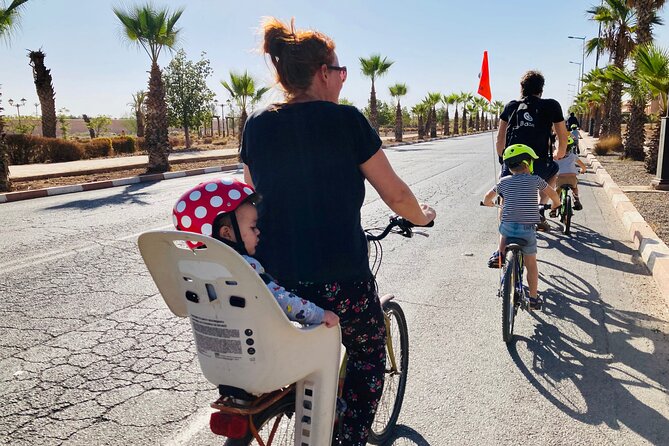
Marrakech is a city that runs on movement—traffic, scooters, carts, pedestrians, and the push-and-pull of the medina. Doing it on foot can be slow and exhausting. Doing it by taxi can turn into sitting in heat while you wait. On a bike, you get something better: momentum plus context.
In a tight 3-hour window, this kind of guided ride helps you read the city. You see what’s modern (Gueliz) and what’s older (the Medina), and you start to recognize streets and landmarks later when you’re exploring on your own. That matters on a short trip.
Also, the guide style here seems to be built around storytelling and practical navigation. Names like Amina, Sofiane, Sofial, Amena, and Soufian show up in the feedback, and the consistent theme is that guides don’t just point. They explain why places look the way they do and how daily life works.
You can also read our reviews of more tours and experiences in Marrakech.
Marrakech Green Wheels meet-up and how the tour actually flows
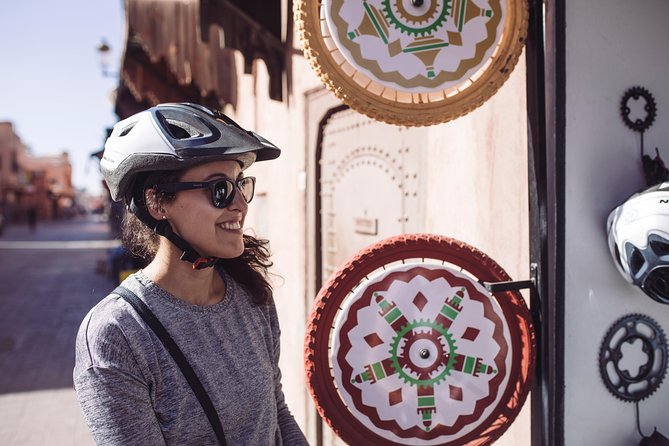
You start at Marrakech Green Wheels on Tariq Makhzen (240 Tariq Makhzen, Marrakech). The tour ends back at the same point, which keeps things simple—no transfers, no guessing where to go next.
This is a small-group tour with a max of 50 travelers. More important than the total group size is the guide-to-cyclist ratio: one guide per eight cyclists. In real terms, that’s why the ride feels guided instead of just “follow the leader.” Guides can watch pacing, keep you from drifting into the chaos, and check in if someone’s getting tired or nervous.
They provide bikes and helmets. Bottled water is included, and you’ll get tea or orange juice during a break. That turns the tour into an experience you can actually enjoy, not just a workout you have to survive.
A detail I appreciate: the tour includes off-the-beaten-path routing. You’re not locked into a single “postcard loop.” In the Medina especially, it’s the side streets and transitions that help you understand the city’s rhythm.
Gueliz streets: where you get breathing room and real orientation
Most first-time visitors arrive expecting the medina to be the whole story. It isn’t. Marrakech also has Gueliz—the newer part of town with wider streets, more straightforward navigation, and a different vibe.
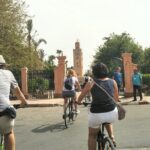
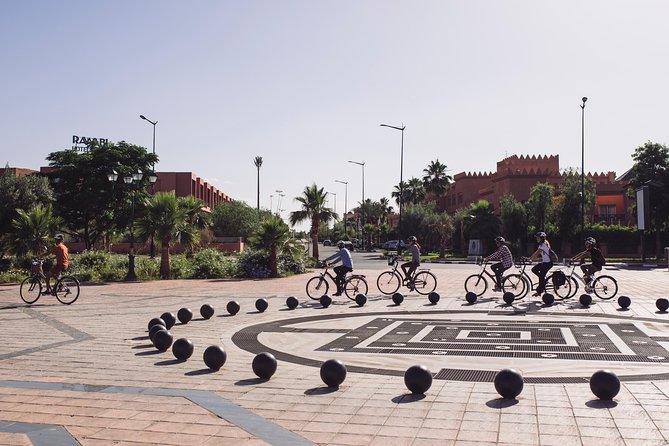
During the early stretch, this tour typically moves from modern roads toward older areas. That’s a smart rhythm. You get time to settle on the bike, learn what the group expects, and start building your sense of direction before you reach the tight, crowded lanes.
Why I think Gueliz matters on this tour: it’s where you’ll likely notice the city’s structure—how streets connect, how neighborhoods change, and where big landmarks sit relative to daily life. Later, when you walk, those mental maps help.
The ride isn’t sold as technical biking. It’s urban riding. So the goal is confidence and flow, not speed.
Koutoubia Mosque and the spice souk: landmarks plus senses
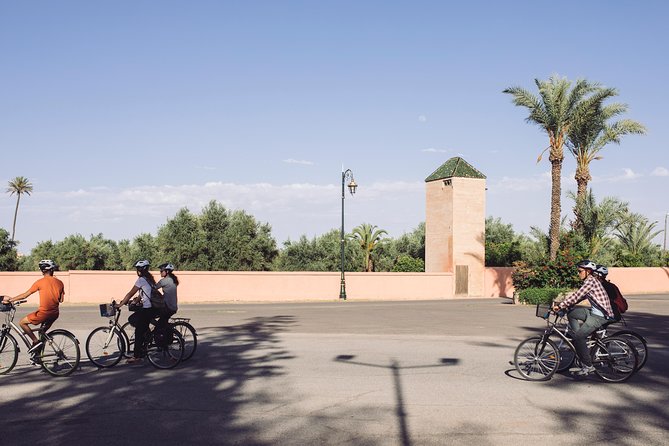
The tour includes the Koutoubia Mosque and a spice souk. Those stops work because they connect iconic Marrakech to everyday smells and textures.
Koutoubia is one of those places you’ve seen in photos, but it lands differently in real life when you approach it through city streets rather than from a bus drop-off. You get the scale of the area and you can see how important landmarks fit into the surrounding flow of people.
Then comes the spice souk. Souks aren’t just “shops”—they’re a sensory map. Even when you don’t buy anything, you’ll notice the way vendors display goods, the energy of bargaining, and the logic of where certain products show up. For many people, this is the stop that makes the tour feel more like culture than sightseeing.
A couple of ride notes from the feedback also point to how the experience adds texture. Guides often stop for small moments beyond the big monuments, like visiting artisan areas. In at least one case, there was a stop for bread at a local bakery—tiny detail, big morale boost.
Entering the Medina: safe guiding in crowded traffic
Riding into the Medina is where the tour earns its reputation—and where you should be honest with yourself about comfort.
The Medina is crowded. The streets can be narrow. Movement is constant, and you’ll share space with carts, donkeys, and all kinds of street activity. Reviews describe the experience as fun and memorable, but one person summed it up bluntly: not for the faint of heart. Another cyclist mentioned a near-collision involving traffic.
Here’s the practical takeaway: this tour is designed with safety-forward guiding. The guides use the buddy system of sorts—keeping you with the group and watching your spacing. That’s exactly what the one guide per eight cyclists setup is for.
If you’re choosing this tour, I’d treat it like a “city traffic” cycling day. You don’t need to be a pro racer, but you should be able to ride calmly when things slow down, when people cross lanes unexpectedly, or when the road gets tight.
Even if you’re nervous at the start, the guidance from names like Hanan, Amina, and Abdul shows up repeatedly as attentive and reassuring. The best tours in Marrakech help you feel like you’re part of the street scene without being swallowed by it.
Mellah Jewish quarter: seeing Marrakech as layered
The tour also visits the Mellah Jewish quarter. Even if you don’t go inside every site (entry fees aren’t included), simply riding through the area helps you understand that Marrakech is layered—different communities over time, visible in architecture, street layout, and local history.
What I like about including Mellah on a bike tour is that it changes your perspective. Most visitors focus only on the most famous sights. Here, you get a broader sweep of neighborhoods in a short time, which makes your later self-guided wandering more meaningful.
A cycling tour also helps with context because you’re moving between areas in the same day. You’ll start noticing how the city’s character shifts block by block.
Tea break, water, and those little stops that make it feel local
You’re not out there just to collect monuments. The tour includes a tea break with tea or orange juice and provides bottled water.
That matters more than it sounds. Marrakech heat and street dust can sneak up on you. Taking a real break is what keeps the tour from turning into a slog. It’s also where guides can slow down and talk. That’s when you’ll pick up small insights about relationships, growing up in Marrakech, and how the country balances tradition with modern life—stories that don’t usually show up in guidebooks.
Some feedback mentions small extras like visiting artisans and pausing for bread at a local bakery. Those moments are not just “nice.” They make you feel the tour is connected to how people actually live, not just what you can see from the street.
Traffic reality, distance, and how hard this feels
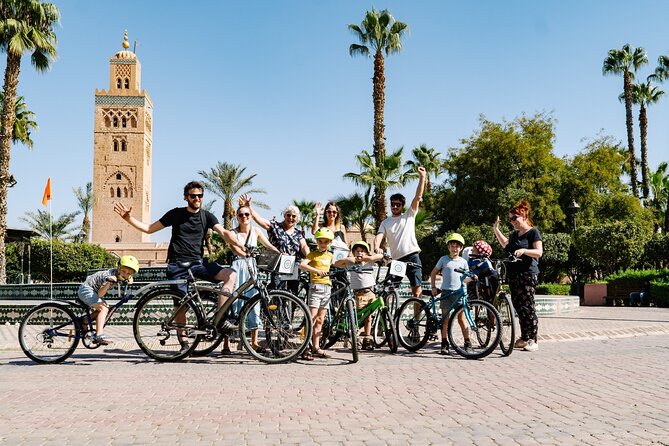
This tour runs about 3 hours and is described as suitable for most travelers. But “most” doesn’t mean “anyone.” The Medina in particular asks for a certain level of comfort.
One review mentioned the ride felt like around 20 km over the course of the tour. Even if your distance ends up a bit different, it’s a useful clue: you’ll get a workout, but it shouldn’t be a grinding one.
What determines how hard it feels:
- How confident you are riding in busy city spaces
- How comfortable you are with frequent stopping and starting
- Your tolerance for heat and sun (suncream isn’t included)
Also, one review complained about not hearing the guide well at times. That’s fixable: don’t be afraid to ask questions directly, and try to position yourself where you can hear without twisting around.
If you’re the type who panics when things get crowded, you’ll probably feel stressed in the Medina. If you can stay calm, keep your line, and trust your guide, this becomes one of the easiest ways to see a lot without feeling like you’re stuck in traffic.
Price and value: what $32.75 gets you in Marrakech
At $32.75 per person, this tour competes well because the basics are included:
- Bike + helmet
- Tour leader
- Bottled water
- Tea or orange juice
What isn’t included: entry fees to monuments and gardens and sunscreen. That means you won’t pay extra for the bike and guiding—but if you want to go inside certain places, you may still need to cover those fees separately.
Here’s the value math I like: you’re paying for access—not just to sights, but to a route through both old and modern Marrakech. In just 3 hours, you get a guided sweep, safety support, and the kind of city orientation you’d otherwise spend on multiple taxi rides or long, exhausting walks.
If you’re on a budget and want a high-impact first day, this price feels fair.
Should you book this Marrakech cycling tour?
I’d book it if:
- You want a first-day orientation that helps your walking and shopping later
- You like city stories and want to understand neighborhoods, not just stare at landmarks
- You’re comfortable riding through busy streets with a guide watching the group
I’d skip it (or pick a different style of tour) if:
- You’re not comfortable cycling in crowded traffic
- You prefer slower, purely historical tours where you can read and stop longer without moving
- You know you’ll struggle to hear a guide in busy street conditions
If you’re on the fence, go with this simple rule: you don’t need to be fearless, but you do need to be steady. When you’re steady, this tour delivers a lot of Marrakech in a short time—old Medina texture, modern Gueliz clarity, and landmark stops that make sense together.
FAQ
How long is the Marrakech cycling tour?
It’s about 3 hours.
What does the tour cost?
The price is $32.75 per person.
What’s included in the price?
It includes a bike and helmet, a tour leader, bottled water, and tea or orange juice during a tea break.
What areas of Marrakech will we see?
You’ll ride through Gueliz and older parts of town, including the Medina, Koutoubia Mosque, a spice souk, and the Mellah Jewish quarter.
Where is the tour meeting point?
The meeting point is Marrakech Green Wheels at 240 Tariq Makhzen, Marrakech 40000, Morocco. The tour ends back at the same place.
Is pick-up available?
Free pick-up is available for groups of five or more.
Is the tour suitable for beginners?
Most travelers can participate, but you should feel comfortable cycling in Marrakech’s city streets. The Medina area can be crowded.
How many cyclists are with each guide?
There is one guide per eight cyclists for safety and group control.
What if the weather is bad or plans change?
You can cancel for a full refund up to 24 hours in advance. The tour also requires good weather; if it’s canceled due to poor weather, you’ll be offered a different date or a full refund.