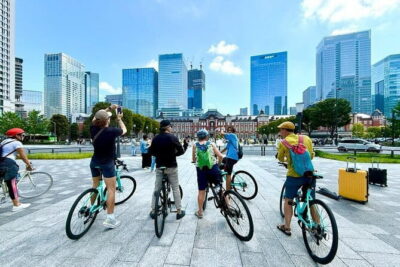
Two wheels make Verona easy. This Verona bike tour strings together the city’s top landmarks in about 3 hours, with an English-speaking guide who puts the stones into context as you ride. It’s a simple plan: glide past the big sights, then slow down for the places that actually stick in your head.
I especially like the way the ride balances wow moments with real explanation. Guides such as Sylvia and Sara bring Verona to life with clear, well-timed stories, and Francesca has an art history and archaeology background that makes the Roman and medieval pieces feel connected. I also like that the route is mostly flat, so you get movement without turning your trip into a workout video—cobblestones are the main thing to watch.
One consideration: two of the most famous stops require separate tickets—the Arena di Verona and Casa di Giulietta. Also, central streets can feel busy (pedestrians and occasional cars), so go in ready for tight-city biking even though the pace stays controlled.
In This Review
- Key highlights and what feels different on this tour
- Getting started on Via del Pontiere: your Verona route begins
- Stop 1: Arena di Verona at Piazza Bra (the Roman Arena’s big moment)
- Stop 2: Piazza delle Erbe and the Roman Porta Borsari approach
- Stop 3: Casa di Giulietta in the lanes behind the famous balcony
- Stop 4: Piazza dei Signori and the medieval heart of town
- Stop 5: Castel San Pietro stairs, Roman ruins, and a serious view
- Stop 6: Basilica di San Zeno Maggiore and the river crossing
- The $47.18 price: what you actually get for your money
- How physically demanding is it really?
- Guide quality: why the stories make the ride better
- Should you book the Verona Bike Tour?
- FAQ
- How long is the Verona Bike Tour?
- What time does the tour start, and where do we meet?
- Is the tour offered in English?
- Are entrance tickets included for the Arena di Verona and Casa di Giulietta?
- What’s included in the price besides the guide?
- Is the ride strenuous?
Key highlights and what feels different on this tour
- A small group (up to 15) keeps the ride organized and safer on crowded streets.
- Official English-speaking guide helps you understand what you’re seeing, not just point and click.
- Mostly flat riding, with cobblestones as the main “gear test.”
- A hilltop reward at Castel San Pietro: you park the bike and climb stairs for major views.
- Top Verona stops plus smart river time, so you don’t miss the layout of the city.
Getting started on Via del Pontiere: your Verona route begins
You start at Via del Pontiere, 23 (37122 Verona). The tour meets there, and it ends back at the same spot, which is great because you don’t waste time re-navigating the center later.
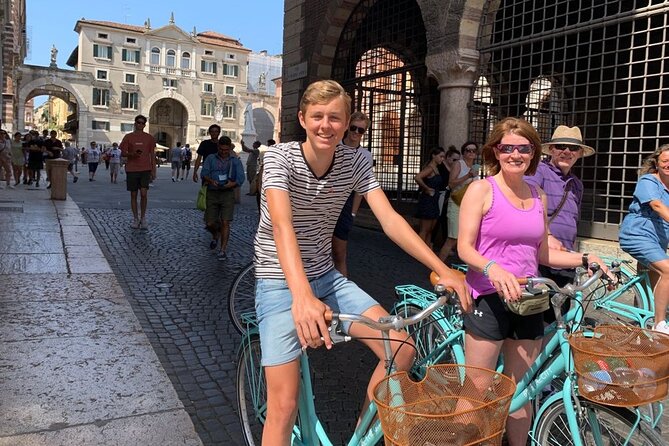
You’ll get a bike rental and helmets, plus third-party liability insurance. You should be comfortable biking in a city setting—no special skill required—but expect normal street-life: tight turns, pedestrians, and the occasional car weaving where it fits. The upside is that Verona’s sights aren’t all in one neat cluster, so the bike saves you from backtracking.
The tour runs from 10:00 am and lasts about 3 hours. It’s also a popular slot—bookings tend to happen well ahead—so if your dates are fixed, it’s worth reserving early.
You can also read our reviews of more tours and experiences in Verona.
Stop 1: Arena di Verona at Piazza Bra (the Roman Arena’s big moment)
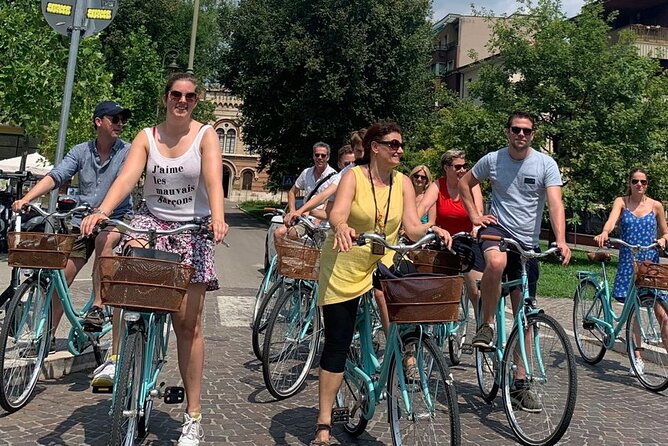
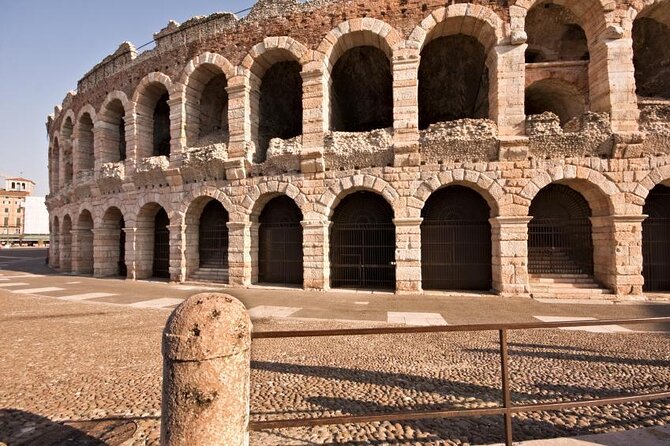
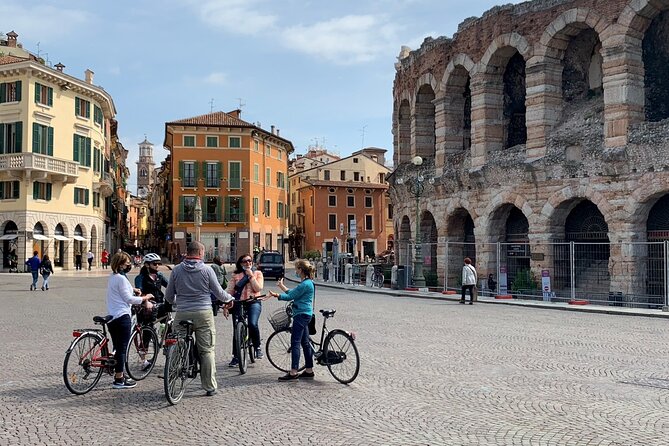
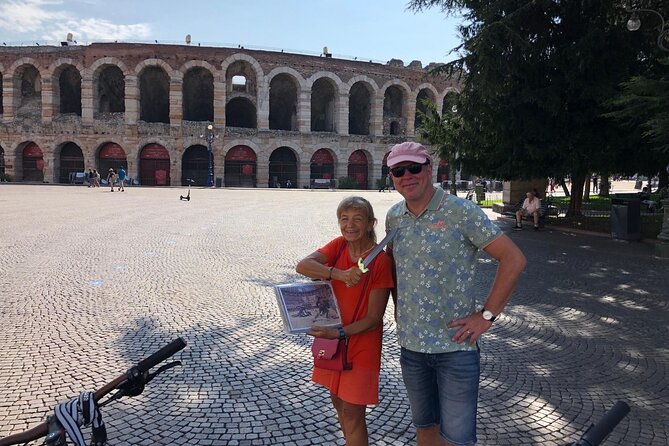
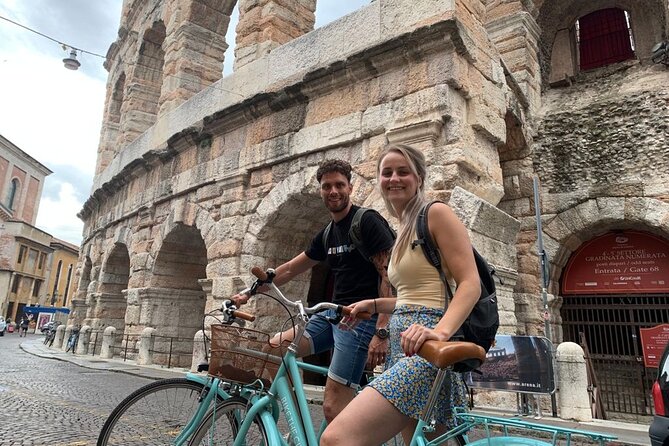
The ride kicks off at Arena di Verona in Piazza Bra. You roll right up to the colossal pink-tinged marble amphitheater—hard to miss, even if you’re not a Roman-history person. This is Verona’s most dramatic landmark, and it works as a first stop because it instantly gives you the city’s “before the cafes” identity.
You’ll spend about 10 minutes here. Note that the Arena ticket is not included, so have a plan for buying it (or deciding on the best moment for it) before you arrive. If you’re aiming to attend the famous open-air opera setting inside the Arena, you’ll at least leave with a clear sense of why the venue is such a big deal.
Practical tip: stand back a little before taking photos close-up. The scale is huge, and stepping a few feet gives you that better “I’m really seeing Verona” perspective.
Stop 2: Piazza delle Erbe and the Roman Porta Borsari approach
Next you bike toward Porta Borsari, the Roman gate dating to the 1st century AD. This is one of those transitions that makes the tour feel smart: you’re not just jumping from one postcard to another. You’re seeing the way Verona layers eras on the same streets.
Then you reach Piazza delle Erbe, the former Roman forum, now an open-air market square framed by historical buildings with frescoes and sculptures. This stop also runs about 10 minutes, and there’s no entrance ticket needed.
What I like here is the contrast. The Arena is huge and monumental; Piazza delle Erbe is human-scale—places to look up at details, look around at city life, and notice how Verona markets still animate the space. Even if you don’t shop, it’s the kind of stop that makes the city feel lived-in.
If you want a quick self-check: slow down for the facades and the square’s edges. That’s where you’ll spot the storytelling.
Stop 3: Casa di Giulietta in the lanes behind the famous balcony
After the Roman pulse, the tour shifts to Verona’s love legend at Casa di Giulietta (Via Cappello, 23). You’ll weave into narrow lanes and arrive at the small, crowded courtyard where the bronze statue of Juliet sits—an instant photo magnet.
You’ll spend about 10 minutes here. The Casa di Giulietta ticket is not included, so treat this as a “must-see stop” rather than an included activity. If you’re not into statues and balcony lore, you can still enjoy the scene for the atmosphere and the city’s relationship to romance tourism.
Here’s the best way to enjoy it: don’t try to rush the courtyard. Look for the details around the space—stone textures, doorways, and the sense that everyone is quietly sharing the same moment. The tour’s guide will usually connect the mythy vibe to Verona’s broader story, which helps it feel less like a theme park.
Stop 4: Piazza dei Signori and the medieval heart of town
Then you’re back on the bikes heading to Piazza dei Signori and the Arche Scaligere area. This is where Verona’s medieval identity comes forward. The buildings around the square feel built for power—shapes, stonework, and layout all made to impress.
This stop is about 10 minutes and is ticket-free. The ride through this area also tends to include those heart-themed photo cues that Verona is famous for. Think: decorative motifs that link the city’s romance image to its historic center.
I like this stop because it helps you “read” Verona. Once you’ve seen the Roman Arena and the Juliet courtyard, Piazza dei Signori adds the missing middle—medieval rule, civic pride, and the sense that the city was organized around major squares long before modern tourism.
If you’re the type who loves structure: stand where you can see how the streets funnel into the square. It tells you how people once moved through power centers.
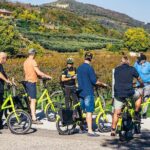
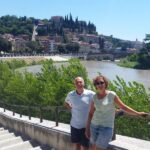
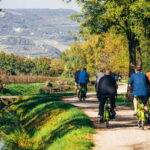

Stop 5: Castel San Pietro stairs, Roman ruins, and a serious view
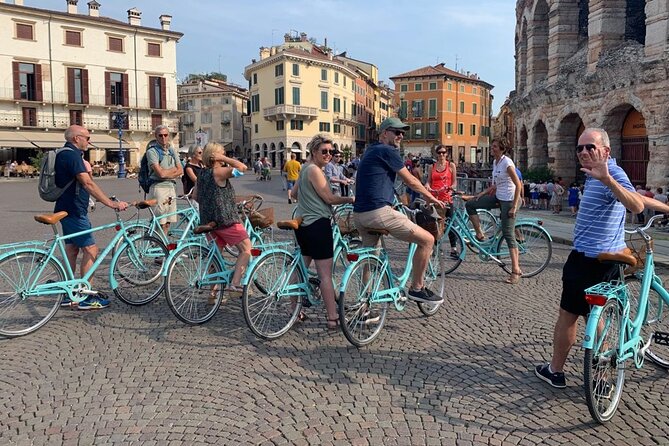
Now comes the one active moment that makes the tour worth it: Piazzale Castel San Pietro. You’ll take in a view of Verona from Brà Molinari, then stop near the Duomo and cross Ponte Pietra, the ancient Roman arch bridge.
This leg runs about 30 minutes total, and you’ll leave your bikes for a climb up a panoramic staircase. The good news: you’re not biking uphill; you’re walking up steps for a short spell. The guide handles the timing so the group stays together.
The payoff is huge. At the top, you’re rewarded with the spectacular ruins of the Roman theatre and a breathtaking view of Verona. This is also where the city’s layout clicks: the Adige River, the terracotta rooftops, and the hill shapes all make sense at once.
Important note: the stairs are real. If you have mobility limits, consider skipping this tour or asking the operator about how they manage the climb. This is the only “hard” part.
Stop 6: Basilica di San Zeno Maggiore and the river crossing
To finish, you cross back over the Adige and head toward Basilica di San Zeno Maggiore, one of Verona’s strongest Romanesque sights. You’ll bike over the Scaliger bridge, a fortified bridge built in the 14th century that was destroyed during World War II and later rebuilt using original materials.
This part matters because it adds a modern layer to an ancient city: history isn’t just “long ago,” it’s also something Verona rebuilt. The bridge story is the kind of detail a good guide will time well so it doesn’t turn into a lecture.
You wrap up at the basilica, spending about 10 minutes. A highlight is Mantegna’s masterpiece, protected within the church. No ticket is required for this stop on the tour.
What I like about ending here is the shift from panoramic views back to craftsmanship. The finish feels calm and grounded after the action of biking and the staircase climb.
The $47.18 price: what you actually get for your money
At about $47.18 per person for a roughly 3-hour ride, this tour is good value if you want a guided overview without spending your whole day bouncing between scattered stops.
Here’s what’s included:
- Official English-speaking guide
- Bike rental and helmets
- Third-party liability insurance
And here’s what’s not included:
- Entrance tickets not listed as included—so plan on buying Arena di Verona and Casa di Giulietta tickets separately if you want both.
This pricing works because the bike saves time and energy. Verona is compact, but it’s still spread out enough that walking can eat your day—especially in warm weather. People also mention that biking feels safer and less exhausting than walking when it’s hot, and I agree with the logic: you’re moving with less stop-and-start fatigue.
If you’re traveling with kids, this price can be a smart way to get them through the city’s big highlights. The ride length is short enough to keep energy up, but the guide keeps the history clear and interesting.
How physically demanding is it really?
The ride is described as predominantly flat, and that matches the experience people report: single-speed bikes that are easy to handle, with cobblestones as the main challenge. You don’t need to be a cyclist—more like, you need basic comfort on uneven pavement.
Also, central streets can be crowded. Expect walkers and occasional cars in some areas, even on days when it’s not peak-season chaos. The guide keeps the group organized and watches your pace, but you should still ride with focus.
The one real effort is the stair climb to Castel San Pietro. You’ll park the bike and walk up the steps, then come back down. If that’s a problem for you, this tour may not be the best match.
Comfort tips that actually help:
- Wear shoes that handle cobblestones (not slippery sandals).
- Bring water, especially if you go in warmer months.
- Pack a small daybag; if your bike doesn’t have storage, keep your hands free and your items secure.
Guide quality: why the stories make the ride better
This tour’s biggest differentiator is the guide. Names that come up often include Sylvia, Sara, Silvia, Daniella, Cecilia, and Elizabeth, and the common thread is how they connect each stop to how Verona functioned—Roman infrastructure, medieval power, and how the city evolved.
Francesca is highlighted for bringing an art history and archaeology lens, which is exactly what you want when you see Roman arches, medieval squares, and church art all in one morning. Silvia is praised for adjusting the trip when people show genuine interest and even adding extra points you might not find on your own. Daniella is noted for being born and raised in Verona, which adds that local pride you can feel when the guide talks about place names and street logic.
Also, timing matters. The groups are small, and the best guides keep explanations short enough that you don’t lose momentum—so you still get a full tour rather than sitting too long at each site.
Should you book the Verona Bike Tour?
Book it if you want:
- A high-impact overview of Verona in a tight time window
- A bike-friendly way to hit places that are spread across the center
- English guidance that explains what you’re seeing (instead of just pointing)
You might skip it if:
- You can’t do stairs at all (Castel San Pietro is part of the plan)
- You want only fully ticket-included attractions and don’t want to buy Arena/Juliet separately
- You’re extremely anxious about riding in busy city streets
For most people, the best reason to book is simple: Verona is made for seeing by bike. You get speed, you get context, and you still end with views that feel like you earned them—without spending your whole day walking.
FAQ
How long is the Verona Bike Tour?
The tour lasts about 3 hours.
What time does the tour start, and where do we meet?
It starts at 10:00 am, meeting at Via del Pontiere, 23, 37122 Verona VR, Italy.
Is the tour offered in English?
Yes. The tour includes an official English speaking guide.
Are entrance tickets included for the Arena di Verona and Casa di Giulietta?
No. Admission tickets are not included for Arena di Verona and Casa di Giulietta.
What’s included in the price besides the guide?
Bike rental, helmets, and third party liability insurance are included.
Is the ride strenuous?
The route is predominantly flat, and cobblestones are the main challenge. You will also leave your bike to climb a panoramic staircase to Castel San Pietro.