REVIEW · ROME
Rome: E-Bike Tour of Appia Antica, Aqueducts, and Caffarella
Book on GetYourGuide →Operated by Rome in a Day Tours · Bookable on GetYourGuide
Rome by bike beats another museum day. This 4-hour ride threads together Appia Antica, aqueducts, and Caffarella Valley in a way that feels like you left modern Rome behind.
I love two things most. First, the chance to cruise the Appian Way itself, including the quieter back-road feel and frequent photo stops at major ruins. Second, the aqueduct section at Parco degli Acquedotti, where you get the Roman “water system” story without trudging uphill on foot.
One consideration: you really do need solid bike skills, and a few stretches can be bumpy, especially on older stone. If you’re not comfortable balancing on uneven ground, this may be more stress than fun.
In This Review
- Key points to know before you go
- How this Rome e-bike tour actually feels: city out, countryside in
- Starting at Circus Maximus: why this neighborhood matters
- Caracalla Baths and the Roman water mindset
- Quo Vadis and the Catacombs zone: quieter sacred Rome
- Villa Massenzio, Cecilia Metella, and Appia Antica’s big names
- The practical break: a local bar stop that keeps the ride fun
- Parco degli Acquedotti: the Roman water system, explained where it matters
- Caffarella Valley: ruins beside open space and farm animals
- Nymphaeum of Egeria: closing on a myth and a real site
- E-bikes and safety: what you should expect on the road
- Price and value: why $88 makes sense for this route
- Who should book this Rome e-bike tour
- Should you book it?
- FAQ
- How long is the e-bike tour?
- What’s the meeting point?
- Is the tour offered in English and other languages?
- How big is the group?
- Is the tour rain or shine?
- Do I need to know how to ride a bicycle?
- What’s included in the price?
- Is it possible to cancel or pay later?
Key points to know before you go
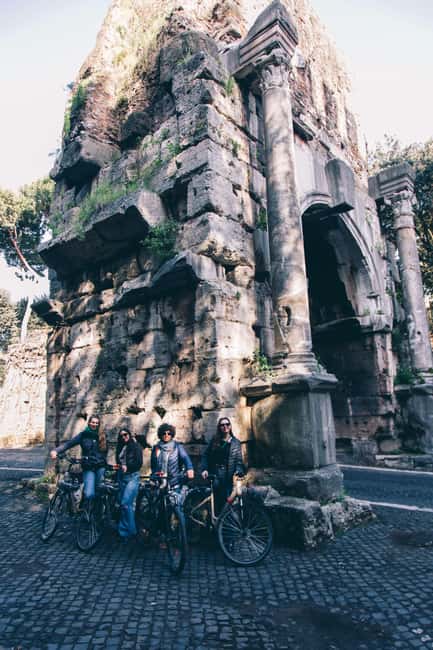
- Appia Antica by e-bike: cover real ground fast, with frequent stops at recognizable monuments
- Parco degli Acquedotti: understand how Romans moved water, up close
- Caffarella Valley: ancient ruins next to open space where farm animals can wander
- Small group (max 8): easier pacing and safer road choices
- Guide-led history: expect clear context on Roman roads, walls, and water works
- Well-maintained e-bikes: reviews repeatedly call out bikes that are in great shape and charged
How this Rome e-bike tour actually feels: city out, countryside in
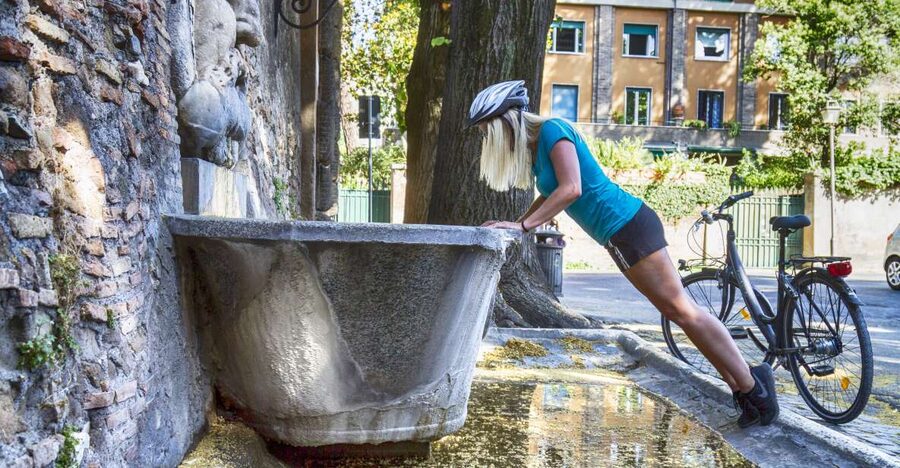
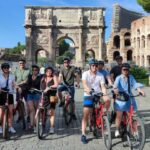
This tour is a smart mix of Rome’s big-ticket history and the calmer green spaces people miss when they stick to the center. You start near the Circus Maximus and then gradually work your way away from traffic and into the Roman countryside mood. The e-bike matters here. It turns a “would take all day walking” route into a 4-hour experience you can actually enjoy without arriving exhausted.
You’ll get multiple photo stops and short site visits, so you’re not rushing through like a checklist. The pacing also makes sense for the road conditions: older paths, occasional gravelly patches, and the kind of gentle bumps that feel fine on an e-bike but would get old fast on foot.
Group size plays a role too. With a small group limited to 8, you can keep a steady flow and still take breaks without feeling herded.
You can also read our reviews of more tours and experiences in Rome.


Starting at Circus Maximus: why this neighborhood matters
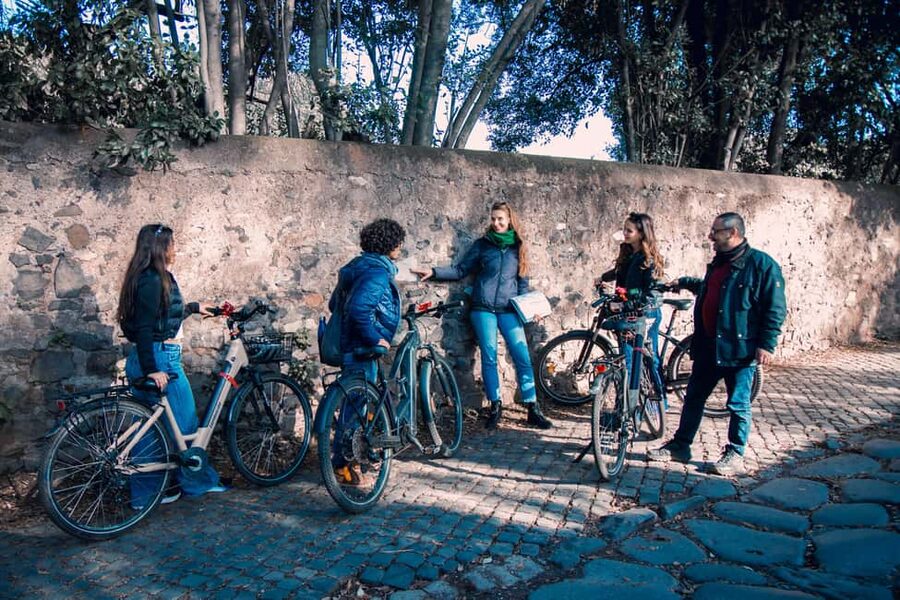
You begin at the Rome in a Day Tours meeting spot (Rome in a Day Tours – Electric Bike and Vespa Excursions), right in front of the Circus Maximus area. They ask you to arrive about 15 minutes early so you can get oriented, handle paperwork, and fit yourself to the bike setup.
Circus Maximus isn’t just a cool landmark to point at. It sets the tone: you’re standing in the footprint of a place that once held a massive crowd for chariot racing. It’s a reminder that Rome’s “everyday” history is tied to power, spectacle, and engineering.
There’s a photo stop here (about 10 minutes), so use it to get your bearings and confirm you feel comfortable on the bike before you start rolling.
Caracalla Baths and the Roman water mindset
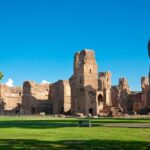
Next comes the Baths of Caracalla for a photo stop (around 20 minutes). Even if you don’t go inside, it helps anchor the Roman world you’re moving through. Baths weren’t just luxury. They were hubs of daily life, and they connect directly to Rome’s obsession with water and infrastructure.
After that, you head toward Porta San Sebastiano (another 20-minute photo stop). This spot is tied to fortification history and the Aurelian Walls area. It’s the kind of contrast you want on this route: you’re seeing Rome’s “defense” logic alongside its engineering logic.
In practice, what I like about these early stops is that they make the later aqueduct section easier to understand. You’re not suddenly learning about water works with no context.
Quo Vadis and the Catacombs zone: quieter sacred Rome
The tour then touches a cluster of sites that feel like a different Rome—older, slower, and more reflective.
You’ll stop at the Church of Domine Quo Vadis (about 20 minutes). It’s not just a name on a map. It’s one of those places where the story of Rome’s faith layer overlaps with its ancient roads and movement patterns.
Then you’ll pass by the Catacombs of Saint Callistus (around 20 minutes). You won’t be spending hours inside during this ride, but passing by is useful. It signals you’re moving through areas connected to early Christian burial traditions—right alongside the older Roman material all around you.
If you’re the type who likes your history in layers, this section delivers. If you prefer only “major must-see interior stops,” you might want more time at the catacombs—but the route trades that for the Appia Antica and aqueduct segments you came for.
Villa Massenzio, Cecilia Metella, and Appia Antica’s big names
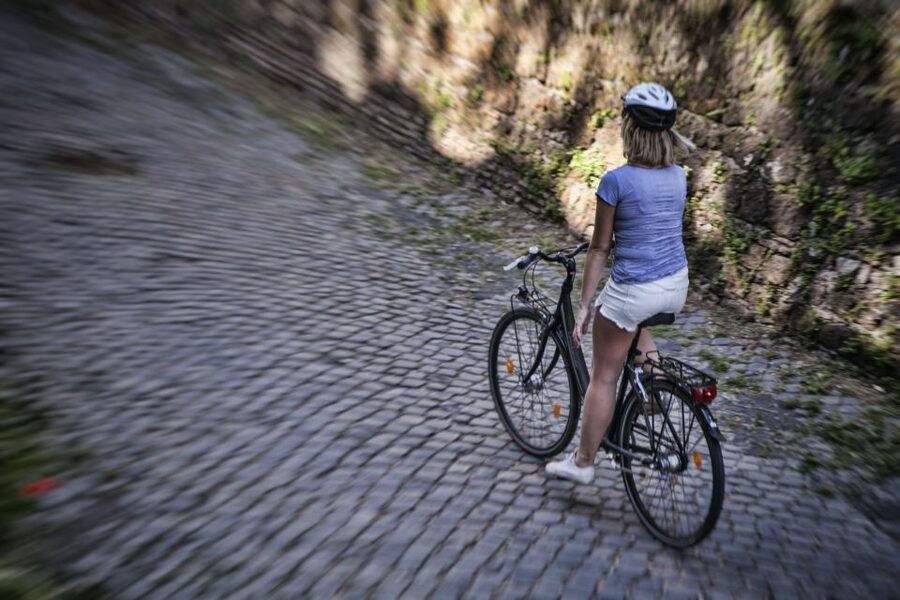
As you continue along the early miles of Via Appia Antica, you’re in the zone where multiple famous ruins stack up close together.
You’ll have a photo stop at Villa di Massenzio (about 20 minutes). Then you’ll stop for photos at the Tomb of Cecilia Metella (also 20 minutes). These aren’t just pretty silhouettes. They help you read the landscape like a timeline—elite residences and monumental tombs clustered along a road that mattered.
One highlight here is the guide’s storytelling. In particular, guides such as Monika, Adriana, and Frederik/Fredrico have been singled out for strong knowledge and a patient pace. Even when you’re just looking at ruins, a good guide turns “stone shapes” into real people, real politics, and real reasons the road mattered.
There’s also a Tumulus of the Curiazi and Residence of Maxentius in this stretch as part of the overall story the guides cover. You don’t need a degree to follow it, but you’ll notice how often the Romans built to last.


The practical break: a local bar stop that keeps the ride fun
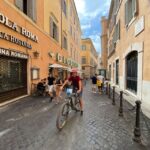
Mid-tour, you get a break at a local bar (about 20 minutes). This is more than a routine stop. It’s when you reset your body and switch from “moving mode” to “walking and looking mode.”
In warm months, this kind of pause can make the difference between feeling great and feeling drained. Even in mild weather, it helps because the surfaces can be uneven. E-bikes make the ride easier, but your legs still do work when you’re rolling on older stone.
If you want to keep moving afterward, use the break to grab something quick and hydrate. Then you’ll be ready for the bigger nature-and-water changeover.
Parco degli Acquedotti: the Roman water system, explained where it matters
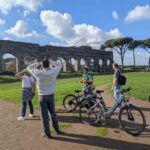
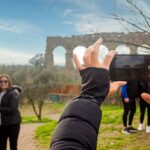
This is the part of the tour that many people remember longest: Parco degli Acquedotti (about 30 minutes).
The tour connects the dots between Rome’s demand for water and the aqueduct engineering that delivered it. You’re riding through a setting that feels like open-air history, and the guide’s explanations make the “how did they do it?” question click.
What’s valuable for you here is that this isn’t just romantic ruins. It’s functional Roman engineering tied to daily life—water supply on a scale that supported a whole city.
Also, this is where the ride starts feeling more countryside. Less urban bustle, more space to see, and a calmer rhythm. That’s why e-bikes are such a good choice here: you get to stay in the viewing window instead of spending most of the time walking.
Caffarella Valley: ruins beside open space and farm animals
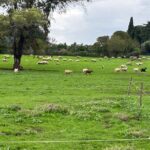
After the aqueduct park, the route continues toward Caffarella Park (about 30 minutes). This area drops into the Caffarella Valley near the Almone River, and the vibe shifts again. It’s greener, quieter, and noticeably more rural than anything in the center.
One of the fun, unexpected elements from the tour description is that you might encounter horses, sheep, goats, and pigs close by. Whether you see them or not, the open-space feel is real, and it changes how you experience Rome’s ancient world. You’re not trapped in walls and ticket lines. You’re seeing how nature and archaeology coexist.
This section also supports great photo opportunities. You’ll get views where the ancient road story meets the present-day landscape—without turning the whole day into a “scenery only” moment.
If you love the idea of Rome that looks and sounds less like a city, this is where you’ll lean forward and pay attention.
Nymphaeum of Egeria: closing on a myth and a real site
Near the end, you reach the grace of the Nymphaeum of Egeria, linked to the area by Herodes Atticus’s villa. Egeria is part of Rome’s long-running storybook tradition—yet you’re seeing the physical place tied to that legend.
This ending note matters because it rounds out the tour’s themes. You started with major civic scale (Circus Maximus), moved through elite power and fortification, then tracked infrastructure (aqueducts), and finally slowed down into a valley setting. A myth-linked site helps make the last stretch feel meaningful, not just procedural.
From here, you roll back to the meeting point near where you started.
E-bikes and safety: what you should expect on the road
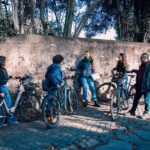
You’ll be riding an e-bike from the company-owned fleet, and reviews repeatedly highlight bikes that are in excellent condition and fully charged. You also get practical route choices, with guides aiming to keep you away from heavy car traffic and to use crossings when needed.
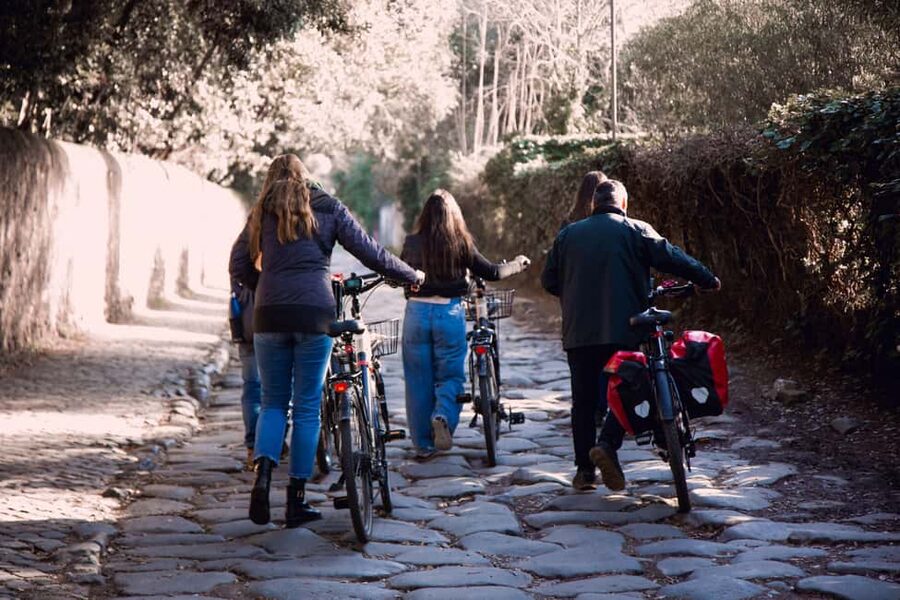
That said, do treat this as a riding experience, not a guided stroller walk. You need to know how to ride a bicycle. Some parts of the route can be bumpy, especially along older stone surfaces on the Appian Way corridor.
Also, pay attention to fit. One review noted the bike might not fit a small rider perfectly, so when they offer bike setup, take a moment to confirm comfort and reach.
Price and value: why $88 makes sense for this route
At $88 per person for about 4 hours, this tour is priced like a serious guided experience—not just a casual ride. You’re paying for two things that cost real money in Rome: a guide who can interpret multiple sites and the e-bike itself.
Here’s the value logic you should use: if you tried to do this by yourself, you’d likely spend time figuring out routes, managing transport between far-apart areas, and hunting for a safe way to cover Appia Antica plus aqueducts plus Caffarella in one day. With the route planned and the bike doing the heavy lifting, the experience becomes efficient without feeling rushed.
You’re also getting a lot of “Rome big names” content in a single half-day. That’s hard to match with walking tours unless you accept a longer day (or higher fatigue).
For many people, the best ROI here is simple: this tour gets you out of the city center and into places you’d struggle to reach quickly and comfortably on your own.
Who should book this Rome e-bike tour
This tour is a strong fit if you want:
- Real Appia Antica time without spending the whole day walking
- A guided explanation of Rome’s water system at aqueducts park
- The blend of archaeology + nature in the Caffarella Valley
- A small group pace that keeps you from feeling stuck in a crowd
It’s not for you if:
- You can’t ride a bike (an e-bike is still a bike)
- You need mobility support beyond what’s described as suitable
- You’re traveling with kids under 12
- You’re pregnant
If you’re an adult who can handle a half-day bike outing, this is one of the more efficient ways to see a quieter Rome side while still getting major historical stops.
Should you book it?
I’d book this if your Rome goal includes Appia Antica + aqueducts + Caffarella in one go, and you want the comfort advantage of an e-bike. The route is built to give you context, not just photos, and guides like Monika, Adriana, Alannah, and Frederik have been praised for knowledge and a pace that keeps you safe and comfortable.
Skip it only if you already know you hate uneven surfaces or you’re not confident riding a bicycle for 4 hours. Otherwise, it’s a great half-day that trades traffic stress for historic roads and open-air ruins.
FAQ
How long is the e-bike tour?
It runs for 4 hours.
What’s the meeting point?
You meet at Rome in a Day Tours – Electric Bike and Vespa Excursions, in front of the Circus Maximus area. Arrive about 15 minutes early to fit the bikes and handle paperwork.
Is the tour offered in English and other languages?
Yes. The live guide is available in English and Dutch.
How big is the group?
The group is small, limited to 8 participants.
Is the tour rain or shine?
Yes, it operates rain or shine.
Do I need to know how to ride a bicycle?
Yes. You need to be able to ride a bicycle to join the e-bike tour.
What’s included in the price?
You get an experienced tour guide and an e-bike.
Is it possible to cancel or pay later?
Free cancellation is available up to 24 hours in advance for a full refund, and you can reserve now and pay later.