REVIEW · OAHU
Historical Honolulu Bike Tour
Book on Viator →Operated by Bike Tour Hawaii · Bookable on Viator
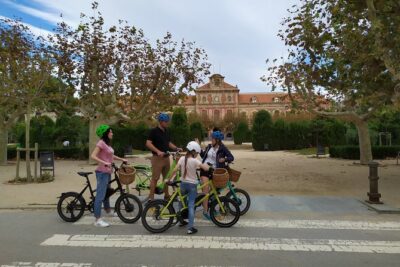
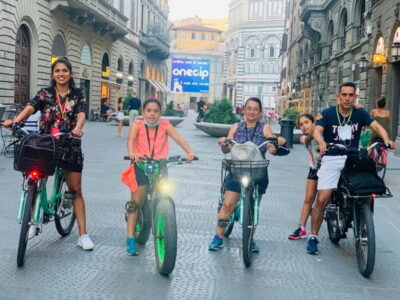
Morning bikes turn Honolulu into your classroom. This 4–5 hour small-group ride is a smart way to see the neighborhoods you’d miss on foot—Waikiki, Chinatown, downtown, and the royal core—while your guide threads in stories about how the city grew. I especially like the way the tour mixes big landmarks with everyday details, so the morning feels both scenic and practical.
One of my favorite parts is the guide’s photo support. The guide takes lots of pictures during the ride and helps you get shots at stops you’d normally struggle with solo, then shares a way to download them (and even a video-style recap, based on past departures). The pace also sounds dialed-in: not a burnout, not a slow crawl, with regular stops for rest and photos.
There’s one thing to keep in mind: the tour is capped at 10, but at least one past departure ran with 11, and one rider reported a bike needed minor fixes (like a chain issue). It’s still a great value, but do a quick bike check at the start and expect a little “vacation repair” energy just in case.
In This Review
- Key highlights you’ll care about
- Why this 7:00 am Honolulu ride feels easier than you expect
- What $149 covers and why it’s not just another bike rental
- Meeting at Kuhio Beach: the start point that sets the tone
- Waikiki to the Ala Wai Canals: the city’s first story beats
- Chinatown fruit and downtown momentum: where the ride gets fun
- Aloha Tower by elevator: the skyline payoff stop
- Kaka’ako murals: a photo stop that feels made for you
- The royal-and-cultural core: Mission Houses, Kawaiaha’o, Kamehameha, and Iolani
- Hawaiian Mission Houses Historic Site and Archives
- Kawaiaha’o Church
- King Kamehameha Statue
- Iolani Palace
- State Capitol and the rock-and-roll stop: civic power and Elvis at Blaisdell
- Hawaii State Capitol
- Neal S. Blaisdell Center: the Elvis connection
- Magic Island and the final roll through the ficus-lined path
- Magic Island and Ala Moana Park context
- Hawaii Convention Center and the tree-lined finish
- How the ride feels: pace, safety, and why the guide matters
- Who should book this Honolulu bike tour?
- Should you book it?
- FAQ
- Where is the meeting point?
- What time does the tour start?
- How long does the tour last?
- How far will I ride?
- Is the route flat or hilly?
- What’s included in the price?
- Do you stop for food during the ride?
- Is there an Aloha Tower stop?
- Does the tour run in bad weather?
- Can I cancel and get a full refund?
Key highlights you’ll care about
- A tight route with big-sight payoffs: Waikiki → downtown → Chinatown → royal sights → Aloha Tower → Kaka’ako
- Kelly’s photo and narration approach: lots of pictures, plus a photo/video recap from prior guests
- Mostly flat riding, easy rhythm: 13.5 miles total with frequent stops
- Aloha Tower views via elevator: harbor scene and skyline moments from up top
- Kaka’ako street art photo stop: mural walls designed for camera moments
- Included fuel and gear: helmet, bicycle, bottled water, snacks
Why this 7:00 am Honolulu ride feels easier than you expect
Starting at 7:00 am is a big deal in Honolulu. You beat the worst heat, you dodge more of the mid-day chaos, and you’re still fresh for the more “stop-and-look” parts like palaces and viewpoints. The route is also described as mostly flat, and the tour builds in regular breaks for photo ops and rest stops—so you can keep your energy for the sights, not for fighting the route.
If you’re the type who likes to get your bearings fast, this format works. You cover real distance—about 13.5 miles—without doing the stressful parts of sightseeing logistics (parking, finding bikes, and piecing together a route on the fly).
You can also read our reviews of more tours and experiences in Oahu.
What $149 covers and why it’s not just another bike rental
At $149 per person for roughly 4 to 5 hours, you’re paying for three things that add up quickly in Hawaii:
1) Guided route planning + safety coaching
You’re given a helmet and a bike, then led past major areas by a professional guide. You’re not “winging it” through crowded spots, and you get narration at the right times instead of Googling everything later.
2) Fuel during the ride
Bottled water and snacks are included. One rider also noted Gatorade was available on their day, which is a nice extra if you tend to get dry on a morning ride.
3) Included admissions/fees on the day
The tour lists National Park fees as included. Even if you don’t think about fees until checkout day, that’s one less line item to manage.
The “small-group” cap at 10 is also part of the value. With fewer people, you typically get more manageable pacing and more chances to stop and look without feeling rushed.
Meeting at Kuhio Beach: the start point that sets the tone
You meet at Kuhio Beach (2453 Kalākaua Ave, Honolulu, HI 96815), by the Kuhio Beach Hula Mound. This is a good start for two reasons:
- You’re already in the Waikiki zone, so you can easily combine the tour with breakfast or a morning beach walk after.
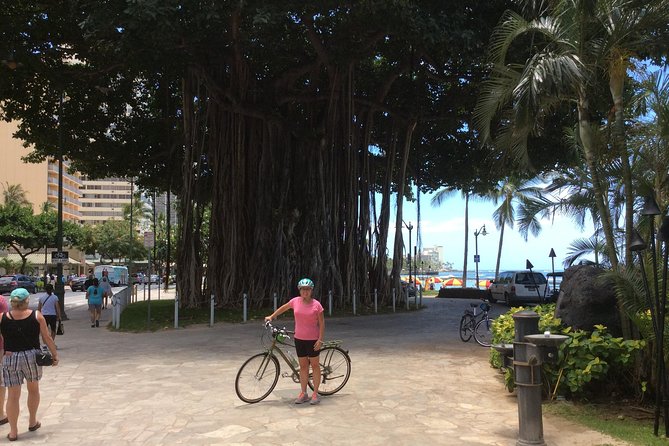
- The banyan tree canopy and the nearby context about Free Hula shows give you a local lens before the ride turns into “neighborhood hop.”
Plan to arrive a few minutes early so you can fit the helmet, get comfortable on the bike, and settle in before the group starts rolling.
Waikiki to the Ala Wai Canals: the city’s first story beats
After departing Waikiki, your guide leads you past a string of recognizable areas that also help you understand how Honolulu works as a city.
Here’s what stands out in the early stretch:
- Waikiki Beach: you start with the historic Banyan Tree area and context around the Free Hula shows.
- Honolulu Zoo (rolled past): not a long stop, but enough to orient you and hear insider narration.
- A golf course edge (rolled past): you get narration about the location and what’s coming next, which helps you read the area beyond the obvious green space.
- The Ala Wai canal area: you learn about the past, present, and future of this landmark developed in 1929.
This section is good if you like “history in motion.” You’re not trapped in a museum; you’re moving through the city while the guide turns what you see into context.
Chinatown fruit and downtown momentum: where the ride gets fun
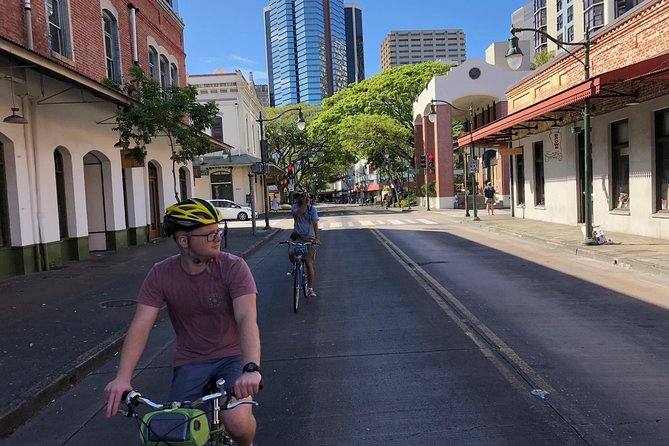
As you head toward downtown and Chinatown, the tour shifts from big landmarks to lively street energy. A key moment: you stop to sample Hawaii’s exotic fruits.
That stop matters more than it sounds. It’s not just a snack break—it’s a small way to understand local tastes and how markets show up in daily life. It also gives you something to do besides watch streets go by, which keeps the ride feeling social and alive.
You’ll also roll through areas like the Honolulu Convention Center and along the promenade. Even without a long halt, those views help connect the dots: ocean access, major public spaces, and how the waterfront fits into the city’s daily rhythm.
Aloha Tower by elevator: the skyline payoff stop
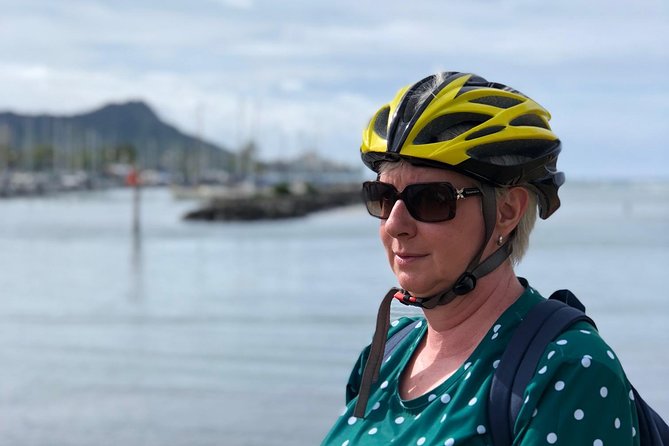
One of the most memorable moments is the Aloha Tower Marketplace stop, where you ride up via an elevator for broad views of Honolulu.
From the top, you get:
- A sense of the harbor layout and surrounding areas
- Information about fish and the clear harbor waters, plus mention of healthy coral life frequenting the area
This stop is worth it because it changes your perspective fast. You go from street level—where everything feels flat and close—to a big aerial read of the coastline and city grid. It’s also a great reset if you’ve been pedaling and want a scenic “pause” without losing time.
Kaka’ako murals: a photo stop that feels made for you
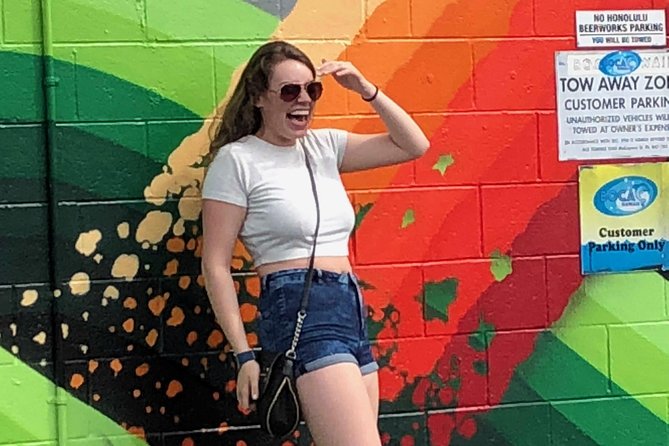
After downtown, you head toward Kaka’ako, known for its street-art walls. The tour includes a mural photo moment, with time to take pictures where the artwork does a lot of the work for you.
This part is especially appealing if you:
- Want something visually different from the palaces and monuments
- Like contrast—modern art against older royal and civic sites
The tour also frames Kaka’ako as a neighborhood changing quickly. Even if you don’t love construction talk, it helps you understand why murals and public creativity show up where they do: the area is actively redefining itself.
The royal-and-cultural core: Mission Houses, Kawaiaha’o, Kamehameha, and Iolani
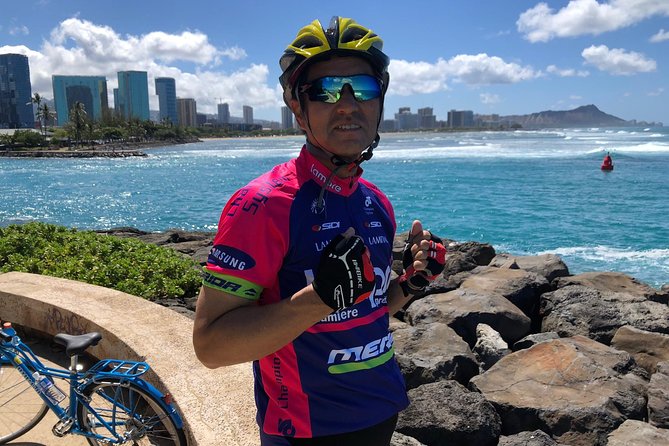
This is where the tour earns its “history” reputation without turning into a textbook. You get multiple key stops close together, so your brain links themes: religion, kingdom leadership, and architecture.
Here’s the lineup, in the order you’ll experience it:
Hawaiian Mission Houses Historic Site and Archives
You stop at Hawaii’s first western-style home, brought in by ship and built by the Hall Missionary family. There’s also a printing press linked to the first Bible printed in the Hawaiian language.
What makes this stop work on a bike tour: it’s short, but it gives you a clear cultural reference point so the later buildings don’t feel random.
Kawaiaha’o Church
This stop focuses on materials and craftsmanship. The tour notes that over 14,000 coral stones were used in construction. It’s also framed as a living landmark, welcoming visitors every Sunday for an 8:30 am church service.
Practical tip: even if you’re only stopping briefly, arrive with a moment of quiet respect. This isn’t just a photo wall.
King Kamehameha Statue
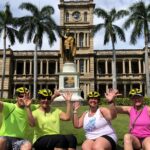
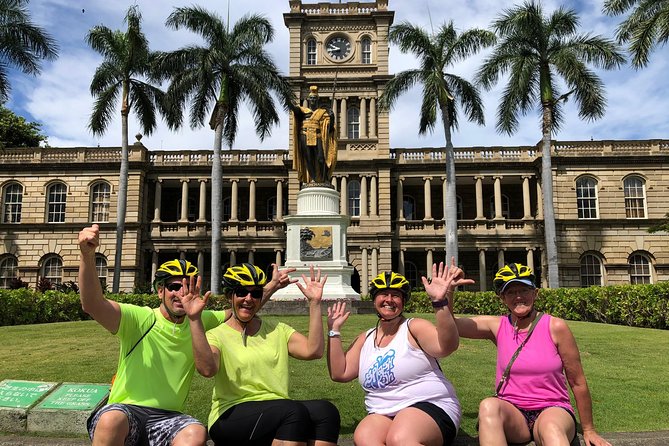
You’ll stop at the statue of Kamehameha, the king who united the islands. A standout detail: the tour mentions the statue was refurbished with real gold paint, and that it has appeared in Hawaii Five-0 opening scenes.
If you’re a TV fan, that connection makes the stop easier to remember, but even without that, it’s a strong visual anchor in the downtown core.
Iolani Palace
This is a major highlight. The tour notes Iolani Palace as the royal residence of the rulers of the Kingdom of Hawaii, and points out it’s the only royal palace on US soil. It’s also listed as a National Historic Landmark and on the National Register of Historic Places.
Why this matters on a bike tour: you’re seeing it as part of a full route through the city, not as a “random destination.” It feels like a centerpiece that your earlier streetscape narration leads you toward.
State Capitol and the rock-and-roll stop: civic power and Elvis at Blaisdell
After the palace cluster, the tour keeps stacking big identity markers.
Hawaii State Capitol
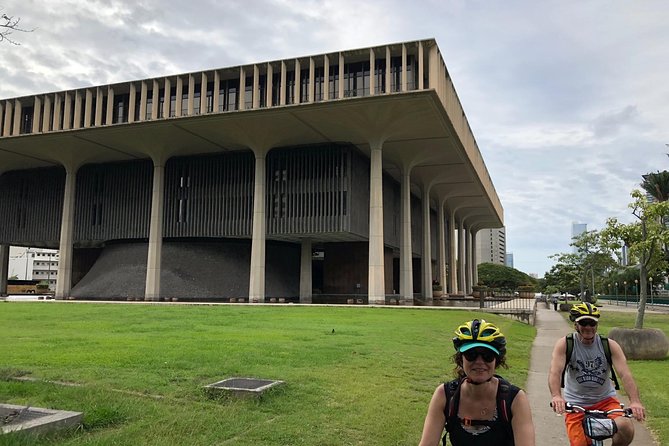
You’ll roll past and stop to take in the Hawaii State Capitol, constructed in 1969. The standout claim here is that it’s the only open-air capitol in the USA. You’ll also hear about the idea of manna (super natural powers) associated with Hawaii.
This is one of those stops where the information helps the building make sense. The architecture is the visual hook; the narration is the “why.”
Neal S. Blaisdell Center: the Elvis connection
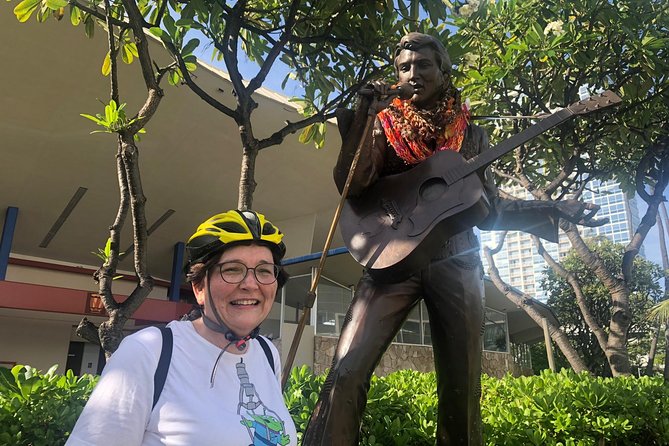
Another quick-but-impactful stop is at Neal S. Blaisdell Center, framed as where Elvis Presley performed his last concert in 1973. The tour also mentions a King of Rock and Roll statue, and name-drops other performers connected to the venue: Prince, Sting, Jack Johnson, Janet Jackson, and more.
It’s a fun pivot from royal sites and churches—music history plugs directly into modern Honolulu identity.
Magic Island and the final roll through the ficus-lined path
Near the end, you’ll hit a mix of waterfront park context and a last “look where the city shines” stretch.
Magic Island and Ala Moana Park context
You stop at Magic Island, part of Ala Moana Park (the People’s Park). The tour explains that the park was constructed in 1947 to turn an unsightly landfill into one of Honolulu’s most visited parks. Magic Island is described as reclaimed land with history worth hearing.
Even if you’re not into urban planning stories, this is useful context. It changes how you see the coastline: not just scenery, but decisions people made to shape public space.
Hawaii Convention Center and the tree-lined finish
Your last mile includes a pathway covered by dozens of ficus trees behind the Hawaii Convention Center. It’s a calm, shaded stretch that also helps you transition from “sights” mode into “we’re wrapping up” mode without feeling like the tour just ends abruptly.
How the ride feels: pace, safety, and why the guide matters
This tour’s success depends heavily on how it rides in the real world: traffic, stop frequency, and whether everyone can hear the guide.
A few things you can plan around:
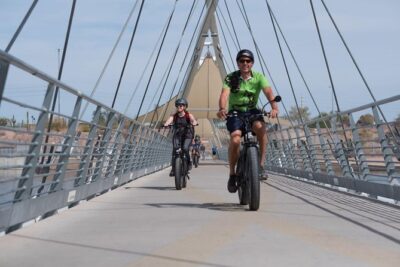
- Pace: the tour is described as a nice pace that avoids turning into a workout. You’ll still pedal, but you won’t feel like you’re racing for your life.
- Safety tools: helmets and bikes are provided, and the guide focuses on safe riding.
- Frequent stops: photo ops and rest stops break up the ride so it feels more like a guided loop than one long grind.
- Audio: one review notes a speaker system worked well so people could hear narration while riding.
Also, since it’s a bike tour, do yourself a favor: keep your hands relaxed, stay aware at intersections, and treat each stop as a mini reset. The route includes plenty of city corners, and your comfort level improves when you slow your brain just a bit.
One more practical note from past departures: bikes have generally been described as well maintained, but a negative report mentioned a chain issue. When you get your bike, do a quick check: make sure the chain sits right and the gears feel normal. You’ll be glad you did.
Who should book this Honolulu bike tour?
This is a strong fit if you want:
- A small-group way to see Waikiki through downtown without the parking headaches
- A mix of iconic landmarks (Iolani Palace, Kamehameha Statue, Aloha Tower) and street-level Honolulu (Kaka’ako murals, Chinatown fruit)
- A guide-driven experience that includes photos and photo time at key spots
It’s especially good for couples and solo riders because the guide helps with pictures and keeps the route from feeling like you’re wandering alone. It can also work for families with children if an adult is along, but you’ll want a “moderate fitness” mindset.
If you hate cities on bikes, or if you’re expecting a totally off-the-beaten-path countryside ride, this isn’t that. This is Honolulu, seen at street speed—more city identity than nature escape.
Should you book it?
If your goal is a morning of easy-to-manage pedaling plus real Honolulu landmarks (with Aloha Tower views and Kaka’ako murals), this tour looks like good value. The included gear and snacks remove small planning burdens, and the guide’s photo effort is a genuine bonus if you care about getting great shots.
My main “before you book” check is simple: treat it as a city-bike experience. Do a quick bike check at the start, expect frequent stops, and plan for city intersections. If that sounds good, you’ll likely leave with photos, context, and a clearer sense of where to go next on Oahu.
FAQ
Where is the meeting point?
You meet at Kuhio Beach at 2453 Kalākaua Ave, Honolulu, HI 96815 (near the Kuhio Beach Hula Mound). The tour ends back at the meeting point.
What time does the tour start?
The start time is 7:00 am.
How long does the tour last?
It lasts about 4 to 5 hours.
How far will I ride?
The riding distance is listed as 13.5 miles.
Is the route flat or hilly?
The terrain is described as mostly flat.
What’s included in the price?
Included are a helmet, bicycle use, bottled water, snacks, and National Park fees.
Do you stop for food during the ride?
Snacks and bottled water are included. The tour also includes a stop to sample Hawaii’s exotic fruits in Chinatown/downtown.
Is there an Aloha Tower stop?
Yes. You ride up to the top of Aloha Tower by elevator for sweeping views of Honolulu.
Does the tour run in bad weather?
It operates in all weather conditions, but if it’s canceled due to poor weather, you’ll be offered a different date or a full refund.
Can I cancel and get a full refund?
Yes. You can cancel for free up to 24 hours in advance for a full refund.