REVIEW · MADRID
Madrid City Tour | Regular Bike or E-Bike | Reduced Groups
Book on Viator →Operated by Bravo Bike · Bookable on Viator
Madrid looks better on two wheels. This guided ride strings together royal sights, big parks, and pocket neighborhoods without feeling like a rush.
I like that the tour keeps things small (it’s capped at up to 10 travelers, and it’s sold as a reduced-group experience), so you’re not getting bounced along in a crowd. I also like the practical inclusions: a bike, helmet, local guide/photographer, and tour photos, plus time at major highlights like El Retiro and the Art Walk corridor.
One thing to think about: the route is hilly, so if you’re not feeling confident on climbs, an e-bike is the smart move. The pace is still active, and you’ll want moderate fitness for a steady pedal.
In This Review
- Key things that make this bike tour work
- A 3-hour bike orbit of Madrid’s best-known neighborhoods
- Small groups and fewer headaches: what reduced means in practice
- Bikes, helmets, and the hill reality (regular vs e-bike)
- Where you start and end: the Bravo Bike launch point
- Stop-by-stop ride: Royal Palace, Retiro, and the neighborhoods in between
- Stop 1: Bravo Bike, the pre-ride setup
- Stop 2: The Royal Palace of Madrid (big landmark moment)
- Stop 3: La Latina, old streets and market echoes
- Stop 4: Barrio de Las Letras, Golden Age literature streets
- Stop 5: Paseo del Prado, Madrid’s Art Walk corridor
- Stop 6: Parque del Retiro, the big park break by bike
- Stop 7: Plaza Colón and a taste of modern food culture
- Stop 8: Malasaña area, rebellion memories and the movida
- Stop 9: Plaza de Chueca, nightlife district energy
- Stop 10: Templo de Debod, an ancient temple with a view
- Price and value: what $42.24 really buys you
- The guide factor: why certain names kept popping up
- Who this tour is best for (and who should choose differently)
- Should you book this Madrid city bike tour?
- FAQ
- What’s the duration of the Madrid city bike tour?
- Is this tour in English?
- Is there an option for an e-bike?
- How many people are in the group?
- Where do I meet and where does it end?
- What’s included in the price?
- Are attraction tickets included?
- What fitness level do I need?
- Does the tour run in bad weather?
- Can I cancel for free?
Key things that make this bike tour work
- Up-close coverage in ~3 hours: you see a lot, but you still get stops to look and ask questions
- Small group (up to 10): easier listening, easier photo moments, less waiting around
- Guide + photographer + tour photos: you get memories without playing cameraman all day
- Retiro Park + Paseo del Prado: the ride hits Madrid’s green space and art boulevard
- Optional e-bike helps on hills: tested value if you want to enjoy the views, not just survive them
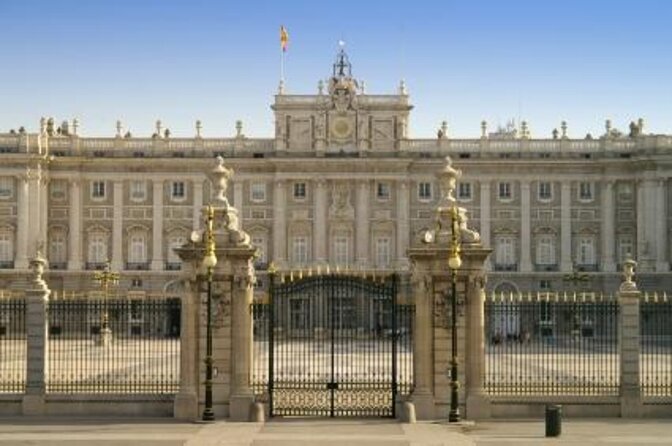
- Royal Palace exterior stop only: it’s the major landmark moment, but palace admission is not included
A 3-hour bike orbit of Madrid’s best-known neighborhoods
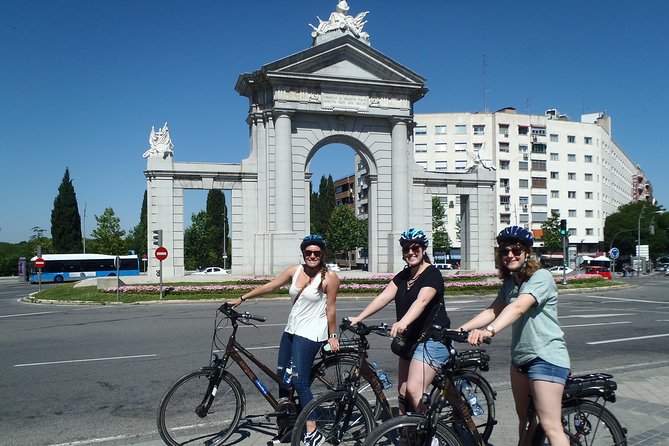
If you’re only in Madrid for a few days, this kind of tour is how you get oriented fast. You cover central highlights in a compact time window, then you’re free to come back later on foot or by metro for anything that grabbed you.
The vibe is more “guided ride with smart stops” than “checklist marching.” The small group size really helps here—your guide can keep everyone together, and you can hear the key stories without needing to lean forward the whole time.
And yes, it’s a bike tour. That’s part of the joy. You glide through broad avenues, then bounce into narrower old-street areas where Madrid’s medieval bones show through.
You can also read our reviews of more tours and experiences in Madrid.
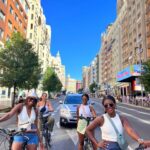
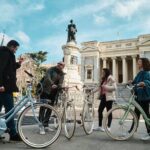
Small groups and fewer headaches: what reduced means in practice
A cap of up to 10 travelers changes the feel immediately. In a big group, you spend time waiting for stragglers and trying to see past shoulders. In a reduced group, the guide can guide—turns, spacing, and photo moments tend to be smoother.
It also makes a difference for the human stuff: you can ask a question, get a quick recommendation, and actually pay attention instead of mentally calculating whether you’re keeping up.
Plus, because this is set up with a local guide/photographer, you’re not just riding—you’re getting guided context and documentation. That’s a real value add when you’re trying to remember what you saw later.
Bikes, helmets, and the hill reality (regular vs e-bike)
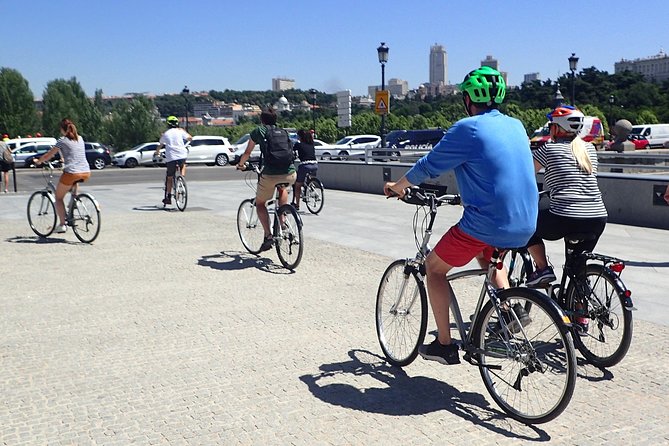
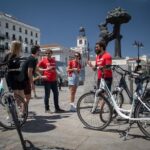
You’ll be provided a city bicycle and a helmet. That takes care of the basics, and it’s one less thing to organize before you roll out.
The tour is designed for moderate physical fitness. Madrid has hills, and the ride covers ground across central areas and parks, so it’s not a flat, leisurely loop.
Here’s the practical decision rule: if you’re even slightly unsure about climbs, I’d plan on choosing the e-bike option. One of the standout bits from real-world guidance on this tour is that many people love the electric assist because it keeps the ride fun instead of grindy.
Where you start and end: the Bravo Bike launch point
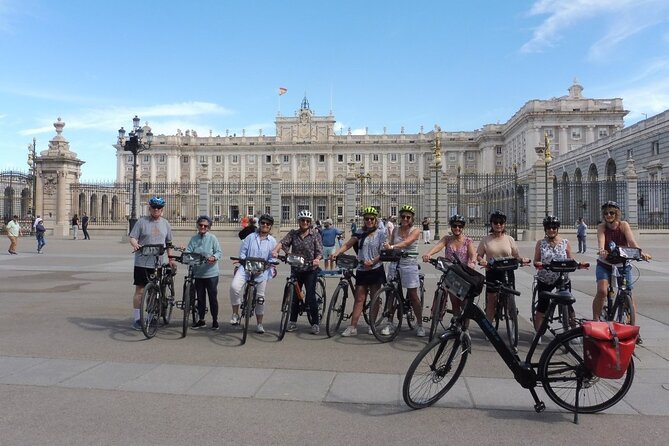
The tour meets at Bravo Bike, C. de Juan Álvarez Mendizábal, 19, Moncloa – Aravaca, 28008 Madrid and ends back at the same meeting point. It also notes you’ll be near public transportation, which matters because you don’t want your afternoon to start with a complicated taxi puzzle.
If you like to arrive early, use that time to get comfortable with the bike and ask one or two quick questions. Once you’re rolling, the tour moves efficiently.
Stop-by-stop ride: Royal Palace, Retiro, and the neighborhoods in between
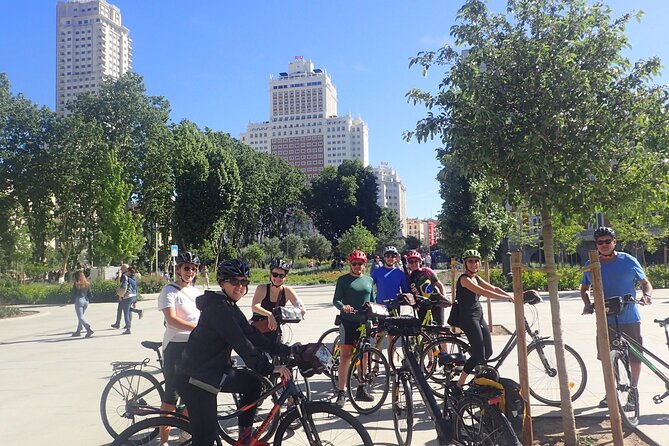


Stop 1: Bravo Bike, the pre-ride setup
You begin at Bravo Bike, where the tour company has been running bicycle tours in Madrid since 1999. That long track record matters because it usually means clearer bike routines and smoother coordination in traffic.
You’ll also get the first chance to confirm the bike fit and go over how the group will ride. That’s the stuff that keeps the rest of the afternoon calmer.
Stop 2: The Royal Palace of Madrid (big landmark moment)
The Royal Palace is one of Madrid’s headline sights. You’ll learn that the current palace stands on the site of an older fortress (the Alcázar), which burned in 1734. After that, Felipe V ordered a new palace, designed with major architectural influence from Filippo Juvarra and later changes by Giambattista Sacchetti.
Important practical note: palace admission is not included here. This stop is for orientation and exterior impact, not ticket time inside the palace.
Still, it’s a strong moment on the ride because you get the story before you ever decide whether you want to come back and tour the interiors.
Stop 3: La Latina, old streets and market echoes
La Latina is a maze of narrow, winding streets that largely trace back to the Middle Ages. The tour connects that layout to a commercial past—merchants and markets shaped the neighborhood.
You’ll also hear references to squares that carry the names of older trading life, like Plaza de la Cebada and Plaza de los Carros. And you’ll get the sense of why El Rastro is such a big name for Madrid flea-market culture.
Best way to use this stop: slow down and look at the street geometry. It’s one of those neighborhoods where the streets tell you the city’s history without needing a museum ticket.
Stop 4: Barrio de Las Letras, Golden Age literature streets
Barrio de las Letras is tied to Spain’s Golden Age of literature. The area name comes from famous writers linked with the neighborhood, including Cervantes, Lope de Vega, Quevedo, Tirso de Molina, and Góngora.
This is a good stop for people who like culture without sitting in a chair for hours. Even if you don’t go into any sites here, the neighborhood context helps you understand what you’ll notice later when you’re walking on your own.
Quick tip: keep your eyes up. These streets are full of small cues—street names, plaques, and corners that connect to the writers who put Madrid on the literary map.
Stop 5: Paseo del Prado, Madrid’s Art Walk corridor
Now you shift to one of the city’s “look and breathe” sections: the Paseo del Prado boulevard. It’s part of the larger Art Walk idea, sometimes called the Golden Triangle of Art, tied to the Prado Museum, the Reina Sofía Museum, and the Thyssen-Bornemisza collection.
Even though you’re not spending hours inside museums on a bike tour, this stop is valuable because it teaches you where Madrid’s major art axis runs. Later, you’ll be able to plan your museum day without guessing.
Also: Paseo del Prado has that tree-lined, broad-boulevard feel that makes riding pleasant. It’s a nice contrast to the narrower medieval areas earlier.
Stop 6: Parque del Retiro, the big park break by bike
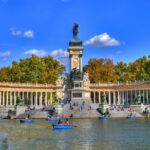
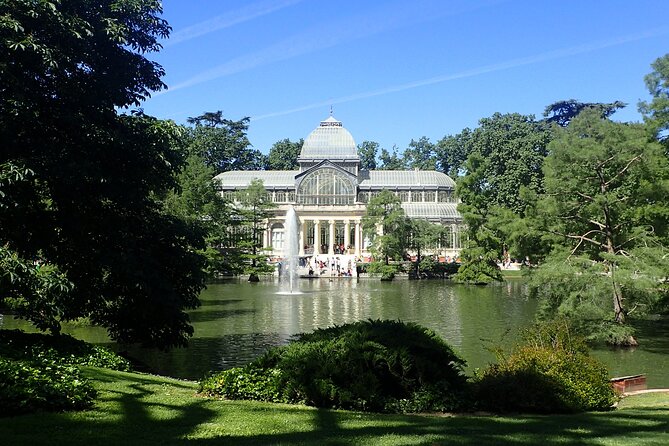
This is the heart of the tour’s “wow, Madrid is green” feeling. El Retiro is a former royal garden built in the 17th century, and you’ll ride through key areas toward the Estanque (lake).
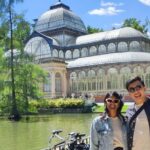
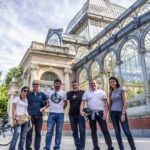
The route moves you past parterre areas and toward highlights like the Crystal Palace area—the elegant glass and iron construction where exotic plants were originally displayed.
There’s an optional break around the lake for refreshments. This is where the tour stops being just sightseeing and turns into a relaxing reset.
Then you exit the park through the main entrance near Alcalá gate, a symbol of the Spanish capital. It’s a clean transition back to city streets.
Practical note: bring water or plan to grab something during the park break. You’re biking, and that park time can feel like “not that long” until you’re back in the saddle.
Stop 7: Plaza Colón and a taste of modern food culture
Plaza de Colón is a jump into a different Madrid flavor—shopping streets, food markets, and tapas energy. The ride points you toward places like Mercado de la Paz and also mentions Platea on Calle Goya, across from the plaza.
You’re not here to eat for the whole tour, but you are here to get your bearings for where to go when you want a meal later without guessing.
If you like choosing food based on location, this is a smart stop because it clusters options in one area.
Stop 8: Malasaña area, rebellion memories and the movida
You’ll ride into the neighborhood associated with Manuela Malasaña, one of the heroines and victims of the events on 2 May 1808. Plaza del Dos de Mayo sits at the center of this area and commemorates the rebellion against Napoleon’s occupation.
The tour also connects Malasaña to the movida madrileña, the 1980s underground movement that changed arts and society in Madrid.
This stop works best if you like Madrid as a living city, not just an old-city postcard. It’s where history and modern identity sit close together.
Stop 9: Plaza de Chueca, nightlife district energy
Chueca became one of Madrid’s liveliest districts after the Franco dictatorship. The tour mentions boutiques and bars, plus San Antonio international food market as a magnet for visitors.
From Chueca square, it highlights streets like Calle Augusto Figueroa with shoe shops, cafés, and traditional taverns. Even without formal ticket time, this stop tells you where to look later if you want a fun evening.
For planning: use this as your mental marker. If you want a night out, Chueca is where your feet will probably take you anyway.
Stop 10: Templo de Debod, an ancient temple with a view
The tour ends at the Templo de Debod, an ancient Egyptian temple donated by the Egyptian government and reassembled in Madrid at the start of the 1970s in Parque del Oeste.
This area is known for its views, and the tour info points out visibility toward Casa de Campo parklands and the Sierra Guadarrama mountain range in the distance. It’s also described as one of the better sunset spots.
So even if you’re not timing an actual sunset, you still get a great “Madrid from the edge” perspective. It’s a satisfying finish after the parks, palaces, and neighborhoods.
Price and value: what $42.24 really buys you
At $42.24 per person for around 3 hours, this tour is priced in the “solid value” zone because it bundles several things that are usually separate.
You get:
- a guide / photographer
- a bike
- a helmet
- tour photos
- time-efficient access to big landmarks and a park-heavy route
That matters because bike rentals and guide time alone can eat into your budget fast. Here, your money also buys clarity—after this ride, you understand how Madrid’s art corridor, old neighborhoods, and major parks connect.
The one “not included” item you’ll want to watch is Royal Palace admission. Everything else on the route is described as admission-free in the tour notes, and Retiro Park is included without ticket costs.
If your goal is orientation plus a highlight mix, this price is easier to justify than a museum-only day—especially if you’re short on time.
The guide factor: why certain names kept popping up
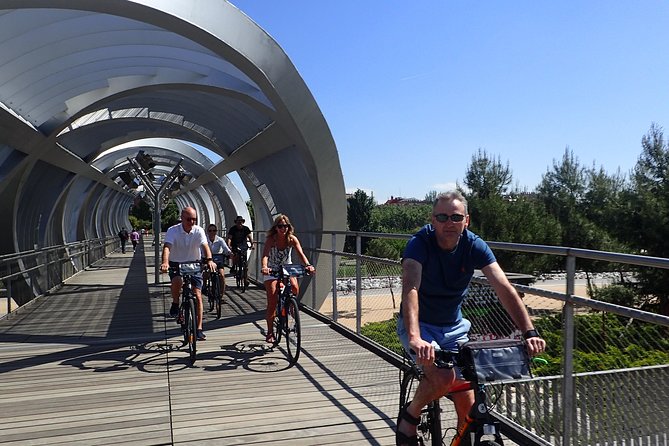
A strong guide can make bike tours feel like a story, not just motion. In this case, the ride has a local guide/photographer role, and you’ll see repeated praise for how guides like Alboran, Juan Filipe, Sergio, and Remy handle the experience.
What tends to get singled out is not just facts, but engagement—guides who keep you moving, stopping at the right moments, and explaining the “why” behind the sights. One practical tip that comes directly from the ride experience is to consider doing it earlier in your visit. You’ll come away with the city map in your head.
Also, one guide-level piece of advice that sticks: after your ride, aim for Cava Baja for food. It’s the kind of neighborhood dinner plan that’s easier after you’ve already biked the city core.
Who this tour is best for (and who should choose differently)
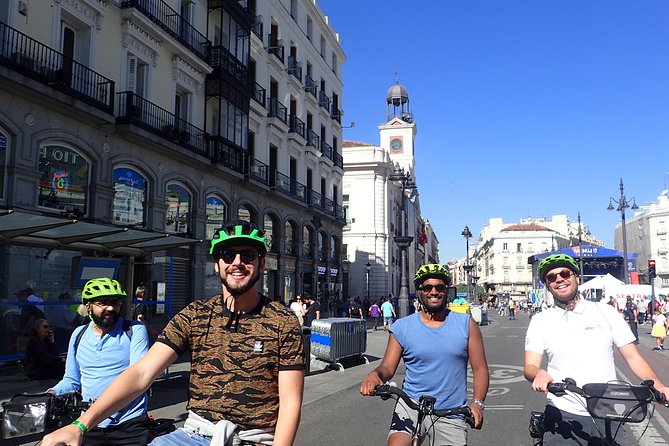
This is a great fit if:
- you want a first-day orientation to central Madrid
- you like biking but also want the comfort of a helmet and a guide
- you’re interested in parks (Retiro) and classic neighborhoods (La Latina, Las Letras, Malasaña, Chueca)
- you want a manageable group size with a photographer angle
It’s less ideal if you:
- hate hills and can’t do a moderate fitness ride unless you’re on an e-bike
- want long museum time or palace interior viewing (this includes the palace moment, but not entry)
- prefer a very quiet, slow sightseeing pace (you’re biking and moving between areas)
Should you book this Madrid city bike tour?
I think you should book it if you want to get your bearings fast and still enjoy a real Madrid mix: palace landmark energy, literature streets, and the park-and-lake feeling of El Retiro.
It’s also a strong value play. With bike + helmet + guided storytelling + tour photos included in one ticket, you’re paying for convenience as much as sightseeing.
Book it sooner rather than later in your trip. And if you’re worried about climbs, choose the e-bike. You’ll spend the afternoon taking in the city instead of fighting the route.
FAQ
What’s the duration of the Madrid city bike tour?
It runs for about 3 hours.
Is this tour in English?
Yes. The tour is offered in English, and it may also be run by a multi-lingual guide.
Is there an option for an e-bike?
Yes, it’s described as a regular bike or e-bike tour.
How many people are in the group?
The tour information lists a maximum of 10 travelers for this activity.
Where do I meet and where does it end?
You meet at Bravo Bike, C. de Juan Álvarez Mendizábal, 19, Moncloa – Aravaca, 28008 Madrid. The tour ends back at the same meeting point.
What’s included in the price?
Included items are a local guide/photographer, city bicycle, helmet, and tour photos (as described in the tour highlights). GST is also included.
Are attraction tickets included?
Royal Palace of Madrid admission is not included. Other stops on the route are listed as free in the tour details.
What fitness level do I need?
You should have moderate physical fitness since this is a bike tour.
Does the tour run in bad weather?
It operates in all weather conditions, so you’ll want to dress appropriately.
Can I cancel for free?
Yes. You can cancel for a full refund up to 24 hours before the experience starts.