REVIEW · MADRID
Madrid: Street Art Bike Tour
Book on GetYourGuide →Operated by Cooltourspain · Bookable on GetYourGuide
Street art looks better on two wheels. This Madrid street art bike tour rolls out festival walls and neighborhood scenes with a local graffiti artist as your guide. You’ll learn how tags, stencils, and paint layers shaped the city, then pedal through Malasaña and Lavapiés to see works by artists from Spain and beyond.
I like the way the tour connects street art to Madrid’s timeline, from early graffiti markers to more recent festival pieces. I also like the route for photos and atmosphere: you hit major murals in the center area, then shift into the community-minded art spaces around Solar Antonio Grilo and Esto es una Plaza.
One thing to consider: this is a medium cycling ride with traffic and just one uphill. If you’re not steady on a bike through city streets, the ride can feel like work, even though the guide may adjust the pace.
In This Review
- Key highlights you should care about
- Why bike-powered street art works in Madrid
- Getting started at Gran Vía & Sol: the smooth logistics that matter
- The early graffiti trail: Muelle and a tag preserved since 1989
- Alonso Martínez and Boa Mistura: when street art goes global
- Malasaña: Pinta Malasaña walls and Plaza Dos de Mayo’s traffic art
- A chance at Madrid’s biggest center mural
- Lavapiés and the community garden art spaces: Solar Antonio Grilo and Esto es una Plaza
- The street-art technique lesson you’ll actually remember
- Cycling fit: traffic, the one uphill, and how the guide handles it
- Price and value: is $46 worth a 2.5-hour graffiti ride?
- What to bring so the tour feels easy
- Who this tour suits best (and who should choose another plan)
- Should you book the Madrid Street Art Bike Tour?
- FAQ
- How long is the Madrid street art bike tour?
- Where does the tour start?
- What’s included in the price?
- Is anything not included?
- What languages are offered?
- What should I bring?
- What cycling level should I expect?
- Can I cancel for a refund?
Key highlights you should care about
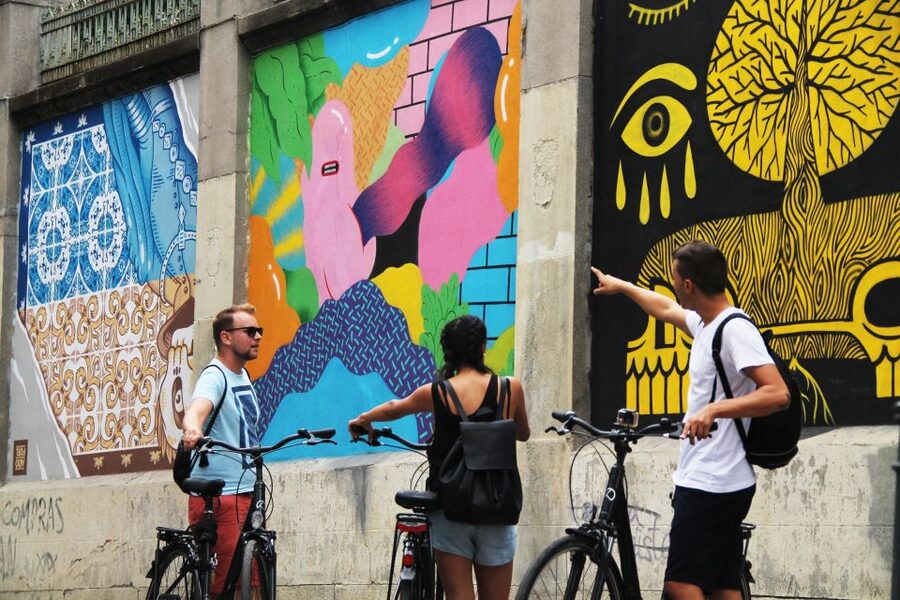
- Festival walls you can actually ride up to, not just stand-and-point stops
- A local graffiti artist guide who ties artwork to techniques and street-art history
- Malasaña + Lavapiés by bike, two neighborhoods with a different feel block to block
- Plaza Dos de Mayo’s traffic sculptures (Bolardo Voy, Bolardo vengo) for fun, eye-level street detail
- Solar Antonio Grilo and Esto es una Plaza, community hubs where street art plays a social role
- A preserved 1989 tag linked to the early graffiti story in Madrid
Why bike-powered street art works in Madrid
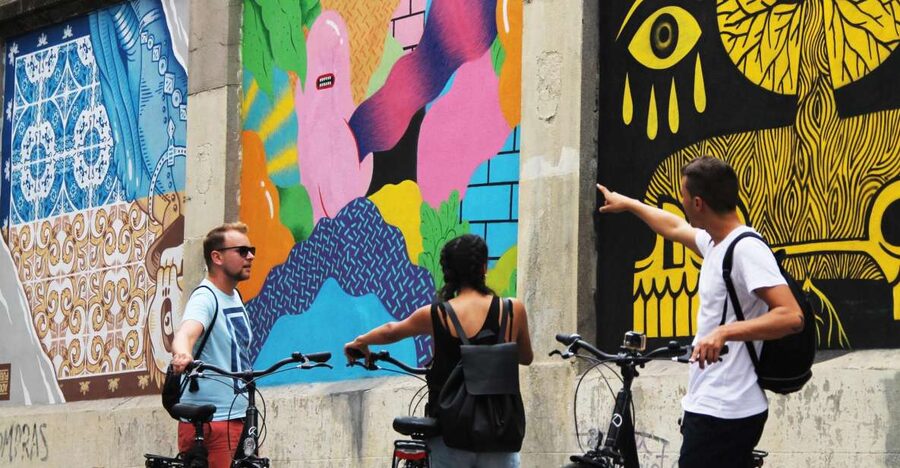
Madrid street art is best understood in motion. On foot, you can miss the way a wall sits in its street context—how shutters, corners, and setbacks change the story. By bike, you get the rhythm: stop, look closely, then roll on to the next wall while the neighborhood keeps unfolding around you.
This tour is built for that kind of viewing. You’re not just chasing famous names; you’re learning what street artists do—how they place marks, build color, and choose surfaces like metal shutters and other urban edges. That makes your photos look better too, because you start noticing technique instead of only faces and lettering.
And the route matters. Malasaña and Lavapiés are close enough to stitch together in one ride, yet different enough that the art feels like it’s changing gears. You’ll go from festival-themed walls and plaza energy to community spaces where art is part of everyday life.
You can also read our reviews of more tours and experiences in Madrid.



Getting started at Gran Vía & Sol: the smooth logistics that matter
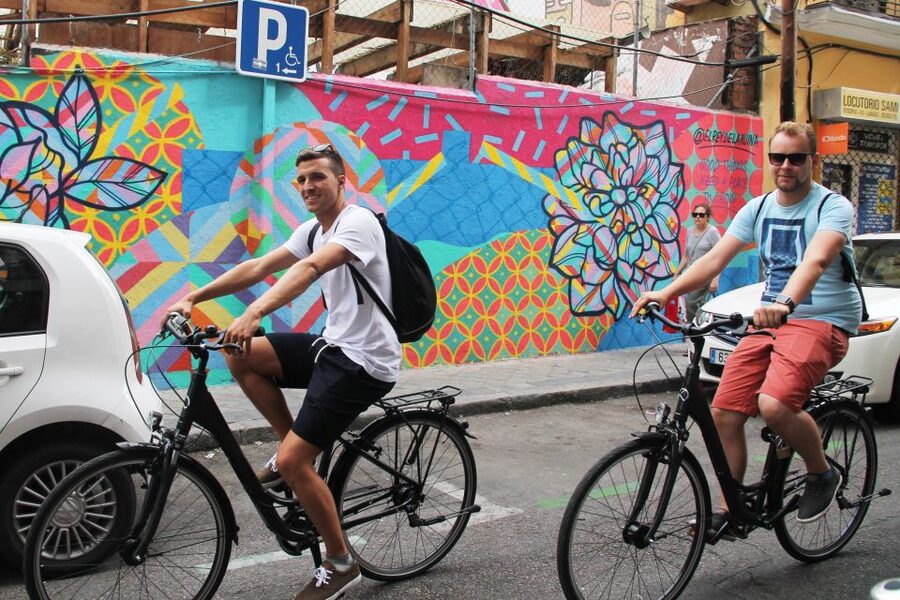
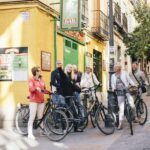
The meeting point is easy to find: the entrance of a small Carrefour Express on C/Montera 32, near Gran Vía & Sol. That’s a smart setup because you’re starting near Madrid’s core. In other words, you don’t spend the first half hour commuting while everyone gets antsy.
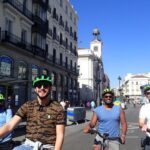
You’ll get a bike plus a helmet and lock, and you’ll also receive a Madrid city map. The guide gives live commentary in English or Spanish, and there’s a restroom break scheduled during the ride. I also appreciate that the tour loop ends back at the meeting point, because it removes the mental load of “where do I park my brain (and bike)?”
The one caution: this is still city cycling. You’ll get bicycle safety instructions first, which helps, but you should show up ready to ride in traffic, not expecting a car-free cycling path.
The early graffiti trail: Muelle and a tag preserved since 1989
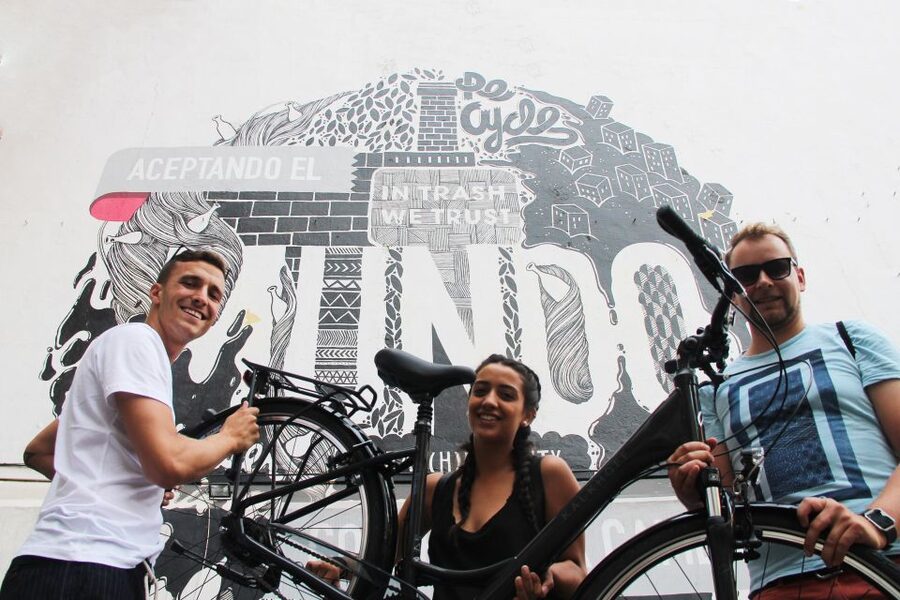
One of the tour’s most interesting shifts happens early. You’ll observe the graffiti marker called Muelle—often described as a pioneer in Madrid’s graffiti movement—and you’ll see a tag that’s still preserved from 1989.
This isn’t just a cool relic for the photo folder. It frames street art as something that evolves through time, then gets remembered in the streets when the city decides to keep it. It also gives you a baseline for everything you’ll see later: festival murals and big compositions make more sense once you understand the smaller, earlier marks and why graffiti started as a quick, repeatable form.
You’ll also learn about techniques, including how artists decorated not only walls but metallic shutters and other parts of urban infrastructure. That matters because Madrid’s older streets have lots of shop fronts and shuttered surfaces—so street art there is often designed to fit city life, not just blank canvases.
Alonso Martínez and Boa Mistura: when street art goes global
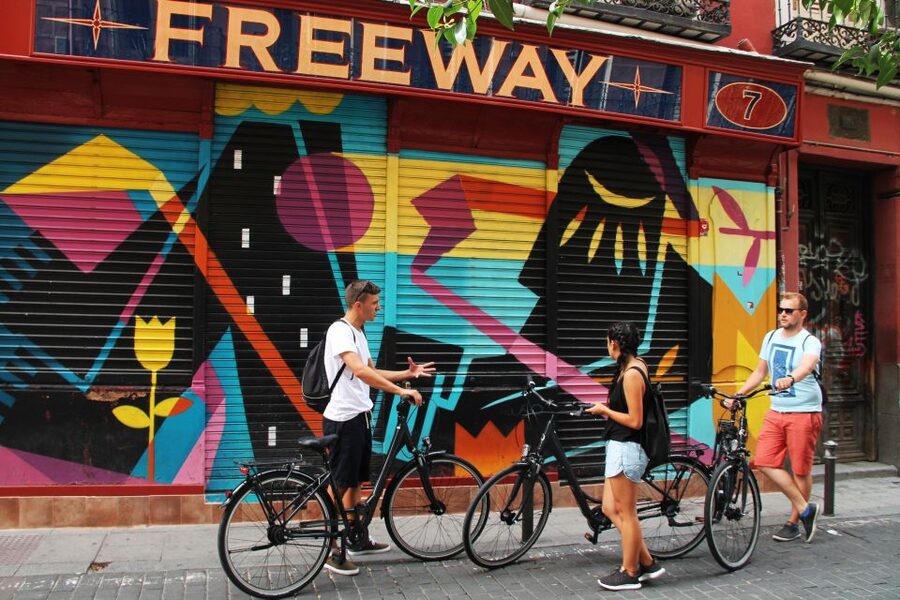
After you’ve been briefed on safety and gotten the route rolling, you head toward Alonso Martínez. This is where you’ll photograph the first piece created by Boa Mistura.
What I like here is the way the tour shows street art as both local and internationally connected. Boa Mistura is described as a crew born and raised in Madrid’s outskirts, yet active across street-art projects around the world. That lets you see a pattern: Madrid doesn’t just host street art—it exports talent and style back into the global street-art conversation.
Even if you’re not a graffiti deep-dive person, the guide’s technique talk makes the Boa Mistura piece feel readable. You start noticing how artists build a visual system—layering ideas, using typography or graphic shapes, and making the mural feel like it belongs in its neighborhood.
Malasaña: Pinta Malasaña walls and Plaza Dos de Mayo’s traffic art
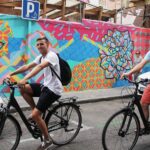
Pedaling into Malasaña is where the tour gets fun fast. You’ll cross artwork from national artists who participated in the 2017 Pinta Malasaña festival. The tour doesn’t treat the festival like a one-off event; it treats it like a major engine that changes how the neighborhood looks during April.
At the heart of that energy is Plaza Dos de Mayo. One stop centers on Bolardo Voy, Bolardo vengo, a colorful display of traffic elements. I love this kind of street art because it’s playful and specific—it turns normal city hardware into part of the art world, and it rewards close looking.
Malasaña has a “hang out and look around” vibe. On this tour, that vibe isn’t generic. You’re riding between concrete points—murals, plaza interventions, and artist pieces—so you don’t end up just wandering. Instead, you get a guided path through what makes the neighborhood feel like itself.


A chance at Madrid’s biggest center mural
The tour also includes a stop for what’s described as the biggest mural in Madrid’s center district. This is one of those moments where bike speed is helpful: you can reach the spot, take in scale from a few angles, and then move before the group gets stuck in one place too long.
Why this matters: big murals can overwhelm you on foot. From the street, you need time to read the composition—especially when artists use multiple styles or layers. With a bike tour format, you can pause, study, and then roll forward, using the city’s flow to keep your attention fresh.
Also, this “center district mural” stop fits the tour’s bigger theme. You start with early markers and technique basics, then you work your way into large-format street work. By the time you reach the big mural, you’ve got the visual language to appreciate it.
Lavapiés and the community garden art spaces: Solar Antonio Grilo and Esto es una Plaza
Once the tour shifts toward Lavapiés and Noviciado, it leans into a different side of street art. Instead of only festival-sized works and big wall statements, you’ll spend time around local hubs created for and by the community—Solar Antonio Grilo and Esto es una Plaza.
These spaces are described as urban gardens full of street art, built from places that were once abandoned. That’s a key idea. Street art isn’t only decoration here; it’s part of what turns neglected space into shared space. The tour also frames these gardens as examples other communities look to for hybrid economy systems, which gives the neighborhood art a real-world reason to exist beyond aesthetics.
I’d put these stops on your must-see list if you care about how art interacts with people’s daily routines. You’re not just watching artists; you’re seeing what happens when residents and creators collaborate and keep spaces alive.
The street-art technique lesson you’ll actually remember
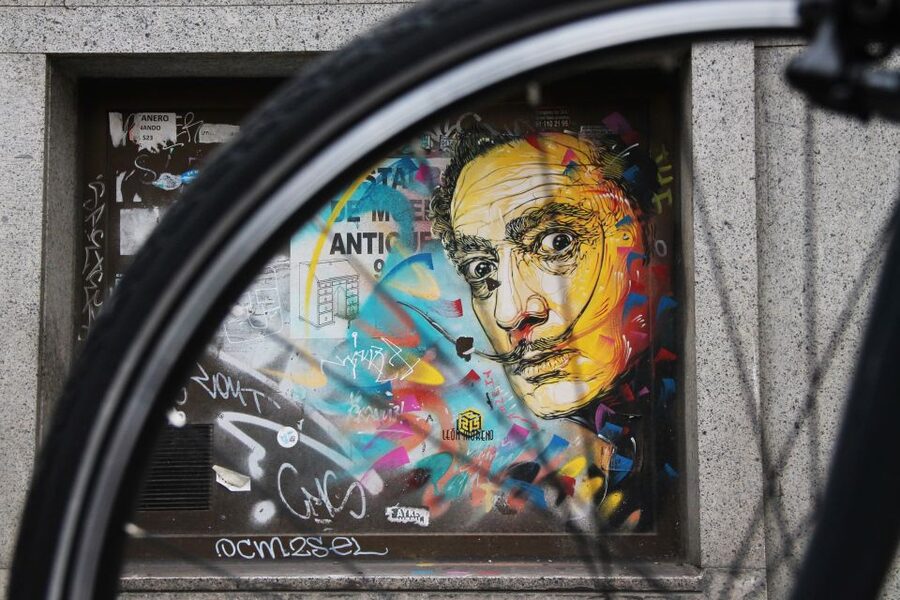
A good street art tour teaches you how to look. This one explains the history of street art and the techniques artists use when they decorate walls, metal shutters, and other street surfaces. That technique-focused approach is what turns random murals into something you can interpret.
You’ll also learn about the graffiti movement origins in Madrid, with Muelle and the preserved 1989 tag acting like a timeline anchor. Once you’ve got that anchor, the rest of the tour becomes easier: festival pieces feel like modern chapters, and community art spaces feel like a continuation of the same impulse—turning the city into a message board.
And because the guide is a local graffiti artist, the explanations tend to connect to what you’re seeing in real time. That’s the difference between hearing facts and learning a way to notice things.
Cycling fit: traffic, the one uphill, and how the guide handles it
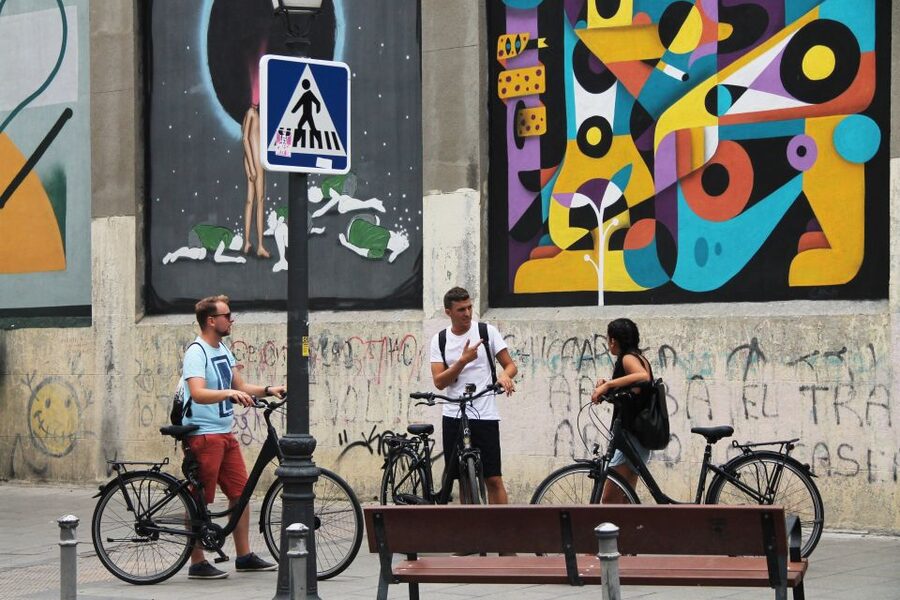
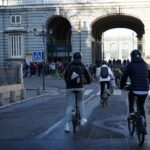
You should plan for urban traffic. The ride is described as medium level, with just one uphill, but cycling in Madrid can still feel like a moving puzzle. This matters because street art tours are short—if you spend too much energy fighting for balance, the artwork suffers.
The good news is that the guide can adjust the tour pace. In one group, there were participants below average in cycling, and the tour was adjusted to help them manage traffic and the uphill better. That’s the kind of flexibility that turns a “maybe” experience into a “glad I booked it” experience.
Still, don’t show up with zero bike experience and expect it to be effortless. If you can comfortably ride in a city and make basic speed and braking choices, you’ll maximize the tour and enjoy the stops instead of rushing past them.
Price and value: is $46 worth a 2.5-hour graffiti ride?
At $46 per person for about 2.5 hours, this tour can feel like a fair deal, mainly because so much is included. You get bike rental, a helmet and lock, a city map, a live English or Spanish guide, and a restroom break. You’re paying for the guide’s street-art context too—especially the technique and history bits tied to what you see on each block.
If you’re already spending time in central Madrid, the value spikes. This route hits multiple neighborhoods—Malasaña, Lavapiés, and key center district stops—without you needing to line up transit, pay for rentals separately, or spend hours researching where the murals actually are.
The one thing you won’t get is beverages, so bring water if you’re the kind who likes to sip during breaks. But overall, the inclusion list makes the price feel more like a guided experience than just “bike + some photos.”
What to bring so the tour feels easy
This is a short ride, so keep your packing simple. Bring your passport or ID card (you’ll be asked for it), and wear comfortable shoes. The tour includes some uphill effort, and you’ll likely do quick stops where you need to stand and look up without tripping.
If you care about photos, plan to wear something with pockets or quick access for your phone. Street art details—like typography, small character touches, and layered textures—are easiest to capture when you can stop, focus, and snap without fumbling.
Also remember: there’s no beverage included. If it’s warm, grab water before you meet up, then let the restroom break do the rest of the work for you.
Who this tour suits best (and who should choose another plan)
This street art bike tour fits people who want both art and real Madrid neighborhood life. If you like guided context—history, techniques, and why certain works exist—you’ll get more out of it than by simply walking and pointing at walls.
It’s also a strong choice if you want a fun activity that still feels meaningful. One group even brought a 7-year-old on their own bike, and they said it worked well. That tells me the experience can be family-friendly when kids are comfortable cycling and when the group stays mindful.
On the other hand, if you hate riding in traffic or you’re not confident on a bike, you’ll likely feel more strain than enjoyment. You may get some version of the experience, but you won’t fully enjoy the art stops if you’re working too hard just to keep up.
Should you book the Madrid Street Art Bike Tour?
Book it if you want a guided route through Malasaña and Lavapiés that connects murals to technique and history, not just names on a wall. The combination of festival-linked pieces (including Pinta Malasaña references), major center murals, and community art spaces like Solar Antonio Grilo makes it a smart use of a couple of hours.
Skip it if you’re not comfortable cycling in city traffic, even with a medium route and one uphill. Street art is great, but you’ll enjoy it more when your legs and balance aren’t busy managing the ride.
If you want, tell me your travel dates and your cycling comfort level (confident / somewhat / not really). I can suggest whether this tour sounds like a match and what time of day to aim for.
FAQ
How long is the Madrid street art bike tour?
It runs for about 2.5 hours. You can check availability for starting times.
Where does the tour start?
The meeting point is at the entrance of the small Carrefour Express on C/Montera 32, near the Gran Vía & Sol metro area.
What’s included in the price?
Bike rental is included, along with a helmet and lock, a Madrid city map, a live English or Spanish guide, and a restroom break.
Is anything not included?
Beverages are not included.
What languages are offered?
The live guide is available in Spanish or English.
What should I bring?
Bring your passport or ID card and wear comfortable shoes.
What cycling level should I expect?
It’s listed as a medium level activity with just one uphill.
Can I cancel for a refund?
Yes. You can cancel up to 24 hours in advance for a full refund.