REVIEW · SEVILLE
Seville: Historic Center Bike Tour
Book on GetYourGuide →Operated by Centerbici · Bookable on GetYourGuide
Seville feels different when you’re moving. This 2.5-hour Historic Center Bike Tour turns the city’s winding streets into a readable story, from Roman-era beginnings to the riots of 1868 and the later Glorious Revolution. I like that the route centers on the defensive walls and major gates, so you’re not just passing monuments—you’re understanding why Seville was built to protect itself. One downside to consider: some bikes can feel a bit worn, so it’s smart to do a quick safety check at the start.
The best part is the guide’s pacing through time. You’ll hear how different peoples—Tartessians, Carthaginians, and Romans—left their mark, then watch how the city’s defenses evolved under the Almoravids. Guides can handle Spanish, English, and French, and you’ll benefit from that if you need clarity on the details—some guides, like Luca, have been noted for staying flexible with languages.
This tour is made for people comfortable riding in an older city street network. It’s not suitable for people with mobility impairments, so plan on a hands-on, active experience.
In This Review
- Key things to know before you ride
- Starting at Centerbici Store: bikes, helmets, and a quick plan
- Seville’s timeline in motion: from Tartessians to the 1868 riots
- Almoravid walls and the defensive route you can still feel
- Gates with stories: Puerta Carmona, Puerta Osario, and Puerta Triana
- Architecture you can read: why the route feels more than scenic
- Alcázar area and the 1868 shock: what remained after the riots
- Pacing and comfort: 2.5 hours that actually work
- Price and value: why $35 can make sense in Seville
- Who this tour fits best (and who should skip it)
- The guide factor: multilingual clarity can change everything
- Should you book this Seville Historic Center Bike Tour?
- FAQ
- How long is the Seville Historic Center Bike Tour?
- How much does the tour cost?
- Where is the meeting point?
- What’s included in the price?
- What languages does the live guide speak?
- What sights and areas does the tour cover?
- Is the tour suitable for people with mobility impairments?
- Is there free cancellation?
- Can I pay later?
Key things to know before you ride
- 2.5 hours focused on Seville’s historic core with a defensive-wall angle, not a random highlights loop
- Gates like Puerta Carmona, Puerta Osario, and Puerta Triana give you a “why it mattered” way to see the city
- Defensive history from Almoravid walls to post-1868 remnants helps you connect monuments to events
- Bilingual (Spanish/English/French) guidance keeps the story clear as you pass different architectural styles
- Bike rental plus water bottle and map keeps you from scrambling for essentials
Starting at Centerbici Store: bikes, helmets, and a quick plan
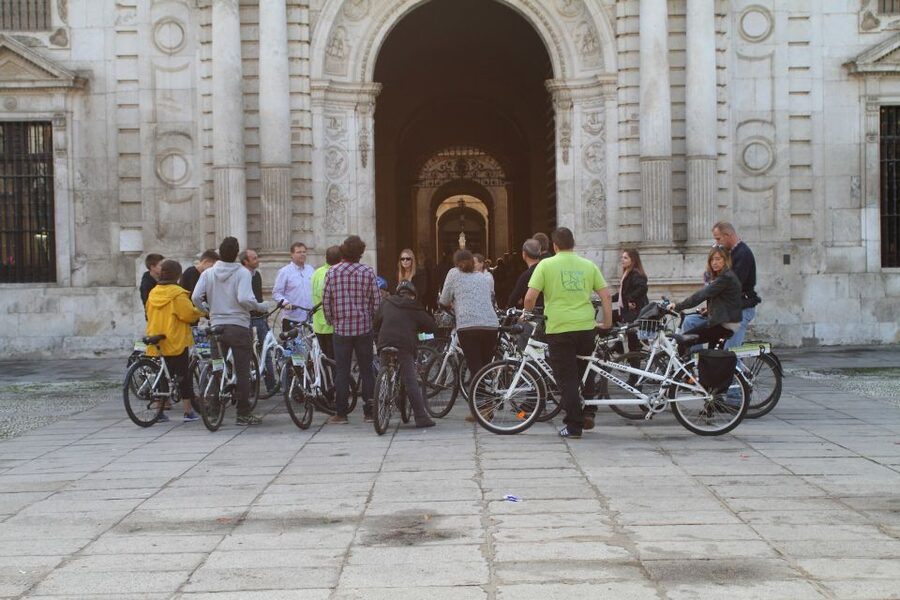
You’ll meet at Centerbici Store at C/ Espronceda, 5 (41004 Sevilla). This location matters because it gets you close enough to start pedaling right away, while still placing you in reach of the historic center.
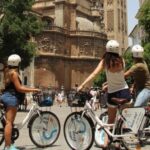
The tour includes bike rental, and you also get a water bottle and a map. That’s practical for Seville, where walking can tire you fast in the midday heat, and where your bearings matter. You’ll also get helmet rental for children—useful if you’re traveling with kids who need their own safety gear.
Before you roll, do your usual check: brakes feel solid, seat height works, and your helmet fits comfortably if you’re using one. One piece of real-world caution: at least one rider noted that the bikes were at the end of their life. You can’t control what’s on hand, but you can absolutely request a better option if something feels off.
You can also read our reviews of more tours and experiences in Seville.

Seville’s timeline in motion: from Tartessians to the 1868 riots
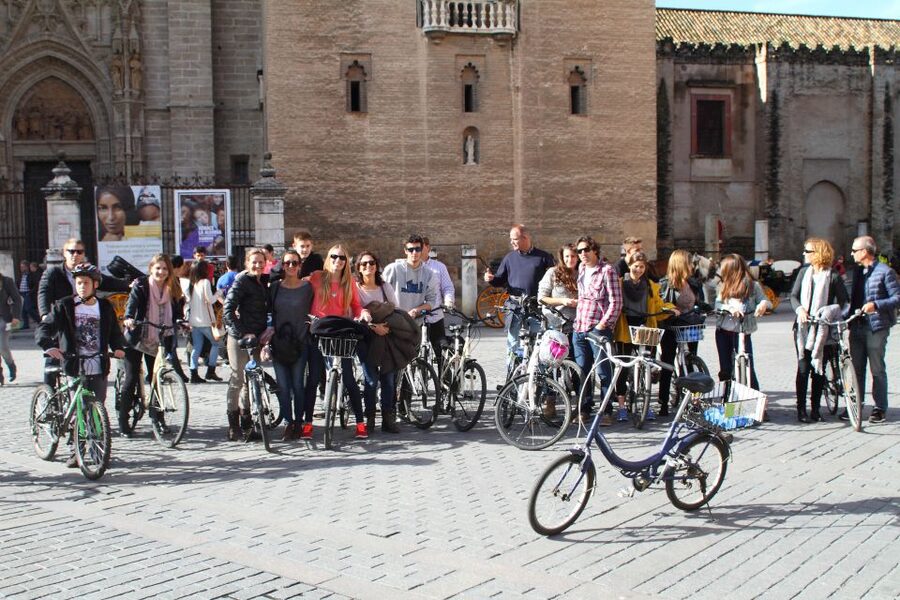
The ride is built like a moving lecture, but it stays practical because you’re always tying the story to what you see around you. You’ll hear Seville’s history described from early settlement to later upheavals, with stops that connect people and power to the city’s physical form.
Here’s the big arc you’ll follow:
- Early peoples in the area, including the Tartessians and the Carthaginians
- The period when Romans settled the area and left an urban imprint
- Later defensive expansion—especially the era when the city’s walls became a major point of power
- The riots of 1868 and what remained after those events, plus the story around the Glorious Revolution
Why this approach works: it stops the usual “photo-and-move-on” rhythm. Instead of treating buildings like isolated sights, you’ll understand how a city’s priorities change—defense, control, and then reconstruction or adaptation after conflict.
If you like history but hate museum lectures, this is the kind of tour that keeps your attention because the scenery is always part of the lesson.
Almoravid walls and the defensive route you can still feel
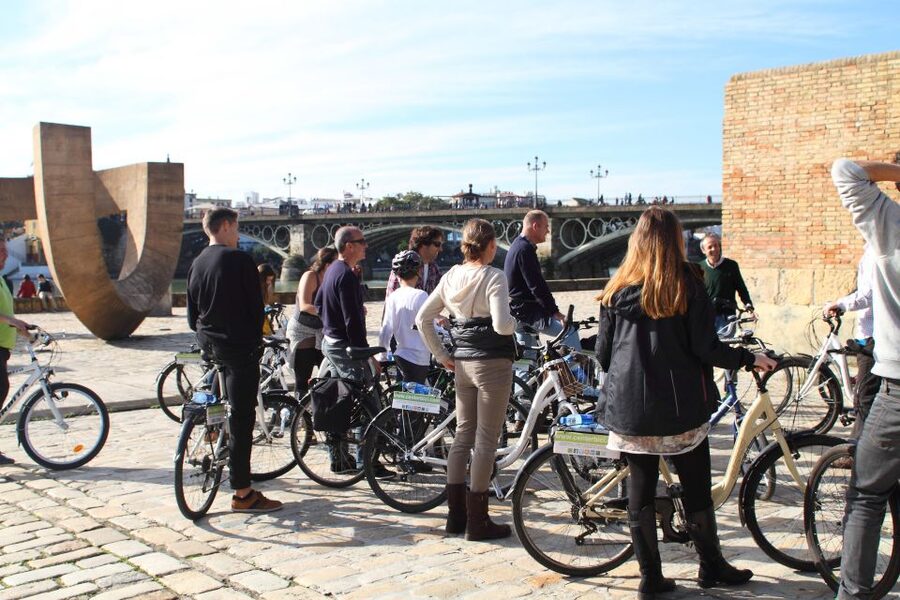
A highlight of the tour is the defensive angle: you’ll cycle along sections of the former walls of Seville and learn how the city became the “best-walled city in Europe” under the Almoravids.
That phrase matters because it explains why you’re riding a specific route. Walls weren’t decoration. They shaped travel patterns, protected key areas, and determined where people gathered and how the city functioned.
On this tour, you’ll see wall sections connected to named neighborhoods and landmarks, including:
- Macarena
- Puerta de Córdoba
- Sections that were left after the 1868 riots, including references tied to the Alcázar area
What you’ll likely notice as you go: the defensive mindset shows up in scale and layout. Even if you don’t read stone like an archaeologist, moving parallel to walls gives your brain the right sense of enclosure and protection.
This is also where the bike format becomes a real advantage. You cover more ground than you can on foot, and you maintain context from one wall segment to the next.
Gates with stories: Puerta Carmona, Puerta Osario, and Puerta Triana
Gates are more than entry points. They’re choke points, checkpoints, and backdrops for power—plus they connect the outer city to the inside.
You’ll stop at major gates, including:
- Puerta Carmona
- Puerta Osario
- Puerta Triana
At Puerta Triana, the tour adds human detail: it’s tied to a place where carriages were stopped, and where stories unfold through the guide’s explanation. That kind of detail is what turns a gate into a scene.
At Puerta Carmona and Puerta Osario, you’ll get the gate’s place in the city’s defensive system and the bigger narrative the guide is building. Even without deep technical terms, the message is clear: these weren’t random doors in a wall. They were controlled gateways that mattered in day-to-day movement and in moments of pressure.
Practical tip for your experience: keep your phone handy for quick photos, but try not to spend every stop staring at your screen. Gates can look similar at a glance. The guide’s talk is what makes each one distinct.
Architecture you can read: why the route feels more than scenic
The tour explicitly focuses on architecture and city form. As you cycle, you’ll see diverse architectural styles, then you’ll hear how those styles connect to the eras described in the tour’s narrative.
This matters because Seville can feel like a smooth mix of beautiful eras if you only walk casually. The bike route creates “chapters,” and each chapter has a topic: Roman beginnings, later settlement impacts, defensive growth, and the aftermath of later conflicts.
You’re essentially learning Seville’s visual language in a low-pressure way:
- Look at the way spaces are arranged near defensive sections
- Notice how landmarks anchor the story as you move
- Pay attention to how gates break the city’s edges
If you’re the kind of traveler who loves architecture but gets lost in too many names, this tour gives you a guided structure so your eyes and ears stay aligned.

Alcázar area and the 1868 shock: what remained after the riots
One of the more compelling parts of the story is the mention of what’s still visible after the 1868 riots. You’ll connect that to the defensive and monumental structure around the Alcázar area and to the sections of wall and passageways linked to the gates you visit.
Even if you don’t go deep into event specifics, you’ll understand the practical outcome: conflicts don’t erase a city—they re-shape it. That’s why it’s valuable to learn where you’re riding. You’re not just seeing old stones; you’re seeing traces of change.
This makes the route feel more grounded. Instead of treating the city as a preserved postcard, you get a sense of how Seville kept evolving, even in difficult chapters.
Pacing and comfort: 2.5 hours that actually work
The tour runs 2.5 hours, and that duration is a sweet spot for a historic-center ride. It’s long enough to build a coherent story from one period to the next, but short enough that you’re not committed to the whole day.
You’ll want to come ready to pedal and listen. Bring comfortable footwear for street conditions, and plan on light sun care if you’re riding in warm months. The tour includes a water bottle, which helps keep the pace realistic.
Group dynamics aren’t spelled out here, so I won’t guess. But with a guided history route, you should expect stops to happen often enough to keep the story anchored. You’ll get the chance to pause at the named gates and wall segments, not just glance while rolling by.
Price and value: why $35 can make sense in Seville
At $35 per person, this tour looks affordable, especially because it bundles several things that add up on your own:
- A bilingual live guide (Spanish, English, French)
- Bike rental
- A water bottle and map
- Helmet rental for children
- The tour also notes skipping the ticket line
Value isn’t only price—it’s time. With a 2.5-hour format, you cover an efficient slice of Seville’s core and get historical context for what you’re seeing. If you’ve ever walked around a city thinking, I love this, but I’m not sure what I’m looking at, this is exactly the kind of outing that fixes that problem.
If you’re budgeting carefully, do a quick comparison: independent bike rentals, a guide-only history session, and time spent piecing together a defensive-wall route on your own. This tour gives you a ready-made storyline with transportation.
Who this tour fits best (and who should skip it)
This experience is ideal for:
- First-time Seville visitors who want a structured introduction
- Travelers who like history tied to real places, not just names
- People comfortable cycling through a historic center and making frequent photo-ready pauses
- Families with kids, since helmet rental for children is included
It’s not for you if:
- You have mobility impairments (it’s listed as not suitable)
- You aren’t comfortable riding a bike for the full 2.5 hours, even with stops
The guide factor: multilingual clarity can change everything
The tour includes a live guide who speaks Spanish, English, and French. That’s a big deal because Seville history can get complicated quickly, especially when you’re moving through multiple eras.
From what you’re likely to encounter, guides such as Luca have been praised for language skill and for staying attentive to client understanding. Another guide noted as Daniel received praise for clear explanations and a solid, well-handled tour. Sébastien was also highlighted as a strong guide.
Even if you’re confident in one language, it’s worth choosing a tour date where the guide’s language matches what you want to hear. You’ll get a smoother flow when you don’t have to work for understanding.
Should you book this Seville Historic Center Bike Tour?
I’d book it if you want Seville in a practical, guided format—especially if the idea of learning the city’s defensive route appeals to you. For $35 and 2.5 hours, you’re getting a bike, a guide in Spanish/English/French, and a focused route through gates and wall segments that explain why Seville’s most important structures matter.
Two cautions make this a smart decision rather than a casual one:
- If bike condition is a worry for you, do a quick check at the start and request an alternative if something feels rough.
- If you need mobility accommodations, this isn’t the right match.
If you’re ready to trade some wandering time for a clear storyline and a more efficient route, this tour is a strong value.
FAQ
How long is the Seville Historic Center Bike Tour?
It lasts 2.5 hours.
How much does the tour cost?
The price is $35 per person.
Where is the meeting point?
You’ll meet at Centerbici Store, C/ Espronceda, 5, 41004 Sevilla.
What’s included in the price?
It includes a tour of Seville, bike rental, a bilingual guide, a water bottle and map, and helmet rental for children.
What languages does the live guide speak?
The live tour guide is available in Spanish, English, and French.
What sights and areas does the tour cover?
You’ll cycle through Seville’s historic center with stops connected to the former defensive walls and gates, including Macarena, Puerta de Córdoba, Alcázar left after the 1868 riots, plus Puerta Carmona, Puerta Osario, and Puerta Triana.
Is the tour suitable for people with mobility impairments?
No, it’s listed as not suitable for people with mobility impairments.
Is there free cancellation?
Yes. You can cancel up to 24 hours in advance for a full refund.
Can I pay later?
Yes. It offers Reserve now & pay later so you can book your spot without paying today.