REVIEW · MEDELLIN
Medellín: History & Local Life Essentials Tour on an E-Bike
Book on GetYourGuide →Operated by Turibike · Bookable on GetYourGuide
Medellín comes at you fast. This e-bike tour is a smart way to learn the city’s story while you’re actually moving through it, from Ciudad del Río to the river parks. You get that rare combo of big urban sights and human details, helped along by guides who know where to look and what to notice.
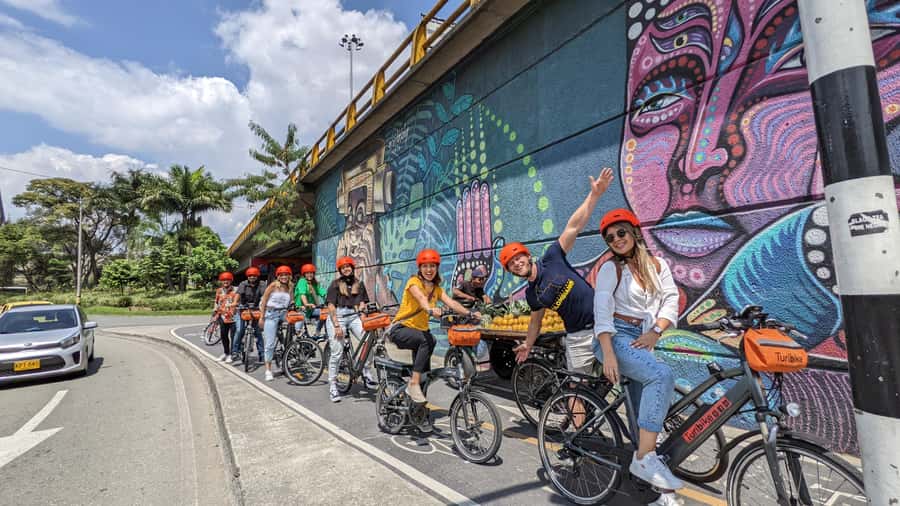
I especially love how the route links art and infrastructure. The Museum of Modern Art in Ciudad del Río, the murals in the creative district, and the street-level energy of El Centro are all part of the same lesson: Medellín rebuilt itself into something people live inside—not just something you stare at.
One thing to consider: the ride is mostly flat and traffic can get busy at road crossings, so it’s not the most adrenaline-heavy biking. If you’re a strong cyclist, the e-bike might feel like overkill, and one gear issue was mentioned in a past review—so it’s worth asking for a quick bike check before you roll.
In This Review
- Key points I’d mark on your map
- Why Medellín feels different from an e-bike
- Getting started at NOI Coworking: the calm before the ride
- Ciudad del Río and the Museum of Modern Art: resilience you can see
- What to watch for
- San Antonio Park and the Botero sculptures: destruction and rebirth
- Rolling through the metro viaduct and into El Centro’s rhythm
- Perpetuo Socorro (passing by) and Plaza Botero: beauty with chaos
- A practical note
- Parque de las Luces and the river parks: where the city slows down
- Plaza Mayor walk: a short finale that lands the message
- Guides who tell Medellín like locals (and keep it easy to follow)
- Safety, comfort, and the traffic reality you should plan for
- Who this tour suits best (and who should skip it)
- Price check: is $48 good value for what you get?
- Should you book the Medellín History & Local Life Essentials Tour?
- FAQ
- Where is the meeting point for the tour?
- How long is the Medellín History & Local Life Essentials Tour?
- What does the $48 price include?
- Are transportation to and from the meeting point included?
- What languages are the guides?
- What should I bring?
- What is not allowed during the tour?
- Who is the tour not suitable for?
Key points I’d mark on your map
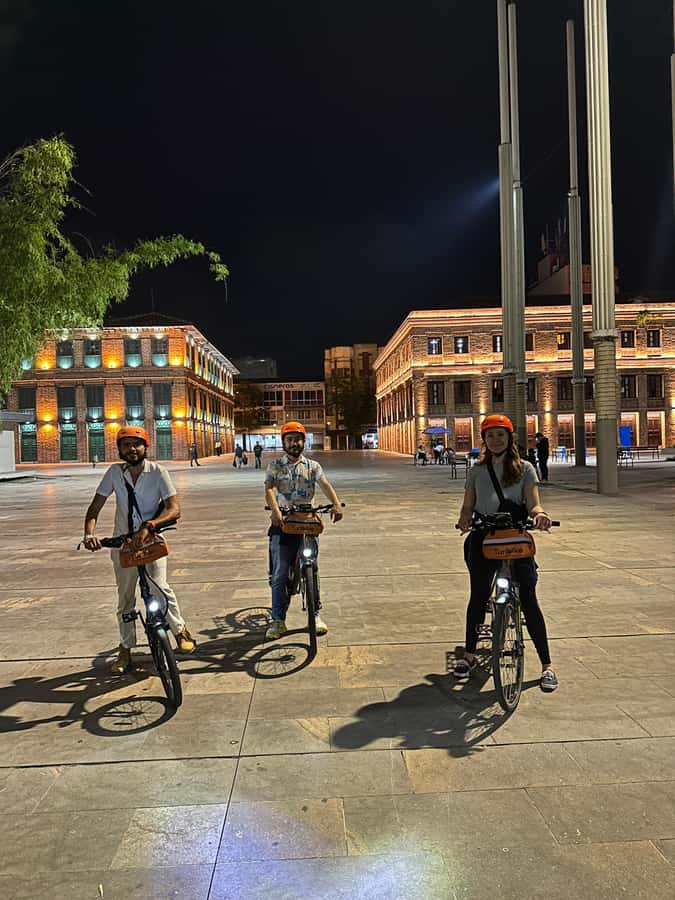
- Fast city orientation in 3.5 hours with multiple major stops and a logical flow across Medellín
- Art with context at Botero sites, plus murals and public spaces tied to real local meaning
- Comfort built in with helmet, rain jacket, and technical support for an easier ride
- Guides make it feel personal, with lively storytelling and patient pacing for beginners
- You’ll feel the city in motion, including the metro viaduct area and major parks
Why Medellín feels different from an e-bike
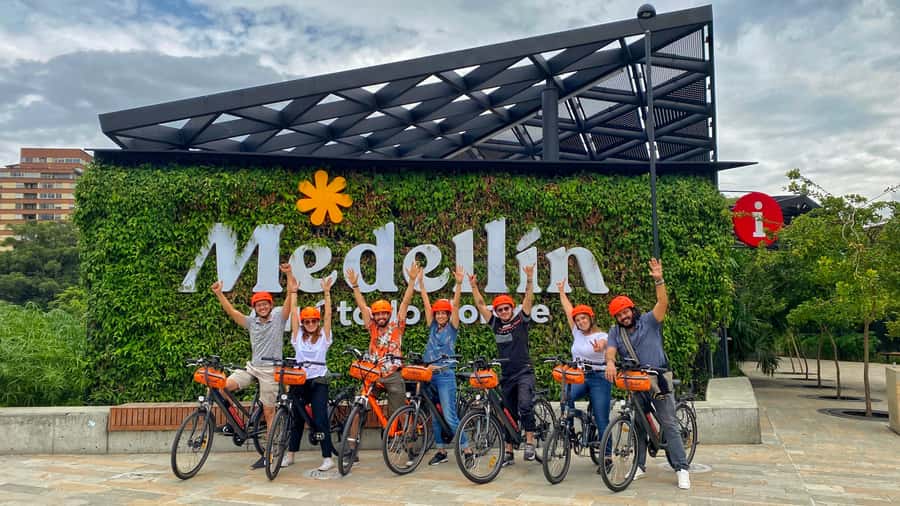
Medellín has layers. If you only walk, you start to miss the big picture and you’ll spend too much time repositioning. If you only hop in taxis, you miss the street rhythm. On an e-bike, you get the best middle ground: you can keep pace, but still register what’s around you—wall art, street sounds, the way people use public space.
The e-bike also changes how you experience elevation and distance. This tour is designed to cover a lot of territory without turning your morning into a workout you didn’t plan for. You’re not just collecting landmarks. You’re riding through neighborhoods and public places that explain Medellín’s identity—how it expresses itself in public art, how it built infrastructure, and how nature and the urban fabric are constantly negotiating space.
You can also read our reviews of more tours and experiences in Medellin.
Getting started at NOI Coworking: the calm before the ride
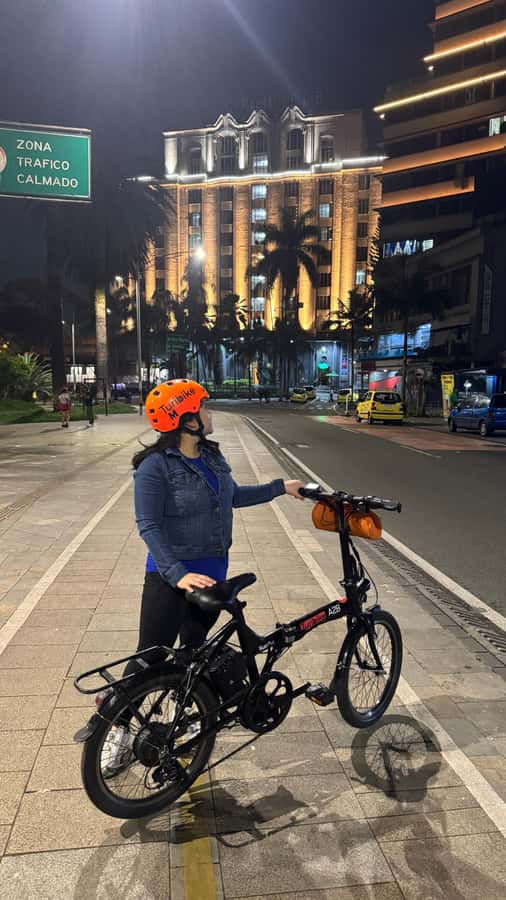
Your meeting point is Calle 17 # 43F-287 (NOI coworking). It’s about a 10-minute walk from Poblado metro station, or around a 10-minute drive from Parque Lleras. That’s a useful detail because it gives you a simple mental anchor: once you’re at NOI, you can show up without stress, get geared up, and start learning.
You’ll be outfitted with the essentials you’d want for a city ride: an electric bike, a helmet, and a rain jacket. You’ll also have technical assistance on hand, which matters more than people think. Medellín weather can shift, and having support makes the tour feel smoother from minute one.
The ride time is 210 minutes, so you should go into it with the mindset of a guided morning plan: enough time to see multiple districts, but not so long that you’ll feel fried by the end.
Ciudad del Río and the Museum of Modern Art: resilience you can see
The tour kicks off in Ciudad del Río, where modern Medellín and its ambitions are easy to spot. One standout stop is the Museum of Modern Art, described as brutalist in feel. That style isn’t just an aesthetic choice here—it mirrors the city’s geography and its history of dealing with difficult terrain and fast change.
I like this start because it sets the tone. You’re not starting with a postcard. You’re starting with a way to understand Medellín’s resilience. Even before you reach the busier central squares, you’re being primed to look for relationships: how buildings hold up the city’s movement, how public space gets claimed by art, and how nature keeps showing up in the city’s edges.
Then, as you keep riding, you pass through the creative district energy—murals and innovative projects—so the story isn’t only about concrete. It’s about people putting meaning on walls and shaping what the future can feel like.
What to watch for
This section tends to be ideal if you want context early. If you’re hoping for nonstop riding with zero stops, you might feel like you’re paused to absorb information. But for most first-timers, those quick stops are the point.
San Antonio Park and the Botero sculptures: destruction and rebirth
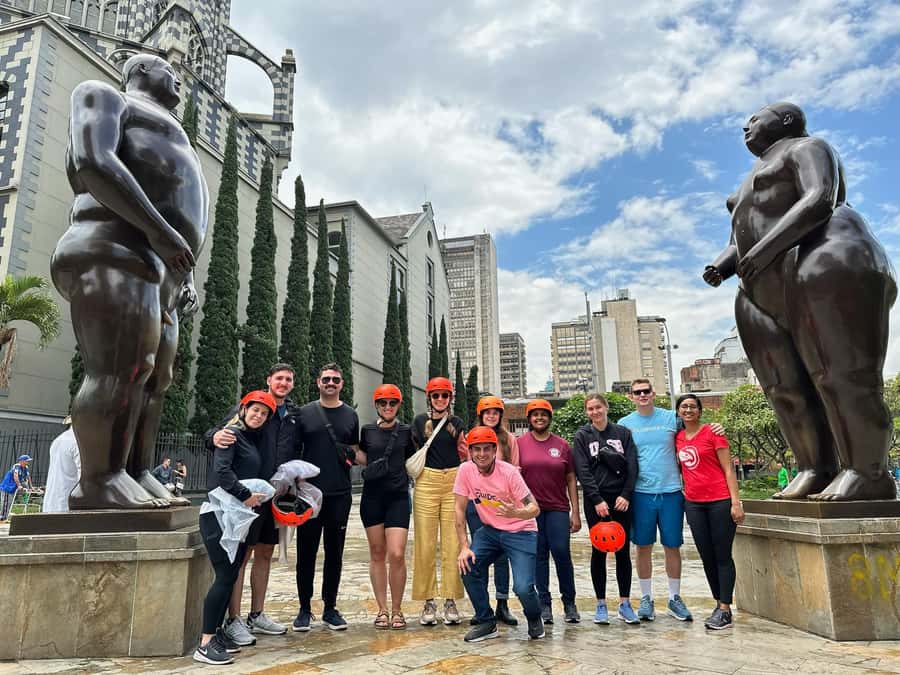
Next up is San Antonio Park, where the tour stops around the two Botero sculptures. Botero’s work often looks playful at first glance, with its rounded forms and bold presence. Here, the key is the story connected to the sculptures: destruction and rebirth.
This is where the experience starts to feel less like sightseeing and more like reading a city. Standing in a park with sculptures that carry heavy meaning makes the ride click. You start to sense how Medellín’s public art can hold complexity without needing to be explained every second.
Also, because you’re on an e-bike, you’re not stuck in one spot for too long. You can feel the park as a node inside the city’s movement. Then you roll onward with that new context in your head.
Rolling through the metro viaduct and into El Centro’s rhythm
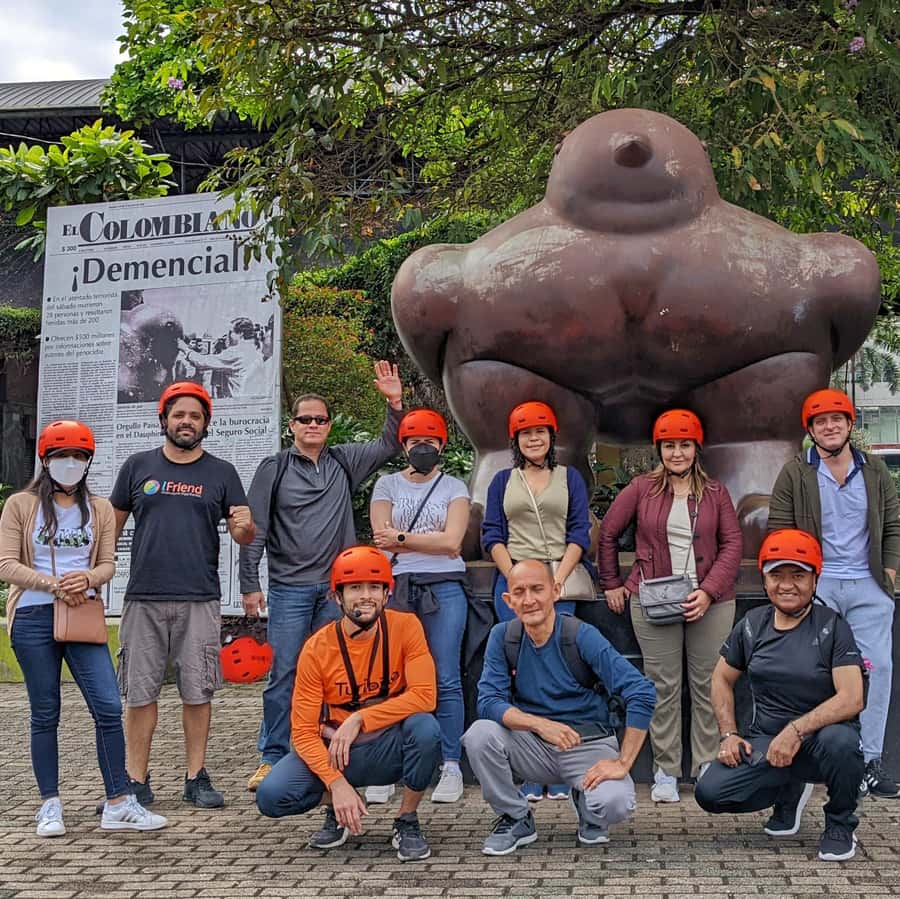
Between parks and squares, you get a ride through the metro viaduct area—where the city’s pace is loudest. This part matters even if you’re not a transit nerd. Medellín’s identity isn’t hidden. It’s in the way people move, the density of daily life, and the way infrastructure carries the city.
On a bicycle tour, the viaduct corridor helps you understand scale. The city looks different when you’re not inside a car. You’re closer to street life, and you’re moving at a speed that lets you notice details without having to stop at every curb.
One guide I’ve seen praised for pacing is Dayana, described as very safe and cautious. That kind of guide choice helps a lot here, because busy urban areas require calm, not bravado.
Perpetuo Socorro (passing by) and Plaza Botero: beauty with chaos
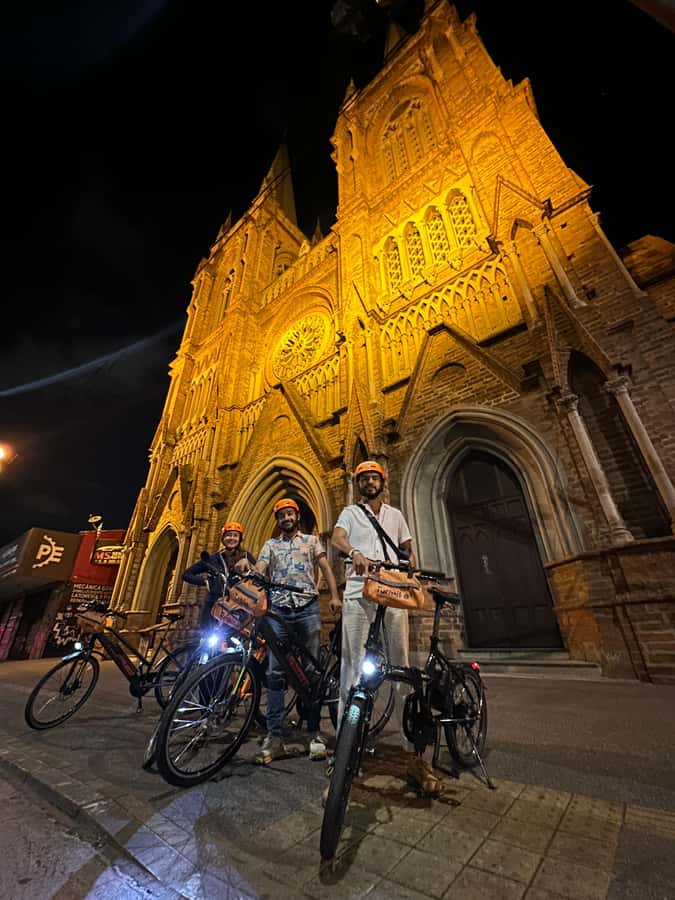
The itinerary includes Perpetuo Socorro as a pass-by moment. Even without a long stop, a pass-through can be useful on a history tour because it teaches you where to look next time you’re exploring on your own. It’s a reminder that the city’s identity isn’t only in museums and big plazas; it also lives in everyday streetscapes.
Then you hit Plaza Botero, one of Medellín’s central meeting points for art and public life. The tour frames the square as a balance between beauty and chaos—exactly what the center can feel like. This stop is particularly strong if you want to understand how Medellín holds contrasting moods in the same space: families, movement, noise, and art all coexisting.
A practical note
If you’re prone to feeling overwhelmed by crowds, plan to use the stop time to take a breath before the next ride segment. The e-bike keeps you efficient, but Plaza Botero can be lively.
Parque de las Luces and the river parks: where the city slows down
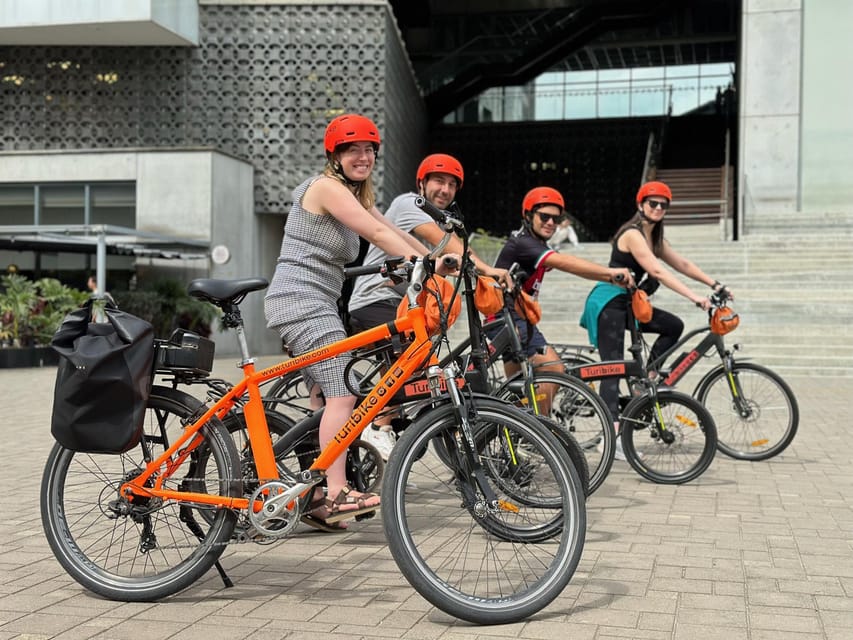
After Plaza Botero, you go to Parque de las Luces. Even if you don’t know the details before arriving, the tour’s framing helps: this is a place that’s meant to be experienced in public. Lights, movement, and the evening-friendly feel of many Colombian city parks often go together, and this stop is a good “reset” in the middle of a busy ride.
Then comes the highlight ending zone: Medellín River Parks and the area around Parques del Río. This is described as an urban oasis where modern Medellín can breathe—and you get to breathe with it. That’s not just poetic language. River parks work because they give you space to move, pause, and see how the city relates to nature.
I like ending around the river because it changes your mental map. Many first-time Medellín visits end with the downtown core. Here, you finish with a calmer, more spacious feel, so your brain isn’t stuck only on statues and streets. You leave with a second mental image: the city as a place with green corridors and public gathering spots.
Plaza Mayor walk: a short finale that lands the message
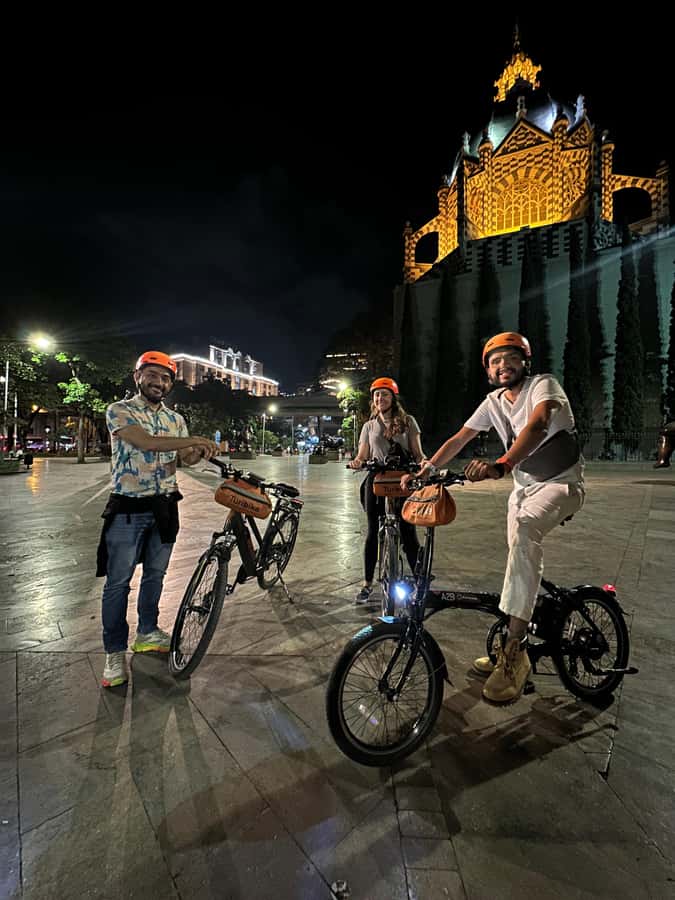
The tour includes Plaza Mayor Medellín with a walking segment at the end. Walking after a ride is intentional. On a bicycle, you can cover ground quickly, but you sometimes miss the texture of a place. A short walk gives you time to register the atmosphere without the speed of the bike.
By the time you reach Plaza Mayor, you’re already carrying stories from Botero sculptures, murals, museum context, and park meaning. The walking finale is where all those ideas begin to feel connected in one city picture.
Guides who tell Medellín like locals (and keep it easy to follow)
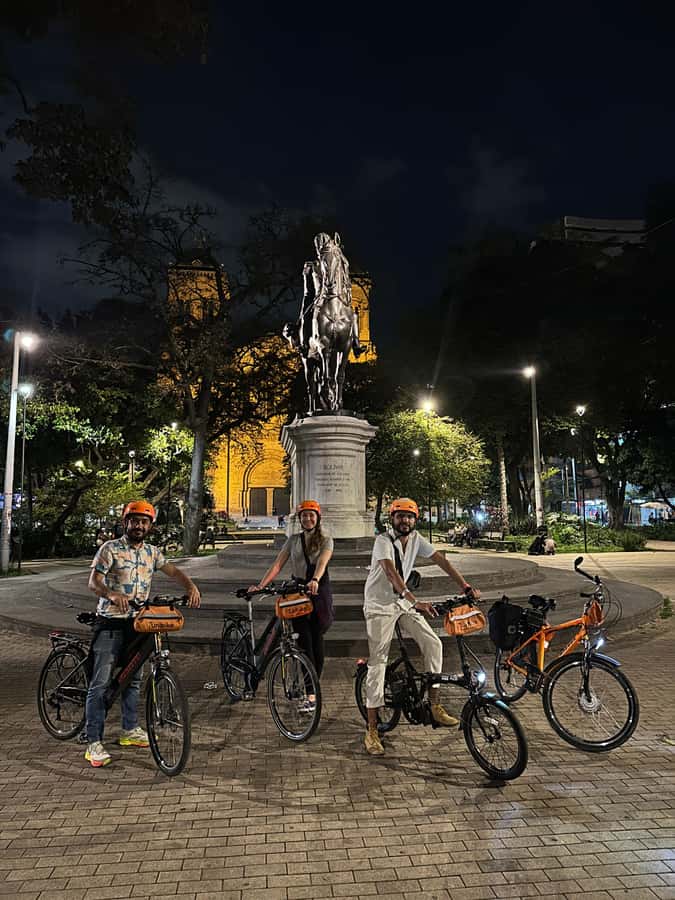
This is the part that most separates a good bike tour from a forgettable one: the guide.
I’ve seen strong praise for Diana for being friendly, plus Dani, who’s described as loving her city and sharing architecture, art, culture, and practical tidbits. There’s also a note that one guide compiled a video from photos and videos taken during the ride and sent it afterward—an underrated bonus if you like having something to remember the route by.
For safety-minded riders, Juan and Carlos are mentioned as making the tour fun and interesting, and Dayana gets repeated praise for cautious riding. That’s important because an e-bike tour is only as comfortable as the guide’s decisions at turns and crossings.
Also, the tour is bilingual (Spanish and English), which helps if your travel crew includes mixed language comfort levels.
Safety, comfort, and the traffic reality you should plan for
The tour is built for comfort: helmet, rain jacket, and high-quality e-bikes with technical assistance. That combination makes a big difference on a city ride, because it lowers the friction that turns bike tours stressful.
Still, Medellín is a real city, not a closed track. One past review flagged busy road junctions and a lot of pedestrians at intersections even when cycle paths are present. Another comment noted the ride felt flat and that an e-bike might be unnecessary for confident cyclists.
Put simply: you’re not signing up for mountain biking. You’re signing up for moving efficiently through neighborhoods. If you’re expecting constant off-the-beaten-path biking bliss, you might feel shortchanged. If you’re expecting a guided, safe ride that helps you connect stories to places, it fits well.
And yes—one review mentioned an issue with gears on a specific bike. That’s not guaranteed for your tour, but it’s a good reminder to listen to the guide at the start and do a quick check of shifting once you’re seated.
Who this tour suits best (and who should skip it)
This is a practical tour, but it has clear limits.
It’s not suitable for:
- pregnant women
- people who can’t ride a bike
- wheelchair users
- people under 140 cm (4 ft 6 in)
You’ll also want to follow the basics:
- bring an ID card or passport
- wear comfortable shoes
- skip sandals or flip flops
- avoid alcohol and drugs during the experience
If you’re a first-time e-bike rider, the tour is often described as beginner-friendly because guides take time to acclimate riders. That’s the right vibe for Medellín, where you want confidence more than speed.
This is also a great fit if you want a first-day orientation. The route hits key modern-and-old junctions, so you’ll understand what you’re seeing later while you explore on your own.
Price check: is $48 good value for what you get?
At $48 per person for 210 minutes, the value comes from two places: time efficiency and included gear.
You’re not just paying for someone to point at buildings. You’re getting:
- a bilingual guide
- an electric bike
- helmet and rain jacket
- a refreshing Colombian drink
- medical insurance
- technical assistance
For Medellín, where distances can be deceptive and traffic can eat your day, 3.5 hours with a plan you can trust is a solid deal. The included drink is a nice extra too—some guides have served things like sugar cane drink, and there’s also praise for coffee/fruit snacks in the broader experience style.
Bottom line: if you’re new to Medellín and want to see multiple districts without wasting energy on logistics, this price is easy to justify.
Should you book the Medellín History & Local Life Essentials Tour?
If you want to understand Medellín beyond a few icons, this tour is a strong bet. I’d book it if:
- you like learning through the streets, not just from a museum wall
- you want major stops like Plaza Botero and river parks, all in one run
- you appreciate a guide who mixes history with how locals live and feel
- you’d rather spend your morning riding than figuring out routes
I’d think twice if:
- you hate any chance of traffic and pedestrian-heavy crossings
- you’re already a confident cyclist who expects a more intense biking workout
- you have mobility needs that make biking difficult
If that sounds like you, grab your spot. This is the kind of tour that leaves you with a better sense of direction, plus a more human understanding of what Medellín is still becoming.
FAQ
Where is the meeting point for the tour?
You meet at Calle 17 # 43F-287 (NOI coworking). It’s about a 10-minute walk from Poblado metro station or about a 10-minute drive from Parque Lleras.
How long is the Medellín History & Local Life Essentials Tour?
The duration is 210 minutes (about 3.5 hours).
What does the $48 price include?
The tour includes a bilingual guide, an electric bike, helmet, rain jacket, a refreshing Colombian drink, medical insurance, and technical assistance.
Are transportation to and from the meeting point included?
No. Transportation to and from the meeting point is not included.
What languages are the guides?
The live tour guide speaks Spanish and English.
What should I bring?
Bring a passport or ID card and comfortable shoes.
What is not allowed during the tour?
Alcohol and drugs are not allowed.
Who is the tour not suitable for?
It’s not suitable for pregnant women, people who can’t ride a bike, wheelchair users, and people under 140 cm (4 ft 6 in).