REVIEW · MEDELLIN
Medellín: E-bike and Foodie Tour
Book on GetYourGuide →Operated by Turibike · Bookable on GetYourGuide
Skip the map. Ride Medellín locally. On this e-bike and food tour, you cruise away from the usual tourist crowd and into neighborhoods where daily life runs on its own schedule. What I like most is the mix of local food with meaning, not just food on a plate, plus the chance to hear real stories from guides who clearly know the city.
The second thing I really enjoy is the pace: you cover a lot of ground without getting wrecked, and the ride feels controlled even when the city gets busy. You might end up with a guide like David, Toto, or Dayana on your date, and the small group size (max 8) keeps it conversational. One possible drawback: this isn’t for you if you can’t ride a bike confidently, and it’s not set up for people with mobility impairments or very short riders (under 140 cm).
In This Review
- Key things worth knowing before you go
- Why an e-bike foodie tour works so well in Medellín
- The food stops: classic Medellín flavors with a story behind them
- What this means for your trip
- Stop-by-stop: how the route tells Medellín’s story
- Turibike start: where it kicks off
- Unidad Deportiva de Belén: first tastings
- Parque Belén: bike time plus another food lesson
- Laureles: regional food on the move
- Conquistadores: local snacks and another stretch of riding
- Final food tasting + River Parks visit
- What about safety, traffic, and the bike?
- What you need to bring (and what to skip)
- Who should do this tour
- Price and value: is $48 a fair deal?
- Meeting point and how to avoid the start-time stress
- Should you book the Medellín e-bike and foodie tour?
- FAQ
- How long is the Medellín e-bike and foodie tour?
- What is included in the price?
- Are hotel pickup and drop-off included?
- What should I bring and wear?
- Do you allow alcohol or drugs during the tour?
- Is it accessible for people with mobility impairments or for pregnant travelers?
Key things worth knowing before you go
- E-bike first, sightseeing second: the bike does the heavy lifting so you can focus on people and food.
- Food that comes with context: you’ll hear why dishes matter in Medellín’s past and present.
- Small group pace: up to 8 people, so you’re not stuck in a slow shuffle line.
- Neighbhorhoods beyond the postcard zones: traffic noise fades as you move into residential streets.
- River Parks at the end: a final change-of-scenery moment after the tastings.
- Comfortable-shoes rule: sandals and flip-flops are a no-go, so plan accordingly.
Why an e-bike foodie tour works so well in Medellín
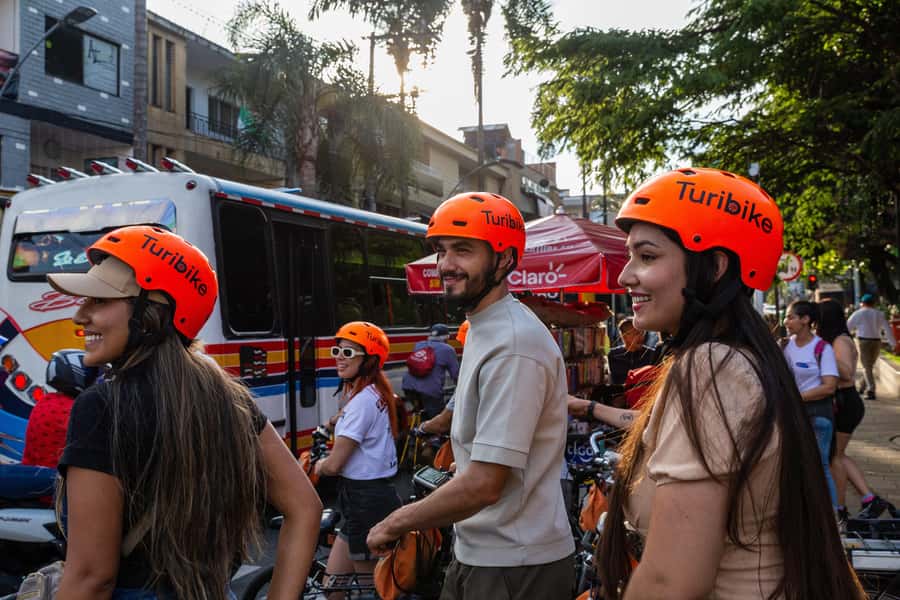
Medellín is one of those cities where the “interesting bits” aren’t all clustered in one neat area. With a regular walking tour, you’d spend your time waiting at intersections or trimming routes to stay sane. On an e-bike, the math changes. You can move quickly between neighborhoods and still stop often enough to actually taste and talk.
And the best part is how the ride shapes the experience. Within minutes, you’re no longer surrounded by the loud, tourist-heavy areas. You start rolling through tree-lined streets and everyday blocks, where you notice details like small plazas, neighborhood bakeries, and the kind of street life that doesn’t show up in most highlight reels.
The e-bike also makes the tour feel more like “seeing the city” and less like “checking off stops.” Even with the hills and varied streets, the goal is to keep you comfortable so you can focus on the food and stories.
You can also read our reviews of more tours and experiences in Medellin.
The food stops: classic Medellín flavors with a story behind them
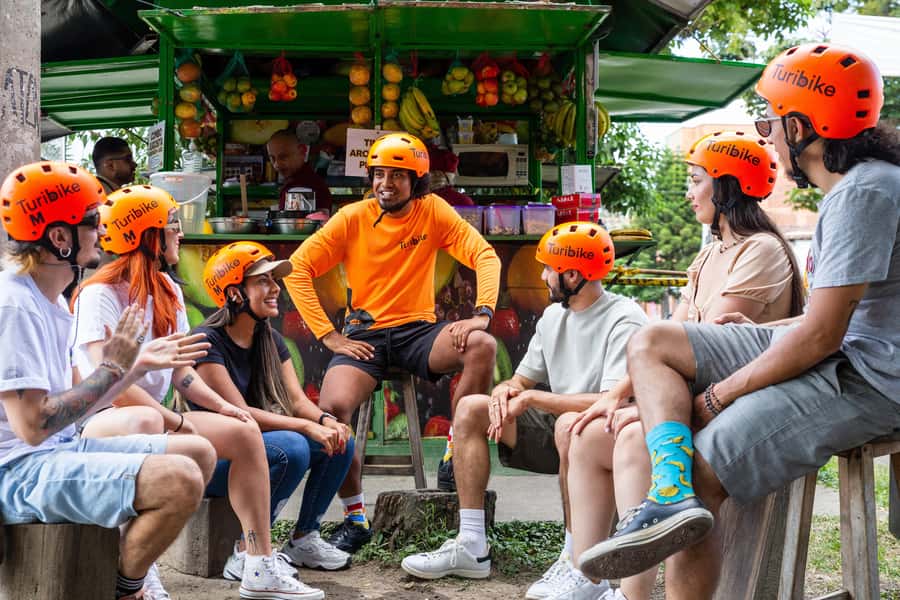
This is not a random snack crawl. The food is tied to local identity—how people eat, what they preserve, and how old recipes survive in a modern city.
Here are the kinds of bites you can expect across the tour:
- Pandebono (cheesy, baked goodness)
- Salpicón de frutas (fruit mixed with flavorings and usually served fresh)
- Coffee (Colombia does coffee, and Medellín does it well)
- Guarapo (sugarcane drink)
- Empanadas (including crisp versions that hold up under a bike ride)
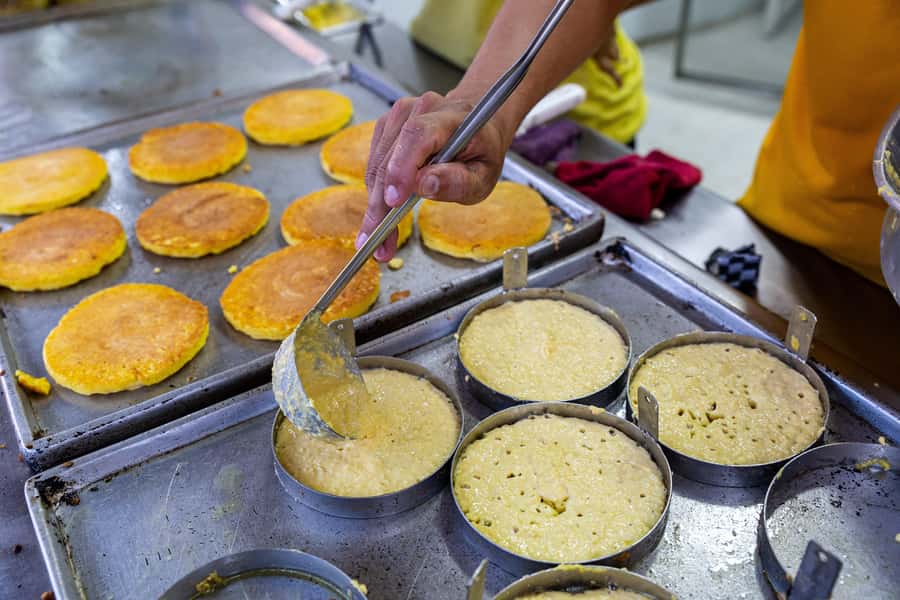
- Arepa, including a version made from an older, repeated recipe
You’ll also get more than tasting. The tour frames food like a timeline. You might sit at a table with locals and learn that some recipes have stayed basically the same for decades. That’s a big difference from eating something tasty while barely learning what it is.
What this means for your trip
If you’re here for only a few days, this tour gives you a shortcut to “how locals think,” because food is one of the most practical ways to understand a place. You’ll leave knowing what to look for on menus later—especially the Antioquian staples like arepas and empanadas—and you’ll order with more confidence.
Stop-by-stop: how the route tells Medellín’s story
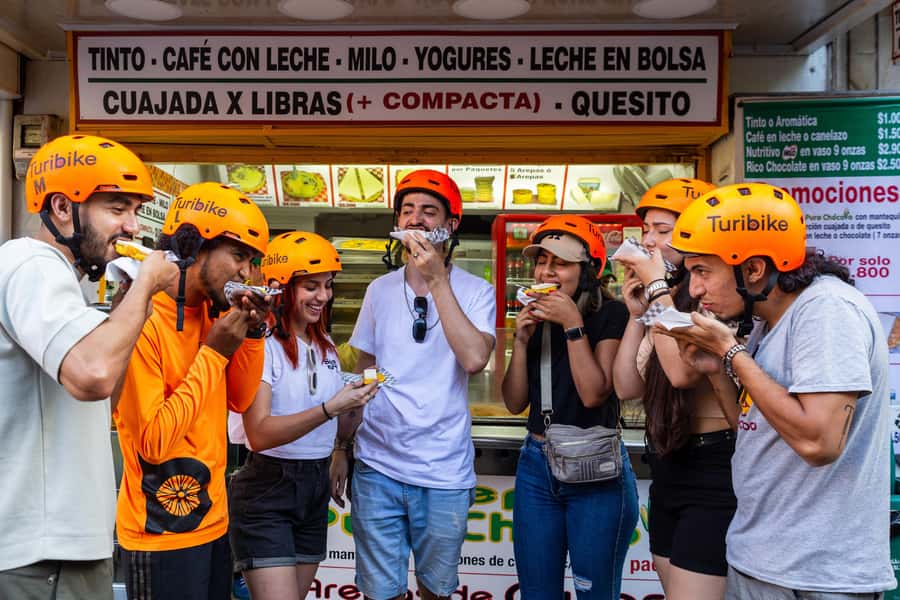
The tour runs about 3 hours, and it’s built like a slow-moving narrative: bike out, snack in, then ride again with context in your head.
Turibike start: where it kicks off
You begin at Turibike, located in a coworking space on an industrial street. The meeting spot is simple but specific: find a brick building with a big black metal door. If the door is closed, knock and the guard will let you in.
This start matters because you’re not meeting at some polished tourist hub. You’re starting near the working side of the city—where the rest of the tour keeps its promise.
Unidad Deportiva de Belén: first tastings
Your ride begins with a food stop at the Unidad Deportiva de Belén. Think of this as your “warming up” moment: you taste, you settle into the group, and you get oriented before you start covering more distance.
This early section is where you’re likely to sample items like coffee, fruit salpicón, and other traditional bites that set the tone for the rest of the tour. It’s a good moment to ask questions too, because you’ll still be fresh enough to enjoy the conversation.
Parque Belén: bike time plus another food lesson
Next is Parque Belén, with more biking and more tasting. This is one of those stops where the city’s personality shows up fast: you’ll spot everyday scenes like elderly men playing cards in a plaza-like setting, and the atmosphere can feel like time slows down.
You’re not just eating here; you’re connecting food with place. The tour includes moments where you understand the roots of local cuisine and how traditions show up in real neighborhoods, not staged venues.
Laureles: regional food on the move
Then you head into Laureles, with more riding and regional food. Laureles often feels more “established” than the very residential zones, so it’s a natural transition point. You get a sense of the city’s character changing as you move through different areas—without leaving the city-life vibe behind.
If you like your food with texture and contrast, you’ll probably enjoy the regional-style items here. Some riders call out favorites like crispy empanadas and pandebono, which are exactly the kind of snacks that make you feel like you’re eating like a local instead of like a tourist.
Conquistadores: local snacks and another stretch of riding
After Laureles, the route includes Conquistadores, with local snacks and more bike time. This leg is where you really feel what an e-bike is for. The ride connects the neighborhoods smoothly, so you don’t spend the evening exhausted from transit.
The local-snack part keeps the tour grounded. Instead of chasing big-name restaurants, you’re sampling the kind of food that fits into normal life: fast, familiar, and meant to be eaten in the moment.
Final food tasting + River Parks visit
The tour continues with another food tasting, and then you head to Medellín River Parks. This is a nice finish because it flips your perspective. After eating and riding through neighborhood blocks, you end with an outdoor area that helps you see the city’s physical evolution—how space, movement, and planning shape daily life.
Important detail: food at the last stop is not included. So plan for the possibility of an extra purchase at that final tasting. Everything else is set up to keep you fed, but the last bite can cost a bit out of pocket.
What about safety, traffic, and the bike?
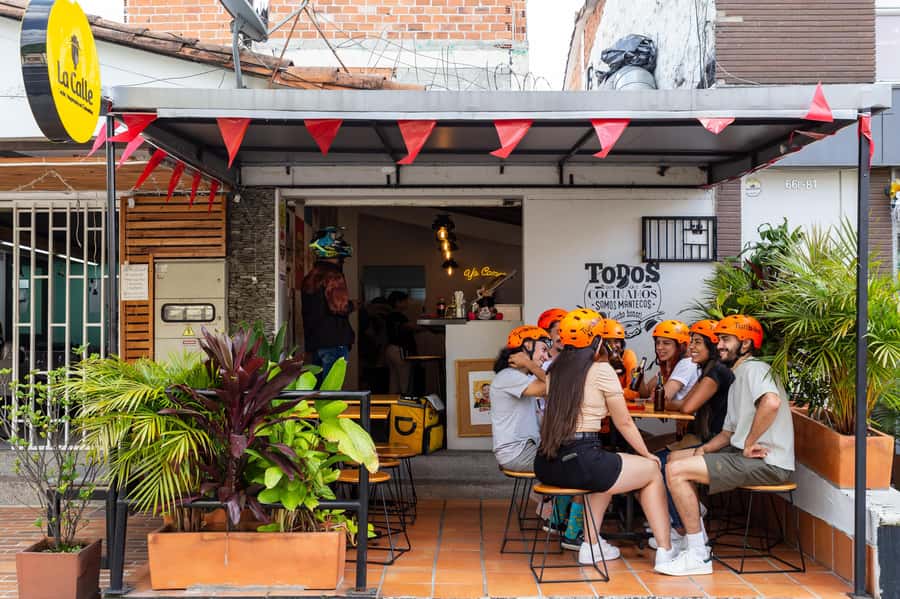
Medellín’s streets can be intense, but the tour is built around the reality that you need to feel steady while moving through the city. E-bikes help a lot. They reduce the effort, so you’re less likely to rush or wobble.
You’ll also be riding as part of a small group of up to 8, which makes it easier to manage spacing. Plus, the tour includes medical insurance, which adds peace of mind if anything goes sideways.
What you need to bring (and what to skip)
Bring comfortable shoes. Avoid sandals or flip-flops—they’re not allowed for this activity. This is one of those simple rules that makes a big difference when you’re on a bike for hours and need good grip.
Also, the tour has a clear ruleset: no alcohol and no drugs. If you want to celebrate, do it after.
Who should do this tour
It’s a good match if you:
- can ride a bike (confidently enough to stay balanced)
- want neighborhood access without the stress of navigation
- enjoy food that comes with explanation, not just flavor
It’s not suitable if you:
- are pregnant
- have mobility impairments
- can’t ride a bike
- are under 140 cm
Price and value: is $48 a fair deal?
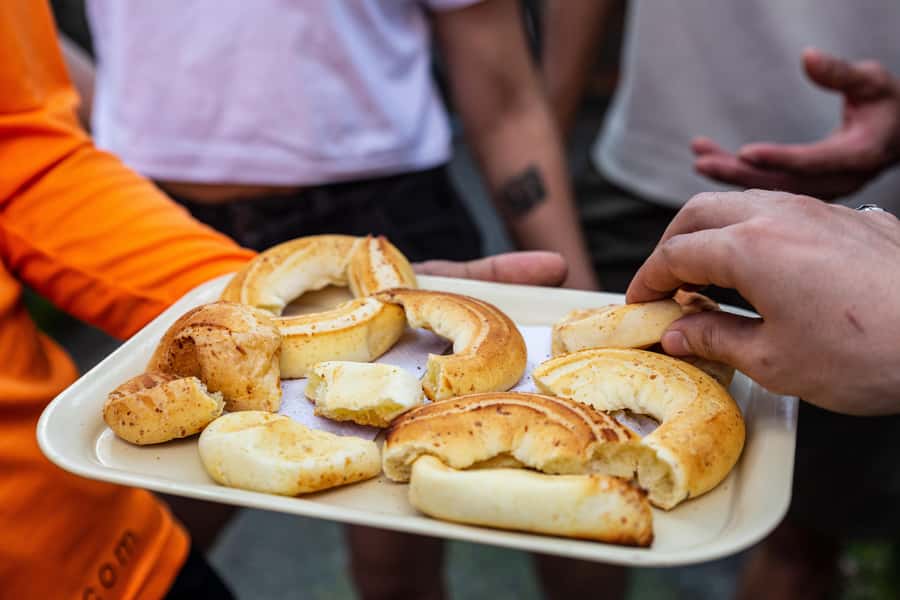
At $48 per person for about 3 hours, this tour is priced like a “smart small-group activity,” not like a long, multi-day excursion.
What you’re getting for that money:
- Electric bike
- Guide (Spanish and English)
- Medical insurance
- Food and drinks (with the note that beverages at the first 3 stops aren’t included, and food at the last stop isn’t included)
So the value isn’t only the bike ride. It’s that you’re paying for time-saved logistics (you don’t have to map the route or hunt for tastings) and for the context that turns snacks into learning.
If you’ve only got a day or two in Medellín, I’d treat this as a “foundation tour.” You’ll likely get more from your other meals after you’ve learned what locals actually treat as everyday classics.
Meeting point and how to avoid the start-time stress
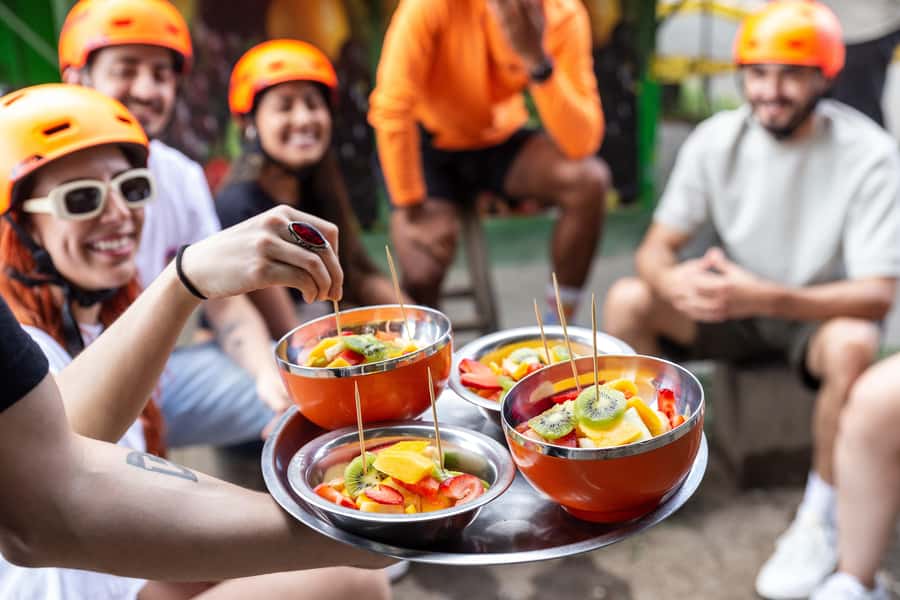
Meet at Turibike in a brick building with a big black metal door inside a coworking space on an industrial street.
If the door is closed, knock. There’s a guard who will let you in. This is one of those practical details that prevents the classic travel-moment panic of standing outside wondering if you’re in the right place.
Also plan to arrive with time to settle in. You’ll want to get your gear and feel comfortable on the bike before you roll.
Should you book the Medellín e-bike and foodie tour?
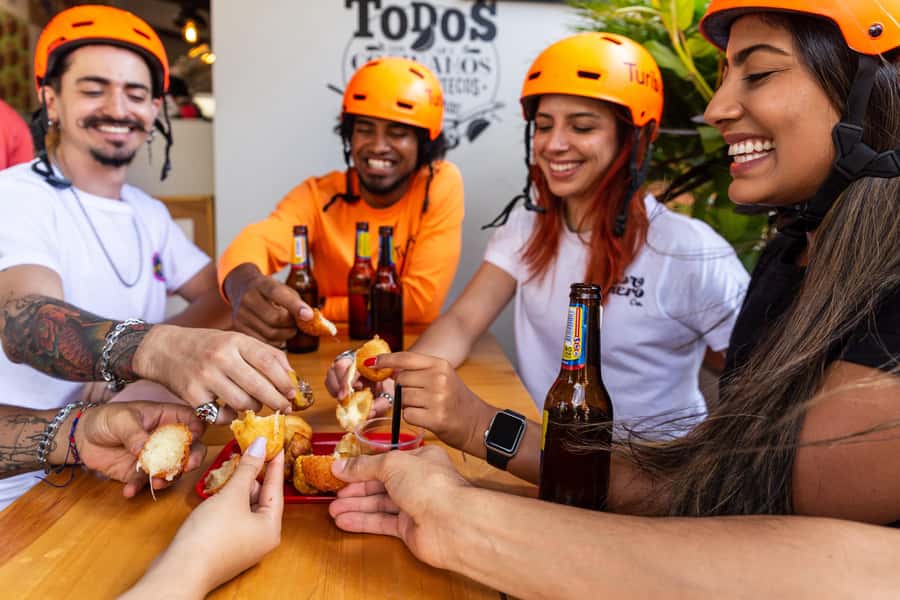
Book it if you want the fastest way to understand Medellín beyond the usual sights. This tour is built for people who like neighborhoods, enjoy eating along the way, and don’t mind riding long enough to actually feel like you moved through the city—not just past it.
Skip it if you’re expecting a relaxed walk-only tour. You’ll need comfortable shoes, you must be able to ride a bike, and there’s a specific participant profile it’s designed for.
If you’re on the fence, my advice is simple: if you can ride, go hungry and bring your curiosity. The combination of e-bike movement plus food with context is exactly the kind of value that makes Medellín stick with you after you’ve left.
FAQ
How long is the Medellín e-bike and foodie tour?
The tour lasts about 3 hours.
What is included in the price?
The tour includes an electric bike, a guide, medical insurance, and food and drinks (with specific items not included at certain stops).
Are hotel pickup and drop-off included?
No. Hotel pickup and drop-off are not included.
What should I bring and wear?
Bring comfortable shoes. Sandals or flip-flops are not allowed.
Do you allow alcohol or drugs during the tour?
No. Alcohol and drugs are not allowed.
Is it accessible for people with mobility impairments or for pregnant travelers?
No. It’s not suitable for pregnant women or people with mobility impairments, and participants also need to be able to ride a bike.