REVIEW · NASHVILLE
Nashville’s Historic Electric Bike Tour
Book on Viator →Operated by Wander Nashville · Bookable on Viator
Two hours, and Nashville starts clicking. This historic electric bike loop pairs guide-led storytelling with hands-on e-bike riding, sliding you through the spots most people only see from the sidewalk. You’ll also benefit from helmet audio narration, with guides like Bea, Bee, Cash, and Donny known for mixing facts with fun little details.
I especially like how the route covers more than the usual Downtown strip. You’ll see Music Row, Printer’s Alley, Marathon Village, The Gulch, and big-name music museums, plus quick passes by the Titans and Predators arenas. At $69.99 for about 2 hours, the included bike, safety gear, and listening device make it a solid value if you want ground covered without turning it into a workout.
One thing to consider: this is not a casual stroll. You must be able to mount, dismount, walk with the bike, and operate an adult-sized e-bike safely, at times without relying fully on pedal assist. Also, heavy traffic and construction can make audio harder to hear when the city is loud.
In This Review
- Key highlights
- First Gear: What You Get Before Rolling
- On an E-Bike in Music City: Easy Hills, Real Streets
- Downtown Nashville to Music Row: From Civic Core to Recording World
- Lower Broadway: Honky-Tonk Highway and the Purple-Stage Icon
- Grand Ole Opry Area: A National Historic Landmark Moment
- Printer’s Alley: Comedy Bars, Speakeasies, and Old-Style Entertainment
- Marathon Village: Industrial Nashville Turned Creative Hub
- The Gulch Intermission: Photo Spots and Fresh Air
- Nissan Stadium and Bridgestone Arena: Sports Fans Get Their Moment
- Music Museums Stop: Country Music Hall and Musicians Hall
- Bicentennial Capitol Mall State Park and Tennessee Capitol Views
- Vanderbilt Edge and the Gulch Wings: Quick Looks, Good Memory-Making
- RCA Studio B and the Studio-Culture Finish on Music Row
- Practical Tips for a Smooth Ride (and Better Photos)
- Should You Book This Nashville Historic Electric Bike Tour?
Key highlights
- Helmet audio narration that keeps the tour moving without you constantly stopping to read signs
- Music Row + Lower Broadway contrast, from recording-studio history to drink-and-dance honky-tonk energy
- Printer’s Alley and Marathon Village stops that show Nashville beyond Broadway’s main drag
- Big skyline moments with photo chances near Union Station and the artist wings installation in the Gulch
- Sports-fan route boosts, passing Nissan Stadium and Bridgestone Arena during the ride loop
- Short, structured pacing: about 1 hour 40 minutes riding plus orientation and a brief intermission
First Gear: What You Get Before Rolling
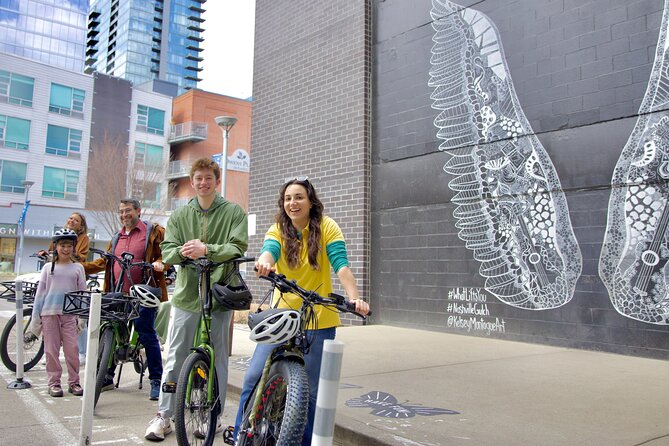
Your tour starts at 144 5th Ave N in the heart of Downtown Nashville, and the ride ends back there. Expect a quick setup and safety briefing before you head out with the rest of your group. Your equipment includes an electric bike, helmet, and safety vest, plus a personal listening device so you can follow the narration while riding.
Why this matters: in cities like Nashville, the best tours don’t just name-check places. They help you feel confident moving through traffic-adjacent streets while still keeping the tour time tight. Here, the goal is to get you comfortable fast, then use the next two hours to actually connect neighborhoods and stories.
The tour is offered in English, and it runs with a small group size (max 12 travelers). That smaller number tends to help with spacing on the road and keeps the guide from turning the experience into a rush-job.
You can also read our reviews of more tours and experiences in Nashville.

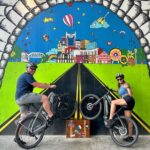

On an E-Bike in Music City: Easy Hills, Real Streets
Electric bikes are perfect for Nashville’s mix of flat stretches and short hill ramps. The bikes provide pedal assist, and many riders also use additional power/boost features for climbs and starting from slower stops. That means you’re not grinding every block like a traditional bike tour, but you still get the satisfaction of moving under your own control.
Your job is simple but important: you need to be able to safely operate the bike, including times when you can’t rely entirely on assist. If you’re unsure about balance, stopping, or getting going smoothly, practice before you arrive and plan to tell the guide right away during the initial orientation.
You’ll ride in areas with vehicle traffic and some construction detours, so keep your head up and stay alert. One nice upside is that the audio narration means you don’t have to guess what you’re looking at while you’re focusing on the road.
Downtown Nashville to Music Row: From Civic Core to Recording World
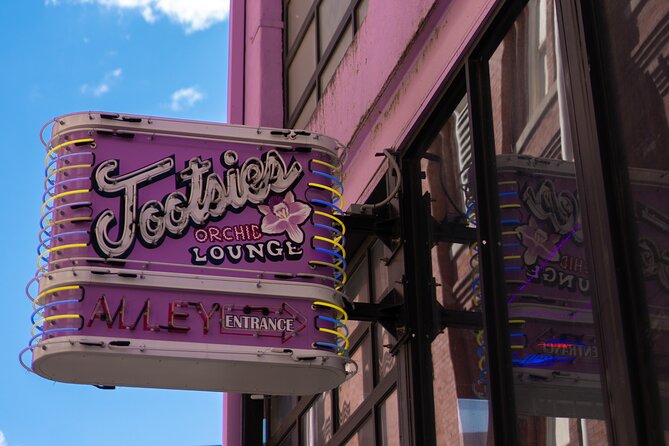
The first stretch gets you oriented in Downtown Nashville, then you roll into the Music Row zone—Nashville’s recording-industry heart. This is where you get the “how Nashville became Nashville” story: studios, record labels, management offices, and the support businesses that turned sessions into hits.
You’ll hear names tied to the myth of the Nashville sound—artists who recorded there over the decades. Even if you’re not a vinyl-nerd, it helps to see the neighborhood’s layout from the street level perspective. Music Row is less about one landmark and more about the cluster effect: lots of music industry power packed into a walkable-feeling area.
If you want a quick win before you even decide what you’ll do later in town, this is it. You’ll leave understanding why Broadway is the show, but Music Row is the machine.
Lower Broadway: Honky-Tonk Highway and the Purple-Stage Icon
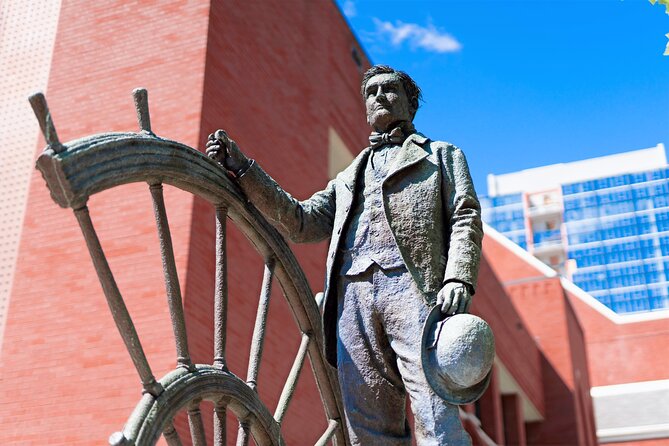
After Music Row, the route shifts toward the live-music energy of Lower Broadway. This portion is described as the Honky Tonk Highway: a compact five-block stretch packed with venues, drink lines, and constant performances.
You’ll pass places such as:
- Ole Red
- Luke’s 32 Bridge
- Acme Feed and Seed
- Hard Rock Cafe
- Robert’s Western World
You also get a specific stop at one famous honky-tonk landmark known worldwide for its distinct purple hue—a stage that has been part of the proving ground for countless country artists over the years.
Here’s why this stop works on an e-bike tour: the narration explains the difference between recording history and performance culture. One neighborhood is about who made the music; the other is about how music gets heard, nightly, in real time.
Grand Ole Opry Area: A National Historic Landmark Moment
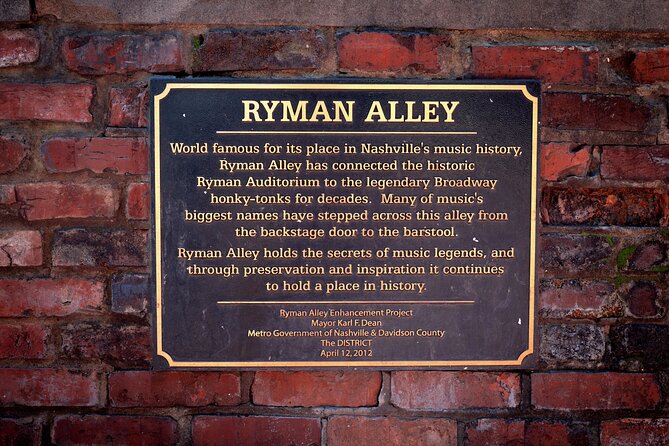
Next comes a stop at the area often called the Mother Church of Country Music. This is the home of the Grand Ole Opry, a National Historic Landmark and also tied to the Rock and Roll Hall of Fame.
Even if you’re only passing through the exterior areas, the timing within the tour helps: you just absorbed Music Row’s recording power, and now you’re shown the institution that turned country into national show business.
If you’re building a Nashville itinerary, this is a good hinge point. After you see the Opry connection, you’ll be better at picking which venues you actually want to pay for later.
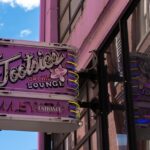

Printer’s Alley: Comedy Bars, Speakeasies, and Old-Style Entertainment
Printer’s Alley is your entertainment micro-neighborhood stop, and it’s one of those places where Nashville history feels tucked behind the main street view. The tour frames it as an original live entertainment area—once hosting everything from burlesque and gun ranges to speakeasies and blue bars.
This is also where you get an admission ticket included stop. That matters because it’s one of the few points in the route where the tour isn’t only about passing by—it includes time tied to a specific site.
Why I think this is a smart choice for visitors: it shows that Nashville’s music story isn’t only Broadway flash. It’s also the smaller streets where performers gathered, audiences formed habits, and the scene developed its edge.
Marathon Village: Industrial Nashville Turned Creative Hub

From the alley-style nightlife feel, the tour shifts into Marathon Village, a repurposed industrial site often linked to the former Marathon Motor Works vehicle manufacturing era. Now, it’s an area filled with crafts, artists, vendors, and boutique shops.
You’ll pass notable stops in that zone, including the Jack Daniel’s Store and Nelson’s Greenbrier Distillery, plus an antique-focused shop tied to American Pickers.
This stop gives your tour a different texture. Instead of chasing only famous entertainment addresses, you also get a sense of where local makers and brand-world visitors overlap. It’s a useful reminder that Nashville’s creative scene extends beyond stages.
The Gulch Intermission: Photo Spots and Fresh Air

Then you get a brief intermission at The Gulch, Nashville’s fast-growing high-end neighborhood. This is where the route makes sense for energy levels: you pause, breathe, and reset before the next run through stadium country and museums.
You’ll pass:
- the art installation with angel wings titled What Lifts You
- the Station Inn (Bluegrass Music Association connected)
- photo opportunities near historic Union Station
The Gulch is also where you get the contrast of old rail architecture and newer Nashville development side by side. Even if you don’t plan to spend hours there, seeing it from the bike lane helps you understand the city’s direction.
Photo note: those wings and architectural shots can vary depending on crowd and weather, so treat them as quick wins rather than guaranteed perfect angles.
Nissan Stadium and Bridgestone Arena: Sports Fans Get Their Moment
After The Gulch, the tour keeps rolling and gives you quick passes by two major sports anchors:
- Nissan Stadium (home of the NFL Tennessee Titans)
- Bridgestone Arena (home of the NHL Nashville Predators)
You’ll also hear about the stadiums hosting big events, from professional games to major festivals and touring shows. If you’re traveling with sports fans, this is a nice “everyone wins” part of the itinerary.
Practical tip: even if you’re not a season-ticket type, take a look. The scale of these arenas changes how you read Downtown Nashville. It’s not just music; it’s a full-events city.
Music Museums Stop: Country Music Hall and Musicians Hall
Two of Nashville’s best-known museum stops are worked into the ride:
- Country Music Hall of Fame and Museum
- Musicians Hall of Fame and Museum
The tour frames the Country Music Hall as a major museum and research center built around American vernacular music, with the museum chartered in 1964 and holding one of the largest musical collections in the world. The Musicians Hall spot focuses on the artists who worked behind the scenes—songwriters, session players, and the people whose work supported recordings across genres.
You also pass the Municipal Auditorium, historically known as a major touring-artist venue tied to big names and big awards.
Even if you don’t go inside during your day (some admissions are handled via the included ticket schedule), the museum stops help you calibrate your later choices. They tell you what kind of music experience you want: the famous voices on stage, or the makers behind the sound.
Bicentennial Capitol Mall State Park and Tennessee Capitol Views
Next up is a park-and-government combo that surprises a lot of visitors. You’ll reach Bicentennial Capitol Mall State Park, tied to Tennessee’s 200-year celebration, and you’ll have an admission ticket included moment there.
From the park, you also see the Tennessee State Capitol area, with a free Greek-revival building tour offered on-site and panoramic views of Downtown Nashville.
Why this portion is valuable: it breaks the tour’s “music-only” focus. You’ll get a better sense of Nashville’s civic center, which helps the rest of the stories land with more context. The city has a backbone, not just a soundtrack.
Vanderbilt Edge and the Gulch Wings: Quick Looks, Good Memory-Making
As you move past the south edge of Vanderbilt’s campus, you’ll skim an iron-fenced, magnolia-lined university setting. You’ll also get another photo opportunity tied to the angel wings installation in The Gulch area.
These are not meant to be long stops. They’re designed to create anchors in your mental map so you can later match what you saw with what you read or heard in other parts of your trip.
If you want to slow down and capture photos, plan to do it during these short windows. The tour keeps moving, and you’ll feel that timing.
RCA Studio B and the Studio-Culture Finish on Music Row
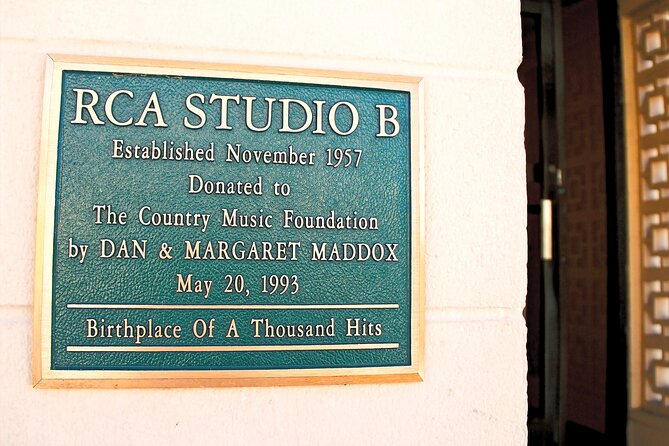
The final stretch focuses back on recording legacy. You’ll stop at RCA Studio B, known for the Nashville Sound and built in 1957. This is presented as the birthplace of that sound style, often linked to background vocals and string arrangements that helped set Nashville’s international recording reputation.
Important detail: the RCA Studio B admission is not included. So think of this as a stop to connect with the location and decide whether you want to pay for entry separately during your trip.
Then the tour loops back toward Music Row again for a finish point where the plan includes admission ticket coverage. This final stop is designed to leave you with the studio-neighborhood picture, not just the names.
Practical Tips for a Smooth Ride (and Better Photos)
Here’s how to make the two hours feel easy instead of hectic:
- Wear comfortable shoes. You’ll need to mount and dismount, and you may do short walks around stops.
- Bring a light layer. Even in good weather, you’ll be out enough to notice temperature shifts.
- Expect traffic. Some street segments run near busy roads, so keep your focus on riding first.
- If you’re sensitive to noise, consider that helmet audio can be harder to hear when traffic and city construction get loud.
- For comfort, adjust how you ride right away. If the seat or positioning feels off, say something early during the setup.
Also, plan your day so you have buffer time before and after. This tour is built around a tight schedule (about 2 hours total, with orientation and a brief intermission), and it can start up to a few minutes early or late depending on timing.
Finally, the experience needs good weather. If conditions are poor, you’ll be offered another date or a refund.
Should You Book This Nashville Historic Electric Bike Tour?
If you want Nashville in one compact hit—Music Row, Lower Broadway, hidden-in-plain-sight neighborhoods like Printer’s Alley, plus stadium passes and museum stops—this is a strong choice. The included e-bike, helmet, and listening device make it feel like more than a simple ride. The small group size also helps the tour stay friendly and organized.
I’d pass or at least ask questions first if you’re worried about handling an e-bike safely in real city conditions, especially if you’re unsure you can operate it unaided when assist isn’t enough. Also, if you’re expecting a slow, stop-everything sightseeing day, this route is paced to cover a lot.
For most visitors, it’s a smart opener for a Nashville trip: you’ll come away with a clear map of where music gets made, where music gets played, and where the city’s bigger landmarks fit into the story.