REVIEW · SAN SEBASTIAN
San Sebastian Bike Tour
Book on Viator →Operated by Local Experts Tours · Bookable on Viator
San Sebastián by bike feels like a shortcut. I really like how this ride lines up La Concha Beach with the city’s most famous sculptures, and I also like that you get real stories as you pedal, not just a photo parade. You’ll start with stops like Buen Pastor Cathedral and end back near where you began, which makes it easy to roll into dinner plans. One thing to consider: bike and guide quality can vary a bit trip to trip, so arrive early, check your fit, and don’t hesitate to ask for clarity if something gets lost in translation.
In about 2 hours 30 minutes, you’ll cover a lot more ground than on foot while staying on a mostly manageable route. The tour is capped at a maximum of 15 people, so it’s not a giant bus-factory, and you’ll pass parts of the city cars don’t make easy to reach.
In This Review
- Key things I’d bet on (before you book)
- San Sebastián by bike: the value behind the $51.89 price
- Getting started at Buen Pastor Cathedral: a strong first anchor
- La Concha Beach promenade: where the city shows its cards
- Peine del Viento at Monte Igeldo: art that behaves like nature
- Miramar Palace and the viewpoint between beaches
- María Cristina Bridge and Hotel María Cristina: glamour with scars
- Victoria Eugenia Theatre: culture that keeps showing up
- Kursaal and Zurriola: from film-festival energy to surf culture
- Buen Pastor Cathedral, round trip style: easy reset for dinner
- E-bikes, bike quality, and how to protect your ride time
- Who should book this San Sebastián bike tour?
- Should you book this San Sebastián bike tour?
- FAQ
- How long is the San Sebastián Bike Tour?
- How much does the tour cost?
- What language is the tour offered in?
- What’s included in the price?
- Are e-bikes available?
- Where does the tour start and end?
- Is the ride suitable for most people?
- What should I wear for weather?
- What if the tour is canceled due to weather or not enough travelers?
Key things I’d bet on (before you book)
- A tight 2.5-hour loop that’s built for first-day orientation and quick landmark coverage.
- Classic San Sebastián hits: La Concha, Peine del Viento, Miramar Palace, Kursaal, and Zurriola Beach.
- Small-group vibe with a max of 15 travelers, which usually helps the pace stay human.
- Helmet + bike insurance included, which is a practical comfort when you’re sharing roads and crossings.
- E-bikes may be available for extra charge, useful if you want less effort or you’re traveling with kids or tired legs.
- Weather matters, since the tour runs outdoors and you should dress for wind and rain.
San Sebastián by bike: the value behind the $51.89 price
At $51.89 per person for roughly 2.5 hours, you’re paying for three things: a local guide, a working bicycle (plus helmet), and a route that’s designed to hit the key coastline sights without you spending your whole day figuring out logistics. For many first-timers, that’s the sweet spot. You get the layout of the city fast, then you can decide what to revisit on your own.
Also, you’re not stuck paying for admissions at stops here. The scheduled viewing stops are free, and a lot of the charm comes from being outside—on promenades, at viewpoints, and near landmark buildings—where you can take photos without waiting in lines.
Is it a bargain compared to renting a bike for cheap? It depends on your priorities. If you mainly want exercise and views, renting can beat the price. If you want history, culture, and practical tips that help you eat and explore better, the guide time starts making sense.
You can also read our reviews of more tours and experiences in San Sebastian.
Getting started at Buen Pastor Cathedral: a strong first anchor
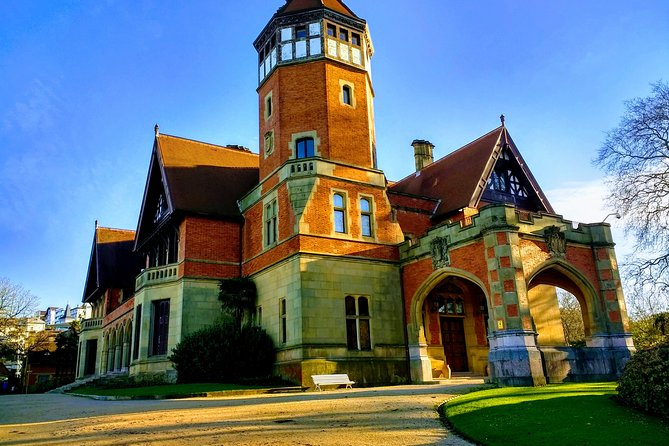
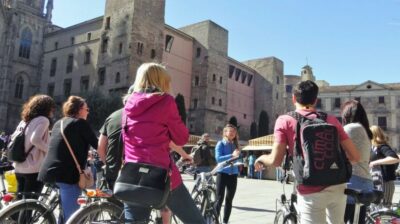
The meeting point is on the stairs in front of the main entrance of Buen Pastor Cathedral. That location is handy because it’s right where you can quickly orient yourself before you roll. It also sets the tone: this is not just seaside sightseeing. The tour begins with a major religious landmark, and your guide uses it as a springboard to explain the city’s scale and character.
You’re told about the cathedral as San Sebastián’s largest religious building and the fact that it houses one of the biggest organs in Europe. Even if you’re not an organ person, that detail gives you a sense of how important big institutions are in the city’s identity.
Practical note: since you pick up bikes after meeting, I’d suggest arriving a little early. One common frustration on any bike tour is waiting around while the bikes get sorted and riders adjust their seats.
La Concha Beach promenade: where the city shows its cards
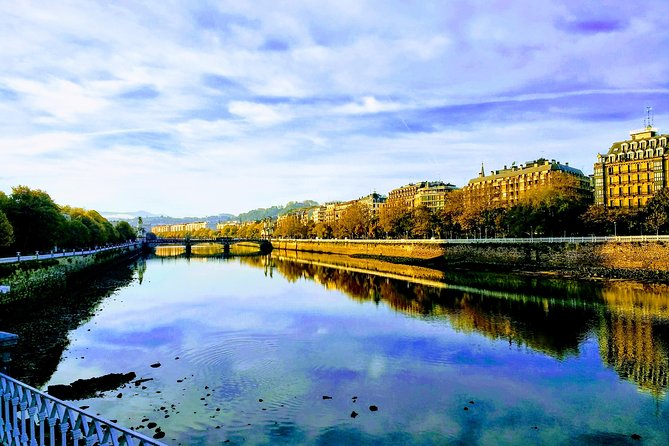
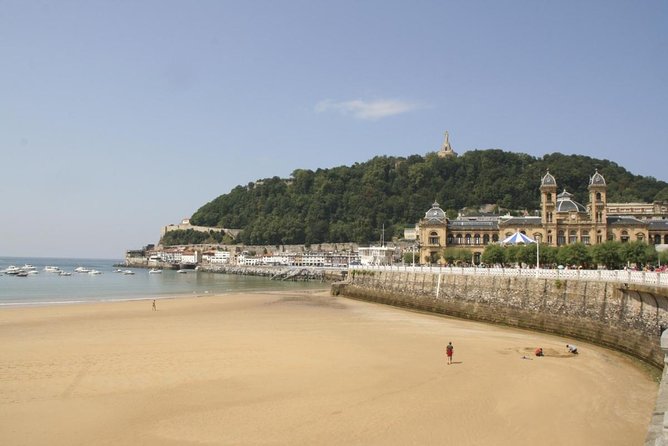
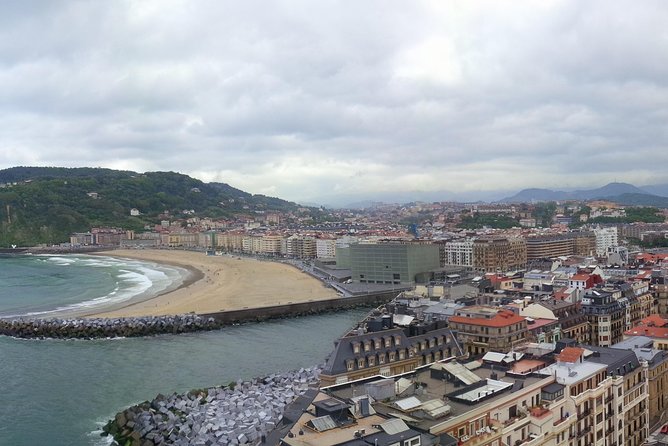
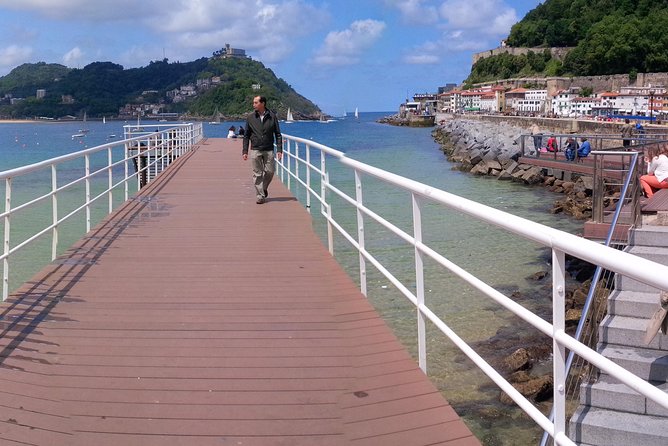
From Buen Pastor Cathedral, you ride toward La Concha Beach, the famous golden-sand bay that’s been a royal favorite over the years. The route matters here. Cycling the promenade means you get to see the city’s architecture while it’s actually in use by locals—people walking, jogging, and lingering at the waterline.
As you move along, you’ll hear stories connected to landmarks like the City Hall (Ayuntamiento) and the Hotel de Londres y de Inglaterra. You also pass villas that evoke the city’s Belle Époque splendor. Even when you don’t know every building’s full backstory, the guide’s narrative helps you connect what you’re seeing to why it looks the way it does.
Photo tip: plan on stopping enough to frame the bay from a few angles. The promenade has plenty of spots where the water and buildings line up nicely. If the group pace is moving fast, don’t fight it—grab your photos during the scheduled stop windows.
Peine del Viento at Monte Igeldo: art that behaves like nature
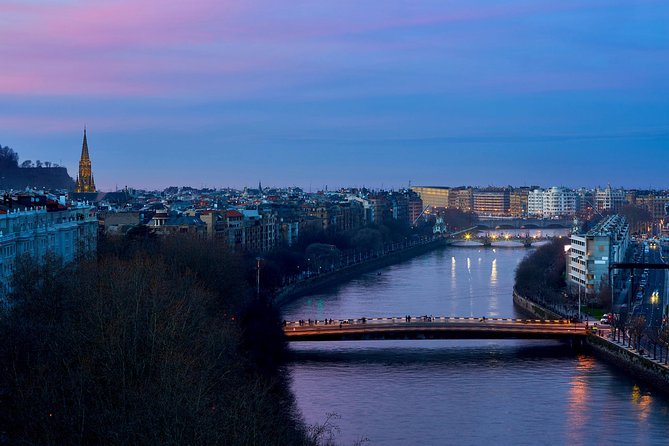
After cycling along the scenic coastline, you reach the base area of Monte Igeldo, where you find one of San Sebastián’s most iconic sculptures: El Peine del Viento. What makes this stop special is the timing effect. At high tide, water jets through the sculpture’s holes and turns a static monument into a moving show.
That detail is why this stop often feels memorable compared to a typical statue. You’re watching something that changes with the ocean.
Two things to keep in mind:
- You’re seeing it during a specific moment, so the water-jet effect may vary.
- This is a short stop. If you’re the type who loves lingering at viewpoints, you’ll want to return on your own later—after the tour gives you orientation.
Miramar Palace and the viewpoint between beaches
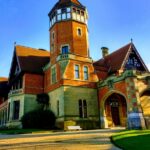
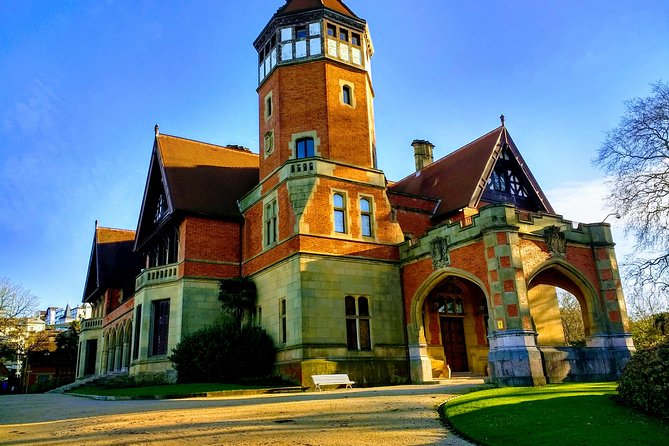
Miramar Palace sits between La Concha and Ondarreta beaches, and it was built as a late 19th-century summer residence for the Spanish royal family. The palace itself is striking, but the reason it works on a bike tour is the view. You get panoramic coastline angles while you’re already out moving along the waterfront.
The English-style gardens around the palace also add texture. You’re not just staring at stone and railings; you’re seeing how the land was shaped for leisure and sightlines.
If you care about photos, this is a good moment to slow down mentally. The best shots usually come from waiting for a clear line, adjusting your lens height, and taking a quick breath. Your guide will help point out what’s worth aiming for, but you still control the camera.
María Cristina Bridge and Hotel María Cristina: glamour with scars
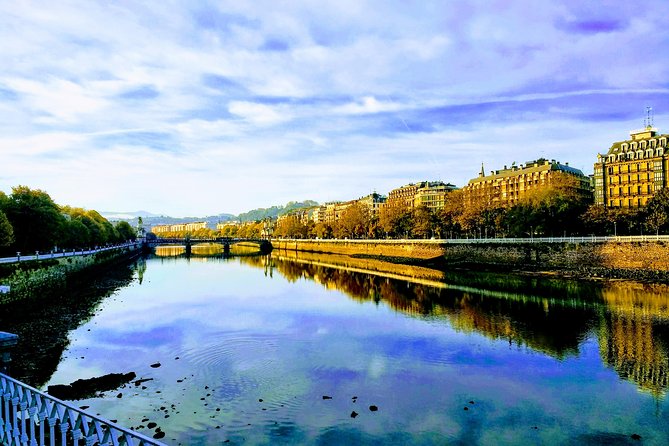
You cross the María Cristina Bridge and get close to the Hotel María Cristina, a glamorous landmark connected to the San Sebastián Film Festival era when celebrities flood the city. At the same time, you’ll hear about marks left by the Spanish Civil War.
That mix—glamour and hardship—makes the stop feel more honest than the usual postcard version of San Sebastián. The guide’s framing turns a hotel name into a real slice of 20th-century Spanish history.
Also, this is one of those areas where the city’s “front stage” and “back stage” stories overlap. The buildings look elegant because the city has always been a place where people come for beauty. The historical context keeps you from treating it like a theme park.
Victoria Eugenia Theatre: culture that keeps showing up
You’ll also pass by the Victoria Eugenia Theatre. This stop is shorter, but it matters because it signals that San Sebastián is not only about beaches. The theatre and other cultural venues host major events each year, which is why the city feels busy in a way that goes beyond summer.
Even if you never catch a show, seeing where it happens helps you understand the city’s calendar. You’ll feel more at home if you return later knowing why certain areas feel important.
Kursaal and Zurriola: from film-festival energy to surf culture
Next up is Kursaal, known as a congress center and the site of the main and final event of the San Sebastián Film Festival each year. From here, you get views toward Zurriola Beach. That viewpoint is a good way to connect the city’s indoor cultural world with its outdoor coastal lifestyle.
Then you roll to Zurriola Beach, especially the eastern end. This is where surfing culture shows up in a more everyday way. You’ll see surfers riding waves, and the vibe tends to feel local—not just sightseeing.
What I like about ending the tour this way is that it lands with motion and sound. Even when you’re tired from pedaling, the beach keeps things lively. It’s also a clean transition: once you see where the action is, you can decide how much you want to stick around.
Buen Pastor Cathedral, round trip style: easy reset for dinner
You return to Buen Pastor Cathedral to drop the bikes and end the experience back at the meeting point. That matters more than it sounds. You don’t need to puzzle out how to get back across town with sore legs and hunger.
You can treat this as your first-day foundation: take in what you need, then build your next half-day around what looked most interesting to you—whether that’s more promenade time, a museum stop, or a beach hang.
E-bikes, bike quality, and how to protect your ride time
This tour includes a bicycle, helmet, and bike insurance. E-bikes are available depending on options and come with an extra charge, so if you want one, check ahead.
Now, about the bike experience itself. The vibe seems to vary. Some people report basic bikes and smooth, easy routes. Others mention bike fitting problems or that the bike store staff didn’t set their height correctly and they had to adjust while moving. So do this before you roll:
- Check your seat height and make sure you can pedal comfortably.
- Test your brakes on flat ground, not after you’re in traffic.
- Make sure gears shift smoothly if your bike has them.
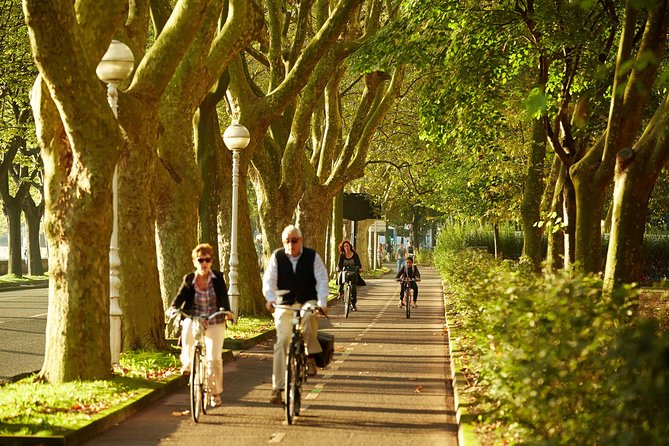
Riding style is also something to plan for. The route is generally flat and easy, but you should still watch for normal city cycling stuff: mixed paths, road segments, traffic lights, and groups crossing together.
One more practical point: if your English comprehension depends on perfect clarity, choose your expectations wisely. Most guides are described as friendly and informative, but a few comments point to heavy accents or small communication issues. If you’re serious about understanding every detail, it helps to ask questions when the group stops.
Who should book this San Sebastián bike tour?
This works best if you want:
- A fast orientation to San Sebastián’s layout, especially the bay and coastline.
- A guided route that makes it easy to connect the dots between architecture, landmarks, and local culture.
- A low-stress way to cover big sights in a short window, without wearing out your legs on endless walking.
It can also work well for families. One review mentioned taking an 8-year-old, and the bike route being easy helped the day feel manageable.
Skip it—or at least set expectations—if:
- You want deep, slow storytelling at every stop. Some people felt there were too few stops for the price.
- You’re highly sensitive to guide pacing and language clarity.
- You’re arriving expecting a premium bicycle and perfect fitting every time.
Should you book this San Sebastián bike tour?
I’d book it if it’s your first or second day in San Sebastián and you want a clean way to learn the city without spending hours planning routes. The list of stops is strong: Buen Pastor Cathedral, La Concha, Peine del Viento, Miramar Palace, Kursaal, and Zurriola Beach. That’s a lot of variety for one ride.
But I’d also go into it like a smart traveler. Arrive a bit early, check your bike fit, and be ready for outdoor weather. If it’s raining hard, dress for it and keep an eye on group timing. And if you’re picky about pacing or language, ask clarifying questions during the stops so you don’t lose the story.
Overall, this is a good way to get your bearings fast, see the iconic coastline, and leave with a sense of where you’ll want to linger later.
FAQ
How long is the San Sebastián Bike Tour?
It runs for about 2 hours 30 minutes.
How much does the tour cost?
The price is $51.89 per person.
What language is the tour offered in?
The tour is offered in English.
What’s included in the price?
You get a local guide, bicycle use, helmet, and bike insurance. E-bikes may be available for an extra charge.
Are e-bikes available?
Yes, e-bikes are listed as an option. You’ll need to check availability/options for the added cost.
Where does the tour start and end?
The meeting point is Cathedral Buen Pastor de San Sebastián (Urdaneta Kalea, 12, 20006 Donostia / San Sebastián). The tour ends back at the same meeting point.
Is the ride suitable for most people?
Most travelers can participate, but there is a moderate amount of bicycle riding involved.
What should I wear for weather?
The tour operates in all weather conditions, so dress appropriately. Rain clothes are not included.
What if the tour is canceled due to weather or not enough travelers?
If it’s canceled due to poor weather, you’ll be offered another date or a full refund. If the minimum group size isn’t reached, you’ll be offered an alternative date or a full refund.