REVIEW · SAN SEBASTIAN
San Sebastian E-bike trour: Basque History and Cultural.
Book on Viator →Operated by San Sebastian Adventures · Bookable on Viator
A bike ride, with Basque history in your helmet. This e-bike loop strings together sea panoramas and Basque stories on one smooth morning or afternoon.
You’ll like that guides in English, such as Lorenzo and Jacob, keep the pace relaxed while still explaining what you’re seeing. You’ll also see the big sights from angles you’d never pick on foot.
One heads-up: the tour depends on good weather, and crowded areas can get a little tight, so keep your focus when you pass busy intersections.
Key reasons this tour works
- Easy e-bikes so you spend time seeing, not grinding uphill
- English-speaking guides who explain Basque culture in plain terms
- Sea views all the way from Zurriola to La Concha and beyond
- Real art stops including Peine del Viento and modern works near the bay
- Small group size (max 12), so you’re not just herded along
In This Review
- Starting at Reyes Católicos: your shortcut to Donostia orientation
- Puente de Santa Catalina to Gros: architecture plus street-level Basque life
- Zurriolako Hondartza and the Kursaal contrast: sea drama meets debate
- La Concha promenade, Miramar, and Ondarreta: views plus a legend
- Peine del Viento and the bay’s end art: the “secret passage” moment
- The Urumea River return: seeing the city in motion
- E-bike comfort, pacing, and why this fits your first day
- Price and value for $59.28 per person
- Should you book this Basque History e-bike tour?
- FAQ
- How long is the San Sebastián e-bike tour?
- What does the tour cost?
- What language is the tour offered in?
- How many people are in a group?
- Where do I meet for the tour?
- What’s included, and what’s not included?
- Is there admission cost at the stops?
- Is a mobile ticket provided?
- What happens if the weather is poor?
- What is the cancellation window?
Starting at Reyes Católicos: your shortcut to Donostia orientation
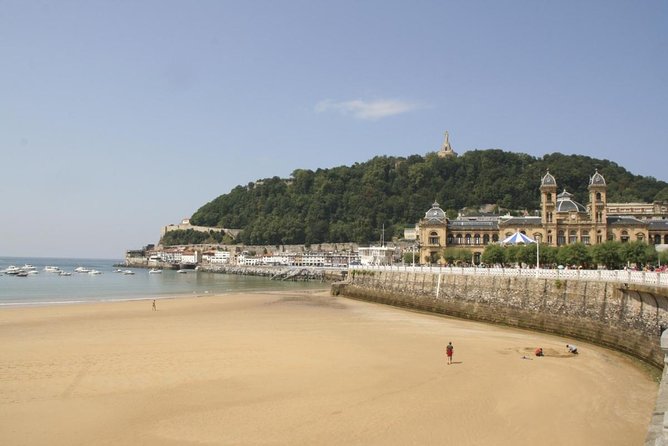
Most first-time San Sebastián plans start with a map and end with sore feet. This tour skips the guesswork. You begin in Reyes Católicos, right in the historic core, then roll out with a guide who knows how to read the city for you. After a quick meet-up and getting comfortable on the e-bike, you head toward the historic Buen Pastor Cathedral area.
That opening stretch matters more than it sounds. You’re getting oriented while the streets are still “old town” scale: tight enough to feel local, but not so complicated you lose your bearings. It’s a smart start for anyone who wants to understand why Donostia looks the way it does—where the city grew, where people live, and how the coast shaped the mood.
If you’re traveling in the morning, I like that you’ll leave with a mental picture of the waterfront, the neighborhoods, and the bike paths. If you’re going later in the day, the timing still works because the tour is structured around viewpoints and stops, not just moving from one ticket line to another.
Puente de Santa Catalina to Gros: architecture plus street-level Basque life
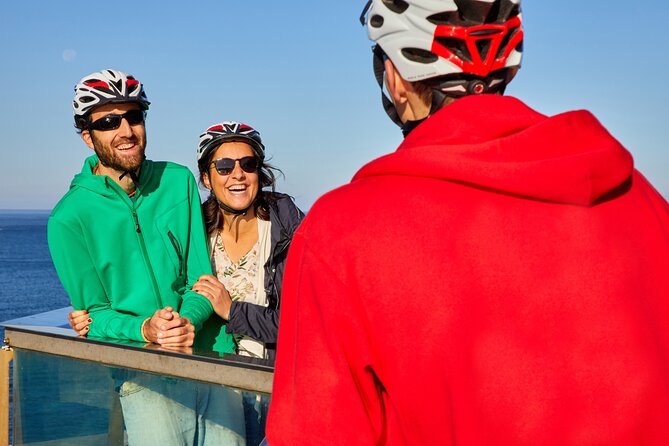
Soon you’re at Puente de Santa Catalina, a bridge with historical context built into the story. You’ll pause there to look at emblematic buildings and get a feel for how the city has grown over time. Bridges are great “history anchors” because they force you to look both ways—toward what was there and what’s changed.
Then comes Gros, one of the city’s liveliest neighborhoods. You don’t just ride through it. You take time for people-watching and local rhythm—exactly the kind of detail that makes a place feel real instead of like a set of postcards. At Gros’s Cataluña Plaza, your guide talks about life in the neighborhood, including the cost of living angle. That’s a useful context piece. San Sebastián is stunning, but it’s also a working city with real pressures, not just scenery.
One practical perk: these stops are short (minutes, not long-ticket waits). That keeps the tour moving while still giving you breathing room for photos and quick questions.
You can also read our reviews of more tours and experiences in San Sebastian.


Zurriolako Hondartza and the Kursaal contrast: sea drama meets debate
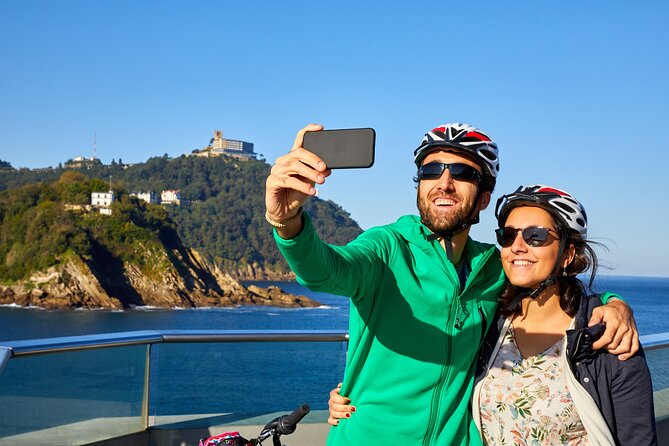
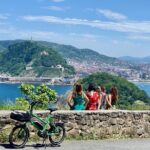
Next you roll toward Zurriolako Hondartza (Zurriola Beach) for Bay of Biscay views. This is where the tour earns its “camera ready” reputation. You’ll see the ocean stretch out and catch surfers in action. Even if you don’t care about surfing, it helps you understand San Sebastián’s relationship with the sea: the water isn’t background. It’s the headline.
As you continue, you pass Kursaal, one of the city’s most important and controversial buildings. That’s a key point for me: you’re not only touring beauty. You’re learning how architecture and public debate shape a place’s identity.
From there, you keep getting that old town / newer city separation feeling. The city has layers, and your route is built to show them. You’ll catch an “in-between” view of Donostia where sea, promenade, and major structures line up in a way you’d miss if you stayed strictly in the center streets.
La Concha promenade, Miramar, and Ondarreta: views plus a legend
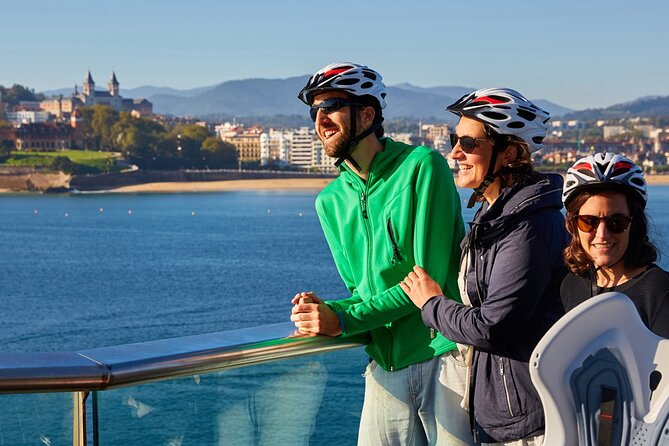
Then you head to La Concha Beach, one of Europe’s best-known shorelines for good reason. You’ll pause there for the views and some local context. One detail I’d actually remember is the explanation of why there are so many small trees in this area, plus a legend connecting San Sebastián with Japan. That’s the kind of story that turns a scenic stop into a “wait, tell me more” moment.
After La Concha, you follow the bidegorri bike path along the waterfront toward the palace of Miramar. This is one of those stretches where the e-bike matters. The views are continuous, but you don’t want your legs to take over the day. With the assist, you keep rolling, keep looking, and keep enjoying the coastal perspective.
You finish this beachfront section at Playa de Ondarreta, where you’ll learn its history. That’s a smart move late in the ride: you’re taking in another slice of the coastline while your brain is already primed to notice details—architecture edges, promenade structure, and how different beach areas feel distinct.
Peine del Viento and the bay’s end art: the “secret passage” moment
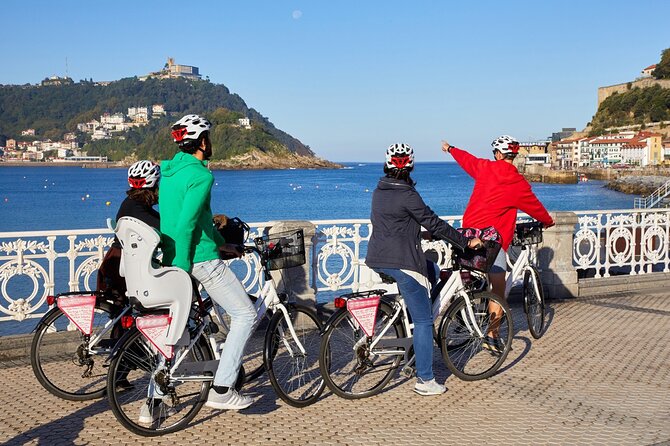
After Ondarreta, you reach Peine del Viento, a viewpoint built around the idea of public art meeting the sea. You’ll get a different angle on the city from the other side, plus you’ll see contemporary art in the mix.
From here, the route continues toward the end of the bay, where nature meets city life. You’ll get another modern-art moment and then turn into the older parts of town. One stop that sounds fun (and is actually useful) is the ride through a “secret passage” that connects two parts of the city. Even if you’ve never heard the term before, the payoff is clear: you’re learning the city’s hidden connections, not just traveling between obvious locations.
Then you move through neighborhoods that show different faces of San Sebastián—described as everything from a workers’ city identity to the aristocratic belle époque of the past. That contrast is the real “Basque culture and history” value here. The guide isn’t only talking about monuments. They’re showing how social life and class history left marks on streets, villas, and the shape of neighborhoods.
The Urumea River return: seeing the city in motion
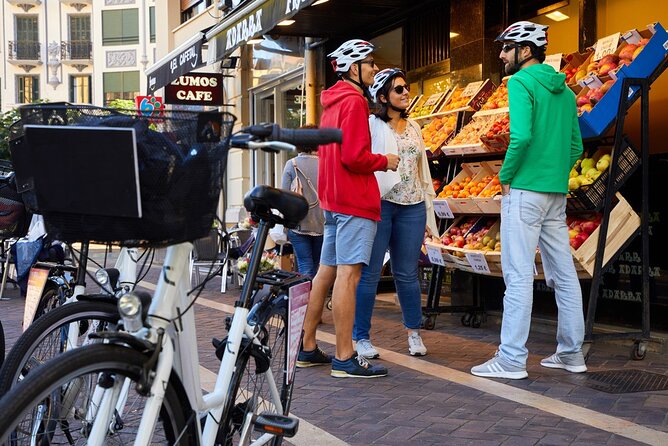
The final segment follows the Urumea River back toward the city centre. This section is more than a ride home. It’s where the tour becomes a picture of daily San Sebastián: villas, palaces, and the way the river corridor acts like a spine for movement.
As you cycle, you’ll notice the rhythm of the city shifting again. Earlier you were in busy neighborhood energy (Gros), then coastal openness (Zurriola and La Concha), then public art and older streets (Peine del Viento and the bay end). Now you’re stitching those pieces together with an easier, flowing return route.
The guided storytelling here tends to land best because you’ve already seen the physical differences. When someone tells you how the city’s people and past shaped the present, you can match it to what you’re seeing out the window—palace-style façades, working-city textures, and the overall flow between old and newer districts.

E-bike comfort, pacing, and why this fits your first day
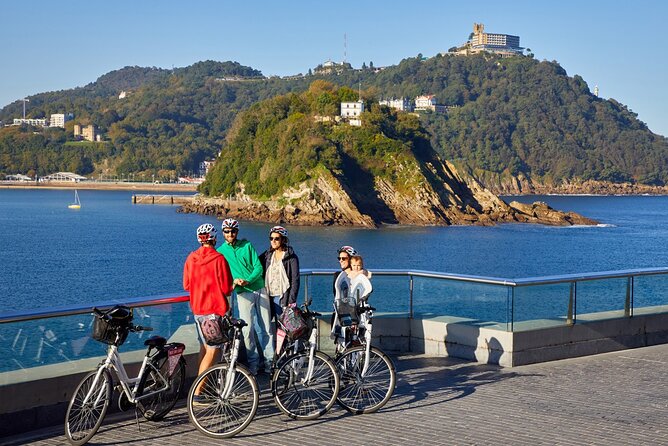
The big reason this tour gets repeated praise is that the e-bike makes the ride feel doable for a wide range of people. Many guests highlight that the tour doesn’t require major physical effort and that instructions are clear, with guides who wait for stragglers. That matters. A good guide doesn’t just talk history; they manage the group so everyone can enjoy the views.
Pacing is also built in. Stops are short and planned, so you’re not stuck standing for long stretches. It’s a style that works well in real weather too. The tour is weather-dependent, but when rain shows up, some guides have handled it and still kept the experience moving when conditions improved. If you’re visiting in hot weather, you might even pass through areas riders mention as a cooling break, like the Morlans tunnel, depending on the day’s route.
And yes, cameras come out early. The itinerary is packed with sea-facing viewpoints, plus quick culture stops that give you both wide city shots and tighter street scenes.
Price and value for $59.28 per person
At $59.28 per person for about 2 hours 20 minutes, you’re paying for three things at once: the e-bike, a professional English-speaking guide, and a route that strings together major areas of Donostia without you needing to plan every turn.
If you’ve tried to “DIY” the city in one day, you know how quickly taxis add up or how exhausting it gets on foot. This tour also has the benefit of small-group feel (max 12) and an emphasis on context, not just moving you between landmarks. With a 4.9 rating and a strong recommendation rate, it’s the kind of activity that tends to work well for people who want value, not just sightseeing ticks.
Should you book this Basque History e-bike tour?
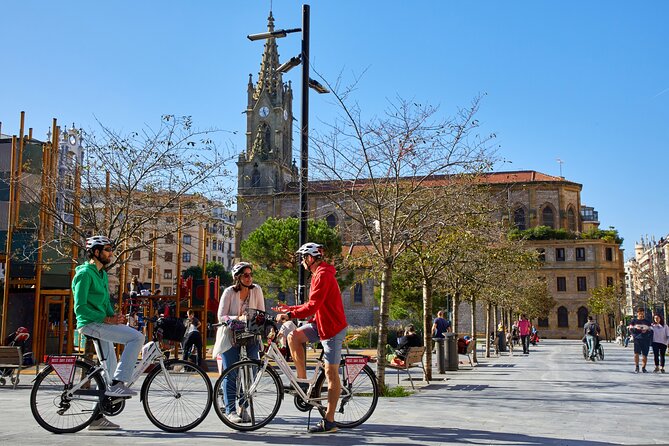
Book it if you want easy riding plus real context: Basque culture explained through neighborhoods, not just museum walls. It’s also ideal for a first day because it gives you a working mental map of the city’s waterfront, old streets, and modern landmarks.
Skip it (or at least choose another plan) if you’re uncomfortable riding in busy city areas or if you’re only traveling on days with guaranteed good weather. Since it’s explicitly weather-dependent, check conditions closely before you go.
If you’re aiming for a single guided experience that covers views, art, and culture without draining your energy, this one is a very solid bet.
FAQ
How long is the San Sebastián e-bike tour?
It runs for about 2 hours 20 minutes (approx.).
What does the tour cost?
The price is $59.28 per person.
What language is the tour offered in?
The tour is offered in English.
How many people are in a group?
There’s a maximum of 12 travelers per tour.
Where do I meet for the tour?
You meet at La Bicicleta Donostia – Bike Rental, Workshop & Tours, Reyes Católicos Kalea, 14, Bajo, 20006 Donostia / San Sebastián, Gipuzkoa, Spain.
What’s included, and what’s not included?
Included are use of the bicycle and a professional guide. Propinas (tips) are not included.
Is there admission cost at the stops?
The listed stops in the tour are marked as free admission.
Is a mobile ticket provided?
Yes, it includes a mobile ticket.
What happens if the weather is poor?
The tour requires good weather. If it’s canceled due to poor weather, you’ll be offered a different date or a full refund.
What is the cancellation window?
You can cancel for a full refund up to 24 hours in advance of the experience start time.